American Guerrilla Marketing
Nationwide serivce
Media planning, media buying, billboard advertising, & guerrilla marketing
American Guerrilla Marketing places interior bus and shelter advertising on Rock Region Metro in Little Rock, Arkansas. Main Street, University Avenue, West Markham, UAMS Medical Center, and the downtown transit hub. Direct execution, 500+ campaigns nationwide.
Little Rock is not an interchangeable market. Arkansas’s capital and largest city sits on the Arkansas River at the geographic center of the state, with a character shaped by state government employment, the University of Arkansas for Medical Sciences medical complex, and a downtown renaissance along the Arkansas River Trail and the Rivermarket District that has been building momentum for two decades. Rock Region Metro is the public transit system that moves people across this city on routes connecting the transit-dependent residential communities of west and south Little Rock to the downtown employment hub, the UAMS medical campus on West Markham Street, and the commercial corridors of University Avenue and Kanis Road. The system also includes the River Rail Electric Streetcar that operates through downtown and across the Main Street Bridge into North Little Rock, creating a riverfront transit corridor unique in the region.
AGM has placed transit advertising campaigns in capital city markets and medical center city markets across the South for over a decade. Little Rock combines both: the state government employment base on the Capitol Complex brings a professional working-adult ridership to the downtown routes, while the UAMS medical district on West Markham is one of the state’s largest employers, generating a healthcare worker transit demographic on the routes serving that corridor. Advertising on Rock Region Metro reaches the full cross-section of Little Rock’s daily workforce in a market where the transit advertising competitive environment is significantly less saturated than in comparable Southeastern capitals like Nashville or Raleigh.
The River Rail Electric Streetcar deserves specific mention because it creates a tourism and entertainment district transit advertising opportunity that most Arkansas advertisers overlook. The streetcar connecting the downtown Rivermarket District to the North Little Rock riverfront carries a visitor and entertainment audience on the same infrastructure as the commuter transit network, and interior advertising on the streetcar reaches that visitor demographic during a particularly engaged, discovery-oriented moment in their Little Rock experience.
AGM places interior bus and shelter advertising on Rock Region Metro routes across Little Rock's government, medical, university, and entertainment corridors. Direct execution, documented results.
The University of Arkansas for Medical Sciences campus on West Markham Street employs more than 12,000 people, making it one of the largest employers in the state of Arkansas. The UAMS campus includes the main hospital, the medical school, nursing and pharmacy schools, and the clinical research infrastructure of Arkansas’s only academic medical center. Transit routes serving the UAMS campus carry nursing staff, medical students, clinical researchers, and administrative employees from across Little Rock’s residential communities to one of the most concentrated professional employment environments in the state. For healthcare, pharmaceutical, insurance, and financial brands targeting the Arkansas healthcare professional demographic, the UAMS-adjacent Rock Region Metro routes are the most precisely targeted placement in the system.
The Arkansas State Capitol complex on Woodlane Drive and the surrounding state government office campus employs tens of thousands of state workers who commute from Little Rock’s residential communities by transit. Routes serving the downtown core and the Capitol corridor carry a government employment ridership with above-median household incomes, stable employment, and the professional consumer patterns that state government work generates. This is not a transit-dependent commuter population in the struggling economic sense; many of these riders choose transit for downtown parking cost reasons rather than out of necessity, which means they have both the income and the consumer profile that advertisers target in professional workforce markets.
The University of Arkansas at Little Rock campus on South University Avenue adds a second institutional employment and student ridership to the Rock Region Metro network. Routes serving UA Little Rock carry students commuting from Little Rock residential communities and faculty and staff accessing the campus from across the metro area. The University Avenue corridor combines the UALR academic traffic with the residential and commercial communities of midtown and south Little Rock, creating one of the most ridership-dense routes in the system outside of the downtown core.
Main Street in downtown Little Rock runs from the Arkansas River south through the historic downtown commercial district, past the Rivermarket Pavilion and the River Rail Electric Streetcar connection at the Clinton Presidential Center, and through the state government district toward the Capitol Complex at the west end of Capitol Avenue. Routes running through downtown on Main Street and the parallel Capitol Avenue and Markham Street corridors carry the highest downtown workplace ridership in the system: state government workers, downtown office workers, and the legal and financial services professionals whose offices cluster in the downtown core between the river and the Capitol.
Interior advertising on the downtown Main Street routes reaches a professional workforce demographic that is consistently described by Little Rock advertisers as the city’s most sought-after consumer target: educated, employed by government or professional services, with household incomes above the state average and strong consumer spending patterns in financial services, dining, entertainment, and healthcare. For brands building a Little Rock professional class presence, downtown Rock Region Metro routes are the most geographically precise placement in the system for this demographic.
Best advertiser categories: financial services and investment brands, legal services, insurance, downtown Little Rock restaurants and entertainment venues, healthcare brands targeting the professional demographic, real estate and mortgage brands serving the Little Rock metro, and technology and business services companies targeting the government and professional market.
West Markham Street is the primary corridor connecting downtown Little Rock to the UAMS medical campus, running west from downtown through midtown Little Rock past Baptist Health Medical Center at 1 Pershing Circle and continuing to the UAMS campus at 4301 West Markham. The corridor carries a healthcare worker ridership that begins accumulating as early as 5:30 AM for the earliest clinical shifts and continues through multiple shift-change windows throughout the day and into the evening. Interior advertising on the West Markham routes reaches a healthcare professional demographic at multiple exposure moments: the early-morning shift-change boarders, the midday clinical staff in transition, and the evening departures that create reverse-peak transit flows on this corridor.
The combination of UAMS and Baptist Health creates a West Markham corridor healthcare employment concentration that is unusually dense even by Southern academic medical center standards. The routes serving this corridor carry both the UAMS clinical and research workforce and the Baptist Health clinical staff from the same residential communities, creating a mixed-employer healthcare worker demographic that represents a significant portion of Little Rock’s total healthcare employment base in a single route corridor.
Best advertiser categories: pharmaceutical brands, medical device companies, healthcare system recruitment, hospital and clinic patient acquisition campaigns, health insurance enrollment, financial products targeting healthcare professionals, and continuing education and graduate program advertising for the Arkansas healthcare worker demographic.
University Avenue runs south from downtown Little Rock through midtown’s commercial and residential fabric toward the UA Little Rock campus at 2801 South University Avenue. The corridor carries one of Rock Region Metro’s most consistent all-day ridership patterns because University Avenue is both a major commercial street and the connecting artery between the downtown employment hub and the University Avenue neighborhood communities and the UALR campus. Students commuting to UALR, midtown residents heading downtown for work, and the service workers employed at the commercial businesses along University Avenue all use this corridor daily.
The UA Little Rock student ridership on University Avenue adds a young adult campus demographic to the corridor’s working adult community profile. UALR’s enrollment of approximately 10,000 students creates a transit audience on the University Avenue corridor that is younger and more educationally mobile than the downtown state government route demographic. For brands targeting both the Little Rock professional and the young adult college-enrolled demographic in a single route placement, the University Avenue corridor delivers both audiences across the full route geography.
Best advertiser categories: student banking and financial products targeting UALR, consumer brands targeting midtown Little Rock residents, educational program advertising, retail brands with University Avenue locations, healthcare and dental practices serving the midtown community, and entertainment brands targeting the UALR student and midtown young adult demographic.
The Rock Region Metro River Rail Electric Streetcar operates on a 3.4-mile loop through downtown Little Rock, crossing the Main Street Bridge over the Arkansas River to connect the North Little Rock riverfront to the Little Rock Rivermarket District, the Clinton Presidential Center, and the downtown commercial blocks. The streetcar is the most distinctive transit experience in the Little Rock metro area, and its ridership includes a mix of downtown commuters, tourists visiting the Clinton Presidential Center and the Rivermarket, event attendees for the Robinson Center performance hall and the Simmons Bank Arena, and residents of the downtown high-rise apartments that have been developing in the Rivermarket District.
Interior advertising on the River Rail streetcar reaches a visitor and downtown resident demographic that is specifically in discovery and entertainment mode rather than commute mode. The streetcar is used for the experience of downtown as much as for transportation, and the advertising environment within it carries the same experiential quality that makes Tuscaloosa Trolley and Scottsdale Trolley advertising valuable: riders who are out, engaged, and open to brand discovery in their urban environment. For downtown Little Rock restaurants, entertainment venues, and experience brands, the River Rail interior is the most contextually aligned transit advertising placement in the system.
Best advertiser categories: downtown Little Rock restaurants and entertainment venues, the Rivermarket District shopping and dining, Clinton Presidential Center experiences, Little Rock event venues, tourism brands, hospitality and hotel brands with downtown Little Rock properties, and consumer brands targeting the urban young professional and visitor demographic.
What it is: A complete exterior wrap on a Rock Region Metro bus, creating a moving brand presence throughout Little Rock’s street network from the Capitol Complex to UAMS to University Avenue.
Best for: Little Rock-wide brand launches, healthcare system campaigns, state government information campaigns, and any brand seeking metro-level visual saturation across Little Rock’s diverse geographic and demographic corridors.
Why buy it: Little Rock’s transit advertising market is less saturated than comparable Southern capitals, and a full bus wrap on a Rock Region Metro vehicle achieves market dominance that would require far more investment in Nashville or Raleigh. A wrapped bus moving through the Capitol Complex, down University Avenue past UALR, and back through the downtown Rivermarket creates a brand presence across three distinct Little Rock audience environments in a single day’s service cycle. Contact AGM for Rock Region Metro wrap pricing and availability.
What it is: A 30-by-144-inch interior posting running along the upper interior walls of Rock Region Metro buses.
Best for: System-wide Little Rock brand awareness campaigns. A king poster buy across all Rock Region Metro routes creates consistent interior presence for the full Little Rock transit ridership base within a four-week campaign cycle.
Why buy it: The Rock Region Metro rider repeats their route daily. A king poster that a West Markham UAMS commuter sees on Monday morning is the same poster they see Tuesday through Friday for the full posting period. By week three of a four-week campaign, healthcare workers on the West Markham route have seen the king poster 15-plus times, and that frequency is the threshold where brand awareness converts to active consideration in the consumer categories where Rock Region Metro’s ridership spends. Contact AGM for Rock Region Metro king poster rates.
What it is: A mid-format interior posting for specific Rock Region Metro route targeting.
Best for: Route-specific campaigns: UAMS corridor campaigns on the West Markham route, student campaigns on the University Avenue/UALR route, downtown professional campaigns on the Main Street routes.
Why buy it: The queen poster on Rock Region Metro allows advertisers to match their campaign to the specific Little Rock demographic they are targeting without paying for full system coverage. A healthcare brand targeting UAMS staff places queens specifically on the West Markham routes. A UALR-affiliated service places queens on the University Avenue route. Route precision on Rock Region Metro is a genuine targeting tool at a cost appropriate to the Little Rock market scale.
What it is: Distributed card placements throughout Rock Region Metro bus interiors and the River Rail streetcar.
Best for: Local Little Rock businesses, state government information campaigns, healthcare enrollment, UALR campus services, and any advertiser whose message requires information density at reading distance.
Why buy it: Interior cards on Rock Region Metro are accessible to local Little Rock advertisers who need transit presence without the cost of a poster campaign. A local medical practice, a downtown Little Rock law firm, a state agency running public information, or a UALR campus service can place interior cards on targeted Rock Region Metro routes for a budget that reflects Little Rock’s local business economy rather than a major metro rate card.
What it is: Cards at reading distance on Rock Region Metro seat backs.
Best for: QR code campaigns, healthcare enrollment information, and detailed messaging for riders on the longer Rock Region Metro routes including the University Avenue run and the West Markham UAMS corridor where trips run 20 to 35 minutes each direction.
Why buy it: On Rock Region Metro’s longer routes, seat-back placements with QR codes drive measurable digital response from riders who have time to scan and engage during their commute. For healthcare enrollment campaigns, UALR program advertising, and financial services brands that need to communicate specific product details, the seat-back format on Rock Region Metro’s longer routes creates the reading engagement environment.
What it is: A horizontal card at the front of Rock Region Metro buses visible at every boarding event.
Best for: Simple, high-recall messages on Rock Region Metro’s higher-frequency routes including downtown Main Street and University Avenue.
Why buy it: The boarding moment on Rock Region Metro downtown routes creates repeated impression events throughout the service day. A state government worker boarding at the Capitol Avenue stop, a UAMS nurse boarding at the West Markham stop, and a UALR student boarding at the University/Asher stop each provide a fresh headliner impression. For brands with a simple, memorable message, the headliner accumulates these boarding impressions into campaign frequency over the full posting period.
What it is: An exterior rear-panel advertisement on Rock Region Metro buses visible to vehicle traffic.
Best for: Vehicle audience reach on West Markham, University Avenue, and the downtown Main Street corridor where Rock Region Metro buses share the road with significant Little Rock vehicle traffic.
Why buy it: West Markham and University Avenue are Little Rock’s primary east-west and north-south commercial corridors, and the vehicle traffic following Rock Region Metro buses at stops and signals creates consistent tail display impressions for the Little Rock driving public. For brands targeting both the transit rider and the vehicle-traveling Little Rock consumer, the tail display bridges both audiences within the same route corridors.
What it is: Cards in the overhead panel of Rock Region Metro buses for standing riders during peak loads.
Best for: Peak-hour placement on the downtown core and West Markham routes during the morning state government and UAMS commute peaks when buses fill to standing loads.
Why buy it: The downtown Main Street routes and the West Markham UAMS corridor during the morning 7:00 to 8:30 AM and afternoon 4:30 to 6:00 PM peaks carry the highest standing loads in the Rock Region Metro system. Overhead cards on these routes during peak periods reach the maximum daily transit audience in a format specifically visible to standing riders.
What it is: Perforated vinyl on Rock Region Metro bus windows visible from outside.
Best for: Exterior brand presence on University Avenue, West Markham, and the downtown Rivermarket corridor where Rock Region Metro buses are visible to pedestrian and vehicle traffic.
Why buy it: The Rivermarket District’s pedestrian activity along the Arkansas River Trail and the downtown street grid creates a window vinyl audience that is already outdoors and engaged with the downtown Little Rock environment. A Rock Region Metro bus with window vinyls on the Rivermarket corridor or the River Rail streetcar route adds a moving brand element to Little Rock’s most walkable commercial environment.
Rock Region Metro maintains covered shelters at key stop locations throughout Little Rock, with the highest shelter density along the primary ridership corridors on West Markham, University Avenue, and at the downtown transit center on 6th Street. Shelter advertising on Rock Region Metro accumulates daily impressions from riders, pedestrians, and vehicle traffic at the stop positions throughout the campaign posting period, building local brand presence at the specific corridor locations where the advertiser’s target audience is concentrated.
The Rock Region Metro downtown transit center at 6th and Main Street is the system hub where multiple routes converge and the River Rail Electric Streetcar connects. Transfer riders, downtown workers, and visitors to the Rivermarket District all pass through this hub daily, creating the highest single-location daily impression count in the Rock Region Metro system. Shelter advertising at the downtown transit center reaches the full cross-section of Little Rock’s transit riders in a concentrated location that anchors the system’s geographic and commercial center.
The shelter stops along West Markham Street approaching the UAMS campus serve the healthcare professional commuter demographic during the shift-change periods that create the highest ridership volume on this corridor. These shelters receive above-average dwell time during peak periods when clinical staff wait for shift-change buses, and the advertising environment at UAMS approach shelters has a healthcare contextual relevance that makes it particularly valuable for brands targeting the Arkansas healthcare professional market.
The shelter stops along University Avenue from midtown Little Rock to the UALR campus approach serve the mixed midtown residential and student commuter demographic on one of Rock Region Metro’s most consistent ridership corridors. Shelter advertising along University Avenue reaches both the working adult residential community of midtown Little Rock and the UALR student population in the same corridor, creating a broad consumer demographic exposure from a single shelter placement position.
What it is: A full backlit panel in a covered Rock Region Metro shelter at a primary Little Rock ridership location.
Best for: Brand campaigns requiring sustained day-and-night visibility at a fixed Little Rock location for a four-week posting period, particularly at the downtown transit center, the UAMS West Markham corridor, and the University Avenue UALR approach.
Why buy it: At $3,850 for a four-week cycle, a premium Rock Region Metro shelter in downtown Little Rock or on the UAMS corridor delivers consistent day-and-night brand presence at the capital city’s most-trafficked transit positions. For brands with an Arkansas state-level presence, Little Rock shelter advertising at the government and medical district nodes is a direct channel to the state’s most influential professional demographic.
What it is: A mid-size shelter panel at a Rock Region Metro stop in Little Rock.
Best for: Local Little Rock businesses, state government information campaigns, healthcare enrollment programs, and community organizations targeting specific Rock Region Metro corridors at a local budget price point.
Why buy it: At $850 for a four-week cycle, the Rock Region Metro junior poster gives Little Rock local businesses an accessible entry to shelter advertising. A Little Rock medical practice, a downtown law firm, or a community organization targeting the West Markham UAMS community can place a junior poster at the most relevant stop for four weeks of consistent community exposure.
What it is: A bench advertisement at a Rock Region Metro stop location.
Best for: Sustained neighborhood presence at specific Rock Region Metro stop locations, particularly at high-dwell stops on the West Markham and University Avenue corridors.
Why buy it: At $700 for a four-week cycle, the Rock Region Metro transit bench is the most accessible advertising position in the Little Rock transit inventory. For a local business, a community organization, or a state agency targeting a specific Little Rock community, a bench at the right Rock Region Metro stop provides four weeks of continuous presence to the transit audience at that location.
Snipe advertising along West Markham Street near the UAMS campus, at the downtown Rivermarket District intersections, and along University Avenue at the UALR campus approach creates street-level brand contact for riders who move from bus to destination on foot in Little Rock’s walkable commercial corridors. A brand running interior Rock Region Metro cards also creates snipes at the key intersections the same riders walk through each day, building frequency across the full commute sequence.
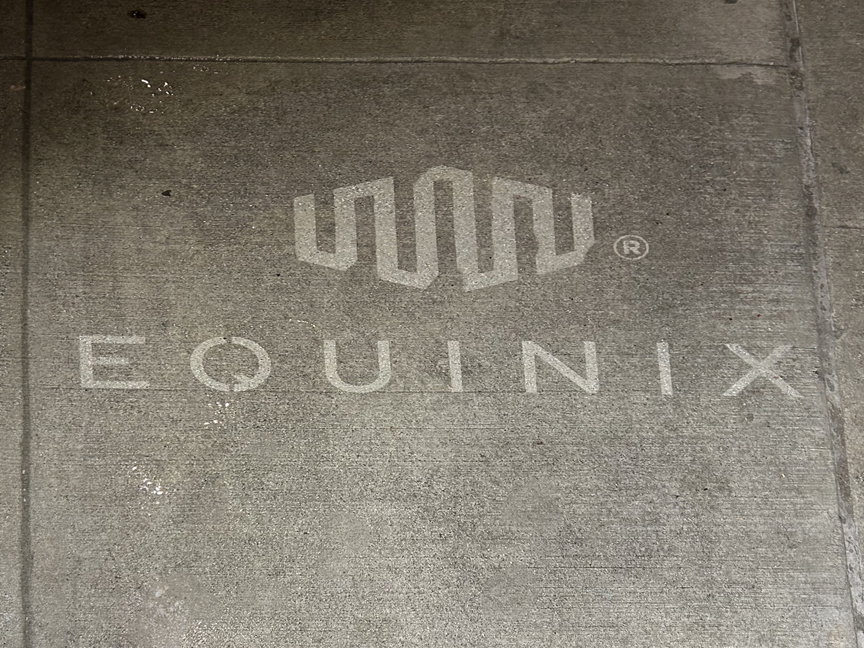
Sidewalk stencils at the downtown Rock Region Metro transit center at 6th and Main, at the River Rail streetcar boarding points in the Rivermarket District, and at the UALR campus entrance on South University Avenue create ground-level brand presence at the pedestrian-density zones of Little Rock’s transit network.
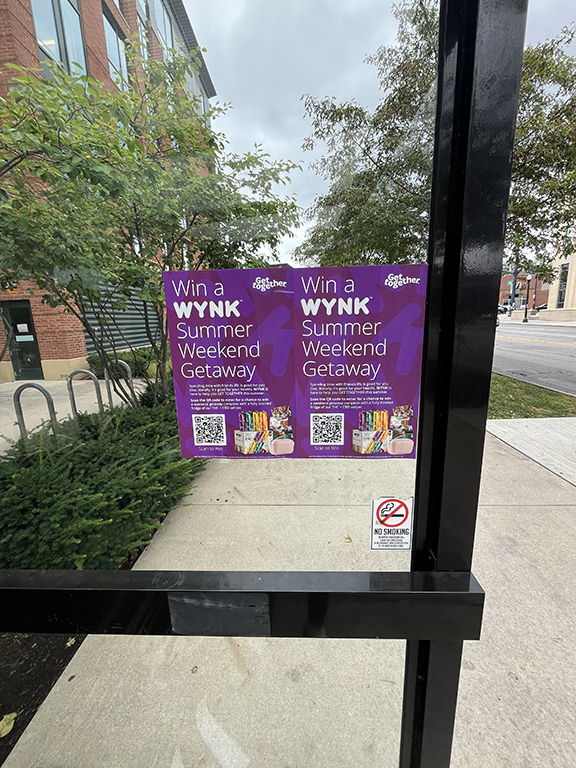
Take-one flyers at the coffee shops, healthcare worker gathering spaces, and community venues adjacent to Rock Region Metro routes in the UAMS medical district, midtown Little Rock, and the Rivermarket area extend the transit campaign message into the off-bus spaces where Little Rock’s transit riders spend time outside their commute.
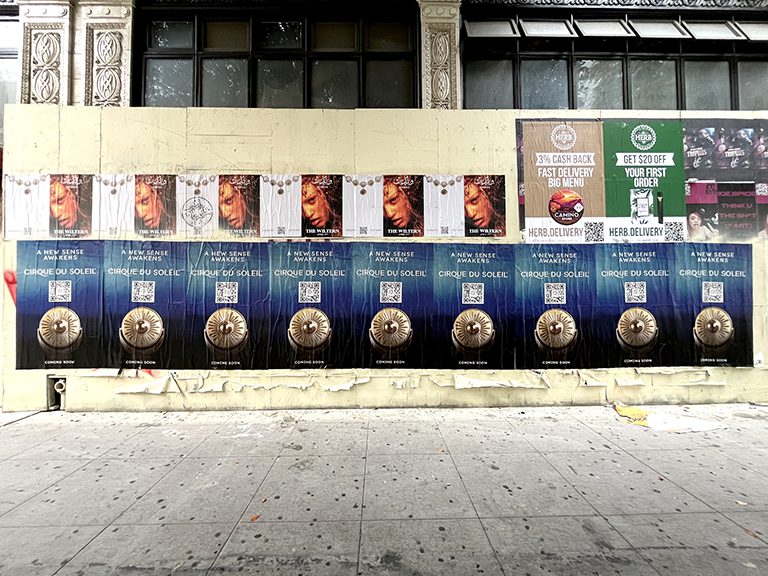
Wheatpasted poster campaigns in the SoMa neighborhood along South Main Street, in the Quapaw Quarter historic district near the Capitol, and in the Rivermarket arts corridor create large-format impressions for the walking and transit community in Little Rock’s most pedestrian-active cultural districts.
UAMS Health System and Baptist Health, the two largest healthcare employers in the state, use Rock Region Metro for patient acquisition, community health outreach, and healthcare worker recruitment campaigns. Arkansas state government agencies run public information campaigns on Rock Region Metro to reach transit-dependent communities with program enrollment information. UALR uses the University Avenue route for enrollment advertising and campus service promotion. Downtown Little Rock’s restaurant and entertainment venues use the River Rail streetcar and the downtown routes for event promotion and discovery advertising targeting the capital city’s professional and visitor audience. Regional banks and financial institutions use Rock Region Metro for brand presence campaigns targeting the professional workforce commuting through the downtown core and the UAMS medical district. Legal services, insurance companies, and the healthcare-adjacent financial services industry use transit advertising to reach the Little Rock professional demographic at commute-time touchpoints that digital advertising misses.
Yes. The River Rail Electric Streetcar is part of the Rock Region Metro system, and interior advertising on the streetcar vehicles is available through the same advertising program as the bus fleet. The streetcar operates on the downtown Little Rock and North Little Rock riverfront loop, and its interior advertising environment reaches a visitor, entertainment, and downtown resident demographic that is distinct from the commuter ridership on the standard bus routes. AGM coordinates both bus and streetcar placements through a single Rock Region Metro campaign engagement.
The highest-ridership Rock Region Metro routes consistently include the West Markham UAMS corridor routes, the University Avenue route serving UALR and midtown Little Rock, and the downtown Main Street and Capitol Avenue routes serving the state government employment district. The downtown transit center at 6th and Main is the single highest-impression location in the system as the hub where multiple routes converge and where River Rail streetcar service connects. AGM reviews current Rock Region Metro ridership data when building campaign plans to ensure route selections reflect actual current ridership volumes.
Rock Region Metro serves both Little Rock and North Little Rock, with the River Rail streetcar connecting the two cities across the Arkansas River via the Main Street Bridge. A comprehensive Little Rock metro transit campaign can be structured to include both the Little Rock bus routes and the North Little Rock connecting service for full Arkansas River Valley metro coverage. Contact AGM about North Little Rock service inclusion in Rock Region Metro metro-wide campaign planning.
Yes. AGM places transit advertising across all Arkansas systems including Rock Region Metro in Little Rock, Razorback Transit and Ozark Regional Transit in Northwest Arkansas, and Fort Smith Transit in the River Valley. A statewide Arkansas transit campaign combining Little Rock, Northwest Arkansas, and Fort Smith transit advertising is coordinated through a single AGM engagement for clients who need statewide Arkansas reach from their transit investment.
Standard Rock Region Metro interior card and poster campaigns require two to four weeks of lead time from final artwork submission to installation. Premium shelter positions at the downtown transit center and the UAMS West Markham corridor may need four to six weeks for peak-demand periods. The River Rail streetcar may have specific lead time requirements due to its smaller fleet. AGM recommends beginning the planning conversation at least four to six weeks before the intended launch date.
Rock Region Metro operates routes serving the Clinton National Airport corridor on Airport Road in Little Rock, connecting the airport employment area and hotel district to the downtown transit hub. The airport corridor routes carry airport workers, hospitality employees, and transit-connected travelers in the employment and commercial environment near the airport. For brands targeting the Arkansas business traveler and airport employment demographic, the Clinton National Airport corridor Rock Region Metro routes are a specific placement option within the system’s geographic coverage.
Yes. Rock Region Metro routes serving the Arkansas State Capitol complex on Woodlane Drive and the surrounding state government office district carry a concentrated state government professional ridership that can be specifically targeted through route selection. Interior cards and queen posters on the routes serving the Capitol district and the downtown government office corridor reach the state government workforce demographic without requiring system-wide placement. For brands targeting the Arkansas state government professional community, a Capitol district-specific Rock Region Metro route buy is the most precise placement approach within the system.
AGM provides photographic installation documentation for all Rock Region Metro placements, including interior card and poster installation photos, shelter panel photos, River Rail streetcar interior documentation, and exterior vehicle documentation for wraps. Post-campaign reporting includes all documentation photographs, placement location records, and estimated impression counts using available Rock Region Metro ridership data for the campaign period.
Yes. Rock Region Metro’s route network serves communities throughout Little Rock including the historically Black West Little Rock and South Little Rock residential communities, and the transit advertising on these routes reaches a predominantly African American working adult demographic that digital advertising campaigns in the Arkansas market consistently underperform in reaching. For brands with specific community commitment messaging, healthcare campaigns targeting the Black community’s health equity priorities, financial services brands, and consumer goods brands targeting Little Rock’s Black working adult population, Rock Region Metro transit advertising on the routes serving these communities provides direct community-level advertising access that no other single format in the market replicates at comparable cost and engagement.
Rock Region Metro routes serving the Heights neighborhood along Kavanaugh Boulevard and the South Main arts and entertainment district (SoMa) in Little Rock reach two of the city’s most economically active and culturally distinct communities. The Heights carries Little Rock’s upscale residential and commercial demographic in the neighborhood north of the downtown core, while SoMa along South Main Street between 6th and 18th Streets has become Little Rock’s creative economy anchor with galleries, restaurants, and independently owned retail. Route placements on these corridors reach Little Rock’s most consumer-active and culturally engaged communities in transit environments where advertising is noticed and discussed.