American Guerrilla Marketing
Nationwide serivce
Media planning, media buying, billboard advertising, & guerrilla marketing

Chicago Metra advertising reaches one of America’s most economically powerful suburban commuter audiences. Metra operates 11 commuter rail lines radiating from four downtown Chicago terminal stations — Union Station, Ogilvie Transportation Center, Millennium Station (Randolph St), and LaSalle Street Station — through 240 stations across the Chicagoland region, covering Cook, DuPage, Will, Kane, McHenry, and Lake counties. When you advertise on Chicago Metra, you reach the professionals, business owners, and suburban families who make up the economic engine of metropolitan Chicago — commuters with an average one-way trip of nearly 41 minutes, providing exceptional dwell time for your message. American Guerrilla Marketing executes Metra advertising alongside street-level guerrilla reinforcement — placing your brand in-car, on station platforms, and on the sidewalk approaches to downtown terminal stations.
American Guerrilla Marketing executes full-service Metra transit advertising — interior car cards, vestibule cards, station saturations, platform posters, exterior wraps, sidewalk decals, and snipe posters. Tell us your brand, budget, and goals.
Chicago Metra advertising delivers a demographic that most transit systems cannot offer: the suburban commuter with above-average household income, homeownership, and purchasing power. Metra riders are disproportionately managers, professionals, business owners, and white-collar workers who make financial decisions — for their households and their companies. This is not the same audience as the CTA urban rapid transit system. Metra’s audience is older, wealthier, and in a different purchase mindset during their commute.
For consumer brands, financial services, healthcare, real estate, and professional services, Chicago Metra advertising accesses a customer segment that is notoriously difficult to reach efficiently via digital advertising — suburban homeowners in their 35–65 age range who tune out digital ads but read during their commute.
In-car advertising displayed above windows and in the overhead luggage rack area. Metra’s bi-level gallery cars create two viewing levels — upper deck and lower deck — doubling interior ad exposure per car. Standard 11″×28″ and 22″×21″ sizes.
Placed in the entryway vestibules of Metra cars, greeting every boarding and alighting passenger at the car door. Unavoidable at the moment of entry and exit — the highest-attention position in the car.
100% ownership of all static media at a Metra station — every poster, every available surface belongs to one brand. A strong frequency play available at a majority of Metra stations. Formats within a saturation include one-sheet, jumbo king, and platform poster sizes.
Static posters in one-sheet and jumbo king sizes at Metra station platforms. Best for building frequency along a specific line or across the full network at multiple stations.
Full exterior vinyl graphics on Metra bi-level cars. Visible at grade crossings and surface stations throughout the suburbs — and at downtown terminal stations where commuters board and deboard in large numbers.
Advertising in and around Union Station, Ogilvie Transportation Center, Millennium Station, and LaSalle Street Station — the four downtown Chicago hubs where all Metra lines terminate. Highest single-location concentration of Metra riders in the network.
| Advertising Format | Rate | Notes |
|---|---|---|
| Interior Car Cards | Contact AGM for pricing | Rates set by transit authority media vendor. Not publicly listed. |
| Full Interior Car Takeover | Contact AGM for pricing | Rates set by transit authority media vendor. Not publicly listed. |
| 2-Sheet Station Posters | Contact AGM for pricing | Rates set by transit authority media vendor. Not publicly listed. |
| Platform Large Panels | Contact AGM for pricing | Rates set by transit authority media vendor. Not publicly listed. |
| Digital Station Screens | Contact AGM for pricing | Rates set by transit authority media vendor. Not publicly listed. |
| Digital Network Package | Contact AGM for pricing | Rates set by transit authority media vendor. Not publicly listed. |
| Exterior Train Side Wrap | Contact AGM for pricing | Rates set by transit authority media vendor. Not publicly listed. |
| Full Train Wrap | Contact AGM for pricing | Rates set by transit authority media vendor. Not publicly listed. |
| Standard Station Takeover | Contact AGM for pricing | Rates set by transit authority media vendor. Not publicly listed. |
| Premium Station Takeover | Contact AGM for pricing | Rates set by transit authority media vendor. Not publicly listed. |
Transit advertising rates are not published publicly by any major U.S. transit authority or their media concessionaires (Outfront Media, Intersection, Lamar, Vector Media). Pricing is determined by format, market, inventory availability, contract length, and season. Contact AGM for a custom quote — we work directly with every major transit media vendor and can confirm exact inventory and pricing for your market.
Why it delivers:
Chicago Union Station is the busiest railroad station in the Midwest and the third-busiest in the United States. It handles Metra service on the BNSF, Heritage Corridor, Southwest Service, and Rock Island lines, plus Amtrak intercity service across the country. Daily traffic across all modes exceeds 100,000 people. The Great Hall — Union Station’s iconic main concourse — is one of the most architecturally significant advertising environments in America, and the station’s Canal St and Adams St frontages generate massive pedestrian and vehicle traffic. Metra riders here commute from the western and southwestern suburbs — generally the highest-income blue-collar and white-collar mixed demographic in the network.
Available formats:
Platform advertising, concourse displays, exterior station graphics, interior car cards on departing trains, station domination, guerrilla extensions on Canal St and Adams St frontage.
Advertiser example:
A mortgage company, financial services brand, or home improvement retailer targeting homeowners in the western Chicago suburbs would execute a Union Station concourse campaign paired with interior car cards on the BNSF line — reaching Naperville, Downers Grove, and Lisle commuters every day for 4 weeks.
AGM guerrilla layer:
Sidewalk decals at the Canal St main entrance staircase and the Adams St secondary entrance, with snipe posters on the utility poles, parking meter posts, and scaffolding on the surrounding blocks. Union Station’s Canal St frontage is one of the highest foot-traffic sidewalk environments in Chicago’s Loop — AGM’s snipe saturation within 100 feet of the entrance puts the brand directly in the path of every daily arrival and departure.
Why it delivers:
Ogilvie is the hub for Union Pacific’s three Metra lines — the North Line (serving the North Shore and Kenosha), the Northwest Line (serving Barrington and Harvard), and the West Line (serving Geneva and Elgin). The UP North Line corridor includes some of the wealthiest ZIP codes in Illinois — Wilmette, Winnetka, Glencoe, Kenilworth, and Lake Forest. Riders on these lines have among the highest average household incomes of any commuter rail corridor in the Midwest. Ogilvie’s retail plaza and the attached 500 W. Madison tower create a major commercial hub at the station level that generates additional non-rail foot traffic.
Available formats:
Platform posters, concourse advertising, interior car cards on departing UP trains, station domination opportunities, exterior station frontage.
Advertiser example:
A wealth management firm, luxury automotive brand, or premium retail destination targeting North Shore households earning Contact AGM for pricing. P North Line platform for a poster campaign paired with interior car cards on northbound trains.
AGM guerrilla layer:
Sidewalk decals at the Washington/Canal entrance and the Madison St frontage, with snipe posters on the construction barriers and scaffolding that line the Ogilvie block. The West Loop’s perpetually active construction environment provides extensive permitted posting surfaces within 100 feet of the terminal entrance.
Why it delivers:
Millennium Station serves the Metra Electric District — the busiest of all Metra lines by ridership — as well as the South Shore Line (Northern Indiana Commuter Transportation District). It sits below Millennium Park and Randolph St, placing it in the heart of Chicago’s lakefront tourist corridor, adjacent to the Art Institute, the Bean, the Riverwalk, and Maggie Daley Park. Riders on the Electric District commute from Hyde Park, South Chicago, University of Chicago, and the South Side communities — a diverse, education-skewing demographic that includes one of the largest transit-connected university corridors in the Midwest.
Available formats:
Platform advertising, concourse displays, interior car cards on departing Electric District trains, station domination.
Advertiser example:
A university, arts organization, streaming platform, or consumer brand targeting educated urban and suburban Southsiders would execute a Millennium Station campaign paired with Electric District interior car cards — reaching Hyde Park, South Shore, and the commuter corridor all the way to University Park.
AGM guerrilla layer:
Sidewalk decals on the Randolph St entrance plaza approach — one of the highest foot-traffic pedestrian surfaces in Chicago, shared with Millennium Park visitors. Snipe posters on the utility infrastructure on Randolph St between Michigan Ave and the station entrance reach both Metra riders and the city’s heaviest tourist and recreational foot traffic simultaneously.
Why it delivers:
LaSalle Street Station terminates the Rock Island District line, which serves the Beverly/Morgan Park, Blue Island, Joliet, and southern suburbs corridor. The station sits directly in the heart of the LaSalle Street financial corridor — Chicago’s financial district, home to the Chicago Board of Trade, the Chicago Mercantile Exchange, the Federal Reserve Bank, and dozens of major financial services and law firm offices in the surrounding towers. Riders on the Rock Island line include a strong contingent of South Side neighborhood communities alongside financial district workers who walk directly to LaSalle St firms from the station.
Available formats:
Platform posters, interior car cards on Rock Island District trains, station advertising, exterior frontage on Van Buren St.
Advertiser example:
A financial services firm, law firm marketing campaign, or professional services brand targeting Loop financial district workers would execute a LaSalle Street Station platform poster campaign paired with Rock Island interior car cards — capturing the outbound commute from Chicago’s financial core.
AGM guerrilla layer:
Sidewalk decals at the Van Buren St station entrance stairs, with snipe posters on the LaSalle St utility poles and construction barriers within 100 feet of the entrance — directly in the path of the daily Board of Trade and CME foot-traffic flow.
Chicago Metra’s downtown terminal stations are among the most concentrated pedestrian environments in the United States. Thousands of riders pass through narrow entrance corridors, street-level plazas, and surrounding sidewalks twice a day — creating exceptional density for guerrilla advertising reinforcement.
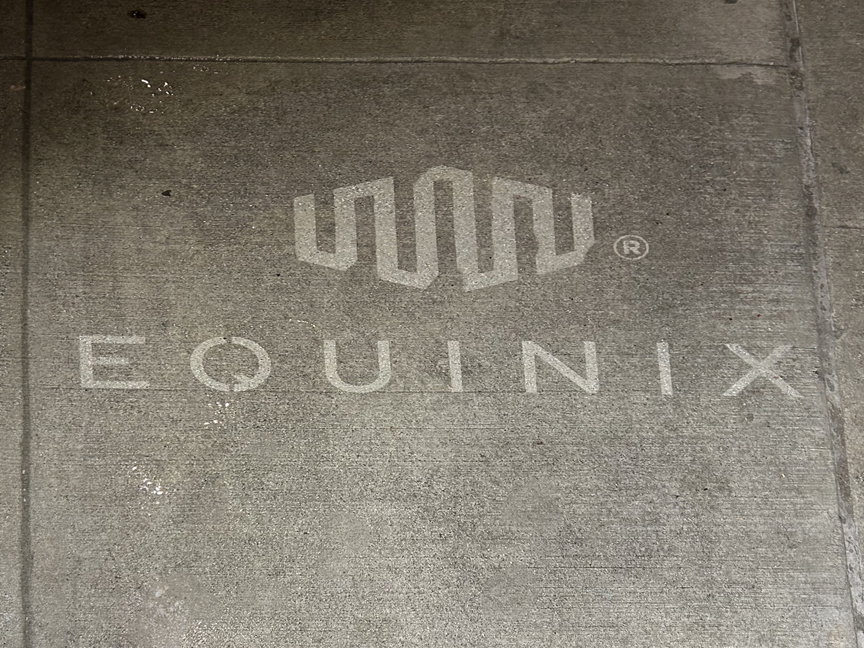
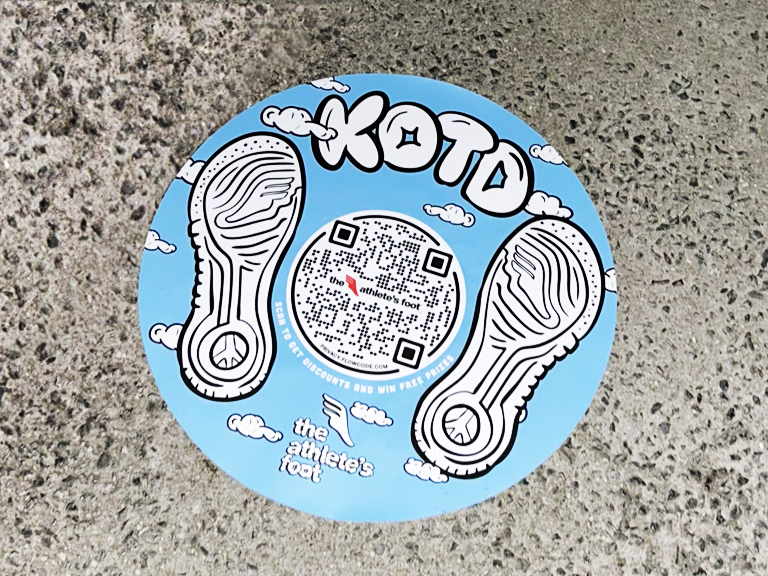
AGM installs removable vinyl sidewalk decals at Metra terminal entrance staircases, plaza approaches, and the sidewalk zones immediately adjacent to station entrances. In Chicago’s urban environment, these decals placed at the top of staircase descents — where commuters naturally look down — achieve some of the highest-visibility positions in the city at a fraction of the cost of conventional OOH.
Chicago’s climate requires cold-weather rated vinyl (Metra campaigns often run in fall, winter, and spring). AGM uses cold-applied, temperature-stable adhesive formulations specifically rated for Chicago conditions.
Within 100 feet of Metra terminal entrances — Union Station, Ogilvie, Millennium, and LaSalle Street — AGM deploys 9×12 snipe posters on the utility infrastructure, construction barriers, and permitted vertical surfaces that are abundant in Chicago’s downtown core. The Loop’s perpetual construction activity provides extensive temporary posting surfaces within the required radius of each terminal.
A layered Metra advertising campaign creates sequential brand contact across an extended commute: snipe poster approaching the terminal entrance → sidewalk decal at the staircase descent → interior car card for 41+ minutes on the train → vestibule card at boarding/alighting → platform poster at destination. This five-touch sequence over 45–60 minutes has no parallel in digital media for frequency and contextual relevance. American Guerrilla Marketing plans and executes all five layers from a single contract.
| Format | Quantity | Price | Includes |
|---|---|---|---|
| 9×12 Snipes (Standard) | 400 snipes | $4,500 | Installation, placement maps, geo-tagged reporting |
| 9×12 Snipes (Standard) | 800 snipes | $5,500 | Installation, placement maps, geo-tagged reporting |
| 11×14 Jumbo Snipes | 400 snipes | $6,500 | Installation, placement maps, geo-tagged reporting |
| 11×14 Jumbo Snipes | 800 snipes | $7,500 | Installation, placement maps, geo-tagged reporting |
| Sidewalk Vinyl Decals | 10 decals | $3,404 | Installation, geo-tagged reporting |
| Sidewalk Vinyl Decals | 80 decals | $4,998 | Installation, geo-tagged reporting |
| Sidewalk Vinyl Decals | 30 decals | $6,373 | Installation, geo-tagged reporting |
| Sidewalk Vinyl Decals | 50 decals | $8,709 | Installation, geo-tagged reporting |
| Sidewalk Stencils (paint, chalk, or pressure) | 10 stencils | $3,231 | Design, application, documentation |
| Sidewalk Stencils (paint, chalk, or pressure) | 50 stencils | $6,982 | Design, application, documentation |
| Transit Station Surround Package | 400 snipes + 80 decals | $10,000 | Full deployment at station entrances, QR tracking on all units, geo-tagged documentation report |
Wheatpaste poster campaigns are Contact AGM for pricing. For wheatpaste campaigns, large format 48×72 posters start at $10,500 (100 large format 48×72 posters, 2 weeks). 72-hour rush fee: +50%. Multi-market and custom volume pricing available. Contact AGM for a custom quote.
Experience
500+ transit campaigns across 30+ markets. Chicago executions include Metra, CTA Rail and Bus, and guerrilla activations across the Loop and suburban corridors for music, fashion, CPG, tech, and financial services clients.
Expertise
10+ years in transit advertising. Direct knowledge of Outfront Media’s Metra concession, format specs, approval timelines, and the specific creative requirements of bi-level car interior formats.
Authority
Direct execution partner. We work with Outfront Media’s Metra concession and execute guerrilla elements ourselves at Metra terminal entrance areas. No broker markup.
Trust
Geo-tagged timestamped photo documentation within 24 hours of every install. Itemized, transparent pricing. Climate-appropriate materials specified for Chicago seasonal conditions.
CTA and Metra serve different audiences and should be considered complementary, not interchangeable. CTA reaches urban Chicago residents — a younger, more diverse, lower-to-middle income audience. Metra reaches suburban commuters — older, higher income, homeowners, with significantly longer dwell time per ride. Most major Chicago-area campaigns run both for full metropolitan coverage.
A Station Saturation is 100% ownership of all available static advertising media at a Metra station — every platform poster, every available surface controlled by one brand for the campaign period. It creates an overwhelming frequency effect at a specific station. Major downtown terminals and high-ridership suburban stations offer this format.
Yes. Interior car cards and vestibule cards can be purchased on a specific line (e.g., UP North Line only) rather than network-wide. This allows precise targeting of suburban corridors — the North Shore, the western suburbs, or the Electric District’s South Side communities — based on your audience profile.
The most strategically valuable Chicago Metra stations for advertising campaigns are Chicago Union Station, Ogilvie Transportation Center, and the high-ridership suburban terminals on the BNSF, UP North, and UP Northwest lines. These stations concentrate the highest volumes of affluent suburban commuters in the Chicago metropolitan area. AGM evaluates each station by line ridership, dwell time, audience income index, and proximity to high-value suburban retail corridors to build the most efficient Metra advertising plan for your campaign.
Chicago Metra advertising reaches the suburban professional audience because Metra is the primary commute vehicle for the region’s highest-income suburban households. Metra riders skew 35 to 65, with above-average household incomes, homeownership rates, and educational attainment. Interior car cards deliver 41-plus minutes of captive exposure to these professionals twice daily. AGM designs Metra advertising campaigns specifically for this demographic, pairing transit placements with guerrilla surround tactics at suburban terminal approaches for maximum frequency.
Yes. AGM executes coordinated Chicago Metra advertising campaigns across multiple lines simultaneously. A multi-line buy through Outfront Media’s Metra concession allows brands to reach different suburban corridors in a single campaign flight. AGM recommends line combinations based on audience overlap and geographic coverage goals. For brands seeking full Chicago metropolitan coverage, a coordinated Metra campaign combined with CTA and guerrilla advertising delivers the broadest possible reach across city and suburban audiences.
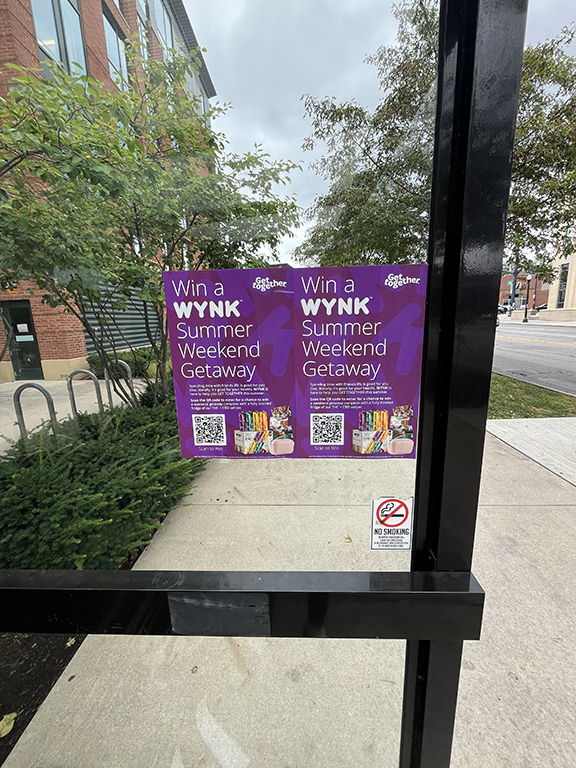
Sidewalk decals and snipe posters near Chicago Metra station entrances extend a transit advertising campaign to street level, intercepting commuters on the approach path before they enter the station. AGM places vinyl sidewalk decals on the last 20 feet of sidewalk leading to terminal entrances and posts snipe posters on poles, utility boxes, and walls within 100 feet of all targeted station entrances. This guerrilla surround layer adds two to three additional brand impressions to each commuter’s daily journey and significantly increases campaign recall compared to transit advertising alone.
The dwell time advantage of Chicago Metra advertising is substantial. The average Metra one-way trip is 41 minutes, compared to 12 to 18 minutes on a typical CTA rapid transit journey. Interior car cards on Metra trains deliver uninterrupted captive exposure to riders who are seated, commuting, and actively reading during that 41-minute window. This extended dwell time makes Metra advertising particularly effective for complex messages, longer copy, QR-driven direct response, and brand categories that require repeated exposure to drive action.
AGM plans a Chicago Metra advertising campaign through a structured five-step process: a strategy call to define the audience, objective, budget, and flight; a placement plan recommending specific lines, stations, and formats; creative consultation with Outfront Media’s Metra production specifications; coordinated buy execution across transit and guerrilla layers; and full geo-tagged, timestamped proof-of-install photography delivered within 24 hours of every placement. This documentation standard ensures clients receive verified evidence of every Metra advertising placement before final billing is issued.
Chicago Metra advertising and CTA L advertising reach fundamentally different audiences and serve different campaign objectives. Metra reaches suburban homeowners aged 35 to 65 with above-average household incomes and 41-minute average dwell times, making it ideal for financial services, home improvement, luxury consumer goods, and family-oriented brands. CTA L reaches urban Chicago residents across a younger, more diverse demographic with shorter dwell times and higher daily frequency. AGM recommends most major Chicago-area campaigns run both systems in coordination for full metropolitan coverage across suburban and urban audiences.