American Guerrilla Marketing

Nationwide serivce

Media planning, media buying, billboard advertising, & guerrilla marketing

Building Projection Scouting

Projection media is technically demanding before it is creatively demanding. The geometry has to work. The ambient light has to cooperate. The wall has to take the image. We scout all of it before you book the equipment.

Building Projection Scouting

Why Projection Campaigns Start With a Physical Scout

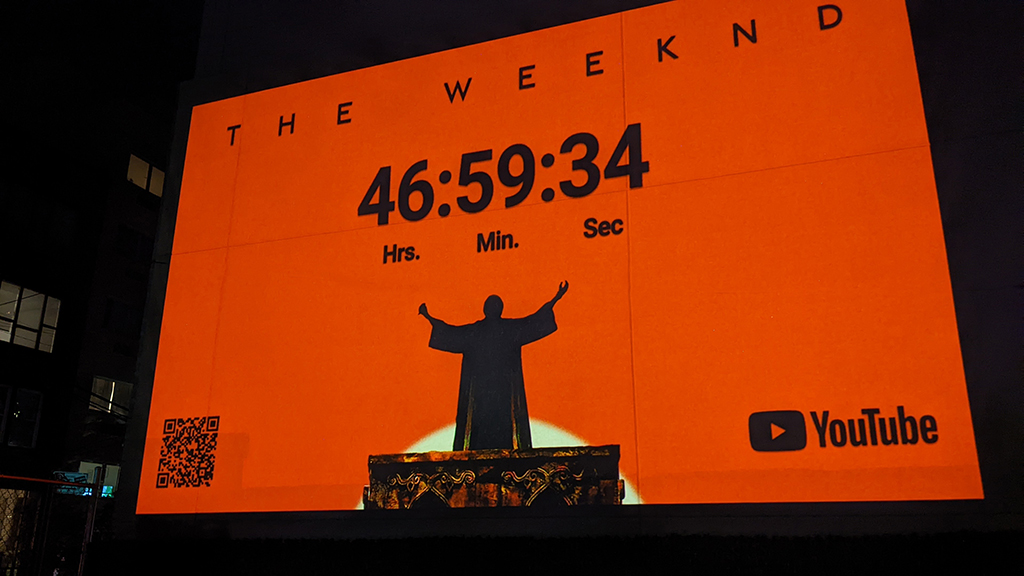
Our operators scout projection surfaces in person, visiting locations during the relevant nighttime hours to confirm sightlines, ambient light levels, and power access before any surface makes a client shortlist. A projection media campaign that looks spectacular in a rendering can fail entirely in the field if the projection geometry is wrong. The standoff distance between the projector position and the building surface determines the image size. The surface color and texture determine image saturation and sharpness. The ambient light level at the deployment time window determines whether the projected image is vivid or washed out. All three of these factors have to be right simultaneously, and all three require a physical site visit to verify.

A location gets recommended only after an operator has physically assessed it. Walked, photographed, documented — in that order, every time.

Every Building Projection Scouting report AGM delivers reflects firsthand field intelligence from operators who visited candidate surfaces during nighttime hours, confirmed surface geometry, measured ambient light conditions, and assessed power access before making any Building Projection Scouting recommendation. Reach the field team to request an existing Building Projection Scouting brief.


Stop Guessing on Location Selection

Every scouting report is built from streets our operators have walked, walls they have photographed, and surfaces they have assessed in person.

How We Do It

Our building projection scouting process involves five documented steps. First, we identify candidate buildings with suitable surface geometry: flat faces, minimal window interruption, and orientation toward a pedestrian or vehicle viewing corridor. Second, we assess ambient light conditions at the target venue during the relevant hours — the difference between a projection that dominates a space and one that washes out is often measured in lux readings rather than equipment specifications. Third, we document power access and confirm viable projection distance from available ground positions. Fourth, we verify permitting requirements and document property ownership for approach. Fifth, we deliver a site report with measurements, photographs, ambient light readings, and our recommended projection specifications.

This service type is led by AGM field operators Carlos Vega and Priya Nair, who between them have completed over 85 building projection scouting briefs across 19 markets. Every recommendation in their briefs comes from an operator who physically walked the location. That’s the only standard they work to.

AGM’s Building Projection Scouting operators are specialists in projection surface geometry, ambient light analysis, and power access assessment. The technical knowledge required to evaluate a building face for projection campaigns — measuring surface plane angles, gauging ambient light interference, identifying projector positioning options — is built from executed Building Projection Scouting engagements, not from map-based estimation.

Our building projection scouting visits every candidate building at night during the deployment time window. We photograph the surface under actual ambient light conditions, measure the available standoff distance from the projector position, assess the surface color and texture, and document any obstructions between the projector position and the building face that would break the projected image. No rendering can replicate this. It requires being there.

AGM building projection scouting delivers surface spec reports, standoff distance calculations, ambient light assessments, power access documentation, foot traffic counts during the deployment window, and property contact status. Turnaround: 7 to 10 business days.
AGM’s nationwide field network supports Building Projection Scouting engagements in every major US market. Our Building Projection Scouting methodology is consistent everywhere: operators visit surfaces at nighttime hours, confirm geometry and ambient conditions firsthand, GPS-verify every candidate before it enters a client report. Reach the field team to request a Building Projection Scouting brief.

What Makes a Good Projection Surface

Surface Color

Light-colored or white surfaces produce the clearest, most saturated projected images. A flat white or light gray stucco or painted concrete wall reflects a projector’s output with minimal color distortion. Dark-colored surfaces absorb light and produce images that appear dim and washed out at comparable projector output levels. Red brick absorbs blue and green channel light in ways that shift projected color temperatures significantly. For a dark-surface building, achieving acceptable image quality requires substantially higher projector output (measured in lumens) that increases equipment cost and sometimes is not achievable with transportable equipment. Our surface assessment documents the surface color and provides a projector output recommendation for the production team.

Surface Texture

Smooth surfaces produce sharper projected images. Heavy texture, deep joints in brick patterns, or deeply profiled architectural ornament all scatter projected light and reduce image sharpness. For large-format projections viewed from pedestrian distances, moderate surface texture is acceptable because the viewing distance exceeds the scale at which texture matters. For close-range activations where the audience is within 30 feet of the surface, surface texture becomes a meaningful quality variable. Our assessment documents the texture level of each candidate surface with a sharpness-impact rating for the production team.

Orientation Relative to Standoff Distance

The projector needs a clear line from its position to the building surface, at a distance that produces the desired image size for the projector being used. Throwratio is the key calculation: throw distance divided by image width equals throw ratio. Most transportable projectors used in guerrilla projection campaigns have throw ratios between 1.2 and 2.0, meaning a 20-foot-wide image requires 24 to 40 feet of throw distance. Our scouting documents the available standoff positions opposite each candidate building and calculates the achievable image size for the projection equipment in the campaign’s budget range.

Ambient Light Levels at Night

Street lighting, building signage, lit storefronts, and vehicle headlights all contribute to ambient light levels that compete with the projected image. Our operators visit candidate sites at night during the deployment window and assess the ambient light environment from the viewing positions where the campaign audience will be. Sites with intense street lighting require higher projector lumen output or creative content designed to be effective at lower contrast ratios. Sites in darker environments allow lower-output projectors and more latitude in color design.

Foot Traffic During Evening Hours

A projection campaign reaches the audience that is present during the deployment window. A building surface that is beautiful at 10 p.m. but in a corridor that empties after 8 p.m. delivers an image to an empty street. Our operators conduct foot traffic counts at candidate sites during the specific deployment hours to verify that audience volume justifies the activation investment. We document both the count volume and the audience behavior: people lingering and looking up versus people moving quickly through without stopping.

Every surface in the building projection scouting placement inventory was assessed by a certified field expert — licensed professional operators who confirm access, evaluate conditions, and document what they find.

AGM’s building projection scouting field specialists are certified placement experts — licensed professionals who maintain the placement inventory through direct on-the-ground surface assessment.

Looking For The Right Bars For Your Brand?

    Award Winning Personalized Service

    You will get thoughtful, devoted, and individualized attention from our experienced, qualified, and professional personnel. Being one of the most illustrious agencies in Brooklyn, New York, American Guerrilla Marketing has been awarded the Best of Brooklyn title.

    Nationwide

    Industry City, Brooklyn, New York 11232

    American Guerrilla Marketing

    +1 (646) 776-2770

    [email protected]

    Telegram: @americanguerillamarketing

    Hours

    Mon - Fri: 9 AM - 5 PM

    Sat & Sun: Closed

    Automate your campaign with AGM’s Request for Proposal Builder.

    Automate your campaign with AGM’s Request for Proposal Builder. Simply answer a few quick questions about your campaign goals, markets, and timeline, and the system will generate a tailored presentation with recommended strategies, quantities, and pricing. Click the RFP Builder to instantly receive your customized proposal.

    Projection-friendly Environments We Scout

    Times Square Adjacencies, New York City

    The blocks surrounding Times Square offer a paradox for projection campaigns: the most foot traffic in North America paired with the highest ambient light levels of any outdoor environment in the country. Projection campaigns in Times Square adjacencies need specialized high-lumen equipment, buildings without significant digital signage competition, and creative content designed to remain vivid against very bright ambient backgrounds. The blocks of 42nd Street running toward 8th Avenue and the side streets south of 45th and north of 40th offer lower ambient light than the core of Times Square while retaining substantial foot traffic from the theater and tourism crowd.

    Wacker Drive, Chicago

    The buildings along Wacker Drive between Michigan Avenue and Wabash carry large, smooth facade surfaces at a scale accessible to projection from the riverwalk level below. Evening foot traffic on the Riverwalk is substantial from spring through fall, and the view from the lower Wacker level allows a projector to address building surfaces at scale while the Riverwalk pedestrian audience is at an ideal viewing distance. The Tribune Tower and the buildings in the block between Michigan and Wabash at the river bend are established targets for projection campaigns in the Chicago market.

    Hollywood Boulevard Facades, Los Angeles

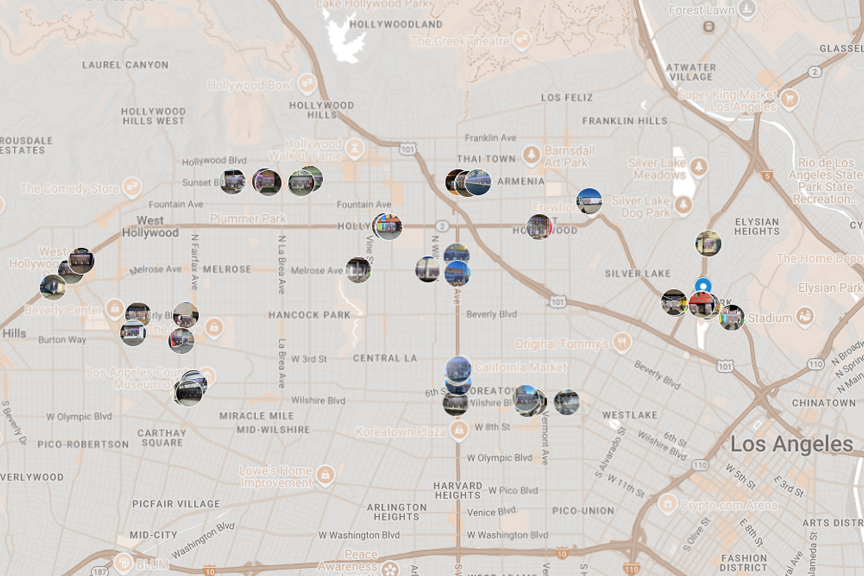
    The building stock on Hollywood Boulevard between Highland and Vine offers a mix of historic theaters, retail facades, and parking structure walls that range from excellent to poor projection surfaces. The Pantages Theatre facade on Vine, the El Capitan Theatre across from the Chinese Theatre complex, and the parking structure walls on Cahuenga all serve different functions in a projection campaign context. Evening foot traffic on Hollywood Boulevard is consistent year-round due to the tourist draw and the entertainment industry nightlife cluster.

    DTLA Warehouse District, Los Angeles

    The warehouse conversion district in downtown Los Angeles around Mateo Street, Industrial Street, and the Arts District perimeter offers large, flat industrial building faces in light-colored concrete and painted brick. The relative darkness of these blocks compared to the retail-lit Figueroa corridor makes them excellent ambient light environments for projection. The audience here is adult, creative, and tends toward extended dwell time at the bars and restaurants in the Arts District.

    South Congress Avenue, Austin

    South Congress Avenue between 5th Street and Oltorf carries the densest pedestrian audience in Austin for most of the week, particularly during the Thursday through Sunday evenings that anchor Austin’s entertainment culture. The building stock along the commercial corridor provides accessible projection surfaces, and the relative absence of high-intensity commercial signage outside the immediate Congress and 1st Street intersection keeps ambient light levels manageable for standard projection equipment.

    Deliverables: The Projection Scouting Report

    Projection Surface Specification

    For each candidate building: surface material and color with a reflectivity assessment, texture evaluation with a sharpness-impact rating, dimensions of the usable projection area, and photographs taken at night from the primary projector positions showing the surface under actual ambient conditions.

    Standoff Distance Calculation

    The measured distance from the available projector positions to the building surface, with image size calculations at each position for the range of throw ratios applicable to standard campaign projection equipment. The production team receives the data they need to specify the correct projector without guessing at the geometry.

    Ambient Light Assessment

    A written assessment and photographic documentation of the ambient light environment at each candidate site during the deployment time window, with a recommended minimum projector lumen output for the specific environment and a note on whether specialty content treatment is needed to achieve acceptable contrast against the ambient light level.

    Power Access Documentation

    The location and accessibility of power sources at or near each candidate site, including building-exterior outlets where accessible, street-level utility access panels, and the closest practical generator placement position with notes on any noise restrictions or pedestrian flow interference.

    Property Contact Status

    For permitted projections requiring property owner coordination, the owner identification and initial contact status. For unpermitted projection campaigns, a risk assessment note covering the enforcement environment at each site.

    Bar and Venue Scouting

    Bar and Venue Scouting

    The right venue reaches your audience when they are relaxed, social, and receptive. Finding that venue requires field research, not a Yelp search. We identify and vet the bars, restaurants, and nightlife spots that match your brand and your target audience.

    Learn More
    Building Projection Scouting

    Building Projection Scouting

    Projection media is technically demanding before it is creatively demanding. The geometry has to work. The ambient light has to cooperate. The wall has to take the image. We scout all of it before you book the equipment.

    Learn More

    All Scouting Services

    College Campus Reconnaissance

    College Campus Reconnaissance

    University campuses have their own geography, their own pedestrian logic, and their own advertising rules. Our field operators map it all before a single dollar goes into production.

    Learn More
    Corporate Campus Reconnaissance

    Corporate Campus Reconnaissance

    AGM scouts corporate campuses, office parks, and business districts to identify the pedestrian zones, commuter corridors, parking approaches, and surface inventory where guerrilla marketing campaigns reach employees, contractors, and visitors at their daily access points.

    Learn More
    Event and Festival Scouting

    Event and Festival Scouting

    The best opportunity to reach a defined audience in a concentrated geographic zone happens in the hours before and after a major event. We map the entire perimeter, document every approach route, and rank every activation zone before the crowd arrives.

    Learn More
    Guerrilla Activation Scouting

    Guerrilla Activation Scouting

    A brand stunt in the wrong plaza is a brand stunt nobody sees. We find the exact intersection, courtyard, or public space where your target audience concentrates, document the logistics, research the permits, and hand you a site that works.

    Learn More
    Mobile Billboard Route Scouting

    Mobile Billboard Route Scouting

    A billboard truck running the wrong corridor delivers impressions to an audience that was never the target. We map the routes that put your LED or static display in front of the specific people you need to reach, at the times they are actually there.

    Learn More
    Mural Location Scouting

    Mural Location Scouting

    A mural is a permanent statement. The wall you choose determines whether it gets seen by thousands daily or disappears behind a dumpster. We find the right wall before your production team touches a brush.

    Learn More
    Neighborhood Distribution Scouting

    Neighborhood Distribution Scouting

    Distribution campaigns fail when the neighborhood data is wrong. A door hanger campaign in the wrong building type, the wrong demographic zone, or a neighborhood with access barriers the crew was not briefed on burns print and labor on zero-return addresses. We fix that before the crew goes out.

    Learn More
    Pop-Up Location Scouting

    Pop-Up Location Scouting

    Actually, A mobile boutique parked in the wrong block is invisible to the audience you paid to reach. We find the locations where your pop-up will attract the people it needs, and document everything from loading access to permit requirements before you commit to a date.

    Learn More
    Street Advertising Location Scouting

    Street Advertising Location Scouting

    Snipe placements, sidewalk decals, and stencil campaigns all depend on knowing the specific poles, pavement, and intersections that your audience actually passes. We map that territory before your crew hits the street.

    Learn More
    Street Team Location Scouting

    Street Team Location Scouting

    Brand ambassadors are only as effective as the zone they are deployed in. We identify the intersections, transit stops, and venue approaches where your exact target demographic concentrates, count the traffic, and confirm the deployment makes sense before your team hits the street.

    Learn More
    Transit Adjacency Scouting

    Transit Adjacency Scouting

    Subway exits, bus stops, and train stations concentrate thousands of people at defined physical points on a predictable daily schedule. We map those points, document the surface inventory within reach, and profile the commuter audience by line, exit, and time window.

    Learn More
    Wheatpaste Location Scouting

    Wheatpaste Location Scouting

    A wheatpaste campaign lives or dies on wall selection. The wrong surface peels in 48 hours. The wrong neighborhood tears posters down before the paste dries. We find the walls that work, in the neighborhoods where posting belongs.

    Learn More

    What Brands Use AGM Building Projection Scouting For

    Entertainment and Film Launches

    Studios and streaming platforms use projection scouting to identify high-visibility urban building faces for large-scale campaign imagery timed to release dates. We assess lumen requirements, surface texture, setback distances, and permitting context before creative production begins.

    Experiential and Brand Activation Campaigns

    Brands using projection as the centerpiece of an experiential activation need surfaces with controlled sightlines, manageable crowd access, and low light pollution. We document all of these conditions at candidate locations so the production team arrives with zero surprises.

    Music and Cultural Moments

    Album drops, tour announcements, and cultural partnerships use building projections to create earned media moments. Scouting identifies which building faces will generate the most photograph-worthy geometry when lit, and which locations attract the organic pedestrian audience that shares what they see.

    Fashion and Luxury Brands

    High-end fashion and luxury brands use temporary building projections for seasonal campaigns and editorial moments. We identify landmark-adjacent surfaces with the architectural context and audience quality that premium brand presentation requires.

    Frequently Asked Questions About Building Projection Scouting

    Light-colored surfaces, particularly flat white, off-white, and light gray, produce the most saturated and accurate projected images. Dark surfaces absorb projected light and require significantly higher lumen output to achieve comparable image quality. Colored surfaces, particularly red brick and tan sandstone, shift projected color temperatures and require color correction in the source content to compensate. Our surface assessment documents the color characteristics of each candidate building and provides a projector output recommendation for the production team.

    Required projector output is calculated from three inputs: the ambient light level at the site during the deployment window, the surface reflectivity of the building face, and the target image size and viewing distance. Our site assessment provides the first two inputs; the production team applies the throw ratio calculation to determine the third. The final lumen specification is the production team’s responsibility but our assessment gives them the site-specific inputs they need to calculate it accurately rather than estimating.

    For a continuous or sustained projection campaign, owner coordination is advisable and in some municipalities required. Short-duration stunt projections of under 30 minutes on a publicly visible building surface exist in a different regulatory category in most cities: the projection leaves no permanent mark and falls under free expression frameworks in many jurisdictions. Our site assessment documents the specific regulatory environment for each candidate building and city. We do not give legal advice; we give clients the factual information they need for their own legal review.

    Yes, and multi-site projection campaigns can be very effective as a form of brand media that appears to pop up simultaneously across a city. The logistics require either multiple projector units deployed simultaneously or a single unit moving sequentially between sites across the night. Sequential deployment works well for earned media documentation campaigns where the goal is content creation rather than audience impression volume. Our scouting can cover multiple sites in a single engagement and includes routing recommendations for the projection equipment crew.

    The ideal standoff distance is determined by the desired image size and the throw ratio of the projection equipment. For most guerrilla projection campaigns targeting 20 to 40-foot-wide images using standard portable projectors, the projector needs to be positioned 25 to 80 feet from the building face. Our scouting documents the available standoff positions at each site and the measurable clear distance at each position, with image size calculations for the range of equipment in the campaign’s budget category.

    Our standard building projection scouting service focuses on exterior building surfaces for outdoor projection campaigns. Interior projection environments for events, activations, and installations follow a different assessment methodology. If your campaign includes interior projection as part of a broader event or venue activation, we assess that as part of the venue scouting engagement rather than the building projection scouting service.

    Adjacent digital displays, lit signage, and illuminated window displays all contribute to ambient light that washes against the projection surface. In some cases, competing digital media directly adjacent to the projection surface creates a visual environment where the projected image loses clarity and impact even at high lumen output. Our operators photograph and document all significant light sources within the sightline of each candidate building at night to give the production team a complete ambient environment picture.

    Later sunset times in summer reduce the usable projection window on weekday evenings, since projections are most effective after civil twilight when ambient sky glow has faded. Winter and autumn provide earlier darkness and longer effective projection windows on evenings when foot traffic is still active. In practice, climate and event context matter as much as season: a February activation in Chicago during a major industry conference may outperform a September activation in a market with no event anchor driving evening foot traffic.

    Yes, and in some cases the building type is an advantage. A hotel with large light-colored facade panels, a parking structure with a wide flat concrete face, or a convention center with a smooth cladding panel surface can all be excellent projection targets. Occupancy is not a disqualifying factor as long as the physical surface characteristics and ambient light conditions are right. Property owner coordination is required for any sustained campaign on an occupied commercial building.

    Standard turnaround is 7 to 10 business days from confirmed brief receipt, which includes the requirement for at least one nighttime field visit at each candidate site during the deployment window hours. Brief us with the target city, the deployment time window, the approximate desired image scale, and any geographic or neighborhood constraints to get the field team moving with the right parameters from the first site walk.

    AGM Scouting Coverage: All 50 States and D.C.

    AGM operates a national network of field operators. We have scouted campaigns in every U.S. state and the District of Columbia. Whether your campaign targets a dense urban core or a suburban retail corridor, we have operators who know the territory.

    No locations found

    American Guerrilla Marketing Blog Posts