American Guerrilla Marketing
Nationwide serivce
Media planning, media buying, billboard advertising, & guerrilla marketing
Distribution campaigns fail when the neighborhood data is wrong. A door hanger campaign in the wrong building type, the wrong demographic zone, or a neighborhood with access barriers the crew was not briefed on burns print and labor on zero-return addresses. We fix that before the crew goes out.
Our field crew walks every distribution zone we recommend, confirming that the foot traffic patterns and residential density match the brief before a distribution plan is finalized. A mailing list gives you addresses. Neighborhood distribution scouting gives you an operational picture of what those addresses actually look like on the ground: which buildings have locked lobbies, which blocks have the residential density to justify the crew time, which corners have the foot traffic for take-one placement, and which neighborhoods have the demographic profile that makes the campaign’s response rate worth the investment.
The right distribution block puts your campaign in front of the right neighborhood at the right foot traffic window. Every neighborhood distribution route is validated through physical field research — walked, photographed, and assessed for traffic density before any crew is scheduled.
Our neighborhood distribution scouting process works in four phases. First, we map the target neighborhood’s pedestrian corridors and identify the high-traffic nodes where hand-to-hand distribution produces the highest per-hour reach. Second, we document the demographic composition of foot traffic at specific intersections and times to verify audience match before committing to a distribution zone. Third, we assess the physical logistics: where distributor teams can legally stand, the approach patterns that maximize engagement rate, and the time windows that optimize both volume and demographic quality. Fourth, we deliver a distribution plan with zone maps, timing schedules, recommended team sizing, and estimated reach per zone.
This service type is led by AGM field operators Rachel Odom and Leila Marsh, who between them have completed neighborhood distribution scouting briefs for more than 200 campaigns across 35 markets. No neighborhood distribution zone enters a client brief without on-the-ground evaluation by an AGM operator — every area assessed in person before reaching the recommendation. That’s not a policy — it’s how this team works.
The technical expertise behind an AGM Neighborhood Distribution Scouting report covers residential density mapping, pedestrian concentration zone identification, household demographic composition assessment, block-level access logistics, and distribution timing windows for door hanger and hand-to-hand programs. Our Neighborhood Distribution Scouting specialists build this intelligence through direct neighborhood field visits.
Physical distribution, whether door hanger, flyer hand-to-hand, or take-one rack placement, has operational realities that no data platform captures. A 12-story apartment building in the right demographic zone may have a locked lobby, a doorman who refuses materials, and no accessible mail room, making it effectively zero-reach despite its 200 units of theoretical household count. A suburban single-family block with no security barriers but a dog-heavy, porch-light-off culture removes materials within hours of placement. These are field conditions our operators document before the campaign run begins.
AGM neighborhood distribution scouting delivers coverage maps with building type overlays, demographic match reports, crew routing plans, take-one placement lists, and operational barrier documentation. Delivered in 7 to 10 business days.
AGM has run Neighborhood Distribution Scouting engagements for campaigns across the US and maintains firsthand field documentation on residential density, foot traffic patterns, and distribution access across major US markets. Our Neighborhood Distribution Scouting reports come from real field visits. Reach the team to access existing documentation for your Neighborhood Distribution Scouting brief.
Distribution crew efficiency is a function of door count per block. A dense apartment corridor where a crew member can cover 40 units in one building in 15 minutes is fundamentally different from a single-family block where each house is 60 feet apart and requires a separate approach. Our block-level density assessment tells the campaign manager how many crew hours are required to cover the target geography at the assumed coverage rate, which feeds directly into crew sizing and cost-per-household calculations.
Building type determines access method, crew efficiency, and dwell time removal probability. High-rise apartment buildings with lobbies and doormen require a specific access approach. Mid-rise walkups with unlocked lobby access are straightforward for door hanger distribution. Single-family homes accept door hangers on the door, on the mailbox, or in the door handle depending on local norms. Mixed-use buildings with ground-floor retail and upper-floor residential require separate crew approaches for the residential units versus the commercial spaces. Our building type classification gives the campaign manager a complete picture of the access landscape before crew deployment.
The neighborhood’s demographic profile determines whether the households being reached are the households the campaign is trying to reach. Age distribution, income indicators from housing stock and vehicle type, family composition, and lifestyle indicators observable at the block level all inform whether a distribution geography aligns with the campaign target. Our demographic profiling supplements published census data with direct field observation to catch neighborhoods where the demographic profile has shifted from what the data says.
Multi-unit residential buildings have enormously varied access patterns. Some have unsecured lobbies accessible 24 hours. Some have locked lobbies with intercom systems where a crew cannot gain access without individual unit consent. Some have property managers who will accept materials for placement in a central location. Some have on-site security staff who actively remove distribution materials. Our operators approach each multi-unit building in the target area, document the access situation, and note the viable delivery method for each property.
Distribution crew logistics in dense urban neighborhoods can be more complex than the distribution itself. Where does the van park while the crew covers a block? How many blocks can a crew cover from a single parking position before needing to relocate? Are there street cleaning windows that restrict parking in specific zones? Are there neighborhood permit parking restrictions that require a commercial vehicle placard? Our crew logistics documentation answers these operational questions before the campaign manager books the crew.
Take-one racks, counter displays, and box units at commercial locations serve the same target demographic in their out-of-home mode rather than their residential mode. Identifying the laundromats, coffee shops, grocery stores, and community centers in the target neighborhood that serve the demographic and are receptive to take-one placement extends the campaign’s reach beyond residential delivery. Our commercial node inventory identifies the right placement locations and documents the ownership contact for each.
Neighborhoods with dense concentrations of young professional residents, typically between ages 25 and 38, with above-median incomes and apartment-based household composition, represent high-efficiency distribution zones for brands targeting this segment. Building types in young professional corridors tend toward mid-rise and high-rise rental buildings with manageable lobby access. Specific corridors we scout regularly include: Bucktown and Logan Square in Chicago along Milwaukee Avenue, the U Street and Columbia Heights corridor in Washington D.C., the South End in Boston along Tremont Street, and the Mission and Noe Valley neighborhoods in San Francisco.
Single-family suburban neighborhoods with young families represent a different distribution environment: lower density per block, direct mailbox and door access with no lobby barriers, longer crew times per household, but high dwell time on materials left at the door. Family suburban zones in specific markets that we scout include the Naperville and Wheaton corridors west of Chicago, the Plano and Frisco suburbs north of Dallas, the Katy and Sugar Land suburbs west of Houston, and the Morrisville and Cary suburbs in the Raleigh-Durham market.
The blocks surrounding major university campuses with dense student housing, particularly the off-campus rental zones within two to three blocks of campus perimeters, are distribution targets for brands reaching the student demographic in their residential mode rather than the academic or social mode. Student housing zones tend toward older walkup apartments with relatively easy lobby access and high household counts per building. Door hanger saturation in a student housing cluster is achievable at high efficiency when the building access is manageable.
High-income residential neighborhoods present specific distribution challenges: gated communities with no external access, private security services that remove materials promptly, and low foot traffic that limits hand-to-hand distribution supplementation. For brands whose campaign target justifies the access complexity, our scouting identifies the specific access points and viable distribution methods in high-income zones: buildings with accessible lobbies, approaches to neighborhood commercial nodes, and any community gathering spaces where the demographic is present in accessible public space.
Certified placement experts with licensed field credentials manage the neighborhood distribution scouting inventory — every recommended surface assessed firsthand before entering the active placement record.
AGM’s neighborhood distribution scouting field specialists are certified placement experts — licensed professionals who maintain the placement inventory through direct on-the-ground surface assessment.
Award Winning Personalized Service
You will get thoughtful, devoted, and individualized attention from our experienced, qualified, and professional personnel. Being one of the most illustrious agencies in Brooklyn, New York, American Guerrilla Marketing has been awarded the Best of Brooklyn title.
Nationwide
Industry City, Brooklyn, New York 11232
American Guerrilla Marketing
Hours
Mon - Fri: 9 AM - 5 PM
Sat & Sun: Closed
Automate your campaign with AGM’s Request for Proposal Builder. Simply answer a few quick questions about your campaign goals, markets, and timeline, and the system will generate a tailored presentation with recommended strategies, quantities, and pricing. Click the RFP Builder to instantly receive your customized proposal.
A block-by-block map of the target distribution zone with building type classification overlaid: high-rise residential, mid-rise walkup, single-family detached, mixed-use residential-commercial, and commercial-only. The map gives the campaign manager an immediate visual of the coverage landscape and allows the client to prioritize specific building types or zones for concentration.
A written assessment of how each sub-zone within the distribution territory matches the campaign’s target demographic, combining field observation notes with available census and neighborhood demographic data. Zones are ranked by demographic fit, which allows clients with limited distribution budgets to concentrate coverage on the highest-match zones first.
A sequenced crew routing plan for each distribution zone that minimizes travel time between stops and accounts for parking logistics, building access sequence, and street cleaning restrictions. For multi-crew campaigns, the routing plan segments the territory into parallel crew zones with defined start and end points and handoff boundaries.
An estimate of the crew hours required to cover the target zone at the assumed coverage rate per format type, with a recommended crew size and deployment duration. Timing recommendations note any access-related windows at specific building types (property management office hours for building access, daytime windows that avoid disturbance complaints in residential zones).
A list of commercial locations in the target zone that are viable for take-one rack or counter display placement, with the business name, address, business type, estimated daily customer volume, and ownership contact or manager name for the placement conversation.
The right venue reaches your audience when they are relaxed, social, and receptive. Finding that venue requires field research, not a Yelp search. We identify and vet the bars, restaurants, and nightlife spots that match your brand and your target audience.
Learn More
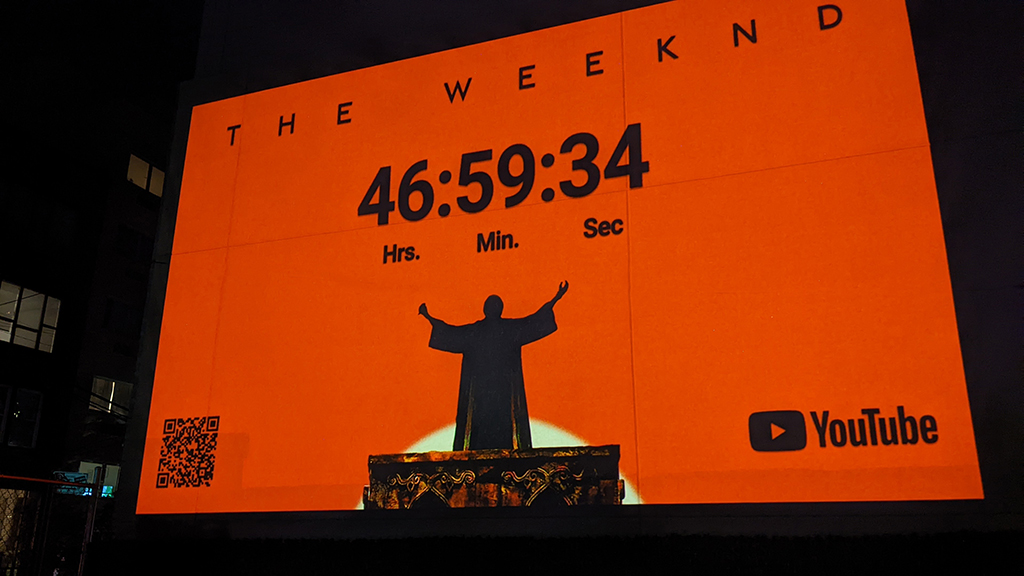
Projection media is technically demanding before it is creatively demanding. The geometry has to work. The ambient light has to cooperate. The wall has to take the image. We scout all of it before you book the equipment.
Learn More
University campuses have their own geography, their own pedestrian logic, and their own advertising rules. Our field operators map it all before a single dollar goes into production.
Learn More
AGM scouts corporate campuses, office parks, and business districts to identify the pedestrian zones, commuter corridors, parking approaches, and surface inventory where guerrilla marketing campaigns reach employees, contractors, and visitors at their daily access points.
Learn More
The best opportunity to reach a defined audience in a concentrated geographic zone happens in the hours before and after a major event. We map the entire perimeter, document every approach route, and rank every activation zone before the crowd arrives.
Learn More
A brand stunt in the wrong plaza is a brand stunt nobody sees. We find the exact intersection, courtyard, or public space where your target audience concentrates, document the logistics, research the permits, and hand you a site that works.
Learn More
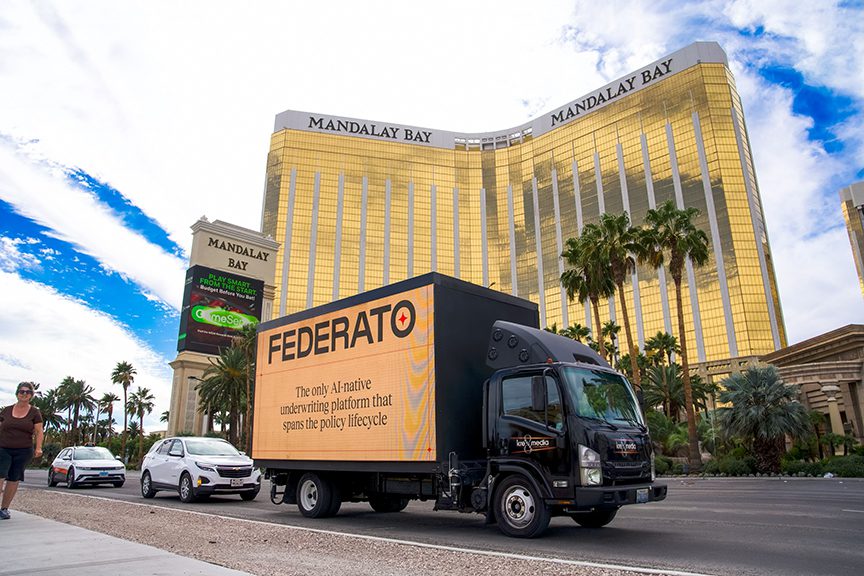
A billboard truck running the wrong corridor delivers impressions to an audience that was never the target. We map the routes that put your LED or static display in front of the specific people you need to reach, at the times they are actually there.
Learn More
A mural is a permanent statement. The wall you choose determines whether it gets seen by thousands daily or disappears behind a dumpster. We find the right wall before your production team touches a brush.
Learn More
Distribution campaigns fail when the neighborhood data is wrong. A door hanger campaign in the wrong building type, the wrong demographic zone, or a neighborhood with access barriers the crew was not briefed on burns print and labor on zero-return addresses. We fix that before the crew goes out.
Learn More
Actually, A mobile boutique parked in the wrong block is invisible to the audience you paid to reach. We find the locations where your pop-up will attract the people it needs, and document everything from loading access to permit requirements before you commit to a date.
Learn More
Snipe placements, sidewalk decals, and stencil campaigns all depend on knowing the specific poles, pavement, and intersections that your audience actually passes. We map that territory before your crew hits the street.
Learn More
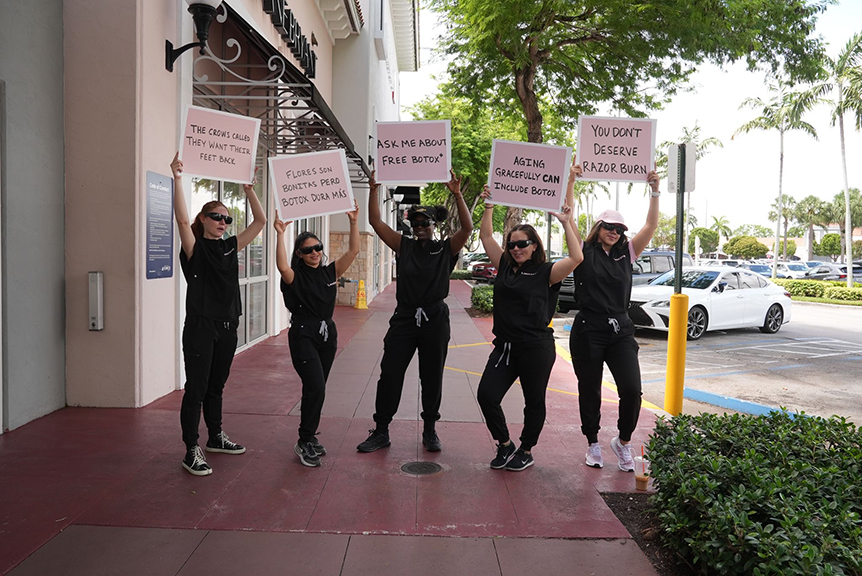
Brand ambassadors are only as effective as the zone they are deployed in. We identify the intersections, transit stops, and venue approaches where your exact target demographic concentrates, count the traffic, and confirm the deployment makes sense before your team hits the street.
Learn More
Subway exits, bus stops, and train stations concentrate thousands of people at defined physical points on a predictable daily schedule. We map those points, document the surface inventory within reach, and profile the commuter audience by line, exit, and time window.
Learn More
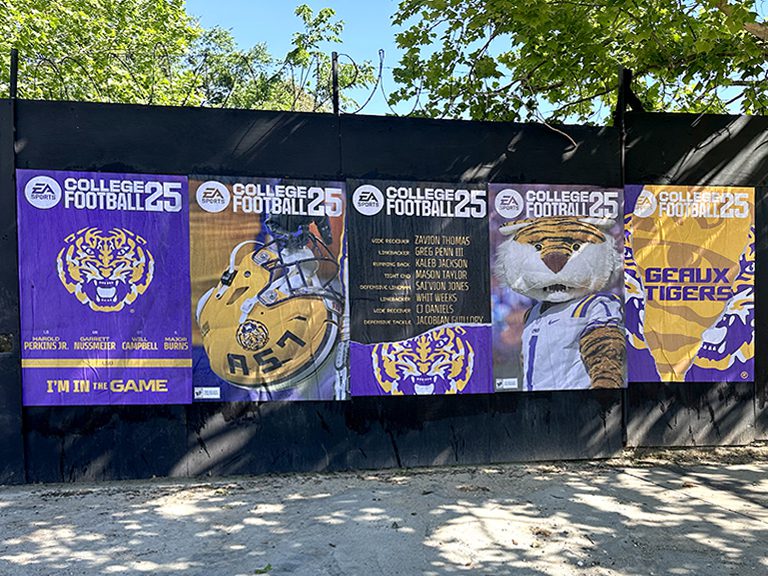
A wheatpaste campaign lives or dies on wall selection. The wrong surface peels in 48 hours. The wrong neighborhood tears posters down before the paste dries. We find the walls that work, in the neighborhoods where posting belongs.
Learn More
Local and regional businesses use neighborhood distribution scouting to identify the specific residential and commercial corridors where their target customer concentrates — delivering flyers, menus, and collateral to the blocks with the highest demographic alignment rather than blanket coverage that wastes budget on unreachable households.
Hyperlocal apps and food delivery services use distribution scouting to identify the dense residential blocks, transit corridors, and apartment complexes that generate the highest conversion per impression in each target market before planning delivery crew routes and timing.
Real estate developers, rental platforms, and moving services use neighborhood distribution scouting to map the residential corridors in transitioning neighborhoods where their target renter or buyer audience is actively looking — identifying the blocks worth saturating before a property launch.
Community organizations, political campaigns, and advocacy groups use distribution scouting to identify the specific block faces, transit stops, and community gathering points that deliver the most direct contact with their target constituent audience in each neighborhood.
Locked lobby buildings are documented in the access report with the specific barrier type: electronic key fob, intercom-only, doorman-screened, or actively secured by building security. For each locked building, we research whether the property management office accepts materials for community distribution through the management office or common area bulletin boards. Some locked buildings are accessible through a management contact; others are not accessible by any method that produces reliable per-unit delivery. The report distinguishes between these clearly so the campaign manager can exclude inaccessible buildings from the coverage count.
Crew efficiency varies significantly by building type and density. In a dense walkup apartment building with accessible lobby and clear floor plans, an experienced crew member can distribute to 80 to 120 units per hour. In a single-family residential neighborhood with houses spaced 50 feet apart and individual door approaches, efficiency drops to 25 to 45 units per hour. Our distribution scouting report documents the building type mix in the target zone and uses the appropriate efficiency rate for each type in the crew sizing calculation, rather than applying a single average rate to the entire territory.
Demographic assessment combines four data sources: published census block group data for age, income, and household composition; field observation of lifestyle indicators such as vehicle types, visible amenities, and commercial tenant mix; observed foot traffic demographics during the field walk; and any specific demographic indicators provided in the campaign brief. We do not rely exclusively on census data because demographic changes in rapidly gentrifying or declining neighborhoods can lag census publication by several years. Field observation catches current conditions that the data does not yet reflect.
Yes. Multi-neighborhood distribution scouting is a standard scope. We typically conduct the field walk across all target neighborhoods in a single engagement, which produces a unified coverage map and routing plan that can be used to execute the distribution in a single coordinated crew deployment. Multi-neighborhood scoping is more efficient than commissioning separate neighborhood reports when all areas will be covered in the same campaign window.
Door hangers are the most reliable format for apartment buildings with accessible lobby access, because they reach the individual unit door directly. For buildings where lobby access is unavailable, take-one placement at nearby commercial nodes serving the same building’s residents (the corner grocery, laundromat, or coffee shop that the building uses) provides a viable alternative reach mechanism. Hand-to-hand distribution at the building exits during morning and evening resident flow periods is a third option for buildings where the timing allows stationary ambassador deployment at the exit.
Our distribution scouting report is designed for physical crew distribution campaigns (door hangers, take-ones, hand-to-hand) rather than postal mail programs. The building access and crew logistics documentation is specific to physical crew operations. USPS Every Door Direct Mail (EDDM) campaigns use USPS route data rather than field-scouted access documentation. If your campaign combines EDDM and physical crew distribution in the same geography, our report informs the physical distribution component specifically.
Coverage duration depends on the number of units targeted, the building type mix, and the crew size deployed. A 2,000-unit target zone with 60 percent apartment and 40 percent single-family housing might require 6 to 8 crew hours with a two-person team, or 3 to 4 hours with a four-person team. Our crew sizing and routing plan in the scouting report provides a specific estimate for the target zone based on the actual building type data documented during the field walk, not a generic average.
Yes. Some clients use take-one placement as the primary distribution method rather than residential door delivery, targeting the commercial locations where the audience congregates rather than their homes. A take-one placement campaign scouting engagement focuses entirely on the commercial node inventory: identifying the specific businesses, documenting the ownership contact, assessing daily customer volume, and noting any restrictions on take-one materials at each location. This is a narrower scope than the full neighborhood distribution report but can be delivered as a standalone engagement.
Outdoor distribution in residential neighborhoods is affected by weather in obvious ways: rain and wet conditions damage materials. But seasonal timing also affects resident behavior that influences distribution effectiveness: summer vacation periods reduce the at-home rate for single-family suburban neighborhoods; academic calendar cycles affect student housing concentration; holiday periods reduce the resident population in high-second-home neighborhoods. Our scouting report notes any seasonal factors relevant to the target neighborhood type that affect the optimal campaign timing.
Neighborhood Distribution Scouting scouting reports deliver in 7 to 10 business days from confirmed brief receipt. The brief should specify the target neighborhoods or zip codes, the distribution format (door hanger, take-one, hand-to-hand, or combination), the target household or unit count, the campaign audience demographic profile, and the planned distribution date range so the field walk can prioritize the zones and building types that match the campaign’s parameters most precisely.
AGM operates a national network of field operators. We have scouted campaigns in every U.S. state and the District of Columbia. Whether your campaign targets a dense urban core or a suburban retail corridor, we have operators who know the territory.