American Guerrilla Marketing

Nationwide serivce

Media planning, media buying, billboard advertising, & guerrilla marketing

Street Advertising Location Scouting

Snipe placements, sidewalk decals, and stencil campaigns all depend on knowing the specific poles, pavement, and intersections that your audience actually passes. We map that territory before your crew hits the street.

Street Advertising Location Scouting

The Physical Intelligence Behind Street Advertising

We’ve walked the commercial corridors we recommend, confirming pole viability, pavement conditions, and sightline quality in person before including any surface in a client scouting report. Street advertising formats look straightforward from a distance: put something on a pole, stamp something on the sidewalk, it gets seen. The execution reality is more layered. Every pole has a different hardware configuration that determines whether a snipe attaches cleanly. Every stretch of pavement has a different surface composition that determines how a decal or stencil holds. Every intersection has a pedestrian direction of travel that determines which side of the pole is the face and which side is the back.

For Street Advertising Location Scouting campaigns, AGM brings boots-on-the-ground field intelligence from a nationwide operator network covering all 50 states. Our Street Advertising Location Scouting operators walk every target corridor on foot, confirming pole surface viability, pavement conditions, and intersection foot traffic patterns in person before any Street Advertising Location Scouting location enters a client report. Get in touch to start your Street Advertising Location Scouting brief.


Surface Selection Drives Street Advertising Results

Campaign performance lives and dies on location selection. AGM's field team makes sure your locations are chosen for the right reasons.

How We Do It

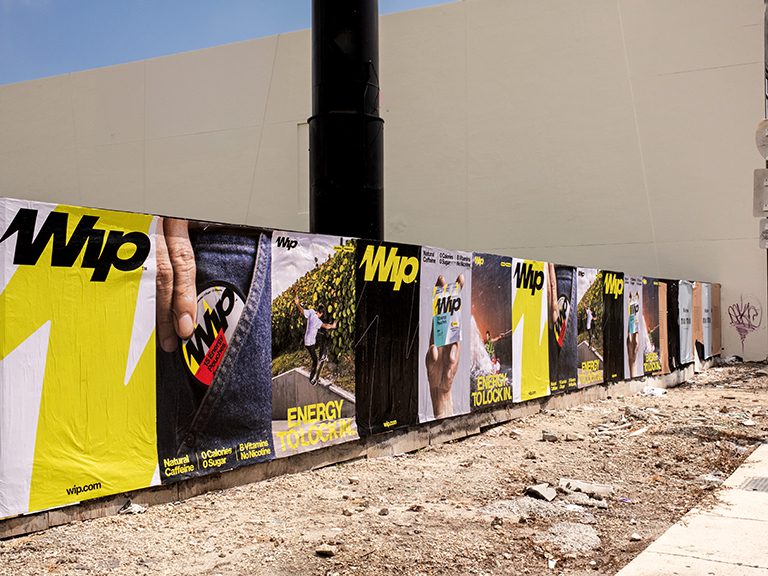
Our street advertising location scouting process runs in four steps. First, we walk the target geography on foot to identify candidate surfaces: building faces, construction hoardings, utility infrastructure adjacencies, and any other physical surfaces that carry foot-traffic-visible exposure in the target zone. Second, we assess each candidate for traffic count, viewing angle, competitive clutter from existing signage, and surface condition. Third, we document ownership and any relevant municipal regulations around non-permitted street-level advertising placements. Fourth, we deliver a prioritized inventory with traffic estimates, photo documentation, surface measurements, and our recommended sequencing for a campaign rollout.

This service type is led by AGM field operators Tom Ferrara and Jake Schuler, who between them have assessed and documented street advertising locations across more than 65 markets in 44 states. No street advertising location enters a client brief at AGM without boots-on-ground field evaluation — every surface is walked and assessed before it reaches the client. That’s not a policy — it’s how this team works.

Street Advertising Location Scouting surface assessment at the specialist level covers pole inventory by neighborhood block, pavement condition and decal adhesion viability, intersection foot traffic geometry, sight distance from the pedestrian approach, and regulatory environment mapping for snipe, decal, and stencil formats. Our Street Advertising Location Scouting operators build this intelligence from on-foot corridor walks.

Getting this wrong wastes print materials and install time. A snipe placed on the wrong side of a pole at a one-way intersection shows to zero pedestrians. A sidewalk stencil applied on pavers with a sealed grout joint fails differently than one on monolithic concrete with an open pore structure. These details live in the street, not in a map view.

AGM street advertising scouting puts a field operator on every block in scope with a camera and a pole assessment checklist. They document the hardware at each candidate fixture, photograph the pavement surface from a crew access angle, and note the pedestrian approach direction at each intersection. What comes back is a report the crew can execute from without needing to problem-solve on install night.

AGM street advertising scouting delivers pole route maps, pavement spec reports, intersection priority rankings, crew coverage routing plans, and photo documentation for every approved surface. Delivered in 7 to 10 business days.

For Street Advertising Location Scouting campaigns, AGM brings specialist-level knowledge of pole inventory, pavement surfaces, and intersection dynamics from a nationwide field operation. Our Street Advertising Location Scouting operators walk every target corridor on foot, confirming surface viability and foot traffic patterns in person. Get in touch to start your Street Advertising Location Scouting brief.

Format-Specific Scouting: What We Look For

Snipe Advertising: Utility Pole Inventory

A snipe campaign lives on the utility pole and fixture infrastructure of a given corridor. Not all poles are equal. Wood utility poles accept staple or tack-based snipes differently than they accept cable-tie snipes. Traffic signal poles and street sign posts typically have a different attachment methodology. Traffic control boxes, the metal cabinets that house traffic signal electronics, are found at most major intersections and offer a large flat posting surface that is legally distinct from the pole infrastructure in most municipalities.

Our pole inventory for snipe campaigns documents: pole type (wood, metal, concrete), hardware condition (surface rust, existing hardware, previous snipe remnants), pedestrian approach direction, effective posting height (minimum 5 feet above ground per most municipal regulations), and any regulatory signage on the pole indicating a restricted zone. Poles adjacent to school zones, hospital driveways, and government buildings often carry restrictions that affect campaign planning.

For more on the snipe format itself, see AGM’s snipe advertising service.

Sidewalk Decals: Pavement Surface Assessment

Sidewalk decal adhesion depends entirely on the pavement surface. Smooth, clean concrete with minimal aggregate exposure and no sealer coating is the best surface for standard vinyl decal application. Brick pavers with grouted joints create an irregular surface that lifts decal edges within days. Stamped concrete with a release agent coating resists adhesion. Asphalt is generally not suitable for vinyl decal campaigns because the petroleum-based surface chemistry rejects the adhesive.

Our pavement assessment for decal campaigns documents: surface material (concrete, brick, asphalt, bluestone, granite), surface texture and aggregate exposure level, any visible sealer or coating, existing contamination (oil, gum, paint), and drainage slope that affects runoff behavior during rain. Each assessed surface gets a go or no-go recommendation with specific notes for the install crew on surface prep requirements.

For more on the sidewalk decal format, see AGM’s sidewalk decal service.

Sidewalk Stencils: Pavement and Environmental Assessment

Sidewalk stencil campaigns are more forgiving than vinyl decals in terms of surface compatibility, because spray paint can be formulated for more surface types than adhesive vinyl. However, stencil scouting has its own specific requirements: the pavement surface needs to be dry enough to hold paint, not smooth enough to cause spray bleed under the stencil, and located in a position where the stencil can be held flat against the surface during application.

Our stencil surface assessment documents: surface material and condition, local wind patterns that affect spray control in open intersection environments, drain proximity (runoff carries fresh paint into storm drains), and the sightline geometry from the pedestrian approach direction to ensure the stencil design reads correctly from the walking angle.

See AGM’s sidewalk stencil service for format details and application specifications.

Environment Types That Drive Different Scouting Approaches

Dense Urban Environments

In high-density urban cores like Midtown Manhattan, the Loop Chicago, or downtown San Francisco, the pole and pavement inventory is dense and the foot traffic is high, but so is the regulatory and enforcement environment. Urban scouting prioritizes intersections with maximum pedestrian dwell time (waiting for signals), documents the presence of BID cleaners who remove street advertising on specific schedules, and identifies surface conditions affected by heavy pedestrian wear and cleaning cycles that reduce dwell time for decal and stencil campaigns.

Suburban Commercial Strips

Suburban commercial corridors, shopping districts along arterial roads, and lifestyle retail clusters in suburban markets have different pole and pavement characteristics than dense urban environments. Poles are spaced farther apart, pedestrian density is lower but more predictable in timing, and pavement surfaces in suburban commercial zones are often newer and better maintained. Scouting in suburban environments focuses on the sections of the corridor where pedestrian concentration actually occurs: around anchor retailers, near transit stops, and in the sections with continuous sidewalk coverage rather than parking lot frontage.

University Neighborhoods

University corridor scouting for street advertising is described in more detail in our college campus reconnaissance service, but the specific street advertising component covers the pole and pavement inventory on the primary pedestrian corridors between campus and off-campus housing and nightlife. The pole density in university neighborhoods is typically high, the pedestrian volume is predictable by academic schedule, and the removal pressure varies significantly by block depending on proximity to campus-managed property versus municipal streets.

Nightlife Corridors

Street advertising in nightlife districts serves a different audience state than daytime campaigns: people in social mode, often in groups, moving at slower pace than commuters. Snipe placements in nightlife corridors need to account for the fact that the target audience passes the same poles multiple times over an evening. High dwell-time intersections where people gather before entering venues or wait for rideshare pickups are priority targets. Our operators document these zones with time-of-night observation to capture the specific crowd patterns that make nightlife corridor placements effective.

Certified placement experts with licensed field credentials manage the street advertising location scouting inventory — every recommended surface assessed firsthand before entering the active placement record.

Map Your Street Advertising Zone

    Award Winning Personalized Service

    You will get thoughtful, devoted, and individualized attention from our experienced, qualified, and professional personnel. Being one of the most illustrious agencies in Brooklyn, New York, American Guerrilla Marketing has been awarded the Best of Brooklyn title.

    Nationwide

    Industry City, Brooklyn, New York 11232

    American Guerrilla Marketing

    +1 (646) 776-2770

    [email protected]

    Telegram: @americanguerillamarketing

    Hours

    Mon - Fri: 9 AM - 5 PM

    Sat & Sun: Closed

    Automate your campaign with AGM’s Request for Proposal Builder.

    Automate your campaign with AGM’s Request for Proposal Builder. Simply answer a few quick questions about your campaign goals, markets, and timeline, and the system will generate a tailored presentation with recommended strategies, quantities, and pricing. Click the RFP Builder to instantly receive your customized proposal.

    Deliverables: The Street Advertising Scouting Report

    Pole Route Map

    A georeferenced map of approved snipe placements across the campaign zone, with routing designed for crew efficiency. The route map sequences the pole placements in the order that minimizes crew travel distance and maximizes installation speed per hour of field time. For multi-crew campaigns, the map segments the territory into parallel crew zones with defined start and end points.

    Pavement Spec Report

    A block-by-block inventory of sidewalk surface conditions for the campaign zone, formatted for decal or stencil format selection. Each segment gets a surface material classification, a condition rating, and format-specific install notes for the crew. Surfaces that require cleaning or prep before application are flagged with the specific prep requirement.

    Intersection Priority Ranking

    A ranked list of priority intersections within the campaign zone based on pedestrian volume, sightline quality, and surface conditions. Priority ranking helps clients with limited campaign budgets concentrate placements where the return per install is highest, rather than spreading spend evenly across a larger area with mixed performance.

    Crew Coverage Routing Plan

    A routing plan for the install crew that sequences the approved placements in efficient order, accounts for parking and crew access logistics, and identifies any time-sensitive installation windows at specific surfaces. Multi-crew routing plans segment the territory to eliminate overlap and ensure complete coverage within the planned install window.

    Photo Documentation

    Every approved pole, surface segment, and intersection is photographed from the pedestrian approach direction and the crew access angle. Photos are labeled and compiled in the report so the crew recognizes each location on install night without needing to search for it in the dark.

    Transit Stop Adjacency: A Special Priority Zone

    Transit stops sit at the intersection of all three street advertising formats and deserve their own discussion. The sidewalk within 20 feet of a bus stop or above-ground rail stop concentrates pedestrians who are standing still, looking around, and not rushing anywhere for 2 to 8 minutes. A utility pole directly adjacent to a bus stop bench serves a captive audience. Pavement at the transit stop landing zone, if the surface quality is good, accepts decal and stencil formats that the waiting audience reads at a normal reading pace rather than in a half-second peripheral glance. Our operators prioritize transit stop adjacencies in every street advertising scout and document the surface inventory at each stop separately from the general corridor inventory.

    Working With AGM on Street Advertising Execution

    Once the scouting report is delivered and approved surfaces are selected, AGM executes the street advertising campaign through our specialized format services. Snipe advertising installation uses the pole inventory from the scouting report as its operational guide. Sidewalk decal crews follow the pavement spec report to deploy to only the surfaces that will hold for the campaign window. Sidewalk stencil teams follow the pavement and wind assessment notes to select the right install windows and surface positions. When the same team that scouted the route executes the campaign, the operational knowledge is retained rather than lost in translation between a scouting report and a separate install crew. This continuity between scouting and execution is one of the specific advantages of commissioning both through AGM rather than splitting the work between vendors. For a complete overview of street-level campaign services, see AGM’s guerrilla marketing services.

    Bar and Venue Scouting

    Bar and Venue Scouting

    The right venue reaches your audience when they are relaxed, social, and receptive. Finding that venue requires field research, not a Yelp search. We identify and vet the bars, restaurants, and nightlife spots that match your brand and your target audience.

    Learn More
    Building Projection Scouting

    Building Projection Scouting

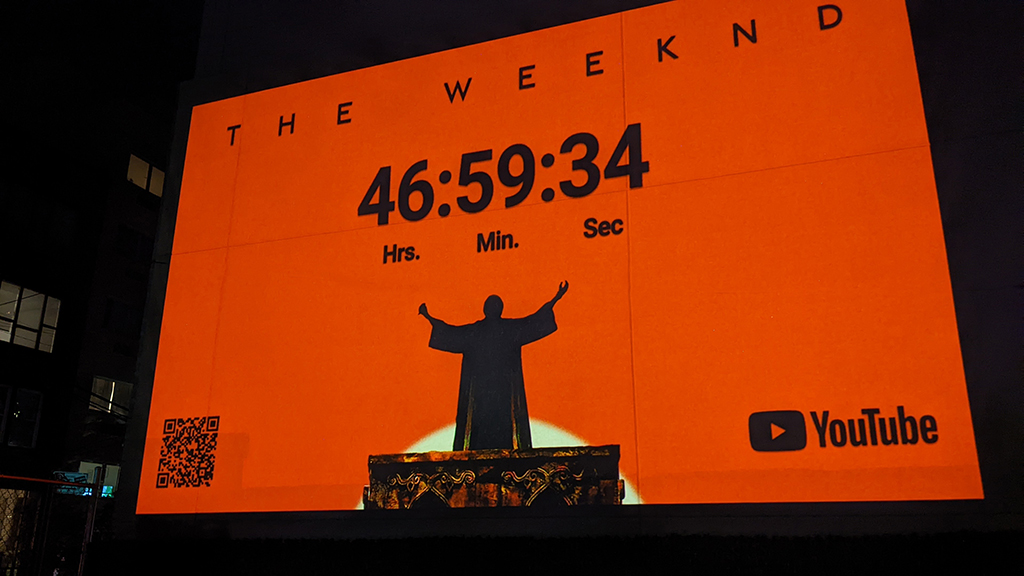
    Projection media is technically demanding before it is creatively demanding. The geometry has to work. The ambient light has to cooperate. The wall has to take the image. We scout all of it before you book the equipment.

    Learn More

    All Scouting Services

    College Campus Reconnaissance

    College Campus Reconnaissance

    University campuses have their own geography, their own pedestrian logic, and their own advertising rules. Our field operators map it all before a single dollar goes into production.

    Learn More
    Corporate Campus Reconnaissance

    Corporate Campus Reconnaissance

    AGM scouts corporate campuses, office parks, and business districts to identify the pedestrian zones, commuter corridors, parking approaches, and surface inventory where guerrilla marketing campaigns reach employees, contractors, and visitors at their daily access points.

    Learn More
    Event and Festival Scouting

    Event and Festival Scouting

    The best opportunity to reach a defined audience in a concentrated geographic zone happens in the hours before and after a major event. We map the entire perimeter, document every approach route, and rank every activation zone before the crowd arrives.

    Learn More
    Guerrilla Activation Scouting

    Guerrilla Activation Scouting

    A brand stunt in the wrong plaza is a brand stunt nobody sees. We find the exact intersection, courtyard, or public space where your target audience concentrates, document the logistics, research the permits, and hand you a site that works.

    Learn More
    Mobile Billboard Route Scouting

    Mobile Billboard Route Scouting

    A billboard truck running the wrong corridor delivers impressions to an audience that was never the target. We map the routes that put your LED or static display in front of the specific people you need to reach, at the times they are actually there.

    Learn More
    Mural Location Scouting

    Mural Location Scouting

    A mural is a permanent statement. The wall you choose determines whether it gets seen by thousands daily or disappears behind a dumpster. We find the right wall before your production team touches a brush.

    Learn More
    Neighborhood Distribution Scouting

    Neighborhood Distribution Scouting

    Distribution campaigns fail when the neighborhood data is wrong. A door hanger campaign in the wrong building type, the wrong demographic zone, or a neighborhood with access barriers the crew was not briefed on burns print and labor on zero-return addresses. We fix that before the crew goes out.

    Learn More
    Pop-Up Location Scouting

    Pop-Up Location Scouting

    Actually, A mobile boutique parked in the wrong block is invisible to the audience you paid to reach. We find the locations where your pop-up will attract the people it needs, and document everything from loading access to permit requirements before you commit to a date.

    Learn More
    Street Advertising Location Scouting

    Street Advertising Location Scouting

    Snipe placements, sidewalk decals, and stencil campaigns all depend on knowing the specific poles, pavement, and intersections that your audience actually passes. We map that territory before your crew hits the street.

    Learn More
    Street Team Location Scouting

    Street Team Location Scouting

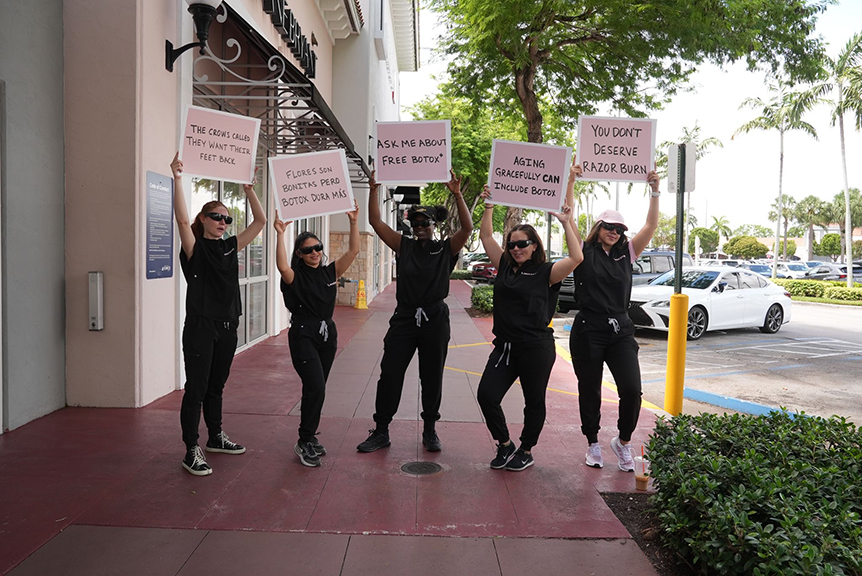
    Brand ambassadors are only as effective as the zone they are deployed in. We identify the intersections, transit stops, and venue approaches where your exact target demographic concentrates, count the traffic, and confirm the deployment makes sense before your team hits the street.

    Learn More
    Transit Adjacency Scouting

    Transit Adjacency Scouting

    Subway exits, bus stops, and train stations concentrate thousands of people at defined physical points on a predictable daily schedule. We map those points, document the surface inventory within reach, and profile the commuter audience by line, exit, and time window.

    Learn More
    Wheatpaste Location Scouting

    Wheatpaste Location Scouting

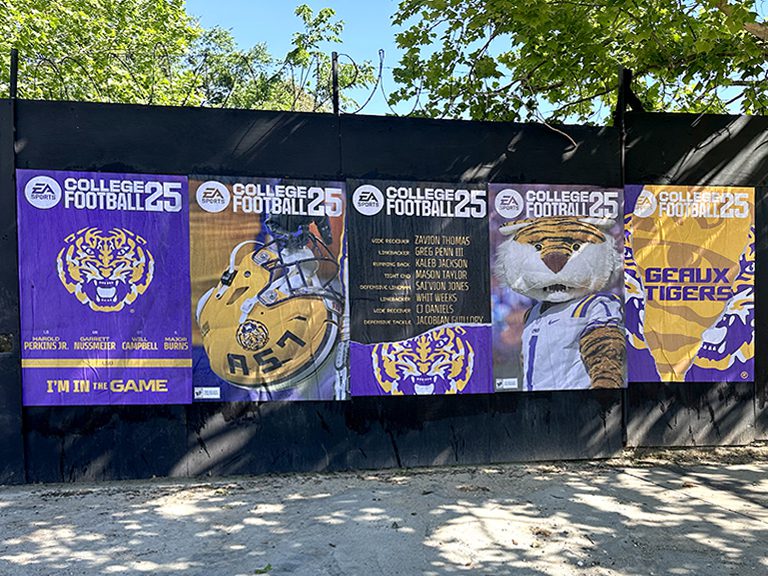
    A wheatpaste campaign lives or dies on wall selection. The wrong surface peels in 48 hours. The wrong neighborhood tears posters down before the paste dries. We find the walls that work, in the neighborhoods where posting belongs.

    Learn More

    What Brands Use AGM Street Advertising Location Scouting For

    Retail and Consumer Brands

    Retail chains and consumer brands entering new markets use street advertising scouting to identify the highest-impression pedestrian corridors adjacent to their target shopper’s daily route — ensuring outdoor placements reach the right audience at the right moments rather than defaulting to expensive media buys on corridors that look good on a media plan but underdeliver on the ground.

    Entertainment and Media Companies

    Studios, labels, and entertainment platforms use street advertising scouting to identify the commercial corridors adjacent to their target audience’s entertainment districts — placing outdoor campaigns in the blocks surrounding concert venues, theaters, and nightlife corridors where their audience is already spending their media budget mentally.

    Health, Fitness, and Wellness Brands

    Gym chains, wellness apps, and health brands use street advertising scouting to identify the commuter corridors and residential neighborhood commercial strips where their target health-conscious consumer passes on their daily routine — morning run routes, transit corridors near fitness studios, and the blocks between residential neighborhoods and commercial centers.

    Financial Services and Professional Brands

    Financial brands, insurance companies, and professional services use street advertising scouting to identify the downtown office corridors, transit station adjacencies, and business district pedestrian zones where the working professional audience they’re targeting concentrates daily at the highest density.

    Frequently Asked Questions About Street Advertising Location Scouting

    The correct side faces the direction of primary pedestrian travel. At a two-way intersection, the operator documents the dominant pedestrian flow direction. On a one-way block with a defined pedestrian corridor along one side, the face placement is toward that corridor. Our pole inventory documents the correct face side for every approved pole so the install crew does not have to make this judgment call on the night of the run.

    Yes, and they vary by city and by pole type. Many municipalities prohibit advertising on public utility poles, traffic signal poles, and street sign posts. Enforcement varies significantly between cities and between neighborhoods within the same city. Our scouting documents the applicable regulatory environment for each corridor and the observed enforcement pattern based on field evidence of existing snipe removal versus non-removal. We do not guarantee regulatory immunity; we provide the intelligence to make informed decisions.

    No. Sidewalk vinyl decal adhesion requires a smooth, clean, non-porous surface. Sealed concrete, brick pavers, asphalt, and surfaces with heavy contamination do not hold vinyl decals reliably. Our pavement assessment identifies and excludes surfaces that are likely to fail within the first 48 hours of a campaign, which is the minimum window that justifies the print and install cost.

    Some cities have active BID enforcement teams, city street cleaning programs, or dedicated signage removal crews that operate on daily or twice-weekly schedules. Our scouting documents the observed removal frequency in each zone based on field evidence of fresh versus aged postings on existing surfaces. Campaign planning for high-removal markets adjusts for shorter effective dwell times per placement and factors in refresh runs if the campaign window requires sustained coverage.

    Yes. Multi-format street advertising scouting covers all applicable surface types in the same engagement. The report is segmented by format but covers the same geographic zone, giving the campaign team a unified view of every physical advertising opportunity in the target corridor. This is more efficient than commissioning separate format-specific scouts for the same geography.

    The crew routing plan documents the recommended vehicle parking position for each segment of the route, based on street parking availability and proximity to the install zone. It notes any segments where the install crew needs to work on foot from a parked vehicle versus drive the route. For overnight campaigns, the routing also accounts for street cleaning windows that restrict parking in specific zones during the night hours.

    Utility pole density in dense urban areas varies by city infrastructure. In a typical residential-to-commercial transition corridor, expect 3 to 6 utility poles per block face. Primary commercial corridors with overhead utility lines may have higher density. Residential blocks with underground utilities have few or no utility poles, redirecting snipe campaigns to traffic signal poles, parking meter posts, and bollards where tactically appropriate.

    Yes. Some intersections are optimized for vehicle-facing placements on high-speed arterials where drivers approach an intersection. Others are optimized for pedestrian-facing placements at crosswalk-heavy corners where people wait for signals. Our intersection assessment documents both the vehicle approach angle and the pedestrian waiting position to determine which audience the placement primarily serves and which side of each pole or fixture captures that audience.

    Transit stops are high-priority scouting targets for street advertising. Bus stop areas concentrate pedestrians in a fixed location with a dwell time of 2 to 10 minutes per person, far longer than the second-or-two exposure that comes from walking past a pole. Poles and surfaces within 20 feet of a transit stop get a specific priority designation in our scouting report, and the pavement at bus stop landing zones is assessed for both decal and stencil suitability given the heavy foot traffic and frequent cleaning that characterize these surfaces.

    Street Advertising Location Scouting scouting reports deliver in 7 to 10 business days from confirmed brief receipt. The brief should specify the target corridors or neighborhoods, the format types (snipe, decal, stencil, or combination), the campaign date range, and any specific audience or demographic filters that should inform priority intersection ranking. This information gets the field operator moving with clear parameters on the first day of the walk.

    AGM Scouting Coverage: All 50 States and D.C.

    AGM operates a national network of field operators. We have scouted campaigns in every U.S. state and the District of Columbia. Whether your campaign targets a dense urban core or a suburban retail corridor, we have operators who know the territory.

    No locations found

    American Guerrilla Marketing Blog Posts