
November 11, 2026
Planning LED Trucks & Mobile Billboards in Jacksonville
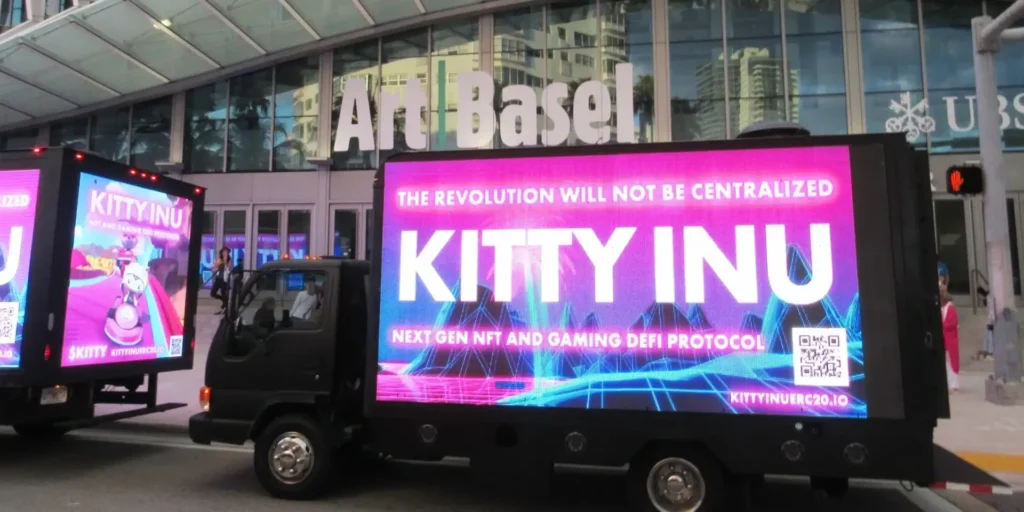
Every other format we run in Jacksonville fights the city's geography. This one uses it.
Jacksonville's consolidated city and county boundary makes it one of the largest cities in the United States by land area. The cultural districts where street-level advertising works are small, walkable and miles apart, and everything between them is driven. For poster work, snipe work and ground graphics, that is a constraint you plan around. For a mobile billboard, it is the audience.
The people you cannot reach with anything else in this market are in cars. They are on the bridges, on the arterials, on the approaches to the beaches, in the Southside, crossing between the north bank and the south bank twice a day. A truck goes where they are.
That does not make it simple. A mobile billboard campaign in a city this spread out is won or lost on routing discipline, and Jacksonville has a specific feature that dominates route planning: the St Johns River cuts the city in half and the bridges decide how long everything takes.
There is also a timing trap here that catches people working from an older media calendar, and it has to do with the stadium.
This page covers how we plan LED Trucks & Mobile Billboards in Jacksonville: how routing actually works around the river, which hours earn their keep in which parts of the city, what the climate does to a screen on wheels, where the permission grey area sits, and what we argue clients out of.
Why this format fits Jacksonville better than it fits most cities
Most markets have a dense core where a truck competes with everything else for attention and a sprawling edge where there is nobody to see it. Jacksonville's shape is different, and it is different in a way that suits a mobile screen.
The walkable districts are genuinely small. Five Points, which formed in the late 1800s around Park Street and Lomax Street and remains the city's counterculture and independent-retail node, is compact enough to work on foot in an hour. The King Street District in Riverside is the same. San Marco's square is a single-stop district. The Shoppes of Avondale is a short strip. Add them all together and you have a fraction of the population's daily movement.
Everything else is vehicular. That is where the majority of the market actually spends its commuting and errand time, and a static format has no answer for it.
A mobile billboard does. It can be on a corridor at the hour the corridor is busy, move to a second corridor when the first thins out, and sit where a crowd is gathering when there is a crowd to sit next to. In a city where the parts worth walking are small and the parts worth driving are enormous, that flexibility is worth more than it would be in a compact market.
One honest limitation up front. A truck is a reach format, not a dwell format, outside of the moments when traffic slows or a crowd gathers. A driver at speed on an open arterial gets a glance. That is fine if the creative is built for a glance and a disaster if it is built like a print ad.
Routing around the St Johns, and why bridges change the maths
The river is the single most important fact in Jacksonville route planning.
The St Johns splits the city, and bridge routing dictates travel time between the north bank districts and the south bank. A route that looks efficient on a map, hopping between pins by proximity, can cost an extra crossing and a chunk of the shift. We plan Jacksonville routes to minimise crossings rather than to minimise distance, and those are different optimisations that produce different answers.
In practice that means a shift is usually structured as a bank at a time. Work the north bank corridors and the downtown core, cross once, work the south bank. Not back and forth.
The crossings themselves are worth thinking about carefully rather than treating purely as a cost. When bridge approaches slow at peak, traffic is moving at a pace where a screen is readable for a sustained period rather than glimpsed. That is the opposite of an open arterial, where the exposure is a second and a half. A route that sits on a crossing approach during a busy period is buying a different and generally better quality of attention than the same truck doing laps of a fast road.
The other routing fact is that drive time between the cultural districts is working time, not transit. Five Points to San Marco to Springfield to downtown are legs of the job in a city this large. If a client wants presence in four districts plus the Southside plus a beaches run in one shift, the honest answer is that most of that shift is spent driving between places rather than being seen in them. We would rather cover two or three areas properly.
Expect stadium construction traffic to affect downtown and the sports-complex approaches through 2026 and 2027. For a format that lives in traffic, that is a mixed thing: congestion creates dwell, and it also creates access problems and unpredictable timings. It gets built into route planning rather than ignored.
Where a truck earns its hours in this city
Jacksonville has a strong daily rhythm and the format should follow it rather than running a flat route all day.
Downtown during office hours. Downtown Jacksonville's daytime office activity is substantial while its evening activity is weaker. That makes the downtown core a daytime proposition for a mobile billboard: commuter movement in the morning, pedestrian flow at lunch, outbound traffic in the late afternoon. During a convention at the Prime Osborn Convention Center there is additional daytime pedestrian volume in the core, and a truck positioned near that flow is seen by people on foot as well as in cars.
Downtown after dark is the trap. The same core empties in the evening. A truck circling downtown Jacksonville at nine at night is burning hours on a street with very few people on it. This is the single most common routing mistake we see in this market, and it comes from applying a big-city night-routing assumption to a downtown that does not behave like one.
Five Points and King Street in the evening. These districts have real bar and restaurant trade, so the evening audience is there. The limitation is physical: the streets are tighter and a truck has less room to position and move. We treat them as targeted evening passes rather than extended loops.
Arterials and commuter corridors at peak. This is the bread and butter of the format in Jacksonville and the part no other format can do. Morning and late afternoon peaks, with routing weighted toward whichever bank the target audience commutes from.
Riverside and Avondale residential streets, essentially never. These are historic residential neighbourhoods with organised, preservation-minded residents. A large illuminated vehicle idling on a tree-lined Avondale street generates complaints, and those complaints move quickly through active neighbourhood associations. There is nothing to gain there that cannot be gained more cleanly from the commercial strips.
Event approaches and parking flow. When something is on, the approach routes and the parking exodus are where a truck does its best work. People in a queue to park, or crawling out of a lot afterwards, have time to read.
Heat, sun and salt on a screen that moves
The Jacksonville climate is humid subtropical: long hot humid summers with frequent afternoon thunderstorms, mild winters punctuated by short cold waves, and around 234 days of sunshine a year with summer temperatures running from the mid-seventies into the mid-nineties Fahrenheit.
What that means for a vehicle-mounted screen.
Daytime brightness is the real specification question. An LED screen competing with direct north Florida sun on a clear day needs genuine output to stay readable. The city's high sunshine count means most daytime routing happens in exactly those conditions. Creative that relies on fine detail, small type or low-contrast colour will not read at midday here. High contrast, few words, large forms. That is a constraint worth accepting at the artwork stage, because it cannot be fixed on the road.
Heat is an equipment-management issue. Sustained high summer temperatures put thermal load on screen and vehicle systems during long shifts in direct sun. That is a maintenance and scheduling consideration rather than a reason not to run, but it is why summer shifts get planned with realistic duty cycles rather than assuming a truck can sit in the sun indefinitely at full output.
Afternoon thunderstorms disrupt summer scheduling. Frequent convective storms through the summer mean that a planned late-afternoon peak run can lose its audience to the weather. Trucks keep running in rain in a way that a pasted poster cannot be installed in rain, so this is less catastrophic than it is for other formats, but visibility drops and traffic patterns change.
Winter is the easy season. Milder, drier air, lower storm frequency, better conditions for long shifts, and darkness arriving earlier, which extends the hours when an illuminated screen has maximum visual advantage. The short cold waves that cross Jacksonville are a comfort matter, not an operational one. There is no sustained freeze or ice season to plan around here, which is a real advantage over northern markets where winter mobile work involves genuine road risk.
Salt exposure is coastal, not citywide. The beaches communities and the St Johns River mouth see genuine marine air. A vehicle running regular beaches routes needs the corrosion attention any coastal-operating vehicle needs. A truck working downtown, Riverside and the Southside is inland enough that this is not a meaningful factor.
Hurricane season discipline applies. Jacksonville sits inside the Atlantic hurricane season footprint. Late summer and autumn bookings carry a stated plan for what happens to scheduled shifts if a named storm is tracking toward the region.
Permission, dwell and the grey area
Mobile billboard regulation varies by municipality more than almost any other outdoor format, and the rules that exist tend to bite on standing still rather than on driving.
We have not verified Jacksonville's specific municipal provisions covering mobile advertising, vehicle signage or dwell on public streets. We will not put a code section in front of a client without checking the current municipal code directly, and we would treat any operator who recites one from memory as unreliable. Mark that unverified. This sits in a grey area that depends on local ordinance, on where the vehicle is, and on whether it is moving or stationary, and it varies between jurisdictions within the wider region.
Two things that are worth knowing regardless of the code position.
The Jacksonville metropolitan area is not one jurisdiction. The consolidated city covers an enormous area, but the beaches communities and neighbouring areas like Ponte Vedra are their own places with their own rules. A route that crosses those boundaries crosses regulatory boundaries too, and that gets checked for the specific route rather than assumed.
Private property dwell is the clean option. Where a campaign wants a truck stationary for a sustained period, the defensible version is a private lot with the owner's written permission. Event parking areas, private commercial lots and construction site frontage where the developer controls the ground are all negotiable commercially. Downtown development including the ongoing stadium redevelopment is developer-controlled, and those conversations are with the site team.
How we reduce risk on a Jacksonville mobile campaign: route planning that respects jurisdictional boundaries, written permission for any extended stationary position on private ground, documentation of the route and the positions worked, and a policy of moving on rather than arguing when a property manager or a resident objects. That last one is practical rather than legalistic. An operator who digs in over a parking spot creates a story. An operator who moves creates nothing.
The neighbourhood dimension matters here too. Riverside, Avondale, San Marco and Springfield are historic residential neighbourhoods where residents are organised and attentive. An illuminated vehicle holding position on a residential street at night in those neighbourhoods will draw a response. We route around that rather than testing it.
The calendar, and the places a truck can reach that nothing else can
The Jacksonville event calendar has changed in a way that has to be understood before planning.
The Stadium of the Future construction project has displaced several of the city's biggest annual events. Local reporting is explicit that there is no Monster Jam and no Florida versus Georgia game in Jacksonville in 2026, and that neither event happens in Jacksonville in 2027 either. If your plan was built around routing trucks to that weekend's traffic, it is built on an event that is not taking place.
Here is where the mobile format has a genuine structural advantage over everything else we run.
THE PLAYERS Championship in March at TPC Sawgrass draws a major national golf audience, but it takes place in Ponte Vedra, outside Jacksonville proper. For a poster campaign in Riverside that is a problem, because the footfall benefit to the arts districts is indirect and shows up in hotels, restaurants and the airport corridor rather than on Five Points frontage. A truck does not have that problem. A truck can run the approach corridors, the hotel concentrations and the airport routes where that audience actually is. This is the clearest example in the Jacksonville year of a mobile format reaching an audience that a static one structurally cannot.
The rest of the calendar worth routing against:
– Gate River Run in March and 26.2 with DONNA in February. Large participatory road races put thousands of people in a known area at a known hour, with heavy approach and departure traffic on both sides of the event.
– Collective Con, three days of comics, anime, gaming, cosplay, voice actors and live music. Strong fit for entertainment and culture brands, with predictable approach and parking flow across three days.
– Jax Home & Patio Show at the Prime Osborn Convention Center, generating downtown daytime traffic.
– Bob Hayes Invitational Track Meet and Spartan Races in March, Florida High School Track and Field Regional and State Championships in May, AAU Track and Field Championships and the Kingfish Tournament in July. Sports events with travelling family audiences generate exactly the arrive-and-depart vehicle flow this format works in.
– Super Girl Surf Festival in November, which brings traffic toward the coast, where a truck can follow and a wall cannot.
– The TaxSlayer Gator Bowl around the turn of the year and the Jacksonville Classic Collegiate Baseball Tournament in February.
– Home dates for the Jacksonville Armada in soccer, the Jacksonville Axemen in rugby, the Jacksonville 95ers in basketball and the Florida Avengers in women's tackle football, which supply smaller but predictable and repeatable traffic patterns.
Winter and early spring carry this calendar. Summer is both the weather trough and, in this stretch of years, the event trough.
We treat university term seasonality as unverified for Jacksonville. The city has a substantial higher-education presence, but we have not confirmed specific campus corridors or term-date traffic effects here, so we do not route against an assumption about them.
What we talk Jacksonville clients out of
Night routing downtown. Repeating it because it is the error we see most. Downtown Jacksonville empties after the office population leaves. Illuminated screens look most impressive at night, so clients want night shifts, and in this particular downtown that instinct buys an audience that is not there. Night hours are better spent on the Five Points and King Street evening trade, on event departure traffic, or not spent at all.
Covering the whole city in one shift. The land area makes this arithmetic fail. A route that touches downtown, Riverside, San Marco, the Southside and the beaches spends most of the shift between places. We would rather commit a shift to two or three areas at the hours they are busy.
Crossing the river repeatedly. Clients sequence stops by what looks close on a map. Bridges decide the real travel time. Routes get built around crossings avoided.
Dense text creative. Under direct north Florida sun on one of the city's many clear days, detailed artwork disappears. Short, high contrast, big. This conversation happens before artwork is finalised or it happens as a disappointment afterwards.
Parking a truck on historic residential streets. Avondale, Riverside, San Marco and Springfield residents are organised and attentive, and an idling illuminated vehicle on their street is exactly the thing that generates a complaint chain. Commercial strips yes, residential streets no.
Using a truck to reach the walkable districts. This is the inverse mistake. If the target is people on foot in Five Points, a vehicle passing at street level is a weak tool for that job. That is where Sidewalk Decals & Stencils earn their place, catching the same pedestrians at ground level on permissioned frontage while the truck handles the driven city. The two formats split Jacksonville cleanly along the line its geography already draws.
Frequently asked questions
Why do you recommend daytime routing in downtown Jacksonville?
Downtown’s office activity is substantial during working hours and its evening activity is weaker. A mobile billboard circling the core at night is seen by very few people, despite the screen looking its best in the dark. We route downtown during commuter peaks, lunch hours and convention activity, and move the truck elsewhere for evening work.
How does the St Johns River affect mobile billboard routing?
The river splits the city and bridge routing dictates travel time between the north bank and south bank. We plan routes to minimise crossings rather than map distance, usually working one bank per shift. Crossing approaches at peak are worth routing to deliberately, because slowed traffic gives a screen far longer readable exposure than an open arterial does.
Are mobile billboards permitted in Jacksonville?
Mobile advertising rules vary considerably by municipality and typically bear on stationary dwell more than on driving. We have not verified Jacksonville’s specific provisions and will not cite an unchecked code section. We route with jurisdictional boundaries in mind, secure written permission for extended stationary positions on private ground, and relocate rather than argue if asked.
Can a truck reach THE PLAYERS Championship audience?
It can reach the corridors that audience uses, which is the advantage this format has over static work in Jacksonville. The tournament takes place at TPC Sawgrass in Ponte Vedra, outside Jacksonville proper, so the benefit to Riverside and downtown frontage is indirect. A routed vehicle can work hotel concentrations and the airport corridor where that audience actually travels.
What does the Jacksonville climate do to an LED truck campaign?
High sunshine levels make daytime brightness and high-contrast creative essential, since detailed artwork will not read at midday. Sustained summer heat means planning realistic duty cycles. Frequent afternoon thunderstorms disrupt summer peak runs. Winter brings milder air, lower storm risk and earlier darkness, which extends the hours when an illuminated screen has the most visual advantage.
How many areas can one shift realistically cover?
Fewer than most briefs assume. Jacksonville is one of the largest US cities by land area and drive time between districts is working time, not transit. A shift attempting downtown, Riverside, San Marco, the Southside and the beaches spends most of itself in motion between places. Two or three target areas worked at their busy hours delivers far more exposure.
Request a campaign quote
The useful first question for a Jacksonville mobile campaign is not how many hours. It is which side of the river your audience lives on, what time of day they are in their cars, and whether your reach needs to extend past the city boundary into the beaches or toward Ponte Vedra.
Tell us the audience, the window and the dates, and we will come back with a routed plan: which corridors at which hours, how the shift is structured around crossings, whether an event approach or parking flow is worth building around, where any stationary dwell would sit and on whose ground, and what the creative needs to look like to survive north Florida daylight.
Request a campaign quote and we will scope it against the way this city actually moves.

Ready to Run Your Campaign?
Call us or email us. We’ll tell you exactly what we can do in your market and what it costs.
Related Services
Explore similar advertising solutions offered by American Guerrilla Marketing.
American Guerrilla Marketing — Los Angeles
Street-level campaigns in Los Angeles and nationwide. Wheatpasting, LED trucks, street teams, and more.
(646) 776-2770
Related Articles
-
LED Trucks & Mobile Billboards in Tacoma, Washington
November 12, 2026
-
Planning LED Trucks & Mobile Billboards in Grand Rapids
November 12, 2026
-
What to Expect From a Mobile Truck Billboard Campaign
November 12, 2026
-
LED Truck Advertising Creative Specs: A Field Guide
November 12, 2026
-
Mobile Billboard Companies: How It Actually Works
November 12, 2026