
November 11, 2026
Experiential marketing activations: How It Actually Works
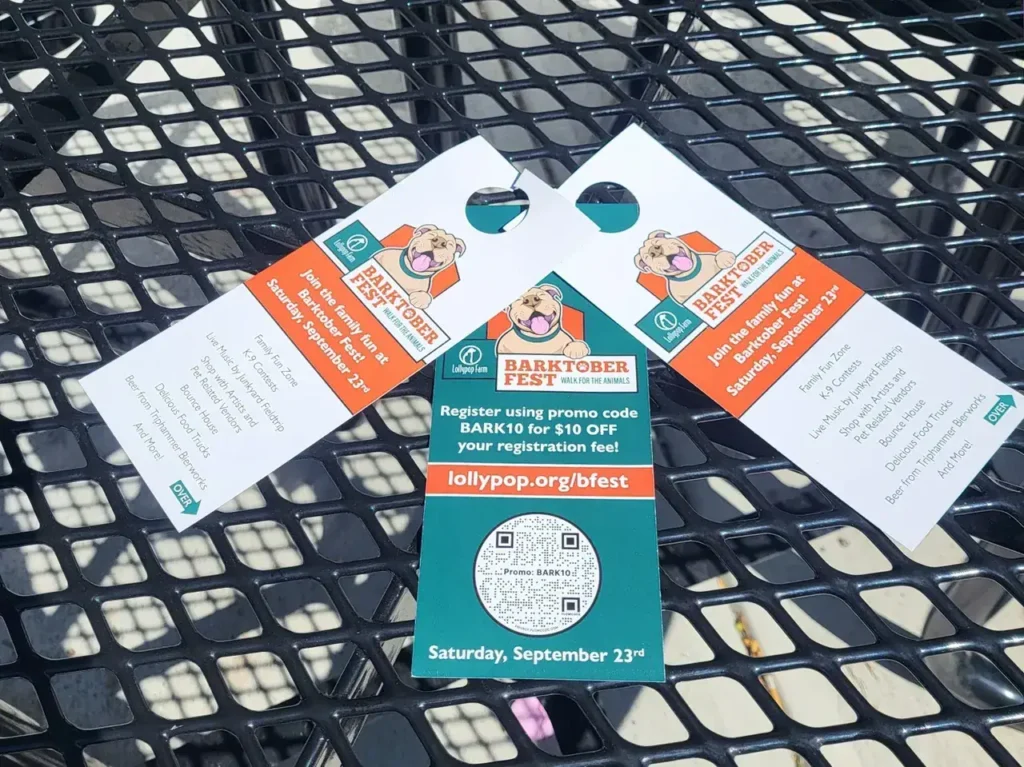
Most of the activation briefs that land in my inbox describe a feeling. Immersive. Unexpected. Something people will talk about. Almost none of them describe a sidewalk.
That gap is the whole job. An experiential marketing activation is not an idea, it is a physical event that happens in a specific place, at a specific hour, with a specific number of people standing on a specific surface, and every one of those specifics can kill the idea or save it.
I have run activations that looked nothing like the deck and worked better. I have also watched beautiful decks die because nobody checked whether the plaza in the render was private property with a facilities manager who leaves at five.
This page is about the second half of the work. The part after the idea. Crew, load-in, permission, weather, dwell, teardown, and the honest list of things we talk clients out of.
If you are shopping for an activation partner, the questions below are the ones that separate a campaign that runs from a campaign that gets explained away in a wrap report.
What an activation actually is, stripped of the language
Strip the vocabulary off and an activation is four things happening at once.
Something is physically present in public or semi-public space. A structure, a vehicle, a team, a surface treatment, a projection, or some combination.
Someone staffs it. Even an unstaffed install needs someone to place it, check it, and take it down.
It happens inside a window. Activations are not permanent. They have a start hour and an end hour, and the window is usually narrower than the client assumes.
It is reversible. Whatever goes up comes down, and the state of the site afterward matters more to the property owner than anything about the brand.
Hold those four in your head and you can evaluate almost any activation concept honestly. If a concept cannot answer all four, it is not an activation yet. It is a mood board.
The formats, and which objective each one actually serves
Buyers ask which format is best. The useful question is which objective you are buying.
Street Teams and experiential. People, handing, talking, demonstrating, sampling. This is the format you want when the product needs a human to explain it, or when you need conversations rather than impressions. A team of two is a presence. A team of six across a corridor is coverage. The constraint is that humans get tired, bored and cold, and quality drops in hour five unless you rotate.
Wheatpasting and Poster Campaigns. Paper and paste on approved surfaces, usually overnight. This is the format for density and repetition. It is not an activation in the handshake sense, but it is almost always the layer that makes an activation feel like a campaign instead of a one-day stunt. One tent in a plaza is an event. One tent in a plaza surrounded by two weeks of poster coverage on the approach streets is a campaign.
Sidewalk decals and stencils. Ground-level directional and message work. The underrated format. Nobody looks up on a crowded sidewalk, they look down and forward. Decals route people toward a physical activation better than any sign at eye level.
Projection Advertising. Light on a wall after dark. Dramatic, zero residue, entirely dependent on three things you do not control: ambient light, a clean surface, and weather.
LED Trucks and Mobile Billboards. A screen that goes where the people are. The format for reaching a corridor that has no available static inventory, or for following an event rhythm across a day.
Snipe Advertising. Small-format placement on approved construction hoarding, posts and temporary surfaces. The scrappy layer. Fast to deploy, fast to refresh.
Most real campaigns run two or three of these together. Single-format activations are usually a sign that someone sold a product rather than solved a problem.
The night before, and the morning of
Here is what a staffed activation actually looks like on the clock.
Load-in starts earlier than clients expect. If the activation opens at ten in the morning, the truck is on site by six thirty. Not because the build takes three and a half hours, but because the first forty minutes get eaten by access. Finding the loading zone that is actually usable. Waiting for a building engineer. Discovering the freight path has a step nobody mentioned.
Build is two to four people for a modest footprint. More people do not make a small build faster, they make it more crowded. Where crew count matters is teardown, because teardown is almost always under time pressure and nobody is fresh.
Soft open before hard open. We run the activation for twenty or thirty minutes before the publicised start time. Staff get their script wrong in the first few conversations. Better that happens in front of eight commuters than in front of the client and a photographer.
Peak is shorter than you think. Most street-level activations have two real windows, late morning and the hour either side of the evening commute. The middle of the day is thin unless you are sitting next to a food cluster. Clients consistently buy an eight-hour day and get four hours of value, and I will say so before the contract rather than after.
Teardown is the risk hour. Tired crew, dark, traffic, and a property owner who wants the site back. Most damage, loss and complaints happen in teardown. We staff it properly and we build the schedule backwards from it.
Overnight work runs the other direction. Poster and snipe crews go out between roughly eleven at night and five in the morning. Two people per vehicle is the standard unit. One works the surface, one watches the street, holds the ladder, manages the roll. A single operator working alone is slower and takes worse decisions.
Permission, ordinance and the grey area nobody wants to discuss
This is where I lose deals and keep clients.
Public-space advertising is a grey area. It varies by municipality, enforcement varies inside a single municipality, and the same corridor can be treated differently by two different inspectors in the same month. Anyone who tells you a blanket answer about what is allowed is either simplifying or selling.
What is not grey is the structure we work inside.
We seek permission from the party who controls the surface or the space. For a plaza that means the property manager, not the city, unless the plaza is genuinely public. For a wall it means the owner or their agent. For construction hoarding it means the contractor or the developer, and those are two different conversations.
We prefer private surfaces. A private wall with a written agreement is a stable asset. A surface with no identified owner is an open question, and open questions get resolved at the worst possible moment.
We commit to removal. This is the single clause that gets us access to surfaces other crews cannot get. Property owners are not primarily worried about your brand, they are worried about what their wall looks like in six weeks. A removal commitment, honoured, converts a one-off into a repeat location.
We document. Pre-condition photos, placement photos, removal photos, timestamps. If there is a dispute later, documentation ends it in an afternoon instead of a month.
We do not advise on law. I am an operator. I will tell you the operational character of a market, how enforcement tends to run there, what property owners there typically ask for, and what our crews have had to adjust. Whether something is permitted in your specific case is a question for your counsel, and I say that plainly rather than pretending otherwise.
Where a client wants certainty, we build the campaign on permissioned surfaces and permitted footprints, and we scope accordingly. Certainty costs scope, not quality.
Weather, surface and the things that actually fail
Nothing in this business fails for interesting reasons. It fails for boring ones.
Wind is the number one enemy of staffed activations. A tent, a banner frame, an A-frame, any flat surface is a sail. We weight for more wind than the forecast shows, and we will strike a footprint early rather than watch a structure travel.
Cold kills adhesion. Paste behaves badly below roughly freezing, and decal adhesive needs a warm, dry, clean surface to bond. A cold damp morning install looks fine at nine and is lifting at the corners by two. We either move the window to the warmest part of the day or we change format.
Rain is survivable, drizzle is worse. Steady rain on a cured paste job is mostly fine, paper is more durable wet than people assume. Light drizzle during application is the problem, because it sits between the paper and the wall and never bonds.
Surface texture decides longevity. Smooth sealed concrete, painted plywood hoarding and clean metal hold well. Rough brick, anything powdery, anything recently painted, anything with a silicone or anti-graffiti coating will reject paste and adhesive. We run a hand test before we commit a wall.
Sun degrades everything. South-facing surfaces fade and embrittle faster. On a long run we plan a refresh pass rather than pretend one install lasts the full flight.
Projection needs darkness and a dry night. A bright adjacent sign, a streetlight on the wall, or a wet surface that scatters the beam will flatten the image. We scout projection at the actual hour we intend to run, never in daylight.
Foot traffic patterns break the decal plan. We place ground graphics where feet actually fall, which is rarely where the site plan suggests. Pedestrians cut corners. They walk the inside of a turn. A decal centred on a walkway gets half the footfall of one placed on the desire line.
What we talk clients out of
This is the part of the sales call that costs me money and earns me the relationship.
One-day hero activations with no supporting layer. A single spectacular day produces a nice photo and almost no recall. I push for a smaller footprint over a longer window, with poster and decal coverage on the approaches. Repetition beats spectacle at street level, every time.
Activating where the brand wants to be instead of where the audience is. Clients pick the marquee corridor. The marquee corridor is often tourists and pass-through traffic who will never buy. The adjacent street with the office towers and the transit mouth is less glamorous and converts better.
Oversized footprints. Big builds eat the budget in logistics and leave nothing for duration or staffing. A modest, well-staffed presence running for three weeks outperforms a huge build running for two days.
Projection on the wrong wall. Clients fall in love with a facade that is textured, lit, or faces the wrong way. I will say no and offer the boring clean wall fifty metres away that will actually render.
Hour counts that ignore the rhythm of the street. Twelve-hour days on a corridor with two real peaks is paying for dead air. We compress the schedule and put the saved capacity into more days.
Copy that needs reading. Street-level audiences give you a fraction of a second at a distance and in motion. If the message needs a second sentence, the format is wrong. Every activation deck I receive has at least one asset with too many words on it, and raising that early is cheaper than reprinting.
Guaranteed engagement numbers. I will not promise a conversation count. I will tell you crew size, hours, corridor and the rhythm we expect, and I will report what actually happened. Anyone quoting you a guaranteed number is quoting you a number they made up.
Measurement without pretending
Street-level activations do not produce clean attribution, and I would rather say that than invent a dashboard.
What we can report honestly: placement locations with timestamps and photographs, surfaces covered and their condition, crew hours delivered, materials distributed, route logs for mobile formats, condition checks during the run, and removal confirmation.
What the client should instrument on their side: a dedicated short link or code used only in the physical campaign, a landing page that matches the creative, geo-filtered search and direct traffic in the activation window compared against a control period, and store or venue traffic if the activation sits near a point of sale.
What nobody can honestly give you: a person-by-person impression count for a sidewalk. Estimated traffic figures exist, but they are models, and I will not present a model as a measurement.
The most useful measurement I have seen clients run is embarrassingly simple. They ask inbound leads where they heard about the brand, in an open text field, for the duration of the flight and for three weeks after. The answers are messier than a dashboard and far more honest.
Scoping an activation: what actually moves the work
Nobody is getting numbers from me on this page, but the drivers of scope are worth understanding because they are the levers you will be asked about.
Surface count and spread. Fifty surfaces in a tight radius is a different job from fifty surfaces across a metro area. Drive time between placements is the hidden cost of a wide plan.
Run length and refresh. A two-week run on exposed surfaces usually needs a mid-flight refresh pass. A four-week run definitely does. Build the refresh into the plan or accept visible degradation in week three.
Crew size and shift pattern. Staffed formats scale with people. Overnight formats scale with vehicles, because each vehicle carries a fixed two-person unit.
Permission complexity. Permissioned private surfaces take lead time to secure. A campaign that wants to launch in eight days will be built from the surfaces we already hold relationships on, which constrains the map.
Removal obligations. Removal is a second deployment. Any plan that does not budget crew time for takedown is a plan that will either skip removal or run over.
Format mix. Adding a projection night or a mobile screen day to a poster campaign adds a different crew type and a different equipment chain. Mixed-format campaigns are stronger and more complex to run.
Where the layers fit together
If you take one practical thing from this page, take this: activations work best as the sharp point on a broader street-level campaign, not as a standalone event.
The sequence that works, in my experience, runs roughly like this. Poster and snipe coverage goes up first, across the corridors feeding the activation site, a week or two ahead. Sidewalk decals go down on the desire lines nearer the date, routing foot traffic toward the footprint. The staffed activation runs in a tight window with real crew and real conversations. A mobile screen covers the corridors the static layer cannot reach, or follows an event schedule. Projection extends the campaign into the hours after everything else has gone home.
Each layer makes the next one cheaper in attention terms. By the time somebody walks up to the tent, they have already seen the creative four times that week without registering it. The conversation starts warm.
If you are only buying one layer, my honest recommendation for most briefs is Wheatpasting & Poster Campaigns, because it gives you duration and repetition, which is what street advertising is actually good at. Add Street Teams & Experiential when the product needs explaining. Add LED Trucks & Mobile Billboards when the corridor you need has no static inventory. Add Sidewalk Decals & Stencils when you need to move people a specific direction.
Frequently asked questions
How far in advance should we book an activation?
Four to six weeks is comfortable for a multi-format campaign. That window covers surface permission, production and printing, crew scheduling and a scout. We can run faster, but a short lead time means building from surfaces and corridors we already hold relationships on, which narrows the map rather than lowering the quality.
Is street-level advertising allowed in my city?
It is a grey area and it varies by municipality. Enforcement is inconsistent, and the answer usually turns on who owns the surface and what the local ordinance says. We work from permissioned surfaces, document placement and removal, and scope around the character of each market. For your specific situation, ask your own counsel.
How long does a poster or decal campaign hold up outdoors?
On a clean, smooth, sealed surface, pasted paper typically holds for weeks rather than days. Rough brick, powdery render, anti-graffiti coatings, freezing temperatures and south-facing sun all shorten that. On runs longer than about two weeks we plan a refresh pass rather than claim a single install lasts the whole flight.
Do you provide impression numbers?
Not as a measurement. Estimated traffic figures are models, and presenting a model as a count is dishonest. We report placements with timestamps and photographs, crew hours, route logs, condition checks and removal confirmation. For response measurement we recommend a dedicated code or short link used only by the physical campaign.
How many people do you put on a crew?
Overnight poster and snipe work runs two people per vehicle, one on the surface and one managing the street and equipment. Staffed daytime activations usually run two to four for build, then the staffing level the footprint needs. Teardown gets the same headcount as build, because that is where most problems happen.
What happens to the materials when the campaign ends?
We remove them. Removal is scheduled as a separate deployment with its own crew time, and it is documented with photographs the same way installation is. That commitment is the reason property owners give us repeat access to surfaces, and it is not something we treat as optional.
Request a campaign quote
If you have an activation brief and you want somebody to tell you honestly which parts of it will survive contact with a sidewalk, send it over. We will come back with a format mix, a corridor map, a crew and window plan, and a clear list of what we think you should cut.
Request a campaign quote and tell us the market, the window and what the activation is actually meant to achieve. The more specific you are about the objective, the more useful our pushback will be.
Livy Phillips American Guerrilla Marketing Nationwide poster, snipe, decal, projection and LED truck campaigns americanguerrillamarketing.com

Ready to Run Your Campaign?
Call us or email us. We’ll tell you exactly what we can do in your market and what it costs.
Related Services
Explore similar advertising solutions offered by American Guerrilla Marketing.
American Guerrilla Marketing — Los Angeles
Street-level campaigns in Los Angeles and nationwide. Wheatpasting, LED trucks, street teams, and more.
(646) 776-2770
Related Articles
-
Projection Advertising in the South Nashville Metro
November 12, 2026
-
Projection Advertising in Miami: How It Actually Works
November 12, 2026
-
What to Expect From an Experiential Marketing Agency in New
November 12, 2026
-
The OOH Media Buying Process: What to Expect
November 12, 2026
-
Brand Ambassador Staffing Agency: A Field Guide From the
November 12, 2026