American Guerrilla Marketing
Nationwide Service
Media planning, media buying, billboard advertising, & guerrilla marketing
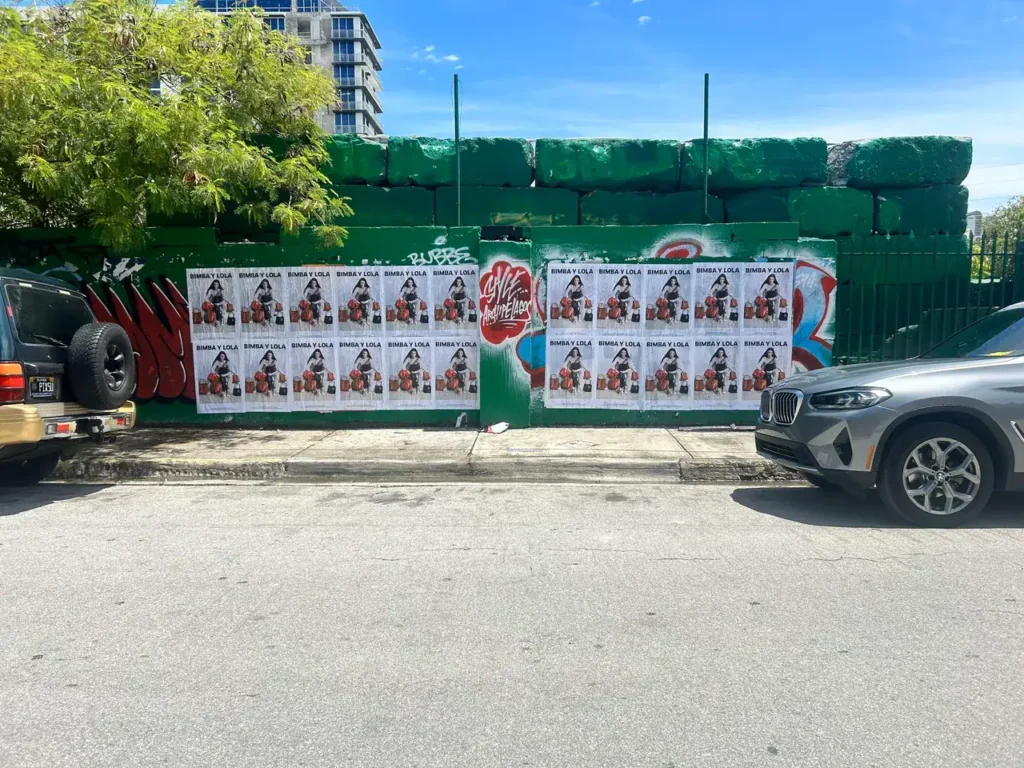
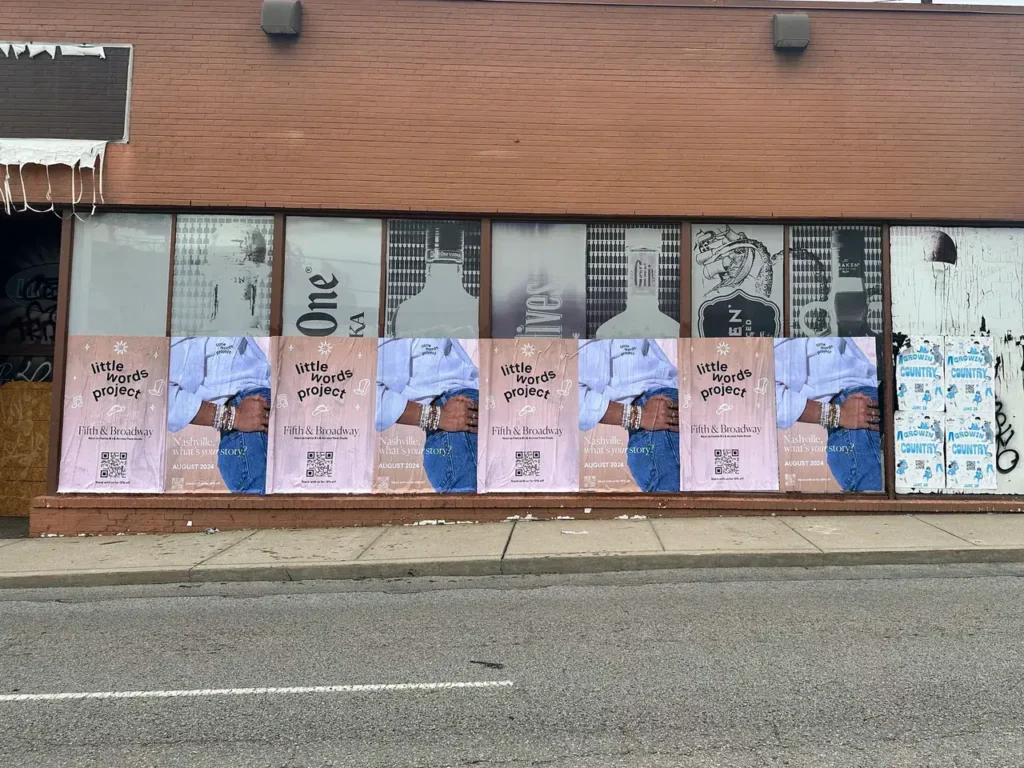
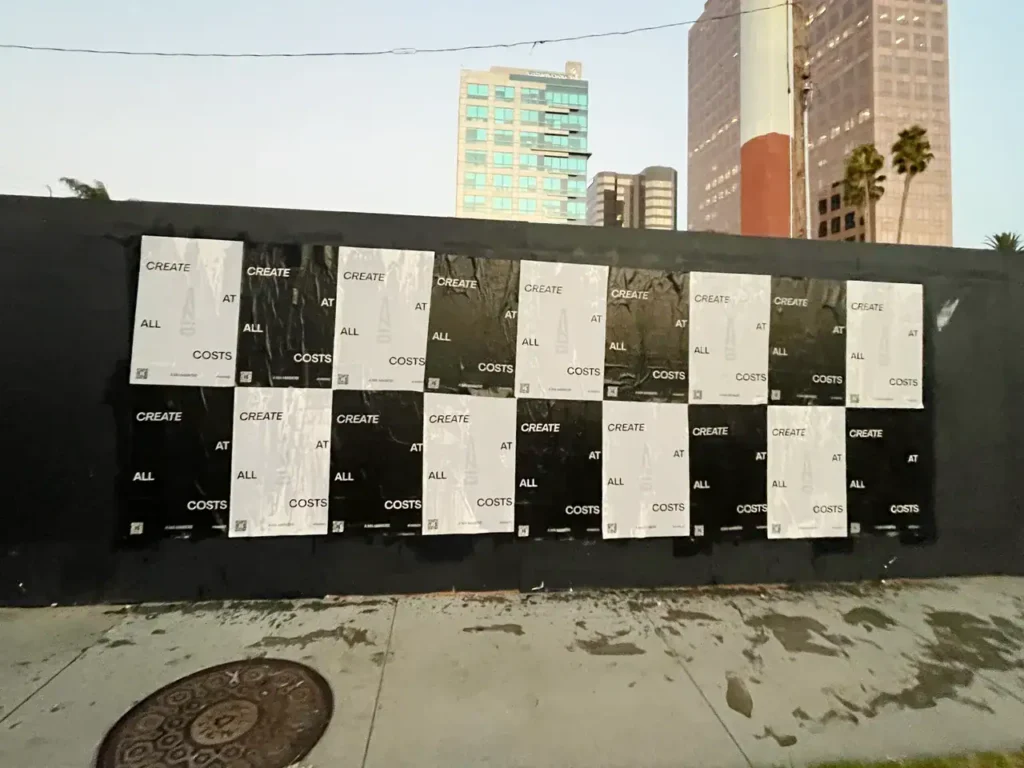
Wheatpasting in Phoenix, Arizona reaches the city’s most active pedestrian zones through a deployment network of pre-approved commercial facade positions in Phoenix’s highest foot-traffic corridors. Roosevelt Row — Phoenix’s nationally recognized arts district along Roosevelt Street between 3rd and 16th Streets — anchors the city’s creative-class consumer corridor, where galleries, independent restaurants, craft breweries, and First Friday events generate the highest foot traffic density of any neighborhood in the Phoenix metro. The Warehouse District along Grand Avenue and the Roosevelt/3rd Street corridor provides a second high-quality poster environment where the arts and nightlife audience concentrates on evenings and weekends. Midtown Phoenix’s Camelback Road and 7th Street commercial zones round out the city’s primary poster campaign geography with a professional and retail consumer audience that generates consistent daily foot traffic across the full demographic range.
Street poster campaigns in Phoenix deliver repeated impressions to the same pedestrian and commuter audiences over a 4–8 week campaign window. Phoenix’s scale as the fifth-largest US city by population creates significant market depth across multiple distinct neighborhoods — from the creative and arts-engaged population in Roosevelt Row and the Warehouse District to the technology and professional workforce in Midtown, the college-age audience near the ASU Downtown campus, and the sports and events audience that concentrates near Footprint Center and Chase Field on game nights. AGM’s Phoenix campaigns use verified foot traffic data for each specific wall position, ensuring impression projections reflect actual daily pedestrian flow through the target corridors rather than generalized market estimates.
American Guerrilla Marketing’s Phoenix field crews operate with established property authorization for the city’s prime poster walls, enabling rapid deployment from approved artwork to live street presence in as few as five business days. Every Phoenix campaign includes GPS-tagged placement photography and a complete post-campaign documentation report delivered within 48 hours of installation. Arid-climate UV-resistant adhesive and ink formulations are specified for Phoenix’s extreme Sonoran Desert environment — engineered to maintain surface bond and print integrity through the 115°F+ summer temperatures and intense solar radiation that represent the most demanding outdoor poster conditions in the continental United States.
Get a Phoenix wheatpasting campaign plan from AGM — wall identification, poster capacity, and impression projections for your target corridors.
Impression estimates use the OOH industry standard: Daily Foot Traffic × Campaign Duration (14 days) × Street-Level Billboard Visibility Factor (0.08–0.12). Actual impressions vary by wall position and pedestrian density.
| Zone / Neighborhood | Est. Daily Foot Traffic | Est. Impressions per Location (14-Day Campaign) | Best Campaign Types |
|---|---|---|---|
| Roosevelt Row Arts District | 1,500–5,000 | 29,500–108,000 | Arts, music, food & bev, lifestyle |
| Warehouse District / Grand Avenue | 1,200–3,500 | 23,500–75,500 | Arts, nightlife, creative lifestyle |
| Midtown — Camelback & 7th Street | 2,000–5,500 | 39,500–118,500 | Professional, retail, food & bev |
| Downtown / ASU Campus | 2,500–6,000 | 49,500–129,500 | University, technology, events |
| Melrose District / 7th Avenue | 1,000–2,800 | 19,500–60,500 | Lifestyle, LGBTQ+, boutique retail |
| Wall / Venue | Street / Address | Neighborhood | Est. Poster Capacity | Best Campaign Type |
|---|---|---|---|---|
| Roosevelt Row Warehouse Facade | Roosevelt Street & 5th Street, Phoenix | Roosevelt Row | 100–200 per block face | Arts, music, creative lifestyle |
| Grand Avenue Arts Corridor Wall | Grand Avenue & 9th Avenue, Phoenix | Warehouse District | 100–170 per block face | Arts, nightlife, events |
| Camelback Road Midtown Strip | Camelback Road & Central Avenue, Phoenix | Midtown | 100–200 per block face | Professional, retail, food & bev |
| Downtown Core / ASU Approach | Jefferson Street & 3rd Street, Phoenix | Downtown | 100–200 per block face | University, technology, events |
| 7th Avenue Melrose Commercial Facade | 7th Avenue & Indian School Road, Phoenix | Melrose District | 100–150 per block face | Lifestyle, boutique, entertainment |
Award Winning Personalized Service
You will get thoughtful, devoted, and individualized attention from our experienced, qualified, and professional personnel. Being one of the most illustrious agencies in Brooklyn, New York, American Guerrilla Marketing has been awarded the Best of Brooklyn title.
Nationwide
Industry City, Brooklyn, New York 11232
American Guerrilla Marketing
Hours
Mon - Fri: 9 AM - 5 PM
Sat & Sun: Closed
Automate your campaign with AGM’s Request for Proposal Builder. Simply answer a few quick questions about your campaign goals, markets, and timeline, and the system will generate a tailored presentation with recommended strategies, quantities, and pricing. Click the RFP Builder to instantly receive your customized proposal.
The case for wheat paste poster campaigns in Phoenix is the case for frequency in the physical environments that matter — building brand recognition through repeated exposure in Roosevelt Row, the Warehouse District, and Midtown corridors where Phoenix’s most brand-engaged consumer demographics concentrate. Phoenix’s size and suburban sprawl mean that the city’s walkable pedestrian zones are proportionally more valuable as advertising environments than in more compact markets — the consumer audiences that concentrate in Roosevelt Row’s First Friday scene, the ASU Downtown campus corridor, and the Midtown professional zone represent a density of brand-engaged consumers that’s difficult to replicate through traditional Phoenix billboard and transit advertising formats. A well-placed Phoenix poster campaign in Roosevelt Row delivers the organic frequency through daily pedestrian movement that makes street-level advertising more efficient per impression than format categories that charge for broad geographic reach without demographic selectivity.
What sustains Phoenix poster campaign performance across a multi-week window is the adhesive and print quality AGM specifies for the most extreme outdoor advertising environment in the continental United States. Phoenix’s summer temperatures consistently exceed 115°F, combined with the low humidity and intense solar radiation of the Sonoran Desert — conditions that render standard commercial adhesives ineffective within days of installation. AGM uses UV-resistant ink formulations with stabilizers specifically engineered for Phoenix’s high-UV desert conditions, maintaining color accuracy and contrast throughout campaigns that run through Phoenix’s peak summer heat. Arid-climate adhesive chemistry maintains surface bond through Phoenix’s extreme temperature range without blistering, peeling, or adhesive failure. The campaign the Roosevelt Row audience encounters in week six is visually identical to the campaign that installed on day one.
American Guerrilla Marketing delivers wheat paste poster campaigns in Phoenix as fully managed engagements: corridor identification and wall qualification based on verified Phoenix foot traffic data, property owner outreach and written authorization, large-format print production with UV-resistant Arizona-grade materials, supervised field installation by experienced Phoenix crews, GPS-tagged photography documenting every placement, installation monitoring, removal at campaign close, and a post-campaign report with GPS coordinates, photography, and impression projections. Phoenix campaigns are frequently integrated with East Valley market deployments in Tempe, Scottsdale, Chandler, and Mesa for thorough Arizona metro coverage within a unified campaign window.
The following five locations represent AGM’s highest-performing active poster zones in the Phoenix market.
Location: Roosevelt Street & 5th Street, Phoenix, Arizona | Poster Capacity: 100–200 posters across Roosevelt Row warehouse facades
Roosevelt Row is Phoenix’s nationally recognized arts district — a corridor of galleries, independent restaurants, breweries, and performance spaces that generate the highest foot traffic density in the Phoenix metro on First Friday evenings and consistent daily pedestrian activity throughout the month. The warehouse facades lining Roosevelt Street provide premium large-format poster inventory reaching the creative-class and young professional demographic that defines Phoenix’s most brand-engaged consumer cohort. Music, arts, food and beverage, lifestyle, and creative brand campaigns consistently identify Roosevelt Row as Phoenix’s highest-quality brand environment for street-level advertising.
Location: Grand Avenue & 9th Avenue, Phoenix, Arizona | Poster Capacity: 100–170 posters on warehouse facades
Phoenix’s Grand Avenue arts corridor extends the Roosevelt Row creative zone into the historic Warehouse District — a zone of muralized industrial buildings, independent galleries, and alternative venues that draws the city’s arts-focused audience for evening events and weekend programming. The wide warehouse facades along Grand Avenue support oversized wheat paste campaigns that create maximum visual impact in a corridor where the art-engaged pedestrian audience expects and responds to bold, high-quality visual content. Creative, arts, music, and lifestyle brands find the Grand Avenue corridor one of the most brand-receptive environments in Phoenix for unconventional advertising formats.
Location: Camelback Road & Central Avenue, Phoenix, Arizona | Poster Capacity: 100–200 posters per block face
Midtown Phoenix’s Camelback Road and Central Avenue intersection anchors the city’s professional and retail consumer zone — a walkable area where office towers, upscale retail, and the Biltmore Fashion Park adjacent corridor generate consistent daily foot traffic from Phoenix’s professional demographic. Light Rail access at Central Avenue makes this one of Phoenix’s most transit-connected pedestrian zones, extending the poster campaign’s effective reach to the commuter audience that boards and exits rail service at this corridor. Professional services, financial, retail, and food and beverage brands reach their most concentrated Phoenix professional audience in this corridor.
Location: Jefferson Street & 3rd Street, Phoenix, Arizona | Poster Capacity: 100–200 posters per block face
Downtown Phoenix’s Jefferson Street corridor serves the convergence of the ASU Downtown campus, Footprint Center (home of the Phoenix Suns), Chase Field (home of the Arizona Diamondbacks), and the Convention Center — Phoenix’s highest-density multi-audience zone where students, sports fans, convention attendees, and downtown workers generate foot traffic that peaks on game nights and convention days. Wheat paste campaigns in this corridor benefit from the event-driven impression spikes that make Footprint Center and Chase Field game nights among the highest single-day impression events in the Phoenix poster advertising calendar.
Location: 7th Avenue & Indian School Road, Phoenix, Arizona | Poster Capacity: 100–150 posters on commercial facades
The Melrose District along 7th Avenue near Indian School Road anchors Phoenix’s most distinctive lifestyle and boutique retail corridor — a walkable zone of independent vintage shops, LGBTQ+ establishments, specialty food and beverage, and neighborhood services that generates consistent daily foot traffic among the creative and lifestyle-oriented demographic that defines Melrose’s brand identity. Commercial facades along this stretch support wheat paste campaigns that reach Phoenix’s most independent-brand-engaged consumer cohort — the audience that actively seeks out non-mainstream alternatives and whose early-adopter behavior makes them a high-value demographic for lifestyle, arts, food and beverage, and creative brands.
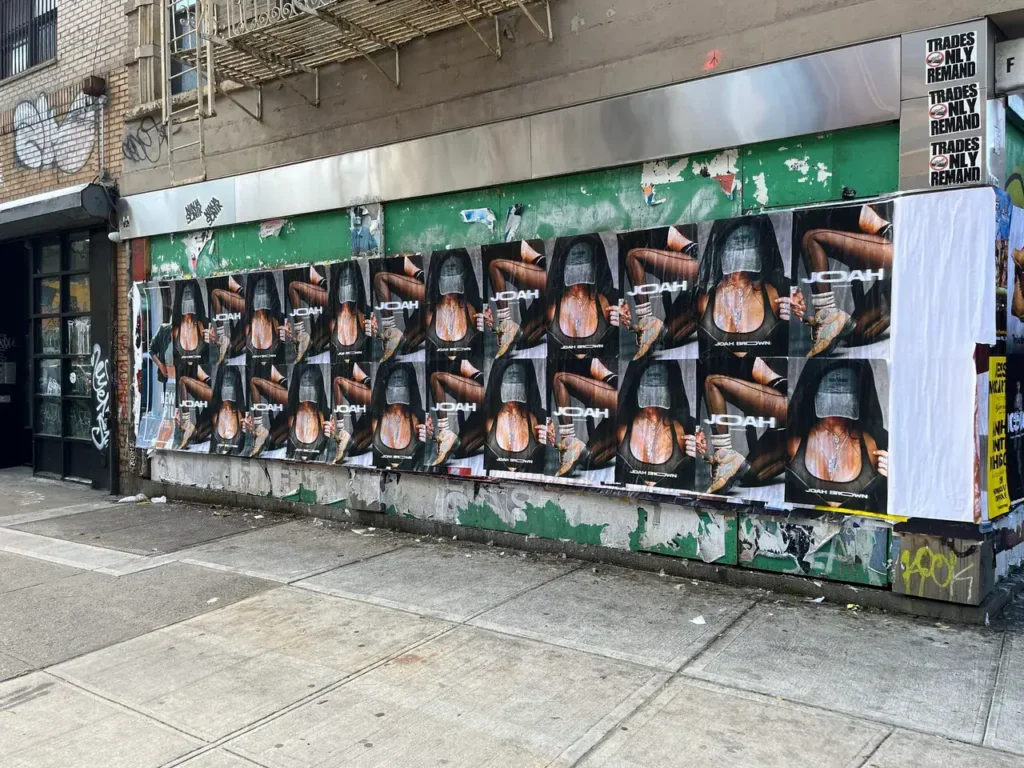
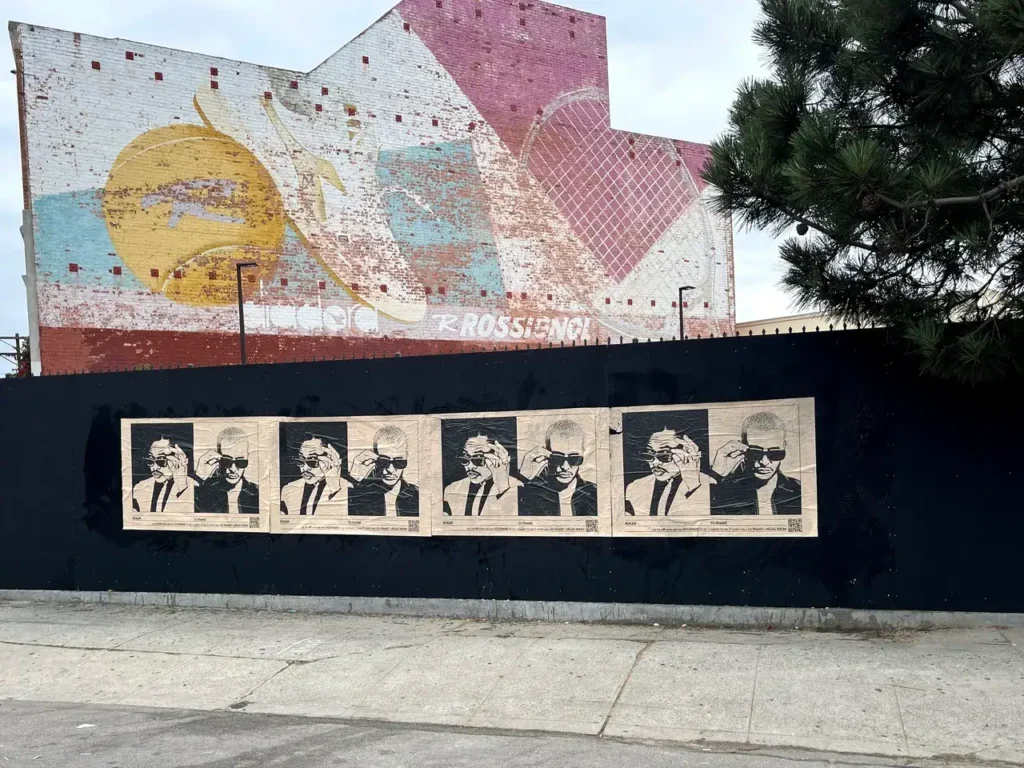
Jay Ellis’s Manhattan wheatpasting campaign used AGM to place large-format poster grids in the entertainment corridors of Brooklyn and Manhattan, Williamsburg, the Lower East Side, and Hell’s Kitchen, timed to an entertainment release and targeted at the core young professional and entertainment audience. AGM’s deployment covered Williamsburg, Lower East Side, and Hell’s Kitchen, the core entertainment audience corridors, with installations completed within a 24-hour window ahead of the release date. The entertainment-corridor poster strategy developed for Jay Ellis’s Manhattan campaign, timed to entertainment industry activity, applies to Mississippi campaigns in Jackson and Biloxi targeting the professional and lifestyle audience.
Result: Full entertainment corridor coverage across Brooklyn and Manhattan within 24 hours, with street presence maintained through the full release weekend
AGM ran a combined wheat paste and sidewalk stencil campaign for Biossance across the beauty and wellness corridors of New York and Los Angeles. The multi-format approach placed Biossance’s brand in the physical environment of its target consumer across two major markets simultaneously.
Result: Multi-format street presence across the core beauty consumer corridors in both NYC and LA markets, with full GPS documentation and post-campaign reporting
The Most Common Poster Sizes, Visualized:
The standard poster size measuring 24 x 36 inches is a cornerstone format for high-impact street marketing and large-scale visual communication. This size is frequently used in premium snipe placements, wheatpasting, and traditional wheatpasting campaigns where commanding attention from a distance is essential. Closely aligned with the A1 international standard, it supports consistent production across markets while delivering strong visual clarity and scale.
In real-world execution, 24 x 36 posters are commonly deployed on large plywood walls, construction fencing, barricades, and exterior surfaces in high-traffic corridors. When used in wheatpasting and wheatpasting, this size allows for bold imagery, oversized typography, and simplified messaging that can be absorbed quickly by passersby. As an oversized snipe format, it is especially effective for advertising campaigns, brand launches, trade shows, exhibitions, and major announcements where visibility, authority, and immediate recognition are the primary goals.
The Most Common Poster Sizes, Visualized:
The 48 x 72 inch poster size is an oversized evolution of the traditional bus stop format, designed for maximum visual dominance in high-traffic environments. This size is frequently used in premium snipe placements, large-scale wheatpaste posting, and advanced wheatpasting campaigns where commanding attention from both long distance and close proximity is essential.
In real-world execution, 48 x 72 posters are ideal for major transit zones, exterior walls, construction wraps, subway approaches, and street-facing installations where scale directly impacts performance. When used in wheatpasting and wild wheat paste posting, this format supports oversized typography, bold imagery, and simplified layouts that stop viewers in their tracks. As a large-format snipe option, it is especially effective for brand launches, national advertising campaigns, cultural announcements, and high-impact outdoor activations that demand authority, visibility, and memorability.
Getting started on a poster design or printed project doesn’t need to involve technical guesswork. Download free starter files for each poster size to begin designing with confidence. These files are pre-sized to exact specifications and built to professional print standards, helping you avoid common setup issues from the start.
Our starter files are available for PDF Reader and Adobe Photoshop, making them simple and accessible for most workflows. Each file is correctly sized and includes proper bleed, trim, and color space settings, so your designs are ready for production whether they are being used for snipes, wheatpasting, wheatpasting, or larger street-level campaigns.
Using these starter files saves time, improves consistency, and helps ensure your posters print cleanly and accurately on the first run. They are ideal for designers, marketers, and brands that want reliable, print-ready files across all standard poster sizes without unnecessary complexity.
What differentiates American Guerrilla Marketing from other Phoenix poster campaign operators is the combination of local wall knowledge, trained Arizona installation crews, and GPS-documented accountability that turns outdoor spend into a performance channel. The Phoenix field installers AGM deploys understand the city’s distinct neighborhood dynamics — from the creative-class corridors of Roosevelt Row to the professional zones of Midtown and the sports-driven traffic patterns around Footprint Center — and execute installation with arid-climate UV-resistant materials that sustain brand-standard impression delivery through Arizona’s extreme desert climate. Every Phoenix campaign closes with GPS coordinates and impression projections within 48 hours.
Standard Phoenix campaigns deploy 100–200 posters across two to four corridors. Multi-corridor Phoenix campaigns covering Roosevelt Row, the Warehouse District, and the Midtown corridor simultaneously scale to 150–200+ units.
AGM uses arid-climate UV-resistant adhesive and ink formulations engineered for Phoenix’s extreme desert heat, intense solar radiation, and low-humidity conditions. Posters maintain integrity for 4–8 weeks through Phoenix’s summer temperatures exceeding 115°F.
Standard Phoenix campaigns deploy within 5–10 business days of artwork approval. Expedited 48–72 hour deployment is available for event-tied activations at Footprint Center, Chase Field, or First Friday Roosevelt Row events.
AGM campaigns in Phoenix use 24×36 Standard Format and 48×72 Large Format. Roosevelt Row’s warehouse walls and the Warehouse District’s industrial facades support large-format deployments for maximum visual impact.
Yes. AGM coordinates Phoenix deployments as part of multi-city Arizona or nationwide campaign rollouts. Phoenix often serves as the lead market for Arizona statewide campaigns that include Tempe, Scottsdale, Chandler, and Tucson.
Arts, entertainment, music, food and beverage, fitness, and lifestyle brands perform strongest in Phoenix’s Roosevelt Row and Midtown corridors. Technology and professional brands excel near the Downtown financial core. Sports brands reach peak Phoenix audience near Footprint Center and Chase Field.
AGM evaluates Phoenix wall positions based on verified daily foot traffic counts, demographic alignment, facade capacity, property authorization, and sightline quality. Wall selections are approved by the client before any production spend is committed.
Fall through spring (October–May) represents Phoenix’s peak outdoor pedestrian activity as temperatures drop below extreme summer heat. Summer campaigns remain deployable with arid-climate UV-resistant formulations, with evening-optimized deployment strategies for the hotter months.
Yes. AGM maintains pre-approved wall positions in Roosevelt Row along Roosevelt Street and the surrounding warehouse district — Phoenix’s most brand-receptive arts and creative corridor where the First Friday crowd and the daily arts-district audience concentrate.