American Guerrilla Marketing
Nationwide serivce
Media planning, media buying, billboard advertising, & guerrilla marketing
Wheatpasting in South Carolina operates in one of the most historically rich and nationally profiled small-city outdoor advertising markets in the American South — anchored by Charleston’s Upper King Street district and the College of Charleston campus perimeter, which together create the most walkable and culturally active poster environment in the Lowcountry. Charleston’s King Street between Calhoun Street and Spring Street — known as the Upper King corridor — has emerged as the city’s most rapidly evolving young professional and arts commercial strip: a zone where independent restaurants, boutique retail, music venues including the Music Farm at 32 Ann Street, and the independently operated food and beverage operators who have made Upper King Charleston’s most nationally covered neighborhood commercial story create a daily pedestrian audience of College of Charleston students, young professionals from the surrounding Cannonborough-Elliotborough and Wagener Terrace neighborhoods, and the destination dining visitors from across the Charleston metro who have made this stretch of King Street the city’s most walked commercial corridor. The College of Charleston campus at 66 George Street provides a direct university approach to the Upper King zone, with the residential neighborhoods between the campus and King Street generating consistent student pedestrian flow throughout the academic year.
Columbia’s Vista District on Gervais Street between Huger Street and Main Street is South Carolina’s state capital poster zone — a warehouse district conversion where art galleries, live music venues including Tin Roof Columbia at 1022 Senate Street, independent restaurants, and the young professional entertainment district that has made the Vista the go-to neighborhood for Columbia’s professional and university-adjacent population create a poster environment serving the University of South Carolina’s 35,000+ students alongside the Columbia professional demographic. Five Points at the intersection of Blossom, Devine, and Harden Streets adjacent to USC’s main campus serves the university demographic more directly — a traditional student commercial strip where bars, restaurants, and the independent retailers that define USC’s off-campus student commercial life create the concentrated student pedestrian environment that university-targeting brands require. Greenville’s Main Street arts district and the West End on Augusta Street complete South Carolina’s four-market coverage, serving the Upstate South Carolina young professional and arts community concentrated in one of the South’s most rapidly growing mid-sized cities.
Myrtle Beach’s Broadway at the Beach and the Ocean Boulevard corridor serve South Carolina’s coastal tourism poster zone — a market that operates at peak volume from Memorial Day through Labor Day when the Grand Strand’s 14+ million annual visitors concentrate the most tourism-driven outdoor impression volume available anywhere in the Carolinas. The Ocean Boulevard pedestrian strip from 9th Avenue North to Surfside Beach serves the concentrated beachfront tourist audience, while Broadway at the Beach’s themed entertainment district and the Myrtle Beach boardwalk area serve the family, young adult, and entertainment demographic. AGM coordinates multi-city South Carolina deployments across Charleston, Columbia, Greenville, and Myrtle Beach with tropical adhesive formulations engineered for the state’s subtropical climate and GPS-documented reporting across all markets.
Impression estimates use the OOH industry standard: Daily Foot Traffic × Campaign Duration (14 days) × Street-Level Billboard Visibility Factor (0.08–0.12). All figures reflect street-level poster format standards — not modeled billboard projections. Actual impressions vary by wall position and pedestrian density.
| Zone / Neighborhood | Est. Daily Foot Traffic | Est. Impressions per Location (14-Day Campaign) | Best Campaign Types |
|---|---|---|---|
| Charleston — Upper King Street District | 3,500–8,000 | 68,000–170,000 | Hospitality, lifestyle, food & bev, young professional |
| Charleston — College of Charleston Campus Perimeter | 2,500–5,500 | 49,000–117,000 | University, lifestyle, entertainment, music |
| Columbia — Vista District / Gervais St | 2,000–5,000 | 39,000–107,000 | Arts, entertainment, young professional, food & bev |
| Columbia — Five Points (USC Campus) | 2,000–5,000 | 39,000–107,000 | University, gaming, music, lifestyle |
| Greenville — Main Street Arts District | 2,500–6,000 | 49,000–128,000 | Arts, food & bev, young professional, lifestyle |
| Wall / Venue | Street / Address | Neighborhood | Est. Poster Capacity | Best Campaign Type |
|---|---|---|---|---|
| Upper King Street Commercial Facades | King St between Calhoun St and Spring St, Charleston | Upper King / Cannonborough | 100–160 per block face | Hospitality, lifestyle, food & bev |
| College of Charleston George Street Perimeter | George St between St. Philip St and Coming St, Charleston | College of Charleston | 60–100 across campus perimeter | University, lifestyle, music, entertainment |
| Columbia Vista Gervais Street Corridor | Gervais St between Huger St and Main St, Columbia | Vista District | 100–160 per block face | Arts, entertainment, young professional |
| USC Five Points Student Strip | Harden St between Greene St and Devine St, Columbia | Five Points | 100–150 per block face | University, gaming, lifestyle, food & bev |
| Greenville Main Street Arts Corridor | Main St between Court St and Broad St, Greenville | Downtown Greenville | 100–160 per block face | Arts, food & bev, young professional |
Award Winning Personalized Service
You will get thoughtful, devoted, and individualized attention from our experienced, qualified, and professional personnel. Being one of the most illustrious agencies in Brooklyn, New York, American Guerrilla Marketing has been awarded the Best of Brooklyn title.
Nationwide
Industry City, Brooklyn, New York 11232
American Guerrilla Marketing
Hours
Mon - Fri: 9 AM - 5 PM
Sat & Sun: Closed
Automate your campaign with AGM’s Request for Proposal Builder. Simply answer a few quick questions about your campaign goals, markets, and timeline, and the system will generate a tailored presentation with recommended strategies, quantities, and pricing. Click the RFP Builder to instantly receive your customized proposal.
Charleston’s poster campaign environment benefits from an extraordinary alignment between the physical character of its historic commercial districts and the outdoor advertising format. King Street’s Federal-era and antebellum commercial facades — brick storefronts with painted masonry surfaces and cast-iron detail that survived the Charleston earthquake of 1886 and the Civil War — provide natural poster surfaces with an architectural legitimacy that modern commercial construction can’t replicate. A brand present on King Street’s painted brick facades is immediately associated with the cultural authority that comes from being embedded in one of America’s most historically significant commercial corridors. The College of Charleston student demographic that gravitates to Upper King as their primary commercial district creates a combined audience of architectural authenticity and youth culture that reaches both the aspirational luxury traveler demographic and the 18–25 student consumer simultaneously — a dual audience reach that is available in few other Southern markets.
AGM’s tropical adhesive formulations address South Carolina’s most challenging outdoor advertising conditions directly: the Lowcountry’s subtropical humidity, which maintains relative humidity above 80% for much of the year; summer heat that drives masonry surface temperatures above 120°F on south-facing walls; the salt air and coastal moisture that affects Charleston and the Grand Strand coastal markets from the Atlantic Ocean; and the near-daily summer afternoon thunderstorm activity that tests adhesive moisture resistance repeatedly over a campaign window. AGM’s South Carolina adhesive specifications use tropical-grade bonding systems that maintain adhesion through high-humidity and high-temperature cycles simultaneously — the same challenge that Florida and Gulf Coast deployments present. Print specifications use UV-resistant inks calibrated to maintain color accuracy through South Carolina’s intense summer solar radiation, preventing the fading and ink degradation that characterize non-specified materials in subtropical outdoor environments.
American Guerrilla Marketing delivers wheat paste poster campaigns in South Carolina as fully managed engagements: corridor identification and wall qualification based on verified South Carolina foot traffic data, property owner outreach and written authorization, large-format print production using UV-resistant and moisture-proof materials calibrated for the subtropical climate, supervised field installation with tropical adhesive formulations, GPS-tagged photography documenting every placement, installation monitoring for the campaign duration, removal at campaign close, and a post-campaign report with GPS coordinates, photography, and impression projections. South Carolina campaigns use AGM’s Southeast field infrastructure — Charleston and Columbia execute as part of the same regional deployment network that serves Atlanta, Charlotte, and Raleigh campaigns.
The following five locations represent AGM’s highest-performing active poster zones in the South Carolina market. Each location is profiled with street address, poster capacity, and the specific demographic and campaign type it serves best.
Location: King St between Calhoun St and Spring St, Charleston, SC | Poster Capacity: 100–160 posters on Upper King commercial facades
King Street between Calhoun and Spring Streets in Charleston’s Upper King District is South Carolina’s most nationally profiled arts and entertainment commercial strip — a zone where independently owned restaurants, boutique retail, the Music Farm at 32 Ann Street, and the craft breweries and cocktail bars that have made Upper King Charleston’s most talked-about neighborhood commercial story draw the College of Charleston student population and the young professional demographic from surrounding Cannonborough-Elliotborough and Wagener Terrace to a walkable corridor with the highest daily pedestrian density in the city’s arts district. Commercial facades along King Street between Calhoun and Spring support wheat paste campaigns at 80–140 units reaching the Charleston arts, entertainment, and young adult consumer audience simultaneously. Lifestyle, food and beverage, music, hospitality, and entertainment brands identify Upper King as South Carolina’s most brand-receptive poster zone — a corridor where the historic architectural context gives brand placements a credibility premium unavailable in modern commercial real estate.
Location: George St between St. Philip St and Coming St, Charleston, SC | Poster Capacity: 100–150 posters on campus perimeter facades
The College of Charleston campus perimeter on George Street between St. Philip Street and Coming Street anchors the university-targeting poster zone in Charleston — serving CofC’s 10,000+ students in the residential commercial corridors immediately adjacent to the campus’s historic College Green and the Cistern Yard. Commercial facades along George Street and the adjacent Wentworth and Queen Street cross-streets support wheat paste campaigns at 60–100 units reaching the CofC student population alongside the Graduate School of Business and the School of the Arts demographic. The College of Charleston’s reputation for arts, humanities, and hospitality management programs creates a student body particularly receptive to entertainment, lifestyle, food and beverage, and travel brands. The campus perimeter placement complements Upper King Street campaigns for brands requiring both the student and young professional audiences that define Charleston’s most commercially active demographic segment.
Location: Gervais St between Huger St and Assembly St, Columbia, SC | Poster Capacity: 100–160 posters on Vista warehouse facades
The Vista District on Gervais Street between Huger Street and Assembly Street is Columbia’s most active arts and entertainment corridor — a converted warehouse district where art galleries, Tin Roof Columbia at 1022 Senate Street, the Conundrum Music Hall at 626 Meeting Street, and the independently operated restaurants and breweries that draw Columbia’s young professional, university-adjacent, and arts community to a walkable urban district adjacent to the South Carolina State House. Commercial facades along Gervais Street between Huger and Assembly support wheat paste campaigns at 80–140 units reaching the Columbia arts and entertainment demographic alongside the state government and university professional workforce that commutes through the Vista corridor daily. Entertainment, arts, food and beverage, and young professional lifestyle brands identify the Vista as South Carolina’s highest-quality arts district poster zone outside Charleston.
Location: Harden St between Greene St and Devine St, Columbia, SC | Poster Capacity: 100–150 posters on Five Points student commercial facades
Five Points at the intersection of Harden, Devine, and Blossom Streets adjacent to the University of South Carolina’s main campus is the primary university-targeting poster zone in Columbia — a traditional student commercial strip where bars, restaurants, music venues, and the independent retailers that define USC’s off-campus student commercial life create the concentrated university pedestrian environment most effective for student-targeting campaigns. USC’s enrollment of 35,000+ students across the main Columbia campus creates one of South Carolina’s largest single-institution student populations, with the Five Points commercial district concentrating the daily student pedestrian flow from the adjacent Greene Street, Blossom Street, and Whaley Street student residential neighborhoods. Commercial facades along Harden Street between Greene and Devine support wheat paste campaigns at 60–100 units reaching the USC student demographic targeted by gaming, music, streaming entertainment, food and beverage, and lifestyle brands.
Location: Main St between Court St and Broad St, Greenville, SC | Poster Capacity: 100–160 posters on Main Street arts corridor facades
Greenville’s Main Street between Court Street and Broad Street is the most walkable and nationally covered arts district in Upstate South Carolina — a commercial corridor anchored by the Peace Center for the Performing Arts at 300 S. Main Street and the Falls Park on the Reedy pedestrian zone, where the concentration of independent restaurants, galleries, and boutique retail serves the Greenville young professional and arts community that has made this city’s downtown one of the South’s most frequently cited urban revitalization success stories. Commercial facades along Main Street between Court and Broad support wheat paste campaigns at 80–140 units reaching the Greenville arts and young professional demographic — a market that has grown significantly with the expansion of BMW Manufacturing, Michelin, and the technology sector employers who have made Greenville one of the fastest-growing major metros in South Carolina. Lifestyle, food and beverage, arts, entertainment, and professional services brands identify Greenville Main Street as South Carolina’s most commercially active secondary market poster zone.
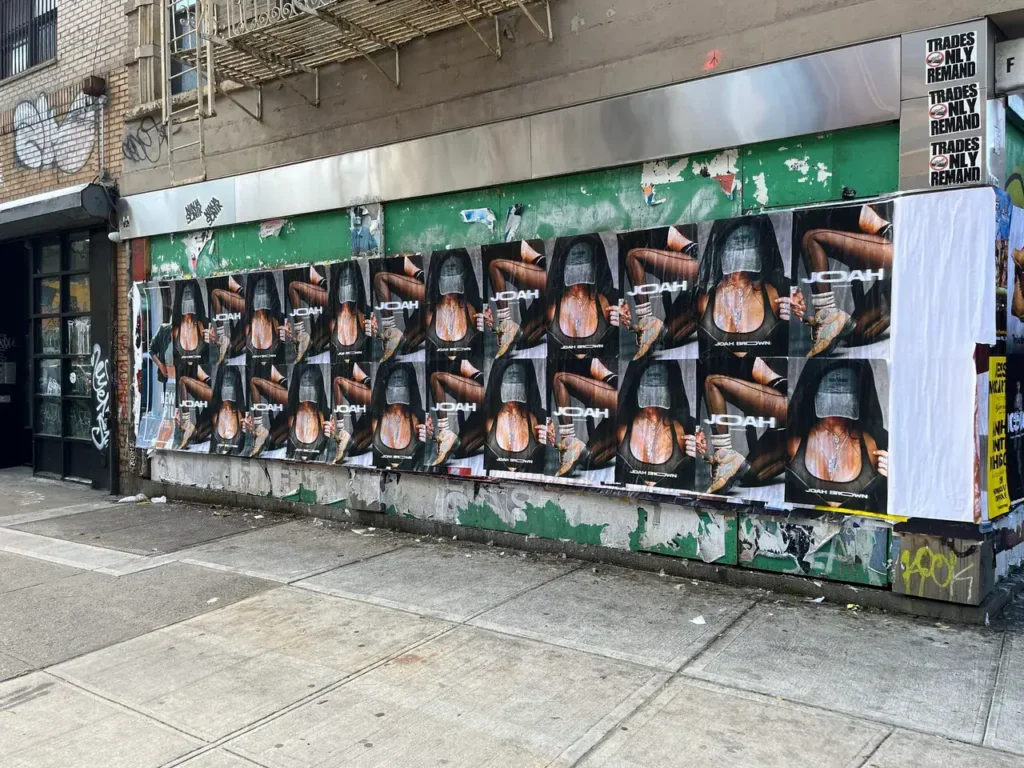
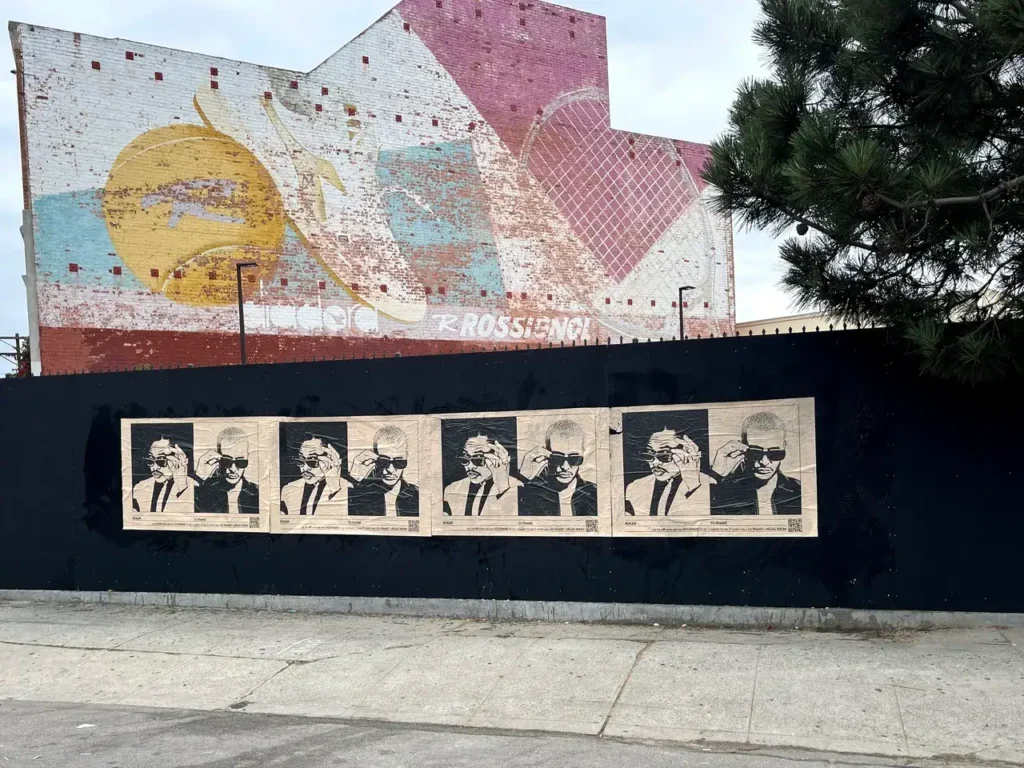
Jay Ellis’s Manhattan wheatpasting campaign used AGM to place large-format poster grids in the entertainment corridors of Brooklyn and Manhattan — Williamsburg, the Lower East Side, and Hell’s Kitchen — timed to an entertainment release and targeted at the core young professional and entertainment audience. AGM’s deployment covered Williamsburg, Lower East Side, and Hell’s Kitchen — the core entertainment audience corridors — with installations completed within a 24-hour window ahead of the release date. The entertainment-corridor poster strategy developed for Jay Ellis’s Manhattan campaign — timed to entertainment industry activity — applies to Mississippi campaigns in Jackson and Biloxi targeting the professional and lifestyle audience.
Result: Full entertainment corridor coverage across Brooklyn and Manhattan within 24 hours, with street presence maintained through the full release weekend
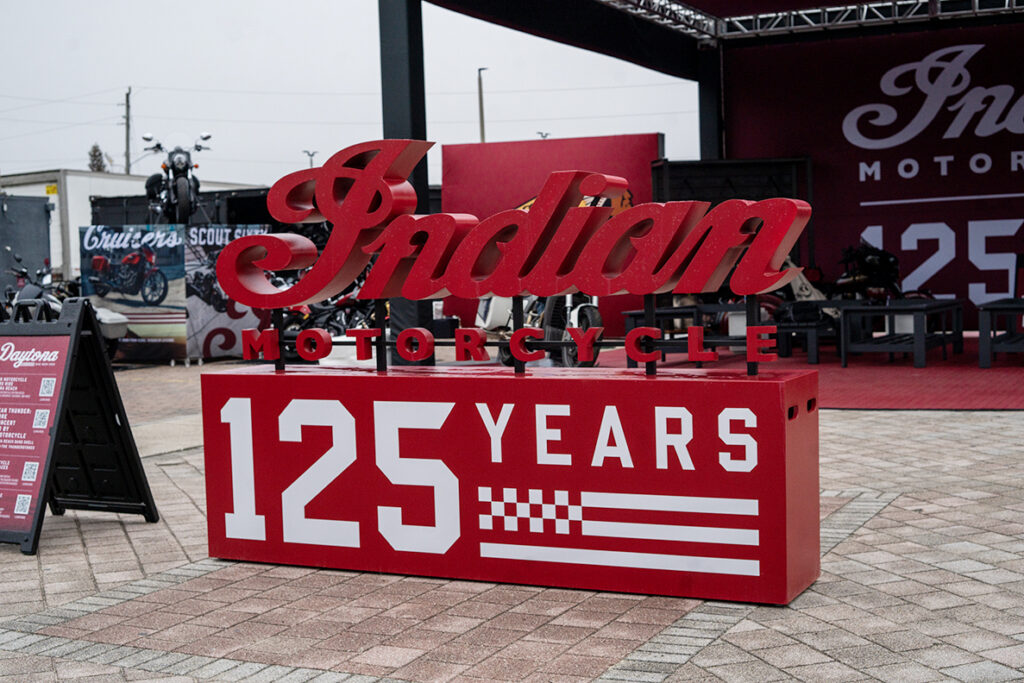
For Bike Week in Daytona, Indian Motorcycle deployed AGM to install an oversized wheatpaste mural on the Main Street Bridge, intercepting the full rider and pedestrian footprint of one of North America’s largest single-brand audience concentration events at its primary crossing point.
The case for American Guerrilla Marketing as your South Carolina wheat paste poster campaign operator is operational accountability at every stage: wall selection grounded in verified South Carolina foot traffic data, installation by trained Southeast field crews using tropical adhesive formulations appropriate for the Lowcountry’s subtropical climate, and GPS-documented reporting that proves the campaign performed as planned. Over ten years of national execution have built the local knowledge and reporting standards that separate AGM from generic outdoor placement in South Carolina and every market where national brands require street-level advertising with documented performance accountability.
The Most Common Poster Sizes, Visualized:
The standard poster size measuring 24 x 36 inches is a cornerstone format for high-impact street marketing and large-scale visual communication. This size is frequently used in premium snipe placements, wheatpasting, and traditional wheatpasting campaigns where commanding attention from a distance is essential. Closely aligned with the A1 international standard, it supports consistent production across markets while delivering strong visual clarity and scale.
In real-world execution, 24 x 36 posters are commonly deployed on large plywood walls, construction fencing, barricades, and exterior surfaces in high-traffic corridors. When used in wheatpasting and wheatpasting, this size allows for bold imagery, oversized typography, and simplified messaging that can be absorbed quickly by passersby. As an oversized snipe format, it is especially effective for advertising campaigns, brand launches, trade shows, exhibitions, and major announcements where visibility, authority, and immediate recognition are the primary goals.
The Most Common Poster Sizes, Visualized:
The 48 x 72 inch poster size is an oversized evolution of the traditional bus stop format, designed for maximum visual dominance in high-traffic environments. This size is frequently used in premium snipe placements, large-scale wheatpaste posting, and advanced wheatpasting campaigns where commanding attention from both long distance and close proximity is essential.
In real-world execution, 48 x 72 posters are ideal for major transit zones, exterior walls, construction wraps, subway approaches, and street-facing installations where scale directly impacts performance. When used in wheatpasting and wild wheat paste posting, this format supports oversized typography, bold imagery, and simplified layouts that stop viewers in their tracks. As a large-format snipe option, it is especially effective for brand launches, national advertising campaigns, cultural announcements, and high-impact outdoor activations that demand authority, visibility, and memorability.
Getting started on a poster design or printed project doesn’t need to involve technical guesswork. Download free starter files for each poster size to begin designing with confidence. These files are pre-sized to exact specifications and built to professional print standards, helping you avoid common setup issues from the start.
Our starter files are available for PDF Reader and Adobe Photoshop, making them simple and accessible for most workflows. Each file is correctly sized and includes proper bleed, trim, and color space settings, so your designs are ready for production whether they are being used for snipes, wheatpasting, wheatpasting, or larger street-level campaigns.
Using these starter files saves time, improves consistency, and helps ensure your posters print cleanly and accurately on the first run. They are ideal for designers, marketers, and brands that want reliable, print-ready files across all standard poster sizes without unnecessary complexity.
Charleston’s Upper King Street corridor and the College of Charleston campus perimeter area are South Carolina’s highest-quality poster environments — a walkable commercial and arts district serving the city’s young professional and university demographic in one of the most historically significant and nationally covered small cities in the South. Columbia’s Vista District on Gervais Street and the Five Points corridor near USC serve the state capital and university market effectively.
Yes — you can view AGM’s location and client reviews directly on Google using the button on this page. AGM’s South Carolina campaigns are managed through the same national infrastructure used for all US market deployments.
AGM uses tropical adhesive formulations for South Carolina campaigns — systems engineered for the Lowcountry’s high humidity, intense summer heat, frequent thunderstorm activity, and the salt air that affects Charleston and the South Carolina coastal markets. South Carolina’s subtropical climate requires adhesive systems capable of maintaining bond strength through summer surface temperatures that can exceed 130°F on south-facing masonry and through the moisture cycling of the region’s near-daily summer rainfall.
Yes. AGM has pre-approved wall positions on the Upper King Street corridor adjacent to the College of Charleston campus and in Columbia’s Five Points district near the University of South Carolina campus on Greene Street. University-targeted South Carolina campaigns can deploy 100–150 posters across campus approach corridors within 5 business days.
Yes. AGM coordinates Charleston metro campaigns with the North Charleston Coliseum and Performing Arts Center events calendar — the Lowcountry’s largest concert venue at 5001 Coliseum Drive. Contact AGM 4–6 weeks before your target event date to secure approach corridor positions in Charleston and North Charleston.
Yes. AGM maintains field crew coverage and pre-approved wall networks in both Charleston and Columbia. Multi-city South Carolina campaigns execute within a 48–72 hour installation window, with GPS-documented reporting across both markets in a single consolidated post-campaign report.
Tourism, hospitality, food and beverage, lifestyle, and arts brands excel in Charleston’s Upper King Street and King Street historic district. University brands targeting College of Charleston and USC students perform well in the Upper King and Five Points corridors respectively. Myrtle Beach summer campaigns serve entertainment, travel, and nightlife brands targeting the Grand Strand tourism audience.
AGM’s tropical adhesive formulations maintain poster integrity for 4–6 weeks under typical South Carolina subtropical conditions, including summer heat, high humidity, and frequent thunderstorm activity. Charleston coastal campaigns use tropical-grade formulations standard to handle salt air and marine humidity from the Atlantic and Charleston Harbor. Contact AGM for season-specific guidance for your target South Carolina market.