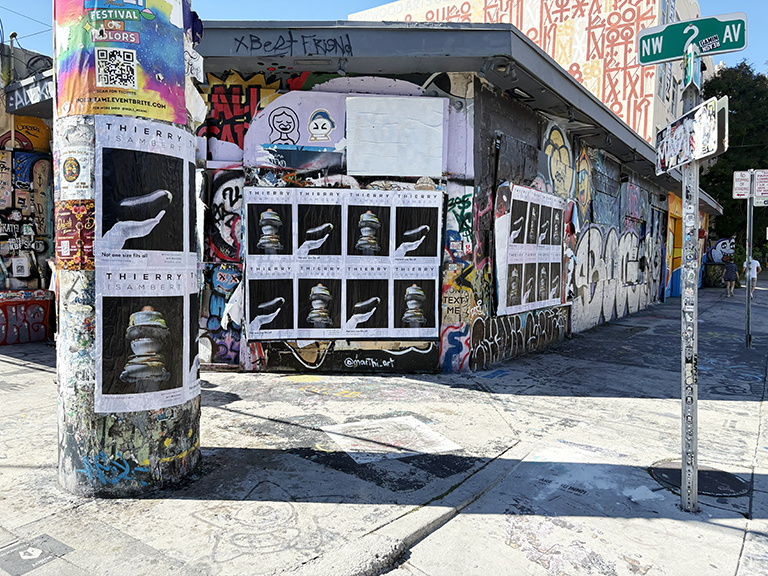
πŸš€ NEW WHEATPASTING MARKETS Discover our wheatpasting campaigns in : πŸ‡¬πŸ‡§ London β€’ πŸ‡¨πŸ‡¦ Canada β€’ πŸ‡²πŸ‡½ Mexico City

American Guerrilla Marketing

Nationwide Service

Media planning, media buying, billboard advertising, & guerrilla marketing

Corporate Campus Reconnaissance

AGM scouts corporate campuses, office parks, and business districts to identify the pedestrian zones, commuter corridors, parking approaches, and surface inventory where guerrilla marketing campaigns reach employees, contractors, and visitors at their daily access points.

Corporate Campus Reconnaissance

Our operators walk campus perimeters, document access point timing, assess surface inventory along commuter corridors, and photograph every viable placement surface before a single brief is finalized. That field-first methodology is what makes corporate campus reconnaissance useful rather than decorative. Corporate campuses are one of the most concentrated and reliable audience environments in guerrilla marketing. Employees at a major office campus follow predictable daily movement patterns: they arrive through the same parking structures, walk the same sidewalk routes to building entrances, visit the same coffee shop or food hall at the same hours, and leave through the same access points at the end of the day. That predictability is the opposite of the variable foot traffic in retail districts and entertainment zones. A campaign deployed at the right access point on a corporate campus with 5,000 employees reaches the same audience five days a week for the full campaign period, building the frequency and familiarity that produces real awareness.

American Guerrilla Marketing has delivered Corporate Campus Reconnaissance reports for campaigns across the United States. Every Corporate Campus Reconnaissance engagement reflects firsthand field intelligence: operators walking the campus perimeter, documenting commute routes, and confirming property contacts before any Corporate Campus Reconnaissance surface recommendation is made. Contact AGM to discuss your Corporate Campus Reconnaissance objectives.


Get a Custom Corporate Campus Reconnaissance Quote

Tell AGM the target company, campus location, campaign format, and deployment timeline. AGM puts a scout on the ground and delivers documentation that gives your campaign ground-truth intelligence on where the target audience moves, when they move, and what surfaces are available to reach them.

How We Do It

Our corporate campus reconnaissance process runs in five steps. First, we map the campus perimeter and identify public access points β€” the entry and exit corridors where non-employees can legally position placements. Second, we document internal campus pedestrian flows using visible site assessment: parking structure approaches, cafeteria routes, fitness facility adjacencies. Third, we assess off-campus approach zones: the commercial streets, transit stops, and surface inventory within a quarter-mile of campus gates that reaches the employee audience during commute windows. Fourth, we verify any relevant municipal regulations around signage placement near corporate campuses. Fifth, we deliver a prioritized placement map with traffic estimates for each zone.

This service type is led by AGM field operators Dana Kowalski and Tom Ferrara, who between them have completed corporate campus reconnaissance briefs at more than 60 campuses across 22 states. The corporate campus reconnaissance briefs this team delivers reflect on-the-ground, firsthand site assessment — operators evaluated every campus location in person before it reached a client. Nothing in the report was evaluated remotely.

Surface and environment assessment at the specialist level β€” what AGM delivers for every Corporate Campus Reconnaissance engagement β€” involves more than identifying an available location. Our Corporate Campus Reconnaissance operators evaluate format-specific viability, foot traffic density by hour and season, sightline clearance or access geometry, and property contacts for permissioned placements. Expert knowledge in each dimension is what makes AGM Corporate Campus Reconnaissance reports executable.

Corporate campus reconnaissance is the field research process that finds those access points and documents them in enough detail to deploy a campaign with precision. We assess employee foot traffic windows by walking campus approach corridors at shift-change hours, not by reading published data. We document competing signage, security camera placement, and transit adjacency by standing at each location in person. AGM’s reconnaissance teams walk the perimeter and interior of corporate campuses as civilians: on public sidewalks, through adjacent retail zones, along the transit stops and rideshare pick-up areas that serve the campus, through the parking garage approach corridors, and along the pedestrian paths between the main campus and the commercial blocks where employees eat and shop. The output is a field documentation package that identifies the highest-impact deployment zones, the surface types available at each zone, the legal and access status of each site, and the specific timing windows when audience density peaks at each location.

Major corporate campuses in the United States concentrate tens of thousands of workers in defined geographic zones. Amazon’s HQ2 in Arlington, Virginia employs more than 25,000 people across a developing mixed-use campus along Pentagon City and Crystal City. Apple Park in Cupertino houses 12,000 employees in a single building. Microsoft’s Redmond campus has more than 50,000 workers on-site. A single well-executed guerrilla deployment at the right access point of any of these campuses reaches a professional audience at frequency that television advertising cannot replicate at any budget level.

American Guerrilla Marketing has delivered Corporate Campus Reconnaissance reports for campaigns across the United States, and the field methodology is the same everywhere β€” operators walking the corporate environment in person, documenting what they find firsthand, and delivering GPS-verified location intelligence. Contact AGM to start your Corporate Campus Reconnaissance engagement.

What Corporate Campus Reconnaissance Documents

AGM’s reconnaissance process is systematic. Each scout walks the full perimeter and relevant approach zones of a target campus, documenting every element that affects campaign execution. The field documentation package that comes back from a corporate campus scout contains the following:

Entry and Exit Point Mapping

Every vehicle entrance and exit, pedestrian gate and turnstile, transit access point, rideshare staging area, and parking structure entrance. Documentation includes sightline distances, pedestrian dwell zones, and traffic volume estimates during peak arrival and departure windows.

Parking Approach Corridors

The sidewalk and surface routes between parking structures and main building entrances. These corridors often carry the highest sustained pedestrian foot traffic on the entire campus because every person who drives to work walks them twice a day. Documentation includes surface type, distance, and physical structures adjacent to the walking path.

Transit Adjacency

Bus stops, light rail stations, metro stops, and shuttle pick-up zones serving the campus. Employee commuters arriving by transit walk defined routes from their drop-off point to their building entrance. These routes carry predictable high-density foot traffic at predictable morning and evening hours. Documentation identifies the specific sidewalk paths, wait zones, and surface inventory along each transit approach.

Cafeteria and Food Hall Exteriors

Campus cafeteria buildings, outdoor dining patios, food truck staging areas, and the coffee shop or retail concourse that employees visit during the work day. These zones carry foot traffic at midday and break hours that supplements the arrival and departure peaks. Documentation includes access points, exterior surface inventory, and the sightlines from high-traffic outdoor seating areas.

Adjacent Commercial Blocks

The restaurants, bars, coffee shops, gyms, dry cleaners, and retail that employees use before work, at lunch, and after work on the blocks surrounding the campus. These blocks are not controlled by campus security and are fully accessible for guerrilla format deployment. Documentation covers the walking routes between campus exits and these commercial zones, the surface inventory on adjacent commercial building exteriors, and the timing windows when employee traffic concentrates.

Surface Inventory and Conditions

Every viable surface in the scouted zone: building exteriors, construction hoardings, utility infrastructure, parking structure facade panels, bus shelter backs, and any permanent or temporary structures carrying visible surface area. Documentation includes surface material, condition, dimensions, height, lighting availability, and permission or legal status.

Security and Access Considerations

Security guard patrol patterns on public-facing perimeter zones, camera coverage on exterior walls and sidewalks adjacent to campus property, and any posted restrictions on the public sidewalks and right-of-ways immediately surrounding the campus. This documentation informs decisions about which deployment methods are appropriate for each zone.

Timing Windows

Documented arrival and departure peaks, lunch hour foot traffic windows, and any irregular high-density periods driven by all-hands meetings, product launches, or campus events. Timing documentation allows campaign deployments to be scheduled for maximum audience exposure rather than general availability.

Corporate Campus Types Agm Scouts

We assess every campus type on foot. Our scouts have walked the public approach routes around single-tenant tech campuses in Silicon Valley, documented the pedestrian flow at urban office towers in Midtown Manhattan, and photographed surface inventory at healthcare campuses in Houston and Boston before any client brief was finalized. Corporate campuses come in several distinct physical configurations, each requiring a different scouting approach. The large single-tenant suburban campus, the urban multi-tenant office tower, the mixed-use tech campus, and the business park with distributed buildings across a large footprint all present different pedestrian patterns, surface inventories, and access conditions. AGM’s reconnaissance teams are trained to adapt their documentation methodology to the specific campus configuration rather than applying a one-size-fits-all field protocol.

Single-Tenant Tech Campuses

Large suburban and urban tech campuses like those operated by Google in Mountain View along Amphitheatre Parkway, Meta in Menlo Park along Willow Road, and Amazon in Seattle’s South Lake Union along Mercer Street have defined employee populations with well-established daily movement patterns. The public sidewalks and adjacent commercial blocks surrounding these campuses are accessible and carry a high concentration of the target demographic throughout the workday. Reconnaissance documents the pedestrian routes from employee parking structures, the transit stops serving the campus, the coffee shops and lunch spots employees frequent on adjacent blocks, and the approach corridors where campaign materials placed outside the property line reach the maximum employee audience.

Urban Office Towers and Plazas

Urban office towers in cities like New York, Chicago, Seattle, Austin, and San Francisco concentrate employees on sidewalks, building lobby approaches, plaza surfaces, and adjacent subway and bus access points. Midtown Manhattan office towers along Sixth Avenue and Park Avenue funnel tens of thousands of workers through specific intersections during morning and evening rush. The plaza at 30 Rock, the sidewalk approach to One World Trade Center, and the ground-level exterior of the Salesforce Tower in San Francisco each have defined pedestrian movement patterns that a scout documents in detail. Urban tower reconnaissance focuses on the street-level environment within a one-block radius of the building entrance and the transit infrastructure serving the building.

Multi-Tenant Business Parks

Suburban business parks with multiple tenants across several buildings and a shared parking infrastructure are common in markets like Tysons Corner in Virginia, the Research Triangle in North Carolina, and the biotech corridor along Route 128 outside Boston. These environments have lower pedestrian density than urban campuses but produce concentrated audience moments at the parking structure approaches, the shared amenity building, and the main access road during arrival and departure hours. Reconnaissance at business parks maps the vehicle flow pattern, identifies the pedestrian zones where employees walk between buildings and amenities, and documents the surface inventory along those routes.

Corporate Headquarters with Mixed-Use Development

Amazon’s HQ2 in Arlington, Microsoft’s campus in Redmond, and Google’s planned Hudson Square development in Manhattan are examples of corporate campuses integrated with or surrounded by mixed-use retail, residential, and entertainment development. These environments create pedestrian zones where employees, residents, and visitors all move through the same streets and access points. Reconnaissance at mixed-use campuses documents the overlap zones where employee and general public foot traffic combine, the retail and dining blocks that serve both populations, and the surface inventory in the mixed-use commercial ground floors adjacent to the campus.

Financial District and Professional Services Clusters

The financial district clusters in New York, Chicago, Boston, and San Francisco concentrate a professional services workforce in dense blocks of office towers with shared pedestrian infrastructure. The streets around the New York Stock Exchange on Broad Street and Wall Street, the LaSalle Street corridor in Chicago, State Street in Boston’s Financial District, and Montgomery Street in San Francisco’s Financial District each carry professional workforce foot traffic at predictable times with predictable destination patterns. Reconnaissance in financial districts maps the pedestrian routes from transit access points to office entrances and documents the surface inventory on the building exteriors, plaza walls, and transit adjacency surfaces in the zone.

Healthcare and Research Campuses

Medical center campuses, hospital complexes, and biotech research parks operate on schedules that create distinct shift-change foot traffic peaks. The medical center campus at the Texas Medical Center in Houston along Holcombe Boulevard and Bertner Avenue is the world’s largest medical complex, with more than 60,000 employees on a campus covering over 1,000 acres. Johns Hopkins Hospital in Baltimore along Orleans Street, Cleveland Clinic’s main campus on East 96th Street, and the Mass General Brigham campus network in Boston each have defined employee movement patterns tied to shift schedules. Reconnaissance at healthcare campuses documents the shift-change windows and the pedestrian routes between parking, transit, and building entrances that concentrate workforce foot traffic at specific hours.

Corporate Campus Scouting Feeds Every Format Agm Executes

    Award Winning Personalized Service

    You will get thoughtful, devoted, and individualized attention from our experienced, qualified, and professional personnel. Being one of the most illustrious agencies in Brooklyn, New York, American Guerrilla Marketing has been awarded the Best of Brooklyn title.

    Nationwide

    Industry City, Brooklyn, New York 11232

    American Guerrilla Marketing

    +1 (646) 776-2770

    [email protected]

    Telegram: @americanguerillamarketing

    Hours

    Mon - Fri:Β 9 AM - 5 PM

    Sat & Sun:Β Closed

    Automate your campaign with AGM’s Request for Proposal Builder.

    Automate your campaign with AGM’s Request for Proposal Builder. Simply answer a few quick questions about your campaign goals, markets, and timeline, and the system will generate a tailored presentation with recommended strategies, quantities, and pricing. Click the RFP Builder to instantly receive your customized proposal.

    Campaign Formats That Follow A Corporate Campus Scout

    Corporate campus reconnaissance feeds campaign execution. Once AGM has documented a campus, the field team deploys the formats that match the specific environment and audience concentration points the reconnaissance identified. No two campus campaigns use the same format mix because no two campuses produce the same pedestrian patterns and surface inventory. The scout determines which formats work and where. The field team executes based on what the scout documented.

    Street Team and Brand Ambassador Programs

    Street team deployments at corporate campuses are among the most precise audience targeting tools in field marketing. A brand ambassador stationed at the rideshare pick-up zone outside a major corporate campus during the 7:30 to 9:30am arrival window interacts face-to-face with every employee who gets dropped off at that access point. The scout documents the exact location, dwell time, and traffic volume at that access point so the street team lead knows exactly where to position staff and when to arrive. Adjacent commercial blocks near campus where employees get coffee and lunch extend the street team deployment window beyond arrival and departure hours into the workday itself. For campaigns targeting employees at specific companies or in specific professional sectors, a corporate campus street team deployment with reconnaissance-based positioning is one of the most cost-effective forms of face-to-face marketing available.

    Snipe and Poster Campaigns

    Snipe poster campaigns at utility infrastructure on the public right-of-ways surrounding a corporate campus reach the employee audience on the same pedestrian routes they walk every workday. A snipe on a utility pole at the corner where 500 employees cross to reach the main parking structure entrance reaches those 500 people twice a day, five days a week, for the full campaign period. The reconnaissance report identifies the specific utility infrastructure on the highest-traffic approach corridors and documents the sightline angles and pedestrian approach directions that determine poster placement height and orientation. Snipe campaigns on corporate campus approach routes produce campaign frequency metrics that no broadcast or digital format can replicate at comparable cost for a targeted professional workforce audience.

    Sidewalk Decal and Stencil Campaigns

    Sidewalk decals and stencils on the public sidewalks and plaza surfaces adjacent to corporate campuses place brand messaging directly in the visual path of employees during their daily arrival and departure. A decal on the sidewalk at the main pedestrian entrance of a corporate campus with 10,000 employees receives 20,000 impressions per workday: every employee sees it on the way in and on the way out. The reconnaissance report documents the surface material, pedestrian direction of travel, and measurement of the target zone at each high-traffic sidewalk point so the production team can spec the correct decal format and size for maximum visibility within the pedestrian sightline.

    Guerrilla Projections

    Evening projections on corporate campus building exteriors, parking structure facades, and adjacent commercial building walls reach employees during departure hours and the dinner service window in adjacent restaurant districts. A projection on the face of a parking structure visible from the main pedestrian approach during the 5:00 to 8:00pm departure window reaches thousands of employees during the exact moment they are transitioning from work mode to personal time, with attentional availability that daytime ambient formats do not capture. Reconnaissance for projection campaigns documents the optimal projection wall, standoff distance for the projection unit, power access options, and the foot traffic pattern in the target zone during the deployment window.

    Off-Campus Environments: Where the Real Conversations Happen

    The campus perimeter is only part of the picture. Some of the most productive touchpoints in a corporate campus campaign happen nowhere near the building entrance. AGM scouts the off-campus environment employees actually live in: the coffee shop two blocks from the parking garage they stop at before clocking in, the lunch spot on the commercial strip they walk to three days a week, the bar around the corner where the team goes on a Thursday after a long day. These are the places where employees are relaxed, off-guard, and genuinely receptive to a well-placed brand interaction. The scout maps all of it.

    A coffee shop two blocks from a tech campus with 4,000 employees does not need a massive budget to make an impression. A stack of branded coasters on every table, a take-one card holder next to the register, and a door hanger on the bathroom stall reaches every employee who walks through that door during the morning rush. That same shop filled with the same people every morning for three weeks builds a frequency level that no display ad can touch. The reconnaissance report identifies which specific shops are in the employee traffic pattern, how far they are from the campus entrance, and what the interior looks like for placement opportunities.

    Lunch spots within walking distance of a campus are another high-value environment. Employees cluster at the same three or four restaurants on a rotating schedule. A brand activation in one of those restaurants, whether it is a sponsored lunch promotion, a take-one at the host stand, or a branded presence in the seating area, reaches the target audience in a setting they chose voluntarily and where they have time to actually engage. For a healthcare brand targeting the clinical staff at a hospital campus, placing materials at the sandwich shop on the ground floor of the adjacent medical office building during the 11:30am to 1:30pm window hits the exact audience at the exact moment they step away from work.

    Bars and after-work spots near corporate campuses serve a different function. The employee audience at a bar two blocks from a financial district office tower on a Friday at 6pm is a concentrated, defined demographic in a context where they are socially open and not rushing anywhere. Bar takeovers, coaster campaigns, and branded activations at these locations reach the professional workforce audience in a way that does not feel like an interruption. A fintech brand running a bar takeover at the spot where the teams from a target company unwind after earnings season is not just buying impressions. It is buying a moment. Reconnaissance identifies which specific bars see the after-work traffic from the target campus, what the interior layout looks like, and who owns the place.

    Every surface in the corporate campus reconnaissance placement inventory was assessed by a certified field expert β€” licensed professional operators who confirm access, evaluate conditions, and document what they find.

    AGM’s corporate campus reconnaissance field specialists are certified placement experts — licensed professionals who maintain the placement inventory through direct on-the-ground surface assessment.

    Corporate Campus Reconnaissance Use Cases

    Competitive Conquesting

    Competitive conquesting campaigns target the employees of specific competitor companies. A fintech startup building brand awareness in the enterprise software sector scouts the campuses of Salesforce, Oracle, SAP, and Microsoft to deploy campaigns that reach software procurement decision-makers and technical users during their daily commute. A recruiting agency specializing in technology talent scouts the campuses of the largest tech employers in Seattle, Austin, and the Bay Area to reach engineers and product managers during their arrival and departure windows. A law firm or financial services brand targeting the professional workforce in a specific sector scouts the office towers and campuses where that sector concentrates. Reconnaissance provides the location intelligence that makes conquesting campaigns deployable with precision rather than generalized media placement.

    B2B Product and Service Launches

    Companies launching B2B software, enterprise hardware, professional services, and workplace products use corporate campus reconnaissance to identify the highest-concentration points for reaching decision-makers and technical users. A cloud infrastructure company launching a new enterprise product scouts the campuses of its target customer segment to deploy field marketing at the exact locations where the target buyer and user population concentrates. The combination of precise audience geography from reconnaissance and the tactile impact of guerrilla marketing materials creates a brand presence that digital-only enterprise marketing cannot produce.

    Recruiting and Employer Brand Campaigns

    Companies in active hiring modes for technical and professional talent use corporate campus reconnaissance to deploy employer brand campaigns at competitor and talent-pool campuses. A startup targeting engineers from established tech companies scouts the parking structures, transit stops, and coffee shop approach zones around the target campus to deploy campaign materials that reach the specific professional audience with the right message at a predictable daily touchpoint. Reconnaissance-based recruiting campaigns reach the target candidate population outside the job board environment, where the candidate is not actively browsing and where the competitive noise of digital recruiting advertising is absent.

    Financial Services and Investment Products

    Financial services campaigns targeting high-income professional workforces use corporate campus reconnaissance to reach the demographic at their workplace access points. A wealth management firm targeting senior professionals at investment banks and private equity firms scouts the office tower corridors of Midtown Manhattan, Chicago’s Loop, and Boston’s Financial District to deploy brand campaigns at the transit exits and lobby approach zones where the target demographic passes daily. The concentration of target-income households in the professional workforce at major corporate campuses makes corporate reconnaissance one of the most efficient targeting tools available for high-net-worth financial product marketing.

    Bar and Venue Scouting

    Bar and Venue Scouting

    The right venue reaches your audience when they are relaxed, social, and receptive. Finding that venue requires field research, not a Yelp search. We identify and vet the bars, restaurants, and nightlife spots that match your brand and your target audience.

    Learn More
    Building Projection Scouting

    Building Projection Scouting

    Projection media is technically demanding before it is creatively demanding. The geometry has to work. The ambient light has to cooperate. The wall has to take the image. We scout all of it before you book the equipment.

    Learn More

    All Scouting Services

    College Campus Reconnaissance

    College Campus Reconnaissance

    University campuses have their own geography, their own pedestrian logic, and their own advertising rules. Our field operators map it all before a single dollar goes into production.

    Learn More
    Corporate Campus Reconnaissance

    Corporate Campus Reconnaissance

    AGM scouts corporate campuses, office parks, and business districts to identify the pedestrian zones, commuter corridors, parking approaches, and surface inventory where guerrilla marketing campaigns reach employees, contractors, and visitors at their daily access points.

    Learn More
    Event and Festival Scouting

    Event and Festival Scouting

    The best opportunity to reach a defined audience in a concentrated geographic zone happens in the hours before and after a major event. We map the entire perimeter, document every approach route, and rank every activation zone before the crowd arrives.

    Learn More
    Guerrilla Activation Scouting

    Guerrilla Activation Scouting

    A brand stunt in the wrong plaza is a brand stunt nobody sees. We find the exact intersection, courtyard, or public space where your target audience concentrates, document the logistics, research the permits, and hand you a site that works.

    Learn More
    Mobile Billboard Route Scouting

    Mobile Billboard Route Scouting

    A billboard truck running the wrong corridor delivers impressions to an audience that was never the target. We map the routes that put your LED or static display in front of the specific people you need to reach, at the times they are actually there.

    Learn More
    Mural Location Scouting

    Mural Location Scouting

    A mural is a permanent statement. The wall you choose determines whether it gets seen by thousands daily or disappears behind a dumpster. We find the right wall before your production team touches a brush.

    Learn More
    Neighborhood Distribution Scouting

    Neighborhood Distribution Scouting

    Distribution campaigns fail when the neighborhood data is wrong. A door hanger campaign in the wrong building type, the wrong demographic zone, or a neighborhood with access barriers the crew was not briefed on burns print and labor on zero-return addresses. We fix that before the crew goes out.

    Learn More
    Pop-Up Location Scouting

    Pop-Up Location Scouting

    Actually, A mobile boutique parked in the wrong block is invisible to the audience you paid to reach. We find the locations where your pop-up will attract the people it needs, and document everything from loading access to permit requirements before you commit to a date.

    Learn More
    Street Advertising Location Scouting

    Street Advertising Location Scouting

    Snipe placements, sidewalk decals, and stencil campaigns all depend on knowing the specific poles, pavement, and intersections that your audience actually passes. We map that territory before your crew hits the street.

    Learn More
    Street Team Location Scouting

    Street Team Location Scouting

    Brand ambassadors are only as effective as the zone they are deployed in. We identify the intersections, transit stops, and venue approaches where your exact target demographic concentrates, count the traffic, and confirm the deployment makes sense before your team hits the street.

    Learn More
    Transit Adjacency Scouting

    Transit Adjacency Scouting

    Subway exits, bus stops, and train stations concentrate thousands of people at defined physical points on a predictable daily schedule. We map those points, document the surface inventory within reach, and profile the commuter audience by line, exit, and time window.

    Learn More
    Wheatpaste Location Scouting

    Wheatpaste Location Scouting

    A wheatpaste campaign lives or dies on wall selection. The wrong surface peels in 48 hours. The wrong neighborhood tears posters down before the paste dries. We find the walls that work, in the neighborhoods where posting belongs.

    Learn More

    What Brands Use AGM Corporate Campus Reconnaissance For

    Recruiting and HR Technology Campaigns

    Companies in active hiring modes and HR tech brands targeting talent acquisition teams use campus reconnaissance to deploy employer brand and recruiting campaigns at competitor and talent-pool campuses — reaching the specific professional audience outside the job board environment where competitive noise is absent.

    B2B Technology and Software Brands

    Enterprise software companies, SaaS platforms, and B2B tech brands use campus reconnaissance to identify the access points, transit corridors, and adjacent commercial blocks where decision-makers and technical users at target companies concentrate during their daily routines.

    Financial Services and Investment Products

    Wealth management firms, fintech brands, and financial services companies targeting high-income professional workforces use campus reconnaissance to reach the demographic at their daily workplace access points — the transit exits, parking structure approaches, and lobby corridors where no digital ad format has access.

    Healthcare and Pharmaceutical Brands

    Healthcare brands targeting clinical staff, pharmaceutical companies reaching healthcare professionals, and medical technology companies use hospital and healthcare campus reconnaissance to document shift-change foot traffic windows and the off-campus lunch and coffee corridors where clinical staff decompress away from the facility.

    Frequently Asked Questions: Corporate Campus Reconnaissance

    Corporate campus reconnaissance is field research that documents the pedestrian zones, access points, surface inventory, traffic patterns, and timing windows around a corporate campus or office complex. The output is a field documentation package that enables guerrilla marketing campaigns to deploy at the exact locations where target employees and professionals concentrate during their daily work routines.

    No. Corporate campus reconnaissance documents the publicly accessible environment surrounding the campus: public sidewalks, transit stops, rideshare zones, parking structure approach corridors, and adjacent commercial blocks. Access to private campus property is not required for reconnaissance that supports guerrilla marketing campaigns, which deploy on public right-of-ways and adjacent commercial surfaces outside the campus property line.

    A single-campus reconnaissance of a suburban office complex or urban office tower typically takes one full field day. Larger multi-building campuses or campus networks across multiple sites require coordinated field teams and additional time on the ground. Final reconnaissance packages are delivered within 7 to 10 business days after all designated site visits are completed. Contact AGM to discuss timeline requirements for your specific project.

    AGM conducts corporate campus reconnaissance in any U.S. market. Major corporate campus reconnaissance markets include New York, San Francisco, Seattle, Austin, Boston, Chicago, Los Angeles, Washington DC, Atlanta, Dallas, Denver, and Miami. Secondary markets with major employer campuses are covered through AGM’s national field network.

    The most effective formats following corporate campus reconnaissance are brand ambassador and street team programs at access points, snipe campaigns on utility infrastructure along approach corridors, sidewalk decals at main pedestrian entrances, and distribution at transit stops and adjacent commercial locations. The best format mix depends on the specific campus layout, the surface inventory the reconnaissance documents, and the campaign objective. AGM recommends formats based on what the reconnaissance finds rather than a predetermined format list.

    Yes. Multi-campus reconnaissance in a single market can cover several campuses in one field engagement. For competitive conquesting campaigns or broad professional workforce targeting, scouting multiple campuses in one trip reduces both cost and time between reconnaissance and deployment. AGM structures multi-campus reconnaissance itineraries based on geographic clustering and format requirements.

    Yes. Recruiting and employer brand campaigns are one of the highest-value applications of corporate campus reconnaissance. Reaching engineers, product managers, financial professionals, and other in-demand roles at their current workplace access points puts the employer brand message in front of the target candidate in a context outside the job board environment, where the competitive noise of digital recruiting advertising is absent and the physical presence of a well-executed guerrilla campaign creates memorable brand exposure.

    General location scouting identifies surface inventory and audience concentration across a neighborhood or city zone. Corporate campus reconnaissance is specifically structured to document the behavioral patterns of a defined professional workforce population: where they arrive, where they park, which transit stops they use, which commercial blocks they visit, and what the surface environment looks like along each of those routes. The specificity of the audience geography is what makes corporate campus reconnaissance useful for campaigns that need to reach a professional workforce rather than a general public audience.

    AGM Scouting Coverage: All 50 States and D.C.

    AGM operates a national network of field operators. We have scouted campaigns in every U.S. state and the District of Columbia. Whether your campaign targets a dense urban core or a suburban retail corridor, we have operators who know the territory.

    No locations found

    American Guerrilla Marketing Blog Posts