American Guerrilla Marketing
Nationwide Service
Media planning, media buying, billboard advertising, & guerrilla marketing
Advertise onThe Wave
AGM works as your media planning and buying partner for bus and transit line advertising — we source placements through established vendor and transit authority relationships, negotiate rates on your behalf, and manage the campaign from creative specs through to proof-of-performance reporting. You work with one team; we handle the operators and inventory owners.

The Wave is Fort Lauderdale’s modern streetcar connecting downtown, the Brightline station, and the Arts and Entertainment district along Broward Boulevard and SW 2nd Street. Interior ads and shelter placements reach Fort Lauderdale’s growing downtown professional and entertainment community.
The Wave is Fort Lauderdale’s modern streetcar system serving the downtown core, connecting the Broward County Convention Center area, the Brightline high-speed rail station, the federal courthouse, and the Arts and Entertainment district along a dedicated streetcar corridor. The system serves the growing downtown Fort Lauderdale professional population and the visitors to the downtown entertainment and cultural district.
Fort Lauderdale’s downtown has experienced significant development in recent years, with new residential towers, the Brightline intercity rail connection, and continued growth in the waterfront and Flagler Village neighborhoods. The Wave streetcar serves this growing urban population with a dedicated transit corridor through Fort Lauderdale’s most active commercial and cultural district.
AGM has placed transit advertising on Florida bus systems for over a decade, with 500+ campaigns executed nationwide across comparable systems. We know the The Wave service area, the routes that matter for specific advertiser objectives, and the shelter locations that deliver the highest pedestrian dwell time in Fort Lauderdale. What follows is a detailed breakdown of interior bus advertising, shelter advertising, and guerrilla marketing opportunities across the The Wave network. Every section includes specific route information, shelter location context, and format recommendations based on AGM’s direct execution experience.

Advertise onBay Town Trolley
Bay Town Trolley serves Panama City Beach's 13 million annual visitors and the downtown Panama...
Learn More
Advertise onBroward County Transit
Broward County Transit runs 40+ routes across South Florida's third most populous county. Interior bus...
Learn MoreTransit Systems Serving Florida

Advertise onCitrus Connection
Citrus Connection serves Lakeland, Winter Haven, and Polk County along the I-4 corridor. Interior bus...
Learn More
Advertise onCollier Area Transit
Collier Area Transit serves Naples, Immokalee, and Collier County's working population. Interior bus ads and...
Learn More
Advertise onDisney Transport
Disney Transport's internal network is unavailable for third-party advertising. AGM places advertising on LYNX public...
Learn More
Advertise onEscambia County Area Transit
ECAT connects Pensacola and Escambia County with routes along Palafox Street, Davis Highway medical district,...
Learn More
Advertise onHillsborough Area Regional Transit
HART operates 30+ routes and the Ybor City streetcar across Tampa and Hillsborough County. Interior...
Learn More
Advertise onI-Ride Trolley
I-Ride Trolley runs two routes along Orlando's International Drive, the most commercially dense tourist corridor...
Learn More
Advertise onJacksonville Transportation Authority
JTA operates Jacksonville's transit network with 40+ bus routes across Florida's largest city by area....
Learn More
Advertise onLakeXpress
LakeXpress connects Leesburg, Clermont, Mount Dora, and Tavares across Lake County. Interior bus ads and...
Learn More
Advertise onLeeTran
LeeTran serves Fort Myers, Cape Coral, and Lee County in one of America's fastest-growing metro...
Learn More
Advertise onLYNX
LYNX is Central Florida's regional transit authority with 70+ routes across Orange, Osceola, and Seminole...
Learn More
Advertise onManatee County Area Transit
MCAT serves Bradenton and Manatee County with routes along US-41, Manatee Avenue, and east Bradenton....
Learn More
Advertise onMiami-Dade Metrobus
Miami-Dade Metrobus operates 100+ routes across America's most internationally diverse metro area. Interior bus ads...
Learn More
Advertise onPalm Tran
Palm Tran serves West Palm Beach and Palm Beach County with 40+ routes. Interior bus...
Learn More
Advertise onPasco County Public Transportation
Pasco County Public Transportation serves New Port Richey, Zephyrhills, and the growing communities of Pasco...
Learn More
Advertise onPinellas Suncoast Transit Authority
PSTA serves St. Petersburg, Clearwater, and Pinellas County with 30+ bus routes. Interior bus ads...
Learn More
Advertise onRegional Transit System
RTS serves Gainesville and the University of Florida with routes connecting UF's 55,000 students, the...
Learn More
Advertise onRide Solution
Ride Solution serves Ocala and Marion County with demand-response and fixed routes. Interior bus ads...
Learn More
Advertise onSarasota County Area Transit
SCAT serves Sarasota and Sarasota County with routes along US-41, Fruitville Road, and Bee Ridge...
Learn More
Advertise onSpace Coast Area Transit
Space Coast Area Transit serves Melbourne, Cocoa, Titusville, and Brevard County. Interior bus ads and...
Learn More
Advertise onStarMetro
StarMetro serves Tallahassee, Florida State University, FAMU, and the Florida Capitol Complex. Interior bus ads...
Learn More
Advertise onSumter County Transit
Sumter County Transit serves The Villages, the world's largest retirement community, and surrounding Sumter County....
Learn More
Advertise onSunTran
SunTran serves Ocala and Marion County with fixed bus routes connecting downtown, the healthcare district,...
Learn More
Advertise onTHE Bus
THE Bus serves Manatee County and Bradenton with fixed routes connecting working communities across the...
Learn More
Advertise onVOTRAN
VOTRAN serves Daytona Beach and Volusia County with routes connecting the Daytona Beach tourist strip,...
Learn More
Advertise onWinter Haven Area Transit
Winter Haven Area Transit serves Winter Haven and central Polk County. Interior bus ads and...
Learn MoreStart Your Fort Lauderdale Transit Campaign
AGM handles media buying, production, installation, and documentation for The Wave advertising. Tell us your budget, target audience, and campaign window. We will build the buy and execute it directly.
Why The Wave's Network Reaches Fort Lauderdale's Best Consumers
The Wave runs along Broward Boulevard and SW 2nd Street through downtown Fort Lauderdale, connecting the Brightline station at NW 1st Avenue with the Broward County Convention Center and the waterfront hotel and entertainment zone near Las Olas Boulevard. This corridor is the center of Fort Lauderdale’s downtown development activity.
The Brightline connection at the northern end of The Wave route gives the streetcar access to travelers arriving by high-speed rail from Miami, Boca Raton, West Palm Beach, and eventually Orlando. Brightline passengers arriving in Fort Lauderdale and transferring to The Wave represent a mobile, higher-income traveler demographic.
The Broward County Convention Center at the southern end of The Wave route generates consistent convention attendee ridership during the convention center’s busy event calendar. Convention attendees using The Wave for hotel-to-venue connections represent a business traveler and convention audience.
The Wave’s transit advertising inventory is underutilized relative to the consumer reach it provides. Compared to digital advertising costs in the Fort Lauderdale market, transit interior and shelter advertising delivers cost-per-impression rates typically 40 to 60 percent lower for comparable audience size. Brands that establish consistent The Wave media presence reach the same riders daily throughout the campaign, building brand recall through the repetition frequency that transit advertising delivers and digital channels rarely sustain. Transit riders are a captive audience in a closed environment with nothing to compete for their attention except what is posted on the bus walls around them. This captivity is the core value proposition of the format, and it is why brands that commit to consistent transit advertising in Fort Lauderdale generate above-average aided recall compared to equivalent spend in digital, print, or traditional out-of-home channels.
Interior Bus Advertising on The Wave
The Wave operates routes across Fort Lauderdale’s primary corridors, with fleet vehicles making multiple daily runs that accumulate interior advertising impressions across each bus’s full ridership. Interior advertising reaches a captive audience during every trip, with average ride durations creating dwell-time exposure that no other format in the Fort Lauderdale market replicates at comparable cost. The following route corridors represent the system’s highest-value interior advertising environments by audience quality, ridership volume, and demographic targetability. Each route section includes specific geographic and demographic context for the advertising environment on that corridor.
Broward Boulevard Streetcar: Brightline Station to Broward Convention Center
The Broward Boulevard Streetcar: Brightline Station to Broward Convention Center corridor serves Downtown Fort Lauderdale, Brightline station, BCCC area, waterfront along Broward Boulevard, SW 2nd Street. This route is among The Wave’s most consistently-ridden corridors, carrying downtown professionals, Brightline travelers, convention attendees throughout the day. Morning commute peaks from 6:30 to 9 AM and afternoon peaks from 3:30 to 6:30 PM generate the highest boarding and alighting volumes, while midday ridership from healthcare workers, retail employees, and transit-dependent residents maintains consistent daily impression delivery. The geographic reach of this corridor across Downtown Fort Lauderdale, Brightline station, BCCC area, waterfront means the brand message travels through multiple distinct neighborhood contexts in a single bus run, accumulating impressions across the full range of the route’s service territory every time a bus completes the loop.
Interior advertising on this corridor reaches downtown professionals, Brightline travelers, convention attendees during their full trip duration on The Wave. Riders on this route are a captive audience for an average of 18 to 35 minutes per trip. That sustained dwell time is the defining advantage of transit interior media over every other format in the Fort Lauderdale market. A commuter riding this route five days a week sees the same interior ad 10 or more times in a two-week campaign flight, building the kind of brand frequency that drives genuine recall and purchase consideration. Consistent creative across multiple vehicles on this corridor builds brand recognition that accumulates across every trip the same rider takes during the campaign period. No other Fort Lauderdale advertising channel delivers this combination of audience specificity, captive dwell time, and repetition frequency at comparable cost per impression.
Broward Blvd streetcar corridorBrightline station connectionBroward Convention Center terminalDowntown professional + convention audience
Las Olas and Riverwalk Area Connection
The Las Olas and Riverwalk Area Connection corridor serves Las Olas Blvd dining and retail district, Riverwalk Arts and Entertainment District along SE 6th Street, Las Olas Boulevard approach. This route is among The Wave’s most consistently-ridden corridors, carrying Las Olas restaurant and entertainment visitors, Riverwalk arts district audience throughout the day. Morning commute peaks from 6:30 to 9 AM and afternoon peaks from 3:30 to 6:30 PM generate the highest boarding and alighting volumes, while midday ridership from healthcare workers, retail employees, and transit-dependent residents maintains consistent daily impression delivery. The geographic reach of this corridor across Las Olas Blvd dining and retail district, Riverwalk Arts and Entertainment District means the brand message travels through multiple distinct neighborhood contexts in a single bus run, accumulating impressions across the full range of the route’s service territory every time a bus completes the loop.
Interior advertising on this corridor reaches Las Olas restaurant and entertainment visitors, Riverwalk arts district audience during their full trip duration on The Wave. Riders on this route are a captive audience for an average of 18 to 35 minutes per trip. That sustained dwell time is the defining advantage of transit interior media over every other format in the Fort Lauderdale market. A commuter riding this route five days a week sees the same interior ad 10 or more times in a two-week campaign flight, building the kind of brand frequency that drives genuine recall and purchase consideration. Consistent creative across multiple vehicles on this corridor builds brand recognition that accumulates across every trip the same rider takes during the campaign period. No other Fort Lauderdale advertising channel delivers this combination of audience specificity, captive dwell time, and repetition frequency at comparable cost per impression.
Las Olas Blvd area connectionRiverwalk Arts and Entertainment DistrictDining + entertainment audienceWeekend leisure peak
Flagler Village and Creative District Connection
The Flagler Village and Creative District Connection corridor serves Flagler Village arts district, creative office development along NE 4th Street, NW 1st Avenue. This route is among The Wave’s most consistently-ridden corridors, carrying young professionals and creative industry workers in Fort Lauderdale’s emerging arts district throughout the day. Morning commute peaks from 6:30 to 9 AM and afternoon peaks from 3:30 to 6:30 PM generate the highest boarding and alighting volumes, while midday ridership from healthcare workers, retail employees, and transit-dependent residents maintains consistent daily impression delivery. The geographic reach of this corridor across Flagler Village arts district, creative office development means the brand message travels through multiple distinct neighborhood contexts in a single bus run, accumulating impressions across the full range of the route’s service territory every time a bus completes the loop.
Interior advertising on this corridor reaches young professionals and creative industry workers in Fort Lauderdale’s emerging arts district during their full trip duration on The Wave. Riders on this route are a captive audience for an average of 18 to 35 minutes per trip. That sustained dwell time is the defining advantage of transit interior media over every other format in the Fort Lauderdale market. A commuter riding this route five days a week sees the same interior ad 10 or more times in a two-week campaign flight, building the kind of brand frequency that drives genuine recall and purchase consideration. Consistent creative across multiple vehicles on this corridor builds brand recognition that accumulates across every trip the same rider takes during the campaign period. No other Fort Lauderdale advertising channel delivers this combination of audience specificity, captive dwell time, and repetition frequency at comparable cost per impression.
Flagler Village arts districtCreative office + residential developmentYoung professional + creative industryFort Lauderdale’s emerging cultural zone
Every route in the The Wave system carries a captive audience for the full duration of each trip. Interior bus advertising builds brand recall through frequency of exposure that digital advertising rarely sustains. Repeated daily exposures on the same route accumulate into genuine recognition. A rider who commutes five days a week on the same The Wave route sees the same interior ad poster more than forty times over a four-week campaign flight, an impression frequency that no digital channel delivers against a specific geographic audience at comparable cost. The following nine format options are available across the The Wave fleet, from individual car cards to full interior bus takeovers.
King Size Poster (30″ x 144″)
The full-length horizontal run above the windows, spanning the complete window bay. King size posters command attention from every seated passenger for the full ride duration. Largest single-panel interior transit format. Ideal for brand campaigns and product launches needing visual scale. Average dwell time: 18 to 35 minutes per trip. Production in full-color durable vinyl. Creative that fills the full king format makes the bus interior feel branded from the moment a rider boards, sustaining awareness through the complete journey.
Queen Size Poster (30″ x 88″)
Standard transit poster running approximately two-thirds of a window bay. Fits every bus model in the fleet including hybrid and low-floor vehicles. High-contrast creative with a single clear message performs best at this scale. Many advertisers run queen posters system-wide as the foundation format, adding king placements on priority corridors for additional visual impact. Queen posters allow multiple creative rotations across a campaign flight at lower per-unit production cost than king formats.
Full Bus Vinyl Wrap
Complete exterior domination using perforated one-way vision vinyl on windows and solid vinyl on body panels. A fully wrapped bus turns every square foot of vehicle exterior into brand creative. On the route, the wrapped bus generates impressions from every vehicle alongside it, every pedestrian at stops, and every driver behind it at signals. Per-impression cost on a high-frequency wrapped bus is among the lowest in any advertising format. A wrapped bus operating on a 40-mile daily route generates thousands of exterior impressions before the first passenger boards.
Interior Car Card (11″ x 28″)
Above-the-window card panels running along the top of the window line on both sides of the bus. Visible from every seat and the standing zone. Works well for short-form messaging: a URL, a phone number, a single offer, a brand mark with tagline. Cost-effective per impression. Easy to swap between campaign flights. Typical materials: paper or light vinyl. Car cards running continuously on both sides of the bus interior create a brand presence that envelops the passenger rather than addressing them from a single direction.
Overhead Banner (11″ x 42″)
Longitudinal strip running above the center aisle. Primary format visible to standing passengers during peak hours. Text-forward, high-contrast creative reads cleanly from below. Effective for local businesses, QR response campaigns, and messages that benefit from the captive attention of a standing commuter in a dwell environment. Overhead banners are the dominant visual when a bus is fully loaded and standing room only, making them particularly valuable on high-frequency peak-hour routes.
Window Transparency (One-Way Vision)
Perforated vinyl on the interior face of bus windows. From outside: solid printed image. From inside: passengers see through with minimal obstruction. Converts empty glass into brand canvas along the full side profile. Effective at pedestrian scale when the bus is stopped, turning the vehicle into a street-level billboard for commuters, cyclists, and pedestrians alongside the route. Window transparencies create a continuous graphic band visible from the street on every bus that carries them, extending the campaign footprint beyond the vehicle interior.
Door Panel Poster
Front and rear door panels capture the passenger at the two highest-attention moments: boarding and alighting. Passengers pause at the door, look at it, wait for it to open. That pause is the impression. Best for local businesses, services, and employers targeting commuters at the transition moment between transit and the street. Frequency builds fast on high-ridership routes. Over a four-week campaign flight, a door panel on a high-frequency route generates thousands of boarding-moment impressions, each at close range and high attention.
Headliner Panel Strip
Continuous strips along the ceiling edge above the windows on both sides of the interior. Catches the eye of passengers leaning back or scanning the cabin during longer rides. Creates full-perimeter brand presence when combined with car cards and overhead banners. Works well for brand campaigns running multiple interior formats simultaneously. Headliner strips are the one interior format that reaches passengers during the quiet, contemplative moment in the middle of a long ride, when attention is highest and competition for it is lowest.
Full Interior Takeover
Every available ad position in a single bus, executed as one unified brand campaign. King or queen posters, all car card positions, overhead banners, door panels, and headliner strips designed as a single immersive brand environment. Passengers stepping on experience the brand on every surface from boarding to exit. Reserved for high-impact launch campaigns: store openings, product releases, or corridor-specific blitzes. The full interior takeover is the transit advertising equivalent of exclusive broadcast: every visual impression inside a specific vehicle, for every trip it makes on the route.
Bus Shelter Advertising With The Wave
Guerrilla Marketing Along The Wave Corridors
Fort Lauderdale’s transit corridors are ground-level advertising environments. The streets your bus and shelter placements run through are where well-executed guerrilla campaigns build street-level brand presence that reinforces the impressions generated inside the vehicles. AGM deploys the following formats along The Wave corridors to amplify transit media reach.
- Link Snipes — Posted at high-traffic The Wave stops, snipes hit the pedestrian sightline at the exact moment commuters are standing and waiting. Same audience as your interior cards, reached at a different point in their transit experience. Snipes go up fast and concentrate precisely where your riders are, creating an additional impression touchpoint that reinforces what they see on the bus itself.
- Sidewalk Stencils and Decals — Applied at major transfer stops and pedestrian crossings near shelter positions. Riders look down while waiting. A chalk stencil or ground decal at a busy stop is seen at close range by a concentrated dwell-time audience. Ground-level advertising works in the same physical space as shelter panels, adding a second viewing angle at the moment when riders are most stationary.
- Take-One Dispensers — Mounted inside buses or at shelter structures, take-one holders turn the transit ad environment into a direct response channel. Riders grab a physical coupon, QR card, or offer slip. Most effective for local services, real estate, healthcare, and hospitality brands moving commuters from awareness to action. Take-one dispensers convert passive transit impressions into active consumer engagement at low marginal cost per response.
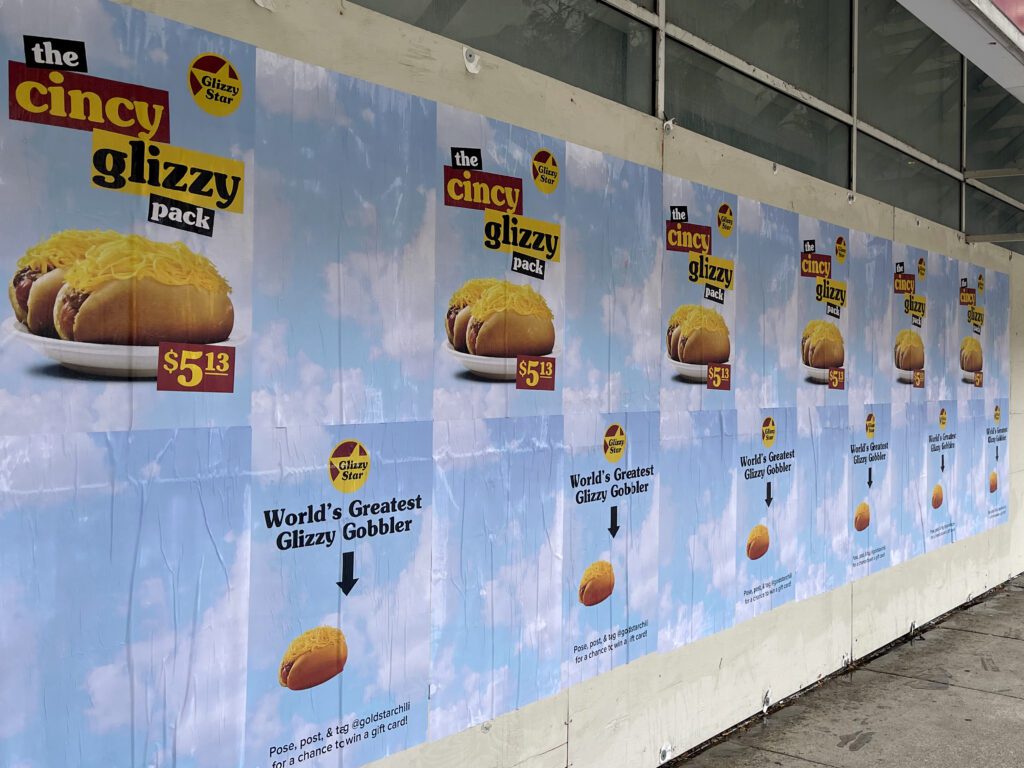
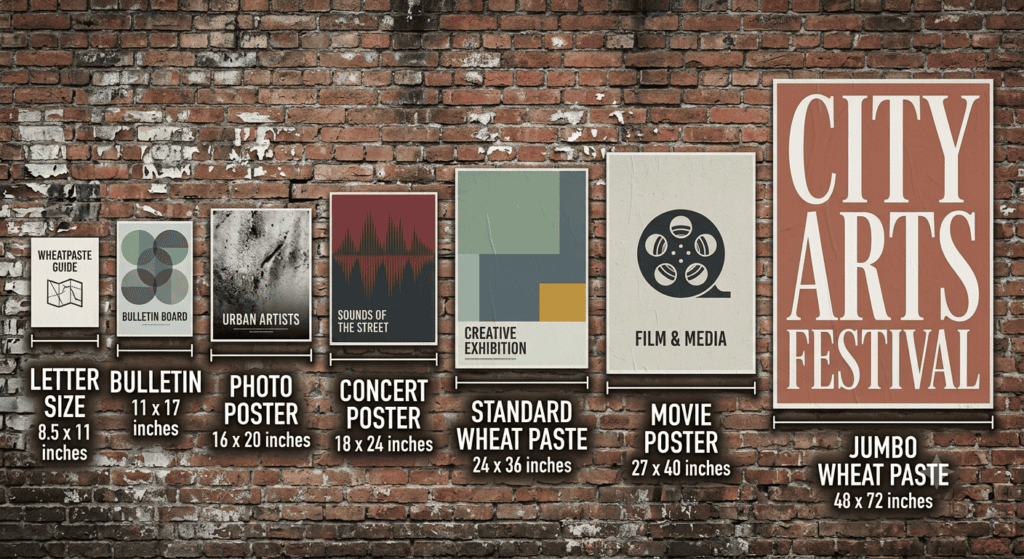
- Wheatpaste Poster Campaigns — Large-format posters on permitted surfaces along transit routes in Fort Lauderdale’s commercial corridors. Wheatpaste adds visual frequency at street level, reinforcing transit interior and shelter placements across the same geography the The Wave system serves. A wheatpaste campaign running alongside a transit buy creates multiple impression touchpoints across the same commute geography, increasing total daily brand exposures without proportionally increasing media cost.
AGM executes all guerrilla formats in-house: location scouting, posting crews, GPS-tagged photo documentation of every placement. Transit advertising and guerrilla work the same corridor from different angles. Together they build Fort Lauderdale brand presence that commuters notice, remember, and act on. Brands that combine transit interior media with coordinated street-level guerrilla campaigns consistently report higher awareness and recall than those running transit alone.
Who Advertises On The Wave
The The Wave ridership covers the full working-adult consumer base of Fort Lauderdale and the surrounding communities. The following advertiser categories consistently generate strong results from The Wave transit media campaigns based on ridership demographics, geographic delivery, and response patterns across comparable systems. Transit advertising is particularly effective for brands that need to reach a defined geographic audience at high frequency, brands targeting working adults who are underserved by digital advertising, and brands that benefit from the sustained dwell-time exposure that only transit interior media provides.
- Luxury hotel and hospitality brands targeting the Brightline travel and convention audience
- Fort Lauderdale restaurant and dining brands for the Las Olas and downtown entertainment district
- Financial services and professional services brands for the downtown Fort Lauderdale professional population
- Convention services and business travel brands for the Broward Convention Center audience
- Real estate and luxury residential brands targeting Fort Lauderdale’s growing downtown residential market
- Entertainment and arts venues along the Riverwalk and Arts and Entertainment District
- Technology and startup brands targeting the Flagler Village creative and professional community
- Upscale retail and lifestyle brands for the higher-income downtown Fort Lauderdale demographic
AGM brings 10 years of transit advertising execution across 500+ campaigns nationwide. We know which formats drive response in which categories on systems comparable to The Wave, and we build Fort Lauderdale transit campaigns that work against your specific objective rather than just filling fleet inventory. Every The Wave campaign we execute is documented with GPS-tagged photography and a post-campaign impressions summary. We do not consider a campaign complete until you have verified proof that every placement ran as contracted.
Frequently Asked Questions
Yes. The Wave is a dedicated streetcar system with its own vehicles, stops, and advertising inventory, separate from the BCT bus fleet. The Wave serves a specific downtown Fort Lauderdale corridor with a distinct professional and visitor audience that differs from BCT’s broader county-wide ridership profile. AGM can place advertising on The Wave separately or as part of a combined downtown Fort Lauderdale transit campaign.
The Brightline connection at NW 1st Avenue makes The Wave the primary ground transportation for travelers arriving in Fort Lauderdale by high-speed rail from Miami, Boca Raton, and West Palm Beach. Brightline attracts a higher-income traveler demographic than conventional transit, and this passenger flow gives The Wave advertising exposure to an affluent traveler audience during their first minutes in Fort Lauderdale.
From contract execution to first installation, most The Wave campaigns launch within two to four weeks. Production of vinyl interior posters takes approximately five to seven business days after final artwork approval. Installation is scheduled with the transit authority maintenance team. For campaigns tied to specific events or seasonal windows in Fort Lauderdale, build in at least four to six weeks from contract to live date. AGM manages the full timeline and provides status updates at each stage of the production and installation process.
Interior transit posters follow standard dimensions: king size (30″ x 144″), queen size (30″ x 88″), and car cards (11″ x 28″). Files should be at print resolution minimum 100 DPI at full size in CMYK color mode. Shelter panels have location-specific dimensions. AGM provides a complete specification sheet for every format in your campaign and handles all production and installation. Creative that uses high contrast, large type, and a single dominant visual performs best in transit interior environments at extended viewing distances.
Interior poster campaigns can start with a small number of buses on a targeted route, with pricing scaling by vehicle count and campaign length. Shelter campaigns start at individual panel purchases. AGM provides specific cost estimates based on your selected formats, routes, and duration during the proposal process. Most effective campaigns run a minimum four weeks to build adequate impression frequency. Shorter campaigns are available but transit advertising’s strength is in repetition and frequency, which requires sustained exposure to generate measurable brand recall.
The Wave’s route structure allows geographic targeting by corridor. Campaigns can concentrate spend on specific routes serving your target neighborhoods rather than buying the full system. AGM builds The Wave media plans based on your target audience geography rather than defaulting to a one-size system-wide approach. We map your target consumer profile against The Wave’s route ridership data to identify the specific corridors that deliver the highest concentration of your target demographic within the system.
AGM provides GPS-tagged installation photography for every bus interior and shelter placement, a post-installation confirmation report with vehicle or shelter identification numbers, and a final campaign summary at the end of the flight. For extended campaigns, periodic audits confirm creative condition. All documentation delivered digitally within 48 hours of installation completion. Documentation includes both installation confirmation and mid-campaign condition audits so you have verified proof of display for every placement in your buy.
AGM manages the complete production process: file specification consultation, print production, delivery to the transit authority, installation scheduling, and post-installation documentation. You provide final approved artwork. We handle everything between artwork delivery and the first paying impression. AGM has established relationships with the The Wave transit authority that streamline the approval and installation process. We know the system’s production requirements, maintenance scheduling, and installation access procedures.
Full exterior bus wraps are available subject to transit authority approval on a vehicle-specific basis. Wrap production uses perforated one-way vision vinyl for windows and solid vinyl for body panels. Wraps generate mobile billboard impressions across the full service area of the wrapped vehicle’s route. AGM manages approval, production, and installation. Wrap campaigns require additional lead time. A wrapped bus operating on a primary Fort Lauderdale route generates outdoor advertising impressions with every block it travels, turning the vehicle’s daily mileage into continuous branded outdoor media exposure.
Healthcare, financial services, QSR, community services, and workforce training consistently perform well across The Wave’s core transit ridership. Entertainment and dining brands targeting the Fort Lauderdale leisure population also find strong response. The specific category performance varies by route and audience segment. AGM advises on which corridors deliver the highest response rates for your category based on our experience across comparable transit systems. We match category performance patterns from similar markets to the specific route demographics of the The Wave system.