
November 12, 2026
Planning LED Trucks & Mobile Billboards in Grand Rapids
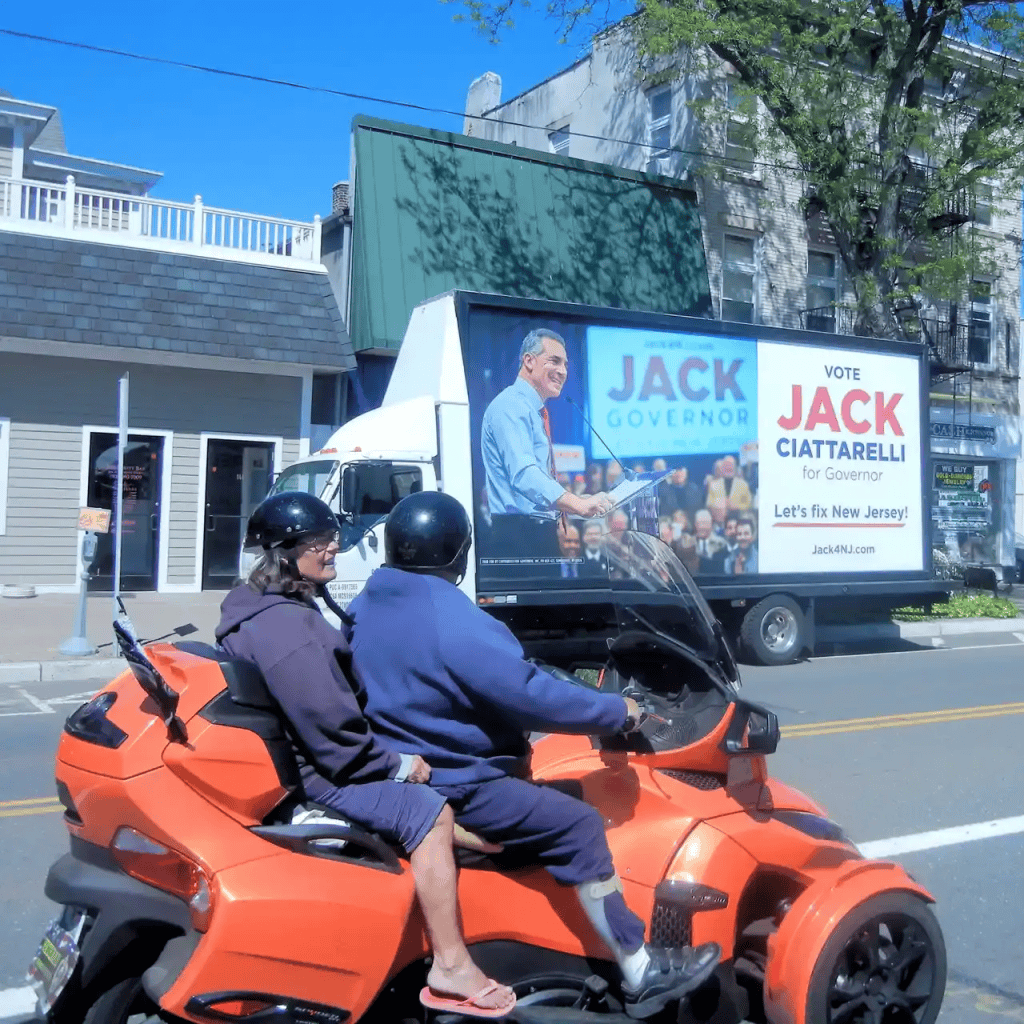
The thing that makes Grand Rapids pleasant for a poster crew is the thing that makes it awkward for a truck.
The downtown core here is small. Genuinely small. Heartside, Ionia Avenue and the South Division stretch sit close enough together that a two-person crew can work all of them on foot from one parked vehicle. The city publishes festival walking loops covering three downtown districts, which tells you the whole core is designed to be crossed without a car.
Put an LED truck into that and you have a problem nobody mentions in the pitch. A vehicle moving at normal downtown speed can complete the useful downtown loop in a handful of minutes. Run that for three hours and you have passed the same people, on the same corners, many times over. That is not frequency. That is a truck circling, and it reads as a truck circling.
I have had this argument with clients more than once. The brief says downtown Grand Rapids, the map looks dense, and the assumption is that a mobile screen will saturate it. What actually happens is that saturation arrives in the first forty minutes and everything after that is diminishing, visible repetition that starts to irritate rather than persuade.
So mobile work in this city is a route-geometry problem before it is anything else. Get the geometry wrong and you have bought an expensive loop. Get it right and a truck does something here that no static format can, because Grand Rapids stops being walkable the moment you leave the core, and a truck is the only format that can hold the whole city together in one evening.
This page is about that geometry: how far apart the pieces are, when to drive and when to sit still, what the seasons do to screen legibility, and where we tell clients a truck is the wrong answer.
Nothing here is advice from an attorney. Where a vehicle may stage, idle or dwell is a grey area that varies by municipality and by the specific location, and enforcement is inconsistent. We work from permissioned private positions where dwelling matters, and we do not improvise in the right of way.
A compact core is the wrong place to lap a truck
The rule we apply in Grand Rapids is that the downtown core is a destination on a route, not the route itself.
A truck should cross the core deliberately, on a line that catches the pedestrian concentrations, and then leave. Coming back later in the evening is fine and useful. Looping continuously is not. The distinction sounds pedantic and it is the single biggest determinant of whether mobile work performs in this market.
The pedestrian concentrations worth crossing are specific. Ionia Avenue is the spine of Heartside, downtown's entertainment district, where the bars, the arena crowd and Studio Park all funnel together. The South Division stretch carries the Avenue for the Arts, downtown's creative business district, with galleries, studios and artist-run storefronts clustered through roughly the 40s to 100s addresses, and it draws a slower, more attentive evening crowd. Those two lines, crossed properly, cover most of what the core has to offer a moving screen.
A short crossing also constrains the creative. If the truck passes a given corner two or three times in an evening rather than circling it, each pass has to land on its own. That argues for fewer words and a single idea per frame on the Ionia Avenue crossing, where people are moving between bars and the street is busy. The South Division crossing is the opposite case, because the Avenue for the Arts draws a slower, more attentive evening crowd that will actually hold on a frame for a few seconds. Running the same content identically across both lines wastes one of them.
The named venues shape the timing rather than the geography. DeVos Performance Hall, GLC Live at 20 Monroe, The Intersection, Grand Rapids Civic Theatre and Grand Rapids Ballet each release an audience at a particular hour. A route that crosses the core at random times catches those crowds by luck. A route built around when houses let out catches them on purpose.
The darkness advantage, and why summer afternoons waste a screen
LED legibility is a contrast problem, and Grand Rapids hands you an unusually good one for several months of the year.
Full darkness arrives mid-afternoon in December here. A lit screen against a dark street at four in the afternoon is at full effect, and it stays that way through the entire evening traffic period. That overlap between darkness and people actually being out is the best screen condition this city offers.
Summer runs the other way. In midsummer, useful dark does not arrive until well after nine. A screen running at two in the afternoon in July is competing with full daylight, and while it remains visible, it is nothing like the same piece of media. The contrast is flattened, the colour is weaker, and the attention it earns drops accordingly.
This produces a scheduling conclusion that surprises people. In winter, a Grand Rapids mobile campaign can run a genuinely effective late-afternoon-into-evening shift. In summer, the hours that matter start late, which pushes the campaign into the bar-trade window on Ionia Avenue and shortens the useful period considerably.
The honest qualifier is that December combines long darkness with real activity, while January through March is the downtown footfall trough. Excellent screen conditions over a thin crowd is a worse trade than it sounds. December and the autumn festival period are where darkness and audience actually line up.
Route geometry: connecting a city that is only walkable in the middle
Here is where a truck earns its place in Grand Rapids rather than just existing.
Outside the core, this city is car-dependent. Bridge Street on the west side carries its own nightlife cluster, and the city's own visitor mapping treats it as separate from downtown. That separation is real on the ground. Bridge Street is a drive, not a walk-on from Heartside. The eastern neighbourhoods are separate trips again.
Every static format we run has to pick. A poster campaign that tries to cover downtown, Bridge Street and the east side at once with a modest surface count ends up invisible in all three. A truck does not have to pick. One vehicle can cross the core at the right hour, run out to the Bridge Street cluster when its evening builds, and come back, and it is the same media in all of those places on the same night.
That is the actual argument for mobile work in Grand Rapids, and it is a geographic argument rather than an impressions argument. You are buying the ability to be in the disconnected pieces of a dispersed city within a single evening.
Wealthy Street and Eastown come up constantly in route conversations as neighbourhood commercial strips. I am marking them UNVERIFIED here. I have not confirmed the current block-by-block evening character on either, and I am not going to design a route leg around activity I have not observed. If a campaign wants them, we drive them first at the hour the campaign would run, and report back what is actually happening.
Sequencing matters as much as inclusion. The Bridge Street evening and the Heartside evening do not peak at the same moment, and a route that tries to be in both at once is simply in neither at the right time. We build the running order around when each cluster actually fills, which means driving the connecting leg at a deliberately chosen hour rather than whenever the previous leg happens to finish.
The route principle: build around the two or three places where people are genuinely concentrated at a known hour, connect them with the shortest sensible drive, and accept that the connecting legs are travel rather than exposure. Pretending the drive between districts is valuable screen time is how mobile campaigns get oversold.
Arena nights, and the decision between driving and sitting still
Van Andel Arena sits at the edge of Heartside and it does not produce steady traffic. It produces surges tied to event doors. The street thickens before a show, empties, thickens again when the house lets out, and sits relatively quiet in between.
A moving truck handles a surge badly. The crowd is dense, slow and often stationary, and a vehicle driving past them at street speed gives each person a few seconds. A truck positioned where that crowd is waiting gives each person several minutes.
So on arena nights the question is not where to drive, it is where to stop, and the answer has to be a position you are permitted to hold. Dwelling in the public right of way is exactly the kind of thing that attracts attention in a core like this one, and I will come back to why that matters here specifically. What works is securing a private position on the approach line between parking and the door, with the owner's agreement, and holding it through the pre-show and post-show windows.
Checking the arena calendar before setting any route is standard for us. An arena night changes the plan completely, and discovering it on the night means either an unexpectedly good opportunity you were not set up for, or a core so congested you cannot move.
Between surges, the truck should be somewhere else. That is the clearest example of the drive-or-dwell discipline this city demands: sit still when the crowd is dense and stationary, move when it is not.
The festival weeks, when a million visitors make a truck slower
The autumn festival period is the densest downtown gets, and it is the one window where I will tell a client that a truck may be the wrong tool despite the audience being enormous.
The event draws close to a million visitors to downtown each autumn. It has run since 2009, and the 2025 edition ran roughly 18 September to 4 October, so a comparable late-September-into-October window is the sensible planning assumption rather than any fixed date. The city publishes walking maps across three downtown districts for it.
All of that audience is on foot, in a small core, during a period when parking is managed intensively. Parking downtown is run by the city's Mobile GR parking operation, with venue-access arrangements specifically around arena and festival nights. The core fills.
A truck in that environment is slow, boxed in, and competing for road space with a huge volume of visitor traffic. The screen is seen, certainly, but mobility, which is the entire reason you hired a truck, is the thing the festival takes away from you.
My read is that the festival weeks favour static and pedestrian-scale formats inside the core, and favour trucks on the approaches rather than in the middle. A vehicle working the routes visitors use to arrive and leave, and the outer districts the festival crowd spills into, does better than one trying to push through the dense part. If a client insists on the core during those weeks, we plan for low speed and few crossings and we say so before the invoice conversation, not after.
Winter driving, snow lanes and keeping a screen readable
Grand Rapids winter is hard on vehicles in ways that affect mobile campaigns concretely.
Lane width disappears. Lake-effect snow off Lake Michigan brings repeated snowfalls, sometimes several in a week. Snow clearance piles narrow the usable roadway and occupy the kerbside space where a truck would otherwise pull in. Routes that work in October have fewer stopping options in January, and positions that were available become snow banks.
Road salt is constant and it lands on the screen. Salt spray and slush splash coat the lower portion of any vehicle working a salted road. A screen that is not cleaned between shifts loses contrast through a grey film, and the lower section goes first. Cleaning the screen is a scheduled part of a winter shift here, not an occasional tidy-up. Any operator running winter mobile work in this city without screen cleaning built into the routine is delivering a dimmer campaign than the client thinks they bought.
Quick temperature drops drive condensation. The same pattern that affects outdoor equipment generally in this climate applies to a vehicle moving between heated and freezing conditions. We allow time for that rather than fighting it mid-shift.
Everything takes longer. Slower driving, more cautious positioning, longer setup at each dwell point. A winter shift covers less ground than a shoulder-season shift, and the route plan should assume that from the start.
The compensation is the darkness advantage. A winter shift covers less ground but every hour of it is at full screen contrast, including the late-afternoon period that in summer would be wasted. On a well-planned December evening, that trade is favourable.
What we talk Grand Rapids clients out of
Continuous looping of the downtown core. The most common request and the one we push back on hardest. The core is small enough that looping becomes visible repetition within the first hour. Cross it deliberately, leave, come back.
Treating the drive between districts as exposure. The leg out to Bridge Street is travel. It has some incidental value and it is not what you are paying for. A route sold as continuous high-value exposure across a dispersed city is a route sold dishonestly.
Midsummer daytime shifts. A screen in July afternoon daylight is working at a fraction of its effect. If the campaign needs daytime summer presence, we would usually rather talk about a static format and save the mobile work for hours when the contrast is there.
Pushing a truck into the core during the autumn festival. Enormous audience, minimal mobility. Work the approaches and the outer districts instead.
Improvised dwelling in the right of way. Downtown Grand Rapids has an organised, well-funded downtown management presence and an active visitor-economy posture, which in general means a tidy-streets expectation in the core. A vehicle parked and running content where it has no agreement is conspicuous in exactly the way that creates friction. We secure private positions for dwell time instead, in writing, naming the location and the hours.
A truck as the only format in a Grand Rapids campaign. It solves reach across a dispersed city and it does not solve repetition on a walking route. Pedestrians in Heartside and along South Division encounter a truck once or twice in an evening. A permissioned poster or snipe presence on those same walking lines is what turns one sighting into recognition. The two formats cover different halves of this city, and the clients who get the most from mobile work here are generally the ones running something static in the core at the same time.
Frequently asked questions
Why not just loop the truck around downtown all evening?
Because the Grand Rapids core is unusually compact. A vehicle can complete the useful downtown circuit in minutes, so continuous looping passes the same people repeatedly within the first hour and starts reading as a truck circling. We cross the core deliberately at the hours crowds concentrate, then leave and return later rather than driving in circles.
What does a truck do here that posters cannot?
It connects the disconnected parts of the city in one evening. Grand Rapids is walkable in the core and car-dependent outside it, with the Bridge Street cluster on the west side mapped separately from downtown and the eastern neighbourhoods separate again. A static campaign has to choose one area. A truck can be in several on the same night.
Is winter a bad time for mobile work in Grand Rapids?
It is harder to drive and better to look at. Snow clearance narrows lanes and removes kerbside stopping options, road salt films the screen and needs cleaning between shifts, and everything runs slower. Against that, full darkness arrives mid-afternoon in December, so the screen runs at full contrast across the whole evening traffic period.
Where can the truck park or sit still?
Where it has permission. Dwelling is a grey area that varies by location and municipality, with inconsistent enforcement, so we secure private positions in writing for any location where the vehicle needs to hold still, naming the spot and the hours. That matters most on arena nights, when a stationary truck near a waiting crowd outperforms a moving one.
Should we run during the autumn festival?
On the approaches, yes. Inside the core, probably not. The festival brings close to a million visitors downtown and parking is managed intensively during it, so the core fills and a truck loses the mobility it was hired for. We work the arrival and departure routes and the outer districts, and we leave the dense centre to pedestrian-scale formats.
What time of day should a Grand Rapids mobile campaign run?
It depends on the season more than most cities. In December a late-afternoon-into-evening shift works, because it is already dark and people are out. In midsummer the useful hours start well after nine, which concentrates the campaign on the Ionia Avenue bar trade and shortens the shift considerably.
Request a campaign quote
The first useful conversation about mobile work in Grand Rapids is about geography and hours, not about screens. Which districts matter to you, whether you need the west side as well as downtown, and what month you are running will shape the route more than anything else.
Tell us those three things and whether you are anchored to arena dates or the autumn festival. We will come back with a route built around actual crowd concentrations and times, honest about which legs are travel and which are exposure, with dwell positions identified and permissioned rather than improvised.
If your plan is a continuous downtown loop, expect us to propose something different and explain why.
Request a campaign quote and we will start with the map and the clock.

Ready to Run Your Campaign?
Call us or email us. We’ll tell you exactly what we can do in your market and what it costs.
Related Services
Explore similar advertising solutions offered by American Guerrilla Marketing.
American Guerrilla Marketing — Los Angeles
Street-level campaigns in Los Angeles and nationwide. Wheatpasting, LED trucks, street teams, and more.
(646) 776-2770
Related Articles
-
LED Trucks & Mobile Billboards in Tacoma, Washington
November 12, 2026
-
What to Expect From a Mobile Truck Billboard Campaign
November 12, 2026
-
LED Truck Advertising Creative Specs: A Field Guide
November 12, 2026
-
Mobile Billboard Companies: How It Actually Works
November 12, 2026
-
LED Trucks & Mobile Billboards in Cincinnati, Ohio
November 12, 2026