
November 12, 2026
Wheatpasting & Poster Campaigns in Brooklyn, New York
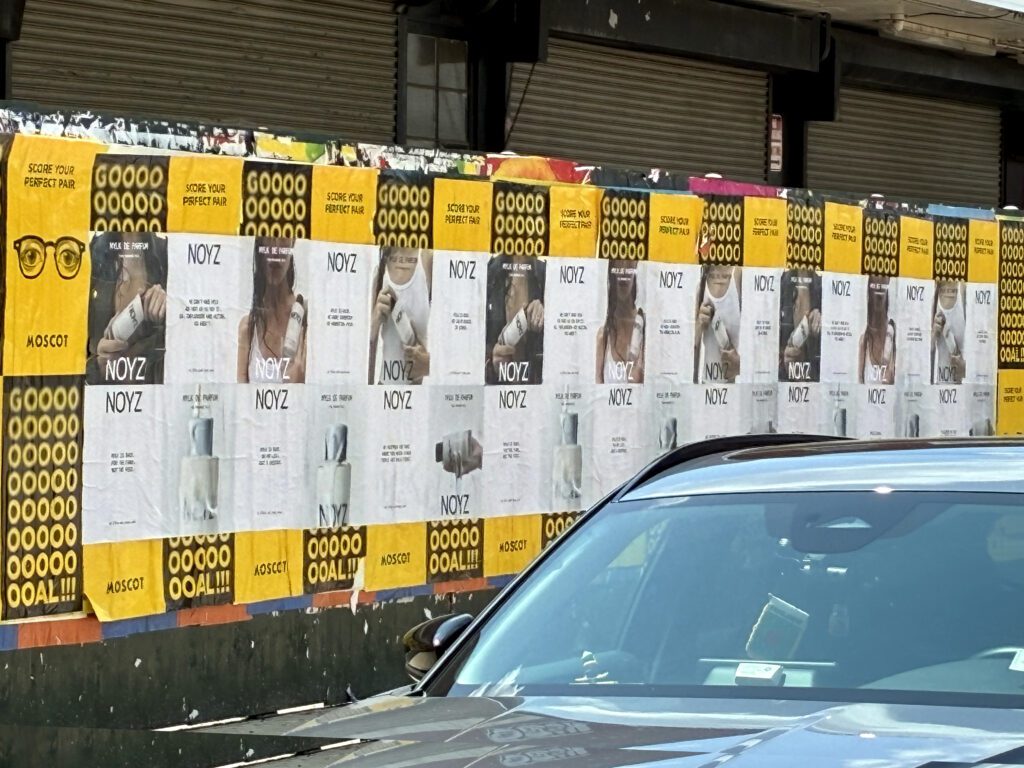
Brooklyn is the most campaign-literate borough in the country, and the audience knows it.
That sentence does more work than it looks like. It means creative that would read as noise in another market can read as content here. It also means weak work gets identified as weak work immediately, by people who look at posters for a living or near enough.
Clients arrive convinced Brooklyn is the easy win because the culture is receptive. It is receptive. It is also unforgiving, and least forgiving of a national brand pretending to be local.
The other thing buyers get wrong is treating Brooklyn as one place. It is enormous and polycentric. Bushwick, DUMBO, Park Slope and Red Hook have genuinely different cultures, different wall stock, different residential politics and different tolerance levels. A campaign planned as “Brooklyn” rather than as named neighbourhoods will waste most of what it spends.
This page is about how paper actually behaves in this borough. Which districts suit it, what the coastal climate does to a bond, how the permission conversation goes here compared with everywhere else, and what we talk clients out of.
Brooklyn has the most receptive wall owners in the country
This is the single most important operational fact about posting in this borough, and it changes the whole approach.
Brooklyn has a commissioned-mural culture. The Bushwick Collective made large-scale permissioned wall work an ordinary feature of the neighbourhood’s economy and identity, to the point where it publishes self-guided tour maps. Walls there are curated and deliberate rather than incidental.
The practical consequence is enormous. Building owners in Bushwick, East Williamsburg, Gowanus and Red Hook are accustomed to being approached about their walls. Many have said yes before. They understand what the conversation is, what it involves, and what they are agreeing to.
That is not true in most cities, where the first job is explaining to a confused owner why anyone would want to put something on the side of their warehouse.
So in Brooklyn the permissioned route is not a fallback. It is the main road, and it produces a better campaign: better walls, longer runs, no removal anxiety, and work that sits in the neighbourhood rather than against it.
The receptive districts, in rough order of how productive the conversation tends to be:
Bushwick is the current centre of gravity for underground art and late-night music, internationally known for warehouse nightlife with large venues, heavy sound systems and DJs playing until morning. Bloomberg reporting describes it as having become a pillar of New York’s party scene, with visitor growth exceeding established hotspots like the East Village and Williamsburg. For a poster campaign this is the most art-literate audience in the city and the most critical one.
East Williamsburg functions as Bushwick’s extension for studios and open-studio programming, with the same industrial stock and culture.
Gowanus is an industrial studio district: canalside workshops, large floor plates, dozens of working studios. Logistically the easiest district in the borough.
Red Hook offers authentic artist-community character without the mainstream crowds, at the cost of being the hardest district to reach.
Williamsburg remains a strong creative district but is more polished and more expensive than Bushwick. Consumer brand audience rather than underground.
DUMBO is the waterfront gallery district, compact and cobbled, running monthly First Thursday Gallery Walks.
Industrial substrate is Brooklyn’s real advantage
Gowanus, Red Hook, Bushwick and East Williamsburg are full of large, flat, planar industrial walls. Brick, block, corrugated, roll-shutter. In a borough where large-format wall work is culturally normal.
These are the best long-life surfaces available to a paper campaign anywhere, and they almost all have an identifiable private owner. That combination is rare. In most cities you get one or the other: good surfaces with murky ownership, or clear ownership of bad surfaces.
What holds paper well here: smooth or lightly textured brick, painted block, flat plywood hoarding, roll shutters that stay down during the run. What does not: heavily textured or crumbling masonry, anything with efflorescence, dusty or chalky painted surfaces that release their own top layer, and cold metal in winter.
Construction hoarding along the Brooklyn waterfront, in Williamsburg and in Gowanus is the single most productive surface class in the borough. Fresh plywood, prominent frontage, an identifiable contractor, and a development that often benefits from the block looking active and interesting rather than blank. The site board names the permit holder, which tells you exactly who to ask.
Sidewalk sheds and scaffolding are semi-permanent across New York, and the plywood skirt belongs to the contractor or building owner, not to the city. In a borough with constant construction, that surface class is abundant and renewable. It is also perishable: a shed that existed last month may be gone. We re-survey rather than reusing old route sheets.
Utility and signal poles are low value here and I steer clients away from them. They get cleared quickly, they degrade from road salt through the winter, and in districts with active block associations they are the single thing most likely to generate a neighbourhood complaint. Brownstone Brooklyn, meaning Park Slope, Cobble Hill and Fort Greene, has organised and vocal residential associations. A pole campaign there buys irritation rather than attention.
Salt, wind and freeze: what the Brooklyn waterfront does to paper
Brooklyn shares New York City’s humid subtropical climate: long, hot, humid summers with frequent late-day thundershowers, and moderately cold winters with snow or a snow-and-rain mix. Temperatures typically run from about 28°F to 85°F and rarely drop below 14°F. Winters are cold, snowy and windy. Average relative humidity peaks around 76% in February and December.
But the borough-specific factor, the one that separates Brooklyn from the inland boroughs, is the water.
Salt air is a genuine factor here in a way it is not elsewhere in the city. Brooklyn has a long exposed waterfront: DUMBO, Red Hook, Sunset Park, Coney Island, Brighton Beach. Marine air carries chloride. Chloride accelerates corrosion on any steel fixing, grommet or staple, and it attacks adhesive bonds from the edge inward. On the waterfront we specify stainless or coated fixings, and substrate-backed media outlives paper there by a very wide margin.
Coastal wind is the dominant mechanical failure mode on the waterfront. Open fetch across the harbour at DUMBO and Red Hook, combined with winters that are genuinely windy, means edge lift is close to certain on anything not fully bonded or mechanically captured at all four edges. On those blocks, wind is a year-round scheduling variable, not a winter one.
Freeze-thaw cycling is a recognised municipal hazard, and it is what actually destroys paste bonds. A dry cold snap preserves a poster perfectly well. Repeated transitions through the freezing point with liquid water present do not. Paste applied into a thaw and frozen overnight delaminates. Water enters at an edge, freezes, lifts the corner, and the next wind event finishes it.
Realistically, wheat paste is a May-to-October technique in Brooklyn. I would rather tell a client that plainly than take a January booking and explain the failures afterwards. The winter half of the year needs pre-glued stock, mechanical fixing, or sheltered surfaces: scaffolding decks, recessed entries, under-structure, interior-adjacent positions.
Rock salt is the other winter problem. The Department of Sanitation spreads rock salt on roadways through the winter, and the spray climbs the bottom band of every kerbside surface on a plowed street. Treat the lower two to three feet as sacrificial from December to March, and keep anything that has to survive above that line.
Summer brings the opposite failure. Hot, humid conditions with frequent late-day thundershowers mean slow paste cure and real rework risk. The working pattern is early-morning application so the sheet has the full day to set before the afternoon showers arrive.
UV barely matters here. The UV index bottoms out at an average maximum of 2 from January through March and in November and December, so fade is irrelevant through the winter. Moisture and salt do the damage. In summer UV becomes a slow secondary path, well behind rain and humidity.
Permission, ordinance and the honest grey area
Posting in New York City is a grey area in the sense that it depends entirely on which surface you are talking about, and I want to be precise rather than reassuring.
New York runs an active sanitation and street-maintenance operation. Unsanctioned material on public infrastructure in a maintained commercial corridor has a short life. Expect removal rather than escalation, but expect it quickly. That is a practical observation about how long work survives, not a legal characterisation.
I am not going to tell you what is permitted or prohibited. Requirements vary, enforcement is inconsistent, and the answer depends on surface ownership, the specific location and current local rules. We do not quote statute numbers or penalty figures, and I would be sceptical of any operator who does so casually in a sales conversation.
What we do instead:
Private walls are the strongest footing available. Written owner or tenant consent moves the question from municipal tolerance to property rights. In Brooklyn that consent is genuinely obtainable, which is the whole argument of this page.
Hoarding and shed permission runs through the contractor or owner controlling the site, named on the site board, and it ends when the structure comes down.
We document everything. Written permission naming the specific wall and the specific dates, photographs of the install, and a named contact who can vouch for the crew on site.
We commit to removal. Paper that is still hanging in shreds three months after a campaign ended is what turns a receptive wall owner into a hostile one, and it poisons the well for everyone. Removal is part of the job, not an optional extra.
Posture matters more than people expect. Daytime, high-visibility, scheduled crews that read as contractors attract far fewer questions than furtive night activity. In a borough this densely overlooked, looking routine is the cheapest protection available.
One more Brooklyn-specific risk, and it is the one I rate highest. The reputational risk here exceeds the removal risk. A neighbourhood that values its visual culture resents material it reads as extractive. Brooklyn residents are quick to identify a national brand wearing local clothes, and the response is public and fast. Getting the creative right matters more here than getting the surface count right.
Confirm current requirements with the City of New York and with the relevant business improvement district or neighbourhood association before any campaign.
The Brooklyn calendar, and when paper should run
The borough’s outdoor festival season is long, running all the way through to the holiday tree lightings.
Spring and summer. Bushwick Open Studios has spring and autumn editions, a weekend where hundreds of artists open their doors across Bushwick and East Williamsburg, paired with pop-up performances and warehouse parties. That is the highest-density creative audience of the year, concentrated in exactly the district where street-level work is most welcome. For a poster campaign aimed at a culture-forward audience, it is the best weekend on the calendar.
BRIC Celebrate Brooklyn! is the borough’s flagship summer performance series. Barclays Center hosts one of the city’s biggest summer concert line-ups alongside its sports calendar. Coney Island is summer-peaked and one of the borough’s iconic draws.
Late summer and autumn. The Junior Carnival on Eastern Parkway runs on the Eastern Parkway corridor as part of the borough’s Caribbean carnival tradition. Atlantic Antic is a major autumn street fair on Atlantic Avenue. The Ragamuffin Parade runs down Third Avenue. Gowanus Open Studios in the autumn opens dozens of industrial studios, floating installations and canalside workshops. A run of Halloween festivals follows across the borough.
Winter. Holiday tree lightings close out the outdoor season. Barclays Center carries the indoor calendar: the Brooklyn Nets from roughly October to April, the New York Islanders, Brooklyn Boxing and Brooklyn Hoops programming. The New York Liberty also play there, with the 2026 season noted as the franchise’s thirtieth.
Year-round. DUMBO First Thursday Gallery Walks run monthly in the evening with coordinated openings, curator talks and street projections. A dependable once-a-month audience in a compact, walkable, photogenic district.
The scheduling read is straightforward. April through October gives you outdoor crowds, workable paste conditions, and the open-studio and street-fair calendar all at once. That is where a poster campaign belongs. November through March gives you Barclays Center’s indoor calendar and DUMBO’s monthly gallery evening, and very little else reliable outdoors, with paste conditions working against you the whole time.
UNVERIFIED: Brooklyn has a substantial student population across several institutions, but specific campuses and academic calendar dates were not confirmed in our research. If a campaign depends on term-start timing, verify against the individual institutions’ published calendars before planning around it.
Crew reality: one district per shift
Brooklyn is enormous and polycentric, and there is no single walkable core. Each target district is individually walkable and the gaps between them are not. The working model is a van plus a walking crew, one district per shift.
A typical paste crew is two to four people: one or two pasting, one on paste and stock, one managing the ground and carrying the paperwork. Posting is slow, physical work, and a realistic surface count per shift is far lower than clients expect when they first see a map.
District by district:
Bushwick and East Williamsburg is the best crew environment here. Industrial street grid, wide streets, loading bays, genuine kerbside parking, large flat walls, and a culture that does not find a crew with a ladder remarkable. Late-night activity is normal because the warehouse venues run until morning, which cuts both ways: you can work late without standing out, but you will be working around queues and crowds near venue doors.
Gowanus is industrial, low density, easy vehicle access, large surfaces, few onlookers. Logistically the easiest district here.
Williamsburg is denser, more retail, more residential, harder parking, more polished. We treat it as a daytime commercial-corridor job.
DUMBO is compact and highly walkable but cobbled, narrow, and heavy with tourist and photography foot traffic, with very difficult parking. Work it early morning. First Thursday evenings are high audience but high congestion.
Red Hook is the hardest to reach in all of Brooklyn: limited subway access and a street network that effectively requires a vehicle. Excellent surfaces and an authentic audience, but budget extra travel time and never plan for a crew to arrive by transit.
Barclays Center and Atlantic Terminal offer maximum footfall and minimum crew freedom. Event nights bring crowds, traffic management and constant observation. Work the surrounding blocks in the early morning, not during an event.
The reliable borough-wide window is five to eight in the morning on a weekday. Venues are closed, retail is not yet open, parking is available, and there is daylight for quality control. That last point matters: pasting in the dark produces bubbles and misalignment you cannot see until the sun comes up.
Parking is the recurring tax. Brooklyn’s commercial corridors have contested kerbside space and active enforcement. The industrial districts are the only places a van sits comfortably. Everywhere else, park off-corridor and walk in.
What drives scope on a poster campaign here: how many distinct districts the campaign covers, how many surfaces per district, how far apart they are, whether permission is already in place or has to be secured, the run length, and the removal commitment at the end. Multiple districts in one campaign multiplies shifts, because you cannot efficiently cross the borough mid-shift.
What we talk Brooklyn clients out of
Treating the borough as one market. A campaign spread thinly across six districts reads as nothing in all six. We would rather saturate Bushwick properly than scatter across Brooklyn.
Winter paste campaigns. Freeze-thaw and road salt will take the work down and make it look bad on the way. If the dates are fixed and they fall between November and March, we switch media and surfaces rather than pretending paste will hold.
Pole and street furniture campaigns. Short life, fast removal, salt degradation, and the fastest route to a complaint in a borough with organised block associations.
Creative that performs localness. This is the one I push hardest on. Brooklyn audiences read brand-wearing-local-clothes instantly and react publicly. Work that is simply good and honest about what it is does better here than work that tries to sound like the neighbourhood.
Waterfront paper with a long run length. Red Hook and DUMBO have superb surfaces and the worst combination of salt and wind in the borough. For anything that needs to hold for weeks on an exposed waterfront elevation, we move to substrate-backed media or move the site inland.
Event-week installs at Barclays Center. Maximum observation, traffic management and crowding, for walls that are no better than the ones two blocks away on a quiet morning.
Pairing posters with light in DUMBO
The natural companion format in this borough is Projection Advertising, and DUMBO is the reason.
DUMBO’s monthly First Thursday Gallery Walks already include street projections. The district has an audience trained to look at projected light on buildings, and the cobbled, industrial, large-facade built environment gives good throw distance with controllable ambient light. That is a rare combination, and it means a projection activation there is read as part of the district’s culture rather than as an intrusion.
The sequencing that works: paper goes up across Bushwick and Gowanus in April through October, holding the corridors across the run on walls where owners have said yes. Projection lands on a First Thursday in DUMBO as the high-audience moment, where the crowd is already out and already looking.
Two honest caveats on the DUMBO projection half. Winter humidity near 76% scatters the beam, so the image is softer in the cold months. And waterfront wind makes any temporary rig a stability problem, which is a safety question before it is a quality one. We plan abort conditions into those nights.
Frequently asked questions
Is wheatpasting allowed in Brooklyn?
It is a grey area that depends on surface ownership, location and current local rules, and enforcement is inconsistent. We do not give legal advice or quote statute numbers. What we do is work permission-first: written consent from the property owner naming the wall and dates, documentation, and a removal commitment. Confirm current requirements with the City of New York and the relevant neighbourhood association.
Which Brooklyn neighbourhood is best for a poster campaign?
Bushwick and East Williamsburg for an art-literate audience and the most receptive wall owners, Gowanus for logistics and large industrial surfaces, Red Hook for authenticity if you can absorb the travel time. Williamsburg suits consumer brands. DUMBO is compact and photogenic but hard to park. Pick one and saturate it rather than spreading across several.
When can wheat paste actually run in Brooklyn?
Realistically May through October. Freeze-thaw cycling destroys paste bonds, and the Department of Sanitation spreads road salt through the winter, which attacks the lower band of every kerbside surface. November through March we switch to pre-glued stock, mechanical fixing or sheltered surfaces such as scaffolding decks and recessed entries.
How long does a poster last on a Brooklyn wall?
It depends far more on the surface and the exposure than on the paper. A permissioned, sheltered industrial wall in Gowanus in June behaves completely differently from an exposed waterfront elevation in Red Hook in February. Salt air, open harbour wind and freeze-thaw are the three things that shorten life here, and all three concentrate on the waterfront.
Why does AGM avoid utility poles in Brooklyn?
Short life and high friction. Poles get cleared quickly, road salt degrades anything at that height through the winter, and in districts with organised block associations such as Park Slope, Cobble Hill and Fort Greene, pole material is the single thing most likely to generate a neighbourhood complaint. The attention is not worth the irritation.
What time of day does a Brooklyn crew work?
The reliable borough-wide window is five to eight in the morning on a weekday: venues closed, retail not yet open, parking available, and daylight for quality control. Bushwick tolerates genuine late-night work better than anywhere else because the warehouse venues run until morning. Brownstone Brooklyn and residential Williamsburg do not.
Request a campaign quote
If you are planning a poster campaign in Brooklyn, the first useful conversation is which single district actually matches your audience, and whether your dates fall inside the paste season or outside it. Tell us the audience, the window and what the campaign has to achieve, and we will come back with a plan built on real walls, real permission and a real removal commitment. If paper is the wrong format for your dates, we will say so.
Request a campaign quote.

Ready to Run Your Campaign?
Call us or email us. We’ll tell you exactly what we can do in your market and what it costs.
Related Service
Explore similar advertising solutions offered by American Guerrilla Marketing.
American Guerrilla Marketing — Los Angeles
Street-level campaigns in Los Angeles and nationwide. Wheatpasting, LED trucks, street teams, and more.
(646) 776-2770
Related Articles
-
Poster Campaign Proof of Posting: Common Mistakes
November 12, 2026
-
Poster Campaign Scope by Market Size vs Alternatives
November 12, 2026
-
Wheatpasting & Poster Campaigns in Houston, Texas
November 12, 2026
-
Wheatpasting & Poster Campaigns in Virginia Beach
November 12, 2026
-
Album Rollout Poster Strategy: How It Works
November 11, 2026