
November 12, 2026
LED Trucks & Mobile Billboards in Tacoma, Washington
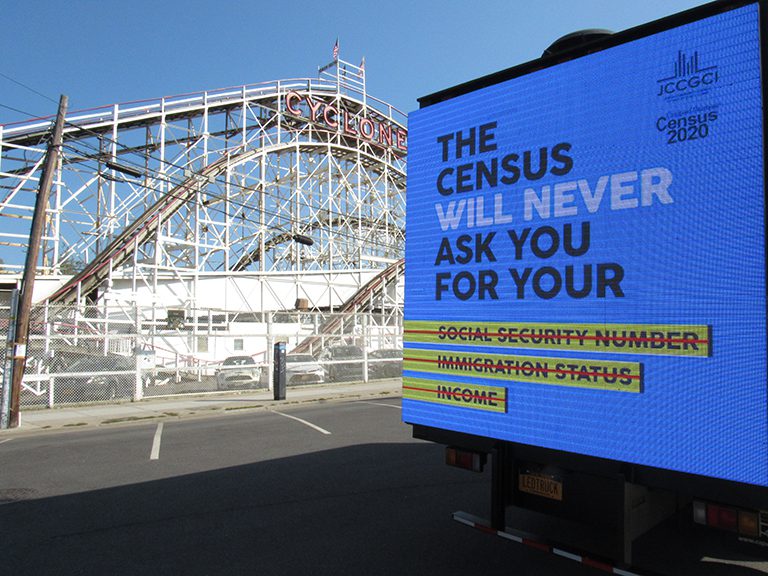
Every fixed street format in Tacoma runs into the same wall: the city does not keep its audiences in one place.
Downtown holds the civic core, the museums, the performing arts cluster and a university campus, all stacked along Pacific Avenue. Then the city’s nightlife lives three miles away on Sixth Avenue. Then its family retail lives further north again at Proctor. Then there is Stadium, Old Town on the waterfront, Hilltop just west of the core, and a set of lower-density neighbourhood districts past those.
A poster goes where you put it and waits. In a city with one dense spine, that is efficient. In Tacoma it means buying the same campaign four times in four separate places, or accepting that you only bought one district.
A mobile screen is the format that does not have that problem. It goes to the audience instead of waiting for the audience to walk past, and in a market structured like Tacoma’s that is a structural advantage rather than a stylistic preference.
There is a second Tacoma argument for this format and it is about light. Winter here brings early sunsets and heavy marine overcast, which means a screen that generates its own light is at full strength during the hours when people are still out and the city has already gone dark. That is the half of the year when paste struggles and adhesion fails on damp concrete. An emissive screen does not care that the air is wet.
Here is how we plan LED Trucks & Mobile Billboards in Tacoma: how the loop gets designed, why the Tacoma Dome dominates the calendar, what the marine weather actually does to a screen, where a truck should not sit, and what we talk clients out of here.
A truck solves the one thing Tacoma’s geography breaks
Start with how the city moves, because that is what makes this format fit.
Downtown is genuinely walkable and transit-served. The Link light rail runs 1.6 miles through downtown on Pacific Avenue with 13 stops, operates 365 days a year, runs roughly every 12 minutes and holds right-of-way over traffic. For a pedestrian, the core works.
The north-end districts do not connect that way. Sixth Avenue, Proctor and Stadium are each walkable within themselves but separate from downtown and from each other. People drive between them. A Tacoma resident’s evening frequently involves a car trip from one district to another, and that trip is the inventory a mobile screen is buying.
That is the real pitch for this format here, and it is specific to a city with this shape. In a one-core city, a truck is competing with static media that the same audience already walks past. In Tacoma, a truck is covering ground that static media cannot cover without being bought four separate times.
It also fixes a problem fixed formats have with Tacoma’s districts having different clocks. Proctor and Stadium are daytime retail that goes quiet early. Sixth Avenue is the live-music and bar strip that is busiest late and quietest in the early morning. Downtown’s rhythm is set by whatever the Tacoma Dome is doing. A static placement sits through all of those hours and is only in front of a crowd during a fraction of them. A vehicle can be at Proctor in the early evening and on Sixth Avenue when the bars are full, which is three audiences in one shift instead of one audience across three placements.
Tacoma Dome event nights are the whole calendar
If you plan one thing about a Tacoma mobile campaign, plan around the Dome.
The Tacoma Dome is the city’s large-event venue, sitting at the south end of downtown with its own Link station and a six-storey parking garage. Dome event nights are the dominant recurring driver of downtown crowd and parking pressure in this city. Nothing else downtown generates a comparable concentration of people on a predictable schedule.
For a mobile screen, that concentration is the single best inventory in the market, for a reason specific to how people arrive and leave a large venue. They queue. They walk in from parking. They stand around before doors. They leave in a slow, dense mass that moves at walking pace in a confined area. Dwell is what makes a moving screen work, and venue egress produces more dwell than any amount of driving around does.
Two practical notes.
Dome events are venue-scheduled and irregular rather than seasonal. There is no pattern to plan against, so we check the Dome calendar when building the schedule rather than assuming a weeknight rhythm. A Tacoma mobile campaign scheduled without looking at that calendar is leaving its best nights on the table.
Street parking on and around Pacific Avenue fills quickly on Dome event nights. That cuts both ways for this format. A truck that is driving is unaffected. A truck that needs to hold a static position near the venue needs that position arranged in advance, because improvising one on the evening of a sold-out event does not work.
Designing a loop on the Pacific Avenue spine
Downtown loop design in Tacoma has one wrinkle that most cities do not have, and it comes from the light rail.
The Link runs on Pacific Avenue through downtown and holds right-of-way over traffic, with a train through roughly every 12 minutes. That has two effects on a vehicle working the corridor. Traffic flow on the spine is shaped by rail priority rather than purely by signal timing, so loop timing estimates built from a map are optimistic. And the rail corridor itself occupies the middle of the street, which affects which side of the street your screen is facing and who can actually see it from the pavement.
Neither is a problem. Both are things to check by driving the loop at the actual hour of the campaign rather than at two in the afternoon when the city is quiet.
The second downtown design question is what the core gives you. Pacific Avenue carries the civic and commercial centre, with the Museum District clustered around the Museum of Glass and the Tacoma Art Museum roughly a block apart, and the Theater District at the north end of the downtown line. The University of Washington’s Tacoma campus is embedded directly in downtown along Pacific Avenue rather than sitting on a separate suburban site, which means student traffic and downtown traffic are the same traffic.
That last point has a scheduling consequence people miss. Because the campus is inside downtown, term time versus break materially changes downtown daytime and evening foot traffic. A downtown-weighted mobile campaign running in a term break is paying for a quieter city than the one it was planned against. We check the UW Tacoma academic calendar alongside the Dome calendar.
The north end is three stops, not one route
Here is where Tacoma mobile briefs most often go wrong.
Someone draws a loop that connects downtown, Sixth Avenue, Proctor and Stadium, looks at the mileage, and concludes it all fits in a shift. The mileage is not the issue. The issue is that those districts are separate destinations with their own clocks, and a loop that strings them together spends most of its time on connecting road where nobody is standing still.
The better structure for this market is dwell-weighted rather than distance-weighted. Pick the district that matches the audience and the hour, hold presence there while it is actually busy, then move.
Applied to Tacoma that produces a recognisable shape:
Early evening belongs to Proctor and Stadium. Proctor is the historic north-end shopping district centred on N 26th Street and N Proctor Street, boutique retail with grocery anchors, family-oriented and daytime-weighted. Stadium is a historic district north of downtown with boutique retail. Both go quiet early, so the window to catch them is before most people think of a street campaign as having started. In winter this is strong, because darkness arrives early enough that the screen is at full effect while those districts are still trading.
Later evening belongs to Sixth Avenue. The Sixth Avenue Business District runs along Sixth Avenue between Sprague and Proctor and is the city’s main nightlife and live-music strip, the single best-defined night-economy corridor in Tacoma. It is busiest late, which is exactly when an illuminated screen is at its best.
Downtown belongs to whatever the Dome is doing. On an event night, downtown and the Dome approach are where the truck should be. On a quiet night, the core after hours does not justify much time.
Hilltop, immediately west of downtown and now served by the extended Link line, is a reasonable addition for a campaign with a specific audience there.
The lower-density neighbourhood districts at Lincoln, the Eastside, the South End and the West End are real commercial districts with real residents, and they are the hardest sell for this format. The frontage and foot traffic are thin, so a truck there spends its time in front of parked cars. We include them when a campaign is genuinely neighbourhood-targeted and we leave them out when it is a city-wide awareness push.
Winter is the strong season for a screen here
Tacoma runs a temperate marine climate on Puget Sound. Average daytime temperatures move from roughly 46 degrees in December to roughly 76 degrees in August. Snow is rare, hard freezes are limited, and winter nights can dip into the 20s and 30s. Humidity sits toward the high end year-round, and the regional pattern is frequent drizzle and light rain rather than heavy downpours, with annual rainfall across the greater Puget Sound area on the order of 37 inches.
For an emissive screen, that profile is largely good news, which is unusual among the formats we run in this city.
Early winter darkness is the main gain. Sunset comes early in a northern marine winter and the overcast deepens it, so a screen is at full visual advantage during active evening hours rather than after the city has emptied. Summer reverses it: late sunsets mean the screen’s strongest hours arrive late, and the daytime advantage of a bright screen against a bright sky is much smaller.
The damp is a mixed factor and I will not oversell it. A screen generating its own light is unbothered by air moisture in the way a projection beam is, so marine haze does not wash it out. But rain on a Tacoma evening thins the pavement crowd, and the people who are out are hooded, hurrying and looking down. A drizzly Sixth Avenue at eleven at night has fewer readable faces than a dry one.
Wet roads add a small bonus and a small nuisance. Reflected light off a wet street extends the visual footprint of an illuminated vehicle, which genuinely helps. It also means more glare in the scene generally.
The thing Tacoma does not do to this format is the thing that hurts it elsewhere. There is no deep freeze problem, no salt-and-snow road season of the kind that punishes vehicles in continental cities, and the low UV load means nothing here is being cooked by sun.
Where a truck should and should not sit
This is a grey area and I will keep it framed that way.
How municipalities treat vehicle-based advertising varies, enforcement is inconsistent, and what matters is where the vehicle is standing, whose ground it is on, and what the local ordinance says. I am not giving legal advice and I will not cite a Tacoma ordinance number I have not verified.
What I can give you is how we reduce risk in this market.
Driving a route is the lowest-friction mode and it is where most of a Tacoma shift lives.
Holding a static position is where the questions start, and our answer is to arrange it in advance on privately controlled ground rather than improvise it on public street. Tacoma makes that easier than many cities, because its commercial frontage is organised into formal, named business districts with their own representative bodies. The Sixth Avenue Business District, the Proctor District and the Stadium District exist as maintained entities, and that structure means there is usually someone to ask about a private lot or forecourt near where you want to be.
Three things we keep off the plan without a specific agreement. Link light rail structures, platforms and the rail right-of-way on Pacific Avenue. UW Tacoma campus property, which sits in the middle of downtown without looking like separate property. And any position that blocks a transit stop, a loading area or an emergency route, which is both an obvious problem and the fastest way to end a campaign night early.
There is one more Tacoma-specific position question: the Dome approach on an event night. It is the best dwell in the city and it is also when everyone else wants the same ground. Arrange it ahead or plan to work it while moving.
Staging, parking and the Dome garage
The most useful logistics fact in Tacoma applies to this format too, slightly differently.
There is a six-storey Link garage next to the Tacoma Dome Station and parking there is free. For a mobile campaign, that garage is a staging reference point rather than a working position: a place for support crew to leave a car, meet the vehicle, swap personnel or stage a street team without paying for or hunting a downtown space.
It matters because the alternative is poor. Metered street parking on and around the UW Tacoma campus is mostly limited to 90 minutes, which does not cover a shift or a changeover. Downtown street parking is a drop-off resource in this city, not a working one.
For the north-end legs, the vehicle is the mobile unit and the support logistics are simpler, but the same principle holds: plan where people meet the truck before the shift, not during it.
A note on crew. A mobile campaign in Tacoma works much harder when there are people on the pavement at the dwell points rather than just a screen going past. Street Teams & Experiential is the natural pairing in this market precisely because Tacoma’s audiences are concentrated in short bursts: a Dome egress, a Sixth Avenue late crowd, a Saturday in Proctor. A screen holding position plus a team working the crowd converts those bursts far better than either does alone.
What we talk Tacoma clients out of
The distance-weighted loop is the main one. Clients want maximum mileage because it feels like maximum coverage. In a city with three disconnected retail districts, mileage mostly buys connecting road. We argue for holding presence where the crowd actually is, at the hour it is actually there, and accepting fewer miles.
The second is the summer daytime campaign. A bright screen against a bright northern summer afternoon is the weakest version of this format, and Tacoma’s late summer sunsets push the strong hours very late. If the campaign is summer and daytime, there are better formats and the dry season is the one time of year paste works properly here.
The third is the neighbourhood-district sweep. Lincoln, the Eastside, the South End and the West End have genuine communities and thin commercial frontage. A truck circulating there for a general awareness campaign is showing a screen to parked cars.
The fourth is the downtown-only Tacoma plan. Downtown carries the campus, the museums and the Theater District, and it is quiet on a non-event night in a way that surprises people who only looked at daytime data.
The fifth is the unplanned Dome night. Either you have a position arranged near the venue for egress, or you work it on the move. Turning up without a plan on a sold-out night means sitting in the same traffic as everyone else, which is the one situation where a mobile format stops being mobile.
The sixth is scheduling a downtown-weighted campaign through a UW Tacoma term break without realising the campus is inside the retail core. That is a Tacoma-specific trap and it is entirely avoidable with one calendar check.
The seventh is any plan that assumes the vehicle can sit wherever it likes for as long as it likes. Movement is the low-friction mode here. Stationary presence is the part that needs arranging.
Frequently asked questions
Why does a mobile screen suit Tacoma specifically?
Because Tacoma’s audiences are not in one place. Downtown sits on Pacific Avenue, the nightlife strip is on Sixth Avenue between Sprague and Proctor, and family retail is further north at Proctor. Those districts are car-separated from each other, so a vehicle covers ground that static placements can only reach by being bought several times over.
When is the best time of year for an LED truck campaign in Tacoma?
The dark half of the year. Northern winter sunsets plus heavy marine overcast mean the screen is at full strength during active evening hours rather than after the city empties. Summer’s late sunsets push the strongest hours very late. There is no deep freeze or heavy snow season here to work around, so winter operation is straightforward.
How much do Tacoma Dome events matter to scheduling?
They are the most important thing on the calendar. The Dome is the dominant recurring driver of downtown crowd and parking pressure, and venue egress produces the kind of slow, dense, walking-pace dwell this format depends on. Events are irregular and venue-scheduled, so we build schedules against the Dome calendar rather than against a weekly pattern.
Is mobile billboard advertising allowed in Tacoma?
It is a grey area. Treatment varies by municipality, enforcement is inconsistent, and what matters is where the vehicle is standing, whose ground it is on, and local ordinance. We do not give legal advice. Driving a route is the low-friction mode, and we arrange static positions in advance on privately controlled ground rather than improvising on the street.
Does rain stop an LED truck campaign in Tacoma?
Not the screen, which generates its own light and is not washed out by marine haze the way a projection beam is. What rain changes is the crowd. A drizzly evening thins pavement traffic and the people still out are hurrying and hooded. Wet roads do extend the screen’s reflected footprint, which partly offsets it.
Can one shift cover all of Tacoma?
Not meaningfully. Downtown, Sixth Avenue, Proctor and Stadium each have different busy hours, so covering them properly means matching districts to the hours they are actually full. Proctor and Stadium are early-evening, Sixth Avenue is late, and downtown depends on the Dome. A genuine multi-district Tacoma campaign needs multiple shifts.
Request a campaign quote
If you are planning a mobile campaign in Tacoma, the questions we need answered first are which districts your audience actually occupies, what hours they are there, and what dates the campaign has to run.
From there we can build a dwell-weighted route rather than a mileage-weighted one, check it against the Tacoma Dome and UW Tacoma calendars, arrange static positions in advance where the crowd justifies them, and scope the shifts, crew and any street team support around the hours that matter.
Request a campaign quote. Tell us the dates first, because in this city the Dome calendar will probably move them.

Ready to Run Your Campaign?
Call us or email us. We’ll tell you exactly what we can do in your market and what it costs.
Related Services
Explore similar advertising solutions offered by American Guerrilla Marketing.
American Guerrilla Marketing — Los Angeles
Street-level campaigns in Los Angeles and nationwide. Wheatpasting, LED trucks, street teams, and more.
(646) 776-2770
Related Articles
-
Planning LED Trucks & Mobile Billboards in Grand Rapids
November 12, 2026
-
What to Expect From a Mobile Truck Billboard Campaign
November 12, 2026
-
LED Truck Advertising Creative Specs: A Field Guide
November 12, 2026
-
Mobile Billboard Companies: How It Actually Works
November 12, 2026
-
LED Trucks & Mobile Billboards in Cincinnati, Ohio
November 12, 2026