American Guerrilla Marketing
Nationwide Service
Media planning, media buying, billboard advertising, & guerrilla marketing
Case Study:
Laminar Conference Marketing Around Moscone Center in San Francisco
A conference audience is the easiest crowd in outdoor advertising to reach and the easiest one to waste. Thirty thousand people walk the same four blocks of South of Market for two days, then they are gone. You know exactly where they will be and exactly when. The only way to miss is to plan around a venue instead of around the walk.
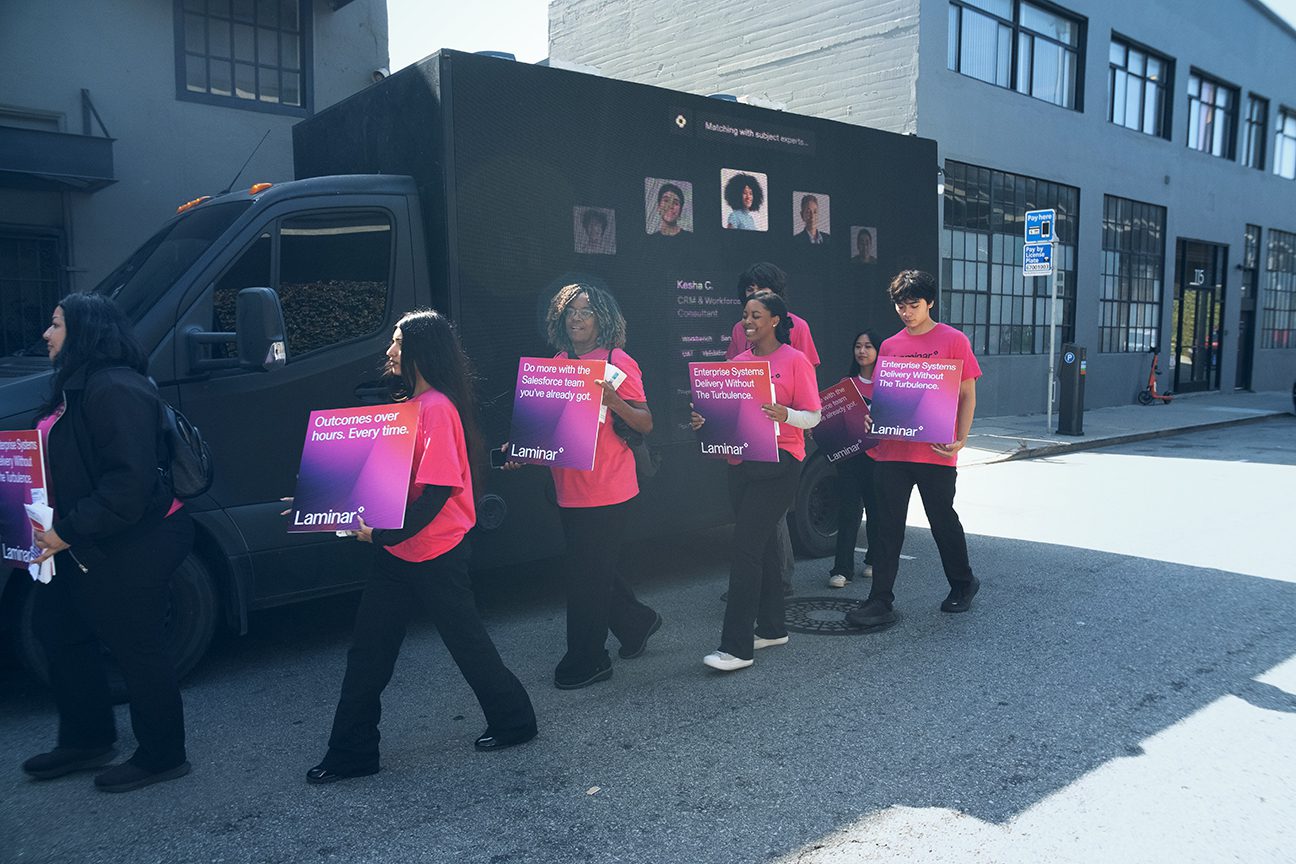
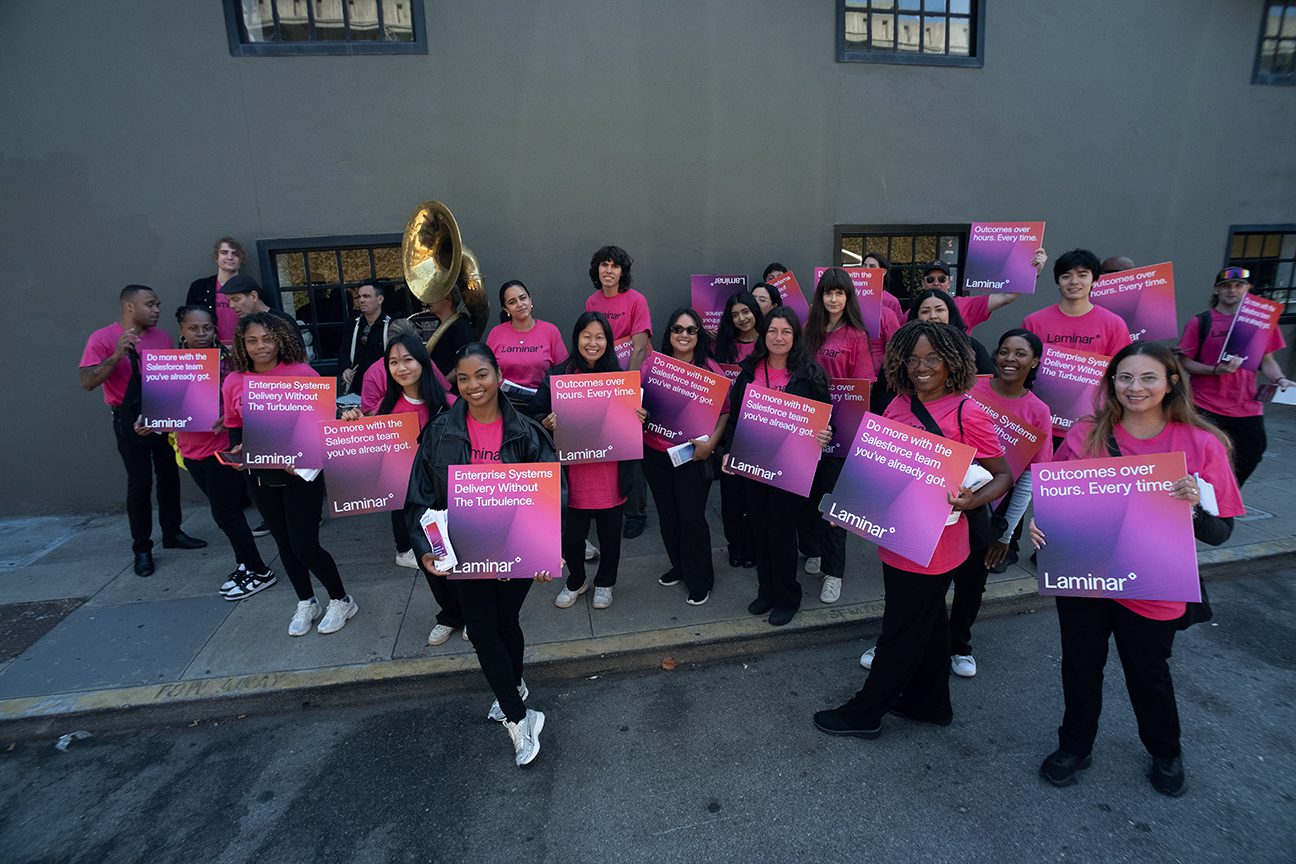
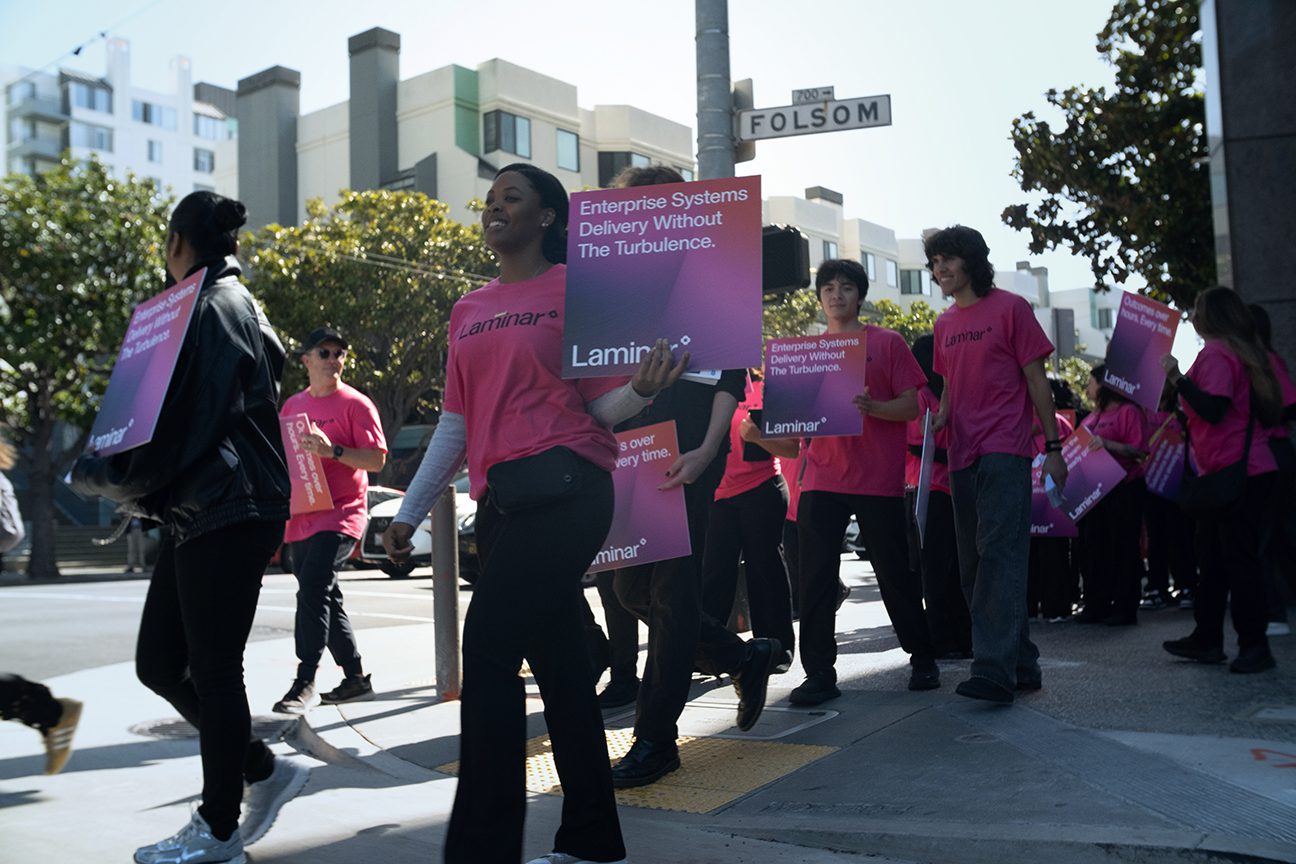
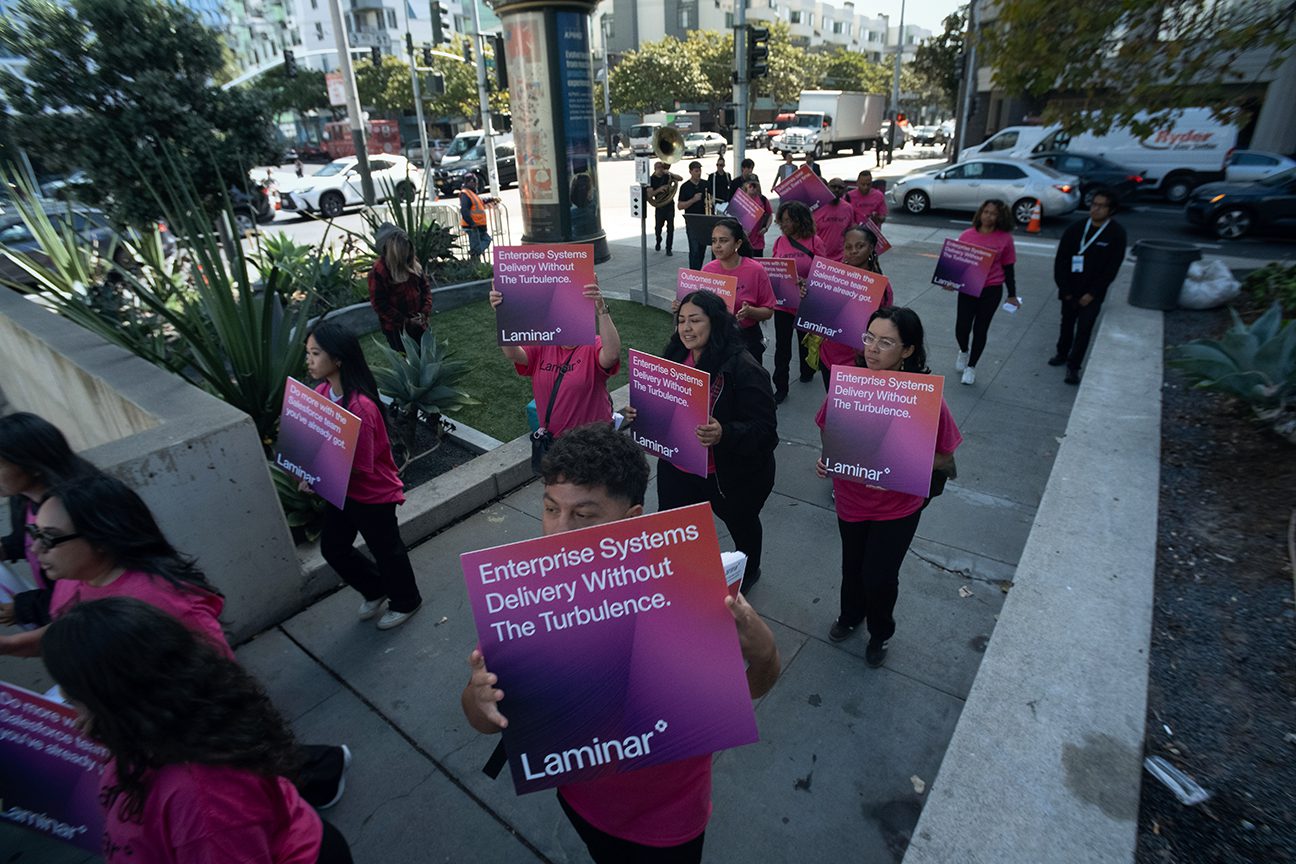
This campaign ran on September 15 and 16 in San Francisco, California, around Moscone Center during a major enterprise technology conference. The scope was two days of day shift truck, one day of night shift truck, plus production, scouting and installation of sidewalk stencils. Artwork was due five days before each install date.
The client sells enterprise software delivery services. Their buyer was inside that building, wearing a badge, with a packed calendar. We were not trying to reach San Francisco. We were trying to reach a few thousand specific people who happened to be standing in San Francisco that week.
How A Convention Audience Actually Moves
Moscone Center sits across Howard Street in the middle of South of Market, and almost nobody arrives there by car. They arrive on foot, and the walking patterns are predictable enough to plan against.
The hotel mass is north and west, along Market Street and up toward Union Square, which funnels people down Fourth Street and Third Street in a heavy morning stream between roughly 7:30 and 9:30. Transit adds to it from the Powell and Montgomery stations. The Yerba Buena blocks absorb the overflow at midday because that is where people go to sit outside and take calls. Evening reverses the flow, but it scatters: instead of one destination there are fifty restaurants and side events across South of Market and the Financial District.
That pattern told us what to buy. A campaign concentrated directly on Howard Street in front of the main entrance would hit people during the three minutes they are least receptive, when they are badge checking and trying to find a session room. The approach routes are where attention is actually available.
| Window | Where the audience is | What we ran |
|---|---|---|
| 7:30 to 9:30 AM | Fourth and Third Street walk in from Market Street hotels and transit | Day shift truck on the approach grid, stencils already in place |
| 11:30 AM to 2:00 PM | Yerba Buena blocks, Mission and Minna, lunch spill | Day shift truck circulating the inner loop |
| 4:00 to 6:00 PM | Outbound walk back toward Market Street and the Financial District | Day shift truck reversing the morning route |
| Evening | Restaurants and side events across South of Market | Night shift truck on the dinner and bar corridors |
Why Sidewalk Stencils Work On A Conference Approach
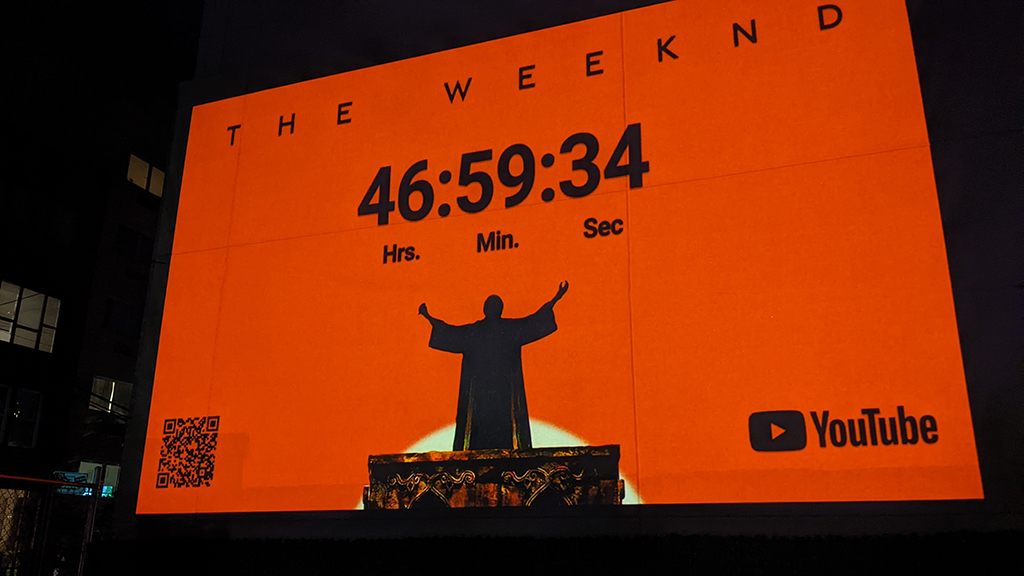
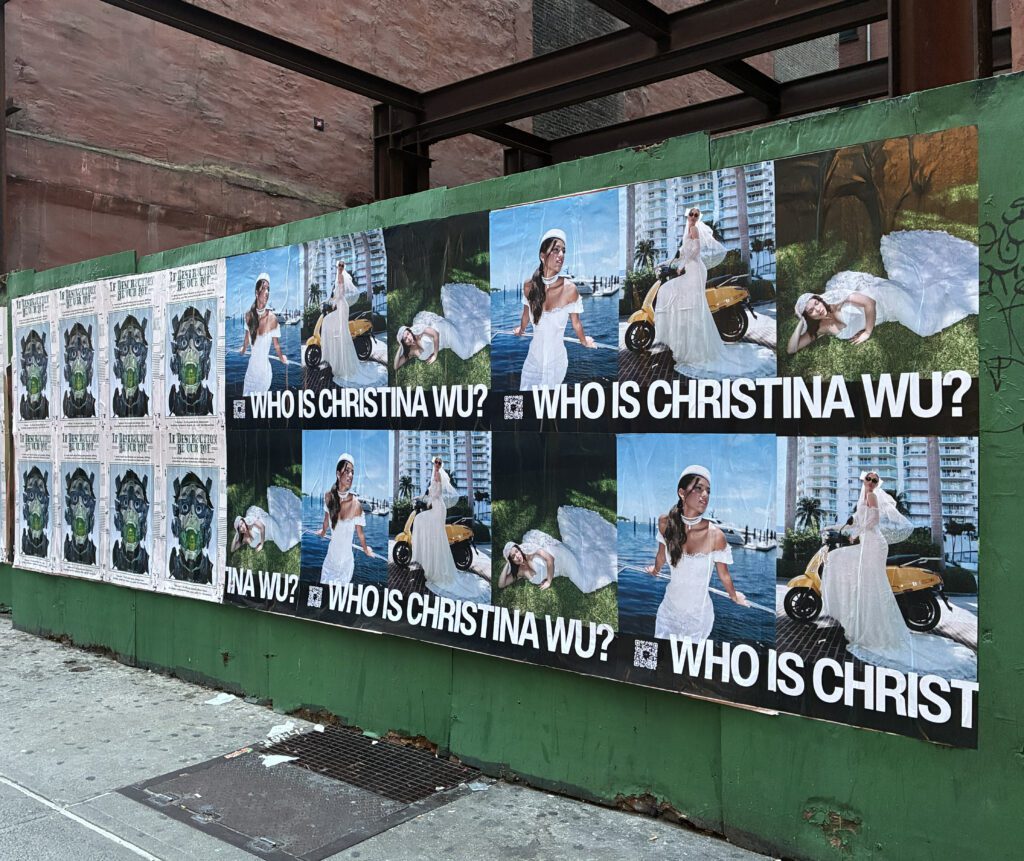
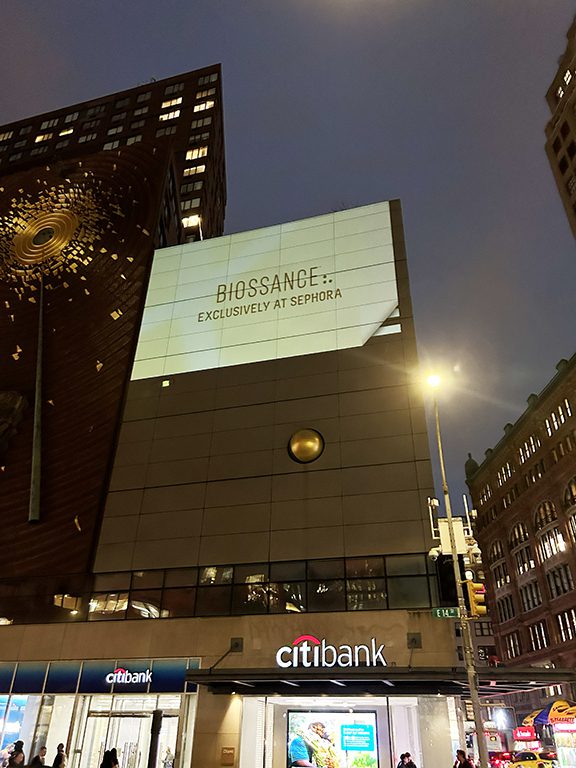
Stencils are the most underrated format in this situation and the reason is behavioral. People walking to a conference session are looking at a phone. Their eyeline is down. A poster at head height is competing with a screen six inches from their face, and the screen wins.
A sidewalk stencil is already in the place they are looking. It takes no effort to read, it carries a short message well, and a conference walk means the same person crosses the same stencil four or six times across two days. That repetition is what makes it work. One stencil seen once is a curiosity. The same mark on the pavement on the way in, the way out, and again the next morning becomes a name you recognize by the time somebody says it to you.
Placement is the whole craft. We scouted the approach routes on foot before installing, looking for clean flat pavement with consistent color, away from the worst of the grease and gum staining, positioned at the natural pause points: the curb side of crossings, the bottom of stairs, the entrance aprons where people slow down. A stencil in the middle of a long clear run of sidewalk gets walked over without registering. A stencil where people are already stopping gets read.
Scale had to change for the surface. A design that reads at poster size does not read on pavement viewed at a sharp angle from twenty feet away. We pushed the artwork simpler and wider, with heavier letterforms, and removed the smaller supporting line entirely. The campaign messaging was built around a short call to action pointing at a scan code, which suits a stencil well. A paragraph would not have.
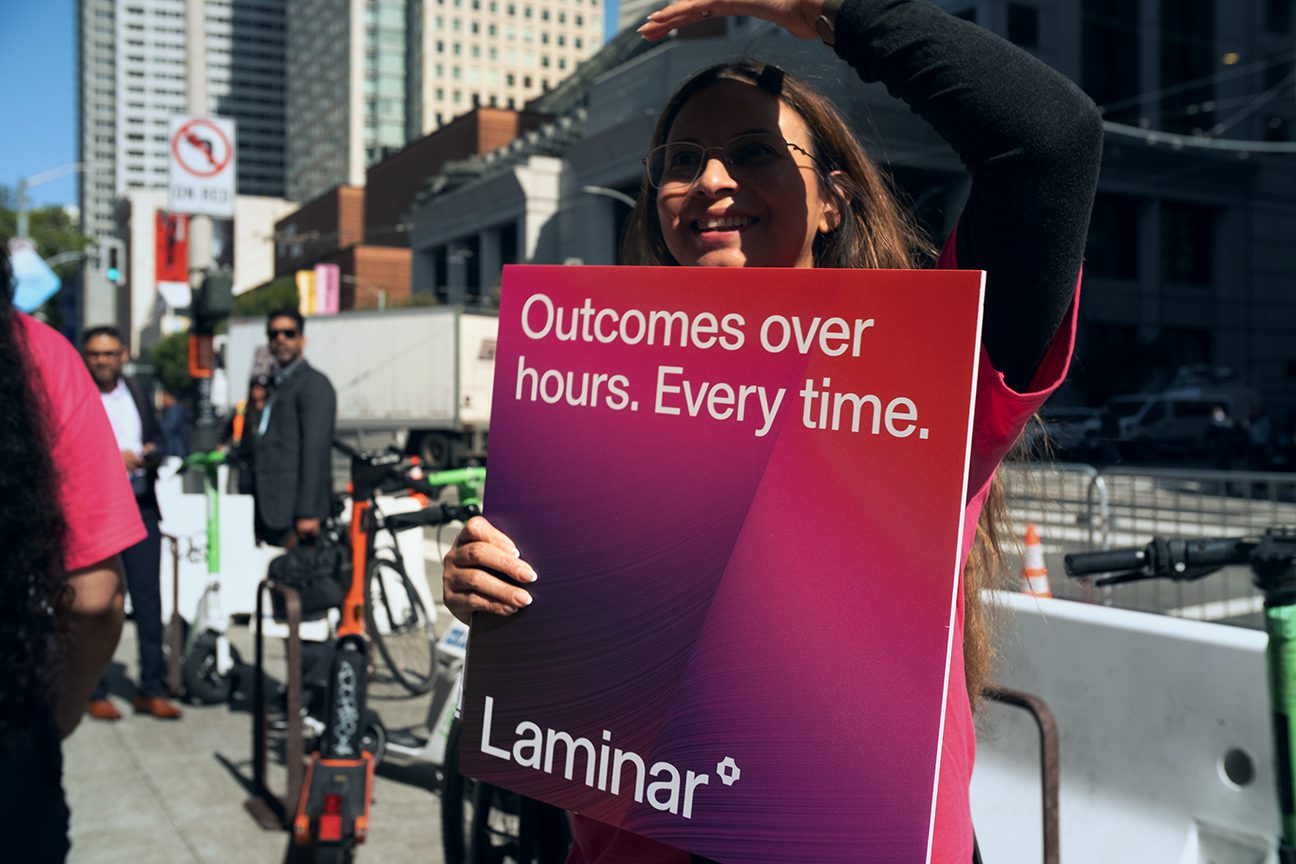
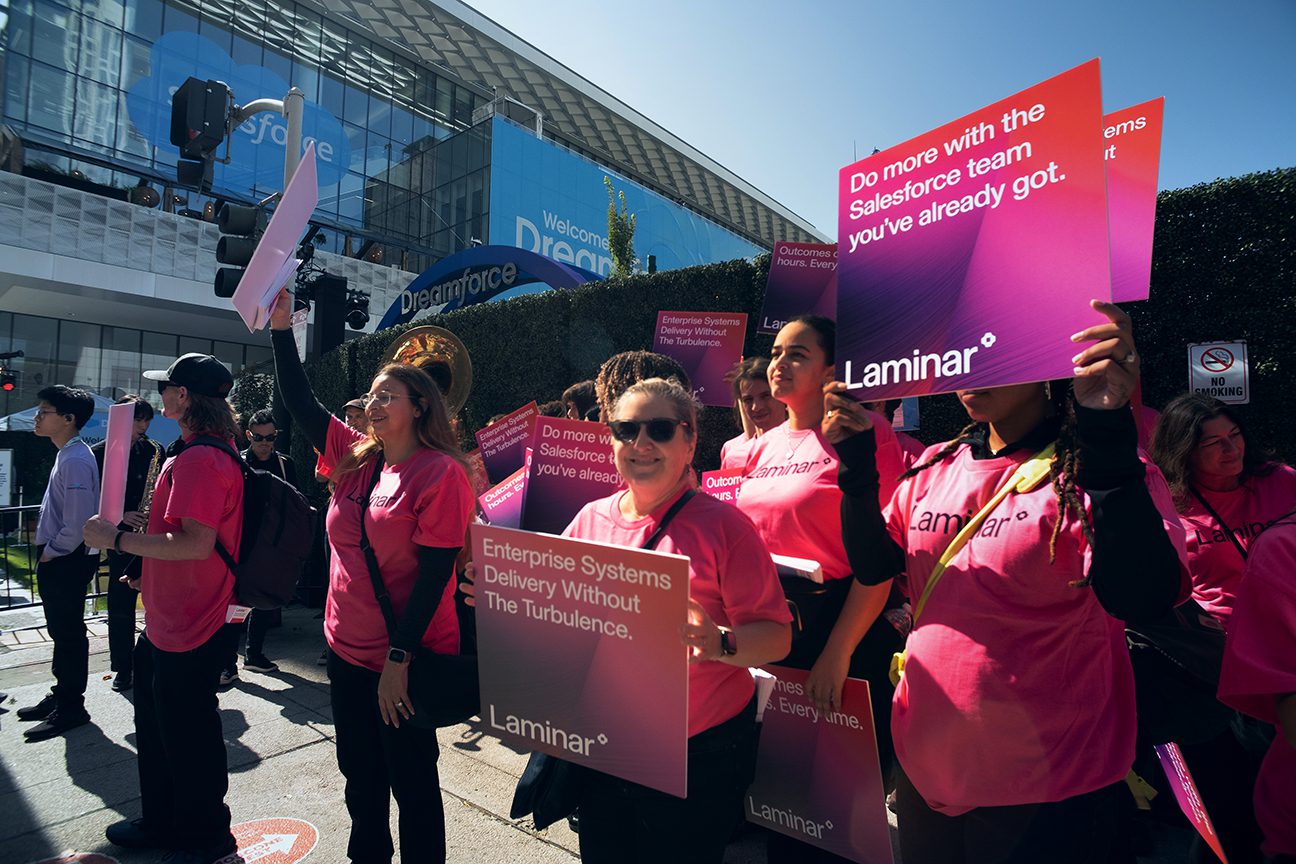
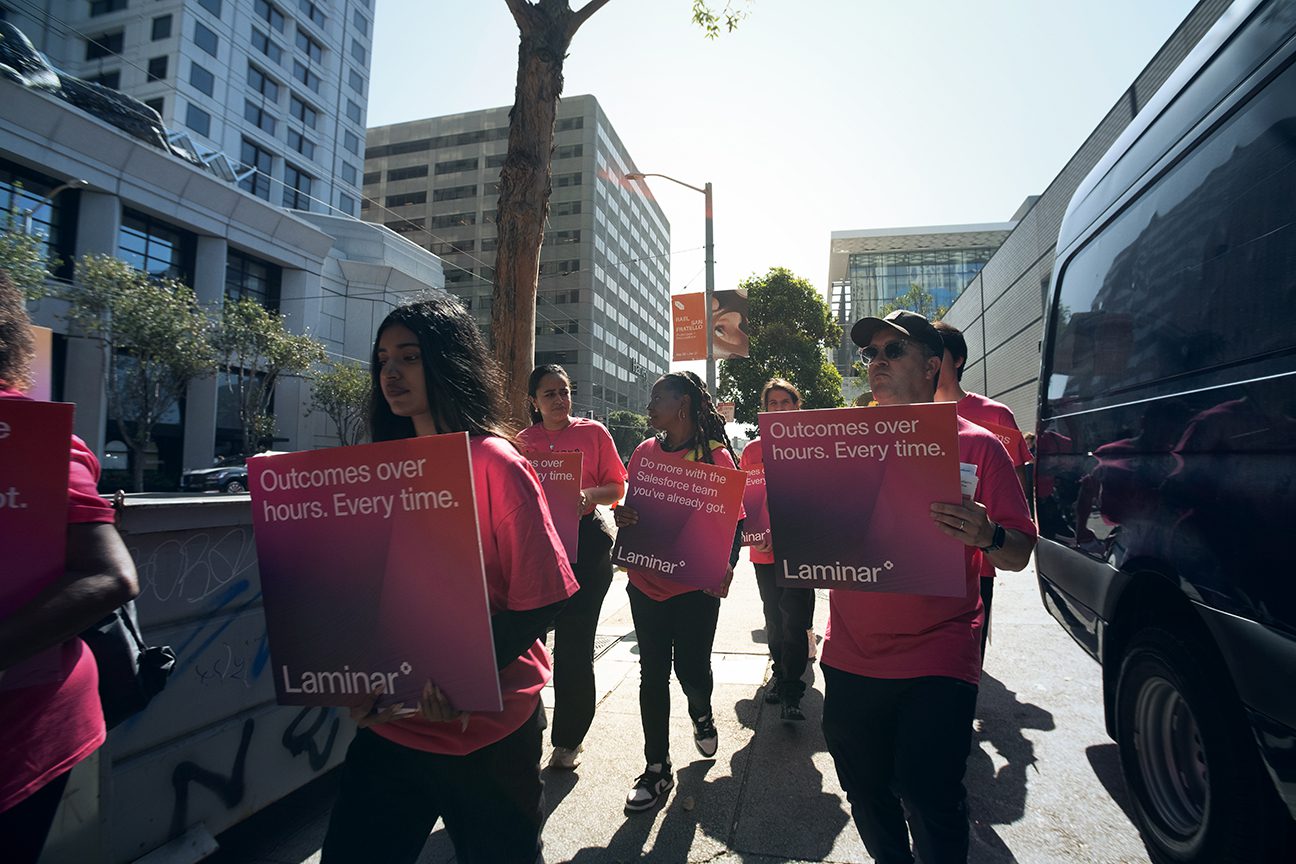
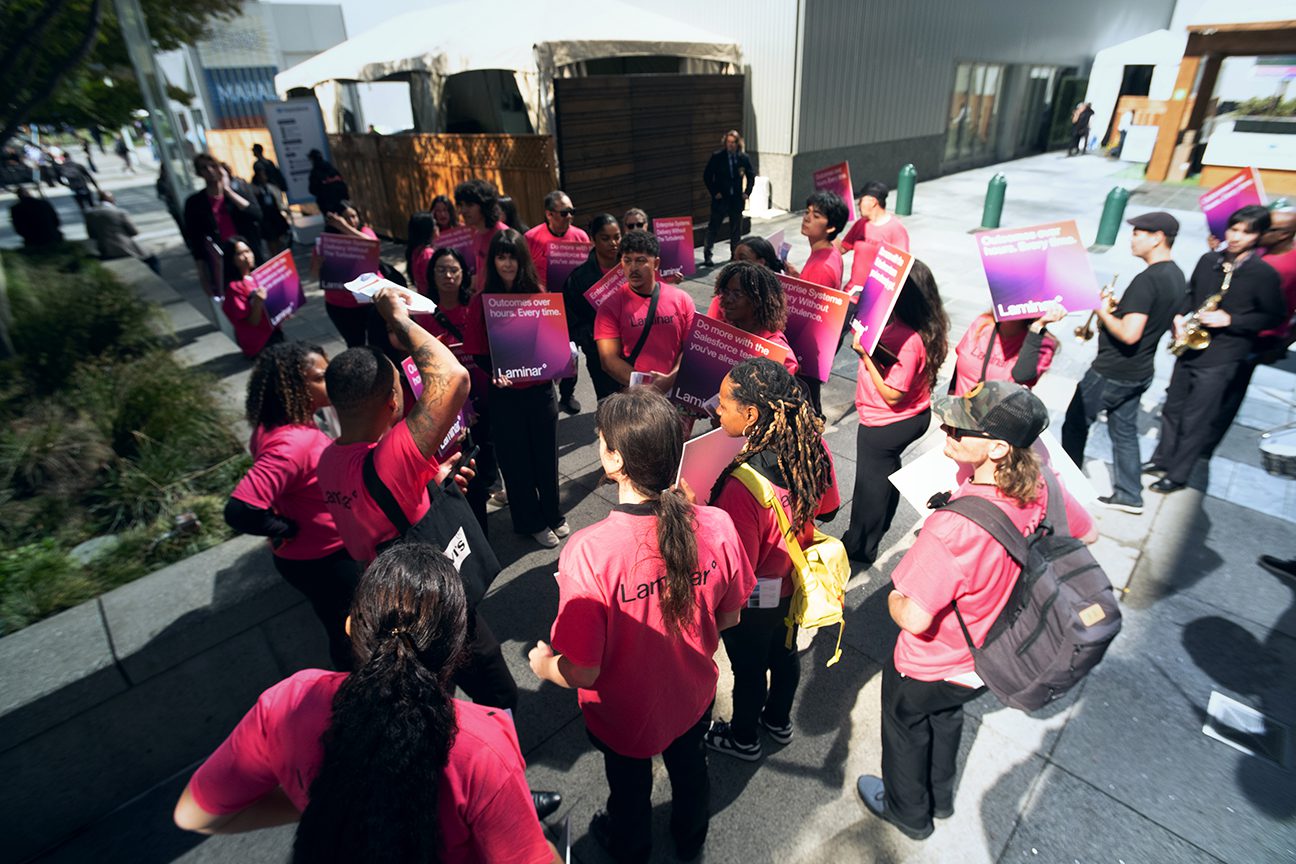
Campaign Photos



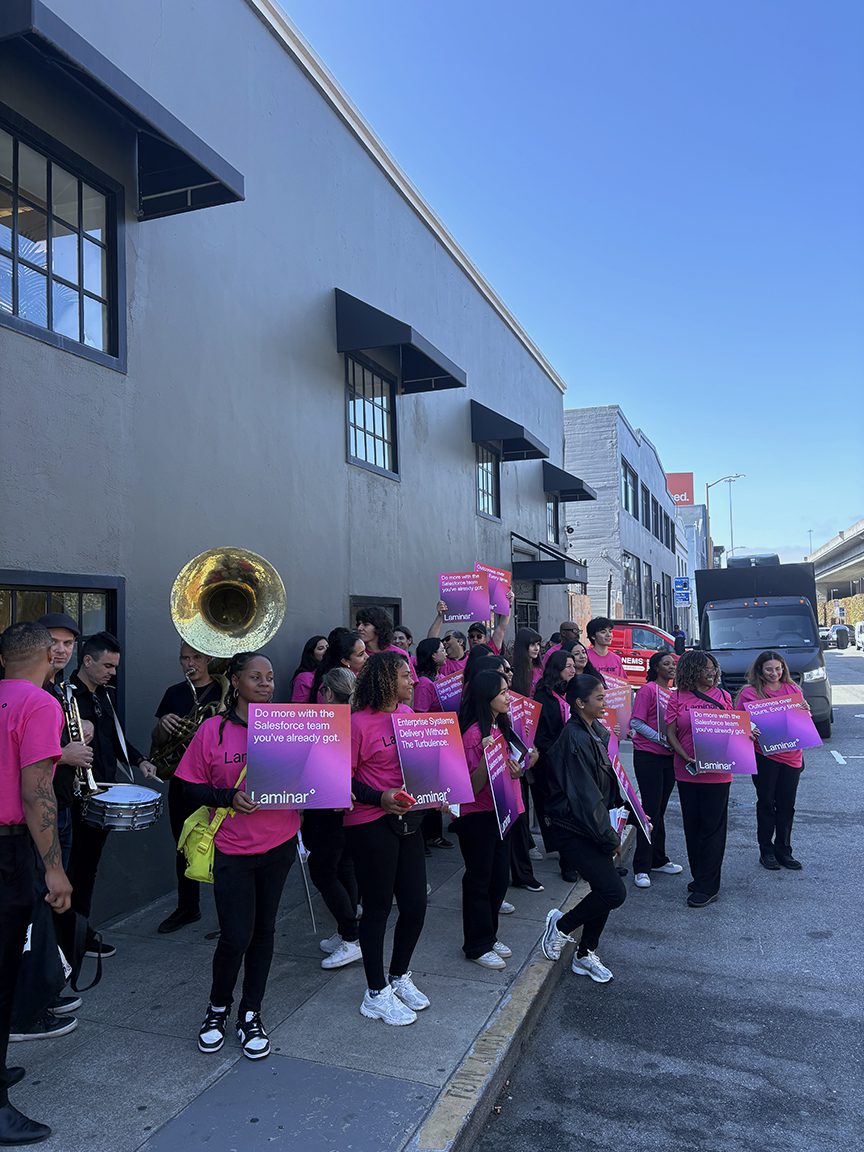
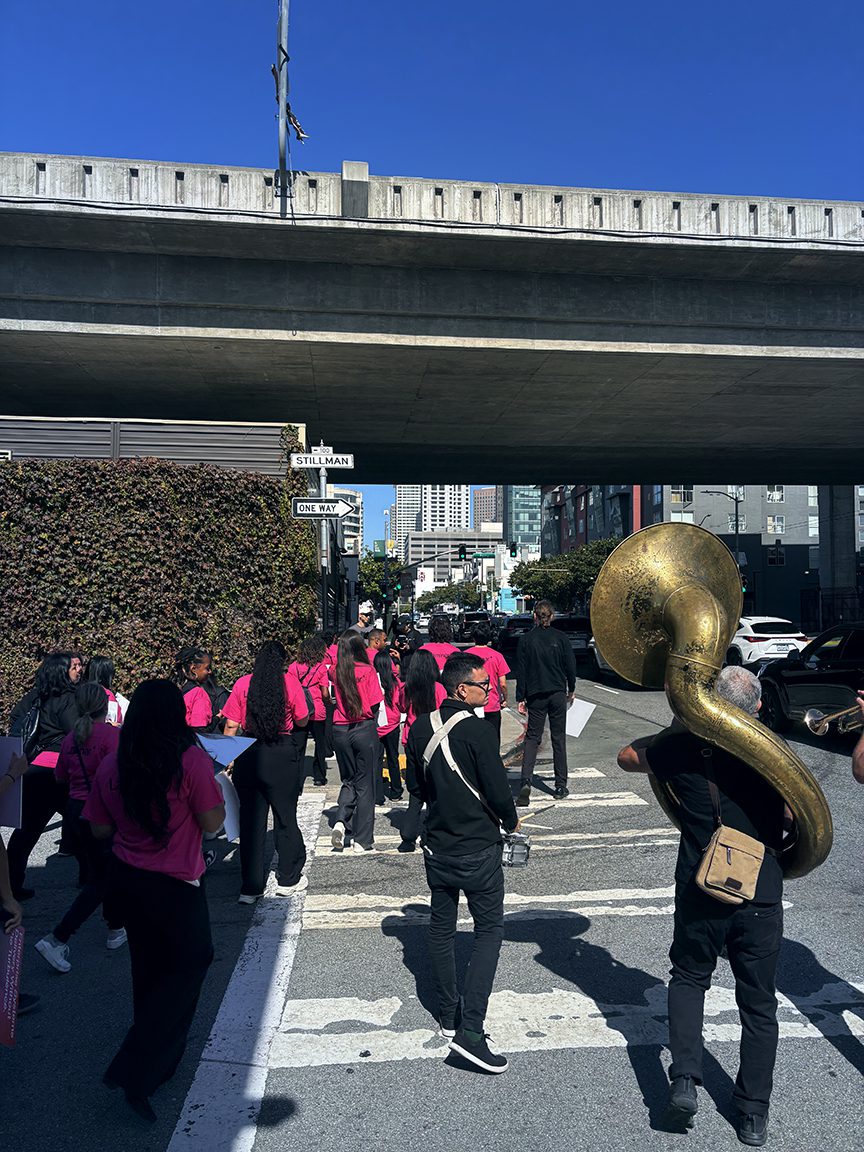
Ready To Put Your Artist Or Brand On The Streets Of America's Top Markets?
Award Winning Personalized Service
You will get thoughtful, devoted, and individualized attention from our experienced, qualified, and professional personnel. Being one of the most illustrious agencies in Brooklyn, New York, American Guerrilla Marketing has been awarded the Best of Brooklyn title.
Nationwide
Industry City, Brooklyn, New York 11232
American Guerrilla Marketing
Hours
Mon - Fri: 9 AM - 5 PM
Sat & Sun: Closed
Automate your campaign with AGM’s Request for Proposal Builder.
Automate your campaign with AGM’s Request for Proposal Builder. Simply answer a few quick questions about your campaign goals, markets, and timeline, and the system will generate a tailored presentation with recommended strategies, quantities, and pricing. Click the RFP Builder to instantly receive your customized proposal.
Day Shift Versus Night Shift: Two Different Audiences
Two day shifts and one night shift was a deliberate split, not a schedule convenience.
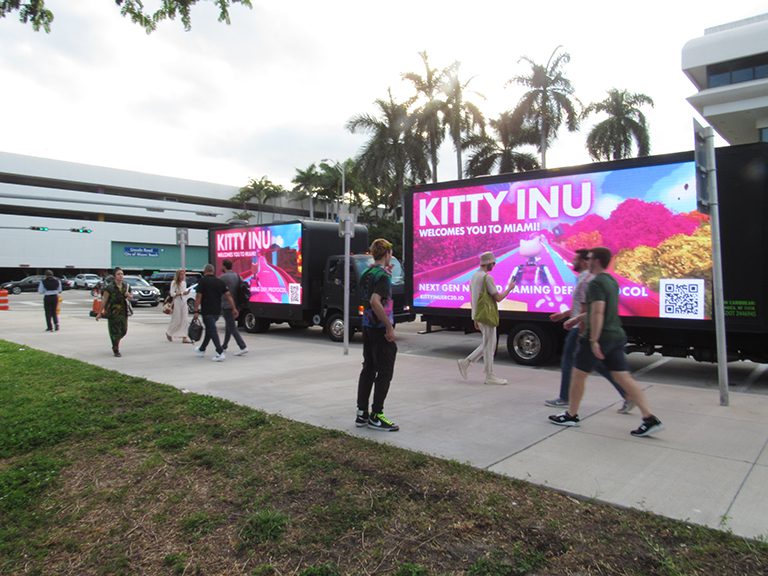
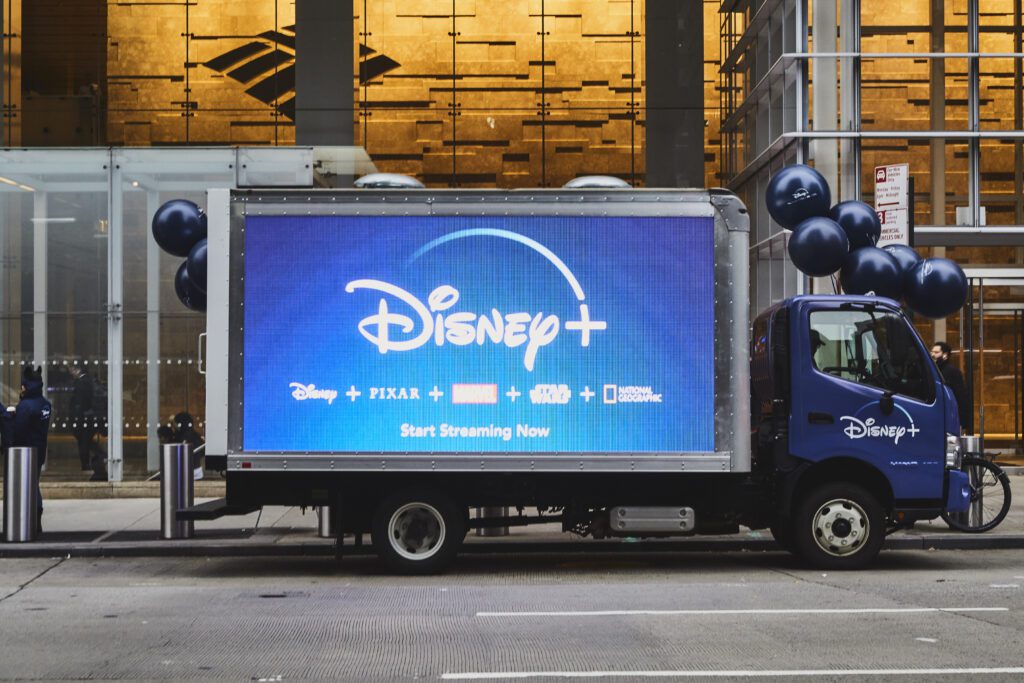
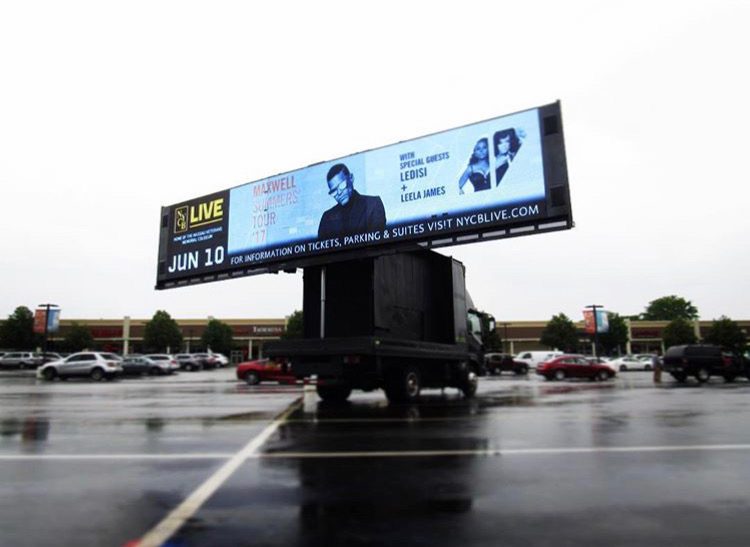
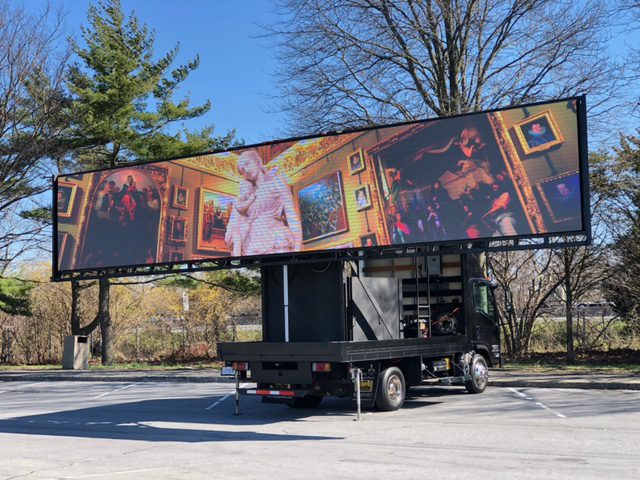
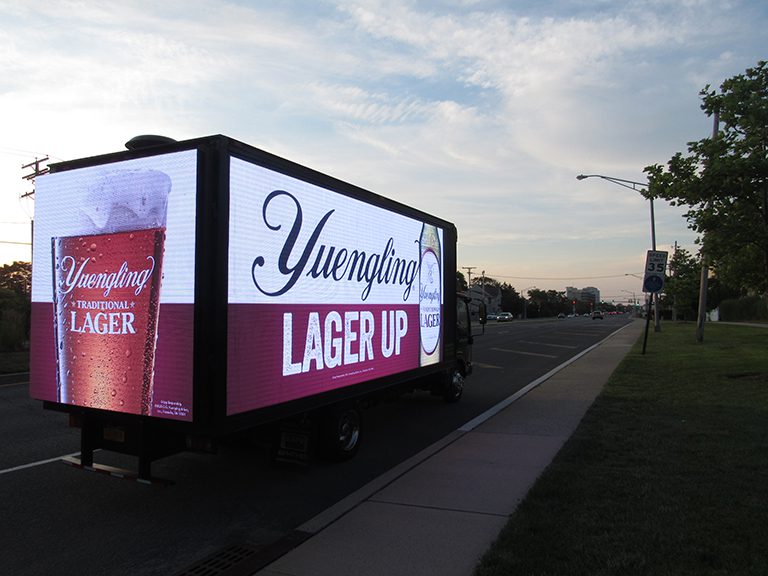
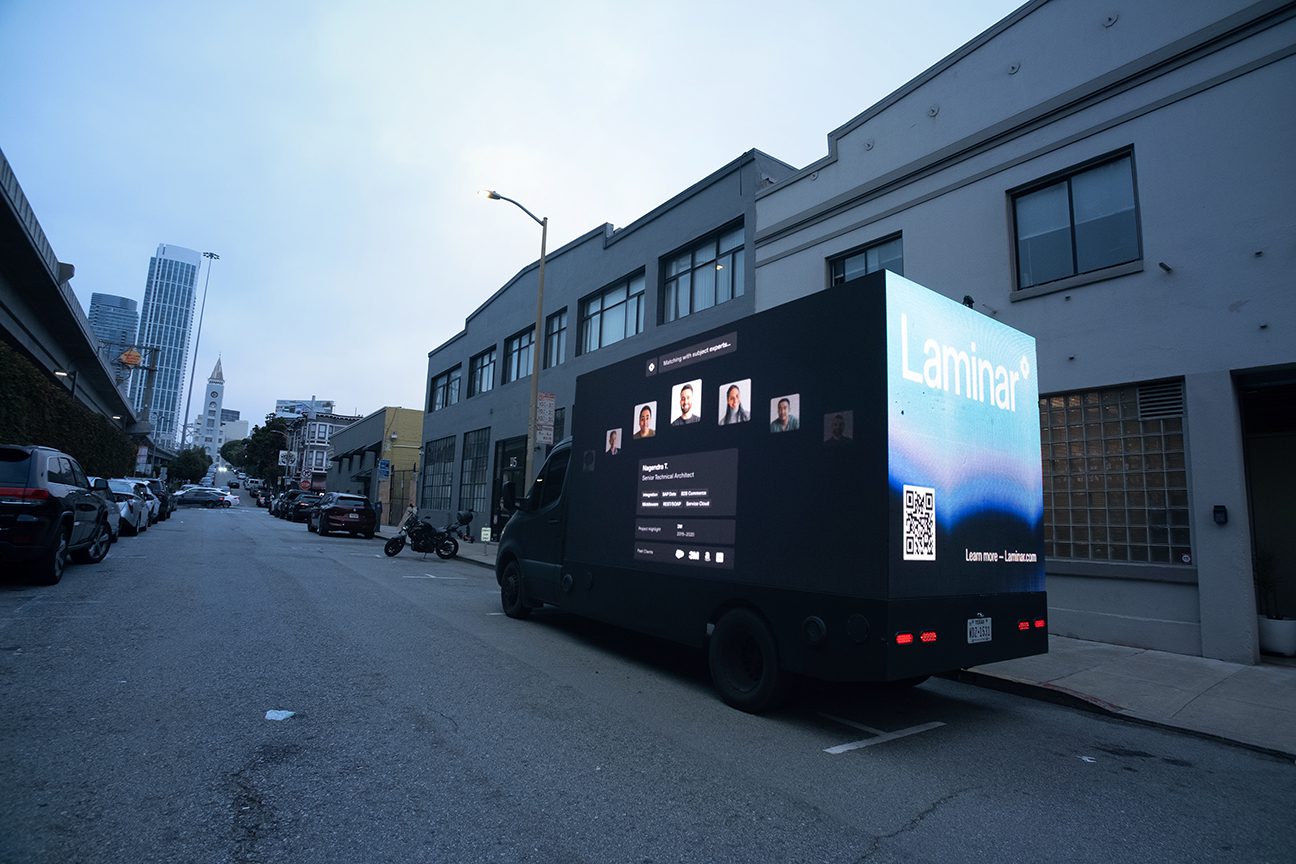
The day shift truck works the badge wearing attendee. Those people are in work mode, moving between sessions, and the value of the truck is that it keeps appearing. A truck circulating the grid around the venue passes the same intersections repeatedly across a six hour shift, so an attendee who walks out for coffee at ten and again at two sees it twice without ever feeling followed. Day shift is a frequency instrument.
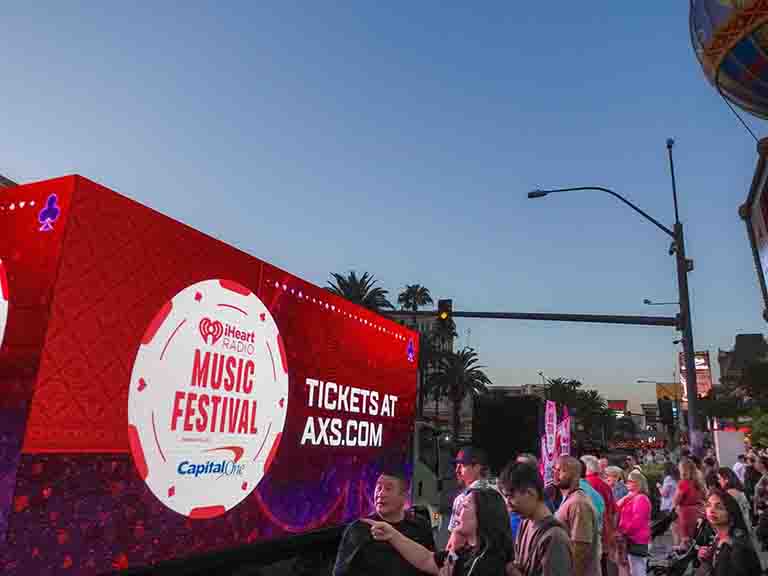
The night shift truck does something else. In the evening the same people are out of badge mode, in groups of four or six, walking between dinner and a side event, relaxed and talking. They are far more likely to point at something, photograph it and post it. Night also gives the truck screens their best contrast, since an illuminated panel at nine at night in South of Market carries much further than the same panel at noon.
Running one night instead of two was the right call for this scope. The second evening of a conference is usually the bigger social night, so that is where we put it.
The tradeoff we accepted
Three truck days around a venue this size is not saturation, and we were honest with the client about that going in. A single truck cannot be on Fourth Street and Third Street at the same moment, so there were windows during both mornings when half the inbound stream saw nothing from the truck at all. The stencils were carrying those gaps alone.
There is a second one worth naming. Pavement stencils are at the mercy of foot traffic and street cleaning, and South of Market gets both heavily. We installed fresh ahead of day one and we knew some marks would be degraded by the second afternoon. The honest version is that a stencil is a two day asset in a high traffic district, not a two week one, which is exactly why we matched the install to the conference dates rather than running it early.
If we ran it again, we would add a second day shift truck on the first morning only, so the heaviest arrival window gets covered on both main approach streets at once, and accept one fewer midday hour to pay for it. Mornings outperformed afternoons by a wide margin on this campaign.
What Came Back
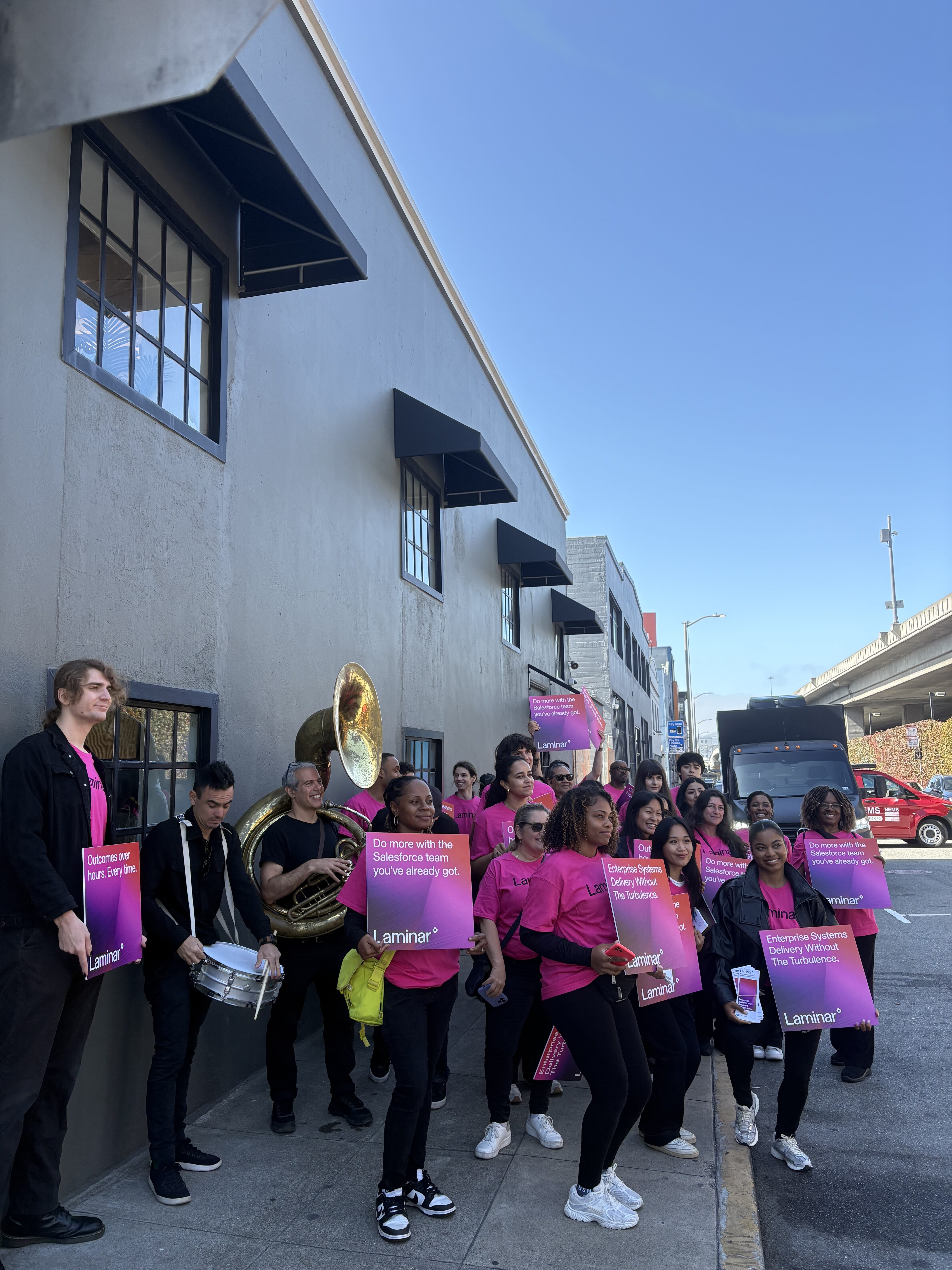
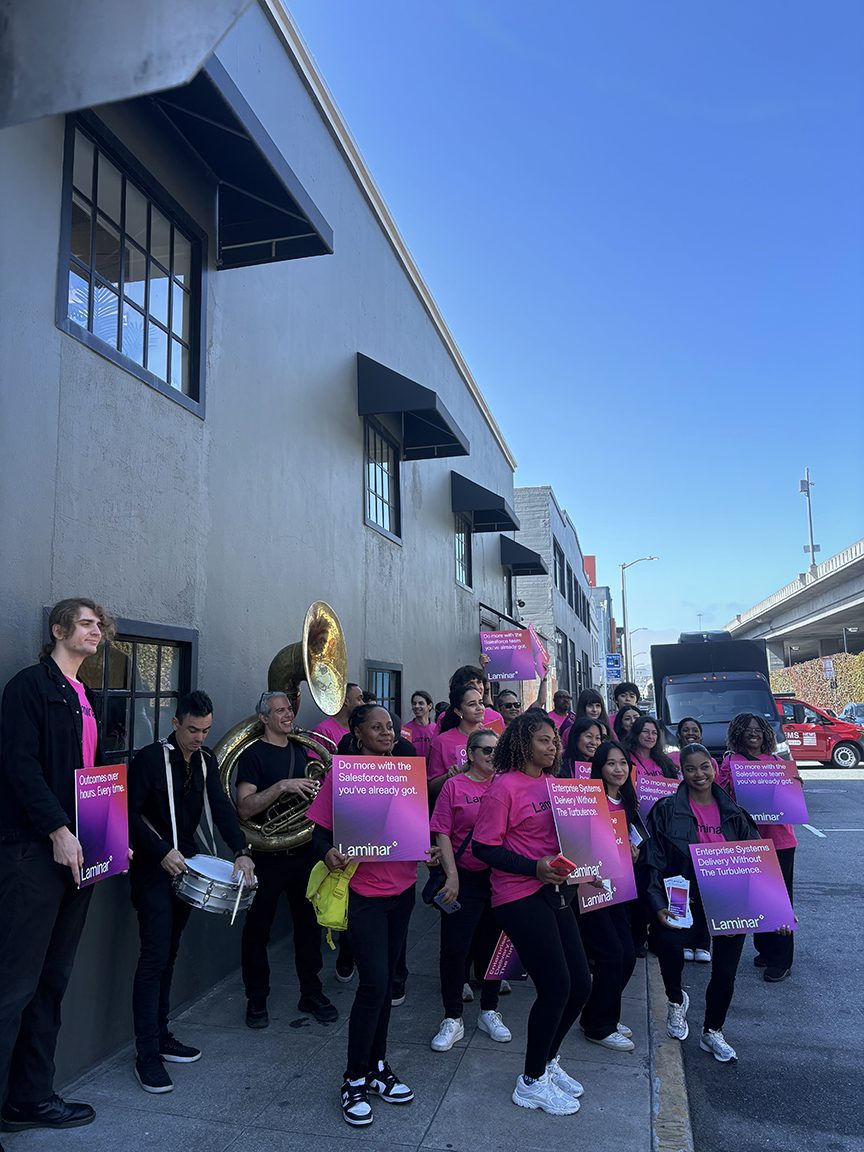
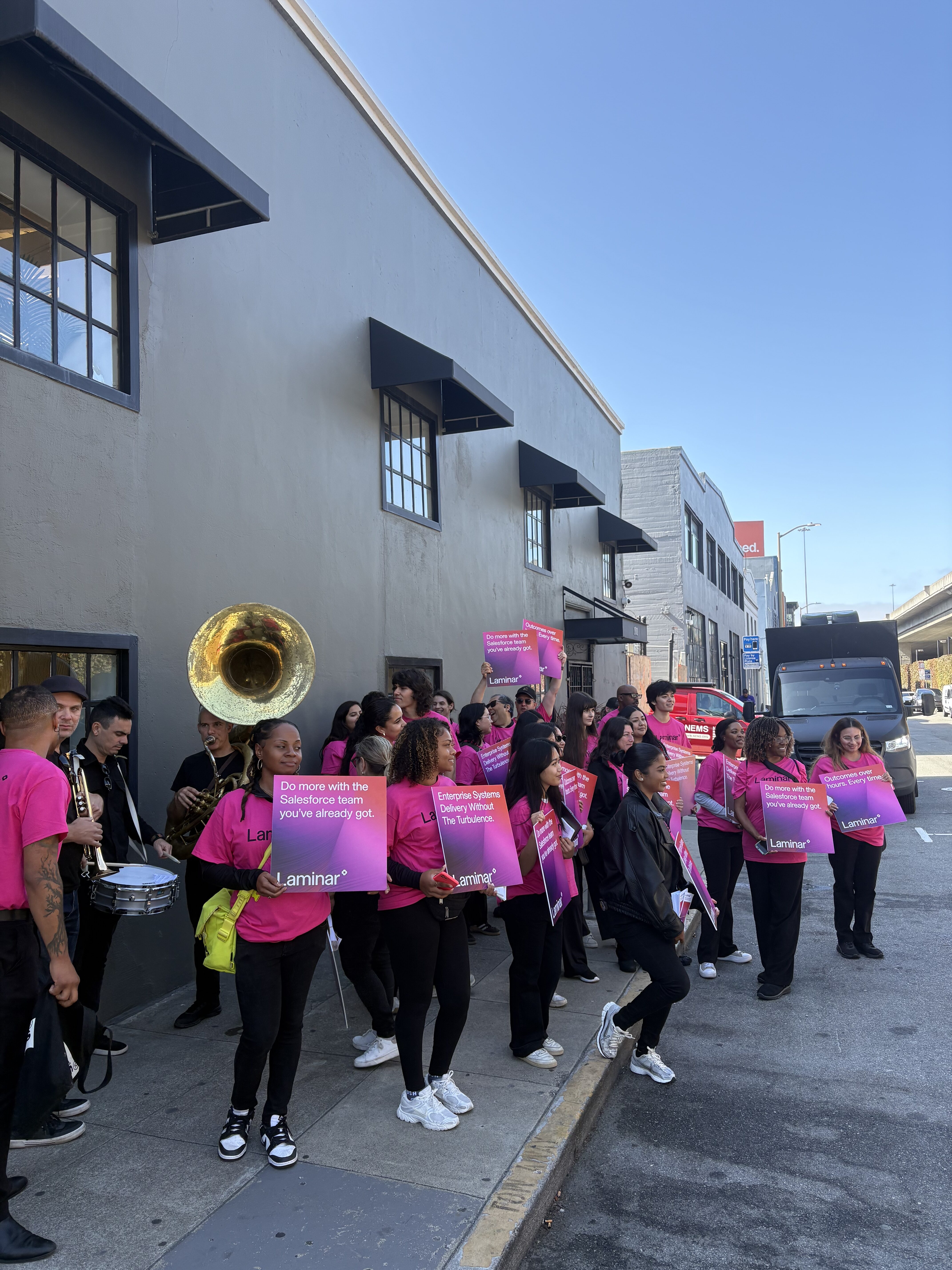
Reporting covered stencil locations with photography and truck route logs with timestamped shots, delivered within seven business days of completion. For conference work we also photograph the approach routes empty, early in the morning before the crowd arrives, because those are the images that actually show placement. A photo of a stencil surrounded by legs proves people were there. A photo of the same stencil at 6:00 AM proves where it was.
Targeting a conference in San Francisco
We scout the approach routes, produce and install the stencils, route the trucks around the venue schedule and document all of it. Give us the dates and the venue.
Frequently asked questions
Work the approach routes. Attendees arrive on foot from Market Street hotels and the transit stations, so trucks and stencils sit on the walk rather than at the door.
Conference walkers look down at a phone. A sidewalk stencil is already in that eyeline, and the same person crosses it several times across two days.
Evening catches the same people in groups, relaxed and sharing. Illuminated panels also read much further after dark.
Five days before each install date, so the cutting and test pulls happen before the crew goes out.