
November 22, 2026
What to Expect From Mobile Billboard Truck Advertising
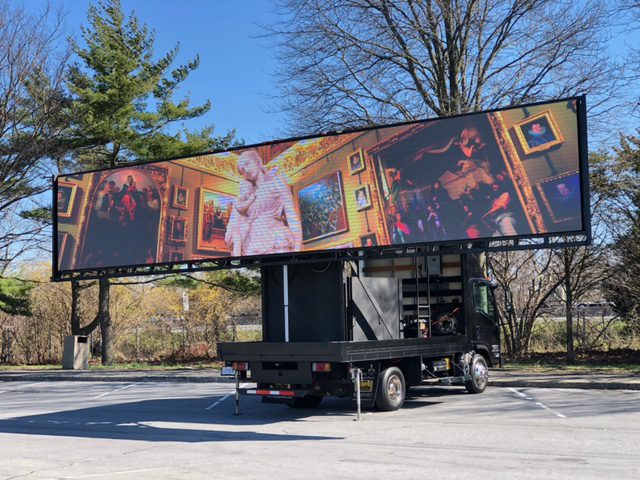
The vendor pages for mobile billboard truck advertising all read the same way. Coverage claims, a map of the country, GPS tracking as a feature, a photo of a clean truck on an empty street at golden hour. Nobody tells you what a route actually looks like, how the driver spends the hours, or why some bookings are a waste of a day.
I run campaigns on the operations side. What follows is what a buyer should expect from a truck, in the order the day actually happens.
The buyer problem is usually the same. Someone has a launch, an event, a store opening or a recruitment push, and they want visible presence without a six-week outdoor booking cycle. A truck fits that. Then they book a vague route, the truck circles a highway for eight hours, and they cannot tell whether anything happened.
That outcome is avoidable, and it is almost always a route problem rather than a truck problem.
Trucks are the one format in our mix that performs in weather that would end a paste night. That alone makes them worth understanding properly.
Static wrap versus LED screen
First decision, and buyers get it wrong constantly.
A static wrap is printed vinyl applied to the truck's panels. One message, no moving parts, nothing to fail. It reads cleanly in bright daylight, which is exactly when an LED screen is at its weakest. A wrapped truck in midday sun on a sunny corridor outperforms a screen at the same hour.
An LED screen is a lit panel, usually mounted to run on one, two or three sides. It changes content, plays motion, and can carry several messages in one booking. After dark it is unmissable. In direct overhead sun it washes out, no matter what brightness number a spec sheet quotes.
The practical rule we use: if the campaign runs mostly in daylight, wrap. If it runs at dusk, after dark, or on a nightlife corridor, LED. If it needs multiple messages or motion, LED regardless, and plan the hours around that.
Three-sided LED configurations matter more than people assume. A single rear screen only works for traffic directly behind you, which means your audience is drivers stuck in the same queue. Side screens are what reach sidewalks, patios, queues outside venues and crowds at a stadium gate. For event work, side coverage is the whole value.
Static wraps have a second advantage worth saying out loud: nothing on them can fail mid-route. A screen with a dead module or a media player that drops out costs you hours before anyone notices.
What a route actually looks like
A good route is a loop, not a line. The truck passes the same high-value segments repeatedly so the same people see the message more than once. One pass down a corridor is a sighting. Six passes over an afternoon is frequency, and frequency is what makes people remember a brand.
Loop length matters. A loop that takes forty minutes to complete gives you plenty of repeats per shift. A loop that takes ninety minutes because it includes a long low-value connector burns your day on road nobody is watching from.
Speed is the second thing nobody mentions. A truck doing forty-five miles an hour past office towers is not advertising, it is commuting. The placements that work are the slow ones: congested surface streets, signalised corridors where you stop repeatedly, event ingress and egress, and arranged standing time where a venue or property owner allows it.
That is why freeway routing is usually a poor buy. The truck is visible, briefly, to people travelling at speed in the next lane, who are looking at the road. We use highways to get between zones, not as the product.
Dayparting decides which audience you get. Morning commute catches drivers on arterials. Midday catches downtown workers on foot around lunch. Late afternoon catches commute again plus retail. Evening catches dining and nightlife on foot, which is the best pedestrian density of the day and the hour LED earns its place.
A sensible shift is built around two or three high-value windows rather than a flat block of hours. Eight continuous hours on one loop will include dead hours. We would rather run the truck when the audience is actually outside.
Cities and corridors where trucks earn their keep
New York is the strongest truck market in the country and also the hardest. Midtown around Herald Square and the Thirty-Fourth Street corridor gives you crawling traffic beside heavy pedestrian flow, which is ideal. Canal Street, lower Broadway and the approaches to the bridges all do the same. The flip side is that Manhattan traffic can turn a planned loop into a standstill, and local rules around vehicles carrying advertising are strict, so routing takes local knowledge.
Los Angeles works on specific corridors rather than citywide. Sunset through Hollywood, Hollywood Boulevard itself, Melrose, Wilshire through Miracle Mile, the Figueroa approach to the downtown arenas on event nights. Outside those, you are paying for the truck to drive.
Chicago gives you Michigan Avenue, the Loop grid, Milwaukee Avenue through Wicker Park, and the streets around the stadium and arena on game days. Winter is genuinely useful here, because a truck runs through weather that would stop every street install we do.
Las Vegas is almost purpose-built for the format. The Strip moves slowly, pedestrians are everywhere, and the evening is long and bright. Convention weeks concentrate a specific audience into a small number of streets, and trucks work the perimeter of venues where indoor advertising is locked up.
Miami runs Ocean Drive and Collins in South Beach, plus Wynwood on weekend evenings. Atlanta works Peachtree and the areas around the stadium district. Austin concentrates on downtown and the campus edge, and during festival weeks the pedestrian density is as good as anywhere in the country.
Nashville's Broadway strip, Philadelphia's Center City grid, Boston around the Fenway area on game nights, Denver's Sixteenth Street district, Houston's Midtown and the area around the convention centre. All workable, all for the same reason: slow traffic plus people on foot.
The common pattern is simple. Trucks are worth it where vehicles move slowly and humans are outside. Everywhere else is transit between those places.
Event targeting, which is where trucks are hardest to beat
The best truck work I have been part of was tied to something already drawing a crowd. Conferences, stadium events, festivals, race days, campus move-in, parades, convention centres.
The reason is ingress and egress. Before an event, thousands of people walk from parking and transit toward one or two entrances along predictable paths. After, the same happens in reverse, slower, with people standing around. A truck positioned on those paths, by arrangement and with the venue's awareness, gets sustained exposure to a concentrated, relevant audience.
Conference work has a particular value. Indoor sponsorship inside a convention centre is expensive and controlled. The street outside is not controlled the same way, and the attendees all walk it. A truck running the perimeter during session breaks reaches exactly the people who paid to be there.
Timing is tighter than people expect. Showing up thirty minutes before doors is too late if the queue forms ninety minutes out. Our drivers plan to be in position well before the crowd, which means scouting the actual ingress pattern rather than trusting a venue map.
A truck also pairs naturally with people on the ground. A Street Teams & Experiential crew handing out something tangible beside a parked truck converts far better than either does alone. The truck gives the team a visual anchor and a reason to be standing there.
Impressions, tracking and what the numbers mean
Expect GPS tracking, because every serious operator provides it. What you get is a route log showing where the truck was and when. That is a proof-of-service record. It confirms the truck ran the agreed route for the agreed hours.
What it is not is an audience measurement. An impression estimate derived from traffic counts along a route is a model, not a count. Nobody is counting eyeballs on a moving vehicle. Any operator presenting a precise impression figure as fact is presenting an estimate dressed up as data.
We will talk about estimates, clearly labelled as estimates. We will not pretend they are measured.
What you can actually measure is campaign response. A route-specific landing page, a distinct short URL on the creative, a scannable code, or a promo code used only on truck creative. Those give real numbers. We push clients toward at least one of them, because otherwise the only evidence of the campaign is the photo set and the GPS log.
Photo documentation is the other deliverable to expect. Our drivers capture the truck in position at the key locations across the shift. That is what ends up in the client report and in the recap deck.
Artwork, and the mistakes that get printed
A truck is read in a couple of seconds by someone who is doing something else. Everything follows from that.
Big type. One idea. Brand recognisable at distance. A single call to action that a person can remember or photograph.
Phone numbers do not work on a moving vehicle. Long URLs do not work. Paragraphs of body copy are money spent on ink nobody reads.
For LED, motion should be slow and simple. Fast cuts and busy animation read as noise at a glance, and the glance is all you get. Static frames held long enough to be read beat clever transitions every time.
Contrast decides daytime legibility. Dark type on a light field holds up in sun. Thin type in a mid tone disappears. For wraps, we check artwork against the panel seams and hardware positions so the key message does not land across a hinge or a wheel arch.
Resolution matters more for wraps than people assume, because the panel is large and viewers get close at traffic lights. Supply the biggest file you have.
We review artwork before it goes to print or onto the player. Once vinyl is printed, the money is spent, and I would rather have an uncomfortable conversation at the proof stage.
Permission, ordinance and the grey area
Mobile billboard rules vary a great deal by municipality, and this is one of the genuinely grey areas in outdoor work.
Some cities have specific ordinances addressing vehicles whose primary purpose is carrying advertising. Some restrict standing or parking such a vehicle. Some treat it like any other commercial vehicle. Some have nothing on the books. Enforcement is inconsistent between cities and sometimes between precincts within one city.
What we do about it:
We plan routes with local knowledge rather than dropping a generic loop onto a map. Local drivers know which blocks draw attention and which do not.
We treat standing time carefully. A moving truck and a parked truck are different questions in many places. Where a client wants the truck stationary, we look for private property with the owner's permission, event lots, or arranged positions with a venue.
We keep the vehicle compliant as a vehicle. Registration, insurance, lighting and condition. A truck pulled over for something mundane costs the client campaign hours.
We do not give legal advice. Where a client has low risk tolerance or operates in a regulated category, they should check their own market with their own counsel, and we will build the route to whatever constraints that produces.
We document the campaign so there is a clear record of where the truck was and when.
Honest framing: this is not a format where anyone can promise there will never be a conversation with an official. It is a format where good planning makes that conversation rare and uneventful.
What we talk clients out of
Highway-only routing. Visible, fast, forgettable. If the plan is miles of freeway, the client is buying diesel.
All-day flat shifts with no daypart logic. Eight hours of coverage sounds like more than four well-chosen hours. It usually delivers less to the people who matter.
LED screens for a daytime-only campaign. The screen will be at its weakest exactly when the truck is running. Wrap it instead and save the screen for an evening campaign.
A single truck covering a large metro. One vehicle cannot saturate Los Angeles or Houston. Either narrow the geography to corridors that matter or add vehicles. Spreading one truck thin produces a GPS log and nothing else.
Promising precise impression counts to a client's leadership. We will not supply a number we cannot stand behind, and we advise against building an internal business case on a modelled figure.
Phone numbers and dense copy on the creative. Every time.
Last-minute event bookings where the ingress pattern has not been scouted. A truck in the wrong position at a big event performs worse than a truck on an ordinary street, because you have paid for the event and missed the crowd.
Trucks as a substitute for neighbourhood presence. A truck passes. It does not stay. If the brief needs a neighbourhood to feel saturated for two weeks, Wheatpasting & Poster Campaigns do that and the truck amplifies it. Trying to buy persistence from a vehicle is the wrong tool.
What drives the size of a booking
No numbers, but the levers are clear, and knowing them makes the quote conversation faster.
Number of vehicles. Coverage scales with trucks, not with hours.
Shift length and daypart. Evening and late-night hours cost more in crew terms than a midday shift.
Market. Dense, complex cities require experienced local drivers and slower routes.
Wrap versus LED. Wraps carry print and application time. Screens carry hardware and content preparation.
Campaign length. A single day is a one-off mobilisation. A multi-week flight lets the same vehicle and driver stay in market, which is more efficient per day.
Event involvement. Venue coordination, positioning arrangements and tight timing all add planning work.
Creative production. One static message is simple. A rotating set of LED content with dayparted variants is a content project.
Add-ons. Street team coordination, sampling, photo and video capture beyond standard documentation.
Pairing trucks with the rest of the mix
The strongest campaigns I have worked on rarely used a truck alone.
A truck plus posters gives you movement and persistence together. The posters hold the neighbourhood for two weeks, the truck pushes the message along corridors the posters cannot reach.
A truck plus a street team gives you a conversation. The vehicle draws the eye, the people on the ground do the work.
A truck plus Projection Advertising covers an evening with two scales of image, one moving at street level and one large on a building face.
If you only have one format to spend on and the brief is an event, a truck is often the right single choice. If the brief is a neighbourhood over time, it usually is not.
Frequently asked questions
How is a mobile billboard route planned?
Around slow traffic and people on foot. We build a loop that repeats high-value segments so the same audience sees the message several times, keep connectors short, and split the day into two or three dayparts matched to when the audience is actually outside. Highways are used to move between zones, not as the advertising itself.
Should I choose a static wrap or an LED screen?
Daylight campaigns favour wraps, because printed vinyl reads perfectly in bright sun while a screen washes out. Evening and nightlife campaigns favour LED, which is unmissable after dark and can carry several messages or motion. If you need multiple creative versions in one booking, LED is the only option and the schedule should lean later.
Can you prove the truck ran where it was supposed to?
Yes. GPS route logs show where the vehicle was and when, and drivers capture photo documentation in position across the shift. That proves service delivery. It does not measure audience. Impression figures for moving vehicles are models rather than counts, and we label them as estimates rather than presenting them as measured data.
Is mobile billboard advertising allowed in every city?
It is a grey area. Ordinances covering vehicles carrying advertising vary by municipality, several places restrict standing or parking such a vehicle, and enforcement is inconsistent. We route with local knowledge, arrange stationary positions on private or venue property with permission, and keep the vehicle fully compliant. We do not give legal advice.
How many messages can one truck carry?
A wrap carries one message per panel for the whole booking. An LED screen rotates as many as you want, though the practical limit is attention rather than hardware. We usually hold frames long enough to be read at a glance and keep the rotation short, because a passer-by sees one or two frames and nothing more.
Does a single truck cover a whole city?
No, and we say so before booking. One vehicle covers corridors, not metros. In a large market the honest options are narrowing the route to the corridors that matter or adding vehicles. Spreading one truck across a sprawling city produces a tidy GPS log and very little actual exposure.
Request a campaign quote
Tell us the city, the dates, the audience and whether anything is already drawing a crowd during your window. We will come back with a route proposal, a daypart plan, a wrap or LED recommendation and an honest view of what one vehicle can and cannot reach.
Request a campaign quote. If a truck is the wrong tool for your brief, we will tell you that and point at the format that fits.

Ready to Run Your Campaign?
Call us or email us. We’ll tell you exactly what we can do in your market and what it costs.
Related Services
Explore similar advertising solutions offered by American Guerrilla Marketing.
American Guerrilla Marketing — Los Angeles
Street-level campaigns in Los Angeles and nationwide. Wheatpasting, LED trucks, street teams, and more.
(646) 776-2770
Related Articles
-
LED Trucks & Mobile Billboards in Madison, Wisconsin
November 23, 2026
-
LED Trucks & Mobile Billboards in Oakland, CA
November 23, 2026
-
Mobile Billboards Near Me: How It Actually Works
November 23, 2026
-
Mobile LED Billboard Truck for Sale: Works and Fails
November 22, 2026
-
Mobile Billboard Dwell Time Strategy vs the Alternatives
November 22, 2026