
November 22, 2026
Mobile LED Billboard Truck for Sale: Works and Fails
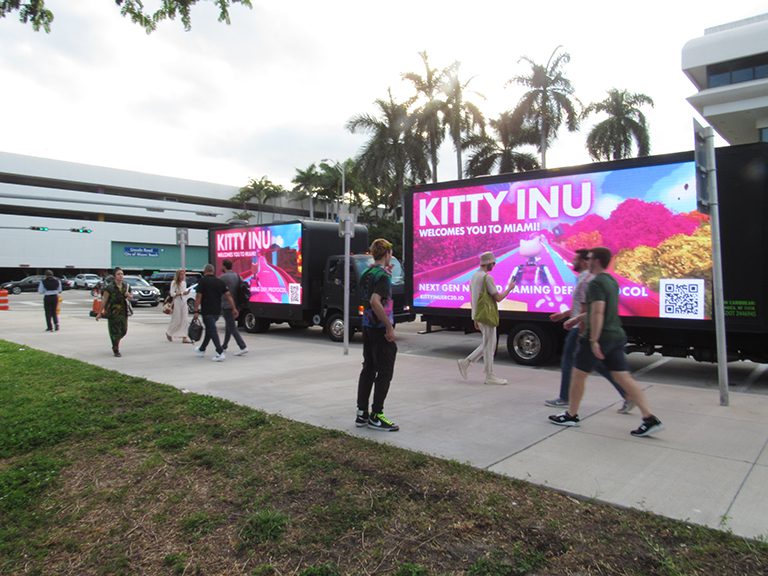
If you are searching for a mobile LED billboard truck for sale, you are almost certainly looking at classified listings right now that show a chassis, a screen size, a pixel pitch and the words call for pricing.
What none of those listings tell you is how the thing behaves on a Tuesday night in traffic, what breaks, who fixes it, where it is not allowed to stop, and how many days a year you have to run it before owning it makes any sense at all.
I run these trucks. Not as a dealer, as an operator. My crews drive them, park them, power them, and deal with it when a panel section goes dark halfway through a route.
So this is the buyer’s guide the classifieds do not write, because the classifieds are trying to sell you a truck and I am trying to tell you whether you should have one.
Some of you should. Most of you should not, and the honest version of that argument is below.
What you are actually buying
A mobile LED billboard truck is three separate things bolted together, and they fail independently.
There is a chassis. Usually a box truck in the medium duty class, sometimes a cutaway van, sometimes a trailer towed behind a pickup. This is a commercial vehicle with commercial vehicle maintenance, insurance and licensing attached to it.
There is a screen system. One or more LED panel walls, typically on the two long sides and sometimes the rear, built from modular cabinets. The cabinets are what you replace when something dies, not the whole screen.
There is a power and control system. A generator or battery bank, an inverter setup, a media player, a controller, and usually a remote connection so content can be changed without physically opening the truck.
Buyers focus almost entirely on the second item. Operators spend most of their time dealing with the first and third.
Pixel pitch, and the spec that matters most
Pixel pitch is the distance in millimetres between the centres of adjacent LEDs. Lower number means tighter pixels and a sharper image at close range.
Listings advertise pitch heavily because it is the easiest number to compare. P4, P4.8, P5, P6 and so on.
Here is the operator reality. Pitch sets a minimum viewing distance. Stand too close to a coarse screen and you see dots instead of an image. Stand far enough back and a coarse screen looks identical to a fine one, because your eye cannot resolve the gap.
For street level advertising where the nearest viewer is a pedestrian on the same sidewalk, finer pitch earns its keep. For highway adjacent and wide arterial work where almost nobody is within thirty feet, paying for a very fine pitch buys you nothing visible.
Brightness matters more than pitch for outdoor work and gets discussed less. A screen that looks spectacular in a warehouse can be washed out and useless at two in the afternoon in direct Florida sun. Outdoor rated brightness, measured in nits, plus a working automatic brightness control, is what determines whether the truck is usable in daylight. A screen without proper dimming will also be painfully overbright at night, which is exactly the circumstance most likely to generate a complaint.
Weatherproofing rating is the third spec I check. These trucks sit in rain. Panels that are not properly sealed will fail, and they will fail in a scattered pattern that looks terrible.
Where a truck genuinely works
There are situations where nothing else does the job, and I say that as someone whose main business is paper on walls.
Fixed time, fixed place events. The hours around a stadium gate opening, a convention centre breaking for lunch, a festival exit. You need to be exactly there, exactly then, and a wall cannot move.
Dense pedestrian corridors at night. Slow traffic and crowded sidewalks mean the screen is seen at low speed by a lot of people. Parts of downtown Los Angeles, the Las Vegas resort corridor, Times Square adjacent blocks in New York, Michigan Avenue in Chicago. The truck is moving at the pace of a walking crowd, which is ideal.
Targeting a single building or a single gathering. Conference venues, a stadium, a specific office tower, a public meeting. A truck can hold a position nearby in a way no static format can.
Motion and sequence. If the message genuinely needs animation, a sequence of frames or a video clip, a screen is the only outdoor format that delivers it short of projection.
Short notice. A truck can be running within days. A static placement cannot.
Markets with limited static inventory. Some cities have very little available outdoor surface, either because of ordinance or because inventory is locked up. A truck sidesteps that.
Where it fails
Suburban and spread out markets. A truck running an arterial in a car dependent metro at thirty five miles an hour is showing your message to drivers who glance for under a second and are gone. The impression quality is poor and the route cost per useful view is bad.
Daytime in harsh sun with an underspecified screen. If the brightness is not there, you are driving a grey rectangle around.
Complex messages. Same rule as posters. Motion tempts people into putting more on the screen. A viewer in traffic has roughly the same attention window they have for a wall.
Anywhere you cannot legally stop. This is the one that surprises buyers most. The truck’s value is in dwell, and dwell requires a place to sit. Many of the exact locations buyers imagine parking, outside stadium gates, in front of convention centres, along event frontages, are precisely where standing and stopping restrictions are strictest and most actively enforced on event days.
Long campaigns. A truck is a day rate format in practice. For sustained presence over weeks, static placements do the job more efficiently per day of visibility.
Neighbourhoods where it will annoy people. A bright moving screen at night in a residential area generates complaints, and complaints attach to the brand on the screen, not to the operator.
Buying versus hiring, honestly
This is the question the classifieds will not answer, so here it is.
Owning makes sense when you have steady, repeated, predictable demand in one metro. If you are an operator planning to sell truck days to other advertisers, or a very large advertiser running continuous local campaigns in a single market, ownership can work. The asset gets used, the fixed costs spread across many billable days, and you control scheduling.
Owning does not make sense when your demand is a handful of campaign bursts per year, or when those bursts are in different cities. The truck sits idle between them, and idle assets still carry insurance, registration, storage, maintenance, depreciating electronics and somebody’s time.
The thing buyers forget is that a truck is not a sign, it is a small business. It needs a licensed commercial driver, a maintenance relationship, a place to park, commercial insurance that covers both the vehicle and the advertising use, a content workflow, a route planner and someone to handle it when a generator will not start at six in the evening on a Saturday.
If you do not want to run a small business, you want to hire.
That is not me talking you out of a purchase to protect my own service, although obviously I have an interest. It is the same advice I would give about buying a bucket truck.
What to inspect on a used unit
If you are going ahead, here is what I actually look at.
Run the screen at full white across the whole surface, in daylight and after dark. Full white exposes dead pixels, dead modules, colour drift between cabinets and brightness inconsistency that a busy video clip will hide.
Run it at full black too. Look for panels that glow or show ghosting.
Check cabinet uniformity. Replaced cabinets from a different batch often do not colour match the originals, and you will see banding.
Open the back of the screen. Look at the cabling, the connectors, the receiving cards and whether anything has been repaired with improvisation. Look for corrosion, which means water has been getting in.
Check the gasketing and seals around every panel edge and every penetration through the box.
Ask who manufactured the panels and whether replacement cabinets are still available. Orphaned panels with no spares are a dead truck once failures start, and they will start.
Inspect the generator separately. Hours, service records, how it is mounted, how it is vented, and how loud it is. Generator noise is a real operational constraint in quiet areas and at night.
Check the inverter and battery setup if it is a hybrid or electric build. Battery health is expensive to discover late.
Then treat the chassis as a used commercial vehicle purchase in its own right. Mileage, service history, brakes, frame corrosion, and a mechanic’s inspection by someone who is not connected to the sale.
Finally ask about the control system and whether you actually get the software, the licences and the remote access, or whether those are tied to the seller.
Crew and operating reality
Here is what a route night actually involves.
A driver, who needs the correct licence class for the vehicle. On busy routes and event work we add a second person, because the driver cannot manage positioning, watch clearances, deal with marshals and handle content at the same time.
Pre route checks on the generator, fuel, the screen and the content load. Content gets verified before departure, not discovered to be wrong at the first stop.
The route itself, planned around traffic, not just geography. A route that looks efficient on a map can be useless if it runs against the flow of the crowd or arrives at the venue after the doors have closed.
Height awareness constantly. These are tall vehicles. Low bridges, parking structures, drive through canopies and tree cover on older residential streets are all real hazards.
Weather. Heavy rain reduces visibility of the screen and brings its own risk around electrics. High wind is a serious consideration on a tall flat sided vehicle. Extreme cold affects generator starting and battery performance. Extreme heat affects panel cooling, and panels throttle brightness when they overheat.
Photography and documentation throughout, so the client has evidence of where the truck was and when.
Fuel and a plan for where the vehicle sleeps.
None of this is difficult. All of it is work, and it is work every single day the truck runs.
Permission, ordinance and where you can stop
This is a grey area and it varies more by municipality than almost anything else we deal with.
Some cities regulate mobile advertising vehicles specifically. Some apply general sign ordinances. Some treat a parked advertising vehicle differently from a moving one. Some have rules about brightness, animation or operating hours near residential areas. Enforcement is inconsistent, and the practical rules on an event day often come from venue marshals and traffic officers rather than from a written code.
What is reliably true is that driving a route and stopping to dwell are different activities with different exposure, and that the places with the best audience usually have the tightest standing restrictions.
How we reduce risk. We check the local picture for each market before a route is planned rather than assuming a national rule. We plan dwell positions on private property where we can get the owner’s permission, which is often a lot easier than people assume, especially with a business that benefits from the traffic. We keep routes moving where standing is restricted. We brief drivers on what to do when approached, which is to comply and move, never to argue. We keep documentation of positions and times.
I do not give legal advice, and I would be wary of any operator who tells you a truck is simply allowed anywhere. The honest answer is that it depends on the city, the street, the hour and whose property the wheels are on.
Truck, trailer or van, and what fits which screen
Buyers ask about chassis format almost last, and it shapes everything else.
A box truck is the standard. The box gives you a flat, tall, rigid mounting surface on both sides plus the rear, room inside for the generator and control gear, and a vehicle that one person can drive and position. The trade is size. It is tall, it is long, and parking it in a dense downtown is genuinely hard.
A trailer towed behind a pickup is a simpler build and easier to store, since you can drop it and take the tow vehicle away. The trade is manoeuvrability. Reversing a trailer into a tight event position on a crowded street at dusk is a specialist skill, and some cities treat a parked advertising trailer very differently from a vehicle.
A cutaway van or compact build carries a smaller screen and fits where the big units cannot, including some parking structures. For tight historic downtowns and narrow corridors that access is worth more than screen area.
Screen size has to match the box. An oversized panel wall on a light chassis puts weight high and wide, which affects handling in crosswinds and on camber. Any reputable build accounts for that in the frame design, and it is one of the things I look hardest at on a used unit.
Whatever the format, measure the overall height with the screen mounted and write it on the dash. Drivers forget, and bridges do not.
What we talk clients out of
Buying a truck for two campaigns a year. I have had this conversation many times and the arithmetic is almost always against it.
Running a truck in a low density suburban market because the ground there is easier to get at than a dense one. Easy ground with no pedestrians on it is not a win.
Putting a thirty second video on the screen. Nobody watches a truck for thirty seconds. Short loops with one idea per frame.
Small type and a phone number. If the message needs a number, make it the only thing on the frame.
Running during the wrong hours. Daytime routes in a business district are mostly wasted unless the screen is genuinely bright enough and the sidewalks are full.
Residential routes at night. Complaints, and the complaint lands on the brand.
Using a truck when the brief actually wants coverage over weeks. For that, I will steer a client to Wheatpasting & Poster Campaigns instead, and often to a combination where posters hold the corridor for the run and a truck handles the event day peak.
Frequently asked questions
Should I buy a mobile LED billboard truck or hire one?
Buy if you have steady, repeated demand in one metro and are prepared to run it as a small business, with a licensed driver, commercial insurance, storage, maintenance and a content workflow. Hire if your demand is a few campaign bursts a year or spread across different cities, because an idle truck still carries every fixed obligation of ownership.
What pixel pitch do I need for an outdoor advertising truck?
Pitch sets the minimum comfortable viewing distance, so match it to your audience. Close range pedestrian corridors reward a finer pitch, while wide arterial and highway adjacent routes gain nothing visible from one because viewers are too far away to resolve the difference. Outdoor brightness and working automatic dimming matter more for daylight usability than pitch does.
What should I inspect on a used LED billboard truck?
Run the screen full white and full black in daylight and darkness to expose dead modules, colour drift and banding. Open the back to check cabling, receiving cards and corrosion. Verify panel seals, confirm replacement cabinets are still available for that model, inspect the generator and its service history, and have an independent mechanic assess the chassis as a used commercial vehicle.
Can an LED truck park anywhere during a campaign?
No, and this is a grey area that varies by municipality. Some cities regulate mobile advertising vehicles directly, others apply general sign rules, and standing restrictions are usually tightest exactly where the audience is best. We plan dwell positions on private property with owner permission where possible, keep moving where standing is restricted, and brief drivers to comply and relocate if asked.
How visible is an LED truck screen during the day?
That depends almost entirely on the screen’s outdoor brightness rating and whether its automatic brightness control works properly. A screen built for indoor conditions washes out in direct sun and becomes a grey rectangle. A correctly specified outdoor screen stays legible in daylight and dims at night, which also reduces the chance of complaints in quieter areas.
What crew does a truck route actually need?
A driver with the correct licence class at minimum, and a second person for event work or busy routes, because one person cannot position the vehicle, watch clearances, deal with marshals and manage content at once. Add pre route checks on the generator, fuel and content load, plus documentation photography throughout, so the client has evidence of positions and times.
Request a campaign quote
If you are weighing a purchase, tell me how many days a year you would genuinely run it and in which markets. I will give you my honest read, including when the answer is that buying makes sense for you.
If what you actually need is the truck on the street next month, our LED Trucks & Mobile Billboards crews run nationwide, and we will plan routes around where your audience stands rather than around a map.
Request a campaign quote and we will start with the route.

Ready to Run Your Campaign?
Call us or email us. We’ll tell you exactly what we can do in your market and what it costs.
Related Services
Explore similar advertising solutions offered by American Guerrilla Marketing.
American Guerrilla Marketing — Los Angeles
Street-level campaigns in Los Angeles and nationwide. Wheatpasting, LED trucks, street teams, and more.
(646) 776-2770
Related Articles
-
LED Trucks & Mobile Billboards in Madison, Wisconsin
November 23, 2026
-
LED Trucks & Mobile Billboards in Oakland, CA
November 23, 2026
-
Mobile Billboards Near Me: How It Actually Works
November 23, 2026
-
Mobile Billboard Dwell Time Strategy vs the Alternatives
November 22, 2026
-
Mobile Billboard Truck Rental: How It Actually Works
November 22, 2026