
November 22, 2026
What to Expect From LED Billboard Truck Rental
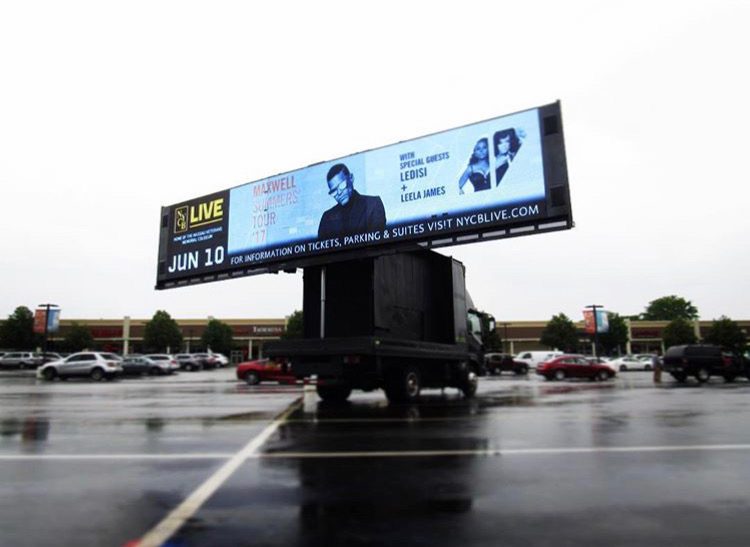
Most people booking an LED billboard truck for the first time think they are booking a screen.
They are booking a night of someone’s labour, a route plan, a vehicle that has to be somewhere specific at a specific hour, and a set of decisions about where it can legally sit and where it cannot.
The screen is the easy part. The screen almost always works.
What determines whether the campaign lands is the route, the hours, the dwell positions, and whether the creative was built for a moving vehicle or lifted from a social post.
I have run these routes. I have sat in the cab at nine at night outside an arena watching marshals redirect everything on wheels, and I have had the conversation where a client asks why the truck is not parked directly at the gate. So this is what a rental actually involves, start to finish, and what I would want to know if I were the one booking it.
What you are actually renting
A rental is a package, and it is worth knowing what is inside it before you compare one offer against another.
The vehicle, with its screen walls. Usually two long sides, often a rear screen as well. Some briefs only need one side, which changes the route logic considerably.
A driver with the correct commercial licence class for that vehicle, and on event work usually a second crew member.
The power system, meaning a generator or battery setup, plus fuel, plus someone who knows what to do when it will not start.
The content system. Your creative, loaded, tested and verified before the vehicle leaves.
A route, which should be a planned document and not a vague area.
Documentation. Photographs of the truck in position, timestamps, and a record of the route actually driven.
If a quote does not make clear which of those are included, that is the question to ask. The gap between a truck with a driver and a planned, crewed, documented campaign night is large.
The route is the product
I will say this more than once because it is the single thing that separates a good truck night from a wasted one.
A route is not a neighbourhood. It is a sequence of streets, in an order, at specified hours, with planned dwell positions and planned repeats.
Good routes are built around where your audience physically stands and at what time. That means knowing when the doors open, when the session breaks, when the bars fill, when the commute peaks, when the crowd leaves.
For an arena or stadium brief, the valuable hours are the ninety minutes before doors and the thirty minutes after the event ends. The middle is dead. A truck circling an empty arena for three hours during the game is burning a night.
For a convention or conference brief, the hours are arrival, the lunch break and the evening exodus toward the hotels and the bars. The route is the walk between the centre and the hotel district, not the centre itself, because the centre frontage is usually locked down.
For a nightlife corridor, the truck wants slow traffic and full sidewalks, which means late. Downtown Los Angeles, the Las Vegas resort corridor, parts of Nashville’s Broadway, Chicago’s near north. The truck moving at crowd pace is exactly right.
For a commute brief, you want the arterial approach at the right direction of flow. Running with the traffic shows your screen to the drivers behind you for a sustained period. Running against it gives everyone a one second glance.
For a targeted brief against a single building, it is a loop with dwell positions as close as permission allows.
Repetition matters. A route that passes the same crowd three times in an evening does far more than a route that covers triple the ground once.
Hours, light and the time of day question
Clients often want daytime because it feels like more people.
Daytime is the harder condition. A screen competes with the sun, and whether it wins depends entirely on its outdoor brightness rating and whether its automatic brightness control is working properly. A correctly specified outdoor screen is legible in daylight. An underspecified one is a grey rectangle, and you will not know which you have until the truck is out.
Dusk through mid evening is the strongest window almost everywhere. The screen is at its most dominant, people are out, and traffic is still moving.
Late night is excellent in dense entertainment corridors and pointless almost everywhere else.
Early morning commute works for arterial routes and is weak for pedestrian work.
The honest planning answer is to pick the hours where your specific audience is physically outdoors, then accept that this may be a four hour window rather than a full day. A concentrated four hours on the right streets beats twelve hours of wandering.
Creative that works on a moving screen
This is where most rentals are won or lost, and it costs nothing to get right.
One idea per frame. Not one idea per campaign, one idea per frame. If you have three things to say, that is three frames in a loop, not three lines on one frame.
Short loops. Something in the range of a few seconds per frame. A viewer in traffic or on a sidewalk has one, maybe two frames of attention before the geometry changes.
Enormous type. Larger than feels comfortable in the design file. Then larger again.
High contrast. Light type on dark field generally reads best at night. Mid tone on mid tone collapses completely at distance and under street lighting.
Full bleed colour. The screen is the asset. Empty white space that looks elegant on a page just throws glare at night.
No small print. No dense URLs, no paragraph of terms, no tiny logo lockups.
QR codes are a frequent request and I am cautious about them. A code on a moving vehicle is difficult to scan unless the truck is stationary, the viewer is close, and the code is very large. On a dwell position outside a venue, it can work. On a moving route, it mostly does not. I would rather see a short memorable web address.
Motion sparingly. Subtle movement draws the eye. Frantic animation makes the message unreadable and raises complaint risk in sensitive areas.
Send the files in the specified resolution and aspect for the screens on the actual vehicle. Screen geometry differs between builds, and content stretched to fit looks exactly like content stretched to fit.
The crew night, from load in to park up
Here is how a route night actually runs.
The crew checks the generator, fuel levels, tyre condition and screen function before departure. Content is loaded and played through in full, on the actual screens, with someone standing back looking at it. Errors found in the yard cost minutes. Errors found on route cost the night.
The drive to the start of the route is planned with height clearance in mind. These are tall vehicles and low bridges, parking structure entrances, canopies and mature street trees are all genuine hazards. Overall height with the screen mounted gets confirmed, not assumed.
The route runs to the plan, with the crew adapting to traffic, closures and whatever the event marshals decide on the night. A good driver reads a crowd and repositions.
Dwell positions are taken where they are available and appropriate. If a marshal or officer asks the vehicle to move, it moves. That is non negotiable and it is in every driver brief we write. Arguing on a street corner with your client’s logo three metres high is the worst possible outcome.
Documentation runs throughout. Photographs of the truck in its real positions, with the real surroundings visible, timestamped.
Then fuel, then park up, then a short written report.
On a multi night campaign the report comes back each morning, so the plan can be adjusted while the campaign is still running rather than reviewed after it is over.
Weather, and what it does to a truck night
Rain reduces screen legibility, cuts pedestrian numbers and brings electrical caution. Light rain is manageable. Sustained heavy rain is a night with poor value, and I will say so rather than run it and bill it.
Wind is the serious one. A box truck with flat screen walls is a sail. High wind affects handling on bridges, open arterials and exposed lots. There is a point where we will not run, and a reputable operator should tell you that point exists before you book.
Extreme cold affects generator starting and battery performance, and it empties sidewalks, which is the bigger problem. A brilliant route in Minneapolis in January at ten at night may have nobody on it.
Extreme heat affects panel cooling. Screens throttle their own brightness when they overheat, so a hot afternoon in Phoenix or Houston can reduce the output of the very screen you are paying for.
Snow and ice are mostly a route problem rather than a screen problem. Narrow streets with snow banks lose their parking and dwell positions entirely.
Build contingency into date driven campaigns where you can. If the event date cannot move, we plan the route to the forecast instead.
Permission, ordinance and where the truck can sit
This is a grey area and it varies by municipality more than almost anything else in outdoor advertising.
Some cities have rules aimed specifically at mobile advertising vehicles. Others apply general sign ordinances. Some distinguish between a moving vehicle and a stationary one displaying advertising. Some address brightness, animation or operating hours near residential property. Enforcement is inconsistent, and on an event day the practical authority on the street is often a marshal or traffic officer rather than anything written down.
The pattern that holds across markets is that the locations with the best audience tend to have the tightest standing and stopping restrictions, precisely because they are busy. The frontage directly outside a stadium gate on game night is usually the hardest place in the city to park anything.
How we reduce exposure. We check the local picture market by market before planning a route, rather than assuming a national rule. Where we want a dwell position, we try to secure private property with the owner’s permission, and a nearby business that benefits from the attention is often receptive. Where standing is restricted, the route keeps moving and takes repeat passes instead. Drivers are briefed to comply immediately and relocate if asked. Positions and times are documented.
We do not give legal advice and we will not tell you a truck can sit anywhere. The honest answer is that it depends on the city, the street, the hour and whose property the wheels are on. Any operator who promises you the gate frontage without qualification is either very well connected on that specific job or is telling you what you want to hear.
What we talk clients out of
Parking at the gate. Covered above. We will get as close as permission allows and plan repeat passes, and I would rather set that expectation at booking than on the night.
Full day routes in thin markets. Twelve hours in a car dependent suburb produces fewer useful views than four hours on the right dense corridor.
Thirty second videos. Nobody watches a truck for thirty seconds.
Routes designed on a map by someone who has not seen the streets. Flow direction, one way systems, crowd direction and closure patterns all matter more than distance.
Using a truck for sustained multi week presence. That is not what the format is good at. For holding a corridor over weeks, I will point a client toward Wheatpasting & Poster Campaigns, and the strongest campaigns I run often pair the two, with posters holding the ground across the run and a truck handling the peak day.
Residential routes at night. Complaints land on the brand on the screen.
Booking a single night for something that needs three. One night in one city is a photograph. Three nights on a planned route is a campaign.
Last minute creative. Files arriving the afternoon of the route is how errors reach the street.
What drives the scope of a rental
Nobody can scope a truck campaign from a city name, and the things that move the work are practical rather than abstract.
Number of nights is the obvious one, and it is the variable with the biggest effect on whether the campaign registers. One night produces a moment. Several consecutive nights on a repeating route produce recognition, because the same crowd sees the same screen more than once.
Hours per night. A tight four hour window aimed at a specific crowd is a different job from an open ended all day route.
Crew size. A driver alone can run a straightforward moving route. Event work, dwell positions and crowd management need a second person, and sometimes a third on complex venue jobs.
Number of markets. Three cities is three route surveys, three sets of local checks and three crews, not one campaign repeated.
Screen configuration. Single side, double side or rear screen as well changes how a route has to be driven to put the message in front of the crowd.
Permission work. Securing private dwell positions ahead of a date takes lead time, and lead time is the single easiest thing you can give a campaign.
Content complexity. A single static frame is quick. A multi frame loop with versions for different hours of the night is more production and more testing.
Questions worth asking any operator
What is the outdoor brightness rating of the screen and does the automatic dimming work.
What exactly is the route, as a list of streets and hours, not an area.
Where are the planned dwell positions and what is the fallback if they are unavailable.
How many crew are on the vehicle.
What documentation comes back, and when.
What happens if the weather makes the night unviable.
What is the overall height of the vehicle, and has the route been checked for clearances.
What file specification does the creative need, and when is the deadline for it.
Those eight questions will tell you more about an operator than any spec sheet.
Frequently asked questions
What is included in an LED billboard truck rental?
Typically the vehicle and its screens, a driver with the correct commercial licence, the power system and fuel, loading and testing of your creative, a planned route with dwell positions, and photographic documentation of the campaign. Event work usually adds a second crew member. Always confirm which of these are included, since the gap between a driven truck and a planned, documented campaign night is substantial.
How many hours should I book for?
Book the hours your audience is physically outdoors, not a full day by default. Dusk through mid evening is the strongest window in most markets. For venue work the valuable time is the window before doors open and the period immediately after the event ends. A concentrated four hours on the right corridor usually outperforms twelve hours of general coverage.
Can the truck park directly outside my venue?
Rarely, and this is a grey area that varies by city. Standing and stopping restrictions are usually tightest exactly where the audience is densest, and on event days marshals control the frontage. We get as close as permission allows, seek dwell positions on nearby private property with owner consent, plan repeat passes where standing is restricted, and brief drivers to relocate immediately if asked.
What creative format works best on a mobile LED screen?
One idea per frame, short loops of a few seconds, very large type, high contrast, and full bleed colour. Light type on a dark field reads best at night. Avoid small print, dense URLs and long videos, since a viewer has one or two frames of attention. Supply files at the resolution and aspect ratio of the actual vehicle’s screens.
Will the screen be visible in daylight?
That depends on the screen’s outdoor brightness rating and whether its automatic brightness control functions correctly. A properly specified outdoor screen stays legible in direct sun and dims appropriately after dark. An underspecified one washes out during the day and is uncomfortably bright at night, which raises complaint risk. Ask for the brightness specification before booking a daytime route.
What happens if the weather is bad on my campaign date?
Light rain is workable. Sustained heavy rain cuts both legibility and pedestrian numbers, and high wind is a genuine safety limit for a tall flat sided vehicle. Extreme cold empties sidewalks and extreme heat makes panels throttle their own brightness. Where a date is fixed we plan the route around the forecast, and we will tell you honestly when a night is not worth running.
Request a campaign quote
Tell me the city, the date, the venue or corridor, and who you are trying to reach. I will come back with a route as a list of streets and hours, an honest read on where the truck can realistically sit, and a creative specification built for the screens on the actual vehicle.
Our LED Trucks & Mobile Billboards crews run nationwide, and if your brief turns out to need weeks of presence rather than a peak night, I will tell you that too.
Request a campaign quote and we will start with the route.

Ready to Run Your Campaign?
Call us or email us. We’ll tell you exactly what we can do in your market and what it costs.
Related Services
Explore similar advertising solutions offered by American Guerrilla Marketing.
American Guerrilla Marketing — Los Angeles
Street-level campaigns in Los Angeles and nationwide. Wheatpasting, LED trucks, street teams, and more.
(646) 776-2770
Related Articles
-
Mobile LED Billboard Truck for Sale: Works and Fails
November 22, 2026
-
Mobile Billboard Dwell Time Strategy vs the Alternatives
November 22, 2026
-
Mobile Billboard Truck Rental: How It Actually Works
November 22, 2026
-
Glass Truck Advertising Explained: How It Actually Works
November 22, 2026
-
What to Expect From Mobile Billboard Truck Advertising
November 22, 2026