
November 22, 2026
Mobile Billboard Truck Rental: How It Actually Works
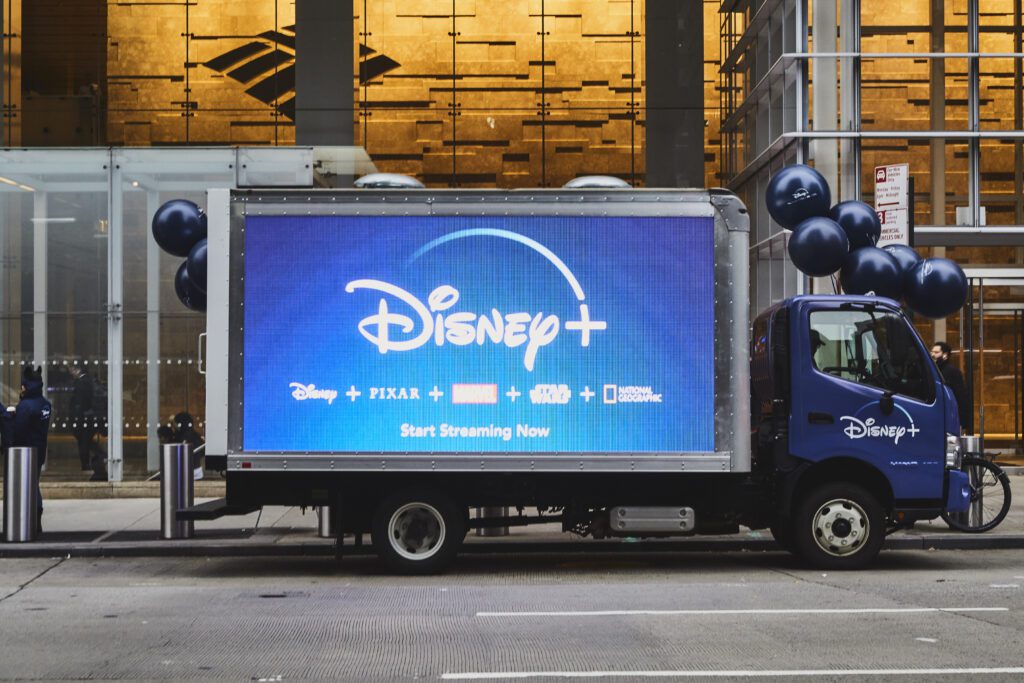
The word rental is doing a lot of damage in this category.
People hear mobile billboard truck rental and picture a counter, a key, a signature and a vehicle they drive away. That is not what this is. You are not renting a truck. You are booking a vehicle, a driver, a route, a display and a crew window, and the whole thing is a managed service that happens to involve a truck.
I have spent a lot of hours in the cab and a lot more hours standing on a corner watching a unit come around the block to see whether the route actually worked. The gap between what buyers expect and what the format does is consistent, and it is worth closing before anyone commits.
Most disappointment with this format comes from three bad assumptions. That the truck can park where you want. That more miles means more impressions. And that the creative that works on a static billboard works on a moving LED screen.
None of those hold up.
Here is how a mobile billboard booking actually runs, from the first route conversation to the end of shift report.
Static panel trucks and LED trucks are different products
There are two families of vehicle in this category and they behave nothing alike.
A static panel truck carries printed vinyl in a frame, usually on both flanks and sometimes the rear. The graphic is fixed for the run. It reads in daylight, it reads in a tunnel, it reads when the vehicle is off. It needs no power, no screen operator, and it degrades gracefully. The limit is obvious. One message, for the whole campaign, and changing it means reprinting and re skinning.
An LED truck carries a video wall. It plays motion, it plays multiple messages in rotation, it can change content by time of day, and it dominates after dark. It is also a power dependent system with a generator, a display operator and a real sensitivity to daylight glare and viewing angle.
Which one is right is mostly a question of when your audience is outside.
If the campaign lives in daylight, static panels usually win on clarity. If the campaign lives at night, around a venue let out, a bar district, a stadium egress or an evening event, the LED truck is a different order of presence. At 10pm on a dark street an LED wall is the brightest thing in the frame.
I will say the part that costs us work sometimes. A lot of clients ask for LED because it sounds more advanced, and then schedule the whole run between 9am and 5pm. In bright direct sun an LED wall loses contrast and a well printed vinyl panel reads better. We say so.
Routing is the product
Everything that matters about this format is the route.
A route is not a line on a map. It is a timed loop built around where your audience physically is at a specific hour, and built around the reality that the vehicle has to keep moving.
When we build one, we are solving for a handful of things at once.
Dwell. The value is in the seconds a person has the vehicle in view. A truck at 40 miles per hour on an arterial is a blur. A truck crawling in congestion beside a sidewalk packed with people is the whole point. Counterintuitively, traffic is an asset in this medium.
Loop length. Short tight loops through a dense district repeat the message to the same crowd several times an hour. Long loops across a metro area touch more unique people once. Both are legitimate strategies and they are not interchangeable. Decide which one you are buying.
Side of the street. The display faces out of both flanks, but one side is nearly always the money side. Routing a loop clockwise or counterclockwise around a venue changes which flank faces the crowd. We draw loops with that in mind and it is the kind of detail that never makes it into a brief.
Turn restrictions, heights and weights. The vehicle is tall and long. Low bridges, posted weight limits on certain bridges and parkways, restricted truck routes, and streets you physically cannot turn a box truck onto all constrain the loop. In New York this is a serious planning exercise, not a footnote.
Time of day. The same block is three different media environments at 8am, 1pm and 11pm.
Real examples of how that plays out.
In Los Angeles, a loop through downtown around a weekday evening event at the convention centre or the arena district works because egress crowds are on foot and traffic is slow. The same loop at 11am is mostly moving cars, which is far weaker.
In New York, midtown crosstown streets give you crawl speed and heavy sidewalks, which is ideal, and bridge and tunnel approaches give you captive stopped traffic. Routing has to respect the truck route network and the posted restrictions.
In Chicago, Michigan Avenue and the near north blocks carry pedestrian density through the day, and the lakefront event footprints concentrate crowds in summer.
In Las Vegas, the Strip corridor is the clearest case in the country for an LED unit after dark, with constant pedestrian volume and a built environment that already expects bright moving signage.
In Austin, downtown during a major festival or a conference week is dense and slow, and a tight loop around a few blocks beats anything wider.
Crew, shift and what a day actually looks like
A single unit on a standard shift is one driver. That is the baseline.
For LED units on anything complex we add a second person. The driver drives and the second person handles the display, watches content playback, deals with the generator and acts as spotter in tight streets. On activations where the truck parks as a staged asset, that second person becomes the on site contact.
Shifts are typically six to eight hours of active routing. That is not arbitrary. It is driver hours, fuel and generator run time, and the honest point at which route quality stops being good. Stretching a single driver across a twelve hour day produces a worse campaign, not a longer one.
A normal day, roughly:
Pre shift inspection and graphic check, or for LED a display and generator test with the playlist loaded and verified. Panels get inspected for lifting corners and road grime. Screens get a full white and full black test to catch dead modules.
Stage and position for the start of the route window.
Active routing in the planned loop, with the driver logging deviations. Construction closures, protests, parades and film shoots all reroute trucks with no notice. A driver who improvises well is worth more than a perfect plan.
Mid shift check, fuel, generator top up, quick exterior wipe if the weather has been filthy.
End of shift, return to yard, and the report.
The report is the part buyers should ask about. We provide GPS route data for the shift, photographs of the unit in context at identifiable locations on the route, and notes on anything that forced a change. If an operator cannot show you where the vehicle actually went, you have no way to know what you bought.
Weather, mechanics and what goes wrong
This format has failure modes and anyone telling you otherwise has not run enough shifts.
Heavy rain. Static vinyl is fine wet, though a grimy panel reads badly and needs wiping. LED screens are weather rated and run in rain, but hard rain cuts visibility for the audience, which is the thing that actually matters. We keep routing. We also flag that a monsoon evening in Phoenix or a nor'easter in Boston is not the shift you want your launch on.
Extreme heat. Phoenix, Las Vegas and Austin in high summer stress generators and LED cabinets. Thermal management is real. We shift those runs toward evening where the campaign allows, which is usually better for LED anyway.
Freezing conditions. Cold starts, road salt coating panels and screens, and genuinely reduced pedestrian volume. A winter shift in a northern city needs lower expectations and more cleaning stops.
Wind. High wind is a static panel issue. Large flat surfaces on a tall box truck in a strong crosswind is a driving risk, not a display risk. Severe wind advisories pause routing.
Mechanical and generator faults. Trucks break. Generators fault. The question is what the operator does about it. Our answer is a swap where a backup unit is reachable, and honest make good time where it is not.
Traffic that is too good. Gridlock sounds ideal and at some point stops being ideal, because a loop that should take forty minutes takes two hours and your frequency collapses. That is a routing judgement made live.
Content that does not read. The most common real failure, and it is creative, not mechanical. More on that next.
Creative rules I would not bend
Pedestrians and drivers see your display for a handful of seconds at an angle, often partly obscured by other vehicles.
So:
Six words or fewer as the dominant message. I would push for four.
One idea per frame. Brands routinely try to run a headline, a sub headline, a logo, a URL, a handle and a QR code on one panel. Nobody reads any of it.
Type as large as the panel allows, high contrast, heavy weight. Thin elegant type dies at thirty feet.
Logo placement consistent across every frame so the brand registers even if the message does not.
On LED, hold each frame long enough to be read by someone who only just looked up. Fast cuts look great on a monitor and read as flicker on the street. Motion should be slow and purposeful, or absent.
No QR code as the primary action on a moving unit. A person on a sidewalk cannot reliably scan a code going past them at fifteen miles per hour. A short memorable word or handle works. A code works on a parked truck at an activation, which is a different scenario.
Design for the flank, not for the rear. The rear panel gets seen by stopped traffic behind you and it is valuable, but the flanks carry the campaign.
Test at distance before you print or load. We ask clients to put the artwork on a screen and walk thirty feet back. If it fails there, it fails on the street.
Permissions, parking and the grey area
Driving an advertising vehicle on public roads is routine. Parking one and leaving it is where this gets complicated.
Rules on stationary advertising vehicles vary considerably by municipality. Some cities have explicit ordinance language about vehicles whose primary purpose is displaying advertising. Some restrict it in certain districts, near parks or on certain corridors. Some say nothing specific. Enforcement is inconsistent between cities and between neighbourhoods inside the same city, and it changes over time. It is a grey area, and the honest answer depends on the municipality, the specific location and whether you have permission from a property owner.
The practical consequence is that our default is a moving unit.
When a client wants a parked presence, which is often the right creative idea for an activation, we solve it with permission rather than with hope. Private lots with the owner's agreement, event grounds, venue footprints, festival sites, campus property with approval, or a location where the client or the venue has secured whatever the city requires.
We also do not idle a generator in a residential block at night. Noise complaints are how a parked activation ends early, and they are entirely predictable.
Removal in this format is simple compared with surface media. The vehicle leaves. Static panels come off the frames at the end of the run and the frames go back to blank. There is nothing left on a street.
What we talk clients out of
One truck covering an entire metro area. A single unit is a corridor product. It can own a district, a venue approach or an event. It cannot blanket a city, and a route stretched to pretend otherwise just produces a lot of driving between the places that mattered.
Daytime only LED. Covered above. If the brief is daylight, consider static panels or shift the schedule later.
Highway routing for impressions. Highway miles produce big theoretical exposure numbers and poor real attention. Fast, distant, at a bad angle, with drivers watching the road. We will not sell a highway loop as a strong plan.
Single day runs for brand awareness. One day works for an event, a launch moment or a stunt tied to something happening that day. For awareness, frequency over a week or more on tight loops does far more.
Chasing a competitor's storefront. It comes up. Parking or looping an advertising vehicle to target a specific business invites exactly the kind of attention nobody wants, and the creative usually reads as petty. We decline.
Overloaded artwork. We will push back on creative until the message reads at distance. This is the single highest leverage conversation in the whole booking.
Mobile Billboards as a complete campaign. A truck is presence and motion. It does not persist. When it leaves the block, the block is blank again.
Pairing it with something that stays put
The strongest use of a mobile unit I have seen is as the loud layer over something persistent.
That is why we usually recommend running an LED or static truck alongside Wheatpasting & Poster Campaigns in the same corridors. Posters hold the street twenty four hours a day for weeks at head height, building recognition through repetition. The truck arrives at the hours your audience is actually out, in motion and impossible to ignore, and it lands on an audience that has already seen the brand on the wall for a fortnight.
Same creative system, two different jobs. The posters do memory. The truck does moment.
For event work we also pair a unit with Street Teams & Experiential, because a parked truck with permission plus people handing out something tangible converts attention that a vehicle alone only creates.
What drives the scope of a booking
Nobody can scope this format from a one line brief, and the variables that move scope are all operational rather than mysterious.
Number of units is the first one. One truck owns a corridor. Several units running coordinated loops can hold a district or cover an event approach from multiple directions at once.
Shift length and number of shift days come next, along with whether those shifts fall on weekdays, weekends or event days, because weekend and event staffing is harder to secure.
Vehicle type matters. An LED unit brings a generator, an operator and a content workflow. A printed panel unit brings production and re skinning instead.
Then there is market and positioning distance. A loop that sits close to a yard is simpler than one that needs a unit staged into a market from elsewhere.
Route complexity is the quiet one. Dense restricted street networks take more planning, more spotting and slower loops than open grid cities.
Finally, content. One static message is one job. A rotating playlist with day part changes is a production schedule.
Frequently asked questions
Is mobile billboard truck rental the same as renting a truck?
No. You are booking a managed service, not taking possession of a vehicle. The booking covers the vehicle, a vetted driver, a planned route, the display or printed panels, and for LED units an operator and generator. You do not drive it, insure it or store it. We run the shift and report on where it went.
Should I choose an LED truck or a static panel truck?
It depends on when your audience is outside. LED dominates after dark, plays motion and rotates multiple messages. Printed static panels read better in bright daylight, need no power and never fail to a black screen. Daytime campaigns usually do better on static. Evening and nightlife campaigns do better on LED.
How many hours does a shift run?
Typically six to eight hours of active routing per unit per day. That reflects driver hours, generator run time and the point where route quality drops off. Longer days are possible with additional drivers. Stretching one driver across a twelve hour day produces a worse campaign rather than a longer one.
Can the truck park outside a specific venue or event?
Sometimes, with permission. Rules on stationary advertising vehicles are a grey area that varies by municipality and enforcement is inconsistent. We arrange parked presence through private lots, event grounds or venue agreements rather than assuming a public curb is available. Otherwise the unit stays in motion on a planned loop.
How do I know the truck actually ran my route?
Ask for proof and expect it. We supply GPS route data for each shift, time stamped photographs of the unit at identifiable points on the route, and driver notes on any reroute caused by closures, events or construction. If an operator cannot show where the vehicle went, you cannot verify what you bought.
What happens if the truck breaks down or the screen fails?
Trucks and generators fault occasionally. We run pre shift inspections, including a full white and black screen test on LED units to catch dead modules. If a unit goes down we swap where a backup is reachable, and where it is not we are straight about lost hours and arrange make good time on a later shift.
Build the route first
If you are shopping this format, the question that matters is not what a truck costs per day. It is where your audience stands, at what hour, and what loop puts a readable message in front of them repeatedly.
Give us the cities, the venues or corridors, the dates and the hours your audience is actually outside. We will build the loop, tell you whether LED or printed panels fit the schedule, flag the creative that will not read at distance, and show you the route data afterward.
Request a campaign quote.

Ready to Run Your Campaign?
Call us or email us. We’ll tell you exactly what we can do in your market and what it costs.
Related Services
Explore similar advertising solutions offered by American Guerrilla Marketing.
American Guerrilla Marketing — Los Angeles
Street-level campaigns in Los Angeles and nationwide. Wheatpasting, LED trucks, street teams, and more.
(646) 776-2770
Related Articles
-
Mobile LED Billboard Truck for Sale: Works and Fails
November 22, 2026
-
Mobile Billboard Dwell Time Strategy vs the Alternatives
November 22, 2026
-
What to Expect From LED Billboard Truck Rental
November 22, 2026
-
Glass Truck Advertising Explained: How It Actually Works
November 22, 2026
-
What to Expect From Mobile Billboard Truck Advertising
November 22, 2026