American Guerrilla Marketing
Nationwide Service
Media planning, media buying, billboard advertising, & guerrilla marketing
Case Study:
Houston Texans 25th Season Campaign: Mobile Billboards & Projection Mapping in Houston, Texas

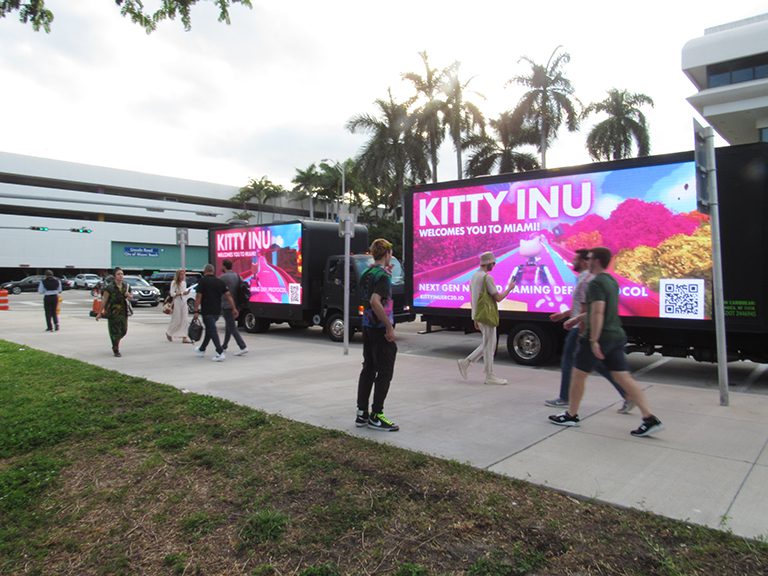
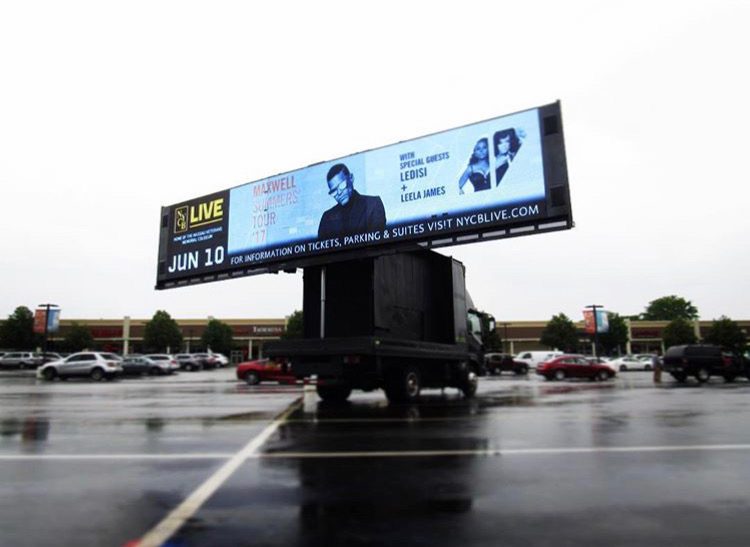
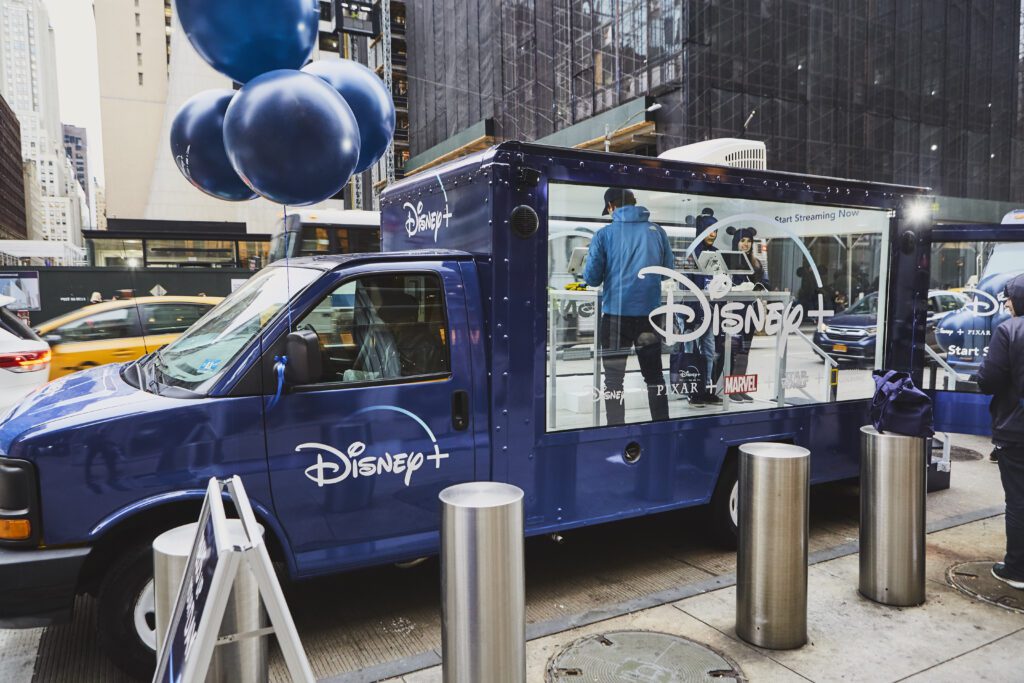
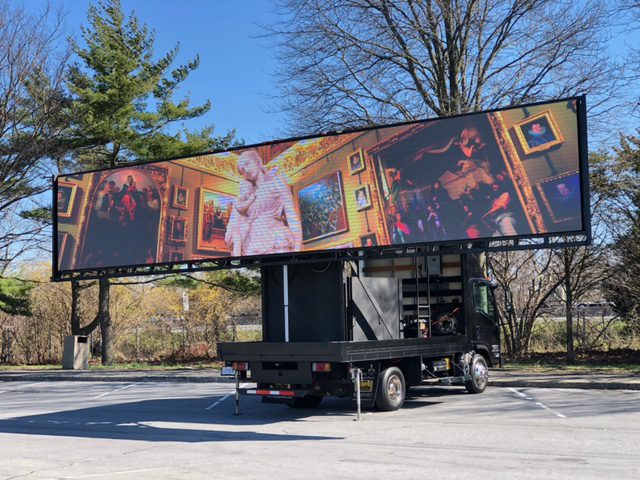
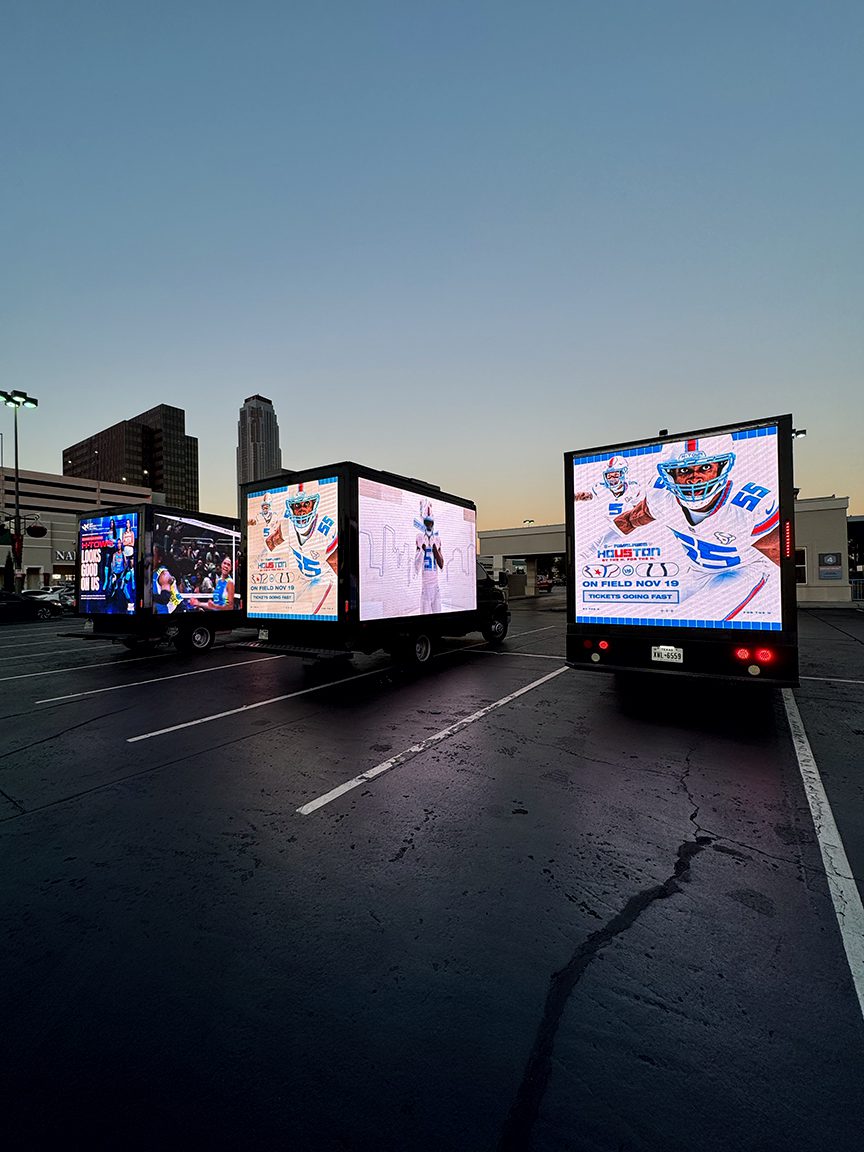
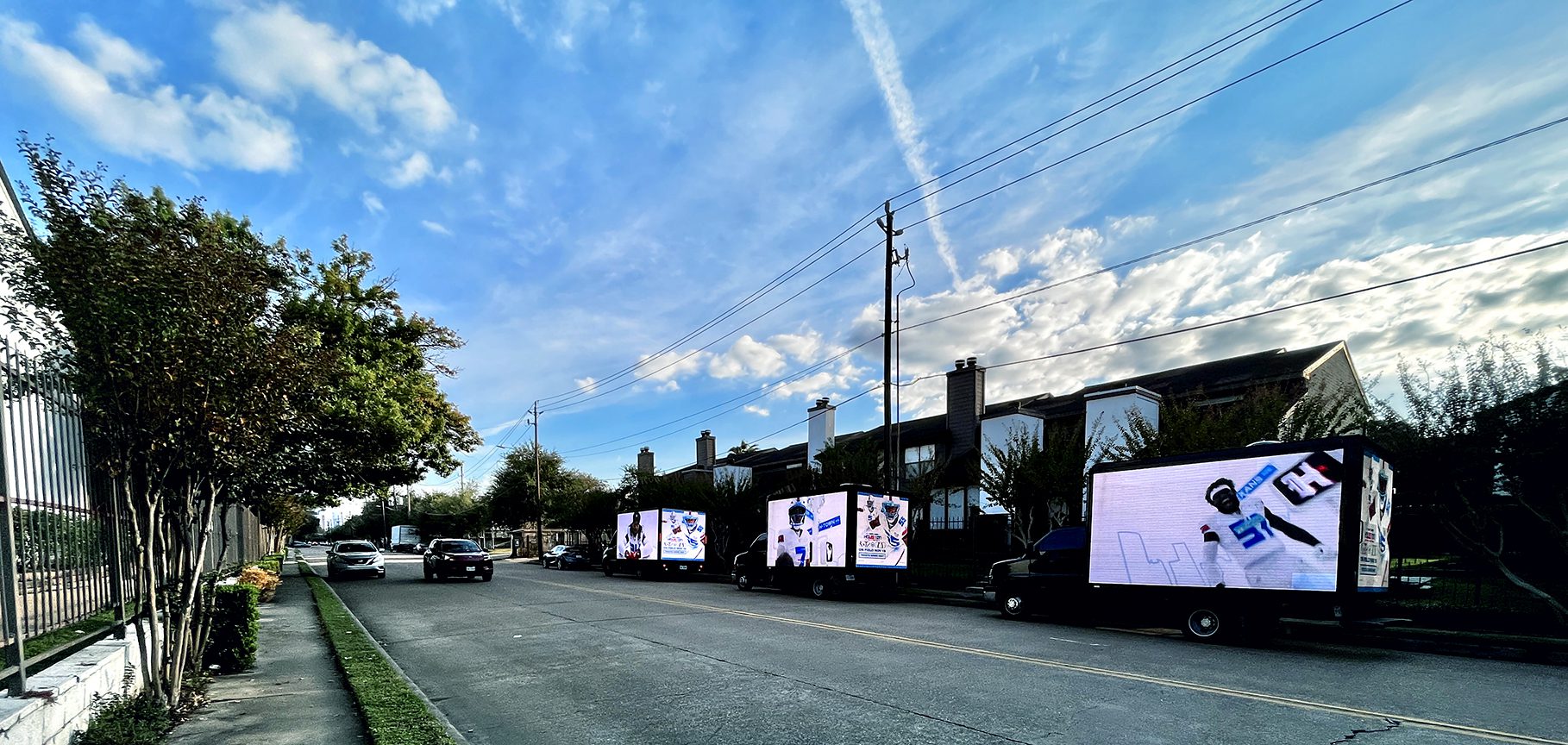
The first truck rolled out of a yard on the west side at eleven in the morning on October 2, and by noon it was crawling down Post Oak at the speed of Galleria lunch traffic. That speed is the whole product. A billboard that moves slowly through stopped cars gets read.
An NFL team marketing its twenty fifth season has a problem most brands do not have. The audience already knows the product. Nobody in Harris County needs an introduction to the home team. The job is not awareness, it is occasion, and occasion has a date on it. Everything we built here was shaped by the fact that the calendar, not the creative, was the campaign.
The scope ran nine truck days across three concentrated moments in Houston, Texas, plus one projection mapping activation on October 3. The install window was October 2 through October 4. Artwork was due five days ahead of each install date.
Three Days, Three Different Cities Inside One City
Houston does not behave like a single market. It behaves like five or six that happen to share a county, and the drive between them is long enough that a truck cannot serve two of them in one shift. So we did not plan a route. We planned three routes and accepted that each day would reach a different set of people.
| Date | Trucks and hours | Ground covered |
|---|---|---|
| October 2 | 3 trucks, 11:00 AM to 5:00 PM | Uptown and Galleria, Downtown and Midtown, Heights and Washington |
| October 3 | 3 trucks, 2:00 PM to 8:00 PM | Galleria, Heights, Washington, Montrose, Downtown and EaDo |
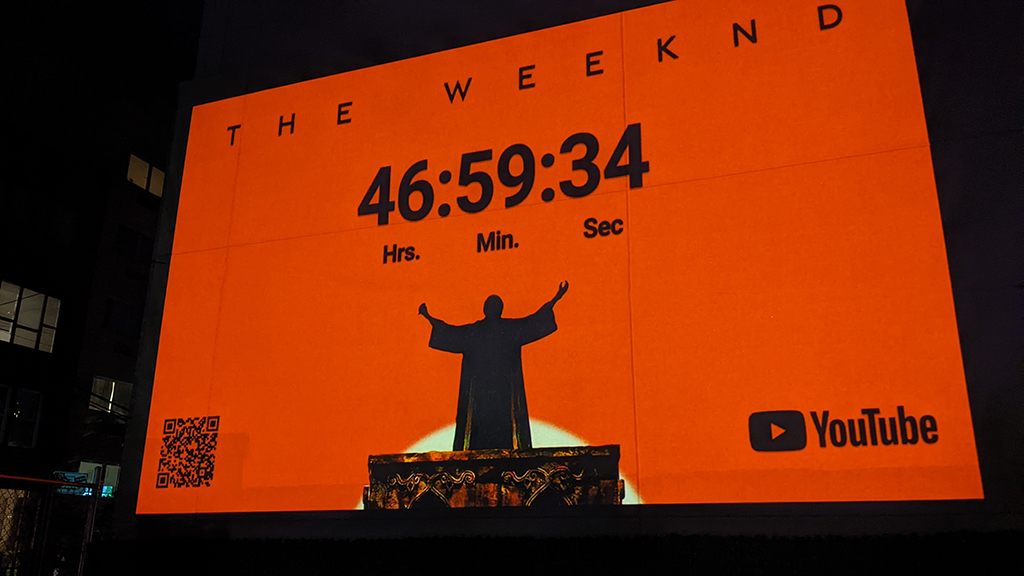
| October 3 | Projection mapping activation | Site selected on the ground after scouting |
| October 4, game day | 2 trucks, 8:00 AM to 12:00 PM | Feeder routes to 610 South, Kirby, Main and Fannin, NRG Stadium |
Day one was a weekday daytime run, eleven to five, aimed at people who were working and shopping. Uptown and the Galleria give you the densest stop and go traffic in the city outside the freeways, and the loop around Post Oak Boulevard lets a truck pass the same intersections repeatedly without looking like it is circling. Downtown and Midtown caught office workers on lunch and on the early edge of the drive home. The Heights and Washington Avenue truck covered a younger residential corridor where people are out on foot, which matters because a pedestrian reads a full fifteen second video loop and a driver reads about four seconds of it.
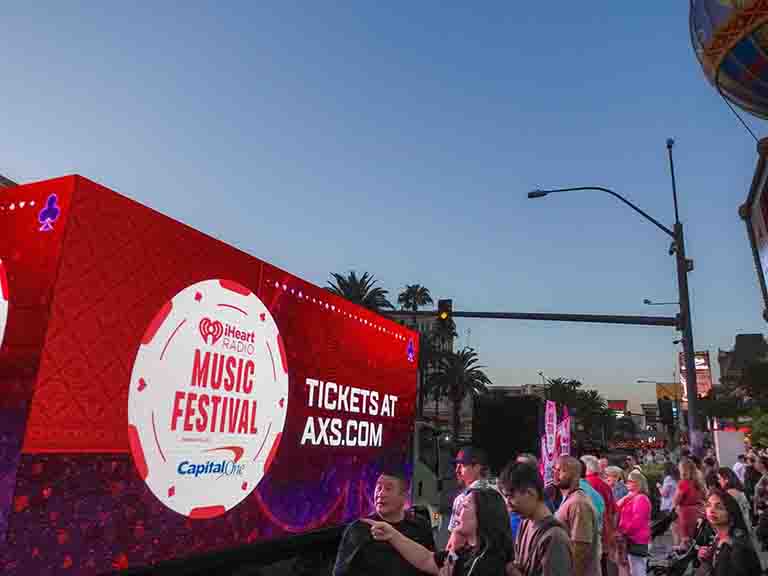
Day two shifted the clock. Two in the afternoon to eight at night, which moves the window off lunch and onto the evening. Same three trucks, wider spread: we added Montrose and EaDo and kept Galleria, Heights and Washington. Evening in Montrose and EaDo is bars, restaurants and people walking between them. That is a different read than a windshield read, and it is the audience most likely to photograph the truck.
Game Day Routing Is A Funnel, Not A Map
October 4 was the game. Two trucks, eight in the morning to noon, four hours each, and the routing logic flipped completely.
On a normal day you are trying to spread across a metro area. On game day you are trying to stand inside a funnel. Everyone going to NRG Stadium converges through a small number of approaches: the feeder roads along 610 South, and the Kirby, Main and Fannin corridors running down from the inner loop. Those roads are at a near standstill for three hours before kickoff. A truck sitting in that traffic is not stuck. It is exactly where it is supposed to be, moving at the same pace as a hundred thousand people who are already in the mood for the message.
This is the argument for a truck over a static placement at an event. A static board on 610 is a fixed asset that charges for a full month of traffic, most of which is commuters who do not care. A truck shows up for four hours on the one morning the audience is self selected, concentrated and emotionally primed, then leaves. You are buying the four hours instead of the thirty days.
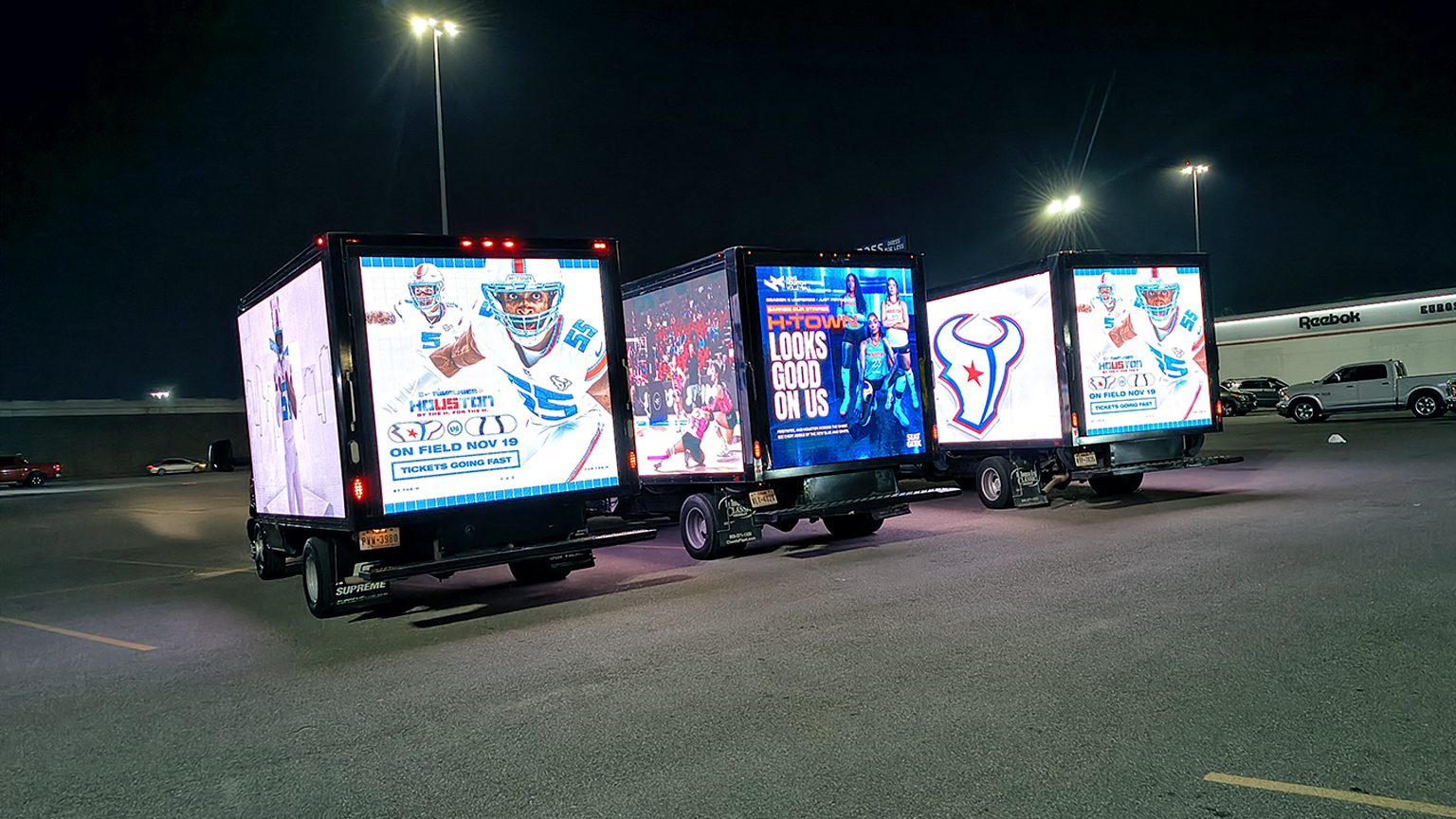
Campaign Photos
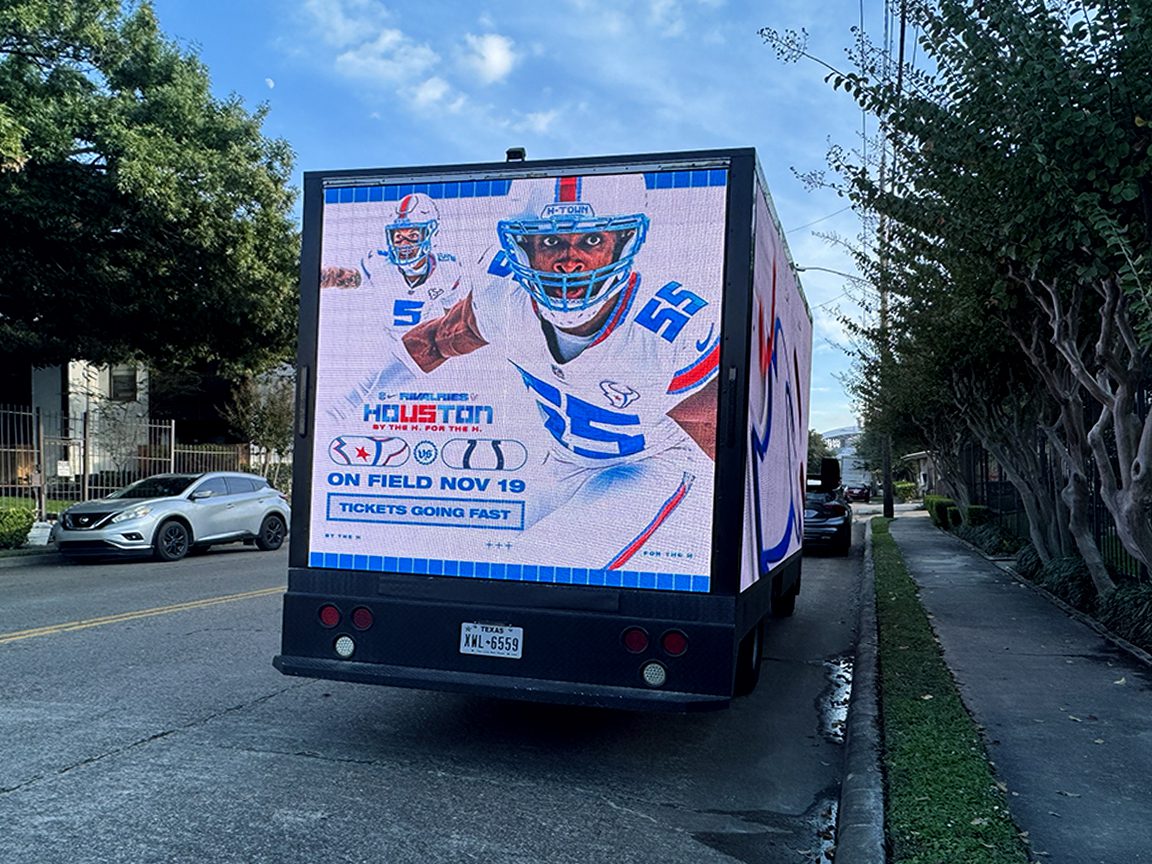
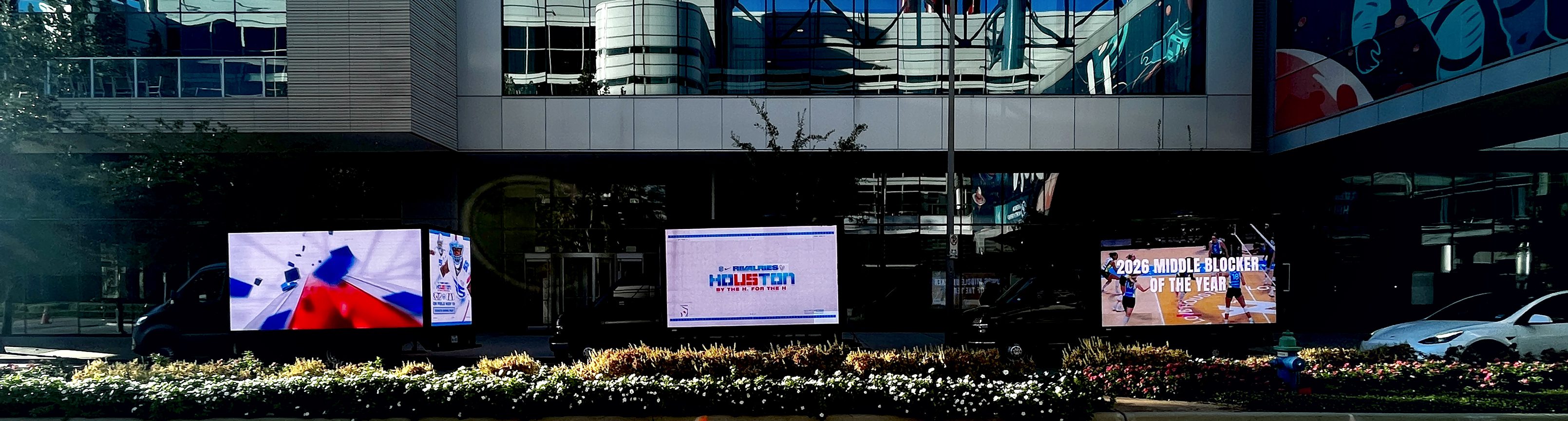
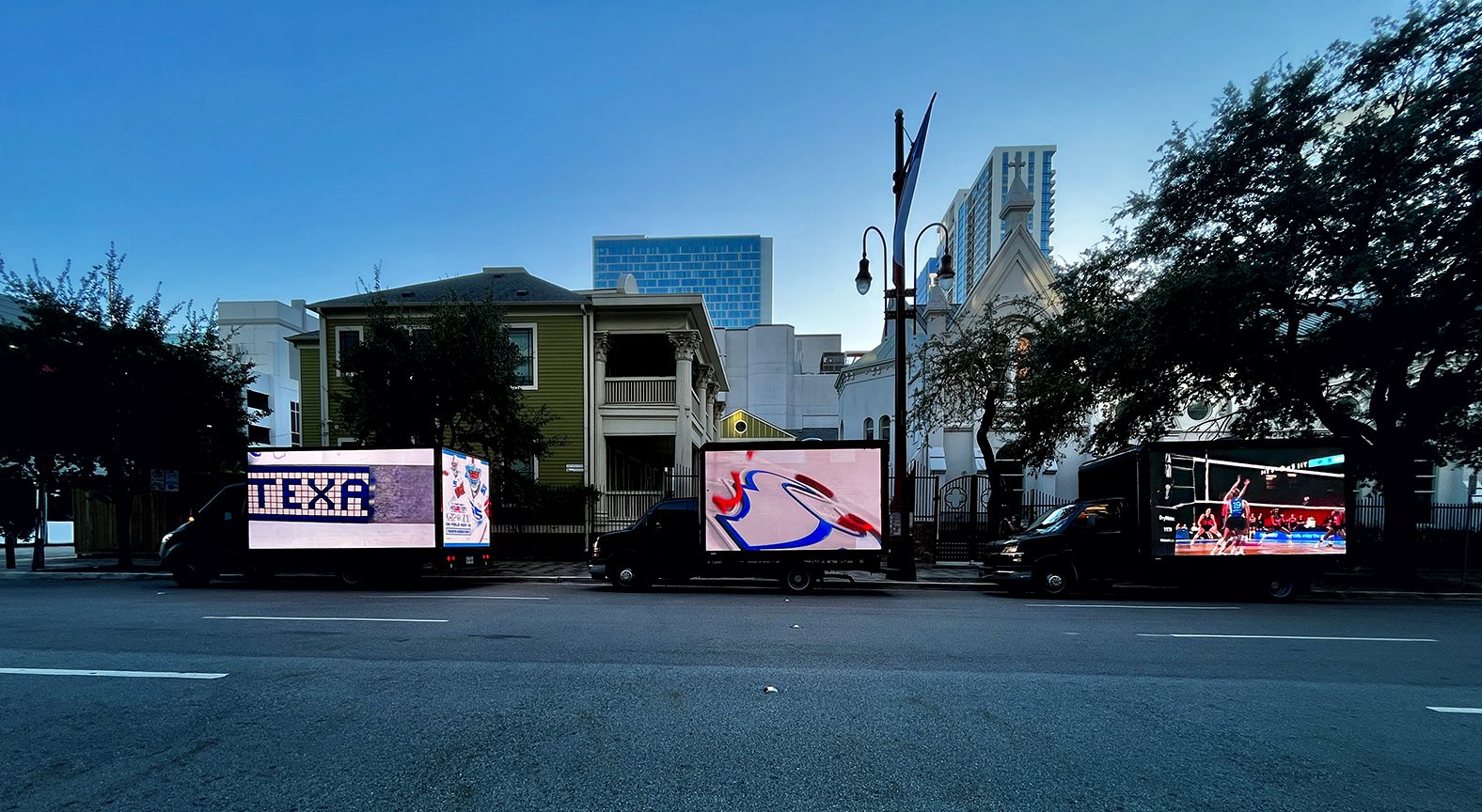
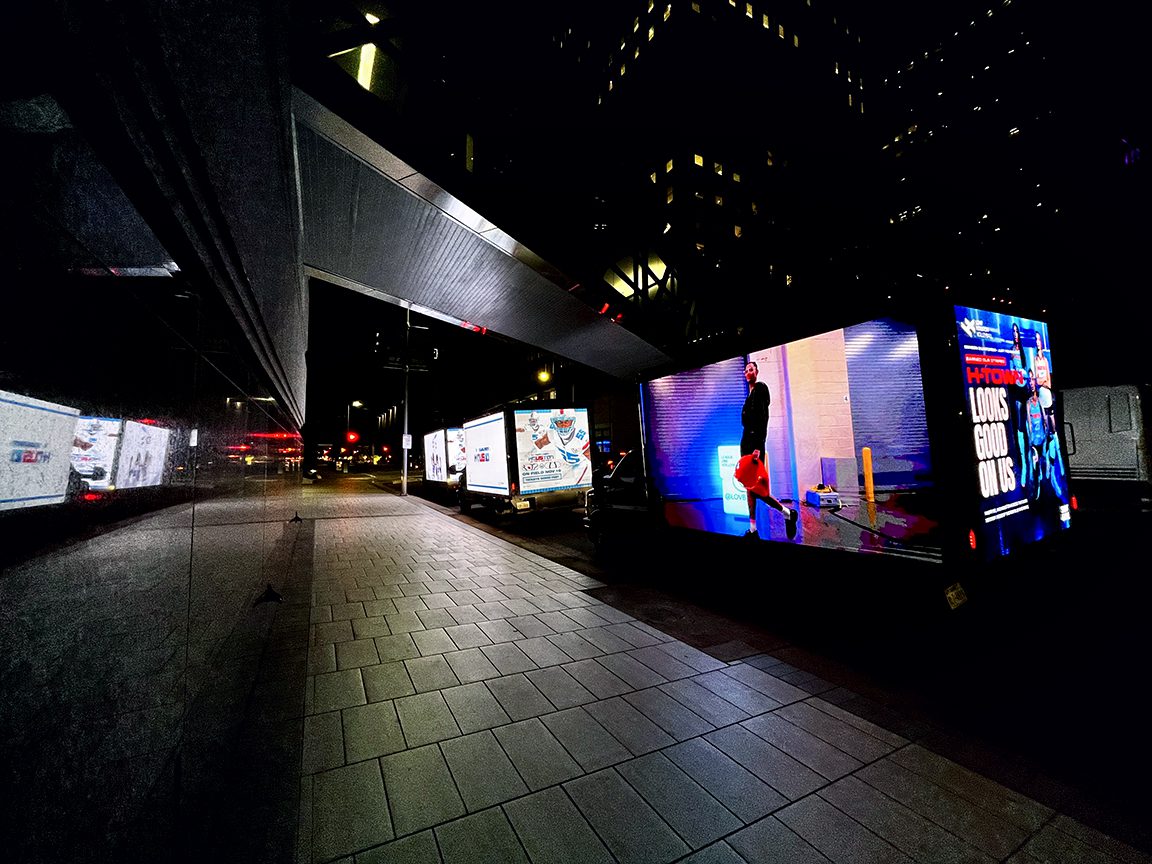
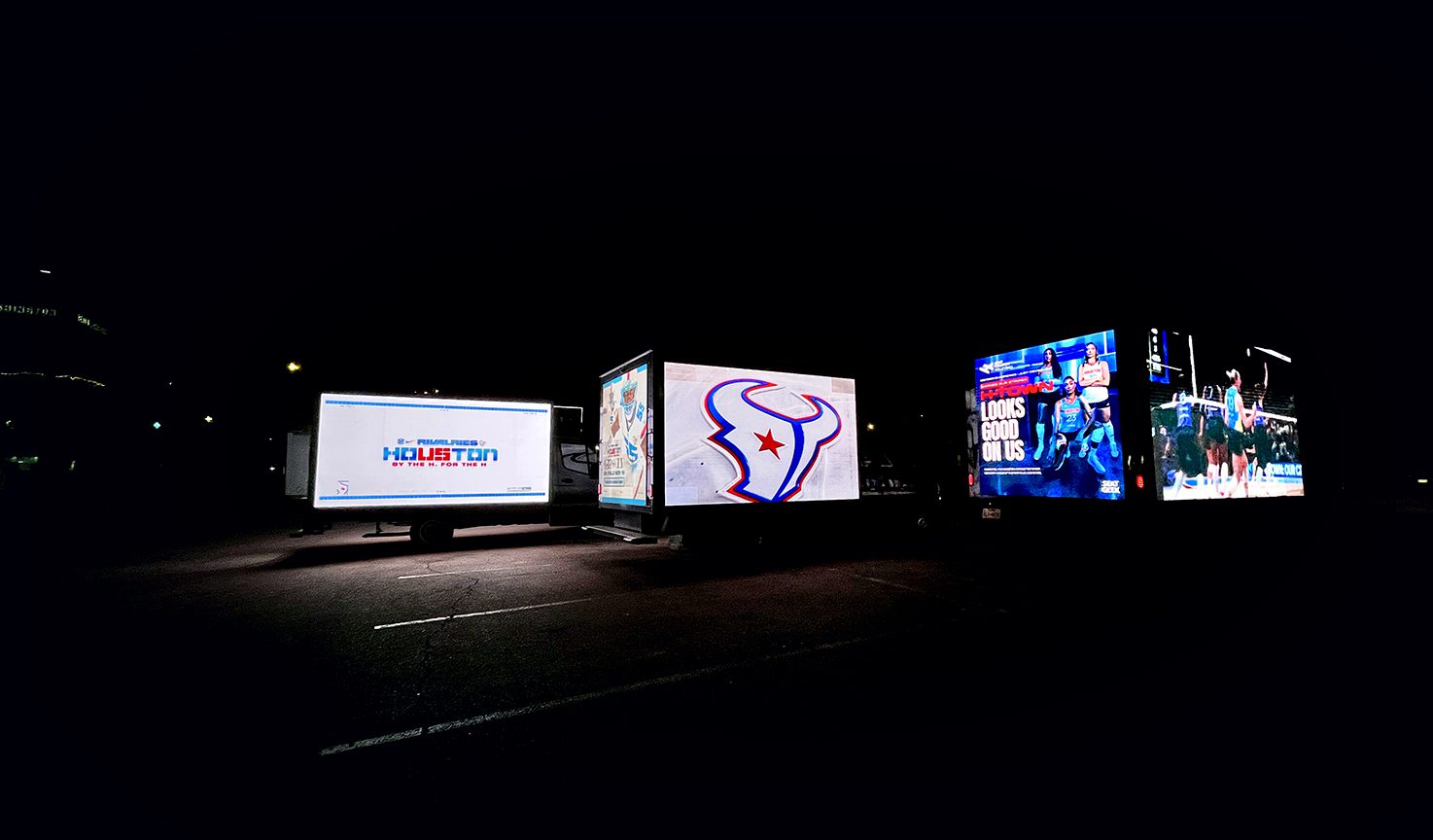
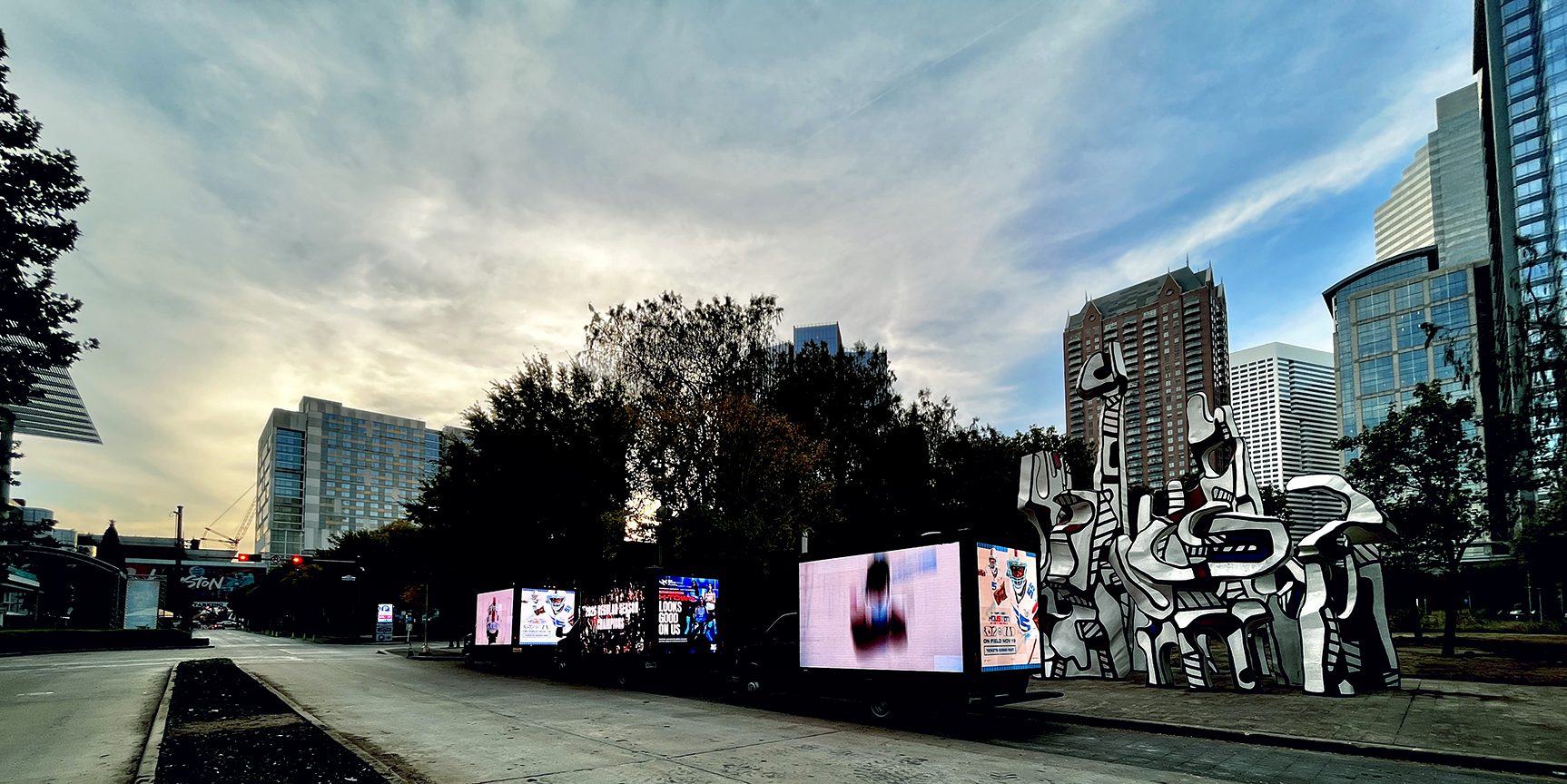
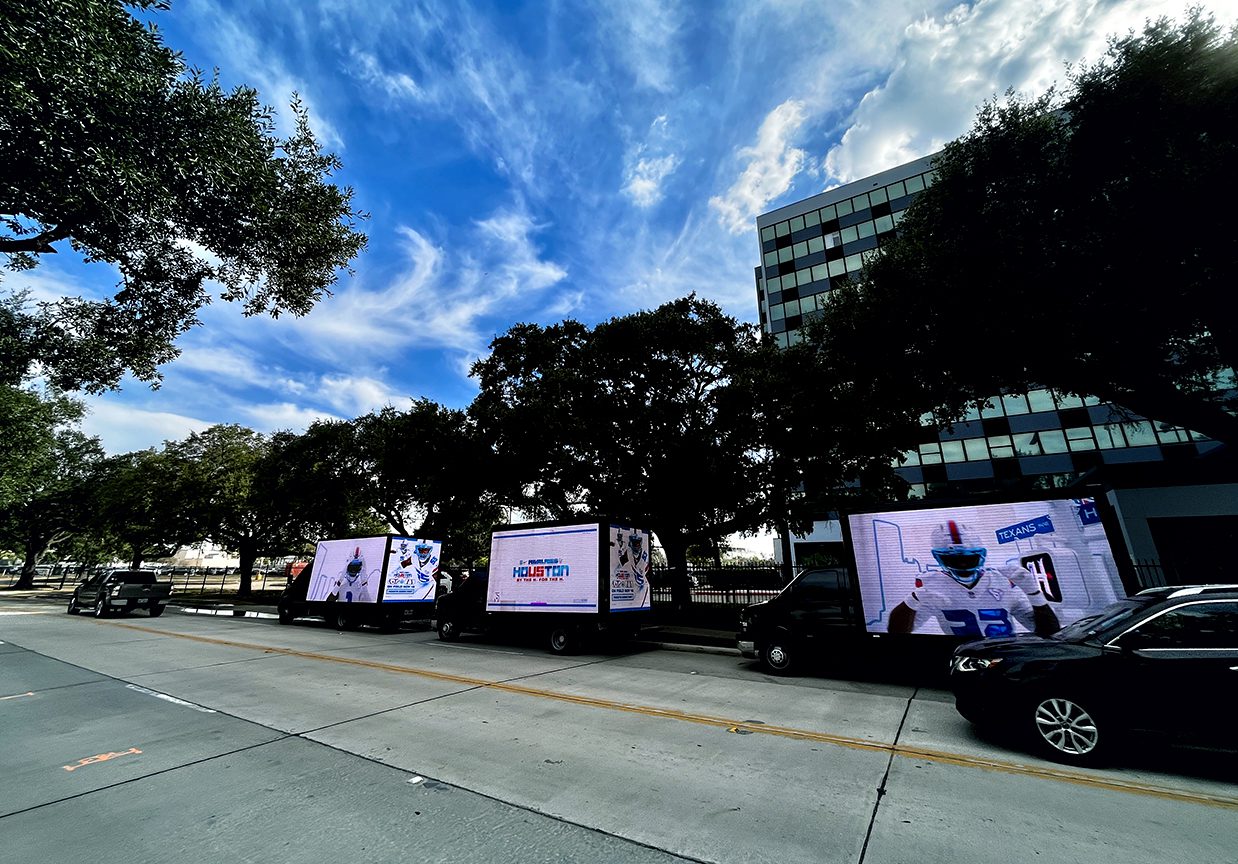
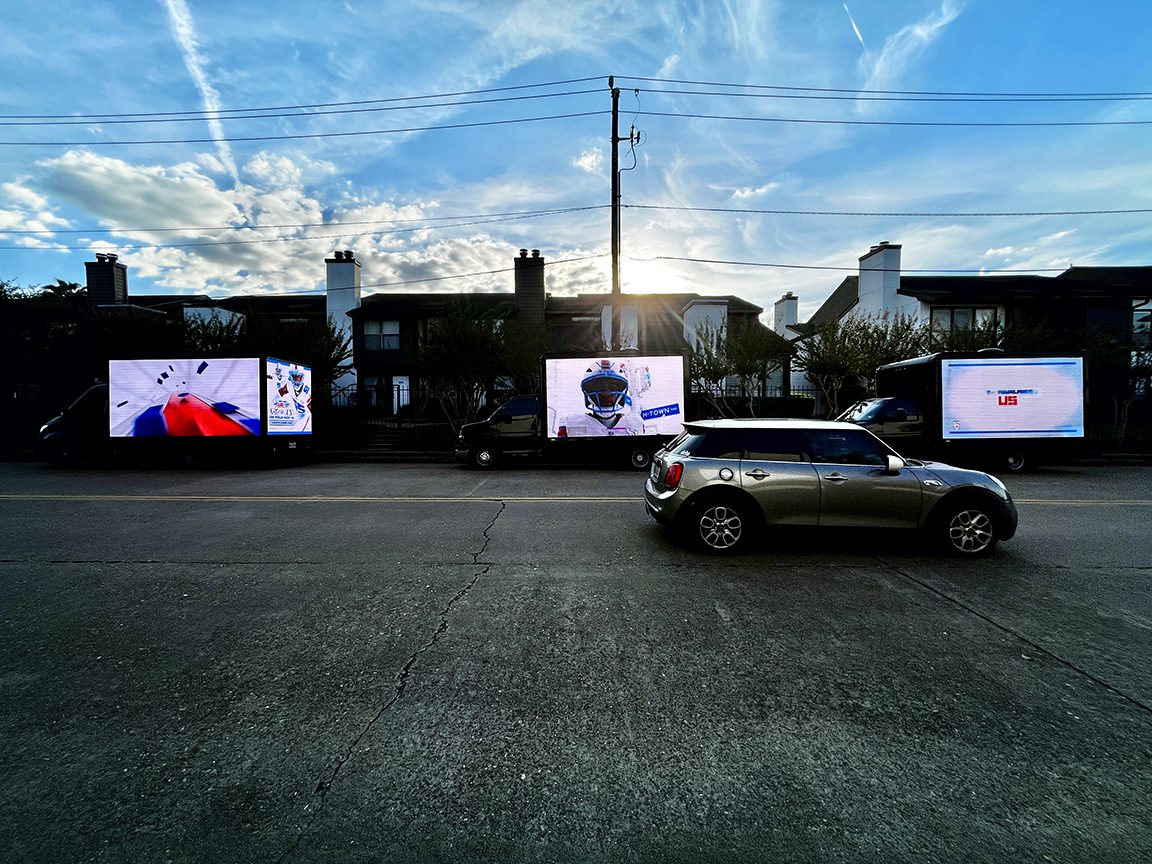
Ready To Put Your Artist Or Brand On The Streets Of America's Top Markets?
Award Winning Personalized Service
You will get thoughtful, devoted, and individualized attention from our experienced, qualified, and professional personnel. Being one of the most illustrious agencies in Brooklyn, New York, American Guerrilla Marketing has been awarded the Best of Brooklyn title.
Nationwide
Industry City, Brooklyn, New York 11232
American Guerrilla Marketing
Hours
Mon - Fri: 9 AM - 5 PM
Sat & Sun: Closed
Automate your campaign with AGM’s Request for Proposal Builder.
Automate your campaign with AGM’s Request for Proposal Builder. Simply answer a few quick questions about your campaign goals, markets, and timeline, and the system will generate a tailored presentation with recommended strategies, quantities, and pricing. Click the RFP Builder to instantly receive your customized proposal.
The White Background Problem
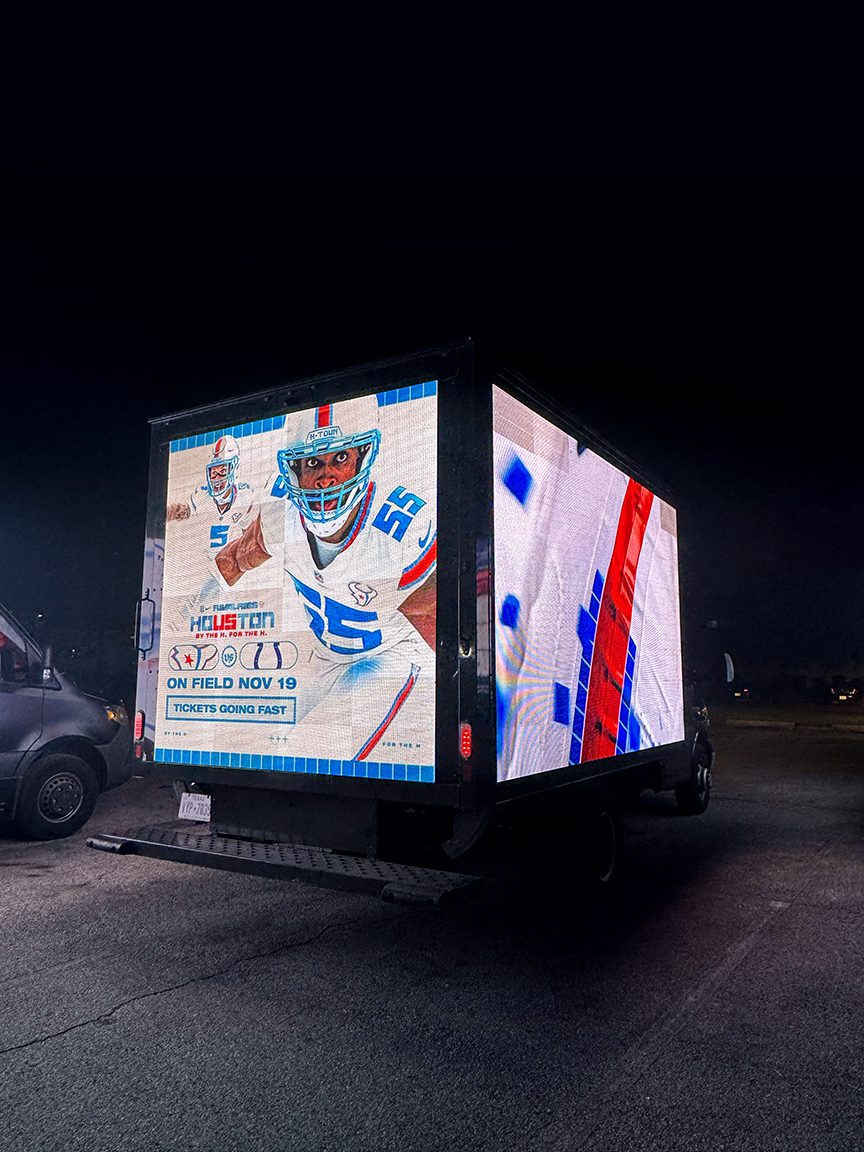
Here is the part that does not appear in the plan deck. The team brand look for the season was built around new white uniforms with a touch of H Town blue, so the creative was white dominant by design.
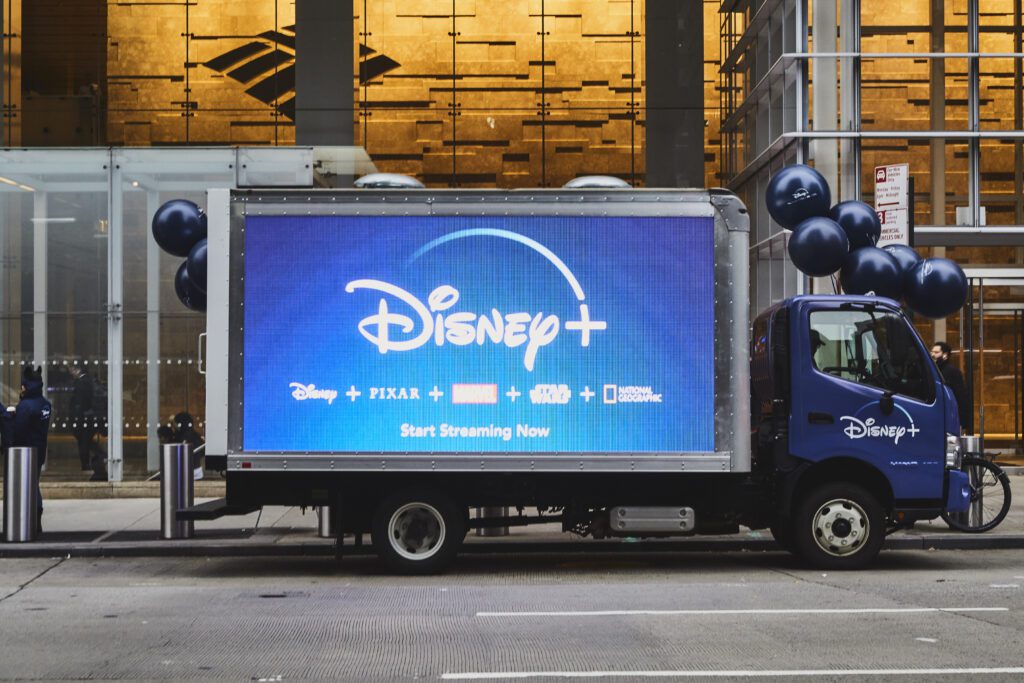
Truck screens draw power from an onboard generator, and a full white field at full brightness pulls far more current than a dark field. Our installers flagged that one of the video spots was heavy on the generator and asked for any background color other than white. The client could not invert it or strip it without breaking the campaign look, because white was the campaign.
We solved it by reworking brightness levels and panel timing rather than the color, but the lesson is worth stating plainly: a mobile billboard is a vehicle with an electrical system, not a print surface. Creative decisions made in a design file have physical consequences at the curb. We now raise power draw at the artwork spec stage, alongside the format requirements, which were 1280 by 720 MP4 for the side panels and 720 by 720 JPG for the rear.
Choosing the projection night
The projection mapping activation went on October 3, the Saturday night in the middle of the window, and that placement was deliberate.
Projection only exists after dark, so it was never going to serve game day morning. Putting it the night before the game put a large scale image into the city at the exact hour people were already out, already talking about the game, and already holding phones. The final surface was chosen on the ground during scouting rather than locked in advance, because a projection site has to satisfy four things at once: a clean unbroken wall, a throw distance that is not interrupted by traffic, somewhere safe to park the rig, and a sightline where enough people are standing still to actually look up.
The Tradeoff We Accepted
Nine truck days across a metro area this large is thin. We knew it going in. Spread across three days and six distinct zones, no single neighborhood in Houston got saturation coverage, and frequency against any individual person was low outside the game day funnel.
The alternative was to concentrate all nine days inside the loop and give up Uptown entirely. We did not take it, because the client needed season wide reach and not one dense pocket. If we ran it again with the same scope, we would cut the Heights from day two and put that truck on the stadium approach a day early, since the October 4 trucks produced the strongest photography and the most engagement by a wide margin.
What came back
Daily photo sets went to the client each evening rather than in one package at the end, which let their social team pull content while the campaign was still live. Location logs and photography were delivered within seven business days of completion. The client asked for full video walkarounds of both trucks after seeing day one stills, which is the clearest signal that documentation is doing its job.
Running a mobile billboard campaign in Houston
We handle routing, production, truck scheduling, projection scouting and location reporting. Tell us the date that matters and we will build the week around it.
Frequently asked questions
Houston is wide and car dependent, so one truck reads as a sighting and three read as a campaign. We used three on each build up day and two on game day morning.
Uptown and the Galleria, Downtown and Midtown, the Heights and Washington, Montrose and EaDo. On game day the 610 South feeders and the Kirby, Main and Fannin corridors beat all of them.
Trucks own daylight and cover ground. Projection owns the dark and delivers one large image worth photographing. Together they cover the full day.
Five days before each install date, supplied as 1280 by 720 MP4 for the sides and 720 by 720 JPG for the rear panel.