🚀 NEW WHEATPASTING MARKETS Discover our wheatpasting campaigns in : 🇬🇧 London • 🇨🇦 Canada • 🇲🇽 Mexico City

American Guerrilla Marketing

Nationwide Service

Media planning, media buying, billboard advertising, & guerrilla marketing

Fly Posting in Arizona

Sidewalk Decals Advertising in Arizona

Sun Belt market density meets year-round campaign conditions. AGM executes street poster campaigns across Phoenix, Mesa, Scottsdale, and Tucson with direct crews and GPS-documented reporting.

Why Arizona Is One of America’s Most Compelling Street Advertising Markets

Arizona has moved far beyond its reputation as a regional market. The Phoenix metropolitan area — encompassing Phoenix proper, Mesa, Scottsdale, Tempe, Chandler, Gilbert, and Glendale — now ranks as the fifth-largest metro in the United States by population, and it continues to absorb new residents at a pace that would be startling in any other state. Over the past decade, more than a million people relocated to the greater Valley of the Sun, bringing with them a young, entertainment-driven consumer culture that attends concerts, visits independent restaurants and bars, frequents arts districts, and moves through street-level environments every single day.

That population density is what positions Arizona as a fly posting market that deserves serious strategic attention. When a touring act, streaming service, consumer brand, or advocacy campaign needs to saturate a major Sun Belt market at street level, the Phoenix metro delivers the pedestrian corridors and the demographic concentration to justify the investment. The same market that built Roosevelt Row into one of the Southwest’s premier arts districts, turned the 7th Street bar corridor into a nightly entertainment destination, and drew Major League Baseball’s entire spring training season to the East Valley is the same market where a disciplined fly posting campaign lands with measurable cultural weight.

Beyond Phoenix, Tucson adds a dimension that few Sun Belt states can replicate. The University of Arizona campus anchors a street scene on 4th Avenue and Congress Street that sustains two overlapping economic cultures — a college student economy and an independent creative professional scene — running simultaneously across the same corridors. For brands that need to reach an 18-to-30 demographic with street-level credibility, Tucson offers concentration and receptivity that outperforms many markets five times its size.

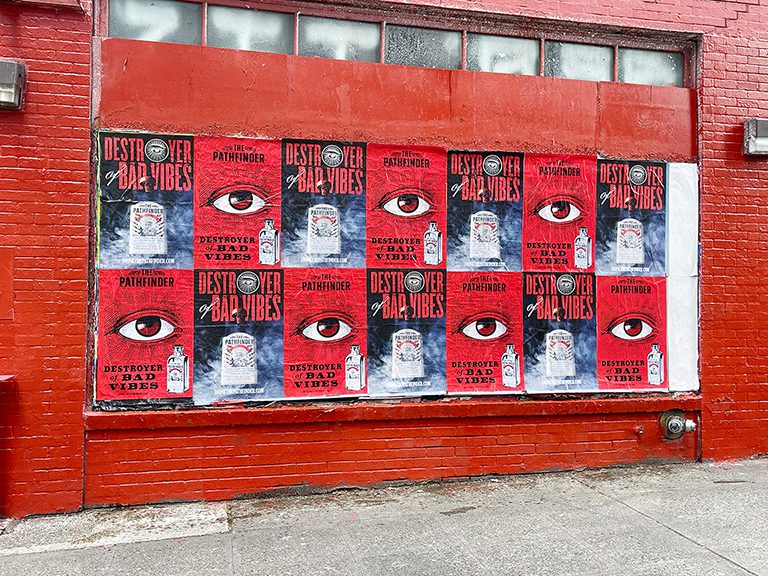
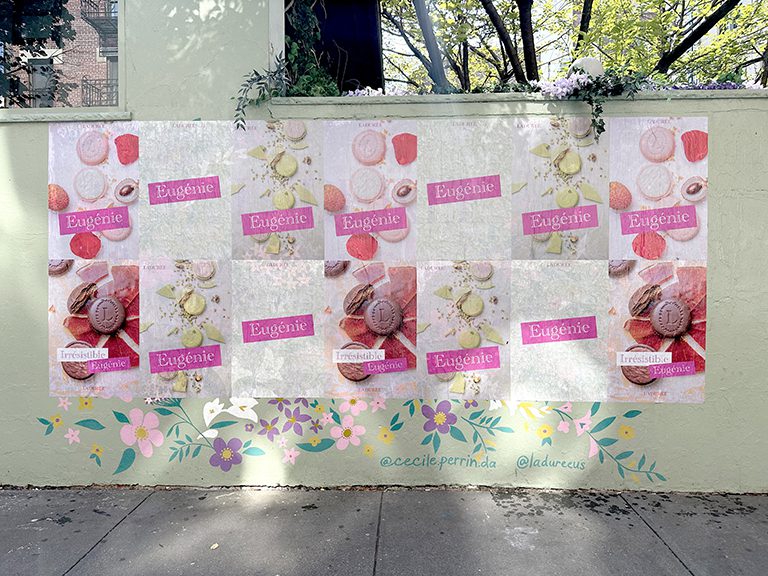
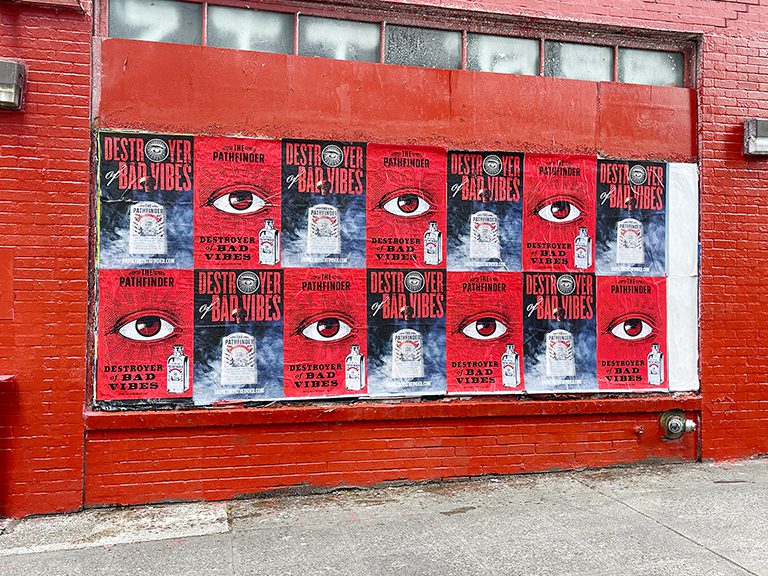
American Guerrilla Marketing executes fly posting and wheatpasting campaigns across Arizona through direct, in-house installation crews. There are no subcontractors involved in the process — AGM handles printing, logistics, and street-level execution from start to finish. Every campaign concludes with GPS-documented photo reporting that gives clients location-verified proof of every placement across every neighborhood targeted.

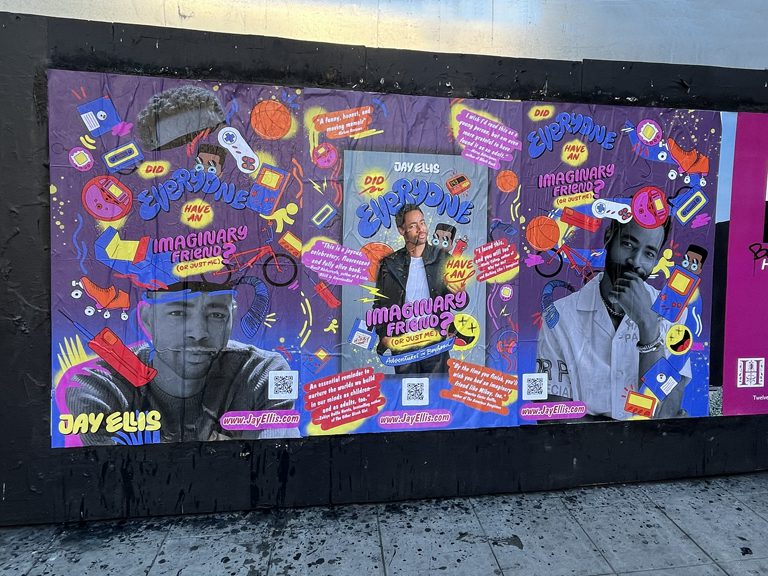
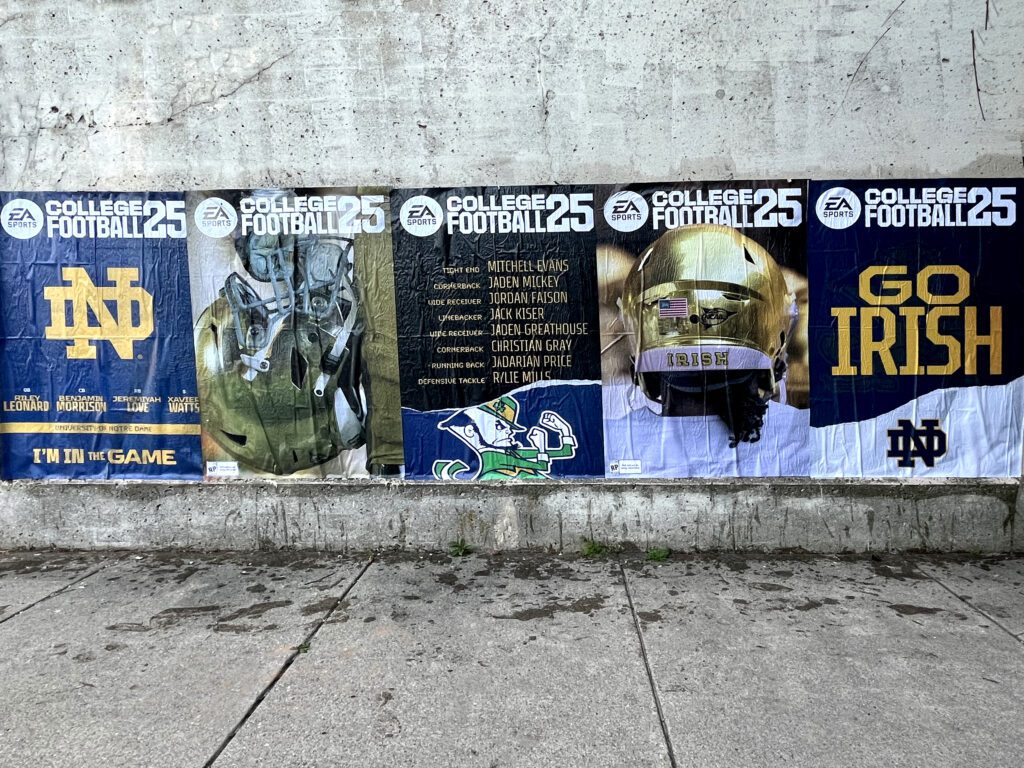
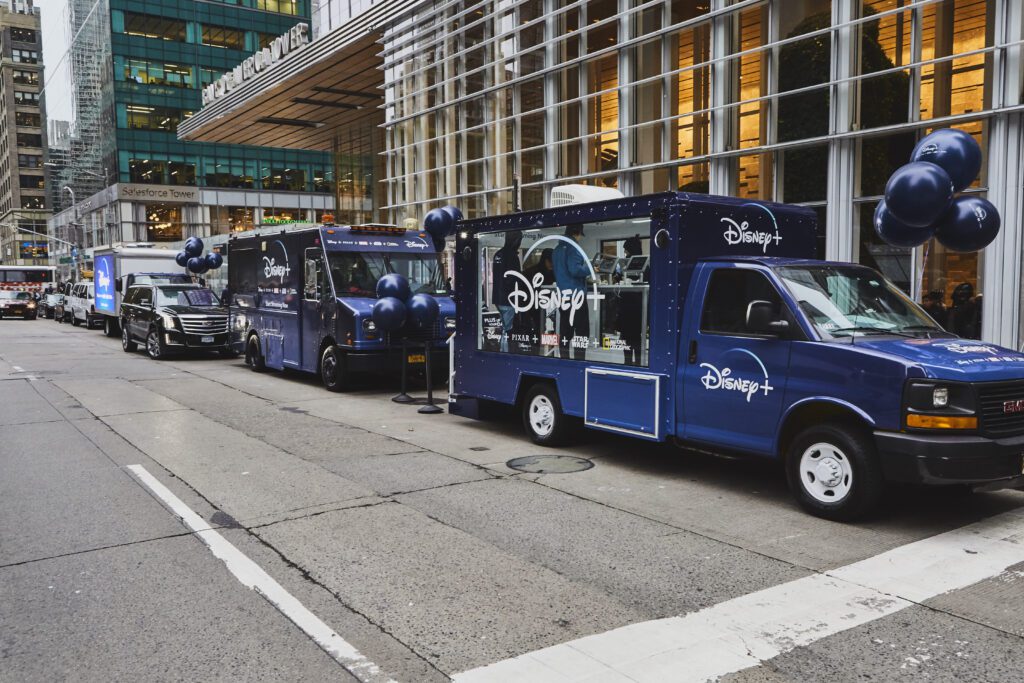
AGM serves clients from the entertainment industry, the streaming sector, consumer product companies, political organizations, hospitality brands, and more. The client list includes Netflix, The Onion, EA Sports, Biossance, and Shepard Fairey — campaigns that demanded not just street presence but street intelligence, an understanding of where posters earn attention versus where they disappear into visual noise. That same intelligence shapes every Arizona campaign AGM executes.


Put Your Brand on Arizona's Streets

AGM executes fly posting campaigns across Phoenix, Mesa, Scottsdale, Tucson, and the full Arizona market. Direct crews, in-house printing, GPS documentation — no subcontractors, no shortcuts.

Browse Cities in Arizona

Select a city to explore Fly Posting Advertising opportunities.

Phoenix Metro: The State's Largest Street Advertising Canvas

Phoenix is not a monolithic market. It is a collection of dense, texturally distinct neighborhoods and corridors that each attract different audiences and reward different campaign approaches. Understanding this geography is the difference between a fly posting campaign that earns real attention and one that disappears against a backdrop of competing visual content on a strip mall wall that no one walks past.

Roosevelt Row — the arts-anchored corridor stretching roughly along Roosevelt Street between Central Avenue and 16th Street — is the creative epicenter of Phoenix street life. The gallery density, the weekend foot traffic, and the concentration of 21-to-35 adults who live, work, create, and socialize in that zone make it one of the most reliably high-performing fly posting corridors in the entire Sun Belt. First Fridays, the monthly arts walk that draws tens of thousands of people through the district on a single evening, creates an exposure window unlike anything else available at street level in Arizona. A campaign positioned to hit Roosevelt Row during First Friday earns impressions in a single evening that would take weeks of digital advertising to approximate.

The 7th Street corridor, running from McDowell Road north through the stretch of bars, music venues, and independent restaurants toward Camelback Road, layers nightlife density onto daytime commuter traffic in a way that extends the impression window well beyond a single time of day. Posters on 7th Street catch eyes during the morning commute, the lunchtime walk, the after-work stop, and the late-night bar run. Melrose Village along 7th Avenue adds a boutique retail and LGBTQ+ cultural community that responds enthusiastically to street-level creative that feels genuinely invested in the neighborhood’s identity.

Midtown Phoenix contributes office density and creative professional foot traffic along Central Avenue, where young professionals commute, lunch, and socialize in an environment that the light rail corridor increasingly connects to the broader urban core. The combination of Roosevelt Row energy, 7th Street nightlife density, and Midtown professional traffic gives Phoenix a fly posting geography that covers the full spectrum of the young adult demographic in a single coordinated campaign.


The College Sports Factor: Event Windows That Drive Street Advertising Roi

Arizona’s college sports infrastructure is one of the state’s most reliable engines of concentrated pedestrian traffic, and smart fly posting campaigns are designed around those windows rather than ignoring them. Arizona State University’s Sun Devil Stadium in Tempe, with a capacity exceeding 53,000, generates home football game environments that push massive foot traffic through the Mill Avenue corridor and the streets surrounding the university campus in the 24-to-72 hours surrounding each game. Posters placed in those corridors during game week reach not just students but the visiting fans, alumni, and general sports audience that fills the Valley for major matchups.

The Cactus League — Major League Baseball’s spring training competition, which brings fifteen MLB teams to facilities scattered across Mesa, Scottsdale, Surprise, Peoria, and Goodyear every February and March — is a campaign opportunity with no real equivalent elsewhere in the country. For six weeks every late winter, the greater Phoenix metro hosts approximately two million spring training visitors who arrive from out of state, explore local neighborhoods between games, spend at local businesses, and pay close attention to the street-level visual environment precisely because they are unfamiliar with it. For brands targeting sports fans with real purchasing power, a fly posting campaign timed to Cactus League season captures an audience that is physically present, economically active, and visually attentive in exactly the way that makes street advertising work.

The University of Arizona’s own sports calendar adds a Tucson dimension. Arizona Stadium’s football season, the McKale Center basketball program, and the full Wildcats athletics calendar drive Tucson foot traffic patterns that a well-timed fly posting campaign can align with directly. For brands whose target demographic includes passionate college sports fans — and in Arizona, that is a very large category — the university sports calendar provides a reliable scheduling scaffold for street advertising that delivers elevated impressions at the moments that matter most.

Build Your Fly Posting Campaign

    Award Winning Personalized Service

    You will get thoughtful, devoted, and individualized attention from our experienced, qualified, and professional personnel. Being one of the most illustrious agencies in Brooklyn, New York, American Guerrilla Marketing has been awarded the Best of Brooklyn title.

    Nationwide

    Industry City, Brooklyn, New York 11232

    American Guerrilla Marketing

    +1 (646) 776-2770

    [email protected]

    Telegram: @americanguerillamarketing

    Hours

    Mon - Fri: 9 AM - 5 PM

    Sat & Sun: Closed

    Automate your campaign with AGM’s Request for Proposal Builder.

    Automate your campaign with AGM’s Request for Proposal Builder. Simply answer a few quick questions about your campaign goals, markets, and timeline, and the system will generate a tailored presentation with recommended strategies, quantities, and pricing. Click the RFP Builder to instantly receive your customized proposal.

    Year-round Campaign Conditions: Arizona's Structural Advantage

    Most high-density advertising markets in the United States deal with weather as a constant campaign variable. Rain in Seattle stretches for months. Boston winters make outdoor installations a practical challenge. New York humidity in August and frozen January mornings each create conditions that affect poster adhesion, print integrity, and campaign duration in ways that marketers have to plan around carefully.

    Arizona’s climate creates a different set of campaign conditions entirely. The state’s low humidity, consistent sunshine, and dry air extend poster durability significantly compared to what’s achievable in coastal or northern markets. A fly posting campaign installed in Phoenix in November can reasonably expect to hold up for two full weeks under conditions that would compress a comparable New York campaign to seven or eight days. The dry desert environment also makes for cleaner surface preparation, better adhesive performance, and sharper print presentation at the street level — the combined effect of which is that Arizona posters simply look better for longer.

    The optimal Arizona campaign window runs from October through April — fall, winter, and early spring — when temperatures are comfortable, the outdoor lifestyle that defines Valley culture is operating at full intensity, and the event calendar is packed with concerts, sports activations, festivals, and hospitality launches. That window aligns precisely with the full entertainment season, meaning optimal climate conditions and peak audience engagement operate simultaneously rather than in opposition. Summer campaigns are feasible, particularly in downtown environments with evening foot traffic, but AGM’s planning team will assess surface and timing factors carefully for hot-season installations.

    For national brands coordinating multi-market rollouts, Arizona’s climate reliability eliminates a scheduling variable that complicates campaigns in markets where weather intervenes unpredictably. Locking in Arizona as a reliable execution partner means one fewer market where campaigns get pushed, rescheduled, or compromised by conditions outside anyone’s control.

    Case Study: Shepard Fairey — Sonic Temple Festival 2024

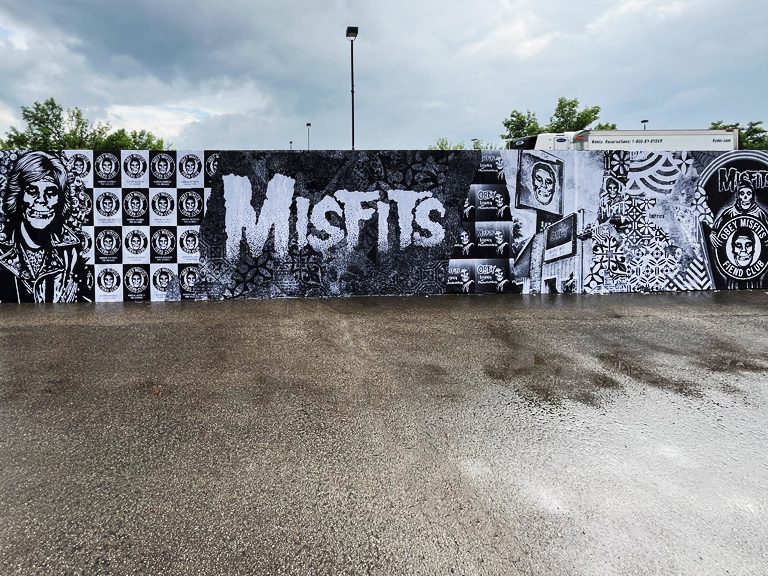
    When the production team supporting the Sonic Temple Music and Arts Festival in Columbus, Ohio needed to place large-scale street installations that could hold visual authority alongside Shepard Fairey’s artwork anchoring the 2024 campaign, they engaged American Guerrilla Marketing for the execution. The challenge was not simply posting art — it was placing monumental work in urban environments in ways that felt native to the street rather than imposed on it. The distinction matters enormously. Wheat paste installations that read as genuine street culture earn sustained attention and social sharing. Those that feel like outdoor advertising wearing street clothing earn neither.

    AGM’s installation crew brought its full methodology to the Columbus execution: deliberate location selection based on pedestrian traffic data and neighborhood cultural context, careful surface preparation to ensure clean adhesive bond and flat final presentation, and installation timing designed to capture maximum early-morning foot traffic before the city’s daytime movement peaked. The documentation package delivered to the Sonic Temple team after installation included GPS-pinned photography of every placement — proof of performance that the festival used for press outreach and for its own internal campaign archive.

    The same principles that shaped the Shepard Fairey campaign — location intelligence, installation precision, full documentation — define what every Arizona client receives from AGM. Whether a campaign targets the Roosevelt Row arts corridor, the downtown Tucson Congress Street scene, or the Mesa Arts Center area, the production standard that applies to a nationally recognized artist’s work applies equally to an entertainment brand, a streaming platform, or a consumer product launch. The street doesn’t give discounts for less-famous clients, and neither does AGM’s quality standard.

    Arizona Cities Agm Serves

    AGM executes fly posting campaigns across the full Arizona market. The state’s geographic breadth — from the dense Valley of the Sun to Tucson’s independent cultural corridor — means that different cities serve fundamentally different campaign objectives. Here’s an overview of the primary markets:

    Phoenix

    The state capital and the commercial, cultural, and entertainment center of Arizona. Phoenix’s Roosevelt Row arts district, 7th Street nightlife corridor, Melrose Village boutique scene, and Midtown professional core give fly posting campaigns a range of neighborhood contexts matched to virtually any brand’s target demographic. The creative class density in Phoenix proper is among the highest in the Sun Belt, and the city’s explosive restaurant and music venue growth over the past decade has made its urban corridors reliably pedestrian-active.

    Mesa

    Arizona’s third-largest city and the anchor of the East Valley entertainment zone. Downtown Mesa’s Main Street and Mesa Arts Center corridor have developed a genuine independent arts and food culture that draws suburban young adults and Valley sports fans throughout the year. The spring training presence at Sloan Park and Hohokam Stadium drives visitor density during Cactus League season, and the University Drive corridor adds a student-adjacent dimension tied to Mesa Community College and the broader East Valley academic population.

    Scottsdale

    Arizona’s premium brand market. Old Town Scottsdale, the Scottsdale Arts District, the Camelback corridor, and the Fashion Square area collectively deliver the state’s highest-income pedestrian demographic — affluent 25-to-45 consumers with established purchasing power and active social calendars. The spring tourism season, anchored by events like Barrett-Jackson and the Waste Management Phoenix Open, adds a high-profile visitor dimension that makes Scottsdale a strategic market for luxury brands, hospitality campaigns, and premium consumer product launches.

    Tucson

    Arizona’s second city and its most distinctive college-town cultural environment. The University of Arizona’s 45,000-student enrollment drives a street culture that runs from the campus corridor through 4th Avenue’s entertainment district into Downtown Tucson’s Congress Street arts scene. Independent music venues, arts organizations, advocacy groups, and student-facing consumer brands consistently find Tucson’s street advertising environment receptive, active, and capable of generating the kind of organic social sharing that amplifies a fly posting campaign’s reach beyond the posters themselves.

    Fly Posting Formats for Arizona Campaigns

    Campaign format is a strategic decision, not a default. The right poster size depends on the target corridor’s physical environment, the visual density of competing content already present at street level, and the creative concept’s need for physical space to communicate its message effectively. AGM offers two primary formats:

    24×36 — Standard Format

    100 posters: contact us for pricing  |  200 posters: contact us for pricing

    The standard fly posting size. At two feet wide and three feet tall, 24×36 posters are the foundation of density-focused campaigns where saturation across multiple corridors matters as much as individual visual impact. A 100-poster campaign installed across Phoenix’s urban core or Tucson’s 4th Avenue district produces visual repetition that builds brand recognition at a rate individual placements cannot achieve. Multiple creative designs available at Contact us for pricing. design. 72-hour rush production available for quantities up to 500 posters.

    48×72 — Large Format

    100 posters: contact us for pricing  |  200 posters: contact us for pricing

    Four feet wide and six feet tall, 48×72 installations command attention in ways that standard-format posters don’t attempt. This size is built for high-traffic intersections in Old Town Scottsdale, major construction barriers in Downtown Phoenix, and anchor placements on the kind of blank warehouse walls that Roosevelt Row’s arts corridor still offers. Luxury brands, film campaigns, large-format album art, and creative concepts that reward extended visual attention perform at their peak in this format. Additional designs at contact us for pricing each.

    Industries And Campaign Types That Drive Arizona Fly Posting Demand

    Arizona’s demographic profile — young, entertainment-focused, sports-obsessed, and growing fast — attracts a consistent range of industries that understand what street-level advertising can accomplish when it’s executed with discipline.

    • Entertainment and Live Music: Concert tours, music festivals, venue programming launches, and album release campaigns are among the most consistent drivers of Arizona fly posting activity. The Phoenix and Tucson entertainment calendars are dense, and artists who invest in street presence in these markets generate the kind of anticipatory buzz that ticket sales reflect.
    • Streaming and Media Platforms: Series launches, film releases, and platform brand awareness initiatives use fly posting saturation to generate water-cooler conversation and social sharing among the 21-to-35 demographic that streaming platforms most want to reach. Arizona’s creative class density makes it a particularly responsive market for media brand campaigns.
    • Consumer Products and Lifestyle Brands: Fashion labels, beverage companies, wellness brands, and lifestyle product launches use fly posting to place their creative directly into the pedestrian environment where their target consumers actually live. Organic social sharing from street-level installations in high-traffic Arizona corridors extends campaign reach well beyond the posters themselves.
    • Political and Advocacy Organizations: Arizona’s consistent status as a genuine swing state makes it one of the most strategically active political advertising markets in the country. Fly posting’s speed-to-street, street credibility, and ability to saturate specific precincts make it a practical tool for voter mobilization messaging in the urban cores of Phoenix and Tucson.
    • Hospitality and Venue Launches: New restaurant openings, hotel launches, rooftop bar activations, and ticketed event promotions use fly posting to build street-level name recognition in the days immediately preceding an opening — exactly the window when awareness translates most directly into opening-night attendance and early reservation volume.

    How AGM Plans and Executes Arizona Campaigns

    Every Arizona campaign starts with a strategic briefing. AGM’s planning team works with clients to clarify the target demographic, identify which neighborhoods and corridors align with that demographic’s actual movement patterns, and map an installation route that delivers both geographic coverage and corridor density where impressions matter most. In a market as geographically spread as the Phoenix metro, this planning step is essential — the difference between a campaign that saturates the right corridors and one that gets distributed too thin across a market too large for the investment to land.

    Printing is handled in-house. AGM does not outsource production to third parties — print quality, material specification, and final output inspection are controlled directly, which means every poster that goes to the street meets the same standard regardless of the campaign’s size or budget tier. Wheat-based adhesive is used for all Arizona installations: it bonds cleanly to approved surfaces, holds up well in the desert’s low-humidity climate, and is designed for removal by pressure washing when a campaign’s run concludes — making it the appropriate choice for markets where surface stewardship matters.

    Installation is executed by AGM’s own crew. After every placement is made, each poster is photographed from street level with GPS coordinates embedded in the image data. Clients receive a complete post-campaign documentation package: location-verified photography of every poster, neighborhood-by-neighborhood installation confirmation, and a record of the campaign’s full street footprint. That level of accountability is not a courtesy — it is standard practice on every AGM campaign, regardless of market or budget.

    Frequently Asked Questions: Fly Posting in Arizona

    AGM executes fly posting campaigns in Phoenix, Mesa, Scottsdale, and Tucson as primary markets. The team also handles campaigns in adjacent Valley communities including Tempe and Glendale, and can coordinate multi-city Arizona rollouts that cover several markets simultaneously. Contact AGM to confirm serviceability and discuss campaign scope for any specific Arizona location.

    Most Arizona fly posting campaigns run one to two weeks from installation date. The state’s low humidity and dry climate extend poster durability meaningfully compared to coastal or northern markets — campaigns in the October-through-April window frequently hold up at or near peak condition for the full two-week run. Exact duration varies based on surface type, corridor traffic intensity, and local environmental conditions at each specific placement site.

    The fall through spring window — roughly October through April — is Arizona’s strongest street advertising period. During this stretch, climate conditions are ideal for both installation and poster longevity, the outdoor lifestyle that defines Valley culture is operating at peak intensity, and the event calendar is packed with concerts, sports activations, and hospitality launches. Summer campaigns are workable but require additional surface and timing planning given extreme heat conditions.

    Yes — multi-city Arizona campaigns are among AGM’s most common campaign structures. Running Phoenix and Tucson simultaneously, for example, covers both the state’s dominant entertainment market and its college-town cultural corridor in a single coordinated execution. AGM manages logistics, installation timing, and GPS documentation across all markets and delivers consolidated reporting for the full campaign footprint.

    Absolutely. Brands launching into the Arizona market often use fly posting to establish street-level presence in the Phoenix metro and Tucson simultaneously, creating the impression of market-wide saturation before other advertising channels have even registered. The speed at which fly posting can be placed — from final file approval to street installation in as few as 72 hours on rush orders — makes it particularly valuable for launch timing scenarios.

    AGM offers two primary poster formats: 24×36 inches, priced at contact us for pricing for 100 posters and contact us for pricing for 200, and 48×72 inches, priced at contact us for pricing for 100 posters and contact us for pricing for 200. The 24×36 is recommended for density-focused campaigns where corridor saturation is the priority. The 48×72 is designed for high-impact anchor placements at major intersections and construction barriers. Multiple creative designs can be added at contact us for pricing (24×36) or contact us for pricing (48×72) per additional design.

    Every poster placed by AGM in Arizona is photographed at installation time with GPS coordinates embedded in the image metadata. Clients receive a comprehensive documentation package after the campaign concludes — street-level photography of every placement, location data confirming each site, and neighborhood-by-neighborhood installation confirmation. This reporting provides both proof of performance and a visual archive of the campaign’s street presence.

    Entertainment and music brands, streaming services, consumer lifestyle companies, political and advocacy organizations, and hospitality businesses are the most consistent Arizona fly posting clients. The market’s young adult demographic, active event culture, and rapidly growing creative class make it particularly receptive to street-level advertising from brands that understand how to communicate at that register.

    AGM recommends initiating the campaign conversation two to three weeks before the target installation date. This allows adequate time for print production, location scouting, and installation scheduling. Rush production is available for 24×36 campaigns up to 500 posters with a 72-hour turnaround. The earlier a campaign is booked, the more time the planning team has to optimize neighborhood targeting and surface selection for the client’s specific objectives.

    Spring training is one of the strongest fly posting windows in the Arizona calendar. The Cactus League brings approximately two million visitors to the Valley of the Sun each February and March — an out-of-town audience that is unfamiliar with local streets, attentive to the visual environment around them, and economically active in ways that make street-level advertising highly effective. For brands targeting sports fans and travel-engaged consumers, the spring training window is a campaign opportunity with no equivalent elsewhere in the Sun Belt.

    A standard 24×36 fly posting campaign starts at contact us for pricing for 100 posters, inclusive of printing, installation, and GPS photo documentation. A 200-poster campaign at the same format is priced at contact us for pricing. Large-format 48×72 campaigns start at contact us for pricing for 100 placements. Multi-city Arizona rollouts are priced per market. Contact AGM for a detailed campaign quote based on your specific target cities and objectives.

    Browse All States

    Explore Fly Posting Advertising opportunities across the United States.

    No locations found

    American Guerrilla Marketing Blog Posts