
November 13, 2026
Outdoor digital billboard: How It Actually Works
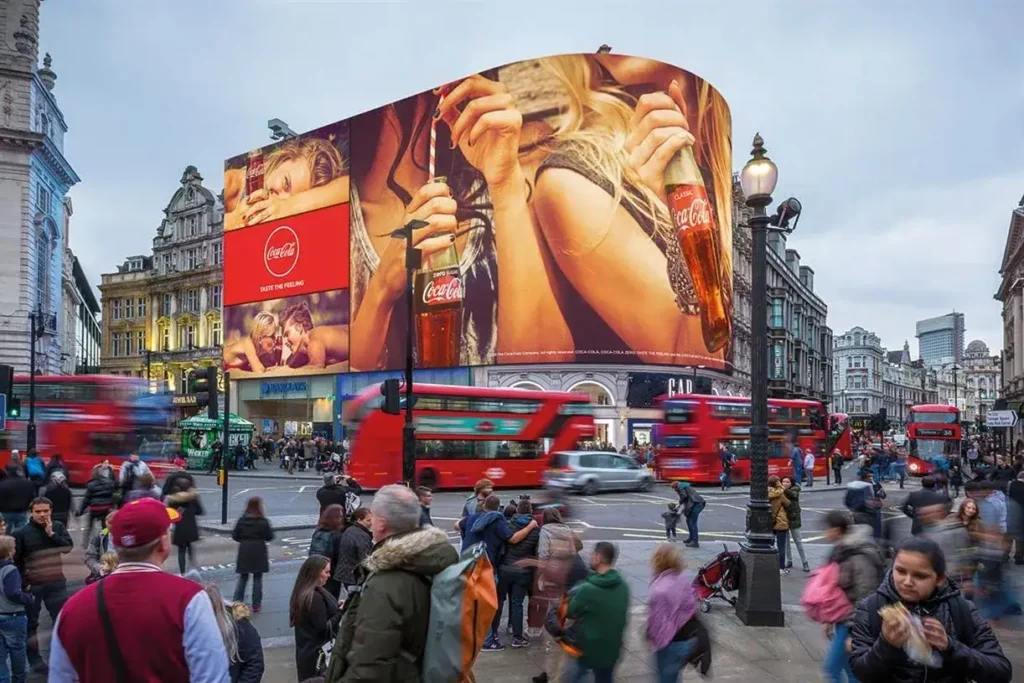
An outdoor digital billboard is a large illuminated screen, usually roadside, running a rotation of advertisements. That much everybody knows.
What buyers consistently get wrong is what they are actually purchasing. They picture the structure, lit, carrying their message, the way a painted board used to. What they are buying is a slot in a loop. Your creative appears for a few seconds, then somebody else’s does, then a third, then a fourth, and eventually yours comes round again.
That distinction changes everything about how the format should be planned, how the creative should be built, and what it is honestly good for.
I do not own billboard structures. I run street-level crews, posters, snipes, decals, projection and mobile screens. That means I have no commission riding on whether you buy a digital board, which is a decent reason to read an operator’s view of the format rather than a seller’s.
Here is how the format actually behaves, where it is strong, where the numbers flatter it, and what I would put next to it.
The loop, and why it is the whole story
Most digital billboards run a rotation of a handful of advertisers. Your creative holds the screen for a short burst, then rotates out.
Three consequences follow, and every one of them surprises somebody.
You do not own the structure. A passer-by glancing up has a reasonable chance of seeing somebody else. Your share of that structure’s attention is roughly your share of the loop, not the whole of it.
Timing is out of your hands. You cannot guarantee your creative is showing at the moment the heaviest traffic passes. Across a long enough flight that averages out, which is fine, but it means short flights are noisier than they look.
Adjacency is uncontrolled. Your brand shares a surface with whatever else is in the rotation. Most of the time that is irrelevant. Occasionally it is not, and there is limited recourse.
None of this makes digital boards bad. It makes them a different product from the static board people have in their heads, and a different product deserves a different plan.
What digital billboards are genuinely good at
I will give the format full credit where it earns it.
Scale and presence. A large illuminated screen on a major road is physically imposing in a way almost nothing else is. For a brand that needs to look established, that signal is real and hard to replicate.
Broad geographic reach. A well-placed board on a major artery is seen by an enormous number of people over a flight. No street-level format matches that raw breadth.
Flexible creative. Changing the message costs nothing physical. For campaigns with shifting offers, dated messages or multiple variants, this is a genuine operational advantage over anything printed or pasted.
Conditional messaging. Time of day, day of week, weather and event triggers can all drive which creative shows. Used well, this is effective. Used because the capability exists, it is decoration.
Delivery certainty. Nothing is installed, so nothing fails because of frost, drizzle, a coated wall or a lifting corner. For a buyer who needs guaranteed delivery, that matters, and I say that as somebody whose formats do carry installation risk.
No removal obligation. The flight ends and the screen moves on. Clean.
Where the format is weaker than it looks
Frequency against any individual is low. Most people pass a given board a small number of times, often once. Recognition is built by repeated exposure, and a single board on a commuter route delivers that only to the people who use that exact route daily. Everyone else gets one glance.
Driving audiences are poor audiences. The viewer is operating a vehicle, usually at speed, with their attention correctly elsewhere. Exposure is brief and shallow. Pedestrian formats get a more attentive viewer even though they get fewer of them.
Inventory decides geography, not you. Boards exist where boards exist. If your audience concentrates in a neighbourhood with no structures, the format cannot reach them, and widening the plan to find inventory moves spend away from the audience.
Neighbourhood targeting is impossible. A board serves an arterial route, which carries everyone. If the objective is to own a few specific streets, this is the wrong instrument.
Impression figures are modelled. Audience numbers come from traffic counts, mobility data and visibility adjustments. That is a reasonable estimation method and it is not a count of people who looked. Treat it as a comparison tool between placements rather than as a measurement of attention.
Short flights are inefficient. Between loop share and single-pass exposure, brief flights deliver far less than the headline figures suggest. The format rewards duration.
Creative that survives a screen
This is the part a buyer fully controls, and it is where most of the value is won or lost.
Exposure is a handful of seconds at most, frequently less, at distance, at speed, often at an angle, in whatever light the day provides.
One idea. Very few words. If it needs a second sentence it will not land. I have never once received a deck where the screen creative was too simple.
Type sized for the real viewing distance. Approve artwork by looking at a scaled print from a realistic distance, not on a monitor at arm’s length. This habit catches more failures than any review process.
Strong value contrast. Subtle tonal palettes that look refined on screen vanish against a bright sky or a grey afternoon.
The brand resolving instantly. If somebody has to work out whose ad it is, the exposure was wasted.
Any single frame has to work alone. This is the one people break constantly. If the creative animates toward a reveal, most viewers arrive mid-sequence and see a fragment. Build so that whatever frame somebody catches still communicates.
Design for daylight, check at night. Screens are far brighter after dark, and a creative calibrated for noon can be harsh and bloomed at midnight. Most networks adjust brightness automatically, but the creative should tolerate both.
No scannable codes. A driver cannot scan anything, and should not try. Put a short memorable destination on it instead, or accept that the board is doing awareness and let another layer do capture.
Permission, ordinance and the grey area
Buyers rarely think about this with digital boards, because the structure owner has already handled it, and that is a legitimate advantage of the format worth stating plainly. Structures, lighting, brightness and operating hours are regulated, and the owner carries that burden.
On the street-level formats I run, the picture is different, and it is a grey area.
Rules for temporary street advertising vary by municipality. Enforcement is inconsistent, sometimes between districts of one city and between individual inspectors in the same month. Outcomes usually turn on who controls the surface and what the local ordinance says. Anyone offering a single confident cross-market answer is simplifying or selling.
What we control is our posture. Permission from the party that controls the surface or space, meaning a property owner, facilities manager, contractor or developer depending on the site. A preference for private permissioned surfaces, because they are stable and repeatable. Documentation of condition before, placement after and removal after that, with locations and timestamps. And removal as a scheduled, budgeted deployment rather than an afterthought, because that commitment is what keeps surface owners willing to work with us again.
I will not tell you whether something is permitted in your specific situation. I am an operator, not your lawyer. That question goes to your counsel.
Digital boards against mobile screens
Buyers considering an outdoor digital billboard often ask about LED Trucks, so here is the honest comparison.
A fixed digital board gives you a location that accumulates traffic, shared with other advertisers in a loop, with no control over timing.
A mobile screen gives you the entire screen, with no rotation and no competing advertisers, for a block of hours, on a route you choose. You trade accumulated position for exclusivity and placement control.
Where the mobile screen wins outright: corridors and neighbourhoods with no structures, event approaches and gates, audiences concentrated somewhere the inventory map ignores, and any campaign where sharing a surface undermines the message.
Where the fixed board wins outright: raw reach on a major artery, physical scale, and the credibility signal of a large presence on a well-known route.
Operationally a mobile run is a driver, a planned route and a set of hours. Dwell comes from traffic and from deliberately planned slow sections. Legibility is a harsher test than a fixed board, because the screen is smaller and moving. Where a vehicle may stop, for how long and with what running varies by municipality, enforcement is inconsistent, and we plan inside each market’s conditions rather than assuming.
How boards are bought, and the lead times behind them
The buying process is less flexible than the technology suggests, and that catches people out.
Inventory is owned, not open. Structures belong to operators who sell their own networks. What is available to you in a given market is whatever those owners have unsold, in the periods they sell in. You are choosing from a list rather than choosing a location.
Good positions are booked early. The boards on the best routes, in the strongest periods, go first. A buyer arriving close to a launch date gets what is left, which is usually a weaker position described in flattering language.
Periods are structured. Traditional outdoor trades in defined blocks. Digital inventory is more flexible, particularly when bought through automated platforms, but the strongest fixed positions still tend to trade in conventional periods.
Creative specifications vary by network. Resolution, aspect ratio, file format, animation rules and brightness handling differ. Artwork built for one network frequently needs rework for another, and that rework is a timeline item people forget.
Approval is a real step. Networks review creative, and categories with sensitivity around content, claims or imagery can take longer or come back with changes. Building zero contingency into the schedule for that is optimistic.
Seasonality compresses everything. Retail-heavy periods and major event weeks tighten availability across a market. During those windows the practical effect is fewer good positions rather than an obvious shortage, so plans made late get quietly worse.
The planning lesson matches the one for the physical layers: work backwards from the first day on the street. The parts of a campaign that are genuinely fixed, surface permission, structure availability, weather windows and daylight hours, should be locked first, and the flexible parts arranged around them.
What we talk clients out of
Buying one board and calling it a campaign. A single structure reaches a route, once per person, in a shared loop. It is a component, not a plan.
Short flights. Between loop share and low per-person frequency, a brief run delivers much less than the headline numbers imply. I would rather see the same capacity spread longer.
Chasing the famous structure. The landmark board on the famous road is mostly reaching people who will never buy, at a premium driven by its fame. The less glamorous board on the route your actual customers commute is the better buy.
Buying boards to reach a neighbourhood. If the objective is owning a few streets, boards are structurally the wrong tool. Street-level density does that job.
Animated reveals. Most viewers arrive mid-sequence. Build frames that work alone.
Treating modelled impressions as delivered attention. Useful for comparing placements, weak as an absolute. Instrument response separately.
Dropping the street layer because the board felt like enough. The board builds broad familiarity. It does not build the neighbourhood-level recognition that converts, and clients who buy only breadth usually wonder later why nothing moved locally.
Reading a board position before you buy it
A digital board is sold on its audience figure. The figure tells you how many people pass. It tells you nothing about whether they can actually see your message, and that is a judgement you can make yourself.
Approach distance. How long is the board visible before a driver reaches it? A board on a long straight approach gives several seconds of readable exposure. A board revealed at the last moment by a bend, a bridge or a line of trees gives a fraction of that, with the same headline audience figure attached.
Angle to the traffic. A screen square to the road is read easily. A screen at a sharp angle is read badly by everyone except those in the nearest lane, and the quoted audience usually counts all lanes.
Competing clutter. A board surrounded by signage, shopfronts, and other illuminated surfaces competes for the same glance. An isolated board on a plain stretch of road holds attention far better at the same traffic volume.
What the driver is doing. A board approaching a junction, a merge or a complex interchange is competing with a driving task that correctly wins. Boards on steady stretches, or in slow-moving sections, get a viewer with attention to spare.
Sun position. A screen facing into low morning or evening sun is washed out at exactly the hours commuter traffic peaks. Worth asking about for any board on an east or west facing route.
Obstruction over the flight. Trees in leaf, seasonal decorations, scaffolding and temporary works can all intrude on a sightline that was clear when the position was sold. If the flight spans a season change, it is a fair question to raise.
None of this requires special expertise. It requires somebody driving the approach, at the hour the campaign is meant to work, and looking. The same principle governs everything we do on foot at street level, and it is remarkable how rarely anyone does it before committing.
How I would use a digital board inside a real plan
Treat the board as the breadth layer and build the depth underneath it.
Start with the corridor map. Three or four streets where your audience concentrates, with entrances, transit mouths and pause points marked. The board does not change this; it sits above it.
Buy the board for reach and signal, on the route your audience actually travels, for a flight long enough to accumulate rather than a burst.
Own the corridors physically with Wheatpasting & Poster Campaigns. This is where the repetition comes from, against pedestrians who get a far more attentive exposure than any driver, on streets where no structure exists.
Fill the gaps and refresh mid-flight with Snipe Advertising.
Cover the inventory blackspots and event rhythms with LED Trucks & Mobile Billboards.
Direct movement at ground level with Sidewalk Decals & Stencils, which is also the only place a scannable element genuinely gets used, because people can stop.
Instrument each layer with its own short link or code, a landing page matching the street creative, and geo-filtered direct and branded search measured against a control period.
Plan the refresh and the removal for the physical layers before anything goes up.
The board makes the brand look established. The street layer makes it feel present. Most briefs need both and buy only the first.
Frequently asked questions
What is an outdoor digital billboard?
A large illuminated roadside screen running a rotation of advertisements. Your creative holds the screen for a short burst before rotating out, so you are buying a share of a loop rather than exclusive use of the structure. Creative can be changed without any physical work, and messages can be scheduled or triggered.
How many seconds does my ad show?
It varies by network and location, but the structure is always the same: a short burst, repeated as the rotation comes round. The practical consequence is that your share of that structure’s attention is roughly your share of the loop, and you cannot guarantee showing at the exact moment the heaviest traffic passes.
Are digital billboard impression figures accurate?
They are modelled estimates built from traffic counts, mobility data and visibility adjustments, not counts of people who looked at the screen. They are genuinely useful for comparing one placement against another measured the same way. They are weak as absolute measures of attention, so instrument response separately.
Is a digital billboard better than a poster campaign?
They do different jobs. A board delivers broad reach and physical scale on a major route, with low frequency against any individual. A street poster campaign delivers concentrated repetition to pedestrians on specific corridors, including streets with no billboard inventory. For most briefs the combination outperforms either alone.
What creative works on a digital billboard?
One idea, very few words, type sized for the real viewing distance, strong value contrast, and a brand mark that reads instantly. Any single frame must communicate on its own, because most viewers arrive mid-sequence. Avoid animated reveals, body copy and scannable codes, which drivers cannot use.
Can you run street-level advertising alongside a billboard buy?
Yes, and it is the combination we recommend most often. Boards cover the arterial routes and deliver scale. Poster, snipe, decal and mobile screen layers cover the neighbourhood corridors where your audience actually walks, which is where repetition and recognition get built. Each layer carries its own tracking link.
Request a campaign quote
If you are planning a digital billboard flight and want the street-level layer that covers the corridors the structures cannot reach, send us the market, the audience and the window. We will come back with a corridor map, a format mix, crew and night counts, a refresh plan and a removal plan.
Request a campaign quote. We will also be direct about which parts of the street plan we do not think are worth buying.
Livy Phillips American Guerrilla Marketing Nationwide poster, snipe, decal, projection and LED truck campaigns americanguerrillamarketing.com

Ready to Run Your Campaign?
Call us or email us. We’ll tell you exactly what we can do in your market and what it costs.
Related Services
Explore similar advertising solutions offered by American Guerrilla Marketing.
American Guerrilla Marketing — Los Angeles
Street-level campaigns in Los Angeles and nationwide. Wheatpasting, LED trucks, street teams, and more.
(646) 776-2770
Related Articles
-
LED Trucks & Mobile Billboards in Richmond, Virginia
November 13, 2026
-
LED Trucks & Mobile Billboards in San Jose, California
November 13, 2026
-
LED Advertising Truck Mistakes That Waste a Campaign, and
November 13, 2026
-
Mobile Billboard Truck for Sale: A Field Guide From the Crew
November 13, 2026
-
How Experiential Marketing Agency London Work Actually Gets
November 13, 2026