
November 13, 2026
OOH Outdoor Advertising: How It Actually Works
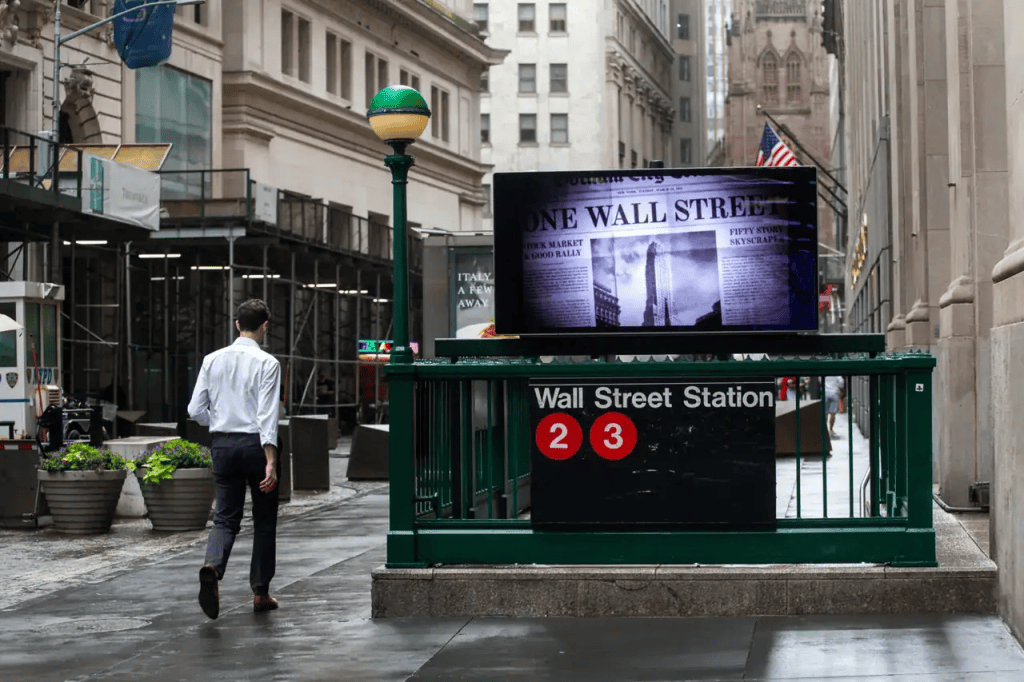
OOH stands for out of home. It is the industry's own shorthand, and like most industry shorthand it is used mainly by people selling it to each other. You will see OOH ads, OOH adverts, OOH advertising and OOH out of home advertising used interchangeably, all meaning the same thing: advertising that reaches people while they are out in the world.
The abbreviation hides more than it reveals, because the category contains formats with almost nothing in common. A bulletin over a freeway, a screen in a lift lobby, a poster on construction hoarding and a decal under somebody's feet are all OOH. They are bought differently, produced differently, installed differently, measured differently and work on completely different audiences.
This page is about the buying mechanics. What the vocabulary actually means, the three ways inventory gets bought, what is and is not in the catalogues, how production and installation really work, and where the whole system has gaps that street-level formats fill.
I run the street side. That means I am outside the catalogue looking in, which turns out to be a useful vantage point for explaining it.
The vocabulary, translated
**OOH.** Out of home. Everything in the category.
**DOOH.** Digital out of home. Any OOH surface that is a screen rather than printed material. The ooh dooh pairing you see written together is simply the distinction between static and digital inventory.
**Classic or static.** Printed formats. Paper, vinyl, painted. Physically changed over by a crew.
**Bulletin.** A large roadside structure, typically on highways and major arterials. The format most people picture when they say billboard.
**Poster and junior poster.** Smaller standardised roadside formats, usually on arterial roads rather than highways.
**Wallscape.** Large-format media applied to the side of a building.
**Transit.** Anything attached to or inside the transit system. Platforms, shelters, vehicle exteriors and interiors, terminals.
**Street furniture.** Shelters, kiosks, benches, information panels. Pedestrian-scale, usually in dense areas.
**Place-based.** Screens inside venues. Gyms, lobbies, medical offices, retail, bars.
**Circulation and traffic count.** The raw number of vehicles or people passing a location. A starting point, not an audience figure, because passing is not the same as seeing.
**Reach and frequency.** Reach is how many distinct people encounter the campaign, frequency is how many times each does. Street-level formats trade reach for frequency: fewer people, seeing it far more often within their own neighbourhood.
**Share of voice or loop share.** On digital screens, the proportion of the rotation your creative occupies. If eight advertisers are in the loop, you are on screen for a slice of each cycle.
**Day-parting.** Scheduling digital creative by time of day.
**Proof of posting.** Dated photographic evidence your creative was installed on the specified structure. Non-negotiable, and you should insist on it.
**Posting period.** The standard duration unit on static inventory, typically four weeks, driven by how installation crews schedule changeovers.
**Impressions.** The industry's audience estimate. Worth understanding that for most formats this is a modelled figure derived from traffic and movement data, not a count of eyeballs.
The three ways OOH gets bought
**Direct from a media owner.** The owner holds the structures, screens and contracts. You call, they quote their own inventory, their crews install it. Fast and simple when you already know exactly which structure you want. The limitation is obvious: every recommendation they give you points at something they own, and if the better location belongs to someone else you will not hear about it.
**Through an agency or media buyer.** They own nothing and buy across owners. Value is planning, comparison and negotiation, plus handling the specs and the schedule. Worth it when you need somebody to tell you which of three competing locations is actually better, or when your campaign spans multiple markets and owners.
**Through a programmatic platform.** Increasingly common for digital inventory. You plan and book through an interface that aggregates screens across owners, often with audience data layered on, sometimes with real-time bidding. Genuinely good for digital, for flexibility and for speed. Its limit is structural: the platform can only sell what is in the catalogue, and the catalogue is standardised inventory.
That last point is the one worth sitting with. Programmatic OOH is often described as though it unlocked the whole physical world. It unlocked the screens. Everything that is not a catalogued screen or structure, which is most of the physical environment, is still bought the way it always was, by talking to whoever controls the surface.
What is not in the catalogue
Here is the gap, stated plainly.
Fixed inventory exists where zoning, land ownership and historical permitting allowed it. In most cities new structures are heavily restricted or cannot be built at all, which is why existing inventory holds value. So the map of available OOH is not a map of where your audience is. It is a map of where somebody was permitted to build something, often decades ago.
That produces four recurring gaps.
**Pedestrian cores.** Dense walking neighbourhoods frequently have very little roadside inventory, because the roadside inventory model is built around vehicle traffic. People walking a retail street, a nightlife corridor or a campus edge may never pass a structure.
**Precise geography.** If your objective is the six blocks around one venue, one campus or one store, the structures may simply not be there. You end up buying the nearest available location and hoping.
**Specific moments.** Fixed inventory is permanent and your moment is not. A structure cannot be outside an arena for two hours before doors and then somewhere else.
**Speed.** Premium static locations book well ahead, creative must be produced to exact spec, material must ship, and installation happens in scheduled rounds. Six to eight weeks from decision to live is a normal planning assumption. If your date is three weeks out, much of the catalogue is simply unavailable.
Street-level formats exist in those gaps. Posters and snipes put media into walking corridors at the density you choose. Sidewalk decals operate in the last few metres before an action. Projection puts scale on a wall for an evening. Vehicle-mounted screens go to the moment rather than waiting for it.
How production and installation actually work
The physical side governs your schedule more than the media side does, and most buyers never see it.
**Static structures.** Your artwork is produced to the exact face dimensions with bleed, usually vinyl for bulletins or paper sheets for poster formats. It ships to the owner's depot before the posting window. Crews work routes of structures within a defined period, which is why your start date is a window rather than a moment. High wind stops bulletin work entirely, because a crew on a catwalk is handling something that behaves like a sail. Vinyl is stretched and tensioned onto the face; a badly tensioned vinyl ripples and the ripples are visible from the road.
Two production traps. Colour: large-format print does not reproduce a screen colour exactly, and at building scale a slightly wrong brand colour is obvious. Ask for a printed draw-down on the real substrate if colour is critical. Surround: your creative sits inside a frame, against sky, next to whatever else is on that road. Art that tested beautifully on a white slide can vanish against a bright sky. Look at approach photographs of the actual structure before finalising.
**Digital.** Files go to a content management system and are approved against the screen's spec. Rejections are common, usually for brightness, motion, legibility or content standards. Scheduling is the complexity rather than installation.
**Street level.** Overnight, roughly eleven at night to five in the morning, because the sidewalk is empty, parking exists and delivery vehicles are not blocking the surfaces. Two-person teams, one applying and one spotting, carrying and documenting. Paste coat on the surface, poster laid top down with air swept out, then a coat over the face. The over-coat is what makes it hold; skip it and corners lift within days. Clean plywood hoarding is the best surface available. Brick is worse than expected because mortar lines create voids. Every placement photographed before the crew moves.
The hard constraint on night work is that the window does not extend. When the street wakes up, the night is over. Remaining placements roll to the next night rather than getting rushed, which is why a large surface count across a wide geography takes multiple nights.
Weather, which is a production input in this channel
Rain during paste application ends a night. Hours later it is fine, because a cured poster sheds water.
Freezing temperatures stop water-based paste curing at all. Winter campaigns in Chicago, Minneapolis, Boston or Denver need adjusted products, the warmer part of the night, and honest expectations about hold time.
Strong sun fades print unevenly over weeks, which matters in Phoenix, Las Vegas and southern markets in summer if a brand colour carries the creative.
High wind stops large-format structure work and lifts poster edges.
Humidity slows curing in Gulf and southeast markets, reducing placements per night.
Projection needs darkness, which changes by season. A wall usable at six in the evening in winter may be unusable until nine in June.
Decals need clean, dry, warm-enough concrete, which often means pressure washing a patch and waiting.
The practical consequence of all this is that an OOH schedule needs slack in it. A plan with zero contingency nights will slip the first time a forecast turns, and it will turn. Experienced operators build spare windows into the schedule rather than promising a fixed night and then quietly moving it.
Permission and the grey area
Fixed inventory arrives with its permissions handled. The structure is permitted, the owner manages compliance, and that is part of what you are buying. It is a genuine advantage and worth naming.
Street-level OOH is a grey area. Rules vary by municipality and sometimes by district inside one city. Enforcement is inconsistent in both directions. Whether a specific placement is a problem depends on who owns the surface, what the local ordinance says, and whether permission was obtained. I am not going to call anything legal or illegal, because that depends on local facts and is not advice I can responsibly give.
What we do about it is operational. We work private surfaces with owner permission wherever the campaign allows, which means property managers, construction firms, independent retail and venue operators. Permission takes longer to arrange than posting, which is exactly why lead time matters. We exclude residential frontage, places of worship, memorials, historic facades and anything damaged by removal. We commit to a removal pass at the end of a run and we do it. We document every placement with geotagged, timestamped photographs.
Vehicle formats sit in a more conventional picture. A truck is a vehicle, operating under the same rules as other vehicles, with commercial display and standing time varying by city.
Buyers with strict risk tolerance can run a permission-held and vehicle-based plan with no ambiguity. Smaller surface count, longer lead, complete clarity.
Measurement, honestly
The industry quotes impressions. Understand what that number is before you lean on it.
For most formats it is modelled: traffic or movement data, adjusted for visibility factors, producing an estimate of likely exposure. It is a reasonable basis for comparing one location against another. It is not a count.
What is genuinely reliable:
Documented placement. Proof of posting on structures, play logs on digital screens, geotagged photo logs on street-level work, plus a mid-run survivability pass reporting real attrition rather than assuming full survival.
Geographic comparison. Run the campaign in one geography, deliberately not in a comparable one, and watch the difference. This is the most honest performance read available for physical media, and it is the discipline buyers skip most often. Without a control you are comparing a campaign period against a previous period, which confounds your media with the season, the news and everything else happening that month.
Brand search volume in treated markets against both baseline and an untreated market. A poster cannot be clicked, but it can be remembered and typed later.
Campaign-specific URLs and codes. They undercount, but they undercount consistently, which still lets you compare runs.
What to be wary of: a single confident impressions figure with no methodology attached.
What we talk clients out of
**One structure in a large market.** It will be seen by the people who drive past it and nobody else. The same effort usually buys far wider coverage at street level.
**Copy written for a page.** A driver at speed reads a handful of words. A pedestrian across a street reads slightly more. The most common revision we request is less text and bigger type.
**One asset across all formats.** A bulletin, a poster, a decal and a vehicle screen need different crops, type weights and copy lengths. Resizing one asset loses the small formats entirely.
**Digital without checking the loop.** Ask how many advertisers are in rotation and what the slot length is, then decide whether that share matches what you imagined.
**Long static buys behind short offers.** A four-week minimum does not serve a ten-day promotion.
**Buying location from a map.** Trees, angles, stacked structures and obstructions are invisible on a map and obvious in an approach photograph. Ask for the photographs.
**Launching into a dead week.** Holiday weekends, term breaks and resort off-seasons produce campaigns that ran perfectly in front of nobody.
**Treating the whole metro as the geography.** A plan written against a city name spreads thin across places your audience never goes. Name the corridors, the neighbourhoods, the venues and the routes. If you cannot name them, finding out where your audience physically spends time is the first job, before any inventory conversation happens.
**Skipping the removal conversation.** On street-level work, what happens at the end of the run is part of the campaign. Media left to weather on a wall after the dates have passed is a lasting impression, and not the one you paid for.
Building a plan that uses both sides
The strongest OOH plans use a broad layer and a dense layer.
The broad layer is catalogue inventory: structures and screens on the routes into and around your geography, establishing the name at scale over weeks, with guaranteed documented placement.
The dense layer is street level: [Wheatpasting & Poster Campaigns](/services/wheatpasting-poster-campaigns) saturating the walking corridors where no structures exist, [Sidewalk Decals & Stencils](/services/sidewalk-decals-stencils) in the last few metres before an action, and [LED Trucks & Mobile Billboards](/services/led-trucks-mobile-billboards) covering the moments and routes the structures cannot serve.
Someone who sees a board on a commute and then the same creative on hoarding outside their station has had a very different week than someone who saw either alone. The creative must be produced for each viewing condition rather than stretched across them.
Frequently asked questions
What is the difference between OOH and DOOH?
OOH is the whole category of advertising reaching people outside the home. DOOH is the digital subset, meaning screens rather than printed material. Digital adds day-parting, fast creative changes and programmatic buying, but you share a rotation with other advertisers. Static formats give you the whole surface for the posting period, usually four weeks.
How is OOH actually bought?
Three routes. Direct from a media owner, who sells only their own structures. Through an agency that buys across owners and can compare locations neutrally. Or through a programmatic platform, mostly for digital screens, which offers speed and audience data. Anything outside the standardised catalogue, including most street-level surfaces, is arranged directly with whoever controls the surface.
How long does an OOH campaign take to get live?
Static formats typically need six to eight weeks, covering availability, creative to exact spec, production, shipping and the next installation round. Digital screens are considerably faster because no physical material is produced. Street-level poster campaigns and vehicle routes can often run within a couple of weeks in markets where the corridors are already known.
Are OOH impressions real counts?
No. For most formats impressions are modelled estimates built from traffic or movement data adjusted for visibility factors. They are a reasonable basis for comparing locations and a poor basis for precise claims. Pair them with documented placement, a geographic control market and campaign-specific mechanisms if you want a defensible read on performance.
Why are street-level formats not on programmatic platforms?
Because platforms sell catalogued inventory, and most physical surfaces are not catalogued. Construction hoarding, private walls, sidewalks and building faces are controlled by owners rather than media companies. Access is arranged by talking to those owners, which is slower than clicking a buy button and reaches places the catalogue does not contain.
Is street-level posting permitted the way billboards are?
No, and the difference matters. Fixed structures are permitted and the owner handles compliance. Street-level posting is a grey area varying by municipality and district, depending on surface ownership, local ordinance and permission, with inconsistent enforcement. We reduce exposure through permissioned private surfaces, sensible exclusions, full documentation and a removal commitment.
Request a campaign quote
Tell us the corridors, the dates and whether your audience is driving or walking, and we will tell you which part of the catalogue is worth buying, where it leaves gaps, and what the street-level layer should look like.
Request a campaign quote.

Ready to Run Your Campaign?
Call us or email us. We’ll tell you exactly what we can do in your market and what it costs.
American Guerrilla Marketing — Los Angeles
Street-level campaigns in Los Angeles and nationwide. Wheatpasting, LED trucks, street teams, and more.
(646) 776-2770
Related Articles
-
Digital Out of Home Companies: How It Works
November 12, 2026
-
Programmatic OOH Advertising: How It Actually Works
November 5, 2026
-
OOH Companies: How It Actually Works
November 5, 2026