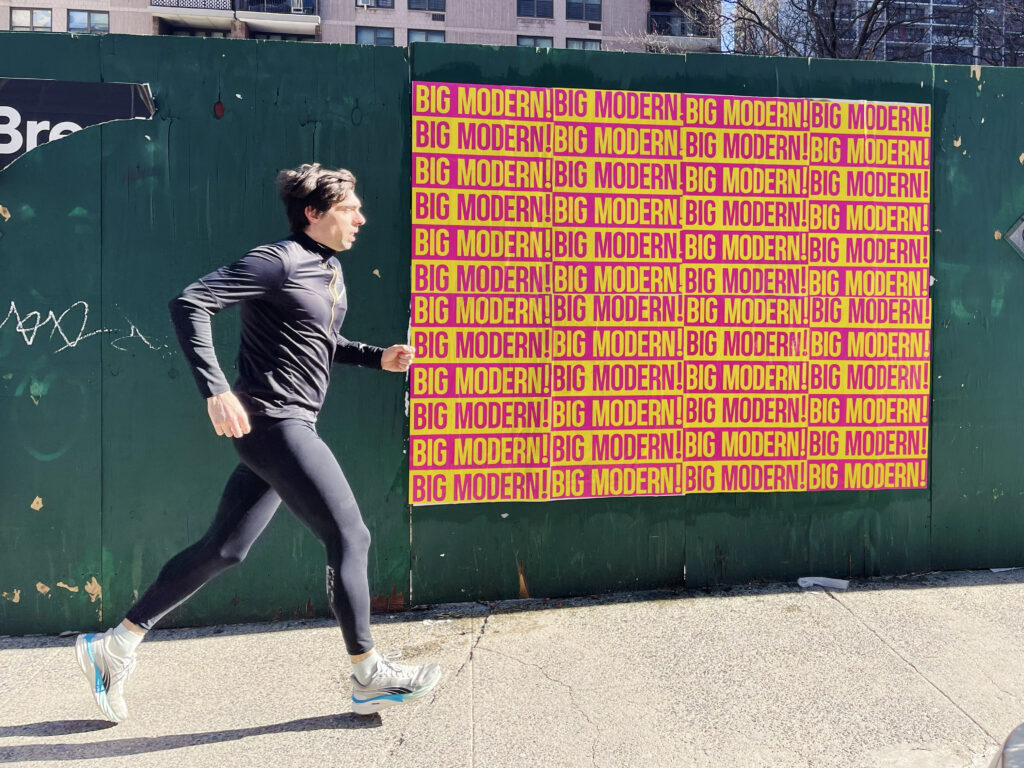
Most agencies in this industry won’t tell you how they price. They’ll send you a number, sometimes broken into vague line items, and the assumption is that you’ll either accept it or go somewhere cheaper without really knowing what you’d be giving up. That opacity benefits agencies that want to hide their margins and penalizes clients who don’t know which corners are being cut.
This article is a transparency guide. Not just a pricing table, our pricing page handles that, but an explanation of the methodology behind the numbers. What the real cost components are. Which ones most agencies undercount in their quotes. Where the actual value is, and where some agencies quietly eliminate it to win on price. And the CPM math that puts street advertising costs in context against the formats it competes with.
This pricing guide works best alongside what wheatpasting is and our street poster campaign planning guide.
If you read this and then talk to three agencies about a campaign, you’ll ask better questions. You’ll know what “full-service” should actually include. You’ll recognize a low-ball quote for what it is. And you’ll be able to evaluate whether the price you’re being offered reflects what you’re actually going to get.
American Guerrilla Marketing Wheatpaste Pricing
Here is what American Guerrilla Marketing actually charges for wheatpaste poster campaigns, by format and quantity:
| Poster Format |
100 Posters |
200 Posters |
| 24″ × 36″ |
$4,500 |
$5,500 |
| 48″ × 72″ |
$10,500 |
$13,500 |
These prices cover installation labor, paste materials, professional location selection, and geo-tagged photo documentation of every placement. Print production can be client-supplied or added to the campaign budget. All pricing is for single-city campaigns in primary markets; multi-city campaigns are priced per market.
Why This Industry Hates Talking About Price
Street advertising sits in an unusual position commercially. It’s a niche service with a fragmented provider space, some operators are crews of two people, some are agencies with national footprints, and there’s everything in between. The variability in quality, scale, and market knowledge is enormous. And because the service is fundamentally experiential, you’re paying for something that happens on city streets over the course of a night, it’s hard for clients to evaluate quality until after it’s been delivered.
For market examples, compare wheatpaste advertising in Miami with our New York City wheatpasting page.
That information asymmetry creates obvious pricing misbehavior. Agencies that know clients can’t easily compare quality compete on headline price, strip out the expensive-to-deliver components like documentation and location quality, and deliver campaigns that technically fulfilled the brief but produced none of the actual business impact the client was hoping for.
The alternative, which is what we’re doing here, is to explain the components of cost in enough detail that you can hold any agency accountable for what their quote actually includes. This isn’t altruistic. We charge what we charge because the components we include cost what they cost. Explaining the methodology makes our pricing make sense instead of just being a number.
The Real Cost Components of a Wheatpaste Campaign
A properly executed wheatpaste advertising campaign has five meaningful cost components. Understanding each one helps you decode any quote you receive.
1. Installation Labor
This is the largest and most variable cost in any street advertising campaign. It covers the trained crew members who execute the installation, their hourly rate, the time to cover all locations, and the efficiency that comes from experience. A crew that knows a market can hit 20 locations in a single night. A crew operating in unfamiliar territory might manage 8 or 10, which means higher effective cost per location or lower quality per location to compensate.
2. Paste Materials and Consumables
Professional-grade paste formulations, brushes, rollers, application buckets, and protective gear for the installation crew. This is a real but relatively stable cost, it doesn’t swing wildly between campaigns unless scale changes dramatically. What does vary: the quality of the paste formula. Cheap wheat-flour-and-water mix versus a professional formula optimized for weather resistance and durability is a real difference that shows up in how long your campaign stays up.
3. Site Scouting and Location Research
This is where inexperienced or budget operators consistently underperform. Identifying the right walls, not just any available wall, requires genuine market knowledge. Which surfaces have the highest foot traffic? Which neighborhoods match the demographic profile of the campaign’s target audience? Which specific walls have a history of social media documentation that amplifies reach? Which surfaces have the structural characteristics, appropriate porosity, protection from direct rain exposure, visibility from multiple approach angles, that maximize poster longevity and impression quality?
Good location scouting is hours of work done before the installation crew ever loads a van. It can be the difference between 20 locations that deliver 400,000 impressions and 20 locations that deliver 80,000. Nobody who is competing on price is spending time on it.
4. Photo Documentation Crew Time
Professional campaign documentation is a separate skill from installation. Capturing each placement in conditions that make the photography useful, right light, right angle, enough context to communicate the neighborhood and the installation quality, takes time and attention that the installation crew typically isn’t optimized for. The resulting imagery is a campaign asset that most clients use across social media, press materials, internal reporting, and client presentations. Treating it as an afterthought produces documentation that is functionally unusable for those purposes.
5. Print Production and Coordination
Poster printing at outdoor campaign standards, correct paper weight, print resolution optimized for street viewing distances, color accuracy across the full run, is the fifth component. This can be client-supplied or agency-managed. When an agency manages it, they’re coordinating with print vendors, managing quality control across the run, and ensuring the materials arrive at the right place at the right time for the installation. That coordination has real cost even when clients supply print-ready files.
The Biggest Variable: Installation Labor
Labor deserves its own section because it’s where the largest cost differences between agencies actually live, and because it’s where quality differences are hardest to see in a quote.
The labor cost for a night of installation in New York City is meaningfully higher than in Nashville or Denver. This isn’t arbitrary. It reflects the actual cost of employing experienced installers in a high cost-of-living market, the complexity of moving through a dense city at night with materials and equipment, and the difficulty of accessing prime locations in a market with genuine competition for them.
An agency quoting $80 per location for a NYC campaign is not covering its actual labor cost for quality installation. Something is being cut. Either the locations are not prime, the documentation is minimal or absent, the crew is undertrained and rushing to cover the volume, or the poster density per location is so low that each “location” amounts to two or three posters pasted in a spot nobody walks past. All of these degrade the value of the campaign in ways that are hard to detect until you’ve seen the documentation, or noticed that the campaign didn’t move the needle.
For reference, American Guerrilla Marketing’s all-in cost per location in a Tier 1 market like New York ranges from approximately $137 (at 40-location volume with 200 posters, 24\” × 36\”) to $225 (at 20-location volume with 100 posters, 24\” × 36\”), with volume discounts reflecting genuine efficiency gains at scale. Those numbers include labor at real market rates, quality location selection, and professional documentation. They don’t include a margin built on cutting corners that clients won’t notice.
Site Selection and Long-Term Location Relationships
This is the part of wheatpaste advertising cost that most agencies never explain, because explaining it requires acknowledging that it takes years to build and can’t be replicated by a competitor showing up in a market for the first time.
The best walls in any market, the ones with consistent heavy foot traffic, the right surface characteristics for lasting installations, and the cultural cachet that drives social sharing, are not a secret. Experienced operators know them. They’ve worked them. They understand how different walls in the same neighborhood perform differently depending on which direction the foot traffic flows, what time of day sees peak pedestrian volume, and which surfaces hold paste for three weeks versus three days.
That knowledge is accumulated over years of working specific markets. An agency that has been operating in Williamsburg since 2010 knows things about the wall on Bedford Ave at N 6th Street that a competitor making their first campaign there simply doesn’t. Which half of the wall gets more direct sun exposure and degrades faster. How the morning coffee foot traffic pattern differs from the evening foot traffic pattern. Which overlapping cultural events drive up social documentation rates for well-placed work in that corridor.
These aren’t trivial details. They’re the difference between a campaign that delivers 500 impressions per day per location and one that delivers 200. That gap, across 20 locations over 14 days, is the difference between 140,000 campaign impressions and 56,000, from identical budgets. Location expertise is one of the most valuable things an experienced agency delivers, and it is almost never explicitly priced in a quote. It’s embedded in the quality of the output.
Documentation: The Hidden Value Line Item
Let’s talk about what documentation is actually worth.
At the absolute minimum, campaign documentation proves that what you paid for was delivered. Location shots confirm the poster was installed, at the right location, in acceptable condition. This is the accountability function, and it matters, but it’s the floor, not the ceiling.
Professional campaign documentation does something else. It produces visual assets, high-quality photography of posters on city walls, in context, in neighborhoods, that brands use across social media content calendars, press kits, investor materials, client presentations, and campaign case studies. The photography from a well-executed wheatpaste campaign in Bushwick or on Traction Ave in the DTLA Arts District has genuine production value. It looks like what it is: brand presence in a real city, in a real neighborhood, documented professionally.
Brands regularly use this documentation to extend the effective reach of a street campaign far beyond the physical placements. A single strong photo of a poster on the corner of Orchard Street and Rivington on the Lower East Side, posted to a brand’s Instagram, can generate thousands of engagements from people who will never walk that corner. The documentation becomes a second campaign layer running on top of the physical one.
Agencies that treat documentation as an afterthought, one phone photo per location, shot in bad light with no compositional intention, are eliminating this entire value layer. The accounting for it in the quote is invisible, which is why cheap quotes can hit low per-location numbers while delivering dramatically less total value.
What Cheap Quotes Are Actually Telling You
There are a few specific patterns that appear in low-ball wheatpaste advertising quotes that, once you know to look for them, are immediately recognizable.
Unrealistically low per-location pricing in major markets. In New York City, a professionally executed wheatpaste placement, meaning a real wall, real documentation, real paste quality, has real labor and materials costs that don’t compress below certain thresholds without something being compromised. When a quote comes in at $60 or $80 per location in NYC, ask specifically: how many posters are included per location, where are the locations, and what does the documentation look like? The answers usually reveal the compromise.
High location count at low total budget. A quote offering 50 locations in NYC for $2,500 is telling you something. At $50 per location, the arithmetic of labor and materials doesn’t support professional execution. The location count is almost certainly being met by hitting walls that nobody walks past, or by pasting three small posters on a boarded-up storefront and calling it a location.
No documentation examples available. Legitimate agencies have a portfolio of campaign documentation. If an agency can’t show you what their installation photos actually look like, you don’t know what you’re getting. Ask before you commit. The quality of the documentation tells you a great deal about the quality of the execution.
No specificity about location selection. Vague language about “prime neighborhoods” or “high-traffic walls” without any specificity is a flag. Experienced operators can tell you, at least approximately, which corridors and which types of surfaces they target in a given market. If they can’t, they’re probably not the ones who know those markets well.
The question isn’t “what’s the cheapest price for wheatpaste advertising?” The question is “what’s the minimum I need to spend to get a campaign that actually works?” Those are different questions with very different answers.
How Market Affects Cost, and Why
The market-based cost differential in wheatpaste advertising is real and reflects real underlying differences, not arbitrary pricing tiers. Here’s what actually drives higher costs in top-tier markets.
In New York City, labor costs are genuinely higher than anywhere else in the country. A trained, experienced street advertising installer commands higher wages in Brooklyn than in Austin, because the cost of living in Brooklyn is higher and because the supply of truly experienced operators, people who know the market’s surfaces, understand its pedestrian patterns, and can work through its operational complexity, is finite. You can hire cheaper labor. The question is whether cheaper labor delivers the same quality of work in the same locations.
Beyond labor, the demand for prime wall space in New York is real competition. The walls on Bedford Avenue in Williamsburg, on Houston Street and the Bowery, on 125th Street in Harlem between Adam Clayton Powell Jr. Blvd and Malcolm X Blvd, these surfaces see multiple campaigns competing for placement simultaneously. Accessing them at high quality, in the right timing window, requires both market relationships and operational skill that costs money to develop and maintain.
In Los Angeles, the same dynamics play out differently. LA’s geographic sprawl means that the cost of moving between key locations, Silver Lake on Sunset Blvd at Silver Lake Blvd, the DTLA Arts District on Traction Ave, the Melrose Ave corridor between La Brea and Fairfax, is a real logistical variable. A crew covering five neighborhoods in one night in LA is covering distances that would require multiple hours of transit time that don’t exist in a dense Manhattan campaign. That time has cost.
Mid-tier markets like Nashville or Denver are cheaper because labor costs are lower, prime locations are less contested, and logistical complexity is reduced. But they’re not cheaper because the service is less valuable, placement in the right Nashville neighborhood reaches a genuine local audience at lower cost per impression than most other advertising formats available in that market.
The CPM Reality Check: Running the Numbers
Cost-per-thousand impressions, CPM, is the standard comparison metric across advertising formats. Let’s run the actual math for a wheatpaste campaign and see where it lands against the formats it competes with.
Take a standard 24\” × 36\” campaign with 100 posters (approximately 20 locations at 5 posters each) at American Guerrilla Marketing’s pricing: $4,500.
In a well-selected mix of NYC neighborhoods, placements on Bedford Ave in Williamsburg, on Troutman Street in Bushwick, in the Lower East Side corridor around Orchard and Rivington, and in Harlem along 125th Street, a reasonable conservative estimate is 400 to 600 daily pedestrian impressions per location. This isn’t a guess. It’s based on actual foot traffic data for those types of high-density urban corridors.
Using the midpoint of 500 impressions per location per day, over a 14-day campaign lifespan:
20-Location NYC Campaign, CPM Calculation
| Variable |
Value |
| Locations |
20 |
| Average daily impressions per location |
500 |
| Campaign duration |
14 days |
| Total impressions |
20 × 500 × 14 = 140,000 |
| Campaign cost (100 posters, 24″ × 36″) |
$4,500 |
| CPM |
$4,500 ÷ 140 = $32.14 |
A CPM of approximately $32 for physical, street-level advertising in high-density New York pedestrian corridors. Now compare that to what you’d pay for equivalent reach through other formats:
| Format |
Typical NYC CPM |
Physical Presence |
Street-Level |
Social Sharing Potential |
| NYC Subway advertising |
$35–$45 |
Yes |
No |
Very low |
| Times Square digital OOH |
$75–$150 |
Yes |
No |
Low (tourist photos, not brand-driven) |
| Social media retargeting |
$15–$25 |
No |
No |
Zero |
| Display advertising |
$2–$10 |
No |
No |
Zero |
| Wheatpaste – 24″ × 36″, 100 posters |
~$32.14 |
Yes |
Yes |
High |
The CPM comparison puts wheatpasting between subway advertising and social retargeting. But the CPM number dramatically understates the wheatpaste value for one reason: the social sharing multiplier. A poster on Bedford Ave at N 6th Street in Williamsburg that gets photographed and posted by five local Instagram accounts with 10,000 followers each delivers 50,000 additional impressions that don’t appear in the base CPM calculation. That multiplication has no equivalent in subway advertising or digital retargeting.
Social media doesn’t generate organic earned media from subway car walls. It does generate it from interesting wheatpaste installations in neighborhoods that people care about and document. That additional reach, which is real but not precisely measurable, consistently makes the actual effective CPM of a well-executed wheatpaste campaign lower than the base calculation suggests.
And social retargeting? You can’t stand next to a retargeted banner ad. You can’t photograph it on a Saturday morning with your coffee and post it. You can’t build cultural presence with it. At $15–$25 CPM, digital retargeting is cheaper per tracked impression, but the impressions are not equivalent. A person who walks past your poster on Troutman Street in the Bushwick Collective neighborhood had a physical encounter with your brand in a context that carries cultural meaning. That is a categorically different kind of impression from a banner ad that loaded in a sidebar while someone was checking their email.
How Wheatpasting Stacks Up Against Other Formats
The CPM comparison is useful, but it’s not the whole picture. Here’s a broader assessment of where wheatpaste advertising sits against its competitive alternatives:
Against digital advertising: Digital is cheaper on paper and vastly more measurable. But it delivers no physical presence, no social sharing triggers, and increasingly encounters sophisticated audience resistance from people who have been trained to ignore digital ads. For brands targeting urban audiences under 40, the trust differential in favor of physical advertising is real and measurable. Wheatpasting and digital work best together, not instead of each other.
Against traditional OOH (billboards, transit): Traditional OOH is significantly more expensive per location and per impression in major markets, delivers no street-level presence, and carries essentially zero cultural credibility in the neighborhoods that matter most for brand-building with younger urban demographics. A single standard billboard placement in Manhattan costs more than an entire 20-location wheatpaste campaign. For the audience profile most street advertising clients are trying to reach, the wheatpaste campaign wins on every dimension except raw scale.
Against influencer marketing: Influencer campaigns can reach large audiences at costs that are superficially comparable to street advertising. But the content is ephemeral, gone from feeds in hours, and the authenticity of paid influencer endorsements is subject to increasing consumer skepticism. Wheatpaste campaigns are persistent, visible over weeks, and documentary in nature. The two formats amplify each other when used together: the physical campaign gives influencers real-world content to document, and the influencer documentation extends the physical campaign’s effective reach.
How to Read a Quote Like You Know What You’re Looking At
Armed with the above, here’s a practical checklist for evaluating any wheatpaste advertising quote:
Ask for itemization by component. The quote should break out installation labor, materials, location scouting, and documentation as separate line items or at least identifiable components. If everything is bundled into a single per-location number, ask them to explain what that number covers.
Ask about location selection methodology. How do they select which walls to use? Can they tell you specifically which neighborhoods and what criteria they use? An experienced agency with genuine market knowledge should be able to give you a coherent answer about why specific locations are valuable.
Ask for documentation samples. Before committing to a campaign, ask to see photo documentation from a recent comparable campaign in the same market. The quality of the photography tells you about the quality of the execution and the agency’s commitment to delivering an asset, not just proof of placement.
Ask about poster density per location. Five posters at a location is meaningfully different from thirty. A quote that says “20 locations” without specifying poster density is leaving a large quality variable undefined.
Do the CPM math yourself. Take the total quote price, estimate daily impressions per location using your knowledge of the target neighborhoods, multiply by campaign days and location count, and calculate your CPM. Compare that to what you’d pay for equivalent impressions through other channels. If the number looks bad relative to alternatives, which it shouldn’t, if the locations are real, find out why.
The goal isn’t to find the cheapest wheatpaste advertising. The goal is to find the option that delivers the most actual impact per dollar. Those are different things. A campaign at $4,500 (100 posters, 24\” × 36\”) that delivers 140,000 quality impressions with strong documentation and social amplification is a better investment than a campaign at $2,000 from an unvetted operator that delivers 30,000 low-quality impressions on walls nobody walks past. The math works out differently than the headline prices suggest.
Frequently Asked Questions
What’s actually included in a wheatpaste advertising quote, and what isn’t?
A complete wheatpaste advertising quote should include installation labor, paste materials, location scouting and selection, and photographic documentation of every placement. What’s often missing from cheap quotes: professional-grade photo documentation, experienced location selection backed by real market knowledge, and a meaningful number of posters per location. Some agencies quote low by planning five posters per location on obscure walls with no documentation. Ask explicitly: how many posters per location, who selects the locations and on what basis, and what documentation is delivered.
Why does the same campaign cost more in NYC than in a smaller market?
Three real things make NYC more expensive: labor costs are genuinely higher, the competition for prime wall space makes location access harder and more skill-intensive, and the operational complexity of working in a dense urban environment, logistics, parking, scheduling, crew coordination, all costs more than in a smaller city. You’re also paying for access to walls with proven high foot traffic and social sharing rates. A placement on Bedford Ave in Williamsburg reaches a different audience than a random wall in a city with no wheatpasting tradition.
Is there a cheaper way to run a wheatpaste campaign that still delivers results?
Yes, concentrate geographically. A 10-location campaign tightly clustered in a single high-value neighborhood delivers better results than 20 locations scattered across an entire city. The saturation effect of repeated exposure matters more than raw location count. You can also reduce cost by providing print-ready files (eliminating design fees) and by timing your campaign to avoid rush charges. What you shouldn’t cut: location quality and documentation. Those are the components that determine whether a campaign delivers real impact or just paper on walls.
How do I know if the price I’m being quoted is fair?
Ask for itemization. A legitimate agency can tell you what portion of the quote covers installation labor, materials, location scouting, and documentation. Compare location count and ask about poster density, how many posters per location, and what size. Ask to see photo documentation from a previous campaign. If an agency won’t share examples of documented work, that’s a meaningful signal about the quality of their execution. Prices below $150 per location in a major market should prompt scrutiny about what’s actually included.
Does increasing the number of locations always improve ROI?
Not automatically. The first question isn’t how many locations, it’s where. Adding locations in neighborhoods where your target audience doesn’t spend time, or where the wall quality is poor, adds cost without adding meaningful reach. The best ROI usually comes from concentrating budget on fewer, higher-quality locations in the right neighborhoods rather than maximizing raw location count. After you’ve identified the right geography, then scaling location count within that area consistently improves ROI because of the compounding recognition effect of repeated exposure.
Ready to Build Your Wheatpaste Campaign?
Use the RFP Builder at American Guerrilla Marketing to get accurate pricing for your market, location count, and campaign timeline, with full transparency on what every component costs and why.
Build Your Campaign RFP →