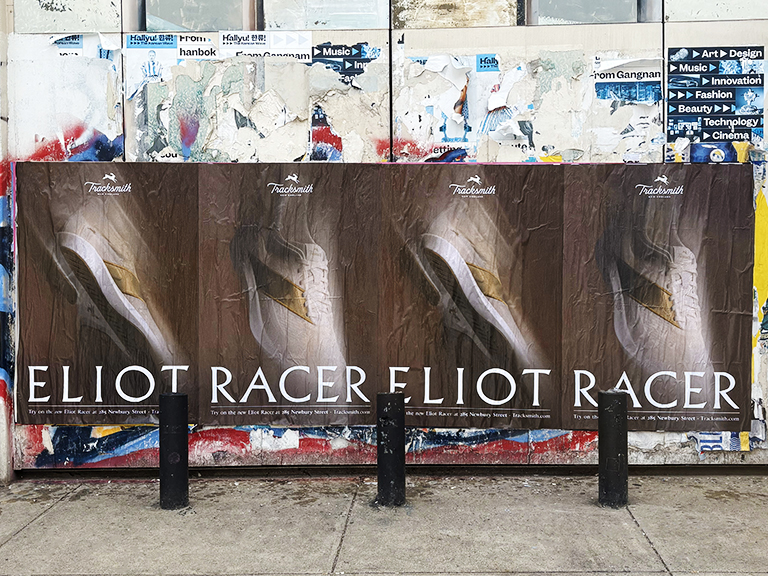
June 8, 2026 Street Advertising, Wheatpasting & Poster Campaigns

How Much Does Flyposting Cost? 2026 Street Advertising Pricing Guide

Wheatpaste Advertising in Las Vegas — American Guerrilla Marketing

The question “how much does flyposting cost?” is the wrong starting point. Or rather, it’s the right second question. The first question is: is flyposting the right format for what this campaign needs to accomplish? And the second is: what does value look like for this specific brief, so you know whether the cost is justified?

Most flyposting cost guides answer the price question without touching the value question. You get a table showing dollars per poster in different cities, and you’re left to figure out the rest yourself. This article works differently. It starts from the outcome, what is this campaign trying to DO, and works backward to whether flyposting can deliver that outcome, at what cost, and how to calculate whether the math justifies the spend.

This is not a substitute for a detailed quote. For the actual numbers on what American Guerrilla Marketing charges by location count and market, the pricing page has that. What this article offers is the framework for deciding whether to make the call at all, and for evaluating the answer you get when you do.

Reframing the Cost Question

When a brand asks what flyposting costs, they’re usually asking a proxy question: is it worth it? And “worth it” is a function of what the campaign is trying to accomplish and what the alternatives cost to accomplish the same thing. The raw cost of pasting posters on walls is almost never the interesting variable.

Consider two campaigns with identical budgets, say, $3,500. Campaign A is a record label promoting a Brooklyn venue show: 15 flyposting locations concentrated in Williamsburg and Bushwick, targeting exactly the demographic that attends that venue, in the neighborhoods where that demographic lives and walks and hangs out on weekends. Campaign B is a B2B software company trying to generate enterprise sales leads using the same 15 locations in the same neighborhoods. Same format, same cost, wildly different results. Not because flyposting doesn’t work, but because the question of whether flyposting works is inseparable from whether it’s the right format for the specific job.

So before the price question: let’s establish when flyposting is the right call, and when it isn’t.

When Flyposting Works, and When It Doesn’t

Flyposting is particularly effective for campaigns that share a set of characteristics. Not all of them need to be present, but the more boxes you can check, the better the value equation looks.

Time sensitivity. Flyposting is a format that builds urgency through physical presence. A poster announcing an event, a product drop, or a launch date, with the date printed large enough to read from across the street, creates the kind of forward-pointing pressure that motivates action. The time-limited nature of the offer and the time-limited nature of the poster installation reinforce each other. Album release campaigns, concert tours, pop-up retail openings, and streaming launch campaigns all use flyposting well for exactly this reason.

Strong visual identity. The format demands visual confidence. A single image, read at walking pace from five to fifteen feet away, in variable lighting conditions, competing with everything else on the wall and the street, this is an unforgiving environment. Brands with a clear, distinctive visual identity, a specific color palette, a recognizable typographic voice, imagery that reads as distinctive at a glance, use flyposting well. Brands whose identity is primarily verbal, or whose creative work requires fine print to make its point, struggle with the format.

Urban 18-35 target audience. This is the demographic that still pays attention to street-level advertising, that walks through the neighborhoods where flyposting is concentrated, and that shares street content on social media at meaningful rates. If your campaign is targeting suburban homeowners, rural consumers, or corporate decision-makers whose daily environment is a suburban office park and a parking garage, flyposting is unlikely to reach them regardless of how well the creative executes.

Markets where digital is saturated. In cities and neighborhoods where the target audience has been served a relentless diet of digital advertising, social media, streaming pre-rolls, influencer content, programmatic display, physical advertising stands out dramatically. The saturation is so complete in certain demographic and geographic segments that a poster on a wall is genuinely novel by comparison.

Campaigns with a visual story to tell. Flyposting rewards creative that communicates something, an aesthetic, a feeling, a cultural positioning, beyond literal product information. The most effective street campaigns feel like they belong in the neighborhoods where they appear. That belonging comes from creative work that is developed with the medium and the neighborhood in mind, not adapted from a digital banner or a television spot.

Now here’s the honest version of when flyposting is the wrong call:

B2B campaigns. If your buyers are procurement managers, IT directors, or C-suite executives making decisions on 6-month purchasing cycles, flyposting in Bushwick is not how you reach them. This seems obvious, but brands with both consumer and B2B dimensions sometimes make the mistake of applying street advertising tactics across the whole organization without thinking clearly about audience geography.

Suburban markets. Flyposting works in dense pedestrian environments. If your target market’s daily life involves driving everywhere, the format’s fundamental advantage, eye-level presence in places where people walk, doesn’t apply. This doesn’t mean you can’t flypost in a city that has suburbs; it means you need to work in the walkable urban core, which may or may not be where your audience is concentrated.

Campaigns with very long timelines. Flyposting has a natural lifespan of two to six weeks for well-placed, professionally executed work. If your campaign needs to sustain awareness over three or four months, flyposting can be part of the mix but shouldn’t be the primary vehicle, the format doesn’t hold that kind of longevity without ongoing refresh installations, which adds cost and complexity. For sustained long-duration presence, murals or other semi-permanent formats work better.

Brands with no visual identity strength. Flyposting can’t compensate for weak creative. A mediocre poster on 40 walls is a mediocre poster 40 times. If the creative brief isn’t strong, the format multiplies the problem rather than solving it.

The Decision Matrix

Here’s a practical scoring framework for evaluating whether flyposting makes sense for a given campaign. Score each dimension from 1 to 3, then total your score.

Dimension1 Point2 Points3 Points
Audience locationSuburban or ruralMixed urban/suburbanDense urban pedestrian
Campaign timelineMore than 6 weeks3–6 weeksUnder 3 weeks / event-driven
Target age range50+35–5018–35
Visual identity strengthWeak / text-heavyModerate clarityBold, distinctive, reads at 10 feet
Campaign typeB2B / enterpriseGeneral consumerMusic, culture, fashion, entertainment
Digital saturation in marketLowModerateHigh

Score Interpretation:

  • 15–18 points: Flyposting is highly likely to deliver strong value. Prioritize it.
  • 11–14 points: Flyposting will work with the right creative and location strategy. Worth doing.
  • 7–10 points: Flyposting may be useful as part of a mixed-format approach but shouldn’t be the primary channel.
  • Under 7 points: Your budget is probably better deployed elsewhere for this specific brief.

This isn’t a substitute for campaign-specific judgment. But it’s a faster way to have an honest conversation about fit than spending weeks on a quote for a campaign that the format isn’t designed to serve.

Cost Per Goal, Not Cost Per Poster

The most useful number in evaluating flyposting cost is not the cost per poster or even the CPM. It’s the cost per goal achieved, where “goal” means the specific thing this campaign needs to accomplish.

For an awareness campaign, building brand recognition among a target demographic in a target geography, the relevant calculation is cost per meaningful impression, which gets you to a CPM comparison against alternatives. For campaigns with harder conversion goals, ticket sales, event registration, in-store traffic, product trial, the calculation is more specific and often more favorable to flyposting than the raw numbers suggest.

The reason: flyposting delivers impressions that convert at different rates than digital impressions. A person who walks past your poster in their own neighborhood, three times in one week, has a qualitatively different relationship with your message than someone who saw the same image as a pre-roll ad before a YouTube video. The repetition is physical, the context is relevant, and the message reaches them without the psychological resistance that accompanies advertising they had no choice but to encounter on a screen.

That doesn’t mean the conversion rate is always better, it means it’s different, and in specific contexts, meaningfully better. Music and entertainment campaigns, in particular, consistently show strong ticket-sale conversion from flyposting in the right neighborhoods. The mechanism is intuitive: someone living in Williamsburg sees your show announcement on Bedford Ave on their morning coffee walk. They see it again three days later on the same corner. By the show date, the show has become part of their ambient cultural environment in a way that a single digital ad impression never could.

The Ticket Sales Example: Real Campaign Math

Let’s work through a specific example to show how cost-per-goal math functions in practice.

A Brooklyn-based music promoter is running a show at a 400-capacity Williamsburg venue. Tickets are $45. The show isn’t sold out, they have about 200 tickets left to move in the two weeks before the event. They’re considering a 10-location flyposting campaign concentrated in Williamsburg, priced at approximately $4,500 (100 posters, 24″ × 36″).

The campaign goes on Bedford Ave at N 6th Street, down the Wythe Ave stretch, on a few corners on the Williamsburg–Bushwick border, and in the L train corridor walking distance from the venue. Ten locations, all within the geographic world of the people who attend shows at this venue.

The math:

10 locations × 500 average daily impressions × 14 days = 70,000 campaign impressions. At $4,500, that’s a CPM of approximately $32, on the high side compared to digital, on the low side compared to transit advertising in that market.

But here’s the campaign-level math: if 1% of those 70,000 impressions converts to ticket purchases (a conservative street advertising conversion rate for a local entertainment campaign), that’s 700 tickets, well over the 200 remaining seats, at a total marketing cost of $3,231, well below the $9,000 in additional ticket revenue that would represent.

Even if the conversion rate is 0.3%, a very conservative estimate, that’s 210 tickets, nearly enough to sell out the remaining inventory, at marketing cost that’s recovered with a modest conversion.

Now factor in what the CPM number misses: the 10 people who saw the poster and texted it to a friend. The Instagram stories from people who walked past and thought the artwork was worth sharing. The organic social posts from fans who spotted the show announcement in their neighborhood. None of this appears in the 70,000 impression count, but all of it is real and most of it contributes to conversion.

The same logic applies to product launch campaigns, pop-up retail openings, streaming platform awareness campaigns, any context where the goal has a concrete dollar value attached to each conversion. The question “does flyposting cost too much?” is only answerable if you’ve done the math on what success is worth.

Neighborhood Matters: Bedford Ave vs. Troutman St vs. Wynwood

One of the biggest mistakes brands and first-time flyposting clients make is treating all street advertising locations as equivalent. They’re not. The variation between a placement on Bedford Ave at N 6th Street in Williamsburg and a placement on a side street in Bushwick is not merely a question of foot traffic volume. It’s a question of audience identity, social sharing behavior, and the cultural meaning that attaches to being present in specific places.

Bedford Ave in Williamsburg, particularly around N 6th Street, the commercial heart of the neighborhood, one block from the L train stop that connects it to Manhattan, is the highest-traffic brand wall real estate in Brooklyn. The foot traffic is dense, the demographic skews young and creative, and the social documentation rate for interesting wall art in this corridor is among the highest in the country. A placement here that’s visually strong will appear in social media content within hours of going up. It costs more to execute here than in a lower-traffic location. The value is commensurate.

Troutman Street in Bushwick, the heart of the Bushwick Collective, has a different character. The foot traffic is lower on any given Tuesday morning, but the dedicated street art audience, people who come specifically to photograph the walls, is highly concentrated. A campaign executed here is reaching people who care deeply about street art and are actively curating their social media feeds around it. For certain brands, that audience is more valuable than the higher-volume but less art-focused pedestrian traffic on Bedford. For others, the lower volume makes Troutman a secondary location rather than a primary one. Knowing the difference is part of what experienced location selection delivers.

In Miami, the Wynwood corridor, particularly on NW 2nd Ave, the main Art Walk spine, has a characteristic that no other American street art neighborhood shares at the same scale: it’s a global tourist destination. The people walking NW 2nd Ave on a weekend include not just Miami residents but visitors from throughout Latin America, Europe, and the rest of the United States who have come specifically to see the art. Your campaign placed here doesn’t just reach Miami. It reaches São Paulo and Buenos Aires and Madrid through the Instagram feeds of international visitors documenting their experience. The cost of a Wynwood placement is higher than equivalent space in a less photographed Miami neighborhood, and the reach multiple on that cost is larger than almost anywhere else in the country.

This is why “how much does flyposting cost per location” is the wrong question. The right question is “how much does a location on this specific wall in this specific neighborhood cost, and what does it deliver?” The variation is enormous and it’s the primary lever you have for extracting maximum value from a flyposting budget.

The DIY Reality Check

The DIY flyposting option comes up regularly, usually as a cost-saving measure for brands with tight budgets or for individuals and small operations who want to run their own campaigns. Here’s an honest accounting of what it actually costs, because the real number is often surprising.

Transportation. You need a vehicle. In New York, where parking is brutal and public transit doesn’t accommodate buckets of paste and rolled posters at 2 a.m., that means either a van rental (roughly $100–$150 per day) or using a personal vehicle and paying for parking and fuel. In LA, you need a car regardless of time of day, plus fuel for covering a city where 20 locations can mean 40 miles of driving. Budget $100–$200 for transportation depending on market.

Print production. Printing 200 posters at 24×36″ at a print shop with outdoor-grade printing costs roughly $250–$450 depending on provider and turnaround. Rush printing, if you decided to run a campaign with a 48-hour lead time, will add 30–50% to that cost. If you’re using a consumer inkjet printer, the cost-per-poster drops but the outdoor durability drops dramatically: ink that isn’t UV-resistant fades in days of direct sunlight.

Paste materials. Flour, water, PVA glue, buckets, brushes, a paint roller or two. Budget $50–$100 for materials. The materials aren’t expensive. They’re also not complicated to assemble, but the first batch of paste you make will be wrong in some way, too thin, too thick, cooked unevenly, and you’ll waste posters learning the consistency. Add $30–$60 in poster waste for first-time execution.

Your time. This is the number people consistently undercount. Covering 20 locations in a city you know reasonably well takes a minimum of six hours of actual walking and pasting time. Add travel time between locations, setup and cleanup, and the time to do anything resembling documentation, and you’re at 8–10 hours. At $25 per hour, not even a premium rate for skilled labor, that’s $200–$250 in labor cost, even if you’re not paying yourself. If you’re having a friend help, you’re now at $400–$500 in labor just to get 20 locations done in a reasonable timeframe.

No documentation. Unless you’re specifically allocating time and attention to photographing each placement before you move to the next one, you’ll end up with a handful of blurry phone photos taken while you’re rushing. If the campaign is for a brand that needs to show results to stakeholders, this is a real problem. Professional documentation takes time, budgeting it into a DIY campaign means the timeline extends or the location count drops.

No location network. This is the hardest thing to quantify. An experienced operator working in Williamsburg knows which walls hold paste for three weeks and which ones bubble and peel within 48 hours. They know which surface angles catch the morning light in a way that makes the poster pop at the right time of day. They know which locations have consistent traffic and which ones looked good on Google Street View but turn out to be low-foot-traffic dead ends. You learn this through experience, which means you’re paying for it in suboptimal first-campaign results even when you’re not paying an agency for it.

DIY true cost for a 20-location campaign:

Transportation ($150) + Printing ($350) + Paste materials ($80) + Poster waste ($50) + Labor at $25/hr × 10 hours ($250) = approximately $880. Without professional documentation. Without established location selection. With a learning curve that costs additional poster waste and suboptimal placement decisions that are hard to put a number on but are real.

A professional agency’s cost for the same 20 locations in NYC: approximately varies by format and quantity (see American Guerrilla Marketing’s pricing). The gap is real, about $3,100 in this example. The question is what that gap buys: established location selection backed by years of market knowledge, professional documentation that’s usable as a campaign asset, and installation quality that’s been refined over hundreds of campaigns. For some budgets and some campaigns, the DIY option is the right call. For any campaign where the result needs to look professional and deliver accountable results, the math looks different than the headline numbers suggest.

What Professional Execution Costs and What It Buys

At American Guerrilla Marketing, our pricing for flyposting campaigns in major markets breaks out roughly as follows:

Campaign ScaleApproximate CostCost Per LocationBest Application
5 locations~varies by format and quantity~$571Market test, event micro-activation
10 locations~$3,231~$323Single neighborhood saturation
15 locations~varies by format and quantity~$240District saturation, strong local presence
20 locations~varies by format and quantity~$199Multi-neighborhood campaign, event rollout
30 locations~varies by format and quantity~$166Full neighborhood cluster, brand launch
50 locations~varies by format and quantity~$140City-level saturation, major release campaign

What professional execution includes that the per-location number doesn’t explicitly advertise: location selection based on real market data and years of experience, paste formulas optimized for each surface type and weather condition in each market, installation teams who know how to work efficiently and consistently, and photo documentation that produces usable campaign assets rather than accountability checkboxes.

For clients managing multi-city campaigns, hitting New York, Los Angeles, and Miami simultaneously for a national product launch, the coordination value is substantial. Running three simultaneous DIY campaigns in three cities you don’t live in is operationally complex in ways that scale poorly. A single agency managing the full national footprint means one brief, one point of contact, consistent execution standards across all markets, and unified documentation delivered through a single reporting package.

Budget Scenarios: What Different Spend Levels Actually Deliver

Rather than abstract pricing tiers, here’s what specific budget levels realistically accomplish in the real world.

$2,800–$3,200 (5–10 locations, single market). This is a proof-of-concept or event micro-activation budget. Five locations in the right neighborhood in Williamsburg, on Bedford at N 6th, a spot on Wythe, a corner near the venue, can create genuine local awareness for an event or product launch hitting that specific community. It’s not a city-wide campaign. It’s a targeted neighborhood presence that creates real impact within a defined geographic radius. For local musicians, small retail brands, and neighborhood-level activations, this budget scale works well.

$3,200–$4,000 (10–20 locations, single market). This is the range where flyposting starts to create the recognition effect that makes street advertising genuinely powerful. Ten to fifteen locations concentrated in two or three adjacent neighborhoods, Williamsburg and Bushwick together, or the Silver Lake/Los Feliz corridor in LA, creates enough repeated exposures per pedestrian to build genuine recall. This is the range where “I keep seeing these everywhere” starts happening. For album releases, event campaigns, consumer product launches targeting urban millennials, and brand awareness campaigns with a defined geographic target, this is the sweet spot.

$4,000–$7,000 (20–50 locations, single market). Full neighborhood saturation or a multi-neighborhood city-wide campaign. At 30 locations properly distributed through Brooklyn, you’re creating coverage that reaches most of the relevant demographic touchpoints in a single borough. At 50 locations, you’re running a genuinely city-scale campaign with meaningful presence in multiple neighborhoods. The per-location economics are significantly better at this scale, $140 per location at 50 locations versus $323 at 10, and the recognition multiplication effect is substantially stronger.

$7,000–$15,000 (multi-city or large single-market). This is where you’re either running a major single-market campaign at significant scale or beginning to build a multi-city presence. A 10-location campaign in each of New York, Los Angeles, and Miami simultaneously, 30 total locations across three markets, lands in this budget range. For national consumer brands with distribution in all three cities, this creates the impression of national street-level presence at a cost that would not cover a single standard billboard in any of those markets.

Frequently Asked Questions

How much does it cost to flypost in a major city?

In a Tier 1 market like New York City or Los Angeles, a professionally executed flyposting campaign starts at approximately varies by format and quantity for 5 locations and runs to roughly $4,000 for 20 locations. In mid-tier markets like Nashville, Denver, or Portland, the same location counts run meaningfully cheaper, often 25 to 40 percent less. The number that matters most isn’t the total campaign cost; it’s the cost per impression delivered in your specific target neighborhoods, which varies significantly based on which walls you’re hitting and how much foot traffic they see.

Is flyposting cost-effective compared to social media advertising?

It depends on what you’re trying to accomplish and who you’re trying to reach. Flyposting outperforms social media on physical presence, neighborhood-level cultural credibility, organic social sharing triggers, and trust among audiences who’ve become resistant to algorithmic advertising. Social media outperforms flyposting on precision targeting, measurability, and scalability. The most effective campaigns use both, flyposting to create real-world presence that social media can amplify, and paid social to reach audiences in the same neighborhoods who didn’t walk past the posters.

What’s the minimum flyposting budget to make a real impact?

The minimum budget that actually moves the needle depends more on concentration than total spend. In a major market, 10 to 15 locations clustered tightly in a single high-value neighborhood, at a cost of roughly $3,200 to $3,600, will create meaningful local saturation. Spreading 5 locations across an entire city at the same or lower cost rarely creates the recognition effect that makes street advertising work. If your total budget is below $2,000, you’ll get better results focusing on one smaller market or a specific neighborhood microzone rather than attempting a major metro presence.

Does flyposting cost more in certain neighborhoods?

Yes, and the variation is meaningful. The Bedford Ave corridor in Williamsburg commands higher placement value than Troutman Street in Bushwick, not because Bushwick is a worse neighborhood, but because Bedford Ave’s pedestrian volume and social documentation rate are measurably higher, which means better impressions per dollar of campaign spend. In Miami, Wynwood placements on NW 2nd Ave cost more to execute and deliver more earned media than equivalent placements elsewhere in the city, because the neighborhood’s global reputation means everything placed there gets photographed and shared by international visitors as well as locals.

What’s the real cost of doing flyposting yourself vs. hiring an agency?

DIY flyposting costs more than it looks on paper. You need a vehicle (rental or personal), fuel and parking, paste materials and application equipment, printed posters, and 6 to 10 hours of physical labor for a meaningful campaign. Labor alone at $25 per hour, minimum wage for this work, adds $150 to $250 before you’ve paid for anything else. Total DIY cost for 20 locations often lands between $800 and $1,500, excluding the cost of your time and without professional documentation or established location selection. A professional agency’s quote for the same scope, with documented locations and a proven location network, is often not as different as it appears when the full DIY cost stack is honest.

Ready to Price Your Campaign?

American Guerrilla Marketing handles street campaigns in every major U.S. market, from 100-poster local drops to 2,000-poster national activations.

Get a Flyposting Quote →

Ready to Run Your Campaign?

Call us or email us. We’ll tell you exactly what we can do in your market and what it costs.

American Guerrilla Marketing — Los Angeles

★★★★★ 5.0 · 34 Google reviews

Street-level campaigns in Los Angeles and nationwide. Wheatpasting, LED trucks, street teams, and more.

(646) 776-2770