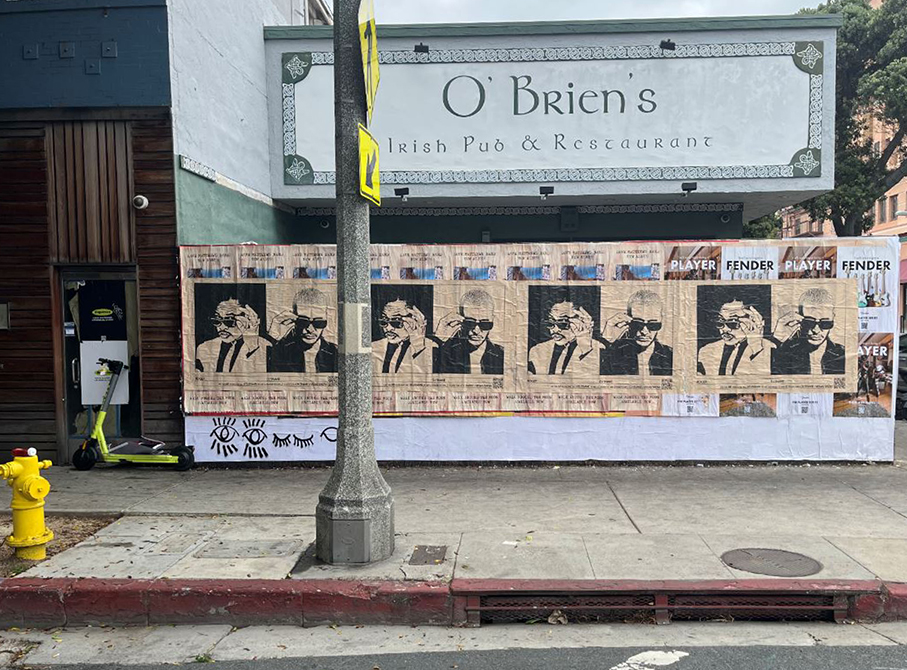
We could open this with a definition of flyposting. We’re not going to, because you already know what flyposting is, posters on walls, wheat paste, street advertising. If that’s what you came here for, the definition is in the FAQ at the bottom.
What this piece is actually about is harder to Google: why flyposting works for certain brands at a level that no digital format can replicate, and what it says about a brand when they choose the street. This is a strategic argument, not a how-to guide. If you’re trying to understand whether flyposting belongs in your brand’s toolkit and what it actually does for brand perception, this is the piece you need.
Teams comparing formats usually read this alongside our flyposting cost guide and our what is wheatpasting explainer.
We’ve run hundreds of campaigns across New York, Los Angeles, Miami, Chicago, and a dozen other markets. We’ve seen flyposting work spectacularly for brands that understand what they’re communicating with the format, and we’ve seen it fall flat for brands that treated it as a cheap alternative to media they couldn’t afford. The difference is almost never budget. It’s whether the brand belongs on the street.
This Isn’t a Definition Piece
The landing page for our street advertising services explains the mechanics. This article takes one step back and examines the cultural and psychological logic of why flyposting creates brand value that defies easy quantification.
The setup: advertising is saturated. You know this. Every marketer knows this. The average person encounters somewhere between 4,000 and 10,000 advertising messages per day depending on whose estimate you believe, and the range itself tells you how little anyone can actually track. Most of those impressions are invisible. Not blocked, not skipped, genuinely invisible, processed at a level below conscious attention and immediately discarded.
Against that backdrop, the question worth asking isn’t “how do we get more impressions?” It’s “how do we get impressions that actually land?” That’s the question flyposting answers differently from anything in a digital media plan, and the answer is more interesting than the format’s surface simplicity suggests.
For the execution side, our street poster campaign guide and New York City wheatpasting page show how these campaigns are actually deployed.
What Flyposting Actually Communicates About a Brand
Here’s the thing about a wheatpasted poster on a wall in Williamsburg or the Lower East Side or the Bushwick Collective: someone chose that wall. A person showed up with paste and a poster and committed a physical act of brand placement in that specific place. That act communicates something.
It communicates investment. Not necessarily financial investment, wheatpasting is not the most expensive advertising format available. But investment of presence, of intention, of showing up. In a world where digital advertising can be deployed from a laptop in thirty seconds without anyone’s physical presence anywhere, the fact that someone physically placed your brand on a specific wall in a specific neighborhood is meaningful in a way that a targeted Instagram post simply isn’t.
It communicates belonging. When a brand appears on the walls of Williamsburg or Troutman Street in Bushwick, it’s placing itself in a visual conversation with every other brand, artist, and cultural moment that has lived on those walls. The wall itself is a community board of cultural relevance. Being on it says: we belong to this world. Not visiting it. Not running a campaign in it. Belonging to it.
It communicates urgency. A flypost has an ephemeral quality, it’s here now, won’t be here forever. That quality maps perfectly onto the campaigns that use the format most effectively: album releases, event promotion, limited drops, launch moments. The poster’s inherent temporariness amplifies the message’s urgency. You have to be in the right place at the right time to see it. That scarcity is a feature, not a bug.
These three signals, investment, belonging, urgency, don’t show up in a CPM calculation. They’re not impressions. They’re meaning. And meaning is the thing that actually builds brand equity.
The Cultural History: From Punk to Supreme
Flyposting has been the native advertising format of every youth subculture movement since at least the 1970s. Punk used it because it was the only affordable way to announce shows in a scene that had no mainstream distribution infrastructure. The posters were rough, Xeroxed, urgent, and they were everywhere on the walls of the right neighborhoods at the right moments. You knew about the show because you walked past the poster. Your connection to that scene was mediated through your physical presence in those streets.
Hip-hop built its early promotional infrastructure the same way. Flyers and posters on walls in the Bronx, Harlem, Brooklyn, and eventually everywhere the culture spread. Before there was an internet to distribute music, there were walls. The poster was the algorithm, it found you if you were in the right place, which served as a self-selecting audience filter as much as a distribution mechanism.
By the 1990s, as street culture began to be commodified and mainstreamed, brands started deliberately reaching for these forms. Supreme understood this earlier than almost anyone. Supreme’s flyposting strategy is not incidental to their brand. It is the brand. The ubiquity of Supreme stickers and posters in the right neighborhoods in New York, Los Angeles, Tokyo, and London isn’t just media coverage, it’s a continuous affirmation that Supreme belongs to the world of the street, regardless of how much revenue they generate or how mainstream their product distribution has become. The format keeps them anchored to an identity that their retail footprint alone would not sustain.
This is the key insight: flyposting isn’t just a distribution mechanism for brand messages. For the right brands, it’s a brand signal in itself. The fact that you flypost communicates something about your brand’s relationship to street culture that no other medium can communicate with equal authenticity.
An emerging music artist flyposts because it communicates scarcity and urgency, you had to be in the right place at the right time to see it. Supreme flyposts because it signals “street” regardless of how much revenue they generate. These are different strategic logics leading to the same tactical conclusion: the walls matter.
The Zero-Friction Problem With Digital Advertising
Digital advertising is enormously efficient. The targeting is precise, the measurement is real-time, the optimization is algorithmic. You know exactly how many people clicked, where they came from, what they did next. It’s a remarkable infrastructure.
And it has a fundamental problem: it’s zero-friction. An Instagram ad costs the brand nothing to deliver. There’s no physical act, no presence, no commitment. The audience knows this. At some level, consciously or not, they process digital advertising as something that appeared because an algorithm served it, not because a brand chose to show up. That frictionlessness is a credibility gap.
Physical advertising doesn’t have this problem. A billboard costs money and requires physical installation. A wheatpaste campaign requires someone to physically be in your audience’s neighborhood with paste and a poster, doing actual work. That physicality communicates commitment in a way that a digital impression cannot replicate.
There’s research behind this. The Nielsen Trust in Advertising studies consistently show that consumers trust outdoor and physical advertising formats at significantly higher rates than digital display advertising. They trust that the brand chose to be there. They trust the investment. They trust the physical reality of the thing. Digital advertising has a trust gap that no amount of targeting optimization can close, because the mechanism of digital advertising is inherently frictionless and consumers are increasingly sophisticated about what that means.
Flyposting is maximum friction advertising. Maximum commitment. Maximum “we chose to be here.” For brands where that signal matters, and for a significant category of brands, it matters enormously, there is no substitute.
Brands That Should Never Flypost
This is where we lose some potential clients, and we’re fine with that.
Traditional luxury houses should not flypost. Chanel on a brick wall in Bushwick isn’t culturally interesting, it’s confused. Luxury brand building depends on exclusivity, controlled presentation, and the implicit message that access is limited. Wheatpaste contradicts every one of those pillars. The format is democratic, improvisational, and public. Luxury is none of those things. Putting a luxury brand on a street wall doesn’t make the street feel premium; it makes the brand feel like it’s trying too hard and doesn’t know what it is.
Corporate financial services don’t belong here either. A regional bank or insurance company showing up on the walls of the Lower East Side isn’t going to generate the response they’re hoping for. The audience reads the cognitive dissonance immediately, what is this doing here?, and that question is not a good one for a brand to prompt. Street advertising builds credibility for brands that belong on the street. For brands that don’t, it creates confusion at best and mockery at worst.
B2B software companies: generally no. The audience that buys your SaaS product is not walking past a Bedford Avenue wall and making software procurement decisions. There are exceptions for certain tech companies with strong cultural brand positioning, but they’re exceptions, not the rule.
Any brand that is embarrassed by the rawness of the format, that wants its posters to look like they’ve been framed and mounted rather than pasted onto brick: also no. Street advertising is contextual. It needs to live in that context without apology. If your marketing team will spend more time debating whether the format “feels on-brand” than actually planning the campaign, save yourself the trouble.
Brands That Belong on These Walls
Music. Full stop. This is the native use case and it remains the dominant one in 2026. Album releases, single drops, tour announcements, streaming launches. The walls of New York and Los Angeles and Chicago have been carrying music advertising since before any of the current major labels existed. The format and the industry grew up together. A music artist or label that doesn’t have a street presence strategy is leaving a significant credibility signal on the table.
Independent and emerging fashion. Not the mainstreamed versions, but the brands that are genuinely part of the cultural ecosystem where flyposting lives. The streetwear label whose founder genuinely shops at the stores on Fairfax. The denim brand whose aesthetic was formed by the visual language of downtown New York. The accessories company that emerged from the same creative community as the artists whose faces appear on the walls around them. For these brands, flyposting isn’t marketing, it’s a natural extension of who they are.
Entertainment campaigns for culturally specific audiences. A streaming series targeting the exact demographic that lives in Williamsburg and walks past Bedford Avenue every day. A film with a sensibility that belongs in the LES nightlife corridor. A podcast launched by and for people who consider themselves part of a specific cultural world. The key is specificity, generic entertainment campaigns that could be for anything get no lift from the format. Specific, culturally embedded entertainment campaigns get enormous lift because the placement itself signals audience knowledge.
Consumer brands that have genuinely earned street credibility. These exist. Hot Ones hot sauce could flypost credibly. So could certain beverage brands, cannabis brands in legal markets, outdoor gear brands with authentic roots in urban adventure culture. The test is simple: would the people who see this poster on a Bushwick wall think “yes, that belongs here” or would they think “why is that here?” If you’re not sure of the answer, ask someone who actually lives in those neighborhoods.
The Attention Economy Case for Physical Advertising in 2026
The fundamental logic of the attention economy is that attention is finite and scarcity increases with each new platform, channel, and format competing for the same limited hours of human consciousness. Every new social platform, every new ad unit, every new targeting mechanism is competing for the same brain real estate.
Physical advertising is exempt from this arms race in one important way: it exists in physical space, not digital space. There is no algorithm deciding whether to show you the poster on the corner of Troutman and Irving in Bushwick. It’s just there, in your visual field, because you’re physically present in that place. The impression is earned by showing up in the real world.
This is increasingly valuable as digital advertising CPMs rise, effectiveness metrics degrade, and audience sophistication about digital marketing mechanisms grows. The brands that maintained physical advertising presence through the digital-first decade of the 2010s didn’t do it because they were behind the curve. They did it because they understood that physical presence does something digital doesn’t, and that the value of that distinction would increase as digital saturation increased. They were right.
The data bears this out. The Out of Home Advertising Association of America’s research consistently shows that OOH advertising drives branded search lift, people who see physical advertising for a brand are measurably more likely to search for that brand online afterward. Physical advertising primes digital response. The two formats reinforce each other in ways that running digital alone cannot replicate.
Our crews have been out at 2am in Williamsburg applying paste to warehouse walls on Kent Avenue while the rest of the digital marketing industry was optimizing bids on ad exchanges. There is something to be said for the brand that shows up in the physical world of their audience, not just in their feed, but in their actual neighborhood, and that something translates into brand perception in ways that are worth more than most CPM calculations capture.
The NYC Walls That Carry the Most Cultural Weight
If flyposting is a positioning signal, then the specific walls you choose amplify or dampen that signal. Not all walls are equal in the cultural meaning they carry.
The Houston Street mural wall at Bowery is the most photographed block in lower Manhattan. Being on that wall means your brand gets documented by every tourist, content creator, and street photographer who passes through SoHo. The earned media from that documentation is genuinely significant for campaigns with the right creative. The tradeoff is competition, many brands know this wall is valuable, so it’s contested, and being buried under three other campaigns defeats the purpose. Show up here with visual dominance or not at all.
Bedford Avenue in Williamsburg is the main strip, highest foot traffic, highest competition. This is the first call for any campaign targeting the creative professional demographic in Brooklyn. It’s also where you’ll find the most layers of old campaigns on every good wall, which tells you something about the demand. Being on Bedford is a statement. Being buried on Bedford is not.
The Troutman Street Bushwick Collective strip is different in character. The audience that walks this corridor specifically to engage with visual art is one of the most attentive pedestrian groups in the city. A campaign placed here isn’t just reaching foot traffic, it’s reaching people who have self-selected for visual engagement. That’s an unusual and valuable audience quality.
What these three walls share is cultural authority by accumulation, decades of significant campaigns have established these locations as the walls that matter. When a brand appears on them, it inherits some of that authority. When an emerging artist’s face appears on the Houston/Bowery wall, it communicates that this artist is operating at the level of every other artist and brand that has appeared there. That positioning signal is real and it costs nothing beyond the placement itself.
The Credibility Premium You Can’t Buy With Display Ads
Here’s the honest version of the case for flyposting advertising in 2026:
There is a class of brand perception, specifically, the perception of authentic street-level presence and cultural belonging, that cannot be purchased through any digital format at any budget level. You cannot buy your way to the credibility that comes from actually showing up in the neighborhoods where your audience lives. You can only earn it by being there.
This is not romantic or nostalgic. It’s a practical observation about how brand trust actually forms in the audiences that matter most for the categories where flyposting is relevant. These audiences are sophisticated about advertising. They know what a targeted Instagram ad looks like and what it costs to run one. They know the difference between a brand that chose to show up in their neighborhood and a brand that bought a demographic target in an ad exchange.
The brands that do flyposting well are not the ones trying to appear authentic. They’re the ones who are authentic, whose presence on the street is a natural extension of their brand’s actual relationship to the culture those streets represent. Supreme doesn’t flypost to seem authentic. They flypost because that’s who they are, and they’ve always been who they are on those walls.
That’s the bar. It’s not about the format. It’s about whether your brand has earned the right to be on those walls, and whether showing up there will reinforce your brand’s story or create a contradiction that your audience will immediately identify.
If you’re confident your brand belongs on the street, we’re ready to build the campaign. If you’re not sure, that’s worth a conversation before anything gets pasted to a wall in Williamsburg.
Ready to Launch Your Flyposting Campaign?
American Guerrilla Marketing plans and executes flyposting campaigns in New York City, Los Angeles, Miami, Las Vegas, Orlando, and markets nationwide. Tell us your goals, we’ll build the strategy.
Get a Campaign Quote →
Frequently Asked Questions
What’s the difference between flyposting and wheatpasting?
Flyposting is the broad category, the practice of placing promotional posters on exterior surfaces in urban environments, regardless of adhesion method. Wheatpasting is a specific technique within flyposting that uses a wheat flour-based paste to bond posters to walls, concrete, and brick. Wheatpasting creates a more durable, weather-resistant installation than stapled or taped alternatives, and produces a cleaner, flush-to-wall appearance that reads as intentional rather than improvised. In professional street advertising, wheatpasting is the dominant technique, when American Guerrilla Marketing executes flyposting campaigns, wheatpasting is the standard method for wall placements. The terms are often used interchangeably in conversation, but wheatpasting is the professional execution of what flyposting describes as a general category.
Is flyposting effective for luxury or premium brands?
It depends on the brand and what they’re communicating. Traditional luxury houses, Chanel, Louis Vuitton, would look confused on a street wall, and the format would undermine their positioning. Luxury brand building depends on exclusivity and controlled presentation; wheatpaste contradicts both. But premium brands adjacent to street culture, high-end streetwear, contemporary art brands, premium spirits targeting creative professionals, can use flyposting very effectively. The key question is whether your brand belongs in the visual language of the street. Brands that do belong there gain credibility from the format. Brands that don’t look like they’re trying too hard. Know which category you’re in before committing to the format.
How does flyposting compare to Instagram advertising for brand awareness?
They do fundamentally different things. Instagram advertising is measurable, targetable, and scalable, precise demographic targeting with real-time performance metrics. Flyposting is physical, contextual, and culturally embedded, it puts your brand in the real world where your audience lives, at zero digital friction. The case for flyposting isn’t that it beats Instagram on efficiency metrics. It’s that it establishes physical presence in specific urban communities, signals investment and authenticity, and generates earned media from organic social documentation that extends well beyond the poster’s physical footprint. The brands getting the strongest results in 2026 run both: street presence generates the credibility that makes digital advertising land differently.
What types of campaigns get the best results from flyposting?
Music campaigns consistently lead, album releases, concert promotion, streaming launches, and artist brand-building all align naturally with the format’s cultural history and audience fit. Fashion and streetwear perform strongly in the right markets. Entertainment launches for culturally specific audiences generate strong earned media. Event promotion with defined audience demographics is a natural use case. The campaigns that struggle are ones where the brand fundamentally doesn’t belong in the visual language of the street: financial services, corporate B2B, anything that looks jarring or out of place in the neighborhoods where flyposting lives. The format works for brands that belong on those walls, and only for them.
How long does a flyposted poster stay up?
Professionally wheatpasted posters typically remain visible for 2–6 weeks depending on location, weather, and competition from new campaigns. High-competition corridors like Bedford Avenue in Williamsburg or Orchard Street in the LES see faster turnover, expect 10–21 days of strong visibility in these zones. Lower-competition walls in secondary corridors can see posters persist much longer. Weather is a significant variable: dry moderate conditions favor longevity; rain cycles and extreme heat accelerate degradation. The planning principle: time your campaign so the poster’s peak visibility window aligns with your most important moment, event date, release window, campaign launch.