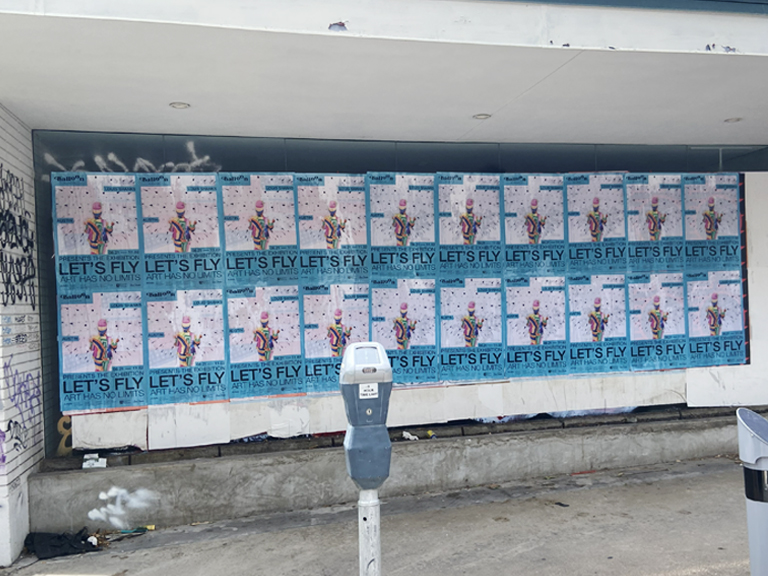
Madrid is one of the world’s great cities for street-level brand campaigns. The combination of genuinely walkable neighborhoods, an outdoor social culture that keeps pedestrian environments active late into the evening, a young and culturally engaged population concentrated in specific creative districts, and a strong tradition of street art and poster culture creates conditions where professional guerrilla marketing campaigns perform exceptionally well. We execute campaigns in Madrid for music labels, fashion brands, technology platforms, film distributors, and international consumer brands entering the Spanish market.
This guide covers where campaigns run in Madrid, which formats perform in the city’s specific cultural and regulatory context, how the neighborhood geography maps to audience profiles, and what the operational picture looks like for international brands planning their first Madrid campaign or for local brands looking to scale their street-level presence.
Madrid’s Campaign Neighborhood Geography
Madrid’s creative and entertainment neighborhoods are concentrated in the central districts northwest and south of the Puerta del Sol. Each has a distinct character that shapes the appropriate campaign approach and audience profile.
Malasaña is the city’s primary street culture zone. The neighborhood centered on Plaza del Dos de Mayo has the densest foot traffic of any creative district in Madrid, with a young, fashion-conscious, music-engaged demographic that fills the streets from early afternoon through the small hours. Malasaña’s wall infrastructure is strong — the narrow streets provide ample vertical surface for wheatpaste campaigns, and the visual culture of the neighborhood creates receptive audiences for bold, graphic street-level communications. For fashion, music, entertainment, and lifestyle brands targeting the 18-to-35 Madrid market, Malasaña is the mandatory first campaign zone.
Lavapiés is Madrid’s most culturally diverse and politically engaged neighborhood. The area centered on Plaza de Lavapiés attracts a mix of long-term residents from Madrid’s immigrant communities, students from the nearby art schools, and a young creative professional population priced out of Malasaña. The neighborhood’s political and cultural engagement makes it receptive to cause-driven campaigns, arts and culture activations, and brands that demonstrate genuine cultural awareness. International music and food brands have found Lavapiés particularly effective for campaigns targeting multicultural urban audiences.
Chueca is Madrid’s LGBTQ+ cultural hub and one of the city’s most cosmopolitan commercial neighborhoods. The area around Plaza de Chueca has a professional and international demographic profile that extends its campaign reach beyond the LGBTQ+ community to the broader progressive, cosmopolitan Madrid market. Evening and weekend campaigns in Chueca reach audiences in a social, bar-going context that is receptive to brand encounters. The annual Pride celebrations in June create an extraordinary campaign window for brands with relevant audience alignment.
La Latina‘s Sunday El Rastro flea market creates one of Madrid’s highest-concentration pedestrian events. The market attracts 100,000+ visitors on Sundays, creating a concentrated, economically diverse outdoor audience that is exceptional for street team and distribution campaign formats. The narrow medieval streets of La Latina provide strong wall surfaces for wheatpaste campaigns in the surrounding residential zone.
Wheatpaste Campaigns in Madrid
Madrid has a strong flyposting culture that predates the contemporary guerrilla marketing industry. The city’s residents are accustomed to seeing band posters, event announcements, and commercial campaigns on walls throughout the creative neighborhoods. This cultural normalization reduces resistance to the format and creates an audience that has learned to read street-level visual communications rather than treating them as visual pollution.
Our wheatpaste poster campaigns in Madrid concentrate on the active wall zones in Malasaña (particularly the side streets off Calle Fuencarral and the blocks surrounding Tribunal metro station), Lavapiés (the corridor from Antón Martín to La Latina), and Chueca (the blocks surrounding Chueca metro station through to Justicia). These zones have the highest foot traffic, the strongest visual culture receptivity, and the best established surface infrastructure.
For music, entertainment, and fashion clients, we time Madrid wheatpaste campaigns to coincide with product or release launches in the Spanish market. The format is particularly effective for creating the impression of established market presence for brands entering Spain for the first time — a well-executed poster campaign in Malasaña makes a brand look like it belongs in the city before its distribution infrastructure is fully in place.
Street Teams and Brand Ambassadors in Madrid
Street team programs in Madrid operate at the high-foot-traffic zones on Calle Gran Vía (the city’s main commercial corridor), Plaza del Sol (the geographic center of the city and a major transit and tourist hub), and the market areas around El Rastro on Sundays. Our brand ambassador teams in Madrid are sourced from our established local operator network and are briefed on the specific campaign, brand, and target audience before every deployment.
Madrid’s late-schedule social culture — restaurants fill at 10 p.m., bars reach peak activity after midnight — means that evening street team deployments can extend significantly later than equivalent programs in northern European or North American cities. Campaigns targeting the young adult nightlife audience can deploy effectively until 1 or 2 a.m. on Thursday through Saturday evenings in Malasaña, Chueca, and Lavapiés.
For event-specific campaigns timed to FITUR (the international tourism fair, held in January at IFEMA), Madrid Design Festival (February), ARCO contemporary art fair (February), or the summer festival circuit, we deploy teams at the event venues and in the adjacent entertainment districts during the event period.
Madrid’s Cultural Event Calendar and Campaign Windows
Madrid’s event calendar creates recurring campaign windows with concentrated target audience density. The most important for brand marketing campaigns:
FITUR (January) — The world’s second-largest tourism trade fair at IFEMA draws 250,000+ professionals from the global tourism and hospitality industry. Convention approach corridor and hotel zone campaigns around IFEMA reach a concentrated international professional audience.
ARCO (February) — The Madrid international contemporary art fair at IFEMA draws galleries, collectors, artists, and art press from around the world. The fair creates an extraordinary audience concentration of arts and culture professionals whose presence in Madrid extends into Malasaña, Chueca, and the gallery districts of Justicia during the fair week.
Madrid Pride (late June) — One of Europe’s largest Pride celebrations, drawing 1.5 million+ participants over a week. The Chueca zone and surrounding streets reach maximum concentration of the LGBTQ+ community and allies from Spain and internationally. Brand campaigns timed to Pride and executed with genuine cultural alignment generate strong social media amplification.
Veranos de la Villa (summer festival program) — Madrid’s summer cultural festival program, held at parks, museums, and outdoor venues throughout the city from June through September, creates a series of high-audience-concentration events that are strong street team and stencil campaign environments.
The Madrid Regulatory Environment
Madrid’s regulations on outdoor advertising are enforced by the Ayuntamiento de Madrid and distinguish between temporary, removable applications and permanent modifications to surfaces. Professional operators with established relationships in the market navigate the regulatory environment more reliably than newcomers, and we always advise clients on the full compliance picture before finalizing campaign plans.
For most commercial campaigns, the most reliable approach is to work with surface owners directly — building owners and property managers who permit flyposting on their walls — rather than relying on public surface applications that carry greater regulatory risk. Our Madrid operator network has established surface relationships that provide access to quality wall inventory with clear legal standing.
Creative Considerations for Madrid Campaigns
Madrid campaigns in Spanish should use Castilian Spanish rather than Latin American Spanish variants — the vocabulary and register differences are noticeable to local audiences and affect brand perception. We work with local copywriters and brand managers to ensure creative copy meets Madrid audience expectations. For international brands with English-language creative, we assess whether the bilingual or Spanish-only approach is appropriate for the specific campaign and neighborhood.
Visual creative that references Madrid’s cultural context — the city’s art history, its contemporary music scene, its fashion identity — performs better in Malasaña and Lavapiés than generic international creative. Brands that invest in localization for their Madrid campaign earn credibility that brands using off-the-shelf international creative do not.
Multi-City European Campaign Coordination
Madrid campaigns frequently form part of broader European programs covering London, Paris, Berlin, Milan, and Barcelona. We coordinate multi-city European campaigns from our operations hub in Industry City, Brooklyn, New York, working with established local operators in each European market to maintain consistent execution standards and reporting formats across all markets.
International campaign coordination requires additional lead time. We recommend 10 to 14 weeks for multi-city European campaigns to allow for operator coordination, surface scouting, creative localization, and any market-specific regulatory review. Campaigns booked inside 6 weeks for multi-city European programs risk constrained surface options and compressed creative approval timelines.
Spanish Market Entry Strategy Through Street Presence
For international brands entering Spain through Madrid as the primary market, street-level campaigns serve a specific function in the market entry sequence. Spain’s retail and distribution landscape requires brands to demonstrate market demand credibility before retailers commit to meaningful shelf space allocations. A brand that can show a Madrid retailer a documented street campaign with genuine neighborhood presence — photographs, placement data, evidence of social media amplification — demonstrates market intent and budget commitment in a way that a digital-only campaign cannot replicate.
The sequence we recommend for international brands entering Madrid is: initial street campaign in Malasaña and Lavapiés timed to coincide with the brand’s first distributor presentations, so the campaign is running while the brand is having retail conversations. Retailers who can look out from their meeting room and see the brand’s creative on the neighborhood walls are having a fundamentally different conversation than they would have from a PowerPoint deck alone. The physical presence validates the brand’s seriousness about the Spanish market in a way that presentations alone cannot.
Following the initial campaign, a second phase timed to the brand’s retail launch — when the product is actually available for purchase in Madrid — creates the consumer awareness that drives traffic to the retail accounts that have committed to the brand. This two-phase approach — trade-facing campaign first, consumer-facing campaign at launch — is the structure we recommend for most international brand entries into the Spanish market.
Working with International Brands in Madrid
International brands entering the Spanish market use Madrid guerrilla campaigns to establish physical presence before their retail or digital distribution is fully established. A brand that places its visual identity in Malasana and Lavapiés before its Spanish e-commerce launch appears to the target audience as a brand that already belongs in Madrid — not a newcomer seeking entry. That perception advantage is difficult to achieve through digital advertising alone and is one of the primary reasons international brands budget for street campaigns as part of their Spanish market entry strategy.
For fashion brands, the timing of Madrid campaigns relative to the collections calendar matters significantly. Spring campaigns launching the SS collection land best in the March through April window when fashion consumer attention is elevated by the season transition. Autumn campaigns timed to the AW collection launch benefit from the September return-to-city energy after August’s mass exodus from Madrid.
We advise international clients on the cultural considerations specific to the Spanish market: the late-schedule social life that means evening deployments run later than northern European equivalents; the August factor that makes July the effective cutoff for most consumer-facing campaigns; and the neighborhood-specific cultural expectations that affect creative reception in Malasana versus Lavapiés versus Chueca.
Campaign Documentation and Reporting for Madrid
All Madrid campaigns are documented with geo-tagged photography at each wheatpaste placement, a written placement log with surface locations and timestamps, street team hourly activity reports, and a post-campaign summary delivered within 72 hours of campaign completion. For international clients in the U.S. or UK, reports are delivered in English with Spanish-language field notes translated and summarized.
Photo documentation for Madrid campaigns is particularly valuable for international clients who cannot travel to verify campaign execution. Our standard post-campaign deliverable includes 30 to 50 placement photographs organized by neighborhood zone and date, plus a campaign map showing placement locations plotted geographically. This documentation package allows clients to verify campaign delivery, share campaign imagery with their marketing teams, and use placement photography for social media content when appropriate.
For clients running their first Madrid campaign with us, we offer a pre-campaign brief call with our Madrid operator team so clients can ask specific questions about local execution and surface availability before the campaign begins. That direct communication reduces uncertainty for international brands operating in a market where they do not have established local knowledge.
What Distinguishes Professional Madrid Campaign Execution
The quality differential between professional and amateur guerrilla campaign execution is visible and significant in Madrid as in any market. Materials printed at professional specifications — accurate color reproduction, appropriate paper weight for the humidity and temperature range, weather-resistant adhesive — hold better and create stronger brand impressions than budget alternatives. Crews who know the neighborhood’s surface geography deploy efficiently, covering maximum surface area in the available overnight window without the wasted motion of teams working an unfamiliar market for the first time.
Our Madrid operator network has been executing campaigns in the city’s creative neighborhoods for years. The surface relationships, neighborhood knowledge, and operational efficiency that come from that experience are not replicable by a brand attempting a DIY campaign or working with a vendor without established Madrid presence. Professional execution is the difference between a campaign that performs and one that looks like it does not belong in the market it is trying to enter.
Frequently Asked Questions
How does guerrilla marketing work in Madrid?
Guerrilla marketing in Madrid operates through wheatpaste poster campaigns on building walls and hoardings, street team brand ambassador programs in high-foot-traffic neighborhoods and at events, and experiential activations at cultural and commercial events throughout the city. Campaigns concentrate in Malasaña, Lavapiés, Chueca, and La Latina.
What are the best neighborhoods for guerrilla marketing in Madrid?
Malasaña is Madrid’s primary street-level campaign environment with a young creative demographic. Lavapiés is the city’s most culturally diverse and politically engaged neighborhood. Chueca attracts an LGBTQ+ and cosmopolitan professional demographic. La Latina’s weekend market creates high-density Sunday campaign opportunities.
Is guerrilla marketing legal in Madrid?
Madrid has regulations governing outdoor advertising that apply to wheatpaste and other street-level formats. Temporary, removable applications on permitted surfaces are generally treated differently from permanent modifications. We work within the regulatory framework and advise clients on compliance requirements for each specific campaign format and zone.
What is the best time of year for guerrilla marketing campaigns in Madrid?
Spring (April through June) and autumn (September through November) are the peak periods. The FITUR tourism fair in January, ARCO art fair in February, and Madrid Pride in late June create specific high-value campaign windows throughout the year.
How much does a guerrilla marketing campaign in Madrid cost?
Wheatpaste campaigns in one to two neighborhoods with professional crew and documentation run EUR 4,000 to EUR 12,000. Combined format campaigns covering multiple neighborhoods with street teams run EUR 15,000 to EUR 35,000. We provide custom proposals for all international campaigns within 72 hours.
Can AGM coordinate guerrilla marketing in Madrid as part of a multi-city European campaign?
Yes. We coordinate campaigns in Madrid as part of broader European programs covering London, Paris, Berlin, Milan, Barcelona, and other major cities. All markets operate from unified creative direction with market-specific surface scouting and consolidated reporting. We recommend 10 to 14 weeks lead time for multi-city European campaigns.
What industries use guerrilla marketing in Madrid most effectively?
For more on this topic, see our guide to snipe advertising.
For more on this topic, see our guide to mural advertising.
Music labels, fashion brands, film studios, food and beverage companies, technology platforms, gaming companies, and international lifestyle brands all use guerrilla marketing in Madrid effectively. The city’s strong creative culture and dense walkable neighborhoods make it one of Europe’s strongest street-level campaign markets.