Milan is the world’s design capital. Every April, the city draws more than 300,000 design, architecture, and luxury brand professionals from around the world for Salone del Mobile and its associated Fuorisalone satellite event network. Every February and September, the fashion industry’s global power structure arrives for fashion week. Between these peaks, Milan operates as one of Europe’s most dynamic commercial and creative cities — home to major fashion houses, global luxury brands, European headquarters for major technology and financial services companies, and one of the continent’s most design-literate consumer populations.
We execute guerrilla marketing campaigns in Milan for fashion brands, design companies, music labels, automotive companies, food and beverage groups, and technology platforms. The market rewards professional execution and penalizes low-quality creative. Milan’s sophisticated visual culture means that campaigns that do not meet the aesthetic expectations of the city’s creative neighborhoods produce poor results, while campaigns that meet that bar generate disproportionate social amplification from an internationally connected creative audience.
This guide covers Milan’s campaign geography, the formats that perform in each neighborhood, the event calendar windows that concentrate the right audiences, regulatory considerations, and what brands need to know before planning their first Milan campaign.
Navigli: The Heart of Milan’s Street Campaign Environment
Navigli, the canal district running from Darsena through Porta Genova along the Naviglio Grande and Naviglio Pavese, is Milan’s primary street culture environment. The district’s canal-side bars, restaurants, galleries, and concept stores create evening and weekend foot traffic density that rivals any entertainment district in Europe. The audience is young, creative, internationally connected, and deeply engaged with visual culture — exactly the profile that makes wheatpaste campaigns effective.
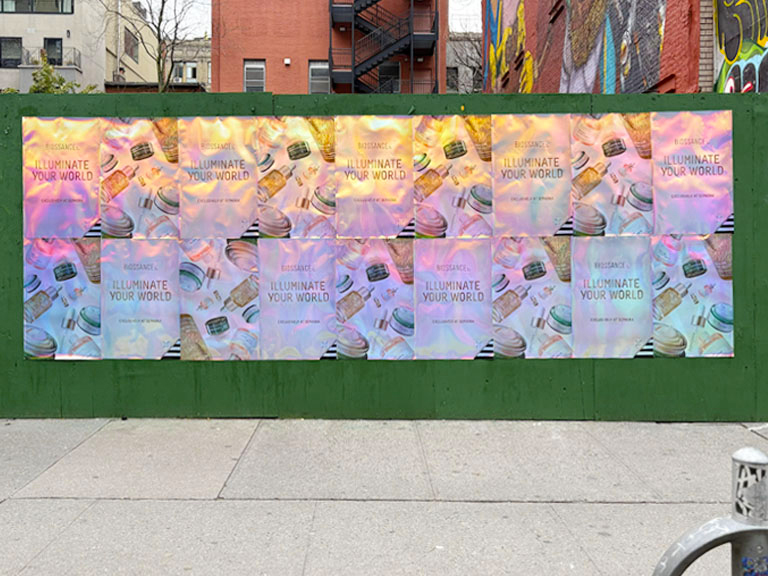
The narrow side streets perpendicular to the canals — the vicoli that run between the canal-side buildings and the surrounding residential blocks — provide strong wall infrastructure for wheatpaste poster campaigns. Building owners along these streets are accustomed to flyposting and many have established relationships with professional campaign operators. We access these surfaces through our Italian operator relationships and time deployments for maximum morning-after visibility before evening crowds arrive.
Navigli is mandatory for any Milan campaign targeting the 20-to-40 creative professional and cultural audience. Evening street team deployments along the canal-side terraces on Thursday through Saturday create direct contact opportunities with this demographic in its most social and receptive context.
Isola: Milan’s Design-Forward Residential Quarter
Isola, located north of Porta Garibaldi station and adjacent to the Porta Nuova business district, is Milan’s most design-conscious residential neighborhood. The area has been transformed over the past decade from an industrial zone into one of the city’s most desirable addresses for architects, designers, and creative professionals who have priced out of Brera. The Mercato Isola weekend market and the neighborhood’s concentration of design studios, co-working spaces, and concept stores make it a strong campaign environment throughout the week.
Isola is particularly important during Salone del Mobile and Fuorisalone. Many Fuorisalone satellite events are hosted in Isola’s studios and spaces, drawing concentrated design and architecture audiences to the neighborhood throughout the Salone week. A wheatpaste campaign deployed in Isola before Salone del Mobile and maintained through the event week reaches this audience in both the residential mode and the professional-event-visiting mode.
Brera: Luxury, Fashion, and the Gallery Audience
Brera, Milan’s historic arts neighborhood, is the city’s most established gallery and luxury fashion zone. The neighborhood’s concentration of contemporary art galleries along Via Brera and Via Pontaccio, combined with the Pinacoteca di Brera museum and the Accademia di Belle Arti, creates a concentrated art and culture audience on weekday mornings and weekend afternoons. The luxury retail strip along Via Manzoni connects Brera to the Quadrilatero d’Oro, Milan’s luxury fashion district.
Brand campaigns in Brera reach an older and more affluent demographic than Navigli or Isola — the gallery collector audience, luxury fashion consumers, and the senior creative professional population. For luxury brands, premium consumer goods, and campaigns targeting the gallery-going demographic, Brera placements are the right choice. The neighborhood’s visual culture is more restrained than Navigli’s, which means creative quality requirements are correspondingly higher.
Salone del Mobile and Fuorisalone: The Peak Campaign Window
Salone del Mobile in April is the single most valuable campaign window in Milan for brands targeting the design, architecture, luxury, and international creative professional audience. The official fair at Fiera Milano in Rho draws 300,000+ registered professional visitors. The Fuorisalone satellite event network, which distributes brand installations and design events throughout Milan’s neighborhoods during the same week, extends the audience into Navigli, Isola, Brera, Tortona, and Lambrate — the city’s design district corridors.
A brand with a well-placed wheatpaste campaign in Navigli and Isola during Fuorisalone week reaches designers, architects, brand managers, and creative directors from every major market in the world, concentrated in a two-square-kilometer area, in the exact state of heightened visual awareness that Fuorisalone creates. This audience photographs everything — the installations, the streets, the food, the design details of buildings they pass. A well-designed street campaign becomes content that they share to global creative and design networks.
Fuorisalone booking requires the full 10 to 14 week lead time. The event week concentrates campaign demand from dozens of brands simultaneously, and the best surfaces in Navigli and Isola are committed well in advance. Our international clients planning Fuorisalone campaigns typically brief us in January for April deployment.
Milan Fashion Week Campaign Windows
Milan Fashion Week runs twice annually — the women’s collections in February and September, and the men’s collections in January and June. Each Fashion Week draws the global fashion press, buyers, brand executives, and international retail decision-makers to Milan for five days of shows, presentations, and brand events.
Fashion Week street campaigns concentrate in Brera and the Quadrilatero d’Oro, where the fashion audience circulates between shows and showrooms. Wheatpaste placements on the walking routes between major show venues, hotel approaches for the key fashion week hotels, and brand ambassador programs at show-adjacent locations all create targeted touchpoints with the fashion professional audience.
For international fashion brands using Milan Fashion Week as a commercial launch window — introducing new products to Italian buyers and press — the street campaign creates visible market presence that makes the brand feel established in Milan regardless of whether it has prior Italian distribution.
Porta Ticinese and Darsena
Porta Ticinese connects the historic center to the Navigli via the Colonne di San Lorenzo corridor — one of Milan’s most photographed streets and a consistent gathering point for the young creative demographic in afternoon and evening hours. The Darsena waterfront at the end of Naviglio Grande creates an outdoor gathering space that handles high foot traffic on warm evenings from spring through autumn.
Street team deployments at Colonne di San Lorenzo during weekend afternoons reach the city’s most social creative youth audience in one of its most distinctive environments. Placements in the surrounding streets create visual impressions for the audiences moving between the historic center and the Navigli entertainment zone.
Regulatory Environment and Surface Access
Milan’s regulatory environment for outdoor advertising requires permit applications for most commercial outdoor placements. Professional operators with established Italian market relationships navigate this environment through two primary approaches: private surface agreements with property owners who permit commercial flyposting (the most reliable and compliant approach), and temporary event-period applications in zones where enforcement is focused on event logistics rather than advertising compliance.
We advise all clients on the full regulatory picture before finalizing campaign plans and structure all Milan campaigns around surface access approaches that minimize compliance risk. For international brands entering Italy for the first time, the regulatory navigation is part of our campaign management service — clients should not need to independently research Italian outdoor advertising law to run a campaign in Milan.
Multi-City European Campaign Coordination
Milan is frequently paired with London, Paris, Berlin, and Madrid in multi-city European campaigns for fashion, design, luxury, and lifestyle brands. The Salone del Mobile window in April often aligns with London Design Festival in September and Paris Design Week in September to create a European design calendar program for brands active in all three markets. We coordinate all markets from a unified operations center with market-specific operators executing local deployments against consistent creative direction and documentation standards.
The Salone del Mobile Booking Window: What You Need to Know
Brands that miss the Salone del Mobile booking window for wall access in Navigli and Isola often learn the hard way that the premium surfaces are committed six to eight months before the event. Property owners in Wynwood and Navigli — the two global mural and street campaign destination neighborhoods — receive Salone inquiries year-round. The best walls are booked on a relationship basis by operators with established property owner contacts, not through last-minute applications from brands that have not established those relationships.
Our Italian operator network maintains ongoing relationships with the Navigli and Isola property owners who make their walls available for quality brand campaigns. When a client briefs us for a Salone campaign in January, we can assess current availability in the premium zones and advise on what is realistically accessible within the available lead time. This is the honest picture: if all of the first-tier Navigli walls are already committed by January, we tell clients that, and we identify the best available alternatives rather than overpromising on inventory we do not have access to.
For brands planning Salone del Mobile campaigns for the first time, the advice is simple: brief us in the autumn for the following April campaign. That timeline allows for the full surface scouting, creative development, production, and property confirmation process without compressed timelines that compromise quality. The brands that have the best Salone campaigns are the ones that start planning eight months before the event, not eight weeks.
Creative Standards for Milan Campaigns
Milan sets a high bar for visual quality. The city’s design culture is not just an abstraction — it is an active, daily practice among the professionals who populate Navigli, Isola, and Brera. Creative that does not meet the visual sophistication expected in these neighborhoods creates the wrong impression: a brand that does not understand the market it is trying to enter. This is particularly damaging in a city like Milan where design judgment is a core professional competency for a large segment of the audience.
We review all creative before production and provide honest assessments of whether campaign materials will perform in the Milan context. Typography matters here in ways that it does not in less design-aware markets. Proportional relationship between image and text elements, color coherence, print finishing quality — all of these elements are read by the Milan audience with the critical eye of trained designers. Professional print production at specifications appropriate for the material and surface is not optional; it is the foundation of a campaign that will be received as a legitimate brand presence rather than a low-quality intrusion.
For international brands without Italian-language creative, we assess whether English-language materials are appropriate for the specific campaign zone and objective. In Navigli and Isola, English-language creative for international brands is commonly accepted and sometimes preferred by audiences who associate English-language branding with specific market positions. In other zones, Italian-language adaptation creates better cultural resonance. We advise client-by-client rather than applying a blanket rule.
Campaign Reporting and Documentation for Milan
All Milan campaigns are documented with geo-tagged photography at each placement location, a written placement log with surface descriptions and timestamps, and a post-campaign report delivered within 72 hours of completion. For Art Basel and Salone del Mobile campaigns where earned media monitoring is a campaign objective, we add press monitoring and social media tracking as post-campaign deliverables.
International clients receive all documentation in English. The placement photography is organized by neighborhood zone and date, providing a clear visual record of campaign execution across all Milan deployment locations. This documentation package allows clients who cannot travel to Milan to verify campaign delivery and use placement imagery for their own marketing communications.
Industries That Use Guerrilla Marketing in Milan Most Effectively
Fashion and luxury brands for whom Milan is a commercial and cultural anchor use guerrilla campaigns to reinforce market presence between fashion weeks and to establish visibility for new collections and brand launches. Design and architecture companies use Salone del Mobile campaigns to create presence in the world’s most concentrated design professional audience. Automotive brands — Milan is home to several major automotive design studios — use the city’s design culture audience for brand positioning campaigns that target the intersection of design culture and premium vehicle consumption. Food and beverage brands entering the Italian market use guerrilla campaigns to establish physical presence before retail distribution is fully built out. Technology platforms targeting European creative professionals use Milan alongside London and Berlin as the anchor markets for campaigns reaching this audience at city scale.
For any brand for which Italy is a significant market, Milan is not optional. It is where the Italian cultural conversation about brands, design, and consumption is shaped. A physical campaign presence in the city’s creative neighborhoods creates the market standing that makes all subsequent Italian marketing activity more effective.
Frequently Asked Questions
How does guerrilla marketing work in Milan?
Guerrilla marketing in Milan operates through wheatpaste poster campaigns in the creative districts, street team brand ambassador programs at commercial and cultural events, and experiential activations during Milan’s major design and fashion weeks. Campaigns concentrate in Navigli, Isola, Brera, and Porta Ticinese.
What are the best neighborhoods for guerrilla marketing in Milan?
Navigli is Milan’s highest-density nightlife and creative environment. Isola is the city’s most design-forward residential neighborhood. Brera attracts the fashion and luxury market audience. Porta Ticinese connects the Navigli scene to the Darsena waterfront with strong daytime foot traffic.
What is the best time for guerrilla marketing campaigns in Milan?
Salone del Mobile in April is the single most valuable campaign window, drawing 300,000+ design and architecture professionals from around the world. Milan Fashion Week (February and September) is the second peak window for fashion and lifestyle brands.
Is guerrilla marketing legal in Milan?
Milan has regulations governing outdoor advertising. Applications on privately owned walls with property owner permission are the most legally reliable approach. The city’s enforcement environment during Salone del Mobile is typically focused on event logistics, creating a more permissive practical environment during this key campaign window.
How much does a guerrilla marketing campaign in Milan cost?
Wheatpaste campaigns in one to two Milan neighborhoods run EUR 5,000 to EUR 15,000 including production and documentation. Combined format campaigns covering multiple neighborhoods run EUR 18,000 to EUR 45,000. Salone del Mobile campaigns command premium pricing due to demand concentration. We provide custom proposals within 72 hours.
Can AGM coordinate Milan guerrilla marketing as part of a multi-city European campaign?
Yes. We coordinate campaigns in Milan as part of broader European programs. Milan is frequently combined with London, Paris, Berlin, Barcelona, and Madrid in multi-city fashion, design, and lifestyle brand campaigns. We recommend 10 to 14 weeks lead time for multi-city European campaigns.
What is Fuorisalone and why does it matter for brand campaigns?
For more on this topic, see our guide to snipe advertising.
For more on this topic, see our guide to mural advertising.
Fuorisalone is the network of satellite design events held across Milan’s neighborhoods during Salone del Mobile week. Street-level campaigns in Navigli, Isola, and Brera during Fuorisalone reach design professionals between their scheduled venue visits at maximum audience concentration. The audience photographs everything and shares to global creative networks, creating organic social amplification.