June 8, 2026 Guerrilla Marketing Agency, Experimental Marketing Agency, Maximum Impact Campaigns

15 Best Guerrilla Marketing Campaigns of All Time (2026)

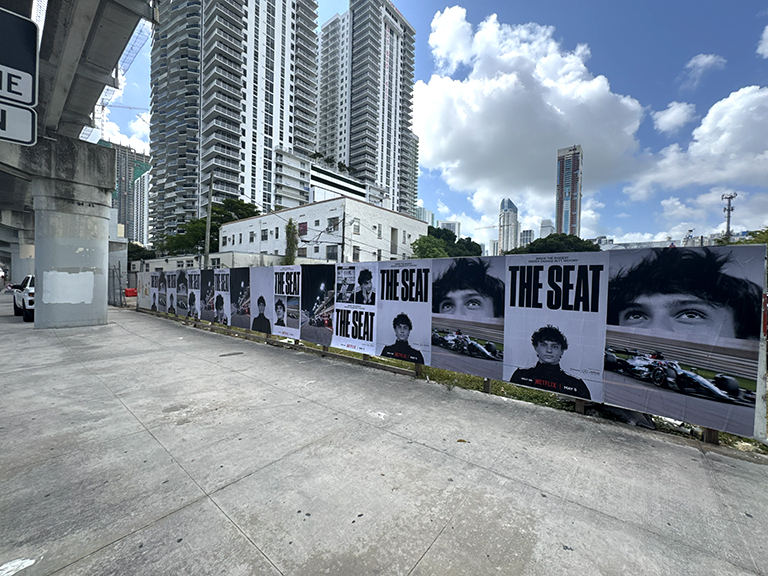
Street poster advertising campaign by American Guerrilla Marketing

Most articles about the best guerrilla marketing campaigns read like highlight reels, you get the concept, a photo, and a vague comment about it “generating buzz.” What you rarely get is any honest analysis of why a specific execution worked when a hundred similar attempts failed.

Here’s what you almost never see discussed: the specific choices that made these campaigns land. Not the overarching strategy, the tactical decisions. Where exactly the wheatpaste went up. Why that wall and not the wall three blocks over. How the timing of the mystery was managed before the reveal. The reason some campaigns at the same scale and budget become cultural touchstones while others get peeled off the wall before anyone notices.

That’s what this article is actually about. Fifteen campaigns that genuinely worked, with honest analysis of the execution decisions that made them work. Plus: what it would cost to replicate the street-level component of each in 2026, and the specific lesson for brands planning their own campaigns today.

Table of Contents

  24 Minutes Read

What Most “Best Campaigns” Lists Get Wrong

The standard format for these roundups goes like this: describe what the brand did, note that it “went viral,” mention the impressive reach numbers, and wrap it up with a generic lesson like “be authentic” or “surprise your audience.” Useless. If you’re actually planning a campaign, that level of analysis doesn’t help you make a single better decision.

The gap is between concept and execution. Most post-mortems focus entirely on the concept, what the idea was, while ignoring the operational decisions that determined whether that idea actually worked. Red Bull Stratos was a brilliant concept. It was also a meticulously produced eight-year project with a film crew, a pressurized suit, and a launch site in Roswell, New Mexico specifically chosen for weather reliability. The concept and the execution were inseparable.

For the street advertising campaigns on this list specifically, the execution details are everything. Supreme’s wheatpaste campaigns didn’t work because wheatpasting is a universally powerful tactic. They worked because the paste went up in the exact right blocks in SoHo during the exact right cultural moment, creating a feedback loop between the brand’s street presence and the neighborhood’s identity that lasted for decades. The location mattered as much as the creative.

Execution vs. Concept: The Distinction That Matters

Before we get into the campaigns: a clarification about what “execution” means here.

Execution isn’t just “doing the thing well.” It’s the sum of specific operational choices: where exactly the campaign runs, what the timing is relative to cultural context, how the mystery or reveal is managed, how the documentation is seeded, what the crew is briefed to do differently at location A versus location B. Two campaigns can have identical concepts and produce wildly different results based on execution decisions that look trivial on paper.

The wall selection question is a good example. On Bedford Avenue in Williamsburg, the wall at N 6th Street is the most competitive wheatpaste real estate in Brooklyn, prime position changes weekly as new posters cover old ones, and the audience is heavy on brand-saturated creative professionals who’ve been exposed to every street advertising tactic in the playbook. Going there with a standard campaign at standard size against established competition is a losing bet. Going there with something genuinely striking at 36×48 inches, or bypassing that wall entirely for the warehouse corridor on Kent Avenue between N 8th and N 9th where foot traffic is comparable but competition is lower, that’s an execution decision that determines campaign performance, not the concept.

Here are fifteen campaigns where the execution matched and amplified the concept.

The 15 Campaigns, Dissected

Campaign #1  |  Supreme  |  SoHo, NYC  |  Early 2000s–Present

1. Supreme’s Wheatpaste Program: The Brand That Built Itself on Walls

The tactical decision that made it work: Supreme’s wheatpaste campaigns didn’t launch from their Lafayette Street store. The early paste-ups went up on Broadway and Spring Street in SoHo, the cultural corridor that Supreme was adjacent to before their retail explosion, the blocks where their actual first customers lived and worked. The posters were unglamorous: bold box logo, nothing else. No campaign messaging, no call to action. Just the mark, on brick, at eye level.

The critical decision was staying in that neighborhood even as the brand grew globally. By the time Supreme was a worldwide phenomenon, their wheatpaste presence in SoHo read as heritage, proof that they’d been on these walls before they needed to be on them. The Spring Street blocks between Thompson and Sullivan, the walls near the corner of Broome and Broadway, became de facto brand territory. New posters reinforced old credibility rather than establishing it fresh.

2026 replication cost: A brand building similar street authority in SoHo and Williamsburg simultaneously, 20 locations, mixed 24×36 and 36×48 formats, runs approximately priced based on format and market — contact us for a quote. Getting the walls Supreme occupied at peak cultural moment requires existing relationship and location knowledge. Generic placement misses the point entirely.

The lesson: Street advertising builds credibility over time through consistency. A brand that shows up on the same walls, in the same neighborhood, campaign after campaign, earns something that a single high-budget activation cannot buy: the implicit endorsement of belonging to a place.

Campaign #2  |  Kanye West  |  Multiple NYC Locations  |  2010

2. “My Beautiful Dark Twisted Fantasy” Street Rollout: The Artwork as Object

The tactical decision that made it work: The Karl Lagerfeld-designed artwork for MBDTF was so visually arresting that Kanye’s team understood it could function as advertising before anyone knew what it was advertising. The choice to go up in music-adjacent neighborhoods rather than high-traffic commercial corridors was deliberate. Wheatpaste hit the walls near Halcyon Records in DUMBO, along Bedford Avenue near N 6th Street in Williamsburg where the indie music scene concentrated, and across the blocks surrounding the Houston/Bowery wall in the Village. These were not the highest-impression locations in New York. They were the highest-influence locations.

The teaser phase used the artwork with no text whatsoever, no artist name, no album title, no release date. The assumption was that anyone who mattered in NYC music culture would start talking about this image they kept seeing on walls, which is exactly what happened. The mystery operated as earned media before earned media became a marketing buzzword.

2026 replication cost: A multi-neighborhood campaign hitting DUMBO, Williamsburg, and the Village/LES corridor simultaneously, roughly 25–30 locations across these three zones, comes to approximately priced based on format and market — contact us for a quote. The creative investment for artwork worth stopping traffic is separate and shouldn’t be cut.

The lesson: If your creative is genuinely strong enough to command attention on its own, remove the brand context initially. Let the image do the work. The reveal pays back all the curiosity the teaser generated.

Campaign #3  |  Frank Ocean  |  NYC + LA  |  2016

3. “Blonde” Teaser Campaign: Color as Language

The tactical decision that made it work: Frank Ocean’s team put up wheatpaste posters in major cities weeks before Blonde dropped, and the posters contained just color swatches. No name, no album title, no release date. In New York, the placements were concentrated along the Houston/Bowery wall in lower Manhattan (the most photographed street wall in the city), through SoHo on Spring Street between Thompson and Sullivan, and in scattered placements through the Lower East Side around Orchard and Rivington. In LA, the campaign hit Melrose Avenue between La Brea and Fairfax, the streetwear and culture corridor that constitutes LA’s version of SoHo.

The specific genius of the execution was that Ocean had been publicly absent for four years. People were already searching for him. Cryptic color-swatch posters appearing on major cultural walls in both cities simultaneously triggered the conversation without needing to announce it. Twitter was doing the work within hours of the first sightings.

2026 replication cost: Replicating this kind of dual-market teaser campaign, Houston/Bowery plus SoHo/LES in NYC, Melrose corridor in LA, with professional execution and proper documentation, 15–20 locations per market, costs priced based on markets, format, and scope — contact us for a quote.

The lesson: Mystery campaigns require discipline to execute correctly. The reflex to include at least the artist name is almost always wrong. The less information you give in a teaser, the more energy the audience brings to filling in the gap.

Campaign #4  |  Banksy  |  All Five Boroughs, NYC  |  October 2013

4. Banksy’s NYC Residency: The Unpredictability Strategy

The tactical decision that made it work: For the entirety of October 2013, Banksy installed new work somewhere in New York City every single day and revealed each piece through a website that published location only after it was up. The documented locations included Tribeca, the Bronx, the Lower East Side, the West Village, and more than twenty other specific sites across all five boroughs. The key tactical choice: the unpredictability was the campaign. You couldn’t predict where it would be next, which meant every witness felt like they’d discovered something.

The execution created a compounding daily news cycle. Each morning’s reveal generated press coverage, social sharing, and hundreds of people going to find the piece before it was covered or taken. The campaign became a scavenger hunt experienced by an entire city. No advertising budget produces that level of sustained daily engagement.

2026 replication cost: A scaled-down version of this approach, a two-week mystery installation series in a single market, one new piece every other day at ten locations, with location revealed post-installation, can work for a brand with the right creative. Professional installation in NYC across ten locations runs starting at $4,500 for 100 posters (24″ × 36″) — contact us for exact pricing.

The lesson: Campaigns don’t have to reveal everything at once. A series with daily reveals creates a reason to keep paying attention. The audience doesn’t just see your campaign once, they follow it.

Campaign #5  |  HBO  |  NYC  |  2018

5. Westworld Season 2 Street Campaign: Targeting the Right Neighborhood

The tactical decision that made it work: HBO’s Westworld Season 2 campaign used blank maze imagery, the show’s central visual motif, wheatpasted across neighborhoods chosen specifically for their audience concentration. The campaign hit Hell’s Kitchen on 9th Avenue between W 43rd and W 51st (proximity to Broadway theaters, a cultural overlap with prestige TV audiences) and Williamsburg near the music venue and bar corridor. No “Westworld” title in the teaser phase. No network logo. Just the maze on brick, at scale, in neighborhoods where the show’s target audience was already concentrated.

What the campaign got right was the match between the show’s visual language and the physical context. A maze image on a blank brick wall in a neighborhood that rewards cultural attention operates differently than the same image on a digital banner. The ambiguity was appropriate to the show’s identity, and placing it in environments where people stop and look rather than scroll past made the ambiguity productive.

2026 replication cost: A targeted two-neighborhood NYC campaign, Hell’s Kitchen and Williamsburg, with 15–20 locations and professional installation runs priced based on format and market — contact us for a quote.

The lesson: Neighborhood selection is audience targeting. The neighborhoods where your campaign runs should be chosen with the same rigor as the demographics you’d target in a digital campaign, because they determine who encounters your message.

Campaign #6  |  Bad Bunny  |  Multiple U.S. Cities  |  2020–Present

6. Bad Bunny’s Community-First Wheatpaste Strategy

The tactical decision that made it work: Bad Bunny’s street campaigns don’t go to Williamsburg or the Mission District. They go to Jackson Heights in Queens, the block of Roosevelt Avenue between 74th and 82nd Streets, the Dominican and Puerto Rican community center of New York. They go to Little Havana in Miami, specifically Calle Ocho between SW 12th and SW 27th Avenues. Boyle Heights in LA. Pilsen in Chicago. These are not the neighborhoods with the highest general foot traffic or the most Instagram-saturated walls. They’re the neighborhoods where his actual community lives.

The choice is strategically brilliant and culturally honest at the same time. When a Puerto Rican artist puts his campaign on the walls of a Puerto Rican neighborhood, the poster isn’t advertising, it’s an expression of belonging. The community receives it differently than they’d receive any outward-facing campaign. And when those community members document and share it, the authenticity reads through every post.

2026 replication cost: A community-targeted multi-city campaign covering Jackson Heights (NYC), Little Havana (Miami), and one LA neighborhood, 10–15 locations per market, runs priced per market and format — contact us for a quote.

The lesson: Target your actual community before you target anyone else’s. The earned media and word-of-mouth that come from genuine community placement outperform generic high-traffic placements almost every time.

Campaign #7  |  Supreme x Louis Vuitton  |  SoHo + Williamsburg  |  2017

7. Supreme x LV Launch Week: Street Advertising for a $700 T-Shirt

The tactical decision that made it work: In the week before the Supreme x Louis Vuitton collaboration dropped, wheatpaste appeared across SoHo and Williamsburg, not at the Louis Vuitton flagship, not near high-end retail, but on the walls where Supreme’s community lived. Broadway near Spring, the Wythe Avenue hotel corridor between N 6th and N 9th in Williamsburg, Kent Avenue warehouse walls. The posters were clean: the LV monogram rendered in Supreme red, no additional text needed.

The execution understood something important about the collab’s positioning: the luxury legitimacy came from LV, but the street credibility had to come from the street. If the campaign had run only in luxury retail contexts, it would have been Louis Vuitton absorbing Supreme’s equity rather than the other way around. By running wheatpaste in Williamsburg and SoHo the week of the drop, the campaign anchored the collab’s cultural meaning in the neighborhood where Supreme grew up.

2026 replication cost: A pre-launch campaign in SoHo and Williamsburg with 15–20 locations across both neighborhoods, mixed formats including some 36×48 anchor placements, runs priced based on format and market — contact us for a quote.

The lesson: When two brands with different cultural positioning collaborate, the street advertising should anchor the collab in the more credibility-rich brand’s native territory, not the more commercially successful brand’s home turf.

Campaign #8  |  Red Bull  |  Roswell, New Mexico (Launch) / Global (Media)  |  2012

8. Red Bull Stratos: When the Campaign Is a Mission

The tactical decision that made it work: The decision Red Bull made that most brands would never make: they kept this off conventional advertising channels entirely. No TV spots leading up to the jump. No billboard campaign. The Stratos project was presented as a scientific mission and a human story, because that’s what it was, and the media chose to cover it as news rather than advertising. The live YouTube stream was the campaign. The eight-year development process generated regular earned media updates. By October 14, 2012, when Felix Baumgartner jumped from 128,100 feet, the world was already invested in the story.

The launch site choice was operationally driven, Roswell, New Mexico offered the weather reliability and airspace access required, but it also added cultural texture. The Roswell association with otherworldly events was too good not to leverage, and Red Bull’s communications team did exactly that.

2026 replication cost: Nothing about Stratos is financially replicable for most brands. The project cost approximately $30 million. What is replicable is the strategic logic: own a category-defining human story rather than buying advertising around someone else’s. The investment-to-media-value ratio was roughly 1:16.

The lesson: The best guerrilla campaigns make news rather than buying media. Red Bull didn’t sponsor the jump, they produced it, which meant every piece of coverage was also a brand story. The difference between sponsor and producer is the difference between a logo in someone else’s frame and the entire narrative.

Campaign #9  |  Artisan Entertainment  |  Early Internet / National  |  1998–1999

9. The Blair Witch Project: Seeding Before Anyone Called It That

The tactical decision that made it work: Before the film released in 1999, the production team built a website presenting the Blair Witch story as fact, fake missing persons reports, police case files, documentary footage of the three “missing” filmmakers. They seeded it across early film message boards and horror communities with no indication it was promotional content. The key choice: they never broke character. No one from the production ever went on record to clarify it was fiction in the months before release.

The film cost $60,000. It grossed $248 million worldwide. The earned media generated by the ambiguity campaign cost almost nothing and delivered an audience pre-sold on the premise by the time they bought tickets. Many viewers entered the theater believing they were watching real footage.

2026 replication cost: The tactical model scales. A mystery seeding campaign, ARG-style content seeded across relevant online communities ahead of a product launch, can be executed for $5,000–$20,000 depending on scope and content production. The challenge in 2026 is that audiences are more sophisticated about recognizing marketing; the creative has to be genuinely compelling to sustain the ambiguity.

The lesson: Earned belief is more powerful than purchased attention. When the audience invests genuine curiosity in what something is before they know it’s an advertisement, the conversion rate is categorically different from any conventional ad format.

Campaign #10  |  The Barbie Movie  |  Global, Including Street-Level  |  2023

10. Barbie (2023): Brand Recognition Through Color Alone

The tactical decision that made it work: The Barbie campaign ran an OOH and street-level component that used all pink, no text. No character art, no film title, no release date. Just the exact Barbie pink, Pantone 219 C, at every scale, on every format, across every market. The brand recognition was so established that no copy was needed. The absence of text was itself a message: we don’t need to explain this.

At street level, this approach worked because the color saturation created a physical experience of encountering the campaign. Three blocks of pink-saturated walls in a single neighborhood is a fundamentally different thing than seeing a pink banner in a digital feed. The scale and texture made it real in a way that screened content can’t replicate.

2026 replication cost: For brands with sufficient recognition to execute color-only campaigns, a street-level pink saturation in a single major market, say, Wynwood Miami along NW 2nd Avenue between 20th and 29th Street, or Williamsburg’s Bedford Avenue main strip, runs $4,000–$7,000 for 15–20 locations. For most brands, this approach requires existing recognition; it doesn’t build it.

The lesson: The most confident campaigns say less. If your brand has genuine recognition, removing copy from your street creative creates intrigue rather than confusion. The question “what is this?” is more valuable than any tagline you could put in its place.

Campaign #11  |  TNT  |  Flemish City Square, Belgium  |  2012

11. TNT “Push for Drama”: The Activation That Became a Curriculum

The tactical decision that made it work: The location selection. TNT put their “Push to Add Drama” button in a quiet, ordinary Flemish town square, specifically chosen because the contrast between the setting’s normalcy and the chaos that followed was as extreme as possible. If the button had been in Times Square or Cannes, the result would have been muted by the already-chaotic context. The mundane setting was load-bearing. It made the drama dramatic.

The production quality of the stunt was also non-negotiable. The ambulances, motorcycles, brawl, dancer, and football player all arrived within a tight choreographed window and performed with complete commitment. A poorly produced version of the same concept would have looked like a sponsored event rather than a genuine interruption. The quality of the performance created the quality of the reactions, and the reactions were what made the video worth watching.

2026 replication cost: This kind of experiential production, a choreographed activation with multiple performers, vehicles, and the production crew needed to capture it cleanly, runs $75,000–$150,000+ for the activation itself. The content production is the primary value; the physical activation is how you generate content that can’t be faked.

The lesson: When you can create a physical experience that is literally your brand promise, the advertising writes itself. But the experience has to be real, shot with real people having real reactions, or the resulting content will feel scripted regardless of how much you spent.

Campaign #12  |  20th Century Fox  |  Everywhere  |  2015–2016

12. Deadpool: The Meta-Marketing Playbook

The tactical decision that made it work: Ryan Reynolds and the Deadpool marketing team understood that any conventional approach to promoting Deadpool would contradict the character’s identity. A character whose entire persona involves breaking the fourth wall and mocking superhero conventions cannot be marketed with a serious trailer and a standard press junket. The unconventional approach wasn’t a creative experiment, it was the only option that wouldn’t be a strategic failure.

The executional details: posting in-character on Tinder, fake romantic comedy posters for Valentine’s Day targeting, appearances in cooking show contexts, and relentless fourth-wall-breaking across every platform. Each individual tactic was low-cost. The cumulative effect was a campaign that felt like the character was actually doing the marketing, which generated enormous earned media because it was genuinely novel.

2026 replication cost: Most of the Deadpool tactics were nearly free to execute, in-character social posting, PR stunts, cross-platform appearances. The marketing budget for the original Deadpool was approximately $45 million, of which the unconventional components were a small fraction. The ROI on the strange stuff was dramatically higher than the conventional spend.

The lesson: Your marketing approach communicates something about your brand before anyone reads a word of copy. When the medium embodies the message, when the way you market says something true about what you are, the advertising becomes part of the product experience.

Campaign #13  |  Spotify  |  Global OOH Including Street-Level  |  2016–Present

13. Spotify “Wrapped” Billboard Campaigns: Data as Comedy

The tactical decision that made it work: The original decision was to treat anonymized user behavior data not as a privacy-adjacent liability but as a creative resource, specifically a comedy writing prompt. “Dear person who played ‘Sorry’ 42 times on Valentine’s Day, what did you do?” could have been a cringe-worthy invasion of user privacy framing. Instead it read as a knowing wink between a service and its users who recognized themselves in the absurdity.

The OOH and street-level component was critical because the billboards existed in the same physical world as the users they referenced. Seeing your own behavior reflected back at you on a London bus stop or a New York City street gives the campaign a different weight than encountering it in a feed. The street presence made it feel like a public confession rather than a targeted ad.

2026 replication cost: The insight is more transferable than the budget. Any brand with behavioral product data has a version of this campaign available to them. The execution, OOH placements in high-traffic markets with genuinely funny data-derived copy, runs $50,000–$200,000+ for a national campaign. A street-level component in a single market can be executed for starting at $4,500 (100 posters, 24″ × 36″).

The lesson: Your product data contains stories. The brands that find those stories and tell them publicly, with enough self-awareness to make them funny rather than creepy, generate word-of-mouth that paid media can’t manufacture.

Campaign #14  |  Nike  |  Multiple Urban Markets  |  Ongoing

14. Nike Street Mural Program: Community Investment as Marketing

The tactical decision that made it work: Nike’s street mural program commissions local artists and features local athletes, not national celebrities on generic walls, but neighborhood-specific figures painted by artists from those neighborhoods. When Nike puts a mural of a Harlem high school track athlete on a wall at 125th Street near Adam Clayton Powell Jr. Blvd, painted by a Harlem muralist, it creates something fundamentally different from a brand placing a glossy billboard in someone else’s community. The mural doesn’t look like Nike came to the neighborhood, it looks like Nike is from the neighborhood.

This approach generates genuine goodwill rather than the resentment that corporate brand presence in organic cultural spaces often triggers. The mural becomes a neighborhood landmark. Residents take pride in it. Local press covers the commission as a community story, not an advertising story.

2026 replication cost: Commissioning a professional painted mural in a major market, artist fee plus materials plus documentation photography, runs priced based on scale and market — contact us for a quote. The community benefit is proportional to how genuinely local the artist selection is.

The lesson: The highest form of street marketing creates value for the communities it operates in. When your campaign is something the neighborhood is glad to have, it stops being advertising and starts being culture.

Campaign #15  |  Coca-Cola  |  Various University Campuses  |  2010–Present

15. Coca-Cola “Happiness Machine”: Genuine Reactions Are Irreplaceable

The tactical decision that made it work: The genius of the Happiness Machine was producing genuine surprise rather than performed surprise. The students who got a six-foot sub from a vending machine were actually surprised. Their reactions weren’t acting. The camera crew was hidden, the machine was real, and the gifts were real, which meant the resulting footage had an emotional authenticity that no scripted content can match.

The location selection, college campuses specifically, was deliberate. College students have less hardened skepticism toward unexpected gifts than adult consumers, and campus environments have natural gathering dynamics that meant witnesses would cluster around the machine as the gifts kept coming. The audience built itself.

2026 replication cost: The physical production of a surprise installation like this, custom-built interactive element, production crew, multiple locations for shooting, runs $100,000–$250,000. What most brands miss is that the investment is in content production as much as in the activation itself. The installation generates the footage; the footage generates the campaign.

The lesson: Create real experiences with real people and document them honestly. The authenticity shows in the finished content, and audiences respond to it in a way they’ve been trained not to respond to conventional branded content. A real moment is worth more than a polished production.

The Common Thread Across All 15

Looking at these campaigns with fresh eyes, a few patterns emerge that don’t get discussed enough in standard marketing analysis.

They Treated the Audience as Participants, Not Recipients

Every campaign on this list generated its most valuable reach not through paid placement but through the audience acting on their own. Banksy’s residency worked because people went to find the pieces. Frank Ocean’s color swatches worked because people searched for what they meant. The Happiness Machine worked because students stood around and watched. The audience wasn’t a passive recipient, they were an active part of the campaign’s mechanics. That’s a fundamentally different model than broadcasting a message and hoping it sticks.

The Location Was Never Generic

None of these campaigns ran in generic “high-traffic” locations chosen by demographic spreadsheet. Supreme went to SoHo because that’s where Supreme’s culture lived. Bad Bunny went to Jackson Heights because that’s where his community lives. The Frank Ocean campaign hit the Houston/Bowery wall because that wall means something specific in NYC music culture, it’s the most documented wall in downtown New York, and appearing on it carries built-in cultural credibility. Location choices in each of these campaigns were expressions of cultural knowledge, not media buying logic.

The Budget Didn’t Determine the Impact

The Blair Witch Project cost $60,000. The Barbie color campaign cost tens of millions. Both generated cultural moments that outlasted the campaigns themselves. The through-line isn’t budget, it’s the clarity and conviction of the execution. Campaigns that know exactly what they’re doing and do it without compromise outperform campaigns that hedge, test, and optimize by committee at almost every budget level.

Documentation Was a Core Deliverable, Not an Afterthought

The campaigns that scaled beyond their physical footprint all had one thing in common: the documentation was planned from the beginning. Red Bull produced the Stratos footage with a broadcast-quality crew. Coca-Cola deployed hidden cameras before anyone pushed a button. Nike’s mural commissions are photographed professionally from day one. The documentation turns a local physical campaign into a global content campaign, but only if you plan for it before you install anything.

Applying These Lessons in 2026

These campaigns are worth studying because the principles they demonstrate are portable to any scale. You don’t need Red Bull’s budget. You need Red Bull’s strategic logic: own a story that expresses your brand’s truth, and let the story generate its own reach.

Start With Cultural Knowledge, Not Demographics

Before you pick a size or print a poster, ask yourself: where does the community you’re trying to reach actually live and gather? Not the broadest possible audience, the core. The Troutman Street Bushwick Collective corridor in Brooklyn is culturally different from the Kent Avenue warehouse corridor two miles away, which is culturally different from the Bedford Avenue main strip at N 6th. All three have foot traffic. They have different communities, different receptivities, and different cultural meaning for the brands that appear on their walls. Know the difference before you pick a location.

Build the Mystery Phase Into the Plan

Almost every campaign on this list that generated organic conversation had a teaser phase with less information than felt comfortable. The instinct to include the brand name, the product, the release date, and the tagline in every placement is understandable and almost always wrong. Withholding context creates a reason for the audience to search, discuss, and share. That organic engagement is worth more than any copy you could write in its place.

Document Everything as a Campaign Deliverable

Invest in professional photography of every placement before you move to the next location. The documentation has two functions: it proves the campaign ran (accountability for the client), and it’s the content that extends the campaign’s reach into digital channels. A 20-location wheatpaste campaign in Brooklyn generates 20 street photography images that can be distributed across social, press, and editorial channels, multiplying the campaign’s effective reach at zero incremental media cost.

Match the Medium to the Cultural Territory

Wheatpaste in SoHo carries different cultural weight than wheatpaste in Midtown. A painted mural in Wynwood is received differently than a painted mural in a suburban strip mall. Every surface and neighborhood has a cultural register, and your campaign either speaks that register fluently or it doesn’t. Working with people who know the territory, crews that operate in these neighborhoods daily, not agencies that treat every city as interchangeable, is the difference between a campaign that lands and one that doesn’t.

Frequently Asked Questions

How much do guerrilla marketing campaigns like these cost to replicate?

It depends heavily on the tactic. A wheatpaste campaign replicating the street advertising component of a music rollout like Kanye’s MBDTF or Frank Ocean’s Blonde can be executed in a single major market for starting at $4,500 for 100 posters (24″ × 36″) — contact us for exact pricing — covering installation across 15–25 locations. Multi-city campaigns with 50+ locations in three to five markets typically run multi-city campaigns priced per market — contact us for a quote. Large-scale physical stunts or experiential activations are in a different category entirely. The wheatpaste and street poster tactics on this list are the most accessible for brands working with real budgets.

What makes a guerrilla marketing campaign go viral vs. just being seen locally?

Three things separate campaigns that spread from campaigns that stay local: the creative is inherently photograph-worthy and visually distinctive; the placement is in a location where the right people will encounter it; and there’s a documentation strategy built into the campaign from the start. Viral guerrilla campaigns don’t go viral by accident. The best ones are designed so that every element makes organic documentation and sharing the natural response. Mystery amplifies this: cryptic campaigns that spark questions generate more organic conversation than announcement campaigns.

How long does it take to plan and execute a major street advertising campaign?

A single-market wheatpaste campaign can be executed in 7–10 days from brief to installation if the creative is ready. Print production for large-format posters runs 3–7 business days. Installation happens overnight. Multi-market campaigns with simultaneous drops across five or more cities require 3–4 weeks of planning: location scouting, print coordination, crew scheduling, and logistics across markets. For campaigns tied to specific release dates, build in extra lead time, last-minute rush campaigns almost always involve tradeoffs on location quality or execution consistency.

What’s the most common mistake brands make when trying guerrilla marketing?

Choosing the tactic before the idea. Brands decide they want a wheatpaste campaign or a street stunt and then try to reverse-engineer a concept to fit the format. The campaigns on this list all started from a clear idea, something worth experiencing, something worth photographing, something that expressed the brand’s actual point of view. The tactic was in service of the idea. The second most common mistake is under-investing in execution. A great concept killed by sloppy installation, poor location selection, or bad creative execution doesn’t get credit for the idea behind it.

How do you measure ROI for a guerrilla marketing campaign?

Guerrilla marketing ROI is real but requires the right measurement framework set up before the campaign launches. Direct response: include campaign-specific QR codes or URLs and track scan and visit volume. Earned media: track press mentions and social posts documenting the campaign, then calculate equivalent advertising value. Brand search lift: monitor branded search volume in campaign markets during and after the campaign window. For music campaigns specifically, compare streaming platform performance in markets where street advertising ran versus markets where it didn’t. The numbers tell a clear story when measurement is planned from the start.

Ready to Build Your Own Guerrilla Campaign?

American Guerrilla Marketing designs and executes street advertising campaigns for brands, artists, and agencies in New York City, Los Angeles, Miami, Las Vegas, Orlando, and markets nationwide. We bring the strategy, the locations, the crews, and the documentation.

Get a Campaign Quote →

Ready to Run Your Campaign?

Call us or email us. We’ll tell you exactly what we can do in your market and what it costs.

American Guerrilla Marketing — Los Angeles

★★★★★ 5.0 · 34 Google reviews

Street-level campaigns in Los Angeles and nationwide. Wheatpasting, LED trucks, street teams, and more.

(646) 776-2770