Mexico City is one of the largest urban environments on earth and one of the most walkable. The combination of dense, mixed-use neighborhoods, a deep outdoor dining and street life culture, and concentrated foot traffic in clearly defined commercial and cultural corridors creates conditions that make street-level guerrilla marketing unusually effective. A campaign that understands how Condesa operates differently from Polanco, and how Roma Norte functions differently from Centro Historico, can reach the right audience in the right environment at a fraction of the cost of equivalent traditional OOH buys.
Our team has planned and executed street-level campaigns in CDMX across multiple neighborhoods and campaign types. This guide covers the field mechanics of guerrilla marketing in Mexico City’s primary districts, the formats that work in each, and the timing, demographic, and logistical considerations that determine campaign performance. Whether you are launching a consumer product, building brand awareness, or running a targeted activation around a specific event, understanding the district-level dynamics of Mexico City is the starting point for any street-level program that produces results.
Mexico City is not a monolithic market. It is a collection of neighborhoods, each with distinct demographics, foot traffic patterns, and cultural identities that respond differently to different campaign formats. The mistake most brands make when planning CDMX street-level work is treating the city as a uniform mass rather than as a set of distinct neighborhood environments that each require specific strategic approaches.
Condesa: The Core Creative and Consumer District
Condesa is the neighborhood most international brands target first in Mexico City, and for good reason. The tree-lined streets around Parque Mexico and Parque España concentrate a young, urban, internationally connected demographic in an outdoor-oriented environment where foot traffic is slow, dwell time at cafes and restaurants is high, and visual saturation from traditional advertising is relatively low. A creative guerrilla marketing activation in Condesa reaches an audience that is receptive to discovery-oriented brand experiences and socially connected enough to amplify what they see.
The primary foot traffic corridors in Condesa run along Amsterdam Avenue, which circles Parque Mexico, along Avenida Tamaulipas between the parks, and along Calle Orizaba and Calle Colima in the restaurant and cafe cluster near Parque España. Weekend afternoon foot traffic on these streets is dense and slow-moving, with pedestrians moving between cafes, restaurants, and the park, making these corridors ideal for brand ambassador approaches and sampling activations where dwell time matters.
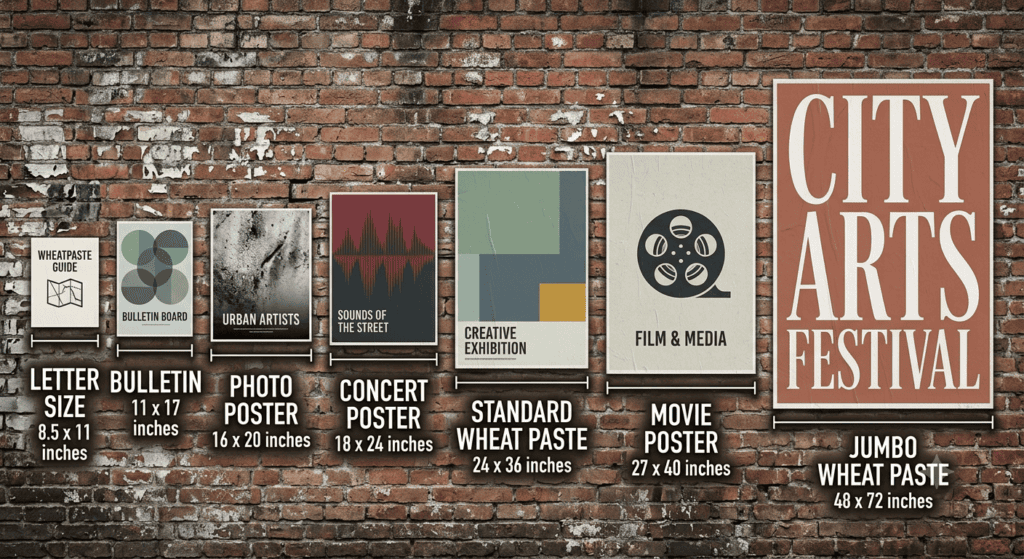
For poster campaigns in Condesa, the concentration of visual culture on specific blocks makes placement selection critical. The walls along Parque Mexico, particularly on the Amsterdam ring, carry poster-format content that gets read because the pedestrian pace is slow and the visual environment is not overwhelmed by competing commercial signage. Our wheatpaste and poster campaigns in Condesa focus on these slower-traffic visual positions rather than high-speed arterial placements that deliver less dwell time per impression.
Roma Norte: Cultural Density and Street Life
Roma Norte is Condesa’s eastern neighbor and shares many of its demographic characteristics while adding a slightly more local, less internationally-facing cultural identity. The neighborhood’s concentration of independent galleries, record shops, independent restaurants, and cultural venues makes it the strongest district in Mexico City for campaigns targeting creative professionals, arts-adjacent consumers, and the broader CDMX cultural community.
The primary foot traffic corridors in Roma Norte run along Avenida Alvaro Obregon, which functions as the neighborhood’s main promenade, and along Calle Orizaba and Tonala between Obregon and Sonora. The Saturday Mercado del Alvaro Obregon concentrates the neighborhood’s target demographic in a single walkable corridor during morning and afternoon hours, creating one of the strongest sampling and brand ambassador activation windows in the neighborhood’s weekly calendar.
Poster campaigns in Roma Norte perform well because the neighborhood’s visual culture values creative expression in public space. Original, well-designed creative gets looked at. Generic commercial formats get ignored. Our team briefs Mexico City creative teams specifically on the visual language that lands in Roma Norte versus what performs in the more commercially-oriented districts like Polanco or Santa Fe.
Polanco: Premium Brand Territory
Polanco is Mexico City’s luxury district, and the demographic concentrated in its shopping and dining corridors reflects that. The area around Presidente Masaryk Avenue, which is sometimes called Mexico City’s Rodeo Drive, carries foot traffic that skews toward high-income consumers, international visitors, and business professionals. For premium consumer brands, financial services, luxury retail, and high-end hospitality campaigns, Polanco is the primary CDMX targeting environment.
Brand ambassador programs in Polanco require a different profile and briefing than equivalent programs in Condesa or Roma Norte. The Polanco consumer demographic expects professional presentation, polished brand materials, and interaction protocols that match the neighborhood’s premium positioning. Our brand ambassador teams deployed in Polanco are selected and briefed specifically for this environment, with presentation standards that reflect the brand positioning of the clients we represent.
Sampling activations in Polanco work best along Presidente Masaryk in the afternoon and evening hours when the shopping traffic is at peak volume. The concentration of luxury retail along this corridor means the audience is already in a discovery and purchase mindset, which makes product sampling and brand introduction particularly well-timed. For premium food and beverage brands in particular, the Polanco corridor is one of the strongest introduction-to-consumer environments in the city.
Centro Historico: Scale and Visual Impact
The historic center of Mexico City operates at a different scale than any other neighborhood in CDMX. The Zocalo, the streets around the Templo Mayor, and the commercial corridors of Madero Street toward Bellas Artes carry foot traffic volumes that dwarf anything available in Condesa or Roma Norte. On weekday afternoons, the pedestrian volume on Madero Street rivals the busiest commercial streets in any North American city. On weekend days during major events or holidays, foot traffic in the Centro reaches millions of people across the wider historic district.
Campaigns in Centro Historico that are designed for scale rather than targeting precision can achieve impression volumes that are difficult to replicate anywhere else in Mexico City at equivalent cost. Large-format poster placements on the commercial buildings along Madero and along the streets approaching the Zocalo reach audiences at a scale that traditional OOH buys in the center require enormous budgets to match. Street team activations in the Centro during peak foot traffic periods achieve direct interaction volumes that reflect the sheer density of the pedestrian environment.
The Centro audience is demographically diverse in a way that Condesa and Polanco are not. The foot traffic mix includes working-class commuters, commercial shoppers, tourists, students, and government workers, reflecting the Centro’s role as the functional heart of the metropolitan area rather than a residential neighborhood with a distinct demographic identity. Campaigns that work in Centro Historico are designed for broad demographic reach rather than precise targeting.
Coyoacan: Arts, Students, and Cultural Community
Coyoacan occupies a specific position in CDMX’s neighborhood ecology. Its association with Frida Kahlo, Leon Trotsky, and a long history of artistic and intellectual life has made it a destination neighborhood for the arts and culture community, for university students from UNAM, and for international visitors who come specifically for its colonial architecture and cultural heritage sites. Weekend foot traffic in the Coyoacan market area and around the main plaza concentrates this specific demographic in a walkable, slow-moving environment.
For campaigns targeting arts-adjacent consumers, students, and culturally engaged Mexicans and international visitors, Coyoacan is one of the strongest districts in the city. The audience in Coyoacan is engaged with cultural content in a way that makes poster campaigns, experiential activations, and brand ambassador approaches land differently than they do in a commercial district. Creative that references arts, culture, or the neighborhood’s specific identity performs better than generic commercial formats.
Sampling activations in Coyoacan work well in the market area on weekend mornings and around the Viveros park during afternoon hours when the UNAM student population that uses the park for exercise and study is concentrated in the area. The demographic crossover between the arts community, the student population, and the cultural tourism audience makes Coyoacan one of the more complex targeting environments in CDMX, but also one of the most rewarding for brands that can speak credibly to this community.
Chapultepec and Reforma: The Central Corridor
The Paseo de la Reforma corridor connecting Polanco to Centro Historico, and the Chapultepec park complex at its western anchor, function as Mexico City’s central axis for both professional commuter traffic and weekend leisure foot traffic. On weekdays, the Reforma corridor carries business professional traffic between the financial and luxury districts and the government and commercial center. On weekends, particularly Sunday when the city closes the avenue to cars and it becomes a pedestrian and cycling corridor, foot traffic volumes along Reforma reach extraordinary levels.
Sunday on Reforma is one of the strongest single-day street-level activation environments in Mexico City. The combination of the vehicle closure, which converts the boulevard into a pedestrian plaza, the cycling traffic from Ecobici and private bikes, and the families and leisure audiences who use the space creates a captive, relaxed, socially engaged audience that is exceptionally receptive to brand activations. Our team has deployed sampling programs, brand ambassador approaches, and experiential activations along Sunday Reforma that reached tens of thousands of consumers in a single activation day.
Chapultepec park itself, which borders Reforma at the park entrance, produces some of the highest weekend foot traffic in the city. The combination of cultural institutions, the lake, and recreational space draws a diverse, family-oriented audience on weekends that works well for consumer campaigns with broad demographic reach. Activation positions near the park entrances on Constituyentes and at the Reforma entrance concentrate foot traffic in predictable, manageable activation zones.
Logistics and Field Operations in CDMX
Executing street-level campaigns in Mexico City requires local field intelligence that goes beyond what can be planned from a desk in New York or Los Angeles. Municipal regulations for street-level activations vary by borough, permit requirements for specific formats in specific neighborhoods require local knowledge, and the practical realities of working in CDMX, from traffic patterns to local vendor relationships, require field experience in the specific markets where campaigns run.
Our team coordinates CDMX campaigns through local field operations partners who have established relationships with the municipal processes, vendor networks, and location-specific access requirements for each neighborhood. This local coordination layer is what separates campaigns that execute cleanly from campaigns that encounter logistical problems that compromise timing and coverage.
All CDMX campaign execution uses the same GPS-tracking and photo documentation infrastructure we apply in US and Canadian markets. Clients receive timestamped, location-verified field reports that document what was deployed, where, and when. For brands that need to demonstrate campaign execution to internal stakeholders, the documentation package gives marketing and finance teams verifiable proof of performance without requiring travel to the market.
Connecting Mexico City to Broader International Campaign Strategy
For brands running international campaigns that span North America and Latin America, Mexico City is typically the first Latin American market to activate, due to its size, its concentration of relevant consumer demographics, and its role as a cultural and commercial hub for the region. Our guerrilla marketing services in CDMX connect directly to our US market operations, allowing brands to coordinate campaigns across New York, Los Angeles, Chicago, and Mexico City with unified creative direction and synchronized timing.
For campaigns that need to launch simultaneously in multiple markets, our coordination infrastructure handles the Mexico City component alongside US market execution. A product launch that deploys brand ambassador teams in Condesa, Roma Norte, and Polanco on the same day that street teams activate in Brooklyn, Echo Park, and Wicker Park creates a coordinated multi-city moment that builds momentum across the brand’s target communities simultaneously.
The integration of Mexico City into US-centered campaign strategies is increasingly common for brands targeting bilingual, bicultural consumers in both markets. An activation in Roma Norte that photographs well and gets shared on social media reaches the same connected, culturally engaged audience in Los Angeles and New York that the US-based activations are targeting. The geographic distance between markets does not diminish the social media connectivity between the communities in those markets.
Formats That Work Across Mexico City Districts
Our poster and wheatpaste campaigns work across all CDMX neighborhoods but perform differently in each. In Condesa and Roma Norte, creative quality is the primary determinant of performance. In Centro Historico, scale and placement are more important than creative refinement because the volume of competing visual content is higher. In Polanco, presentation quality and brand positioning matter more than creative experimentation.
Brand ambassador programs require neighborhood-specific staffing and briefing. The team deployed in Polanco needs different presentation and interaction protocols than the team deployed on Sunday Reforma. Our brand ambassador agency operations in Mexico City maintain neighborhood-specific briefing materials and select field staff based on their fit with the specific demographic and cultural context of each activation environment.
Sampling activations in Mexico City benefit from the outdoor dining and cafe culture in Condesa and Roma Norte, where potential consumers are in a slow-moving, food and beverage-oriented environment that creates natural sampling moments. Our experiential marketing team builds sampling programs specifically around these environmental opportunities, timing activations to coincide with the peak outdoor dining windows in each neighborhood.
Frequently Asked Questions
What is guerrilla marketing in Mexico City?
Guerrilla marketing in Mexico City refers to street-level campaigns that use non-traditional formats to reach consumers in public spaces. This includes poster campaigns, brand ambassador programs, sampling activations, stencil work, and experiential activations in high-traffic neighborhoods like Condesa, Roma Norte, Polanco, and the historic Centro. These formats work because Mexico City’s walkable, dense neighborhoods create concentrated pedestrian environments where direct consumer contact is possible at scale.
Which Mexico City neighborhoods work best for guerrilla marketing?
Condesa and Roma Norte are the two strongest neighborhoods for consumer-facing guerrilla marketing in Mexico City. Polanco works best for luxury and premium brand activations. The historic Centro Historico provides extraordinary visual scale for large-format campaigns. Coyoacan and Xochimilco work well for cultural and arts-adjacent campaigns. Each neighborhood has a distinct demographic profile and foot traffic pattern that determines which formats and timing windows produce the strongest results.
Does American Guerrilla Marketing run campaigns in Mexico City?
Yes. Our team plans and executes street-level campaigns in Mexico City including Condesa, Roma Norte, Polanco, Chapultepec, Centro Historico, and Coyoacan. We coordinate brand ambassador programs, poster campaigns, sampling activations, and experiential activations with local field operations partners. All campaigns are GPS-tracked and fully documented.
How does the Chapultepec area work for brand activations?
Chapultepec park and the surrounding Paseo de la Reforma corridor produce some of the highest-volume pedestrian environments in Mexico City. Weekend foot traffic in Chapultepec park reaches hundreds of thousands of visitors. The Sunday vehicle closure of Reforma converts the boulevard into a pedestrian plaza that functions as one of the strongest single-day activation environments in the city. Brand activations along this corridor reach a demographically diverse, high-volume audience in a relaxed, receptive state.
What street-level OOH formats work in Mexico City?
Poster campaigns, brand ambassador street teams, sampling activations, and experiential pop-ins all work well in Mexico City’s high-density neighborhoods. The city’s walking culture and outdoor cafe scene in Condesa and Roma Norte create extended dwell-time environments where ambient exposure is high. Mobile billboard trucks work along major arteries including Insurgentes, Reforma, and the main Condesa-Roma thoroughfares. Format selection depends on the specific neighborhood and target demographic.
What languages are used for Mexico City guerrilla marketing campaigns?
Most consumer-facing campaigns in Mexico City run in Spanish. Campaigns targeting the international and expat communities in Condesa and Roma Norte can incorporate English, particularly for lifestyle, tech, and entertainment brands. Our field staff in Mexico City are native Spanish speakers with experience in both Mexican consumer culture and international brand presentation.
How does Mexico City compare to other Latin American markets for street-level marketing?
Mexico City is the largest urban market in Latin America and one of the densest pedestrian environments in the world. The concentration of cultural, commercial, and entertainment activity in specific walkable neighborhoods creates street-level marketing conditions that rival the best markets in North America and Europe. The combination of walking culture, outdoor dining, and vibrant street life in neighborhoods like Condesa and Roma Norte makes Mexico City one of the most receptive environments for guerrilla marketing formats globally.