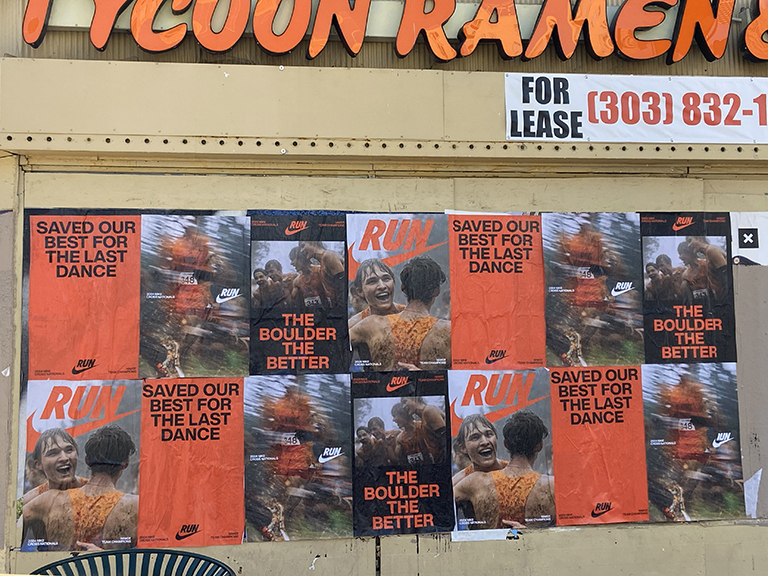
Guerrilla marketing is one of the most used and least precisely defined terms in advertising. People apply it to everything from a startup’s social media stunt to a billion-dollar brand’s flash mob. The core definition — drawn from Jay Conrad Levinson’s 1984 book that named the discipline — is advertising that uses unconventional tactics, unexpected contexts, and creative surprise to earn attention rather than buying it. What distinguishes guerrilla marketing from conventional advertising is not the budget, not the format, and not the medium — it is the approach. Guerrilla marketing goes where conventional advertising does not go, appears in contexts where advertising is not expected, and creates brand encounters that audiences remember precisely because they were not supposed to happen where they did.
American Guerrilla Marketing executes campaigns in 50+ U.S. markets. We operate out of Industry City, Brooklyn, NY and deploy flyposting crews, LED billboard trucks, experiential activations, brand ambassador programs, sidewalk stencil installations, and projection campaigns for brands from emerging challengers to established global names. This is our industry, our daily work, and this guide reflects what guerrilla marketing actually is in practice — not as a theoretical concept but as a set of executed tactics with real costs, real logistics, real legal considerations, and real results.
The Origin and Evolution of Guerrilla Marketing
Jay Conrad Levinson coined the term “guerrilla marketing” in 1984 with a simple premise: small businesses could compete against large corporations not by matching their advertising budgets but by being smarter, more creative, and more unexpected in their marketing tactics. The guerrilla metaphor was intentional — guerrilla fighters succeed not through superior resources but through knowledge of the terrain, surprise, flexibility, and the ability to outmaneuver a larger opponent who is expecting a conventional battle on conventional terms.
The discipline has evolved dramatically since 1984. Levinson’s original guerrilla marketing was primarily about low-budget creativity for small businesses. Today, guerrilla marketing encompasses tactics used at every budget level — from the $5,000 neighborhood flyposting campaign for an independent music artist to the multi-million dollar city-wide guerrilla marketing launch for a global brand’s new product. The core principle — unexpected, attention-earning, conversation-generating brand encounters — remains constant. The scale and sophistication of the execution has grown to match the mainstream adoption of the approach.
Core Guerrilla Marketing Tactics
Guerrilla marketing is not a single tactic — it is a discipline with a range of specific execution formats, each with its own cost structure, audience reach profile, legal considerations, and campaign objective fit.
Flyposting and Wheatpaste Campaigns
Our flyposting and wheatpaste campaigns are the original guerrilla format — deploying large-format posters on permitted surfaces in target neighborhoods to create visual saturation that builds brand familiarity at the community level. A well-executed flyposting campaign covers the key pedestrian corridors of a target neighborhood at a density that creates the sense of ubiquitous brand presence — the impression that the brand is everywhere you look in this part of the city.
Sidewalk Stencils and Street Installations
Our sidewalk stencil programs place brand presence directly in the pedestrian path — creating brand encounters in the literal space where the audience walks. Stencils on sidewalks, painted markings in pedestrian environments, and physical street installations create the underfoot, inescapable brand presence that traditional OOH and poster campaigns cannot achieve because they operate at eye level or above rather than in the pedestrian’s direct line of sight.
LED Billboard Trucks
Our LED billboard trucks are mobile media platforms — trucks carrying large LED screens that display full-motion video content while driving through target areas or deployed at specific event perimeters. The strategic advantage is mobility: the media follows the audience rather than waiting for the audience to come to it. Event-perimeter deployments, competitive conquest campaigns near competitor locations, and targeted neighborhood routes are the primary LED truck applications.
Brand Ambassadors and Street Teams
Our brand ambassador and street team programs create face-to-face brand encounters in target consumer environments — sampling products, distributing materials, gathering leads, and creating the direct human engagement that no passive advertising format can replicate. Ambassador programs work for product launches, consumer education campaigns, event activations, and any campaign objective that benefits from direct human interaction with the target consumer.
Experiential Marketing and Pop-Up Activations
Our experiential marketing activations create brand experiences — not brand messages. Rather than telling consumers what a brand is or does, experiential activations put consumers inside the brand experience in a way that generates emotional response, social content creation, and lasting memory encoding. Pop-up stores, interactive street installations, brand environment builds, and immersive experience events are all experiential marketing formats.
Why Guerrilla Marketing Works in 2026
Guerrilla marketing’s effectiveness in 2026 is greater than at any prior point in the discipline’s history — because the conditions that make conventional advertising struggle have intensified while the conditions that make guerrilla marketing effective have strengthened.
Conventional Advertising Is Increasingly Filtered
Digital ad blocking affects over 40% of U.S. internet users. Social media scrolling past promoted content has become a conditioned reflex. Television viewership is fragmenting to streaming with reduced ad exposure. Standard OOH placements in familiar advertising locations register with passive awareness rather than active attention. The advertising environments that consumers are most familiar with have become the environments where they are least attentive. Guerrilla marketing creates brand encounters in the environments that still earn genuine attention precisely because advertising is not expected there.
Social Media Amplification Creates Leverage
A guerrilla campaign in 1984 reached only the people who physically encountered it. A guerrilla campaign in 2026 reaches everyone who physically encounters it plus everyone who sees the social media content generated by those physical encounters. The combination of physical-world surprise with social media documentation and sharing creates a reach multiplier that makes guerrilla marketing’s cost-per-effective-impression dramatically more efficient than it was in the pre-social media era.
Guerrilla Marketing Strategy: Core Principles
Effective guerrilla marketing is not random creative rebellion — it is strategic surprise. The campaigns that work share specific strategic properties:
Audience Understanding Before Tactic Selection
Know who you are trying to reach and where they actually are before selecting tactics. The best tactic for reaching young creatives in a specific urban neighborhood is different from the best tactic for reaching suburban families or downtown professionals. Tactic selection follows audience and location intelligence — not the other way around.
Quality in Execution
Guerrilla marketing’s effectiveness depends on the quality of its execution. A poorly produced poster campaign, a badly briefed ambassador team, or an experiential activation with broken logistics creates negative brand impressions precisely because the unexpected context amplifies everything — both positive and negative. Quality in guerrilla marketing is not optional — it is the prerequisite for surprise to work in the brand’s favor.
Integration with Broader Campaign
Guerrilla tactics achieve their greatest impact as components of coordinated campaign systems — where street-level elements work alongside digital, OOH, and social media elements to create campaign frequency across multiple audience touchpoints. The guerrilla elements create the surprise and social content; the surrounding campaign elements provide the context that makes the surprise resonate with brand recognition and consistent messaging.
Frequently Asked Questions: What Is Guerrilla Marketing?
What is guerrilla marketing?
Guerrilla marketing is an advertising approach using unconventional, creative tactics to reach audiences in unexpected ways — generating surprise, conversation, and social sharing that conventional advertising cannot produce. It includes flyposting, sidewalk stencils, LED billboard trucks, experiential activations, ambient installations, brand ambassador programs, and any tactic that creates unexpected brand encounters in real-world environments.
What makes guerrilla marketing effective?
It earns attention rather than buying it. In an environment where consumers have developed strong filtering reflexes for standard advertising formats, unexpected brand encounters cut through that filtering. The unexpectedness creates genuine attention; the quality of the experience creates memory; and the social sharing of surprised audiences extends campaign reach far beyond the direct physical audience.
What are examples of successful guerrilla marketing campaigns?
IKEA turning subway benches into showroom displays, Red Bull placing crashed race cars on city streets, Burger King’s Whopper Detour using competitor locations as geo-triggered promotions, The Blair Witch Project’s viral marketing campaign, and Blendtec’s Will It Blend YouTube series. Modern examples range from street-level flyposting for music releases to AR-enhanced brand experiences in urban neighborhoods.
Is guerrilla marketing legal?
Most guerrilla tactics are legal when executed properly. Flyposting is legal on permitted surfaces. Chalk sidewalk stencils are widely tolerated. LED trucks operate legally on public roads. Ambassador programs in public spaces are generally permitted. Projection on private buildings requires owner permission. A professional guerrilla marketing agency navigates legal requirements for each tactic and market as standard practice.
How much does a guerrilla marketing campaign cost?
Neighborhood flyposting: $5,000-$15,000. LED billboard trucks: $1,500-$3,000/day. Brand ambassador programs: $3,000-$8,000/deployment day. Full experiential activations: $25,000-$150,000+. National multi-city campaigns: $100,000 to millions. The right budget depends on tactics, markets, duration, and measurement requirements.
How is guerrilla marketing different from traditional advertising?
Traditional advertising purchases media placements in known advertising contexts. Guerrilla marketing creates brand encounters in unexpected contexts — surprising audiences rather than intercepting them in known advertising spaces. Traditional advertising competes for attention within familiar advertising environments. Guerrilla marketing creates presence where advertising is not expected, generating the attention that novelty produces and that familiarity forfeits.
Frequently Asked Questions
What is what is guerrilla marketing?
American Guerrilla Marketing provides what is guerrilla marketing services across 50+ U.S. markets. Every campaign is planned, scouted, executed, and GPS-documented by our field teams. We work with regional brands and Fortune 500 companies on campaigns that require real street-level execution and documented proof of performance.
How does AGM approach guerrilla marketing?
Our process starts with a market consultation to understand your goals, target audience, and budget. We then scout locations, handle any required permissions or permits, coordinate production and installation with our local crews, and provide a full GPS-tagged photo report after the campaign runs.
What markets does American Guerrilla Marketing cover for guerrilla marketing?
We operate in 50+ U.S. markets including New York, Los Angeles, Chicago, Miami, Houston, Atlanta, Seattle, Denver, Boston, and dozens of secondary markets. Contact us to confirm availability and pricing for your specific market.
How much does a guerrilla marketing campaign cost?
Campaign pricing depends on market, format, quantity, and duration. We work with budgets ranging from targeted single-market runs to national rollouts across multiple cities. Use our RFP Builder or contact us directly for a custom quote based on your specific campaign requirements.
How do I get started with guerrilla marketing through AGM?
The fastest way to get started is to submit your campaign details through our RFP Builder at americanguerrillamarketing.com, or contact us directly at [email protected] or (646) 776-2770. Our team typically responds within one business day with availability and initial pricing.