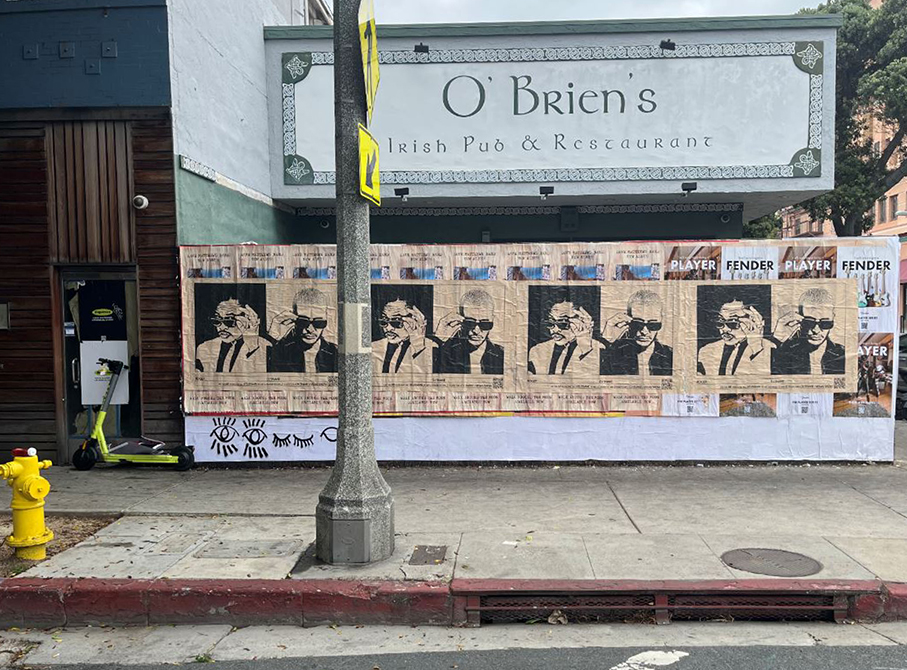
Guerrilla Marketing Chicago: Street Campaigns in Every Major Neighborhood becomes more valuable when it is scoped as an operating decision rather than a generic advertising option. AGM looks at the real variables first: where the audience moves, how surfaces or routes behave, what permissions matter, what production standards protect the brand, and what a client will need to see in the final report.
This page is written from that field perspective. It is meant to help buyers understand when the format is strategically useful, how execution quality changes outcomes, and what questions should be answered before the campaign is approved.
What Makes This Market Different
Chicago is not one market; it is a collection of neighborhoods with sharply different audiences, weather realities, and event calendars. Buyers who flatten the city into one audience usually overspend and underperform. AGM plans by corridor, neighborhood, and daypart because that is how the city is actually experienced. The best media plan in one pocket of the market can be the wrong plan two miles away.
Who This Page Is For
This page is written for buyers who are evaluating guerrilla marketing chicago: street campaigns in every major neighborhood as a real operating decision, not as marketing theory. In practice that means brand managers under launch deadlines, growth teams trying to make a market-entry budget work harder, entertainment and event marketers who need local visibility fast, agencies looking for a field execution partner that understands street-level risk, and founders who know paid social alone is not going to create physical market presence.
It is also useful for teams who are comparing options and need to know whether this format belongs in the plan at all. The wrong use case wastes money. The right use case creates disproportionate attention because it reaches people in the exact places where recall, repetition, and local context matter. AGM’s view is practical: a format earns its place only if it matches the audience, the geography, the timeline, and the operational realities on the ground.
Neighborhood-Level Decision Criteria
AGM’s first neighborhood question is not “where is famous?” It is “where does the target actually move and repeat?” A famous corridor with low audience relevance is expensive theater. A less glamorous corridor with better audience fit can create stronger recall and cleaner downstream performance. That is why location planning gets tied to category: entertainment behaves differently from B2B, political differently from beverage, and event marketing differently from year-round brand building.
In city campaigns, timing also changes neighborhood value. Morning commuter patterns, lunch traffic, after-work concentration, nightlife spillover, weekend tourism, and event-week surges can all transform the same block. A good operator reads those rhythms before making promises.
Execution Standards That Protect the Brand
City campaigns get judged at street level. Creased assets, poor placement height, weak sightlines, route logic that ignores real footfall, or crews who cannot document what they did all erode the credibility of the brand running the work. AGM’s operating standard is built to avoid that. The work has to look deliberate, properly finished, and context-aware because people in dense urban environments can instantly tell the difference between a professional campaign and a cheap approximation.
What Strong Execution Looks Like in the Field
Good guerrilla marketing chicago: street campaigns in every major neighborhood work is operational before it is rhetorical. That means clear market selection, production deadlines that match install reality, route logic that reflects how people actually move through a district, and crews who understand that the quality of placement changes the quality of perception. The reason many brands get disappointed with street marketing is not because the channel failed. It is because the operating standard was weak: the wrong surfaces, too much geographic spread, soft creative choices, poor documentation, or timing that missed the audience concentration window.
AGM’s field bias comes from years of watching small tactical choices change outcomes. A poster bank two blocks too far from the main footfall can underperform badly. A projection pointed at the wrong facade loses half its stopping power. A street team with no concise ask turns a high-energy environment into wasted payroll. For that reason AGM builds from practical details upward: where the audience turns the corner, where they wait, what they notice from distance, how fast turnover happens, what production specs survive the actual environment, and what refresh cadence is required to keep the work looking intentional instead of stale.
How AGM Measures Whether the Work Is Actually Working
Street-level marketing gets talked about too loosely, so AGM treats measurement as part of the job rather than a decorative afterthought. The first layer is proof of execution: route logs, GPS-tagged photos, installation timestamps, and crew accountability. If the work was not documented, it did not happen. The second layer is market observation: what changed in local awareness, inbound mentions, event-foot-traffic quality, sales-conversation context, branded search lift, QR scans, sampling conversion, or earned media pickup. The third layer is decision quality for the next round. Which neighborhood produced better response? Which format created the strongest recall? Which creative carried from field observation into digital conversation?
That approach matters because physical advertising rarely performs as a single isolated touch. It changes the quality of every other touch around it. A prospect who saw the campaign in the neighborhood arrives at the landing page differently. A conference attendee who remembers the truck or poster bank hears the sales conversation differently. A festival attendee who already saw the visual environment on the street responds differently to a team on the ground. AGM scopes measurement around that reality instead of pretending every result collapses into one vanity metric.
When guerrilla marketing chicago: street campaigns in every major neighborhood Is the Right Choice and When It Is Not
The right reason to use this approach is not that it feels edgy. The right reason is that a physical-world format solves a business problem better than the alternatives. It is a strong fit when a campaign needs local density, contextual relevance, neighborhood credibility, event adjacency, launch-week visibility, or repeated exposure among people who travel the same corridor. It is weaker when the buyer actually needs broad national reach with no geographic concentration, when compliance constraints eliminate the available surfaces, or when the creative cannot carry at street speed.
A helpful rule is to ask whether the audience can realistically encounter the campaign more than once in a meaningful window. If the answer is yes, street work gets stronger. If the answer is no and the campaign is essentially a one-pass impression play, the budget may belong somewhere else. AGM will usually steer clients away from the wrong use case rather than forcing a format into a plan where it does not belong.
Compliance, Permissions, and Brand Risk
One of the clearest experience signals in this category is whether the operator talks honestly about permissions. AGM does. Surface access, property-owner authorization, event rules, building visibility, city enforcement posture, and production methods all affect what can be done and how it should be done. The agency’s default position is that brand visibility should be achieved in a way the client can defend internally. That means documenting approved surfaces, setting realistic expectations about timing and removals, and refusing to turn ambiguous access into a fake promise.
For sophisticated clients, that is not a small detail. Legal and operations teams often have to sign off on field work. The marketing department may love a concept that compliance will reject if the execution path is vague. AGM’s job is to close that gap with specifics: what kind of surface, what kind of access, what timing window, what staffing model, what proof comes back after installation, and what contingency exists if conditions change. The more specific the operator is, the more usable the plan becomes for an actual company.
Bottom Line
Guerrilla Marketing Chicago: Street Campaigns in Every Major Neighborhood works best when it is planned as field strategy instead of treated like decoration. The creative matters, but the deeper use comes from market choice, route logic, installation quality, timing, and the discipline to treat physical visibility like an operating system rather than a stunt. That is the perspective AGM brings to these campaigns. The brands that get the most from the channel are usually the ones that respect those details before launch, not after the field report comes back.
Why Chicago is really a network of distinct guerrilla environments
Guerrilla marketing in Chicago works best when the city is treated as a set of different behavior zones instead of a single broad market. The Loop, River North, Wicker Park, West Loop, Logan Square, Pilsen, campus edges, and festival pockets all create different expectations and movement patterns.
That means the same tactic will not perform the same way everywhere. The city rewards planners who choose the right neighborhood logic for the campaign instead of chasing symbolic coverage everywhere at once.
How event timing changes Chicago street strategy
Chicago’s event calendar can dramatically change where public attention sits. Lollapalooza, neighborhood festivals, sports traffic, convention windows, and seasonal public spaces all create temporary shifts in audience density. A strong guerrilla plan notices those shifts and uses them instead of fighting them.
This is one reason route flexibility and localized pressure matter so much in the city. The best campaigns often feel smaller on paper and stronger in the street.
What brands should prioritize when entering the market
Some brands need cultural credibility. Some need launch-week awareness. Some need physical trial or handoff. Some need a repeated visual footprint near nightlife or commuter movement. Once that objective is clear, the city becomes easier to read and the tactic mix becomes easier to justify.
Without that clarity, teams tend to buy too much geography and not enough actual pressure.
Where AGM would usually look for leverage
We usually look for districts where the audience repeats movement, where the environment matches the brand tone, and where the campaign can create either visible dominance or a meaningful handoff. That may involve posters, teams, mobile media, projections, local takeovers, or some mix of fixed and moving visibility.
The use point is different for every brief, but the principle is stable: concentration beats shallow spread.
What the recap should reveal in a city like Chicago
The recap should tell the client which neighborhoods actually held attention, whether the event timing or route assumptions proved true, and where the next round should add or reduce pressure. In a city with so many usable pockets, that learning is part of the value.
Chicago campaigns get sharper when the team respects the city as a living system rather than as a logo backdrop.
How AGM would pressure-test this topic before launch
For a page like Guerrilla Marketing Chicago: Street Campaigns in Every Major Neighborhood, the useful next question is always how the idea would survive first contact with the real market. AGM usually pressure-tests that by looking at audience movement, timing windows, operational dependencies, creative legibility, and whether the tactic can create enough concentrated pressure to matter.
That step matters because guerrilla marketing chicago can sound strong in theory while still being weak in practice if the route, staffing, or production assumptions are off. Good planning turns the concept into something the field can actually support.
Questions a serious buyer should ask about guerrilla marketing chicago
A serious buyer should ask what the tactic is really supposed to do, where the audience will encounter it, what assumptions the plan is making about timing and behavior, and what proof will come back after the campaign. Those questions tighten strategy quickly because they remove the comfort of vague enthusiasm.
They also make it easier to compare options honestly. Once the role of guerrilla marketing chicago is clear, the budget, creative direction, and success metrics all become easier to defend.
Why this subject keeps mattering in 2026
Guerrilla Marketing Chicago: Street Campaigns in Every Major Neighborhood still matters in 2026 because brands are still trying to win real-world attention in markets where digital saturation has made physical presence feel fresh again when it is executed well. The old logic has not disappeared. It has just become more selective and more dependent on planning discipline.
That is why the strongest teams keep returning to the same core principles: concentrated pressure, audience fit, clean execution, and honest recaps that improve the next round instead of merely documenting the last one.
Where brands should stay disciplined about guerrilla marketing chicago
Brands usually get the best result from guerrilla marketing chicago: street campaigns in every major neighborhood when they stay disciplined about scope and avoid asking one tactic to solve every marketing problem at once. The campaign should have a defined job, a realistic target environment, and enough pressure to become noticeable where it counts.
That discipline is also what keeps the creative simpler, the operations cleaner, and the recap easier to interpret once the work is done.
What makes the next round smarter than the first
The first run is rarely the final lesson. What makes a tactic truly valuable is the team learning where the audience responded, where the route logic was strongest, and what should change before the next deployment. Street marketing improves quickly when that learning loop is respected.
That is part of why pages like Guerrilla Marketing Chicago: Street Campaigns in Every Major Neighborhood matter. They are not just definitions or sales copy. They are decision frameworks for building a sharper second campaign.
One more practical note about guerrilla marketing chicago
The most useful final reminder about guerrilla marketing chicago is that execution quality usually matters more than the first version of the idea. Brands can recover from a modest concept more easily than they can recover from weak field delivery, fuzzy scope, or reporting that never proves what actually happened.
That is why AGM keeps returning to the same fundamentals: fit the tactic to the audience, keep the message legible, apply enough concentrated pressure to matter, and treat the recap like part of the strategy instead of an afterthought.
FAQ
What is the best guerrilla tactic for Chicago?
There is no single best tactic. The right choice depends on the neighborhood, audience movement, event timing, and the specific job the campaign needs done.
Should brands go citywide right away?
Usually not. Concentrated pressure in the right neighborhoods often performs better than a thin citywide presence.
How does Chicago differ from other big markets?
Its neighborhoods and event rhythms have strong identities, which means local fit matters more than a generic major-city plan.
What kinds of brands benefit most from guerrilla marketing in Chicago?
Entertainment, retail, hospitality, events, challenger brands, and campaigns that need local visibility or public interaction often benefit most.
Why use AGM in Chicago?
AGM builds around neighborhood logic, field execution, and concentrated pressure so the campaign fits the way Chicago actually behaves.
Closing take on guerrilla marketing in Chicago
Chicago rewards guerrilla campaigns that understand neighborhood identity, event rhythm, and the value of repeated local pressure.
AGM uses that lens to help brands choose smarter streets, stronger timing, and more believable field execution across the city.