
September 12, 2026
Experiential Marketing Campaigns | American Guerrilla Marketing
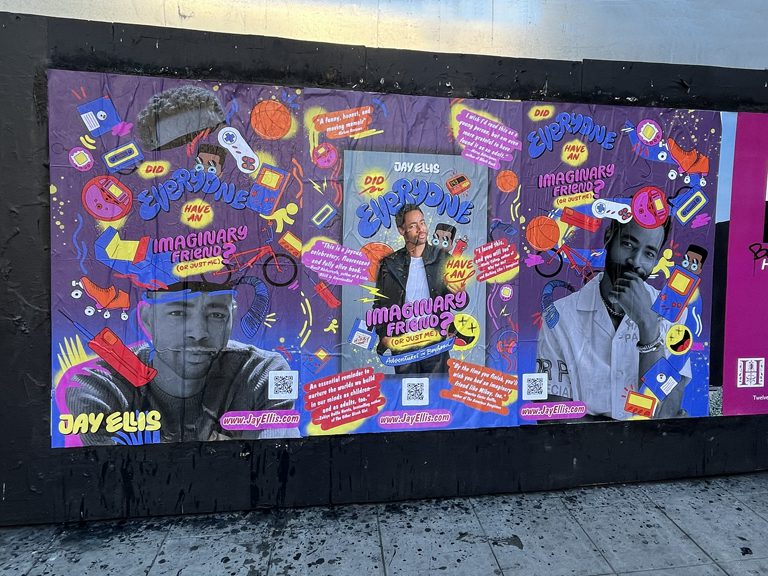
Every effective experiential marketing campaign starts with a clear objective and ends with honest measurement. Here is what happens in between.
An experiential marketing campaign is more than an event or a series of activations. It is a coordinated, strategic program with a defined objective, a specific target consumer, a deliberate format choice, and a measurement framework that tells you whether the campaign delivered what it was designed to deliver. Building one correctly requires thinking through every layer of the campaign before the first activation day, not improvising through it.
We have built experiential marketing campaigns across every major US market, for brands at every scale, across a wide range of categories. The campaigns that consistently deliver results share specific characteristics. The campaigns that disappoint share different ones. This guide covers both — what works, what does not, and the specific disciplines that make the difference between a campaign you can build on and one you learn from the hard way.
The Anatomy of an Effective Experiential Marketing Campaign
Every effective experiential marketing campaign has six components that must all work in alignment. A gap in any one of them weakens the whole structure.
1. A Single, Specific Objective
The single most common reason experiential campaigns underperform is an objective that is too vague or too numerous. “Increase brand awareness and drive trial and build community and generate social content” is not an objective. It is four objectives competing for the same resources and attention. Each of those goals requires a different campaign design. Trying to serve all four with one campaign produces a compromise that serves none of them well.
Pick one. Build everything around it. The most effective experiential campaign we have ever run was for a food brand that wanted one thing: to get 50,000 New Yorkers to try their product during a two-week window in the spring. Every location decision, every staffing decision, every activation timing decision was made in service of that one objective. The campaign delivered 54,000 verified trials. We built the next campaign on that foundation.
2. A Precise Consumer Profile
Who, specifically, are you trying to reach? Not a demographic bracket. A real person. Age. Neighborhood. Daily context. What they are doing on a Tuesday afternoon versus a Saturday morning. What they care about. What they do not care about. The more precisely you can describe the person this campaign is designed for, the more precisely you can choose locations, timing, messaging, and activation design.
Campaigns built for “millennials” or “health-conscious consumers” or “urban professionals” are built for nobody in particular. Campaigns built for a 28-year-old woman who lives in Williamsburg, works in tech, goes to the farmers market on Saturday mornings, and has tried three different brands of the product category in the past year are built for someone real. The design that works for her also works for everyone who shares her profile.
3. A Clear Creative Concept
The creative concept is the experience design — what the consumer will do, what they will feel, how the brand’s identity connects to the interaction. A strong concept can be summarized in one sentence and is specific enough that every production decision can be tested against it.
Weak concepts are generic. “A fun sampling event with branded giveaways” is not a concept. “A street activation where consumers discover that mixing our product with hot water creates an entirely new drink, different from anything they have experienced with the brand before” is a concept. One describes a format. The other describes an experience with a specific sensory and emotional design intent.
4. Disciplined Field Execution
The most important determinant of campaign success is what happens in the field on activation day, and field execution quality is almost entirely determined by the quality of the planning that preceded it. Trained staff, clear protocols, confirmed logistics, contingency plans, and a field supervisor who knows the brand and knows the market: these are not luxuries. They are the infrastructure that determines whether the concept becomes a real consumer experience or a near miss.
5. A Content Strategy
The organic social content that an experiential campaign generates is one of its most valuable returns, and it is only available to brands that plan for it. A content strategy defines what moments to capture, who captures them, in what format, for which channels, on what timeline. A campaign without a content strategy is a campaign that loses most of its earned media value because nobody had a camera in the right place at the right time.
6. A Measurement Framework
Measurement must be designed before the campaign launches, not reconstructed from whatever data you have afterward. Define the 2-3 metrics that will tell you whether this campaign achieved its objective. Build the infrastructure to capture those metrics during the campaign. Report within 48 hours of the final activation day. Use the report to inform the next campaign.
Campaign Formats by Objective
| Campaign Objective | Best Format | Key Success Metrics | Typical Timeline |
|---|---|---|---|
| Product trial at scale | Street-level sampling, retail demo | Samples distributed, trial-to-purchase conversion | 2-8 weeks |
| Brand awareness in new market | Pop-up experience, street team, OOH | Contacts, organic social content, aided awareness lift | 1-3 weeks per market |
| Social content generation | Immersive installation, photo activation | Organic post volume, aggregate social reach | 3-10 days |
| Lead generation | Trade event activation, conference presence | Leads captured, lead-to-opportunity conversion | Event duration |
| Retail traffic and sales lift | In-store demo, retailer event | Sales velocity before/after, traffic counts | Ongoing, 4-12 weeks |
| Community building | Brand-owned event, neighborhood program | Attendees, email captures, community engagement | Recurring, quarterly or seasonal |
| PR and earned media | Press-forward event, newsworthy installation | Press mentions, media value equivalent | 1-3 days, high-profile |
Campaign Planning: The Timeline That Actually Works
The planning timeline for an experiential marketing campaign is one of the most frequently misunderstood variables in the category. Brands consistently underestimate how long quality campaign development takes and pay for that underestimation with compromised execution.
Here is a realistic planning timeline for a mid-complexity single-market campaign:
- Week 1-2: Strategy brief finalized, target market confirmed, format selected, initial concept development
- Week 3-4: Concept presented and refined, location scouted and confirmed, production specifications written
- Week 5-6: Vendor sourcing underway, ambassador recruitment launched, content capture team briefed
- Week 7-8: Materials in production, permits applied for in applicable locations, ambassador training developed
- Week 9-10: Final production completed, ambassador training delivered, content strategy finalized
- Week 11: Pre-activation quality review, contingency plans confirmed, run-of-show distributed
- Week 12: Campaign activates
That is a 12-week timeline for a focused single-market program. Multi-city programs with significant production requirements add 4 to 8 weeks. Programs with custom vehicle builds or major venue negotiations add more. These are not conservative estimates. They are realistic timelines for campaigns that are planned with sufficient depth to execute well.
Location Strategy for Experiential Marketing Campaigns
Where you activate is a strategic decision with direct consequences for who you reach, how many you reach, and what ambient context your brand appears in. We treat location strategy as a campaign-defining decision, not a logistics afterthought.
The best location for any campaign activation is the one where your specific target consumer is already present, in a physical and mental context that makes them most receptive to a brand interaction. That location varies by brand, by consumer, and by campaign objective.
For a premium cold brew coffee brand targeting 25-to-38-year-old urban professionals: the commuter entry to a major subway station during morning rush in a high-income neighborhood puts the brand in front of the consumer at the exact moment when they are thinking about their morning beverage and have two minutes before boarding the train. The location, the time, the consumer state all align.
For the same brand targeting weekend social occasions: the farmers market entrance in a neighborhood where that same consumer spends their Saturday morning puts the brand in a different context with a different consumer state — relaxed, exploratory, already in food-and-beverage discovery mode. Different location, same consumer, different context, different campaign design.
We scout locations on foot, at multiple times of day, before recommending any specific site for a campaign activation. Foot traffic data and neighborhood demographics tell a partial story. The actual experience of standing at a location for 30 minutes at the time of day we plan to activate tells the rest.
The Three Most Common Experiential Campaign Failures
After running hundreds of campaigns, we have a clear list of what causes campaigns to fall short. These are the three we see most often.
Failure 1: Optimizing for the Concept, Not the Consumer
Campaigns that are designed to be visually impressive rather than genuinely engaging fall into this category. The installation that looks extraordinary in a design deck but requires 20 minutes to experience in a high-traffic outdoor environment. The sampling program positioned at a location that is visually interesting but where the target consumer does not actually spend time. The activation that generated a lot of brand discussion within the agency but produced minimal consumer engagement in the field. Great concepts serve the consumer first and the brand second.
Failure 2: Underinvesting in Field Execution
This is the most common and the most costly failure mode. The campaign brief is excellent. The concept is strong. The production is quality. And then the staffing is cut to reduce cost, the training is abbreviated to save time, and the field management oversight is thin. The consumer encounters a disengaged ambassador with shallow product knowledge, or a setup that looks like it was rushed, or a key element that failed because there was no contingency plan. All of the investment in strategy and production is undermined by the execution failure at the point of consumer contact.
Failure 3: No Content Strategy
The activation runs for three days. The consumer engagement is strong. The brand team is excited. And then the campaign ends, and there are 14 blurry photos and no usable video. The organic social content that was generated by the activation is dispersed across hundreds of consumer profiles with no brand tagging and no content capture. The earned media opportunity evaporates. What could have been a campaign with two weeks of social content becomes a campaign that lived and died over a three-day window. Build the content strategy before the campaign starts.
Scaling Experiential Marketing Campaigns
Scaling an experiential marketing campaign from one market to many is one of the most common challenges brands face after a successful first activation. The instinct is to take exactly what worked in Market A and replicate it in Markets B, C, D, and E. That instinct is right about one thing and wrong about another.
Right: the strategic framework and brand standards should be consistent across markets. The concept, the messaging, the visual identity, the ambassador training, the measurement framework — these should all be standardized at the national level.
Wrong: the specific execution should be identical in every market. Different markets have different neighborhoods, different foot traffic patterns, different consumer cultural contexts, different permit processes, and different vendor and staffing resources. A campaign that is rigidly identical in every market is a campaign that fits no market perfectly. A campaign that is consistent in strategy and standards but adapted in execution to each market’s specific characteristics is a campaign that works everywhere.
We manage the national-to-local translation for every multi-market campaign we run. The national brief sets the standards. The market-specific plan adapts the execution. The result is brand consistency with operational flexibility.
Measuring Experiential Marketing Campaign Success
Measurement is not an afterthought. It is part of the campaign design. Here is how we approach it.
Before the campaign launches: define 2-3 primary success metrics aligned to the campaign’s core objective. Not 10 metrics. Not a balanced scorecard of everything you could possibly measure. The 2-3 numbers that will tell you whether the campaign achieved what it was designed to achieve.
During the campaign: real-time field reporting from every activation day. Consumer contact counts, samples distributed, leads captured, any operational flags. This data serves two purposes: it gives the brand visibility into campaign performance in real time, and it creates the foundation for the post-campaign report.
After the campaign: a full post-campaign report within 48 hours of the final activation day. Total campaign metrics, market-by-market comparison if multi-city, photo documentation, honest assessment of strengths and areas for improvement, and a recommendation for how the next campaign should be structured based on what we learned.
The Ambassador Training Framework That Drives Campaign Results
Ambassador training is where experiential marketing campaigns win or lose, and it is where the most significant gap between good agencies and average agencies manifests. Here is the training framework we apply to every campaign we run, at every scale, in every market.
Brand knowledge: Ambassadors need to know the brand’s story — not the corporate history, but the human story. Who made this? Why does it exist? What problem does it solve? What makes it genuinely different from the alternatives? This knowledge needs to be internalized, not memorized from a script. An ambassador who has internalized the brand story answers consumer questions naturally and authentically. An ambassador who has memorized the script sounds exactly like what they are: someone reading from a script.
Product knowledge: Specific to what is being sampled or demonstrated. Ingredients and how they work. Use cases and context. How to match the product to the consumer’s specific situation. What to say when a consumer has a question you do not know the answer to (“I don’t know, but let me give you a way to find out”) and when to escalate to the field supervisor.
Approach and opening: How do you invite a consumer to engage without feeling intrusive? The opening is where street interactions are won or lost. A warm, specific, contextually relevant opening gets 3 to 5 times the engagement rate of a generic one. “Would you like to try our new cold brew?” is generic. “This is our single-origin cold brew from Colombia — most people we’ve met today who’ve tried it switched from their regular order. Want to try one?” is specific and social-proof-loaded. The difference in acceptance rate between these two openings is measurable.
Conversation flow: What happens after the consumer engages? What questions do you ask? What do you listen for? How do you introduce the product in a natural way during the conversation? The best ambassador conversations feel like encounters with someone who knows something interesting and is sharing it genuinely. They do not feel like sales interactions.
Data capture: How to collect email addresses or other information naturally, frictionlessly, and in a way that feels like a genuine offer rather than a data grab. The ambassador who asks “Would you like to receive a discount code for your first online order? I can text it to you right now” gets far higher opt-in rates than one who holds out a tablet and says “Can I get your email?”
Closing: What is the consumer supposed to do next? Buy now? Visit a website? Try a retailer? The closing should be a clear, warm, specific suggestion — not an ask, but a recommendation from someone who genuinely believes in what they are representing.
We deliver this training in a combination of written materials and a live briefing session, whether in-person or by video. Ambassadors who complete both training components produce measurably better results than those who receive written materials only. The live briefing creates engagement, generates questions, and allows us to identify gaps in understanding before the team is in the field.
The Post-Campaign Report: What It Should Include and When to Expect It
The post-campaign report is the document that determines whether a campaign generates institutional knowledge or just a story. A strong post-campaign report includes specific data, honest assessment, and a clear recommendation for what to do next. Here is what we include in every report we deliver.
Executive summary: One page that states the campaign objective, the key results against that objective, and the single most important learning from the campaign. A brand executive should be able to read this page and understand what the campaign accomplished and what it means for the next one.
Campaign metrics: Total consumer contacts, samples distributed, leads captured, organic social content volume, press coverage, and any other metrics that were defined as KPIs before the campaign launched. Presented against the pre-campaign targets, not in isolation.
Market-by-market breakdown: For multi-city programs, individual performance by market. Which markets overperformed and which underperformed against their individual targets. What accounts for the variation.
Photo and video documentation: A curated set of images and video from the activation that serves both as evidence of execution quality and as content assets for the brand’s downstream use.
Honest assessment: What worked, what could have been better, and what would be done differently on a subsequent program. Agencies that only report the positive outcomes are not providing the information that makes the next campaign better. We report both.
Recommendation: A specific, actionable recommendation for what the next campaign in this market should look like based on what this one taught us. Not a vague suggestion to “continue investing in experiential marketing.” A specific next step with a rationale grounded in the campaign’s data.
We deliver this report within two weeks of the final activation day. For programs with multiple activation days over a period of weeks, we deliver daily summary reports within 48 hours of each day so the brand has real-time visibility into campaign performance throughout the program.
When to Use Experiential Marketing Campaigns Versus Other Channels
Experiential marketing campaigns are not appropriate for every marketing objective or every brand situation. Understanding when experiential is the right tool and when another channel would serve better produces better campaign outcomes and better budget allocation decisions.
Use experiential marketing campaigns when direct consumer trial is the highest-value path to purchase. For products in the food and beverage, beauty, personal care, fitness, and technology categories where consumers need to experience the product before they will consider purchasing it, experiential sampling and demonstration programs generate trial-to-purchase conversion rates that no other marketing channel can consistently match.
Use experiential marketing campaigns when brand awareness needs to be built with a specific community rather than a mass audience. A brand targeting the creative community in Brooklyn, the Latino community in Chicago’s Pilsen neighborhood, or the fitness community in Denver cannot reach these communities efficiently through mass media. Direct engagement in the specific communities through experiential programs builds the kind of community credibility and word-of-mouth loyalty that mass media cannot purchase.
Use experiential marketing campaigns when organic social content is a priority. Brands that need authentic social content at scale — content that is shared by real consumers out of genuine enthusiasm rather than paid placements — get that content from well-designed experiential events. No other channel produces this type of content as efficiently or as authentically.
Use other channels when reach at low cost is the primary objective. Digital advertising, out-of-home, and television reach millions of consumers at a cost-per-reach that experiential cannot match. When the brand’s primary need is awareness at scale among a broad audience that does not require direct trial to convert, paid media channels are more efficient than experiential.
Frequently Asked Questions
What makes an experiential marketing campaign successful?
A clear singular objective, a consumer-centered creative concept, disciplined field execution by trained staff, content capture planned from day one, and measurement infrastructure built in before launch. The most important variable is execution quality on the day, which is determined almost entirely by the planning quality in the weeks before.
How much does an experiential marketing campaign cost?
Costs range from $5,000 for a focused single-market sampling activation to over $1 million for a major national immersive tour. Most mid-market brand campaigns in one or two cities fall in the $20,000 to $150,000 range. Budget is driven by format, market, duration, staffing scale, and production complexity.
How long does it take to build an experiential marketing campaign?
A focused single-market activation needs 4 to 8 weeks. A multi-city program with significant production requirements needs 10 to 16 weeks. Programs tied to specific cultural events or festival dates need additional lead time calculated from the event date, not from when planning started.
What are the most effective experiential marketing campaign formats?
The most effective format depends on the objective. For trial generation, street-level sampling is most efficient. For brand awareness and social content, immersive pop-ups and installations drive the highest return. For lead generation, trade event and conference activations consistently outperform digital lead generation on cost-per-qualified-lead.

Ready to Run Your Campaign?
Call us or email us. We’ll tell you exactly what we can do in your market and what it costs.
Related Services
Explore similar advertising solutions offered by American Guerrilla Marketing.
American Guerrilla Marketing — Los Angeles
Street-level campaigns in Los Angeles and nationwide. Wheatpasting, LED trucks, street teams, and more.
(646) 776-2770
Related Articles
-
Street Poster Advertising Ottawa: A Complete Campaign Guide
September 17, 2026
-
Activation Marketing: How Brands Win at Street Level
September 13, 2026
-
Experiential Marketing Firms Chicago | American Guerrilla Marketing
September 12, 2026
-
Pop Up Experiential
September 12, 2026
-
Mobile Pop Up
September 12, 2026