Pop-up experiential marketing creates the kind of brand encounter that advertising cannot: a real, physical, multisensory experience that consumers remember, share, and act on.
Pop-up experiential marketing is the format that most fully delivers on the promise of experiential marketing as a discipline. It creates a complete brand environment: a space that consumers enter deliberately, that surrounds them with the brand’s identity and values, that invites them to try products, engage with brand stories, and have genuine human conversations with knowledgeable brand representatives. When it works well, a pop-up experiential activation creates brand memories that persist for months and consumer relationships that translate into lasting commercial loyalty.
At American Guerrilla Marketing, we have designed and executed pop-up experiential programs across consumer categories ranging from food and beverage to fashion to technology to personal care. The consistent thread across all of them is that the programs that deliver the best results are built from a genuine understanding of what the consumer needs to experience in order to change their relationship with the brand, not from a desire to create something visually impressive or socially shareable. The experience serves the brand objective. Everything else follows.
The word “experiential” is used to describe a very wide range of marketing activities, and it is worth being specific about what distinguishes pop-up experiential marketing from other formats that travel under the same name.
Pop-up experiential marketing creates a physical environment that consumers enter and engage with on multiple sensory and cognitive levels simultaneously. It is not just a branded tent at a market. It is not a sampling station with a nice backdrop. It is a designed space where the brand’s identity is expressed three-dimensionally, where consumers can touch and taste and experience the product in a way that advertising cannot enable, and where staff are present to add the human dimension that differentiates a brand encounter from a brand impression.
The “pop-up” qualifier means this environment is temporary: it exists in a specific location for a defined period and then disappears. This temporality creates a specific consumer psychology. The consumer knows the opportunity is finite, which increases the motivation to engage and reduces the tendency to defer. The pop-up has been and gone before; it may not come back. This scarcity effect is real and measurable in conversion rates for well-positioned pop-up activations.
The Elements of Effective Pop-Up Experiential Design
Pop-up experiential activations that succeed share a set of design principles that distinguish them from those that look good in concept renderings but fail to create genuine consumer impact in practice.
Consumer Insight as the Design Foundation
The most important question in pop-up experiential design is: what does this specific consumer need to experience in order to change their relationship with this brand? Not what would look interesting to a design team, or what has generated press coverage for other brands in other categories, but what specific encounter with this specific brand would create the shift in consumer understanding or feeling that the brand’s commercial objectives require.
For a food brand struggling with skepticism about taste, the answer is probably a tasting experience in a context that sets the product up for success. For an apparel brand trying to establish a new market position, the answer might be an environment that immerses the consumer in the lifestyle the brand is claiming. For a technology brand trying to overcome skepticism about product effectiveness, the answer is a hands-on demonstration that lets the product make its own case. Each of these requires a fundamentally different design approach, and all of them require starting with the consumer insight rather than with an aesthetic concept.
Genuine Product or Brand Experience
The most common failure mode in pop-up experiential design is creating a visually compelling environment that has no genuine product or brand experience at its center. A space that is beautifully designed, impeccably branded, and thoroughly photographable but that never puts consumers in direct contact with the actual product or brand story is an Instagram moment, not an experiential activation. The experience needs to be about the product or brand, not about the environment that surrounds it.
For food and beverage brands, this means the product needs to be tasted, ideally in conditions that present it at its best. For apparel brands, this means consumers need to be able to touch the product and ideally try it on. For technology brands, this means the product needs to be demonstrated working in real conditions. The designed environment should amplify the product experience, not substitute for it.
Human Connection
Staffed pop-up experiential activations consistently outperform unstaffed or lightly staffed environments in consumer engagement depth and conversion to action. The human element of a pop-up, the brand representative who knows the product deeply, who can answer questions genuinely, who can guide the consumer through the experience with genuine enthusiasm, creates the kind of brand relationship that no amount of designed environment can replicate on its own.
Investing in staff quality and training for pop-up experiential programs is not optional. The most beautifully designed pop-up environment staffed with people who do not know the brand will consistently underperform a simpler environment staffed with people who are genuinely passionate about what they are representing.
We have seen million-dollar pop-up builds with excellent photography that generated no lasting consumer impact. We have seen simple, well-designed spaces staffed by genuinely knowledgeable and enthusiastic people that created consumer advocates who talked about the brand for weeks. The environment sets the stage. The people create the relationship.
Planning a Pop-Up Experiential Program
Defining the Objective
Pop-up experiential programs can serve multiple objectives: building brand awareness, driving product trial, creating social content, launching a new product, entering a new market, or reconnecting with an existing consumer community. Each objective implies a different design approach, a different success metric, and a different investment level. Defining the objective clearly before beginning the design process prevents the common problem of a pop-up that tries to do everything and accomplishes nothing particularly well.
Space Selection
The space for a pop-up experiential activation communicates the brand’s identity before a consumer enters it. A premium brand that occupies a gallery space in a luxury retail district sends a different message than the same brand occupying a raw warehouse in a creative neighborhood. The space selection is a brand decision, not just a logistics decision. It should reflect where the brand positions itself in the consumer’s world and who it is trying to reach.
Practical considerations for space selection include size (adequate for the planned activation footprint plus consumer flow), location (proximity to the target consumer and ease of access by foot or transit), infrastructure (power availability, HVAC, loading access, bathroom facilities), and tenure (available for the planned activation duration at a cost that fits the budget).
Build and Production Planning
The physical build of a pop-up experiential activation requires careful planning and realistic timelines. Build lead times depend on the complexity of the environment: simple branded tent setups can be executed in days, while custom installations with unique structural elements and integrated technology require weeks. Retail quality pop-up builds typically require three to six weeks of production lead time after design approval. Brand launch pop-ups with high custom build complexity may require six to twelve weeks.
Production planning should include contingency for delays that are common in any physical construction or installation project: material delays, permit complications, vendor scheduling conflicts, and the inevitable last-minute discoveries that emerge during installation. Building contingency time into the production plan, rather than planning to the absolute minimum possible timeline, prevents the panic that comes from discovering problems with no time to solve them before opening day.
Pop-Up Experiential Type
Build Complexity
Lead Time
Typical Investment Range
Market vendor format
Low
1-2 weeks
$3,000 – $15,000
Branded retail space
Moderate
3-6 weeks
$25,000 – $100,000
Brand launch installation
High
6-12 weeks
$80,000 – $400,000
Festival or event pop-up
Low-Moderate
2-4 weeks
$10,000 – $60,000
Marketing a Pop-Up Experiential Activation
Pop-up experiential activations that depend on organic discovery, on consumers happening to walk by and entering, consistently underperform those that actively drive consumer awareness before opening. The activation marketing plan, encompassing social media, email, PR, influencer engagement, and neighborhood marketing, is a component of the activation investment that should be planned and budgeted as integral to the program, not as a last-minute add-on.
Social media builds anticipation for the pop-up before it opens, communicates the location and duration once it is live, and generates in-activation content that extends the activation’s reach beyond in-person visitors. Email drives high-intent visitation from the brand’s existing consumer base. PR creates media coverage that reaches consumers the brand’s owned channels cannot. Influencer engagement before and during the activation generates social proof and audience reach that amplifies the activation’s visibility significantly.
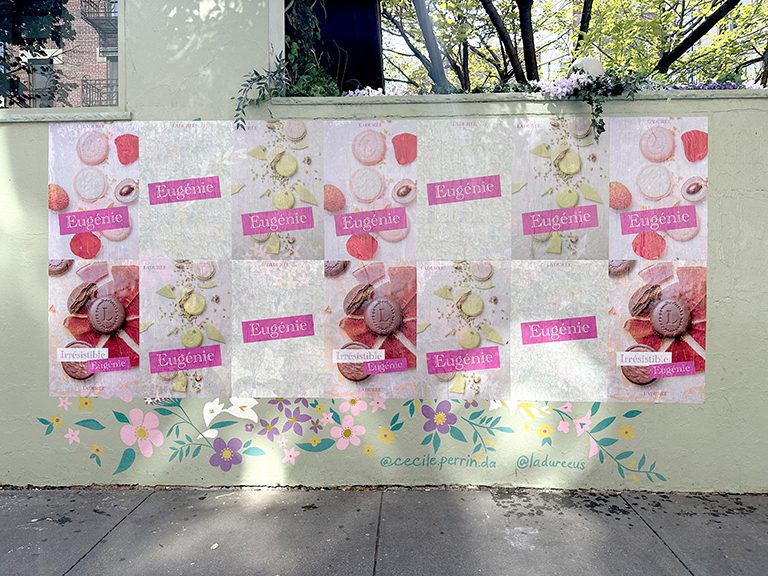
Neighborhood marketing, physical installations, flyers, social media geotargeting, and partnerships with adjacent businesses or community organizations in the area where the pop-up is located, reaches local consumers who may be aware of the brand but not actively following its marketing channels. For pop-ups in residential or commercial neighborhoods rather than high-traffic tourist areas, neighborhood marketing is often the most cost-effective driver of casual foot traffic discovery.
Measuring Pop-Up Experiential Performance
Performance metrics for pop-up experiential activations need to capture both the volume and quality of consumer engagement, and both should be planned before the activation opens rather than assessed after it closes.
Consumer traffic is the primary volume metric: how many people entered the activation space over its run. Engagement rate, the proportion of visitors who participated in the core experience rather than just passing through, reflects the quality of the activation’s design and staff in converting casual visitors into genuine engagements. Time spent, the average duration of consumer visits, is a proxy for depth of engagement. Consumer opt-ins, social shares, and purchase conversions where applicable are the action metrics that connect activation engagement to measurable commercial outcomes.
Qualitative feedback from staff about consumer response patterns, the questions consumers asked most often, the products they engaged with most deeply, and the aspects of the activation that generated the most visible enthusiasm, provides insight that quantitative metrics cannot capture. AGM builds structured daily debrief processes into multi-day pop-up programs specifically to capture this qualitative intelligence while the activation is running rather than trying to reconstruct it retrospectively.
AGM’s Pop-Up Experiential Practice
American Guerrilla Marketing manages pop-up experiential programs from the initial strategy brief through post-activation reporting. Our involvement spans concept development, space sourcing and negotiation, production vendor management, staff recruitment and training, field management throughout the activation, documentation, and analysis.
We bring genuine market knowledge to the space sourcing and location strategy components of pop-up experiential planning. We know which neighborhoods in New York, Los Angeles, Chicago, and other major cities are right for specific brand identities and target consumer profiles. We have established relationships with pop-up space operators, market organizations, and event venues across the major markets where we work, which gives our clients access to spaces and opportunities that are not readily available to brands sourcing spaces independently.
We also bring operational discipline to the execution phase. Production timelines that account for real vendor lead times and contingency for delays. Staffing plans that include backup for callouts. Documentation protocols that capture the evidence brands need to evaluate performance and plan future programs. These disciplines prevent the creative ambitions of a pop-up program from being undermined by operational failures that more rigorous planning would have prevented.
Category-Specific Pop-Up Experiential Approaches
Different product categories have developed distinct approaches to pop-up experiential marketing that reflect the specific consumer decision dynamics and product characteristics of each category. Understanding these category-specific norms helps brands develop programs that meet consumer expectations while differentiating effectively.
Food and beverage pop-up experiential programs almost always center on tasting because the sensory experience of the product is the most direct argument for trial and preference. The best food and beverage pop-ups go beyond a simple sample distribution, however; they create a context around the tasting that elevates the product’s appeal and communicates the brand’s story. A cold brew coffee pop-up that presents the product in a coffee shop aesthetic, with knowledgeable staff who can explain the sourcing and roasting process, creates a more compelling brand impression than one that simply offers a cup of cold brew from a cooler.
Fashion and apparel pop-up experiential programs focus on environment and identity because the consumer’s relationship with fashion brands is built primarily around aspiration and identity rather than functional product attributes. The best fashion pop-ups create a world that the consumer wants to be part of: a visual environment, an aesthetic sensibility, a cultural positioning that resonates with the consumer’s self-image. Staff who embody the brand’s style and can talk authentically about the creative vision behind the collection make the environment feel inhabited rather than staged.
Personal care and beauty pop-up programs often take a consultation or education format, giving consumers personalized guidance on which products fit their specific needs. This format creates a depth of consumer engagement that sampling alone cannot match, because the consumer leaves with specific knowledge about how the brand addresses their individual needs rather than just a general positive impression of the brand.
The Long-Term Value of Pop-Up Experiential Programs
Brands that run pop-up experiential programs consistently over multiple seasons build consumer relationships and market presence that compounds in value beyond what any single program can produce. Consumers who have encountered a brand’s pop-up in multiple contexts over time, at a neighborhood market this summer and at a fall festival last year and at a limited retail installation the previous winter, develop a depth of familiarity with the brand that is qualitatively different from the awareness built through advertising alone.
The operational assets built through a sustained pop-up experiential practice, the brand environment materials, the trained staff relationships, the venue and event connections, the documentation and reporting systems, also improve in efficiency over time. The first season of pop-up experiential programming is the most operationally intensive because everything needs to be built from scratch. Second and subsequent seasons benefit from the infrastructure, learning, and relationships of the previous ones, making each successive program more efficient and more effective relative to the investment it requires.
AGM has managed pop-up experiential programs for brands across multiple seasons and markets, building the kind of sustained brand presence that creates genuine market impact. If you are considering a first pop-up experiential program, think about it as the first season of an ongoing investment rather than a one-time event. The programs that deliver the most lasting value are the ones built for the long term from the beginning.
Pop-Up Experiential and Social Media Integration
The visual quality of a pop-up experiential environment creates natural social media content opportunities that brands can use to extend the activation’s reach far beyond in-person visitors. A well-designed photo moment within the activation, a backdrop, an installation, a product display that is visually distinctive, creates a specific content opportunity for consumers who want to document their experience and share it with their networks.
The organic social sharing generated by pop-up experiential activations is qualitatively different from paid social content because it comes from real consumers sharing a genuine personal experience rather than from a brand broadcasting a marketing message. Consumers who share content from a pop-up activation are implicitly endorsing the brand to their networks, which carries a credibility that paid advertising cannot replicate.
Building the social content opportunity into the activation design rather than adding it as an afterthought requires thinking about which moments in the activation are most naturally photograph-worthy, where the sightlines and lighting are best for consumer photography, and what brand elements should be visible in the background of consumer photos. The social content the activation generates is one of the program’s deliverables, and it should be designed for accordingly.
Working with a Pop-Up Experiential Agency
The right pop-up experiential agency brings more than production capability to the engagement. It brings consumer insight, market knowledge, and the operational discipline that prevents creative concepts from failing in execution. When evaluating agency partners for pop-up experiential programs, ask specifically about their experience with programs in your category, their approach to consumer experience design (do they start with the consumer or the environment?), their track record in the specific markets where you want to activate, and their documentation and reporting practice.
An agency that starts every pop-up brief with a consumer insight question rather than a creative concepting session is built the right way for this kind of work. An agency that treats documentation as a core deliverable rather than an administrative burden is taking the program seriously. An agency that gives you honest assessments of what will and will not work in a specific market or environment is more valuable than one that agrees with whatever the client suggests.
Technology in Pop-Up Experiential Activations
Technology can enhance pop-up experiential activations when it is used to deepen the consumer experience rather than to substitute for genuine brand engagement. Interactive product demonstrations, digital storytelling displays, augmented reality elements, and CRM-connected opt-in stations all have appropriate uses in pop-up experiential programs when they are designed to serve the consumer experience objective rather than to create a technology showcase.
The technology in a pop-up experiential activation should be reliable in the field conditions the activation will encounter. Equipment that works perfectly in a studio environment may fail in the humidity, dust, variable temperatures, or power fluctuations of real outdoor or pop-up activation conditions. AGM specifies and tests technology components for field reliability before incorporating them into activation builds.
Frequently Asked Questions
What is pop-up experiential marketing?
Pop-up experiential marketing creates temporary brand environments that consumers enter and engage with directly. Unlike standard advertising, pop-up experiential puts consumers inside the brand story, allowing them to taste, touch, participate, and form genuine emotional connections with the brand through direct, multisensory experience.
How long does a pop-up experiential activation typically run?
Pop-up experiential activations range from one day at an event or market to multi-week installations in dedicated spaces. Most brand pop-ups run three to seven days. Major brand launch activations may run two to four weeks. The appropriate duration depends on how long it takes to generate adequate consumer traffic to justify the build investment.
What is the difference between a pop-up shop and a pop-up experiential activation?
A pop-up shop’s primary purpose is sales: consumers browse and purchase products in a retail format. A pop-up experiential activation’s primary purpose is brand engagement and relationship building. The pop-up experiential may or may not include a sales component, but the core design is around creating a memorable consumer experience with the brand rather than generating immediate revenue.
What makes a pop-up experiential activation successful?
The most successful pop-up experiential activations have three things in common: a clear consumer insight that drives the experience design, a genuine product or brand encounter at the heart of the activation (not just a visual environment), and excellent staff who can deliver the brand story authentically in real consumer interactions.
How does AGM approach pop-up experiential planning?
AGM starts with the consumer insight and brand objective, designs the experience around those foundations, then manages production coordination, space sourcing, staff recruitment and training, field management throughout the activation, documentation, and post-activation reporting. We treat the physical build as the container and the consumer encounter as the product.