American Guerrilla Marketing
Nationwide Service
Media planning, media buying, billboard advertising, & guerrilla marketing
Advertise withRMTD Taos
AGM works as your media planning and buying partner for bus and transit line advertising — we source placements through established vendor and transit authority relationships, negotiate rates on your behalf, and manage the campaign from creative specs through to proof-of-performance reporting. You work with one team; we handle the operators and inventory owners.
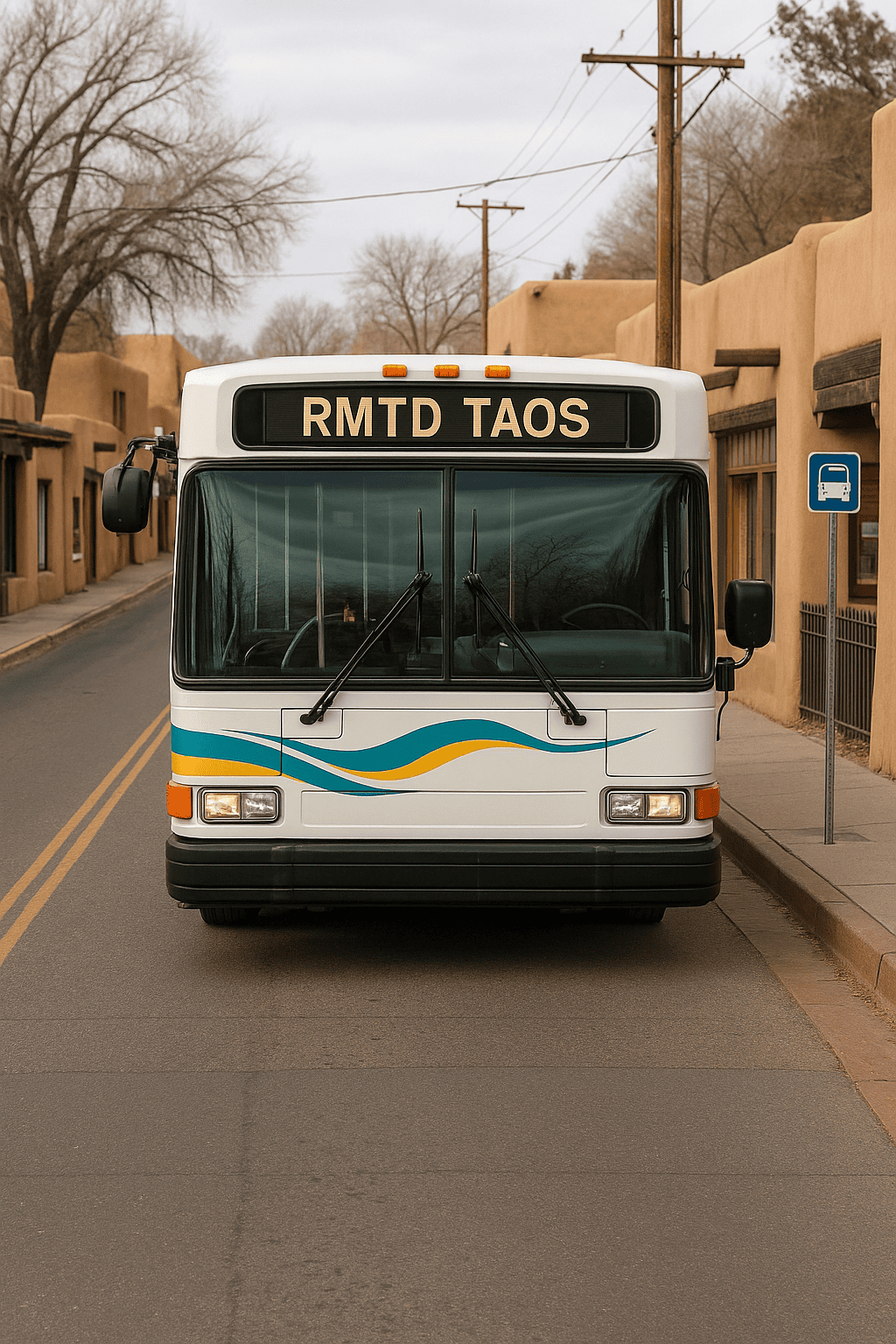
Interior bus ads and shelter placements on the Red River Mass Transit District in Taos. Ski Valley shuttle, arts district routes, and Northern NM community connectors reaching one of the Southwest’s most distinctive visitor demographics.
Taos operates on two simultaneous economic engines: the year-round arts and cultural tourism economy anchored by the Historic Taos Plaza, Canyon Road galleries, Taos Pueblo, and the arts institutions along Paseo del Pueblo Norte, and the concentrated ski economy driven by Taos Ski Valley from mid-November through early April. The Red River Mass Transit District serves both audiences, connecting Taos’s dispersed communities, the ski mountain, and the regional towns of El Prado, Ranchos de Taos, Arroyo Seco, and Questa.
RMTD’s ski season shuttle service to Taos Ski Valley is among the most distinctive transit advertising opportunities in New Mexico. The shuttle carries skiers and snowboarders from Taos lodging and the Plaza area to the Ski Valley base area — a vacation-mode, relatively affluent, experience-focused demographic actively spending on dining, gear, and lodging. The 25-minute ride gives interior advertising extended captive dwell time with an audience that has both the budget and the inclination to act on outdoor recreation and hospitality advertising.
During non-ski months, RMTD’s services connect Taos’s arts community, Pueblo residents, service workers, and regional commuters. The summer arts season from June through September brings the highest concentration of arts and cultural tourists. Interior advertising during this season reaches an arts-focused visitor audience at a concentration available nowhere else in Northern New Mexico.
Taos has strict sign ordinances that limit billboard placements near historic districts. Transit advertising on moving buses operates through these restricted zones without the regulatory barriers that limit fixed outdoor signage. This makes RMTD one of the few advertising formats with full visual presence in Taos’s most valuable advertising corridors.

Advertise withABQ RIDE
Interior bus ads and shelter placements across ABQ RIDE's 40-route network. The Central Avenue BRT...
Learn More
Advertise withGallup Inter-City Indian Transit
Interior bus ads and shelter placements on GIIT in Gallup. Routes connect downtown, the Route...
Learn MoreTransit Systems Serving New Mexico

Advertise withLas Cruces Transit RoadRUNNER
Interior bus ads and shelter placements on RoadRUNNER in Las Cruces. Routes serve NMSU's 15,000-student...
Learn More
Advertise withSanta Fe Trails
Interior bus ads and shelter placements on Santa Fe Trails. Routes connect the Historic Plaza,...
Learn MoreAdvertise on RMTD Taos Buses
Interior bus ads. Shelter placements. Street-level guerrilla tie-ins. AGM handles all of it in Taos.
Interior Bus Advertising On Rmtd Taos
Interior bus advertising places your brand inside the vehicle with riders for the full duration of their trip. On RMTD Taos routes, average ride times range from 25 to 40 minutes depending on the corridor. That dwell time is the foundational asset of interior transit advertising. No other format keeps your message in front of the same person for that long, in a low-distraction environment, without a skip button or a competing screen.
A rider inside a RMTD Taos bus cannot scroll past your ad. During the ride, your interior panel is part of the visual landscape of that person’s commute. Campaigns built on that sustained exposure with clear messaging, strong visuals, and a specific call to action consistently outperform the same creative in formats where the viewer has an escape option. Interior transit advertising is one of the few remaining formats where the audience is genuinely captured.
The nine interior formats available on RMTD Taos vehicles each serve a distinct purpose within the vehicle environment. Brands that run multiple formats simultaneously inside the same vehicle create layered impressions that reinforce recall through the ride. A rider who sees a king size panel on the side wall, a queen card above the window, and a take-one rack with your flyer reaches the stop with three distinct brand contact points from a single trip. That frequency-within-a-single-ride is structurally unique to interior transit advertising.
Interior transit advertising also benefits from a social proof dynamic that deserves more attention in media planning. When multiple riders in the same vehicle see the same advertising message, that shared exposure creates low-level social reinforcement. Regular riders on the same route discuss memorable ads, take photos, and share the message. The captive audience does not just see the brand — it experiences the brand as part of a shared daily environment.
Taos Ski Valley Shuttle: Plaza to Ski Valley Base
The RMTD ski shuttle carries skiers and snowboarders from Taos Plaza area lodging to the Taos Ski Valley base area in a 25-minute ride. This is the most demographically attractive transit audience in Northern New Mexico during the winter season — higher-income visitors from Albuquerque, Dallas, Denver, and Texas, riding in full discretionary spending mode. Morning loads fill as skiers head to the 9 AM opening; afternoon loads run between 3:30 and 5:30 PM as skiers return.
Ski equipment, apparel, dining, lodging, and outdoor lifestyle brands consistently find this audience highly receptive. The captive 25-minute ride gives interior advertising extended engagement time with an audience that is already thinking about gear, food, and the rest of their ski vacation.
Ski season November-AprilAffluent out-of-market visitors25-minute captive rideActive discretionary spending mode
Taos Plaza and Gallery District In-Town Service
RMTD in-town routes connect the Taos Plaza commercial core, the gallery district along Paseo del Pueblo Norte, and residential neighborhoods. These routes carry year-round Taos residents and summer tourists moving through the arts district. Summer arts season peaks during Taos Pueblo visitor season, the High Road to Taos Studio Tour, and fall arts festivals that draw gallery visitors from across the region.
The Taos arts audience is among the most culturally engaged and high-spending visitor demographics in New Mexico. Gallery visitors, collectors, and arts tourists come specifically for Taos’s cultural landscape and spend significantly on art, dining, and lodging during their visit.
Taos Plaza and gallery districtSummer arts season June-SeptemberResident and tourist mixArts and cultural audience
Regional Connector: Questa and Northern NM Communities
RMTD regional connectors link Taos to Questa and connection points toward Espanola and Rio Grande corridor communities. These routes carry rural-to-urban commuters accessing Taos for employment, healthcare, and shopping. The regional audience is predominantly Northern New Mexico Hispanic and Native American communities with significant transit dependency for basic services.
Regional connector routes serve as critical lifelines for communities where driving to Taos for healthcare or shopping is not always feasible, making these routes community-service oriented advertising environments.
Northern NM regional communitiesRural commuter audienceHealthcare and service accessHispanic and Native American riders
The 9 Interior Bus Ad Formats on RMTD Taos
Interior bus advertising is not a single format. RMTD Taos’s fleet supports nine distinct placement positions, each with its own viewing angle, dwell time context, and audience interaction profile. Understanding the function of each format helps you build a campaign that uses the right placements for the right messages and objectives.
King Size Poster
The 30-by-144-inch king panel spans the full length of the interior bus wall. It is the largest and most visually commanding placement inside the vehicle. Every rider who boards sees it; every rider seated sees it continuously throughout the ride. The king format works for brand campaigns that need maximum visual real estate and for creative that rewards extended viewing.
Queen Size Poster
Queens run approximately 11 by 28 inches and fit above windows and along seat-back panels. Running multiple queens inside a single vehicle creates impression repetition that builds recall through the ride. A rider who sees the same brand message three times during a single commute remembers the brand differently than someone who saw it once.
Headliner Strip
Positioned directly above the windshield, the headliner sits in the eyeline of every forward-facing passenger throughout the ride. Ideal for short, high-retention messages: QR codes, phone numbers, single-sentence calls to action. The headliner is one of the first interior panels a boarding passenger registers as they find their seat and orient to the vehicle.
Overhead Rack Card
Cards mounted on the overhead luggage rack face downward toward seated passengers across the vehicle length. Riders in seats naturally look upward at moderate angles, landing on these cards. Extended copy, event details, and offer-driven creative perform well in the overhead position because the format creates a reading environment similar to transit maps that riders already look at.
Interior Full Wrap
A full interior wrap converts the entire bus into a branded environment. Ceiling graphics, side panels, and window treatments all carry the campaign creative. Riders board into a space that is entirely your brand. Full wraps are rare enough in most markets that a single wrapped vehicle becomes a topic of conversation among regular riders on the route.
Window Cling
Perforated vinyl window clings allow passengers to see out while presenting a full-color brand image to exterior viewers. At stops and intersections where pedestrians stand beside stationary buses, window clings deliver a street-level impression to non-riders as well as those inside the vehicle.
Take-One Rack
Physical literature holders mounted on interior panels distribute coupons, menus, enrollment forms, or promotional materials to riders who pull a flyer during the ride. The take rate on high-relevance offers in captive transit environments consistently exceeds take rates in open pedestrian environments because dwell time gives riders genuine opportunity to read and decide.
Divider Panel
Vertical partition panels separating seating sections carry face-level advertising visible to seated passengers throughout the ride. This format delivers a direct, personal-scale impression suited to messages requiring reading time. Healthcare, legal services, and financial products perform well in divider panel placements because the format suits messages that ask something of the reader.
Driver Zone Card
Small-format placements in the operator zone catch boarding passengers at fare payment — the highest-attention moment of the transit experience. A message at fare payment gets seen in an intentional moment of focus distinct from the more passive viewing during the ride. Effective for short campaigns with strong, direct calls to action.
Bus Shelter Advertising Near Taos
Guerrilla Marketing Tie-Ins for Taos
Bus and shelter advertising performs better when coordinated with street-level guerrilla placements along the same corridors. A rider who sees your interior bus ad and then encounters your brand at street level near the stop experiences two-touch brand reinforcement in the same trip. AGM executes all of the following formats in Taos and can coordinate them with your RMTD Taos campaign for full-corridor saturation:
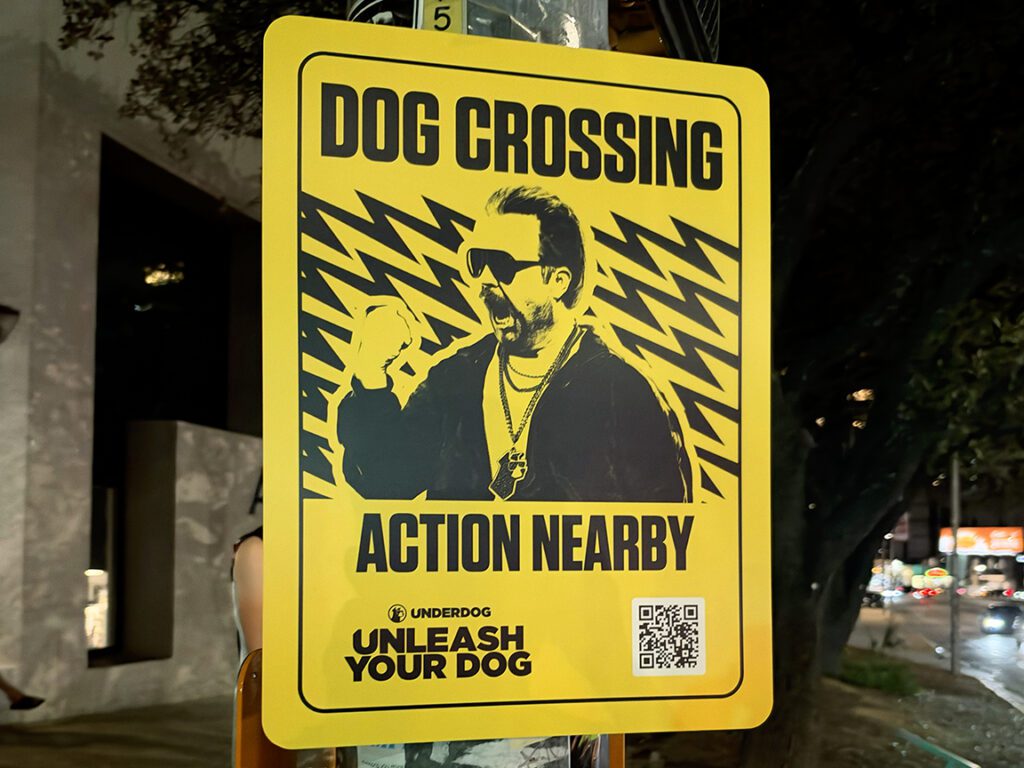
Snipe Advertising
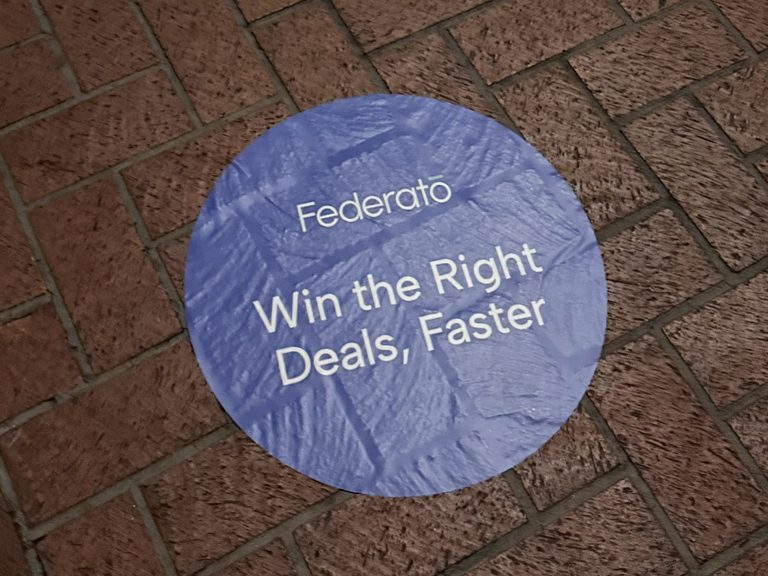
Sidewalk Stencils
Take-One Flyers
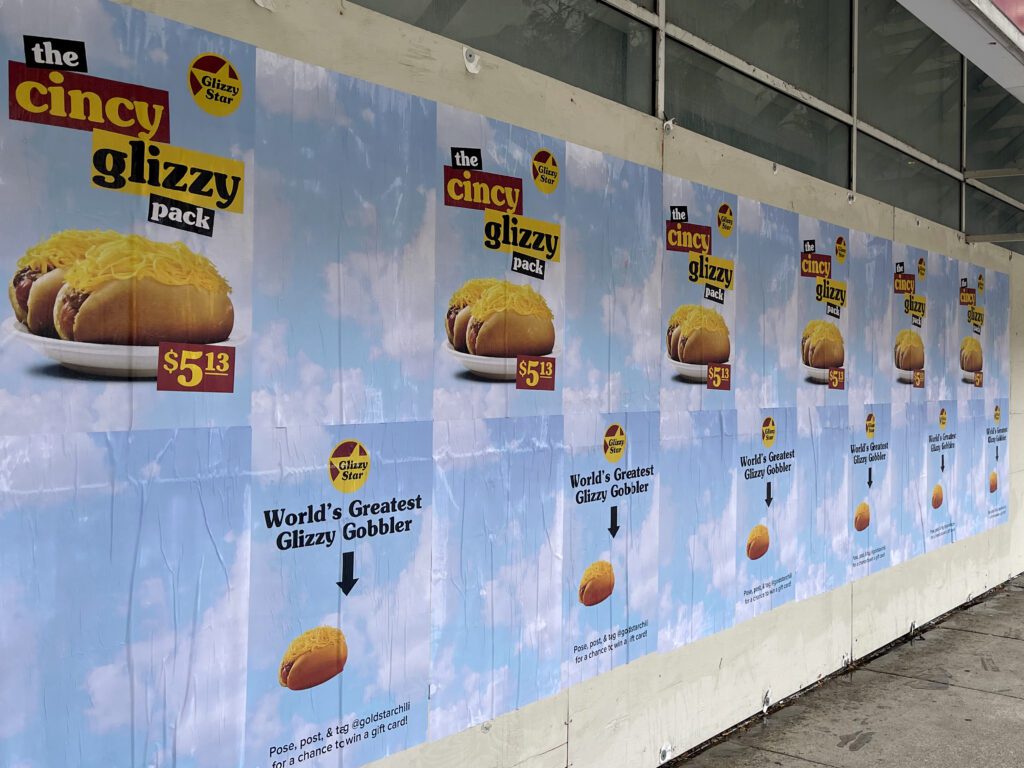
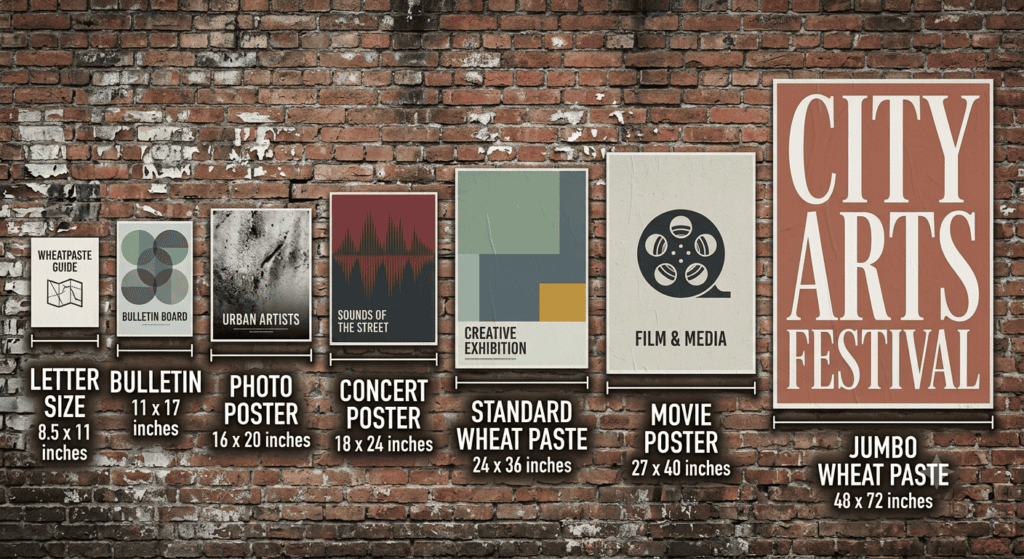
Wheatpaste Posters
Snipe advertising places small-format branded posters on utility poles, construction hoardings, and street furniture throughout the RMTD Taos service area. Sidewalk stencils mark transit stop zones and pedestrian corridors with brand impressions at ground level — so a rider waiting at the stop looks down and sees the message at their feet, then boards the bus and sees your interior panel at eye level. Take-one flyers inside buses distribute physical materials to riders who opt in during the ride. Wheatpaste poster campaigns deliver large-format visual presence on approved surfaces in Taos’s commercial corridors, creating street-level brand landmarks that complement the transit placements with outdoor-scale visibility.
AGM has executed guerrilla advertising campaigns in every major US transit market and understands how each format interacts with transit ridership patterns in Taos specifically. Snipe campaigns work best on high foot-traffic pedestrian corridors adjacent to major bus stops. Sidewalk stencils work best at stops where riders wait for two or more minutes, giving them time to notice and read a ground-level message. Take-one racks work best on longer routes where ride times exceed 20 minutes. Wheatpaste works best on surfaces with high pedestrian visibility in the commercial corridors that RMTD Taos routes serve. Getting the format-to-location pairing right is the difference between a guerrilla campaign that creates genuine brand presence and one that generates impressions without engagement.
The combination of interior bus, shelter, snipe, and sidewalk creates a transit-corridor brand environment where the target audience encounters the brand from multiple angles across a single commute. A rider waiting at a shelter with your panel, boarding a bus with your interior king size, and walking past your sidewalk stencil at the destination has had four distinct brand interactions without going online. That multi-touch sequence, delivered within a single commute, is the mechanics of transit-corridor saturation advertising in practice.
The strategic logic of combining transit advertising with street-level guerrilla formats is reinforcement through environmental repetition. When a brand appears in multiple physical formats along the same corridor — on the bus, at the stop, on the pole, on the sidewalk — it signals presence and scale to the community that experiences it. Brands that invest in multi-format transit-corridor campaigns consistently report stronger community recognition outcomes than brands that run single-format campaigns at higher total spend. The frequency effect of multiple-format exposure is greater than the sum of its parts.
Why Bus Advertising Works In Taos
Transit advertising in Taos is not just another media channel — it is a forced-attention environment that produces results that passive outdoor and digital formats cannot replicate. The moment a rider boards a RMTD Taos bus, they enter a physical space where your brand is the dominant visual content. There are no other ads competing for their attention in the same vehicle. There is no algorithm deciding whether to show them your message. The panel is there, on the wall, for the full duration of the ride, every time that rider boards.
The dwell time advantage of interior bus advertising is particularly significant in the context of modern attention economics. The average digital ad impression lasts under two seconds before a user scrolls, clicks, or looks away. The average interior bus transit ad impression lasts for the full duration of the ride — 25 minutes on a typical RMTD Taos corridor. That is a 600-to-900 times longer per-impression engagement than the average digital display ad. The cost per genuine impression on RMTD Taos interior advertising is, for most brands, among the lowest available in the Taos media market.
Bus shelter advertising in Taos adds a dimension that interior advertising cannot provide alone: always-on street-level presence that works for non-riders as well as riders. A shelter panel at a high-traffic stop in Taos works every hour of every day for the full campaign period. It works for the person waiting for the bus. It works for the pedestrian walking past. It works for the driver stopped at the light. No other single advertising format provides that combination of always-on presence, street-level proximity, and transit rider captive exposure in a single placement position.
The Taos transit market also offers a frequency advantage that traditional outdoor advertising cannot match. A regular commuter on a specific RMTD Taos route sees the interior advertising panels on that route multiple times per week throughout the campaign period. A four-week campaign on a route with a rider who commutes five days a week generates 40-plus individual panel impressions from that single rider. Brand recall from that level of repeated, captive, close-range exposure is qualitatively different from the recall produced by a single highway billboard impression at 65 miles per hour.
Who Advertises on RMTD Taos Buses
The core audience of RMTD Taos transit advertising is the daily rider who boards the bus as part of a consistent, repeating commute or errand pattern. This is not an occasional audience that a campaign might or might not catch on a given day. These are riders who board specific routes at predictable times throughout the week. A campaign placed on the routes they use reaches them not once but repeatedly throughout the campaign period, building brand familiarity through the same repeated exposure that drives recall in radio and television. Transit advertising in Taos leverages that repeating exposure pattern in a format that outdoor advertising and digital advertising cannot replicate: the captive, close-range, sustained impression that is unique to the interior bus environment.
Transit advertising on RMTD Taos draws brands that understand the value of daily reach into Taos’s working and commuting population. The RMTD Taos ridership includes daily commuters, students, healthcare workers, service industry employees, and neighborhood residents who depend on transit as their primary transportation. These riders are in vehicles for 25 to 40 minutes at a time, in a low-distraction environment, with no competing content for their visual attention. Your brand can own that visual environment for the duration of the campaign.
The categories that perform consistently well on RMTD Taos advertising are those genuinely relevant to the daily lives of transit riders: healthcare providers, financial services, legal services, food and restaurant brands, educational institutions, and community services. National consumer brands targeting the Taos market also use RMTD Taos as a high-frequency reach vehicle for product launches and brand awareness campaigns. The key to strong performance in transit advertising is the same as in any other format: relevant messaging to the right audience in the right context. RMTD Taos’s daily ridership provides that audience and context in a media format that still has meaningful supply in most markets.
Ski and Outdoor Brands
Equipment, apparel, and outdoor recreation brands targeting the Ski Valley shuttle audience during winter season.
Arts and Galleries
Taos gallery owners, arts organizations, and cultural tourism programs reaching summer arts season visitors.
Restaurants and Lodging
Taos restaurants, hotels, and vacation rentals reaching both visitors and residents during peak seasons.
Real Estate
Northern NM property and vacation rental platforms targeting the high-income visitor demographic.
Healthcare
Holy Cross Medical Center and specialty providers reaching Taos and regional community members.
Community Programs
Taos County social services and Northern NM community health organizations.
Build Your Rmtd Taos Campaign With Agm
Transit Advertising Formats Compared: Interior Bus, Shelter, and Outdoor in Taos
Understanding how interior bus advertising compares to the other major transit-adjacent formats helps clarify when each format is the right tool for a specific campaign objective. Interior bus advertising, shelter advertising, and outdoor billboard advertising each have fundamentally different delivery mechanisms and audience interaction profiles. Using the right format for the right campaign objective is more important than the raw cost comparison between them.
Interior bus advertising delivers captive, sustained, close-range exposure to a defined audience in a controlled environment. The rider is in the same vehicle as your ad for 25 to 40 minutes. They cannot speed past it. They cannot look away if they want to look at anything in the vehicle. The format rewards creative that takes advantage of the dwell time — copy that asks the reader to think, images that reward sustained viewing, QR codes that link to experiences the rider has time to engage with. Interior bus advertising is best used for messages that need time to land: brand story campaigns, detailed offer communications, QR-driven response campaigns, and any creative where the nuance matters.
Shelter advertising delivers outdoor-scale visibility at the stop environment, reaching both transit riders and the pedestrian and vehicle traffic that passes the stop. Shelters work best as brand reminder and reinforcement placements for campaigns where the primary message is already being delivered through another format — interior bus, digital, or radio. A shelter at a high-traffic Taos stop that supports an interior bus campaign creates the two-touch sequence that consistently outperforms either format used alone. Shelter advertising at a high-traffic Taos stop also reaches audiences that never board the bus, extending the transit advertising investment beyond the transit-riding audience to the full pedestrian environment.
Outdoor billboard advertising delivers mass reach at highway speeds with two to four seconds of viewing time per impression. Billboards in Taos build name recognition and top-of-mind awareness at scale, but they do not deliver the dwell time, the contextual relevance, or the captive audience that interior transit advertising provides. For brands that need both scale and depth — a billboard to plant the brand name and an interior bus panel to deliver the full message — the combination of outdoor and transit is a proven sequence. AGM coordinates outdoor and transit advertising placements across Taos for brands that want coverage at both scales.
How To Plan A Rmtd Taos Bus Advertising Campaign
The most effective RMTD Taos campaigns start with a clear answer to three questions: who are you trying to reach, what do you want them to do, and what corridors carry the highest concentration of that audience. AGM works through these questions with every client before recommending routes, formats, and campaign duration. A healthcare system trying to reach nurses and medical staff in Taos needs different placements than an app company trying to reach 18-to-25 year olds. Getting the targeting right is more important than any individual creative decision.
Campaign duration matters in transit advertising because the first time a regular rider sees a new panel, they notice it. By the third time they see it on their daily commute, they have internalized the brand. By the tenth time, they have associated the brand with Taos’s transit environment. That brand association with a rider’s daily routine is the unique value proposition of transit advertising that no other format offers. Four-week campaigns build first awareness. Eight-week and twelve-week campaigns build the kind of community-level brand recognition that comes from a presence that feels like part of the daily landscape.
Creative specifications for RMTD Taos interior bus advertising are standardized by format type. AGM provides exact specifications for every format — king size panels, queen cards, headliner strips, overhead rack cards, divider panels, driver zone cards, take-one racks, window clings, and full interior wraps — as part of the campaign setup process. If your creative team needs the specs early in the design process, contact AGM and we will provide them before any booking commitment. Getting the creative right at the start is worth the extra preparation time.
AGM handles the complete process for RMTD Taos advertising campaigns: format selection, creative sizing, production, placement booking, installation coordination, and post-installation documentation. We work directly with RMTD Taos advertising administration and have experience placing campaigns across transit systems in every major and mid-sized US market. If you have existing creative, we adapt it to transit specifications. If you need creative development, we coordinate that as well.
Interior bus advertising on RMTD Taos is one of the most cost-effective ways to reach Taos residents with guaranteed daily impressions in a captive viewing environment. Campaigns typically run on four-week minimums, with longer runs available at improved rates. Bus shelter placements can be added to interior campaigns as part of a combined package. Multi-format campaigns combining interior bus, shelter, and street-level guerrilla can be built to cover Taos from every angle within a single budget envelope.
The most common question at this stage is what it costs. The honest answer is that it depends on the format, vehicle count, corridor selection, and campaign duration. The best way to get a specific number is to tell us your target audience, your campaign objective, and your timeline. We build a specific proposal for your Taos transit advertising campaign based on what you actually need. Contact AGM to start the conversation.
For brands that are new to transit advertising, the most important thing to know is that transit advertising performs differently from what most media buyers expect based on their digital advertising experience. It is not a cost-per-click format. It is not a reach-and-frequency format in the traditional broadcast sense. It is a physical presence format — one that creates a brand’s relationship with a specific place, a specific community, and a specific audience through repeated exposure in the shared daily environment of transit. The brands that use transit advertising most effectively are the ones that understand this distinction and build creative specifically for the transit context rather than repurposing assets from other formats.
The measurement approach for RMTD Taos bus advertising campaigns should be set up before the campaign launches. Dedicated phone numbers, unique QR codes, campaign-specific landing page URLs, and promotional codes are the most direct measurement tools for transit advertising response. Brand lift measurement through pre-and-post awareness surveys is the appropriate approach for brand awareness campaign objectives. Sales correlation analysis is appropriate for retail and consumer service campaigns where point-of-sale data is available. AGM helps clients select and set up the right measurement approach for each campaign objective before the panels go up.
Frequently Asked Questions
The two peak windows are ski season from mid-November through late March with affluent visitor shuttle ridership, and summer arts season from June through September with gallery and cultural tourist ridership on in-town routes.
Higher-income adults 25 to 55, primarily from Albuquerque, Texas, and Colorado, with strong outdoor recreation spending. One of the most affluent transit audiences in New Mexico during the winter season.
Yes. Northern New Mexico has a deeply rooted Spanish-speaking community, and bilingual creative is appropriate for routes serving Taos’s Hispanic residential neighborhoods and regional connectors.
Yes. Taos’s strict sign ordinances limit billboard placements near historic and scenic areas. Transit vehicles move through restricted zones without the same limitations, making RMTD uniquely valuable for visual presence in Taos’s core corridors.
Yes. Taos reaches an unusually high-value mix of affluent tourists and arts-world visitors. National outdoor lifestyle, luxury hospitality, and premium consumer brands have used Taos transit advertising effectively.
Three to five weeks. Ski season campaigns should be booked before mid-October to ensure placement before Taos Ski Valley opening.
Yes. Wheatpaste posters on approved surfaces along the Taos Plaza corridor complement RMTD interior placements effectively. AGM coordinates multi-format Taos campaigns.
Summer arts season ridership peaks during Taos Pueblo visitor season and summer arts programming. Volumes are smaller than ski season but tourism audience concentration is comparably high for arts, dining, and cultural experience brands.
Year-round riders are Taos residents, service workers, healthcare patients, and regional commuters. Seasonal riders are ski season visitors from November through March, and arts tourists from June through September.
AGM contacts RMTD administration, confirms available inventory, manages creative production, coordinates installation, and provides post-installation documentation confirming placement.