American Guerrilla Marketing
Nationwide Service
Media planning, media buying, billboard advertising, & guerrilla marketing
Advertise withMaysville City Transit
AGM works as your media planning and buying partner for bus and transit line advertising — we source placements through established vendor and transit authority relationships, negotiate rates on your behalf, and manage the campaign from creative specs through to proof-of-performance reporting. You work with one team; we handle the operators and inventory owners.
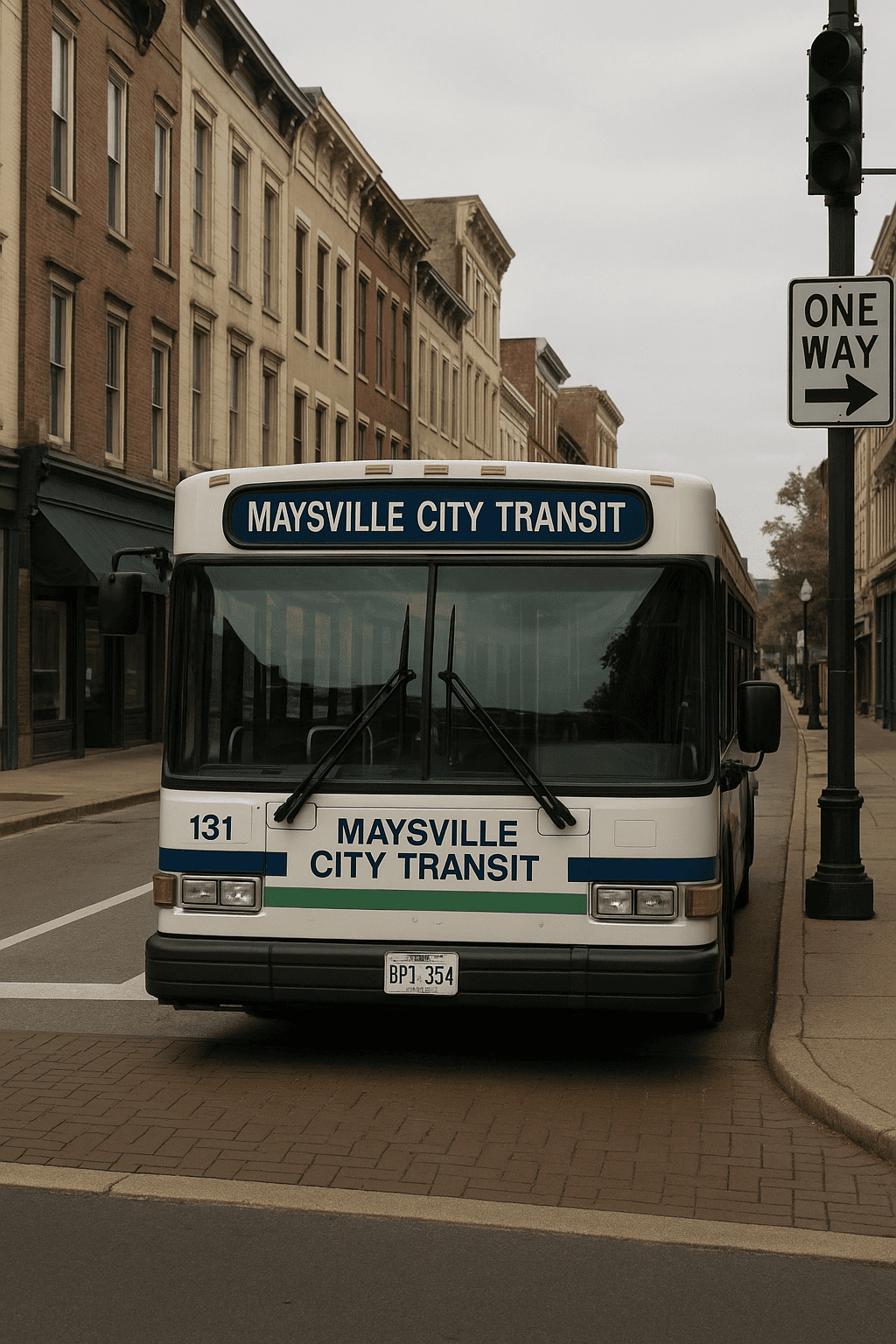
Maysville City Transit connects the Ohio River city’s historic Second Street commercial district, Meadowview Regional Medical Center, and the residential neighborhoods of the Mason County seat on the Kentucky-Ohio border.
Maysville is one of Kentucky’s most historically significant river cities, with a downtown on Second Street containing some of the Commonwealth’s best-preserved 19th century commercial architecture. The city’s position on the Ohio River at the Mason County seat gives it an economic role as the regional hub for several surrounding rural counties. Meadowview Regional Medical Center is the dominant employer.

Advertise withAshland Bus System
Interior and exterior bus advertising across Ashland, Kentucky and Boyd County. The Tri-State area's working...
Learn More
Advertise withBerea Bus Service
Berea Bus Service connects a tuition-free college campus, a nationally recognized craft and artisan district,...
Learn MoreTransit Systems Serving Kentucky

Advertise withBluegrass Ride
Bluegrass Ride connects five Kentucky counties to Lexington -- Toyota manufacturing workers from Georgetown, Clark...
Learn More
Advertise withClarksville Transit System
Clarksville Transit System connects Fort Campbell's 30,000-plus active-duty soldiers to downtown Clarksville, Austin Peay State...
Learn More
Advertise withFrankfort Transit
Frankfort Transit serves Kentucky's state capital -- state government workers on the Capitol campus, Kentucky...
Learn More
Advertise withGlasgow Transit
Glasgow Transit connects T.J. Samson Community Hospital, the US-31E commercial corridor, and Barren County's residential...
Learn More
Advertise withGO bg Transit
GO bg Transit connects WKU's 20,000 students, the GM Corvette manufacturing corridor, and Bowling Green's...
Learn More
Advertise withHenderson Area Rapid Transit
HART serves the Evansville-Henderson cross-river metro -- manufacturing workers at Accuride, Gibbs Die Casting, and...
Learn More
Advertise withLexTran
LexTran is Lexington's urban transit backbone -- University of Kentucky students, UK HealthCare professionals, downtown...
Learn More
Advertise withMor’Trans
Mor'Trans serves Morehead and Rowan County -- Morehead State University students on University Boulevard, St....
Learn More
Advertise withOwensboro Transit System
Owensboro Transit System serves Kentucky's fourth-largest city -- Owensboro Health Regional Hospital workers, distillery and...
Learn More
Advertise withPaducah Transit Authority
Paducah Transit Authority serves Kentucky's western river city at the Ohio-Tennessee Rivers confluence -- Mercy...
Learn More
Advertise withRichmond Transit Service
Richmond Transit Service connects Eastern Kentucky University's 15,000 students, the Eastern Bypass commercial corridor, and...
Learn More
Advertise withTransit Authority of Central Kentucky
TACK connects Elizabethtown's Ring Road commercial corridor, the Fort Knox military community, Hardin Memorial Hospital,...
Learn More
Advertise withTransit Authority of Northern Kentucky
TANK connects Greater Cincinnati's Kentucky suburbs to the metro's employment core -- CVG Airport workers,...
Learn More
Advertise withTransit Authority of River City
TARC is Kentucky's largest transit system -- University of Louisville students, UofL Health workers, NuLu...
Learn More
Advertise withWestern Kentucky University Transportation Services
WKU Transportation Services runs the on-campus transit network for Western Kentucky University's 20,000 students and...
Learn More
Advertise withWinchester-Clark County Transit
Winchester-Clark County Transit connects Clark Regional Medical Center, the US-60 industrial corridor, and the residential...
Learn MorePut Your Brand on Maysville City Transit
AGM handles transit media buying, guerrilla execution, and street-level campaign coordination across Maysville and the Maysville City Transit service area. Interior placements, exterior wraps, shelter panels, bench ads, snipes, stencils, and wheatpaste. One call, full coverage.
Why Maysville City Transit Is A Premium Advertising Network
Meadowview Regional Medical Center is Mason County’s largest employer and the healthcare anchor for a region extending beyond Maysville’s city limits. The hospital workforce creates stable professional ridership on the hospital corridor routes. For healthcare advertisers, the hospital route delivers the Maysville market’s most concentrated medical professional audience.
Downtown Maysville on Second Street retains one of Kentucky’s most intact small-city riverfront commercial environments. The National Underground Railroad Museum, the historic commercial facades, and the Ohio River access points create a tourism and pedestrian environment that adds visitor traffic to the daily transit and commercial audience.
Maysville’s cross-river relationship with Aberdeen and Brown County, Ohio through the William H. Harsha Bridge creates a binational consumer market where advertising on Maysville City Transit reaches the Kentucky-side residents of a regional market with economic ties to Ohio.
Interior Bus Advertising on Maysville City Transit
Every bus in the Maysville City Transit fleet is a moving advertising platform. Interior formats reach riders from the moment they board to the moment they step off — and exterior formats turn the bus into a street-level billboard on every corridor it travels. The nine formats below cover every advertising position on the vehicle, from the overhead valance to the rear tailgate.
Understanding which format serves your specific campaign objective is the first step in building an effective Maysville City Transit transit advertising buy. AGM’s media planning process matches your audience, budget, and creative to the right combination of formats and routes. A full wrap maximizes impressions on the highest-traffic routes. Interior cards build frequency among regular riders on commuter-pattern routes. Seat-back QR codes convert casual riders into digital leads on university and young-professional routes.
Meadowview Regional Medical Center: US-68/KY-68 Hospital Corridor
The hospital corridor route on US-68/KY-68 serving Meadowview Regional Medical Center carries healthcare workers from Maysville’s residential neighborhoods to the hospital campus on the daily shift-change schedule.
Healthcare advertising on this route reaches both Meadowview staff and the patient population traveling to the hospital from transit-dependent households. The healthcare-focused trip purpose makes health-sector advertising unusually relevant on this corridor.
Meadowview Regional Medical Center
US-68/KY-68
Hospital workforce
Healthcare-focused ridership
Downtown Maysville: Second Street and Market Street
The downtown route on Second Street and Market Street serves Maysville’s historic commercial and cultural core, including the National Underground Railroad Museum, the Ohio River waterfront, and the restaurant and retail district.
For tourism-oriented brands, local dining and hospitality businesses, and cultural organizations, the downtown Maysville route is the most contextually aligned placement in the system.
Second Street downtown
Market Street
Historic riverfront
Ohio River waterfront
Residential Neighborhoods: US-62 West and Hillside Communities
The residential routes serving Maysville’s hillside neighborhoods carry the transit-dependent household population that relies on transit for access to the hospital, downtown, and commercial services.
Healthcare enrollment, financial products, and community service campaigns benefit from the extended read time on hillside residential feeder routes in communities of Maysville’s size.
US-62 west
Hillside residential routes
Transit-dependent households
Extended dwell time
Full Bus Wrap
What it is: Complete exterior vehicle coverage — sides, rear, and front — turning the entire bus into a branded rolling billboard.
Best for: Brand launches, major campaigns, product introductions requiring maximum market impact.
Why buy it: A full wrap makes every mile the bus travels a branded impression. Routes that repeat daily give the same commuters and pedestrians dozens of exposures per week.
King Poster
What it is: A 30 by 144 inch printed panel on the streetside of the bus — the primary exterior visibility zone.
Best for: Local retail, healthcare, financial services, and any advertiser needing consistent route-corridor impressions.
Why buy it: The king poster is transit advertising’s proven format. Strong creative cuts through for both vehicle traffic paralleling the bus and pedestrians at stops.
Queen Poster
What it is: Approximately 30 by 88 inch panel on the curbside of the bus, facing the sidewalk and crosswalk audience.
Best for: Pedestrian-heavy corridors, retail districts, campus and downtown routes where foot traffic is high.
Why buy it: Curbside placement faces directly toward sidewalk pedestrians at intersections and stops. Retailers within walking distance of the route see direct foot traffic conversion.
Headliner (Interior)
What it is: A long horizontal card in the overhead valance running the length of the bus interior, in continuous sightline of seated passengers.
Best for: Long-copy campaigns, healthcare and insurance offers, anything benefiting from extended read time.
Why buy it: Interior riders have nowhere to look but forward. The headliner stays in their sightline for the full ride duration.
Tail Display
What it is: A rear-panel display visible to vehicles following behind the bus, typically 21 by 72 inches on the tailgate.
Best for: QSRs, automotive services, and any brand targeting commuters in traffic behind the bus.
Why buy it: Every vehicle stuck behind a bus at a red light reads the tail display. In congested corridors, a single bus generates dozens of forced-exposure impressions per mile.
Interior Card
What it is: An 11 by 28 inch framed card in the interior card rack above the windows, at eye level for standing passengers.
Best for: Promotional offers, event announcements, healthcare services, and community information.
Why buy it: Interior cards are read at close range by a captive audience for the full ride. Commuters on the same route see the card every trip, delivering the message repetition that response campaigns need.
Seat-Back Card
What it is: A smaller card (approximately 6 by 9 inches) affixed to the back of bus seats, at reading distance for the rider behind.
Best for: QR code campaigns, app download offers, event listings — anything benefiting from close-proximity engagement.
Why buy it: Seat-back placement puts your message at reading distance with a QR code or URL that a seated rider can engage with on their phone.
Overhead Card
What it is: A card mounted flush to the ceiling directly above the aisle, in the sightline of standing passengers during peak loads.
Best for: Short, bold messages — five words or fewer. Brand awareness, event dates, offer callouts.
Why buy it: Standing passengers during peak periods are a compressed, captive audience. Overhead cards reach the highest-density load moments of the day.
Window Ad (Perforated)
What it is: Full-window perforated vinyl applied to exterior glass — opaque from outside, see-through from inside.
Best for: Image-forward creative that benefits from large format and unusual texture. Fashion, entertainment, consumer lifestyle brands.
Why buy it: Window vinyls occupy a surface most advertisers ignore. On a moving bus, a full window treatment creates a visual break that catches pedestrians’ eyes at every stop.
Bus Shelter Advertising With Maysville City Transit
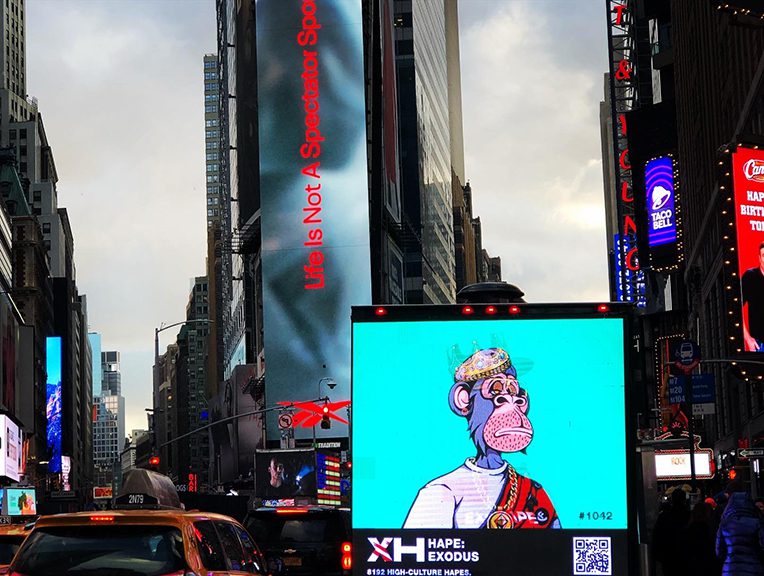
Guerrilla Marketing Alongside Maysville City Transit Routes
Maysville’s downtown riverfront commercial district is a compact walkable environment where guerrilla placements on signal fixtures and utility poles along Second Street and Market Street are highly visible to the pedestrian traffic moving between the museum, the riverfront, and the restaurant corridor.
The approaches to the William H. Harsha Bridge carry cross-river commuter traffic that snipe placements along the bridge approach streets can reach at the point where Kentucky and Ohio traffic converge.
The connection between bus advertising and guerrilla marketing is straightforward: the bus brings your audience to the stop, and guerrilla elements are waiting for them when they arrive. A rider who has seen your interior card during a 20-minute commute and then encounters a sidewalk stencil of the same brand at their exit stop is experiencing a multi-touchpoint sequence that builds recall far faster than either format alone.
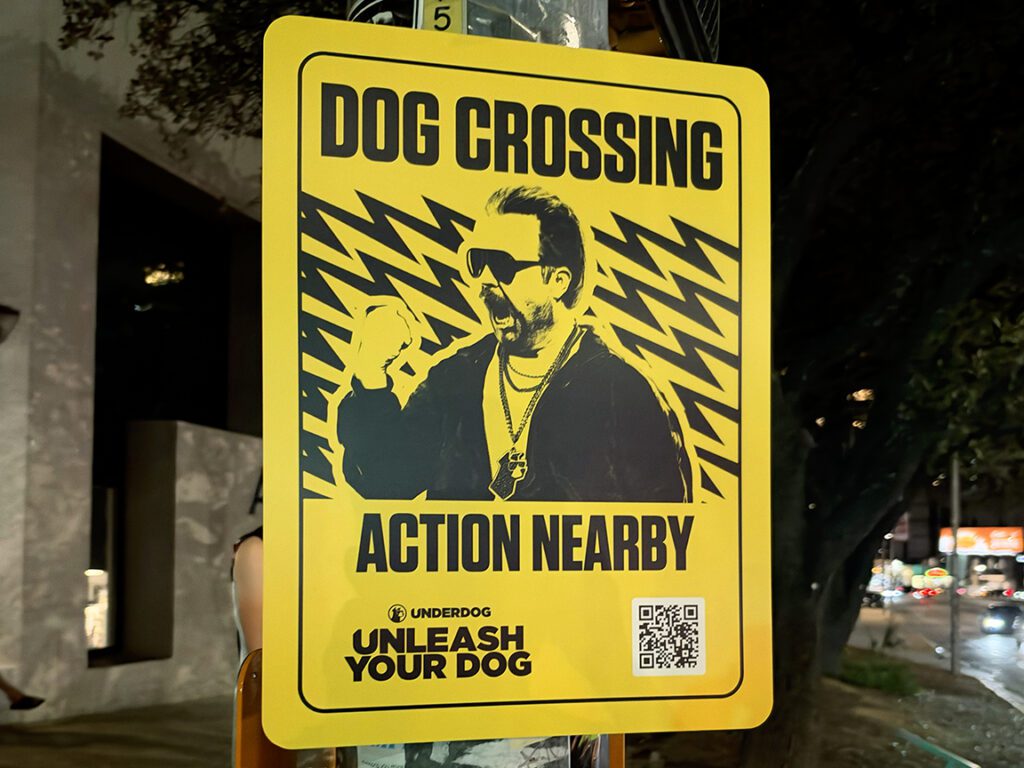
- Snipe advertising on poles, signals, and fixtures along Maysville City Transit corridors
- Sidewalk stencils at high-traffic stops and transfer points
- Take-one flyer boxes mounted at shelters and stop benches
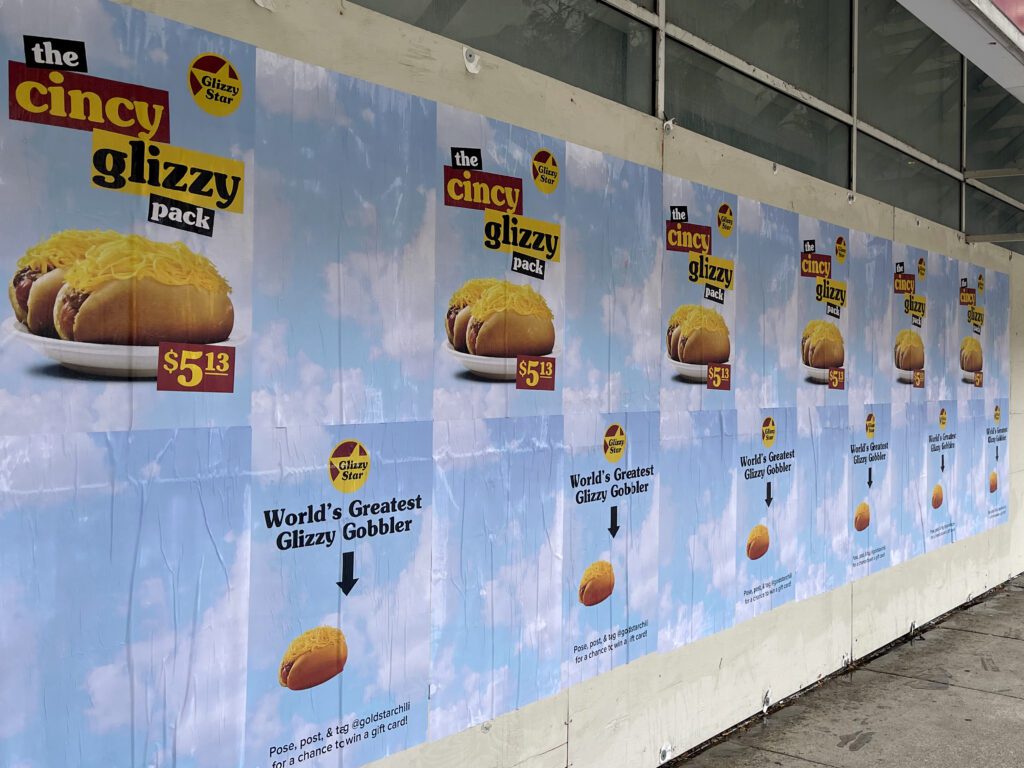
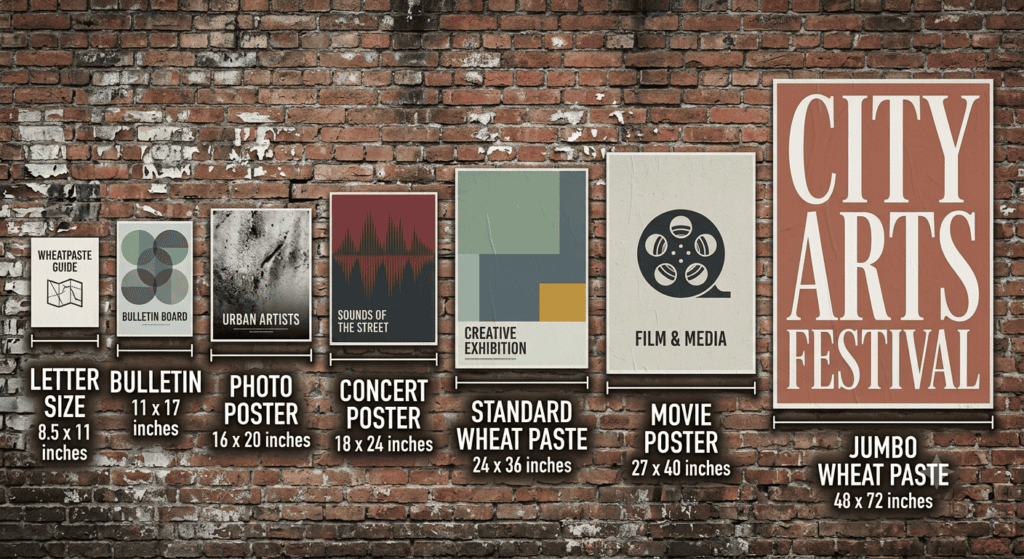
- Wheatpaste poster campaigns on permitted surfaces in commercial corridors served by Maysville City Transit
Who Advertises With Maysville City Transit
Meadowview Regional Medical Center and competing regional healthcare systems, Maysville river tourism businesses, Mason County financial institutions and insurance agencies, and community service organizations reaching the transit-dependent residential population are the primary Maysville City Transit advertisers.
The decision to advertise on Maysville City Transit is not about reaching the largest possible audience — it is about reaching the right audience at the right place and time, with a format that cannot be skipped, blocked, or scrolled past. Transit advertising reaches a captive audience in motion, in a physical environment that demands presence in a way that digital advertising never can. For the brands whose customers ride Maysville City Transit every day, that captive audience is the most efficient available media buy in the Maysville market.
What Stronger Planning Looks Like on Maysville City Transit
Good transit media planning on Maysville City Transit starts with honest route behavior instead of generic circulation claims. AGM looks at where riders actually board, what they are doing before they get on, what they are doing after they get off, and whether the ad unit has enough repeat exposure to earn recall. In practical terms, that means separating commuter corridors from errand routes, transfer hubs from one-seat rides, and weekday patterns from weekend traffic. A message for appointment-based healthcare demand needs a different placement logic than a campaign for a restaurant launch, a public notice, or a college recruitment push. Maysville City Transit works best when the buy reflects those differences at the route level instead of flattening the whole system into one audience bucket.
That route-first approach also helps with creative discipline. Some campaigns need a blunt headline with a phone number large enough to catch from three rows back. Some need a QR code that only makes sense in a seated interior environment. Some need a shelter panel beside a transfer point because the stop itself creates the dwell time that the message requires. On Maysville City Transit, the smartest plan is rarely the flashiest one. It is usually the one that respects how people move through Maysville, Market Street, Meadowview, and Ohio River commuter flow and pairs the right message with the right pause in their day.
We also pay attention to the surrounding street life, because transit ads do not exist in isolation. A bus running the same arterial every day becomes part of that corridor’s visual rhythm. Riders see the ad inside the coach, pedestrians catch the king panel on approach, and drivers sit behind the tail when traffic stacks at a light. That layered exposure is the real value of transit media. It is why a well-placed campaign on Maysville City Transit can outperform louder media categories that seem bigger on paper but disappear from memory five seconds after the impression lands.
How Agm Extends Maysville City Transit Campaigns Beyond The Vehicle
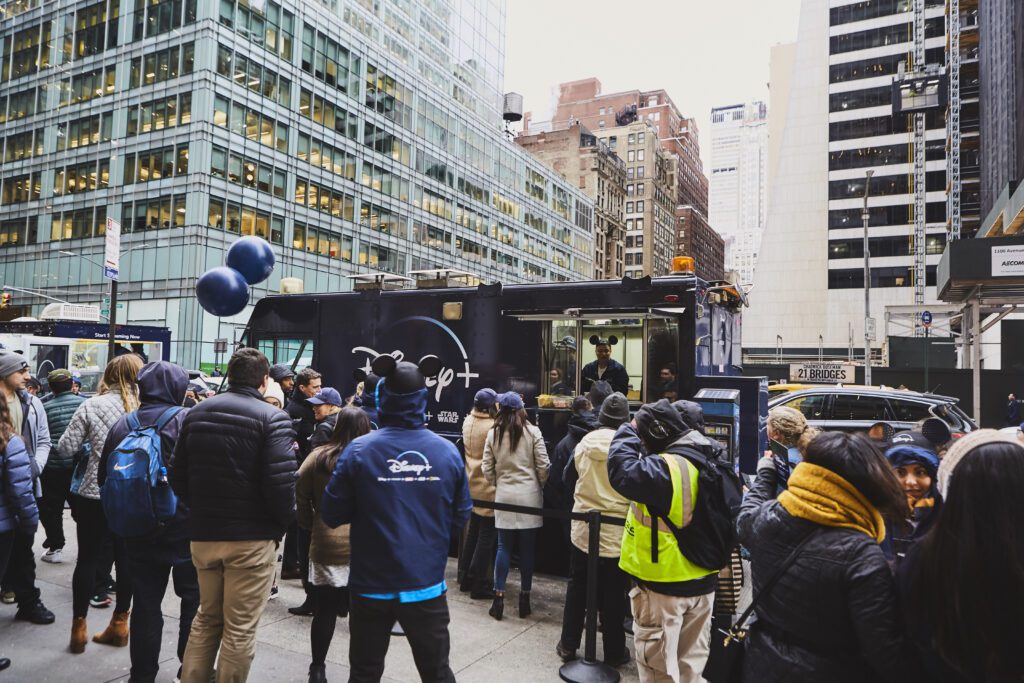
Transit media gets stronger when it is treated as the anchor instead of the whole plan. If a client wants to own a corridor for a few weeks, AGM can pair Maysville City Transit placements with street-level support around the same transfer points, campus edges, downtown blocks, or retail approaches that riders already use. That might mean legal wheatpaste near nightlife foot traffic, flyer boxes near commuter stops, or stencil and snipe support on the pedestrian path between the stop and the destination. The point is not to create clutter. The point is to make the transit impression feel familiar when the same person sees the brand again ten minutes later on foot.
This is especially useful for shorter campaigns that need to build memory fast. A four-week transit run can do a lot, but a four-week transit run with matching guerrilla support around the heaviest boarding zones usually feels bigger than the budget behind it. That matters in markets where people notice repetition quickly and talk about new brands through local routines, whether that is a downtown lunch crowd, a student loop, a hospital shift change, or a county service run. Maysville City Transit gives you the repetition. Guerrilla support turns that repetition into presence.
Execution matters just as much as the idea. We schedule installs so that transit and street-level elements launch together, we keep the visual language consistent across formats, and we make sure the CTA fits the environment. A rider at a shelter can handle a little more information than a driver passing a wrapped bus. A seated passenger has time for a QR scan. A pedestrian leaving a transfer center might respond better to a simple directional prompt. When those details are handled well, Maysville City Transit stops being a line item on a media plan and starts acting like a real local campaign.
What Clients Usually Miss Before They Buy
A lot of advertisers assume the biggest route is automatically the best route. That is only true when the audience mix matches the goal. A higher-ridership line filled with short errand trips may be less valuable than a slightly smaller line with longer dwell time, cleaner repetition, and a tighter fit with the brand. On this system, we look at who is riding, how often they repeat, what transfer behavior looks like, and whether the surrounding corridor gives the campaign extra visibility beyond the bus itself. That level of planning keeps money from leaking into inventory that looks impressive on a spreadsheet but does not create useful recall in the street.
We also watch the difference between image campaigns and response campaigns. If the objective is broad local familiarity, larger exterior units and major shelters do the heavy lifting. If the objective is appointment setting, recruitment, event turnout, or app downloads, interior units often carry more weight because the rider has the time to read, remember, and act. The best campaigns on this system usually mix those two functions instead of forcing one format to do everything.
That discipline is where AGM earns its keep. We are not just sourcing inventory. We are helping decide what deserves premium placement, what should stay simple, and what should be supported by guerrilla touches nearby so the campaign feels bigger without wasting spend. In a market where people notice the same corridors every day, those choices compound quickly.
Maysville rewards practical messaging. Local healthcare, retail, education, and public-service campaigns often perform best because riders already move through the same compact set of destinations every week. When the creative mirrors that grounded daily pattern, the ad feels useful rather than interruptive.
Because the city footprint is compact, even modest campaigns can feel surprisingly present here. That is useful for advertisers who want to dominate a local conversation without paying for excess scale they do not need. A smaller buy on the right units can create the impression that the brand is everywhere people already go.
That kind of repetition is hard to fake with digital alone. In a smaller market, physical presence still signals legitimacy. If people keep seeing a brand on the routes and stops they already trust for daily movement, the brand starts borrowing some of that familiarity.
Frequently Asked Questions
Maysville City Transit inventory includes exterior king and queen poster panels, full bus wraps, interior headliner cards, seat-back cards, overhead cards, window vinyl, tail displays, and shelter advertising at key stops. AGM handles media buying across all formats.
Rates vary by format, duration, and placement. AGM provides a full rate card and placement recommendation based on your campaign budget and target audience. Contact us for current availability and pricing.
Maysville City Transit serves Maysville’s working population, including Meadowview healthcare workers and Mason County residential commuters and downtown Maysville tourism visitors and residential neighborhood transit-dependent households. The system connects residential neighborhoods to major employers including Meadowview Regional Medical Center and Mason County manufacturing employers.
Typical campaigns run four to twelve weeks for interior and exterior formats. Shelter advertising contracts run one to six months. Longer placements are available at favorable rates.
Yes. Route-specific buying lets you concentrate on the hospital corridor on US-68/KY-68 or the downtown Second Street and Market Street route. AGM recommends a placement mix aligned with your campaign objective.
Maysville City Transit serves thousands of riders per week, with peak ridership in morning and afternoon commute windows. Route-specific ridership data is available during media planning.
Yes. AGM deploys snipes, sidewalk stencils, take-one boxes, and wheatpaste campaigns in Maysville alongside transit advertising buys.
Healthcare performs strongly on Maysville City Transit because the system serves the residential and employment corridors of Maysville’s healthcare workforce and patients.
Specifications vary by format. AGM provides a complete creative spec sheet at campaign initiation.
Contact AGM through americanguerrillamarketing.com/contact-us. We assess your campaign objective, recommend format and route mix, and manage the full media buy from contract through installation.