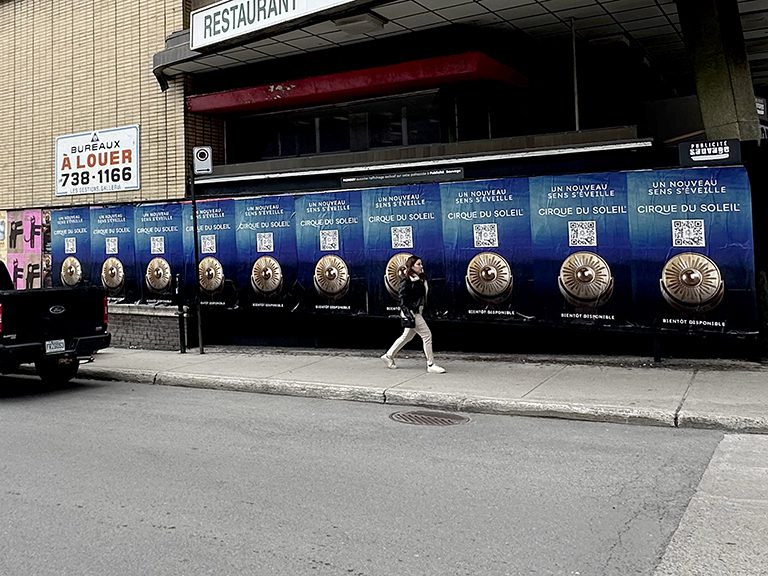
OOH Agency: What Out-of-Home Advertising Actually Takes
Not every OOH agency offers the same thing. Understanding what distinguishes them — and what questions to ask — helps you find the right one before you’ve committed budget.
The out-of-home advertising industry is divided between two types of companies: media owners who control the physical inventory, and agencies who plan and buy campaigns on behalf of advertisers. Most brands approach OOH through agencies, because the agency sits on the client side of the transaction and theoretically owes its loyalty to the advertiser’s objectives rather than the media owner’s inventory.
The reality is more complicated. OOH agencies range from global media buying conglomerates to small boutique shops specializing in guerrilla and street-level work. They differ in market coverage, format expertise, minimum spend requirements, creative capabilities, and execution quality. Choosing the wrong partner is a genuine risk.
This article explains what OOH agencies actually do, how they differ from each other, what to expect in a client relationship, and how to evaluate whether an agency is the right fit for a specific campaign.
At the core, an OOH agency does three things: plans where your advertising should appear, buys access to those locations from media owners, and manages the process of getting your creative onto those locations. Beyond that core, agencies vary significantly in what additional services they provide.
Strategic Planning
Good OOH planning starts with audience analysis. Where does your target demographic live, work, commute, shop, and spend leisure time? Which outdoor environments do they move through, at what times, with what level of attention? These questions translate into a media plan — a set of specific locations, formats, and timing windows that puts your message in front of the right people.
Planning quality varies enormously between agencies. Some do genuine audience-to-location mapping. Others essentially present a client with their most available inventory and call it a strategy. Asking to see the reasoning behind a proposed media plan — specifically, why these locations were chosen for this audience — is a good test of the agency’s planning quality.
Media Buying
Buying OOH media involves negotiating with multiple media owners to secure specific placements at specific rates for specific dates. Larger agencies may have preferred rates from media owners due to volume, though this can also create conflicts of interest — an agency with a volume commitment to a specific media owner may steer clients toward that owner’s inventory regardless of whether it is the best fit.
Smaller, independent agencies may not have volume discounts but also do not have inventory commitments that create bias in their recommendations. The right choice depends on the specific market and campaign type. In New York, where significant OOH inventory is held by property owners who are not major media companies, direct relationships and negotiating experience matter more than volume contracts.
Production Management
Getting creative onto outdoor surfaces requires production: large-format printing, vinyl cutting, physical installation, and quality control. Some agencies handle production in-house; others work with production vendors. Either approach can work, but the agency is responsible for the quality of the final installed creative. A bad print or a botched installation reflects on the campaign, regardless of which vendor was at fault.
On-Site Execution
For campaigns that involve anything beyond standard media placements — street teams, mobile billboards, pop-up activations, sampling programs — on-site execution management becomes a significant part of the agency’s role. This includes staffing, briefing, logistics, real-time problem solving, and field coordination across multiple simultaneous locations.
Documentation and Reporting
Post-campaign documentation is part of what a professional OOH agency delivers. Geotagged, timestamped photos from every placement, a summary of where and when the campaign ran, and any notable field observations give the client proof of execution and material for future planning. An agency that does not provide documentation as a standard deliverable is leaving out part of the service.
AGM Field Note: The documentation question is a useful screening question when evaluating OOH agencies. Ask: “What do I receive after the campaign runs?” If the answer is vague, that is telling you something about how the agency views its own accountability.
Types of OOH Agencies
The OOH agency environment includes several distinct categories, each suited to different client needs.
Global Media Buying Networks
The largest outdoor advertising agencies are divisions of global media holding companies. They handle major multinational campaigns with national or global geographic scope. They have volume relationships with major media owners, sophisticated planning tools, and large account teams. They are best suited to large advertisers with national or multi-market campaigns and significant budgets.
For smaller brands, regional campaigns, or work requiring specific street-level formats like guerrilla, poster campaigns, or wheat paste, global networks are typically not the right fit. Their minimum spends, account management structures, and inventory relationships are built for a different client type.
Regional OOH Specialists
Agencies focused on one or a few specific markets. A New York-focused OOH agency has deep knowledge of that market’s inventory, operators, neighborhoods, and operational environment. A Chicago specialist knows the specific dynamics of that city. This depth of local knowledge is often worth more than the broad geographic coverage of a larger network, particularly for campaigns where the specific neighborhood and street-level context matters.
Format Specialists
Some agencies specialize in specific OOH formats: transit advertising, airport advertising, digital out-of-home, or guerrilla and street-level work. Format specialists have vendor relationships, production knowledge, and operational experience specific to their format. For a campaign that is primarily or entirely in one format, a format specialist may outperform a generalist agency.
Guerrilla and Street Marketing Agencies
American Guerrilla Marketing is in this category. We focus on non-traditional, street-level, and alternative outdoor formats: building wraps, painted installations, poster campaigns, wheat paste, mobile billboards, street teams, and experiential activations. This work requires direct negotiation with property owners, local operational knowledge at the neighborhood level, and production experience with formats that do not go through standard media buying channels.
Guerrilla-focused agencies are not the right choice for campaigns that are primarily traditional billboard or transit buys. But for any campaign with significant street-level or non-standard components, they bring operational depth that generalist agencies typically lack.
How OOH Agencies Are Compensated
Agency compensation models in OOH vary and affect what incentives drive the agency’s recommendations.
Commission on Media Spend
The most common model. The agency charges a percentage of the media spend as its fee. This is efficient for the client because the agency fee scales with the campaign size. The potential conflict is that this model creates an incentive to recommend larger media buys, since the agency earns more from more spend. A well-run agency mitigates this through transparency about how recommendations are made and what the reasoning is.
Flat Project Fee
A fixed fee for the campaign scope, regardless of media spend. This model removes the incentive to inflate the media buy but may create an incentive to minimize effort once the fee is agreed. It works well when the scope is clearly defined upfront and the client wants predictable agency costs.
Managed Service Fee Plus Media Pass-Through
A service fee for campaign management plus pass-through of media costs at actual rate. This model provides the most transparency into what the media actually costs versus what the agency earns for its work. It is common in more sophisticated client-agency relationships where the client has enough market knowledge to evaluate whether the media costs are reasonable.
AGM Field Note: We are transparent about how our campaigns are priced. Ask any vendor you are evaluating to explain their fee structure clearly. If they are reluctant to explain it, that is useful information.
What to Look For When Evaluating an OOH Agency
Evaluating OOH agencies requires asking the right questions and looking past the pitch presentation.
Market Knowledge
Does the agency actually know the specific markets where your campaign will run? Not in general terms, but specifically — which neighborhoods, which property owners, which formats work in which areas, what the operational environment looks like at street level? Test this by asking specific questions about the market and seeing how specific the answers are.
Vendor Relationships
OOH execution depends on relationships with property owners, production vendors, installation crews, and local operators. An agency without these relationships will spend your campaign budget building them from scratch, which is inefficient and creates quality risks. Ask who they work with in specific markets.
Production Quality
Ask to see examples of installed creative from previous campaigns. Look specifically at the quality of the print, the installation, and the physical presentation in the field. Production quality is easy to promise and easy to cut in practice. Examples from real campaigns tell you more than mockups.
Documentation Standards
What does the post-campaign documentation look like? Ask for examples. Professional documentation includes geotagged photos with timestamps from multiple points during each operating day, a location summary, and any field notes. If the documentation examples look thin, the execution probably is too.
Transparency on Inventory
Is the agency recommending specific locations because they are genuinely right for your campaign, or because they have inventory commitments to certain media owners? Ask directly how locations are selected and whether the agency has any preferred-inventory relationships that affect recommendations. A good agency will answer this question clearly.
Agency vs. Direct Buying: When to Use Each
Scenario
Best Approach
Why
Multi-market national campaign
Agency with national relationships
Coordination complexity requires central management
Guerrilla / street-level work
Guerrilla specialist agency
Non-standard inventory not accessible through standard channels
Single standard billboard
Direct from media owner
Simple enough that agency layer adds cost without value
Event-tied campaign with multiple formats
Full-service agency
Coordination across formats and vendors requires expertise
Transit or subway campaign
Transit advertising specialist
Transit inventory has specific channels and format requirements
Building wrap in specific market
Local market specialist
Property owner relationships determine access
What AGM Brings to OOH
American Guerrilla Marketing has been operating in New York’s outdoor advertising environment for years. We handle campaigns that range from single-building installations to multi-format, multi-neighborhood activations. Our core expertise is in the non-traditional formats — building wraps, poster campaigns, wheat paste campaigns, mobile billboard routes, and street-level activations — that require direct property relationships and local operational knowledge.
We also work with traditional outdoor placements, transit advertising, and digital OOH when those formats are the right tool for a specific campaign. The philosophy is that the format serves the objective, not the other way around. We do not push formats we are comfortable with if those formats are not right for the brief.
Our clients include brands across entertainment, consumer goods, fashion, technology, and retail. Campaign sizes range from tight guerrilla budgets to significant multi-format market saturation efforts. We work with in-house marketing teams, brand agencies looking for an OOH execution partner, and founders building their first physical presence in a market.
Working with an OOH Agency: Timeline Expectations
One of the most consistent client surprises in OOH is lead time. Digital advertising can launch in hours. OOH advertising requires physical production and installation, which takes time. Understanding realistic timelines prevents last-minute problems.
A standard billboard or transit buy typically requires two to four weeks of lead time from brief to launch: time for the media buy negotiation, production of creative materials, and installation scheduling. Complex or custom formats take longer. A building wrap involving direct property negotiation, custom production, and professional installation can take six to eight weeks from initial inquiry to installation date. A multi-format campaign across multiple markets can require eight to twelve weeks of planning before the first placement goes up.
These timelines are not inefficiency — they reflect the real logistics of physical advertising in urban environments. The agencies that tell you everything can happen faster than these timelines are often the ones that produce quality problems or miss installation windows.
Building a Long-Term Relationship with an OOH Agency
The most efficient OOH advertising tends to happen in the context of established agency-client relationships where the agency already understands the brand’s objectives, voice, and audience well enough to make good planning decisions quickly. The first campaign with a new agency typically involves significant time spent on discovery — understanding the brand, understanding the market, understanding the campaign history. Subsequent campaigns, when the relationship has been established, move faster and produce better work because the foundational knowledge is already in place.
This argues for treating OOH agency selection as a relationship decision rather than a project procurement decision. If you find an agency that understands your brand and executes your campaigns with genuine quality, the investment in maintaining that relationship over time pays dividends in campaign quality, speed, and efficiency. Switching agencies for every campaign, or treating each campaign as a new competitive bid process, sacrifices the accumulated knowledge advantage that a stable agency relationship provides.
What a Good Agency Relationship Looks Like
A productive OOH agency relationship is characterized by proactive communication, transparency about what is and is not working, and a genuine shared interest in campaign outcomes. The agency should be telling you when a proposed location is not actually the right choice for your audience, even if it is what you asked for. They should be surfacing new inventory options as they become available in your target markets. They should be bringing you documentation and post-campaign analysis that helps you make better decisions next time.
On the client side, a good agency relationship requires clear briefing, timely approvals, and honest feedback. An agency cannot improve its recommendations without knowing what worked and what did not. Share the outcomes — the anecdotal reports from sales staff, the brand awareness numbers, the foot traffic data — even when the outcomes are not perfect. That information makes the next campaign better.
OOH Agency Specializations Worth Understanding
Beyond the broad categories of global networks, regional specialists, and format specialists, there are specific areas of OOH expertise that may be relevant depending on the specific campaign objectives you are pursuing.
Experiential Production
Agencies that specialize in experiential production — the physical build-out of large-scale outdoor installations, pop-up experiences, and interactive elements — offer capabilities that standard media buying agencies do not. If your campaign involves anything beyond standard media placements (custom fabrication, interactive technology, live staffing of complex experiences), working with an agency that has a strong experiential production background is important. Ask specifically about their production vendors, their quality control processes, and their track record with physically complex installations.
Street-Level and Alternative Formats
Agencies that specialize in street-level and alternative outdoor formats — building wraps, painted murals, poster campaigns, mobile billboards, and other non-standard placements — have vendor relationships and operational experience that standard media buying agencies lack. In New York, which has one of the world’s most active markets for these formats, agencies with deep street-level expertise can access inventory and negotiate access to surfaces that are simply not available through standard channels.
Transit Specialization
Transit advertising has its own specialized operators and buying processes in most major markets. In New York, the MTA has specific advertising contractors; in DC, WMATA has its own. In many cities, transit advertising is bought separately from roadside advertising, with different operators, different creative specifications, and different campaign timelines. Agencies that specialize in transit understand these complexities and can navigate them efficiently.
What AGM Does That Standard Agencies Do Not
American Guerrilla Marketing operates in the space between standard media buying and full experiential production. We handle the formats and campaigns that require direct property relationships, local market knowledge at the neighborhood level, and production experience with non-standard creative executions.
Our specific capabilities:
Direct property negotiation for building wall and rooftop placements that are not available through standard outdoor media companies.
Street-level campaign coordination including poster campaigns, wheat paste work, and other formats that require neighborhood-by-neighborhood logistics management.
Mobile billboard route planning and management with real-time tracking and photo documentation throughout each operating day.
Mural and painted installation project management from surface identification through artist coordination, production, and final documentation.
Multi-format campaign coordination that combines standard media buys with non-standard placements into a unified campaign with consistent creative and coordinated timing.
What we do not do: we do not handle programmatic digital OOH buying, we do not manage television or radio buying, and we are not the right agency for campaigns that are primarily major-media national network buys. Our expertise is in the physical, street-level, and alternative outdoor space — the work that requires local relationships and operational presence, not just a buying platform.
Evaluating an OOH Agency’s Proposal
When you receive a proposal from an OOH agency, several specific elements reveal the quality of the agency’s thinking and the reliability of their execution capability.
Specificity of Location Recommendations
A proposal that lists specific street addresses, panel IDs, or surface descriptions for each recommended placement demonstrates that the agency has actually researched the specific locations, not just described formats in general terms. A proposal that says “we will identify suitable locations in SoHo” is less advanced than one that says “we recommend the building wall at [specific address] facing south on Prince Street, with an available installation window of [specific dates] and a rate of [specific amount].”
Audience Rationale
A good agency proposal explains why each location was chosen for the specific target audience, not just where the available inventory is. The rationale should be specific: “This placement is recommended because it is on the primary commute route for the target demographic, with high pedestrian volume during the 8-10 AM and 5-7 PM windows that align with your audience’s movement patterns.” Generic descriptions of neighborhood character are less useful than specific audience-to-location reasoning.
Documentation Standards
The proposal should describe what documentation the client will receive and when. “We will provide a post-campaign report with photos” is the minimum. “We will provide geotagged, timestamped photos from each placement location at installation, mid-campaign, and end-of-campaign, along with a traffic log for mobile formats” is the standard that professional agencies maintain.
Agency Selection for Non-Standard OOH Formats
Standard outdoor advertising — billboard buys through major media owners, transit advertising through franchise operators — is something most agencies can handle competently. The operational complexity is manageable, the inventory is standardized, and the buying process is well-documented. Where agency selection becomes genuinely consequential is in the non-standard formats: building walls, wheat paste campaigns, painted murals, mobile billboard routes, and custom fabrication activations.
For these formats, the question is not which agency has the lowest commission rate or the largest volume commitment with a media owner. The question is which agency has the direct property relationships, the local operational knowledge, and the production vendor network to actually execute the non-standard format you need, in the specific market where you need it, at the quality level you require. These are capabilities that are built through years of on-the-ground work in specific markets — they cannot be replicated by a large agency that does not have direct operational presence in the market.
When evaluating agencies for non-standard OOH formats, ask for a portfolio of actual installed work in the specific market you are targeting. Not mockups. Not renderings. Photographs of installed work in the specific neighborhoods or environments where you want to campaign. An agency that can show you ten years of installed building wraps in SoHo has demonstrated that they can execute this work. An agency that can only show you renderings of proposed work has not.
Contract and Terms: What to Look for in an OOH Agency Agreement
The terms of an OOH agency engagement should be clear about a few specific issues that are common sources of dispute in client-agency relationships.
Media cost transparency: How are media costs presented to the client? Are markups applied to media costs? If so, how much? Does the agency disclose all rebates or volume incentives received from media owners? A transparent agency provides clear pass-through of actual media costs with separate service fees; an agency that bundles everything into a single opaque number makes it difficult to evaluate whether the media recommendations serve the client’s interests or the agency’s financial interests.
Documentation commitments: What documentation is contractually committed as a campaign deliverable? Vague language about “campaign reporting” is insufficient. The contract should specify: geotagged photos from each placement at specified intervals; route logs for mobile campaigns; installation confirmation with timestamps; and a post-campaign summary report delivered within a specified time after campaign completion.
Revision and approval process: How many rounds of revision are included in the engagement fee? Who has final approval authority on media recommendations and creative direction? What is the process if the client needs to change the campaign after media has been booked? Clear answers to these questions prevent the kind of scope creep and billing disputes that erode agency-client relationships.
Campaign performance guarantees: Does the agency offer any form of make-good if the campaign does not run as planned? If a placement is not installed on the contracted start date, or a mobile billboard truck runs significantly fewer hours than contracted, what is the agency’s obligation to compensate the client? Professional agencies have clear make-good policies and stand behind them; agencies that hedge these commitments or avoid the question are more likely to leave clients in a difficult position when execution problems occur.
Contact AGM to Start Your Campaign
American Guerrilla Marketing is the right OOH agency for brands that need non-traditional, street-level, and alternative outdoor advertising in New York and other major markets. We bring direct property relationships, neighborhood-level market knowledge, and full-service production capabilities to campaigns that require more than standard media buying.
Frequently Asked Questions
What does OOH stand for in advertising?
OOH stands for out-of-home. It describes any advertising that reaches consumers while they are outside their homes, in public spaces. This includes billboards, transit advertising, street posters, branded vehicles, digital screens in public areas, airport displays, and ambient installations.
What does an OOH agency do?
An OOH agency plans and executes out-of-home advertising campaigns across formats including billboards, transit advertising, street-level posters, branded vehicles, digital screens, and ambient installations. The agency handles location selection, production, placement, and measurement of the campaign.
What is street-level OOH advertising?
Street-level OOH includes any out-of-home advertising that reaches pedestrians at eye level in urban environments. This includes posters, branded vehicles, ambient installations, sticker campaigns, projection advertising, and hand-distributed materials. Street-level OOH reaches people in the context of their daily lives in the neighborhoods they inhabit.
Is OOH advertising still effective in the digital age?
Yes. OOH advertising has become more effective in relative terms as digital ad avoidance has increased. People cannot skip, block, or mute a billboard. OOH also tends to generate higher brand recall than digital display advertising. The format is particularly powerful when combined with a complementary digital campaign.
How do you measure OOH campaign results?
Traditional OOH is measured by exposures, estimated from traffic count data at each location. Modern campaigns also use mobile location data to estimate the number of devices that passed near campaign locations. Digital OOH can track actual views. QR-enabled campaigns track scans. We document all campaigns with photography and provide full reports.
What markets does AGM run OOH campaigns in?
We run campaigns in every major U.S. market. Our deepest location knowledge is in New York City, but we have executed OOH campaigns in Los Angeles, Chicago, Miami, Austin, Boston, Atlanta, Seattle, San Francisco, and other cities. We manage multi-market campaigns as a single coordinated effort.
Can OOH advertising be targeted to specific neighborhoods?
Yes. Street-level OOH is particularly well-suited to neighborhood-level targeting. We select locations based on the demographic and psychographic profile of each neighborhood, ensuring that the campaign reaches the right audience rather than a mass market average.