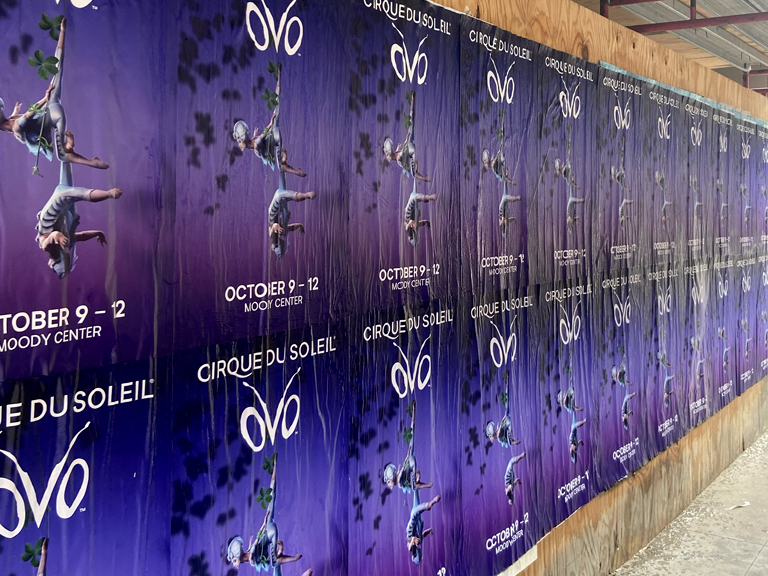
Summer wheatpasting demands faster-setting paste formulations and early-morning installation windows that allow placement to cure before peak heat, campaigns planned with seasonal heat management in mind consistently outperform those that treat summer as a standard execution window.
Guerrilla marketing at its best participates in the visual culture of the neighborhoods where it appears, rather than simply occupying space. Creative that fits the aesthetic, scale, and character of a commercial corridor earns attention from audiences who have learned to filter out conventional advertising. American Guerrilla Marketing designs campaigns around that earned-attention logic rather than the interruption logic that governs most media planning.
What makes wheatpasting worth understanding in depth is the gap between campaigns that generate impressions and campaigns that generate results. The best campaigns are built around audience movement patterns, not just surface availability, they place messages where the right people walk, dwell, and return repeatedly, which drives the frequency that builds real brand memory. The format also benefits from organic amplification: quality street-level work in high-visibility environments gets photographed and shared, multiplying the original media investment without additional spend.
This article covers the tactical and strategic fundamentals of wheatpasting, how campaigns are structured, what execution looks like in practice, how to evaluate format options against objectives and budget, and what distinguishes campaigns that move the needle from campaigns that just spend money. Whether you’re planning a first activation or optimizing an existing street-level program, the information below gives you a grounded framework for making smart decisions and getting measurable outcomes.
Why Summer Heat Changes Everything for Wheatpasting
Wheat paste is an adhesive that relies on moisture, specifically, on moisture staying present long enough during application for the paper to adhere cleanly to the surface before the paste cures and bonds. In cooler conditions, that working window is generous: a crew member has minutes from the moment paste is applied to the surface to position the poster, smooth it flat, and apply the top coat. In summer heat, especially in direct sunlight, that window can collapse to seconds on surfaces that have been baking in the sun all day.
The problem isn’t just drying speed. When paste dries too quickly, several failure modes occur simultaneously. The paper doesn’t lay flat because the adhesive sets before air bubbles can be worked out from under the poster surface. Edges don’t bond completely because the paste in those zones skinned over before the top coat was applied. The paper stock, suddenly in contact with a hot surface, expands at a different rate than the adhesive beneath it, creating the characteristic bubbling and edge lifting that define a poorly executed summer campaign.
UV exposure adds a second independent degradation pathway. Even if a poster is applied perfectly and achieves strong adhesive bond, summer sun, particularly the UV component that peaks during midday hours, bleaches ink pigments faster than most production specifications assume. A campaign designed to run six weeks in October may fade visibly within three weeks in July in markets with intense summer sun. Understanding this and adjusting paper stock, ink specifications, and expected flight duration accordingly is what separates a summer campaign that maintains quality through the full window from one that looks increasingly weathered by week two.
How Heat Affects Adhesive Performance
Standard wheat paste, flour (typically all-purpose or wheat starch), water, and optional additives like salt or preservatives, is formulated for ambient temperatures in the 50–80°F range. At these temperatures, the paste maintains its working consistency in the bucket for extended periods, spreads smoothly with a brush, and gives the crew adequate time to position and smooth each poster before the adhesive begins to set.
As temperatures rise above 85–90°F, several adhesive behaviors change unfavorably. The paste in the bucket thickens faster, requiring more frequent stirring and occasional water additions to maintain workable consistency. The surface paste, the layer applied to the wall before the poster is placed, skins over much faster, reducing the window between application and positioning. The top coat, the layer of paste applied over the poster after placement to seal it and increase durability, spreads less evenly as the surface paste beneath is already partially set, sometimes creating dragging effects that pull at the wet paper.
Hot surfaces compound all of these effects. A brick wall in direct midday sun in Atlanta in August may be at 140°F or higher. When paste contacts a surface that hot, moisture flashes off almost instantly, eliminating the working window entirely. The practical effect is that the paste reaches its dry state during application rather than after it, which means the chemistry that creates adhesive bond never fully activates. The poster may appear to adhere momentarily but will lift at the edges and fail completely within hours.
For humid heat markets (New York, Chicago, Atlanta, Miami), the situation is somewhat less extreme because ambient humidity slows surface drying slightly. But the window is still dramatically shorter than cool-weather conditions. For dry heat markets (Phoenix, Las Vegas, Denver, Dallas), surface temperatures and instant-drying conditions are the primary challenge, and the adjustments to formulation and timing are more aggressive.
How Heat and UV Affect Paper and Ink
Paper behaves differently in heat and humidity than in temperate conditions. When paper absorbs moisture from wheat paste and simultaneously expands from surface heat, the expansion rates of the paper fiber and the adhesive layer beneath it diverge, the paper expands faster, creating the bubbled, wrinkled surface appearance that is the most visible failure mode in summer poster campaigns. This effect is most pronounced with thinner, uncoated paper stocks that absorb moisture rapidly and lack the dimensional stability of heavier or coated alternatives.
Paper that has been printed and stored in a cool, humidity-controlled environment before deployment and then exposed to summer field conditions compounds the problem. The paper expands in the field at a rate it didn’t experience during production, which means even well-laid posters can develop bubble issues hours after deployment as the paper adjusts to the ambient conditions of the deployment environment.
UV degradation is a separate but equally significant issue. The pigments in standard printing inks, particularly in cyan (blue-green) and magenta channels, are less UV-stable than black and yellow. In high-UV environments, the color balance of a poster shifts as the cyan channel fades faster, making brand colors appear warmer and washed out over the campaign flight. Inks specified with UV inhibitors, a higher-cost production option, slow this degradation significantly. For campaigns running in intense summer sun markets, specifying UV-resistant inks is not a luxury; it’s the production decision that determines whether the creative looks as intended in week one versus week four.
Summer Paste Formulation: Adjusting for Heat
The most immediately impactful adjustment for summer wheatpasting is paste formulation. Standard wheat paste mixes lean toward the thinner end of the consistency range to support spreading and reduce brush drag, appropriate for cool conditions where working time is generous. In summer, the formulation needs to shift toward slightly thicker consistency to slow moisture evaporation and extend the working window on hot surfaces.
A simple starting adjustment is to increase the flour-to-water ratio by 20–30% compared to a standard mix, producing a paste that’s closer to thin peanut butter than the standard thin pancake batter consistency. This thicker mix retains moisture longer on the surface, giving the crew a slightly extended window for positioning and smoothing. The trade-off is slightly more brush resistance, which the crew needs to anticipate in their application technique.
Adding a commercial methyl cellulose-based wallpaper adhesive, mixed into the wheat paste base at a ratio of roughly 10–15% of total volume, is a widely used professional technique that improves heat resistance and open time simultaneously. Methyl cellulose (the primary ingredient in most commercial wheat-paste substitutes and wallpaper adhesives) has a higher temperature threshold before it skins over, and blending it with traditional wheat starch paste produces an adhesive that outperforms either component alone in summer conditions. This blend is a standard AGM approach for summer campaigns in heat-intensive markets.
Bucket management matters more in summer than any other season. Keeping the paste bucket in a cooler or in the shade of the vehicle rather than in direct sun prevents the ambient paste temperature from rising, which slows surface skinning and extends workable consistency. A thin layer of cool water poured over the paste surface between applications creates a moisture barrier that significantly delays the paste from thickening in the bucket during multi-hour deployments. Both practices take seconds and extend the effective working time of each bucket of paste substantially.
Paper Stock Selection for Summer Campaigns
Paper stock selection is the production decision with the highest impact on summer campaign longevity. The wrong paper in summer conditions doesn’t just underperform, it fails visibly and publicly, undermining the campaign’s professional quality and the brand impression the placement was meant to create.
Heavier paper weights (80–100 lb text weight and above) provide the dimensional stability that summer heat demands. Heavier papers absorb paste moisture more slowly and evenly, reducing the rapid expansion that causes bubbling. They’re also more resistant to tearing during the application process, an increasingly important property when crew members are working faster in hot conditions and the paste is setting faster beneath the paper.
Coated paper stocks, either gloss or matte coated, outperform uncoated papers in summer in several ways. The coating layer slows moisture absorption from the paste, reducing expansion. It creates a more dimensionally stable surface that resists the heat-driven expansion cycling that causes edge lifting. And it provides a substrate for UV-resistant ink specification that uncoated papers can’t accept at the same quality level. For summer campaigns in high-UV markets, coated paper with UV-resistant ink specification is the professional standard.
Avoid uncoated newsprint-weight papers for summer campaigns entirely. These papers absorb paste moisture almost instantly, expand dramatically before the paste sets, and have virtually no UV resistance in the ink layer. They produce the worst possible summer performance across every failure mode simultaneously. In temperate conditions, lightweight papers may be acceptable for short-duration campaigns; in summer, they’re a production liability.
Poster sizing also interacts with summer performance. Larger-format posters (24″ x 36″ and larger) create more opportunity for uneven adhesion and bubbling because the greater surface area includes more variation in surface temperature and texture. Some operators reduce standard poster sizes slightly for summer campaigns to make application faster and more controlled, accepting a slightly smaller format in exchange for consistently cleaner installation quality across every placement in the campaign.
Deployment Timing: The Summer Schedule
Deployment timing is the single highest-use management adjustment for summer Wheat Paste Poster Campaigns. The difference between a crew that deploys at 2 PM in July and one that deploys at 6 AM is not merely a matter of comfort, it’s the difference between surface temperatures of 130°F and 75°F, and the difference between a working window of seconds and a working window of minutes. Everything else being equal, early morning deployment is the primary reason some summer poster campaigns look excellent two weeks in while others look ragged in their first week.
Target deployment between 5 AM and 9 AM in summer markets. This window captures several advantages simultaneously: surface temperatures are at their daily minimum from overnight radiation cooling; ambient temperature and humidity create paste working conditions closest to temperate-season norms; foot traffic that might observe and interact with the installation crew is minimal; and the deployed posters have the full benefit of the day’s lower-temperature morning hours to cure before the afternoon heat peak challenges the adhesive bond.
Evening deployment, after 7 PM as the sun drops and surfaces begin to cool, is the second-best window. Surface temperatures fall rapidly after direct sun exposure ends, and by 8–9 PM in most markets, walls that were 130°F at midday have dropped to 90–100°F, still warm, but within the range where a properly formulated summer paste can achieve full adhesion. Evening deployment also benefits from overnight curing time before the following day’s heat peak, which means posters installed in the evening are often bonded more securely than ones installed the previous afternoon before the overnight temperature drop.
Midday deployment (11 AM to 4 PM) in direct sun should be avoided in summer for any placement on south-facing or west-facing sun-exposed surfaces. If schedule constraints require midday work, prioritize north-facing and shaded surfaces for that window, and return to sun-exposed locations in early morning or evening slots. Never attempt to paste on surfaces that are hot to the touch, if the surface temperature is uncomfortable to hold your hand against for more than two seconds, the adhesive will fail on application.
Surface Selection in Hot Conditions
Not all surfaces are equal in summer heat, and the surface selection decisions that may be acceptable in spring or fall become critical variables in summer deployment. Sun exposure angle and duration are the primary drivers of surface temperature, a south-facing brick wall in direct sun bakes all day; a north-facing wall on the same building may be 50°F cooler at the same moment.
Crew Management and Summer Field Operations
Summer field operations require crew management adjustments that go beyond paste and paper. The people deploying your campaign are working in conditions that are physically demanding, and the quality of their execution directly determines the visual quality of every placement in the campaign. A fatigued, overheated crew makes more application mistakes, skips the extra smoothing passes that eliminate bubbles, and rushes the top coat application, all of which degrade the finished result.
Start early and finish before the heat peak. A crew that starts at 5:30 AM and completes their deployment route by 10:30 AM has executed in the most favorable conditions of the day and avoided the worst ones entirely. This schedule also leaves the afternoon for transport, material prep, and recovery before the optional evening deployment window if the campaign volume requires two daily sessions.
Hydration and shade access are operational requirements, not amenities. Crew members working physically in summer heat need water available continuously, shade breaks at regular intervals, and a vehicle or base location that’s cooled if possible. Heat exhaustion is a real risk in outdoor summer operations, and the quality of execution reliably degrades as the crew’s physical condition deteriorates. A crew that takes care of themselves through the deployment produces better work at placement #30 than they would without those breaks.
Equip crews with spray bottles of clean water. A light mist on a too-hot surface immediately before paste application, not enough to create a wet film, just enough to drop the surface temperature 10–15°F, can be the difference between adhesion success and failure on borderline-temperature surfaces when schedule constraints prevent waiting for the optimal window. This field technique works best on porous masonry surfaces where the mist can absorb slightly without creating a slick film that undermines adhesion.
Market-Specific Summer Challenges
Summer heat is not a uniform challenge across U.S. markets. The type of heat, humid vs. dry, intensity of UV, typical daily temperature range, shapes which adjustments matter most in each geography. Understanding the specific summer character of each deployment market is part of the campaign planning process that determines how aggressive the production and operational adjustments need to be.
Humid heat markets (New York, Chicago, Philadelphia, Atlanta, Miami, New Orleans): High humidity slows surface drying slightly, which provides a marginally longer working window than dry heat markets. But high humidity also means paper is absorbing moisture from the air before it even contacts the paste, pre-expanding slightly and making the paste absorption dynamic harder to control. In these markets, morning deployment timing is especially important because humidity is lowest in the early morning hours. Heavy coated paper stocks handle the humidity-expansion challenge better than uncoated alternatives.
Dry heat markets (Phoenix, Las Vegas, Los Angeles, Denver, Dallas): The combination of extreme surface temperatures and very low humidity creates the most aggressive summer adhesive environment of any market type. The working window on sun-exposed surfaces during peak hours is essentially zero. Morning deployment before 8 AM and evening deployment after 7 PM are mandatory rather than preferred. UV intensity is also highest in these markets, making UV-resistant ink specification a near-requirement for maintaining color quality through a four-week campaign flight. Phoenix and Las Vegas in particular require the most aggressive version of every summer management adjustment simultaneously.
Coastal temperate markets (San Francisco, Seattle, Portland in summer): These markets often experience morning fog and moderate temperatures that make summer actually easier than the peak of winter. Surface temperatures rarely reach the extremes of inland markets. The primary summer concern in these markets is UV intensity, which can be surprisingly high even on overcast days. Ink fading is the most common summer challenge here rather than adhesion failure.
Campaign Maintenance: Managing Posters Through the Flight
Even a perfectly installed summer campaign requires monitoring and maintenance through the campaign flight. Summer conditions don’t stop working on your posters after day one, UV, heat cycling, occasional rain, and humidity continue to stress the installation throughout the window. A maintenance strategy built into the campaign plan from the start determines whether the campaign looks as good in week three as it did in week one.
Schedule a visual audit of all placements no later than day 7 of the campaign flight. Identify edge lifting, significant bubbling, and any placements where the adhesive bond appears compromised. Early-stage lifting is much easier to address than advanced-stage peeling: a fresh paste application at lifted edges and a smooth press can often re-bond and extend the poster’s useful life significantly. A placement that gets to day 14 with advanced edge failure requires replacement; the same placement addressed on day 7 can often be rescued with a few minutes of maintenance work.
In high-traffic summer markets, plan for replacement printing in 10–15% of placements as a standard campaign budget line. Some posters will be damaged by weather events, vandalism, or accelerated UV degradation before the campaign window closes. Having replacement prints available means those placements can be restored to full quality rather than leaving degraded posters running the remainder of the flight. A campaign that proactively replaces visually compromised placements maintains a consistent quality standard across every location, which is the professional commitment every campaign brief is built around.
Documentation matters in summer because the visual quality window for each placement may be shorter than in cooler seasons. Complete field documentation, photographic verification of each placement within the first 48 hours of deployment, creates a record of the installation at its best and allows post-campaign reporting that accurately represents the campaign’s execution quality regardless of how the posters look when the client does a spot-check walk on a hot afternoon in week four.
Campaign Strategy & Market Considerations
Summer is simultaneously the highest-demand season and the most operationally complex season for Wheat Paste Poster Campaigns. American Guerrilla Marketing approaches summer campaigns as strategy conversations that start earlier in the production cycle than other-season campaigns, because the decisions made at production spec and deployment planning directly determine the field results, and those decisions need to be finalized before the campaign is in flight.
Market selection for summer campaigns should factor in climate type as explicitly as it factors in audience concentration. A campaign that works exceptionally well in New York in September may require significant operational adjustments to perform equivalently in New York in July, and would require even more aggressive adjustments to achieve the same results in Phoenix in August. Building climate-specific operational protocols into the campaign plan rather than discovering them in the field is how AGM ensures consistent quality across seasonal and geographic contexts.
Budget planning for summer campaigns should include line items for production upgrades (heavier paper, coated stock, UV-resistant inks), potential replacement printing (10–15% of total placement count), additional labor time for early-morning and evening deployment schedules, and maintenance visit costs for mid-flight audits. These additions represent a modest percentage increase on a standard campaign budget but substantially reduce the risk of quality failure that costs more to recover from, in both direct costs and brand impression quality, than the preventive investment.
The summer campaign calendar in most U.S. markets is driven by a concentration of high-visibility events, music festivals, outdoor markets, urban block parties, back-to-school promotions, and the full spectrum of warm-weather cultural programming that makes summer the season when street-level advertising has the most audience contact. Running campaigns through these event windows with materials and operational approaches calibrated for summer performance is how AGM makes sure every impression delivered during the highest-reach season of the year reflects the campaign’s intended quality and message impact.
Frequently Asked Questions
Does summer heat affect Wheat Paste Poster Campaign performance?
Yes, significantly. Heat accelerates paste drying during application (reducing the working window for smooth placement), degrades adhesive bond strength on sun-baked surfaces, causes paper to expand and contract with temperature swings creating bubbling and edge lifting, and UV exposure fades ink color faster than in cooler seasons. All of these factors require deliberate management through adhesive formulation, paper stock selection, deployment timing, and crew preparation to maintain campaign quality through the full flight.
What time of day should Wheat Paste Poster Campaigns be deployed in summer?
Early morning (before 8 AM) and late evening (after 7–8 PM) are strongly preferred for summer deployment. Surface temperatures during midday hours in summer can exceed 130–150°F on south-facing walls in direct sun, causing paste to dry almost immediately on contact and preventing proper paper adhesion. Early morning deployment captures the daily temperature minimum and benefits from overnight moisture retention on surfaces. Evening deployment captures the rapid cooling that follows direct sun exposure, with overnight curing time before the next day’s heat peak.
What paper stock holds up best in summer heat for Wheat Paste Poster Campaigns?
Heavier paper stocks (80–100 lb text weight) with matte or gloss coatings outperform lighter uncoated stocks in summer heat. Coated papers resist moisture absorption from the paste (which causes expansion and bubbling) while still accepting the adhesive for reliable bond. UV-resistant inks printed on coated stock significantly slow color fading from direct sun exposure. Avoid thin newsprint-weight papers in summer, they absorb paste unevenly and are prone to tearing during application.
How do you modify wheat paste for summer conditions?
Summer paste formulations should be mixed slightly thicker than standard to extend working time before drying. Adding 10–15% commercial methyl cellulose wallpaper adhesive to the wheat paste base improves heat resistance and extends open time significantly. Keep the paste bucket shaded or in a cooler during deployment, and add a thin layer of cool water to the paste surface between applications to prevent premature thickening. Never deploy on surfaces that are too hot to hold your hand against comfortably.