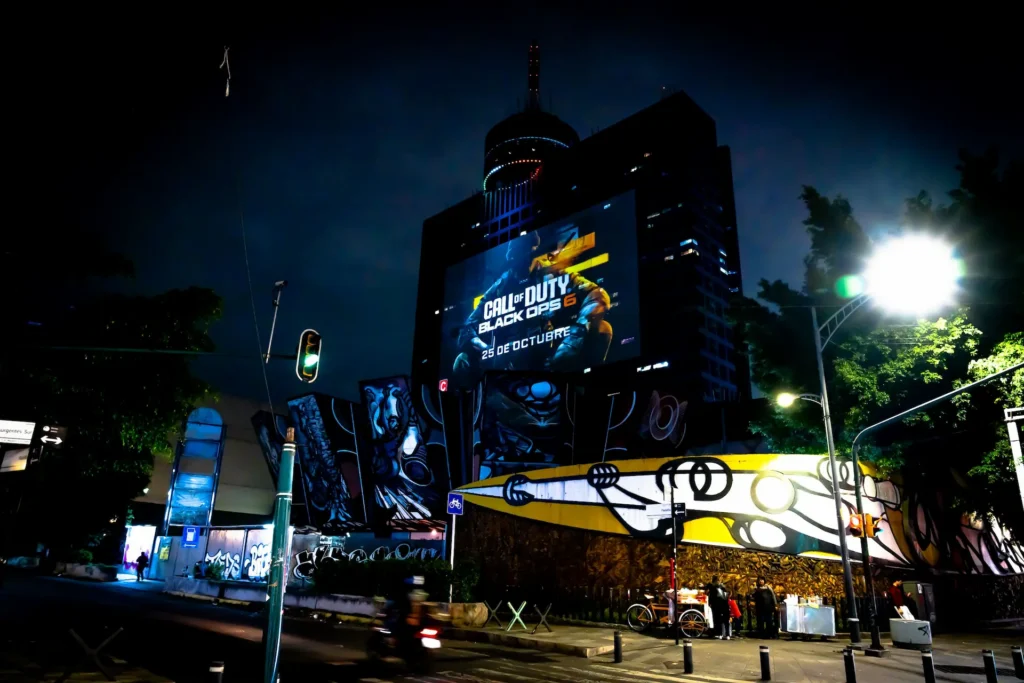
Xochimilco is unlike any other projection market in Mexico City. The ancient canal system, the floating gardens, the colorfully painted trajinera boats, the Saturday and Sunday crowds that come from across the metropolitan area and internationally — these create a concentration of foot traffic and tourist attention that has no parallel in any other part of the city. When AGM plans a projection campaign in Xochimilco, we are planning for one of the most densely attended leisure destinations in all of CDMX, in a setting that is simultaneously a UNESCO World Heritage Site and a living, breathing weekend carnival.
The district occupies a special place in Mexico City’s cultural geography. Xochimilco means “place where flowers grow” in Nahuatl, and the chinampa farming system — the artificial floating island agriculture that the Aztecs developed in the shallow lake basin of what is now southern Mexico City — has been in continuous use for more than 2,000 years. UNESCO recognized this in 1987, adding the chinampas and their canal system to the World Heritage List. That designation acknowledges a landscape covering more than 170 square kilometers in southern CDMX that is unlike anything else in the Americas.
For brand campaigns, Xochimilco’s combination of concentrated tourism, local family recreation, cultural events, and the specific crowd geometry of its embarcadero launch points creates projection opportunities that are available nowhere else in the city. This post covers the geography, the audience, the key projection surfaces, and what brands can realistically achieve in this extraordinary environment.
The Canal System and the Chinampa Landscape
Before getting to projection strategy, it’s worth understanding the physical geography because it determines everything about how campaigns work here. The Xochimilco canal system is not a single canal or a small preserved historic area — it is a 170-square-kilometer network of waterways, artificial farming islands, and waterfront communities spread across the southern portion of Mexico City. The chinampas themselves are narrow strips of land built up from the lake floor over centuries, separated by canals that range from a few meters to several dozen meters in width.
The part of this system that most Mexico City visitors and tourists access is concentrated around the embarcadero areas in the Xochimilco town center and its immediate surroundings. This is where the trajinera boats launch, where the market activity is densest, and where the tourist and recreational infrastructure is concentrated. For projection campaigns, this concentration is the key operational reality — the audience that can realistically be reached is the audience at and around the embarcaderos, not the entire 170-square-kilometer system.
Xochimilco’s canal system covers more than 170 square kilometers in southern Mexico City and was designated a UNESCO World Heritage Site in 1987, making it one of the most significant surviving examples of pre-Aztec agricultural engineering in the Americas.
The embarcadero areas worth understanding for projection purposes are Embarcadero Nuevo Nativitas (the largest and most heavily trafficked), Fernando Celada (serving the northern approach to the canal system), and Belem de las Flores (on the western side). Nuevo Nativitas draws the largest raw volume of weekend visitors and is the most recognizable embarcadero for visitors coming from central Mexico City. The streets leading to it and the building facades around it are the highest-value projection surfaces in the Xochimilco district.
The Trajinera Culture: Understanding the Boat-Based Audience
The trajineras are the colorfully decorated wooden boats that carry visitors through Xochimilco’s canals every Saturday and Sunday. These boats — painted in vivid reds, greens, yellows, and blues, with carved wooden name plates at the bow spelling out names of women (a local tradition) — are the signature image of Xochimilco and one of the most photographed scenes in all of Mexico.
On a typical weekend, hundreds of trajineras are operating simultaneously across the canal system. Groups rent boats for several hours, bringing food, drinks, music, and often a floating marimba or mariachi band hired on the water. The trajectory of a trajinera trip typically starts at the embarcadero, passes through the main canal corridors, loops through some of the quieter chinampa channels, and returns to the embarcadero. Total trip duration is commonly three to five hours.
For projection campaigns, the boat-based audience presents a specific opportunity. People on trajineras are not moving quickly — the boats travel at slow speeds, and the entire experience is oriented toward looking at and interacting with the surrounding environment. A projection on a building that faces the canal near the embarcadero, or on the embarcadero structure itself, will be in the visual field of boat passengers for a sustained period as they depart, and potentially again as they return.
“On the canals, everything is visual. The painted boats, the vendors on the water, the flower-sellers who paddle up alongside you, the buildings on the shore — Xochimilco is already a feast for the eyes, and a projection that fits that visual richness becomes part of the experience rather than an interruption.”
The social behavior of trajinera passengers further amplifies projection impact. Groups on the boats are typically celebrating — birthdays, quinceañeras, weekend outings, anniversaries. They are in a festive, photograph-taking mindset. A dramatic projection visible from the water will be photographed and shared by multiple passengers on multiple boats, generating organic social content from dozens of independent sources during a single campaign evening.
The Embarcadero Concentration: Where the Audience Gathers
The pedestrian density at the embarcaderos on weekend afternoons is genuinely remarkable. Nuevo Nativitas in particular is a point of convergence for multiple flows of visitor traffic — people arriving by car, people arriving by the Tren Ligero light rail connection, families on foot from the surrounding neighborhood, and food vendors and craft sellers who set up around the boat departure area. The result is a dense, slow-moving crowd that fills the streets around the embarcadero for several blocks in every direction.
The building facades around the embarcadero entrance and the market streets leading to it are the most strategically valuable projection surfaces in Xochimilco. These buildings see the full pedestrian crowd before visitors board boats and again when they return, which gives a projection on those surfaces maximum exposure across the entire arc of a visitor’s Xochimilco experience. The entry and exit moments are also when visitors are most alert and oriented — before boarding, people are looking for their boats, taking in the scene, and photographing. After disembarking, the crowd disperses slowly and people often linger in the market area.
Market Streets and the Approach Corridors
The streets connecting the main approach roads to the embarcadero are dense with food vendors, craft sellers, and market stalls. These corridors function as a gauntlet that visitors walk through before reaching the water, and the slow pace of pedestrian traffic in them (determined by the density of the market activity itself) means visitors spend substantial time in each block. Projection surfaces on the buildings facing these corridors capture a slower-moving, more attentive audience than a projection in a transit corridor where people are hurrying to a destination.
The Mercado de Xochimilco — the covered market at the center of the town — generates its own steady flow of shoppers that partially overlaps with the embarcadero tourist crowd and partially reflects the local resident population doing regular food and goods shopping. The colonnaded exterior of the market building and the surrounding plaza are familiar landmarks that visitors photograph. Buildings facing this plaza are among the most photographed structures in the neighborhood.
The Xochimilco Town Center: Colonnaded Buildings and Historic Facades
Unlike the modern glass environment of Santa Fe or the informal concrete landscape of Tepito, Xochimilco’s town center has genuine colonial-era architecture. The main square (the Jardín Juárez) is framed by colonnaded buildings typical of Mexican provincial town centers, and the Parroquia de San Bernardino de Siena — a 16th-century Franciscan church and convento complex — anchors the southeastern corner of the square. These buildings create a very specific visual environment: historic, photographable, and already a backdrop for hundreds of tourist photos every weekend.
For projection campaigns, the contrast between the colonial architecture and a modern projected image can be either an asset or a tension, depending on how the creative is designed. Campaigns that feel connected to the visual language of the setting — using color palettes, imagery, or typography that reads as belonging to this environment — tend to generate more organic photography than campaigns that feel imported from a corporate design studio. The most successful Xochimilco projections we’ve run have been ones where visitors photographed the building with the projection as part of the scene, not despite it.
The Jardín Juárez and the Parroquia de San Bernardino de Siena are among the most photographed locations in Xochimilco, making building facades facing the main square a high-value organic amplification surface for projection campaigns.
Dia de Muertos: The Peak Cultural Tourism Window
Xochimilco’s Dia de Muertos celebrations deserve their own section because they represent a distinct projection opportunity that operates very differently from the regular weekend tourist activity. In late October and early November, the neighborhood’s cemeteries — particularly the Panteón de Xochimilco — become the site of traditional family vigils and communal celebrations that blend pre-Hispanic and Catholic traditions in ways that are recognized internationally as among the most genuine expressions of Dia de Muertos culture in Mexico.
International tourism for Dia de Muertos in Xochimilco has grown substantially over the past decade. Documentary film crews, photographers, journalists, and cultural travelers from North America, Europe, and beyond arrive specifically to witness the cemetery vigils, the candlelit graves, the marigold decorations, and the community gatherings that have been documented in film and media around the world. This international layer sits alongside local Xochimilqueno families who are there for their own cultural and spiritual reasons, creating a crowd demographic that spans from Mexico City middle-class families to international travelers staying in Mexico City’s hotels.
Projection campaigns during the Dia de Muertos window require creative that is appropriate for the cultural weight of the period. Brands that treat it as simply a high-traffic marketing opportunity with no cultural sensitivity will find their campaigns generating negative attention. Brands that approach the period with genuine respect — either working with imagery and creative that honors the tradition, or simply running campaigns on the days before and after the cemetery vigils rather than during them — are in a much better position.
The Xochimilco Weekend Audience: Who Actually Shows Up
One of the unique characteristics of Xochimilco as a projection market is the genuine diversity of its weekend audience. Unlike Santa Fe (predominantly professional adults) or Tepito (predominantly working-class residents and buyers), Xochimilco draws a cross-section of Mexico City’s population that is hard to find concentrated in a single location anywhere else in the city.
| Audience Segment |
Characteristics |
Best Projection Timing |
| Local Xochimilqueno families |
Residents using the area for recreation and shopping |
Weekend morning, market hours |
| CDMX visitors from other colonias |
Day-trip recreational groups, birthday celebrations |
Weekend midday to afternoon |
| Domestic tourists from other Mexican states |
Visitors to CDMX including Xochimilco in their itinerary |
Weekend afternoon |
| International tourists |
Heritage and cultural tourism visitors |
Weekend afternoon, Dia de Muertos |
| Youth and young adult groups |
Social celebration groups, frequent trajectory users |
Weekend midday through evening |
| Flower market buyers |
Trade and retail buyers from the plant market |
Weekday morning |
This breadth means Xochimilco works best for mass-market consumer brands — food and beverage, personal care, telecommunications, tourism, cultural events, and similar categories — rather than for narrowly targeted campaigns that need to reach a specific professional demographic. The audience is wide rather than specific, and campaign creative needs to resonate across multiple cultural backgrounds and age groups simultaneously.
Projections Visible from the Water: The Waterfront Surface Opportunity
Some of the most distinctive projection opportunities in Xochimilco come from surfaces that are visible from the canal itself. Buildings along the waterfront near the embarcaderos, structures on the banks of the main canal corridors near the departure zones, and the embarcadero infrastructure itself can all serve as surfaces that the boat-based audience sees during departure and return.
A projection that is visible from the water occupies a completely different visual context from a street-level projection. Passengers on boats are looking outward and photographing constantly. The water surface itself provides a secondary reflection of projection light under the right conditions. And because the boats move slowly, the dwell time in view of a waterfront projection is measured in minutes rather than seconds. That combination of attentive audience, slow movement, and photographic behavior makes waterfront projection surfaces among the most effective in Xochimilco despite their relatively lower foot-traffic volume compared to the embarcadero market streets.
Equipment Considerations for Waterfront Projections
Operating near water creates specific equipment considerations that our team accounts for in Xochimilco campaigns. Humidity near the canals is higher than in Mexico City’s drier central districts, which affects projector performance and setup protocols. Positioning equipment near the waterfront requires careful choices about projector placement — surfaces near water may not have the same ground-level positioning options available in dry urban environments. Our team uses raised positioning platforms and weatherized equipment for Xochimilco waterfront setups as standard practice.
The Flower and Plant Market: A Separate Audience Window
Xochimilco’s identity as a flower-growing district extends from its pre-Hispanic history — the chinampas were used to grow flowers, vegetables, and plants for the markets of Tenochtitlan — into its present-day economy. The Mercado de Flores de Xochimilco draws wholesale and retail buyers for cut flowers, potted plants, and ornamental greenery. This market operates primarily on weekday mornings rather than the weekend tourist peak, creating a separate audience window that is almost entirely local and trade-oriented.
For brands in home goods, natural products, food, or sectors connected to the agricultural and craft economy, the weekday flower market audience is a different but genuinely valuable one. These buyers — florists, event planners, market vendors from across the city, and individual shoppers coming specifically for flowers — move through the market area at a slower pace than weekend tourists and are more likely to live in or regularly travel to neighborhoods throughout CDMX and the metropolitan area.
Projections targeting the flower market audience work best on the buildings and surfaces that face the market approach routes on weekday mornings, which may be entirely different surfaces from the ones that work for weekend embarcadero crowds. AGM’s location scouting in Xochimilco always maps both windows separately because the optimal surfaces for each can be geographically distinct.
Xochimilco in a Multi-District Southern CDMX Strategy
Xochimilco sits in Mexico City’s southern delegaciones alongside Coyoacan, Tlalpan, and Tlahuac — areas that are culturally distinct from the city’s northern and western commercial districts. A multi-district campaign that uses Xochimilco as the southern anchor alongside a Coyoacan or Tlalpan placement can cover the southern city’s tourist, residential, and cultural audience comprehensively in a way that no single projection in a northern district can achieve.
The southern CDMX audience tends to be older, more family-oriented, and more rooted in traditional Mexican cultural practices than the northern and western commercial districts. For brands that want to speak to established family-formation households, cultural tourism audiences, and the communities that maintain the strongest connection to Mexico City’s pre-Hispanic heritage, southern CDMX is where those audiences concentrate. Xochimilco is the anchor of that geography because it draws visitors from across the city and beyond rather than serving only its own local residential population.
What Makes Xochimilco Unique Among CDMX Projection Markets
When our team compares Xochimilco to the other major CDMX projection markets, several characteristics are genuinely distinctive. The combination of built heritage (the UNESCO designation, the colonial town center, the chinampa landscape) with a living, busy weekend crowd economy is rare. Most heritage districts in CDMX either have the heritage and lack the crowds (some of the quieter colonial neighborhoods in Coyoacan) or have the crowds and lack the heritage depth (the commercial centers along Insurgentes or Reforma). Xochimilco has both.
The boat-based audience is also simply not available anywhere else in the city. No other projection market in CDMX gives a brand the possibility of reaching people who are literally floating, in a festive state, in a visually extraordinary environment, with nothing to do but look around and take photos. That is a specific form of captive audience attention that has no equivalent in Mexico City’s other urban projection environments.
Finally, Xochimilco’s international tourism component means that projection campaigns here can generate international media and social media reach that purely local campaigns in other districts cannot produce. A striking image from Xochimilco — a dramatic projection against the backdrop of the canal or the colonial town center — travels through tourist social networks to audiences in the United States, Europe, and beyond, which has real value for brands with any international dimension to their positioning.
Xochimilco’s Dia de Muertos celebrations draw international documentary film crews, photographers, and cultural journalists, creating a projection window with genuine global media amplification potential for appropriately designed campaigns.
Frequently Asked Questions
When is the best time to run guerrilla projections in Xochimilco?
Saturday and Sunday afternoons through early evening are the highest foot traffic windows in Xochimilco, driven by the trajinera boat traffic on the canals and the market and restaurant activity around the embarcaderos. The Dia de Muertos period in late October and early November is a secondary peak, with international tourism adding to the normal weekend crowd. Projections at the Embarcadero Nuevo Nativitas, Fernando Celada, and Belem de las Flores are most effective during these peak windows.
Can projections be seen from the trajinera boats on Xochimilco’s canals?
Yes, projections on waterfront and embarcadero-adjacent building facades are visible from boats moving through the canal sections near the embarcaderos. The boat-based audience is a captive one — people on trajineras are moving slowly, socializing, eating, and photographing the environment around them. A projection on a building that faces the canal or the embarcadero departure area will be seen and photographed by boat passengers, extending the campaign’s reach beyond the pedestrian audience.
What makes Xochimilco’s Dia de Muertos celebrations significant for projection campaigns?
Xochimilco’s Dia de Muertos celebrations draw a combination of local Xochimilqueno families, visitors from across Mexico City, and international tourists and documentary film crews who come specifically to witness what is considered one of the most authentic and visually spectacular Dia de Muertos traditions in Mexico. The cemetery and neighborhood celebrations generate dense, emotionally engaged crowds over multiple nights. Campaign projections during this period can reach audiences that are highly receptive to culturally resonant visual content.
What is the demographic of visitors to Xochimilco on weekends?
Xochimilco’s weekend audience is a genuine mix. Local Xochimilqueno families who use the area for regular recreation and shopping, Mexico City residents from across the city who make regular or occasional trips to the canal district, domestic tourists from other Mexican cities, and international visitors are all present. The audience spans income levels and ages more broadly than almost any other CDMX projection market, which makes Xochimilco effective for mass-market consumer brands rather than narrowly targeted campaigns.
How does Xochimilco’s flower market activity affect projection campaign planning?
Xochimilco’s traditional identity as a flower-growing district is still reflected in active flower and plant market activity around the town center. Flower buyers arrive early in the morning and throughout the day, particularly on weekdays, creating a different audience window than the weekend trajinera crowd. Brands in food, home goods, natural products, and cultural sectors can find value in projections that reach the flower market audience on weekday mornings.