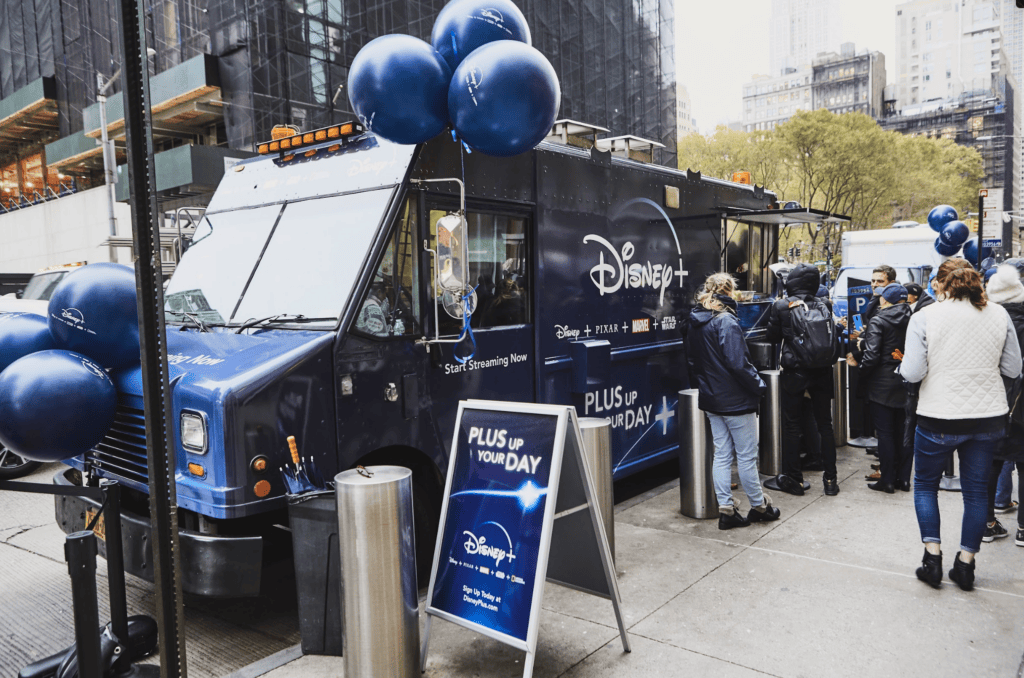
Food truck marketing activations are among the most effective formats in experiential marketing because they combine two things that are difficult to achieve simultaneously: large-scale reach and genuine consumer engagement. A branded food truck parked at a high-traffic location does not ask the audience to stop and pay attention to a brand message. It gives them something they actually want, and in doing so, creates a direct, positive interaction that produces the kind of brand association that passive advertising cannot replicate.
The format has grown significantly over the past decade as brands have realized that the goodwill generated by a free lunch or a sample distribution is a more efficient investment than equivalent spend on digital impressions from consumers who have trained themselves to ignore advertising. The truck is a vehicle, literally, for creating real-world brand moments that people remember, photograph, and talk about.
Our team at American Guerrilla Marketing has planned and executed food truck activations for brands across consumer goods, entertainment, technology, and financial services. We coordinate logistics from truck sourcing and brand wrapping through route planning, crew staffing, and post-campaign documentation. This guide explains how the format works, what makes activations succeed, and where brands tend to make mistakes in planning and execution.
What a Food Truck Marketing Activation Actually Involves
At its simplest, a food truck activation is a branded vehicle that serves food or beverages at a designated location as a means of creating a positive brand experience. The activation can take several forms depending on the brand’s objectives, product category, and target audience.
Sampling Activations for Food and Beverage Brands
The most direct application is a food or beverage brand using a truck to distribute samples of their product at scale. A beverage company launching a new flavor can deploy a branded truck at transit hubs, office districts, and park areas to put the product directly in the hands of hundreds or thousands of potential consumers per day. That direct trial is worth more than any amount of advertising that merely describes the product.
We have coordinated sampling activations that distributed tens of thousands of units per market across multi-day deployments, generating organic social content from consumers who received samples and measurable retail velocity lifts in the markets where the activations ran.
Branded Food Activations for Non-Food Brands
Non-food brands use food truck activations to create positive associations through the mechanism of gifting. A tech company launching a new product can distribute free branded sandwiches in the office district where their target business audience works, creating a direct, positive interaction with a demographic that might otherwise encounter the brand only through LinkedIn advertising.
The psychology here is straightforward: people feel genuine goodwill toward an entity that gave them something enjoyable. That goodwill is transferable to the brand identity when the connection between the food experience and the brand is clear, intentional, and well-executed.
Event-Adjacent Activations
Food truck activations at festival perimeters, event venues, or high-density public events combine the engagement power of the format with the concentrated audience of an event-adjacent deployment. A branded truck positioned in the hospitality district adjacent to a major event can attract both event attendees and the broader neighborhood audience, maximizing the geographic reach of a single deployment day.
Choosing Locations for Maximum Impact
Location selection is the single most important planning decision in a food truck activation. A truck parked in the wrong location, no matter how strong the creative or how good the product, will produce weak results. The right location concentrates the target audience in sufficient density to justify the deployment cost and crew time.
Office Districts and Lunch Hour Deployments
The lunch hour in a dense urban office district is among the most reliable audience concentration windows for food truck activations. Workers who are on a defined break, making a food decision, and moving through a predictable geographic zone are an ideal target for a well-positioned activation. We identify specific intersections and blocks within office districts based on foot traffic volume, proximity to major employers, and competitive density from existing food options.
Transit Hubs and Commute Corridors
Morning commute windows at major transit hubs create a second high-density opportunity. Commuters moving from transit to their workplace pass through defined corridors at predictable times, creating a repeatable audience window for trucks positioned at exit points from major stations. We combine street team support with truck deployments at transit hubs to maximize the number of direct interactions during compressed audience windows.
Park Areas and Weekend Events
Weekend deployments in urban park areas during warmer months reach a leisure audience that has more available time and more positive disposition than a commuter on the way to work. Families, friend groups, and fitness communities congregate in city parks on weekends in ways that create predictable, accessible audience concentrations for activations that benefit from longer dwell time per interaction.
Production and Logistics for Food Truck Activations
The logistical complexity of a food truck activation is higher than most other street-level formats, and that complexity is where well-executed campaigns separate from poorly executed ones. Food service involves health permits, local food handling regulations, supply chain management, and real-time quality control that do not apply to poster campaigns or street team deployments.
Truck Sourcing and Brand Wrapping
We source trucks that match the activation’s aesthetic and practical requirements. A high-end brand requires a truck that reads as premium. A playful consumer brand may want a colorful, distinctive wrap that generates social sharing. The brand wrap is a significant production investment, and we ensure wrap quality that holds up across multiple deployment days without looking worn or off-brand.
In markets where we deploy regularly, we have established relationships with truck operators who understand the requirements of marketing activations. In new markets, we vet operators specifically for their reliability, health compliance history, and operational flexibility, because a truck that cannot execute the deployment as planned is a campaign that fails regardless of how strong the strategy was.
Permit Acquisition
Every major U.S. city has specific permit requirements for food truck operations. Those requirements vary by city, by neighborhood, by location type, and sometimes by the nature of the product being served. We navigate permit acquisition as a standard part of campaign planning. Brands that try to run food truck activations without proper permits face enforcement actions that can terminate the campaign and generate the kind of press coverage that no brand wants.
Crew Staffing and Brand Training
The crew working a food truck activation represents the brand directly. We staff activations with ambassadors who can manage the food service operation efficiently, represent the brand with appropriate energy and knowledge, and handle the documentation requirements that produce the campaign recap our clients need. Training happens before the first deployment day, not during it.
Integrating Food Truck Activations With Broader Campaigns
Food truck activations reach their highest ROI when they function as the centerpiece of an integrated campaign rather than a standalone event. The moment the truck creates is valuable. The amplification of that moment through additional channels is what transforms a good activation into a lasting brand impression.
Social Amplification
We build social documentation into food truck activations by creating visually distinctive environments around the truck, using branded props and creative that are photograph-worthy, and training ambassadors to encourage social sharing by attendees. Branded hashtags, geotags, and QR codes that connect the physical experience to digital content all extend the reach of the activation beyond the people who were physically present.
Pairing With Street-Level Formats
A food truck activation combined with a poster campaign in the surrounding neighborhood creates brand presence that extends beyond the hours when the truck is deployed. Sidewalk stencils on the approach routes to the truck location function as directional advertising that drives additional foot traffic. An LED billboard truck circulating through the surrounding district during the activation window amplifies awareness of the truck’s location in real time.
These combinations create a campaign footprint that extends well beyond the truck itself, reaching the neighborhood audience that might not pass the truck’s specific location during the deployment hours.
Measuring Food Truck Activation Results
Every food truck activation we run includes GPS-tagged photo documentation, crew activity logs, unit distribution counts, and a formatted post-campaign recap. For campaigns with digital conversion mechanisms, we track QR scan rates, branded URL clicks, and social engagement metrics alongside the physical distribution numbers.
We treat documentation as a core deliverable rather than a courtesy. Brands investing in food truck activations need to demonstrate results to internal stakeholders, and a clean, thorough recap is what makes that conversation possible. Our recaps include: locations deployed, times active, units distributed, crew hours, documented social shares, and any downstream metrics supplied by the client.
What Success Looks Like Across Different Objectives
For product launch campaigns, success is typically measured by trial units distributed and organic social documentation generated during the activation. For brand awareness campaigns, it is impression volume across the route and documented consumer interactions per crew hour. For conversion campaigns, it is offer redemption rate and downstream digital conversion from QR codes or branded URLs used at the truck.
We align measurement frameworks to the specific campaign objective from the start, which means the recap we deliver at the end of the campaign is answering the questions the client actually cares about rather than generic metrics that do not connect to business outcomes.
Markets Where AGM Runs Food Truck Activations
We deploy food truck activations across 50-plus U.S. markets. Our strongest infrastructure and vendor relationships are in New York City, Los Angeles, Chicago, Miami, Atlanta, Houston, Boston, and Washington D.C. In markets where we do not have established truck operator relationships, we vet and onboard vendors specifically for the campaign, applying the same quality and compliance standards we maintain in our core markets.
Multi-market food truck campaigns require centralized coordination to maintain creative consistency and operational standards across markets that may be running simultaneously or in sequence. We manage that coordination from our Industry City, Brooklyn headquarters, which means our clients work with a single point of contact regardless of how many markets the campaign covers.
Frequently Asked Questions
What is a food truck marketing activation?
A food truck marketing activation uses a branded mobile food service as a vehicle for consumer engagement. The truck distributes product samples, branded food items, or free meals at high-traffic locations to create a direct, positive brand interaction in a real-world environment. The format combines the mobility of a street team with the tangibility of a physical product experience, generating goodwill that passive advertising cannot replicate.
What types of brands benefit most from food truck activations?
Food and beverage brands use food trucks for sampling and product launches. Non-food consumer brands use branded food trucks to create positive associations through gifting. Entertainment and media brands use food trucks to build crowd energy at launch events and premieres. The format works across categories because the positive experience of receiving free food creates goodwill that transfers to the brand.
How does AGM handle food truck activation logistics?
We coordinate all aspects of food truck activation logistics including truck sourcing, brand wrapping, route planning, permit acquisition, crew staffing, and GPS-tracked documentation. We manage the full campaign from briefing through post-campaign recap, which means our clients do not need to coordinate between multiple vendors or track down separate documentation sources.
Where do food truck activations work best?
High-footfall urban locations like office districts during lunch hours, transit hubs, college campuses, park areas on weekends, and event perimeters during festivals all generate strong food truck activation results. The key is matching the truck’s location and timing to the target audience’s movement patterns, which requires advance scouting and route analysis.
How do you measure the success of a food truck marketing activation?
Primary metrics include units distributed or served, direct consumer interactions, documented social media shares and organic mentions, crew engagement records, and route coverage logs. Secondary metrics include website traffic during the activation window, social follower growth, and offer redemption rates for any digital calls to action built into the campaign.
What is the typical cost range for a branded food truck activation?
Food truck activation costs vary significantly based on the number of markets, campaign duration, truck sourcing, brand wrapping requirements, and product costs. Single-market one-day activations can be structured in the $10,000-$30,000 range. Multi-market multi-day campaigns run higher. Contact our team at (646) 776-2770 for a custom quote based on your specific objectives.