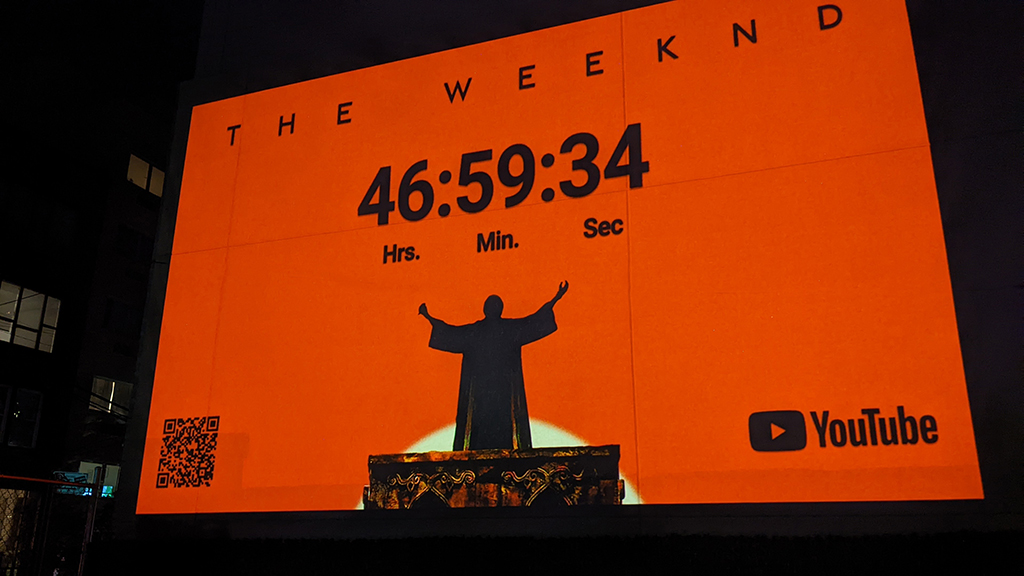
Every city has a neighborhood that the marketing industry ignores until it suddenly cannot ignore it anymore. In Mexico City’s central colonia circuit, Escandón has been playing that role for the past several years — growing steadily in reputation among residents, food writers, and cultural observers while the advertising industry continued to budget almost exclusively for campaigns in Roma and Condesa next door.
That gap is closing. When AGM now plans creative-class campaigns in CDMX, Escandón appears alongside Roma Norte and Condesa as a standard inclusion rather than an afterthought. The colonia has arrived as an advertising market in its own right, with a demographic profile that closely mirrors the Roma-Condesa audience but with meaningful differences that matter for projection strategy: more locally rooted residents, less tourist traffic, better surface availability, and an audience that is not yet saturated by the volume of brand activity concentrated in the colonias just to its east.
This guide breaks down the Escandón projection environment as AGM actually works it — the streets, the surfaces, the audience, and the strategic case for including this colonia in Mexico City campaign plans targeting the creative professional class.
Escandón’s Position in Mexico City’s Colonia Map
Escandón sits in a genuinely strategic location. Its eastern boundary is Avenida Insurgentes — Mexico City’s longest north-south corridor, carrying the Metrobus Line 1 that is one of the city’s highest-ridership public transit routes. To the east across Insurgentes is Condesa; to the northeast is Roma Norte; to the west the colonia opens into the quieter residential streets of Nápoles and Mixcoac. To the south lies Narvarte Poniente.
This position — directly adjacent to Condesa and Roma but separated from both by the Insurgentes corridor — gives Escandón a distinctive identity. It is connected to the creative class circuit without being fully absorbed into it. Residents who cannot afford Condesa rents live here. Artists and designers who need studio space find it here. The coffee shops, wine bars, and restaurants that follow this demographic have arrived, and they have brought their audiences with them.
The Insurgentes Boundary Effect
Avenida Insurgentes functions as more than just a geographic boundary — it acts as a psychological one. Many people who regularly visit Roma and Condesa have never crossed Insurgentes west into Escandón. The Metrobus corridor and the width of the boulevard create a barrier that requires a deliberate choice to cross. This means that Escandón’s independent restaurants, cafes, and galleries serve a more locally rooted audience than the equivalent establishments in Condesa, which capture foot traffic from the entire central colonia circuit.
For projection advertising, this boundary effect is worth understanding. A campaign in Escandón reaches the colonia’s residents at a high rate but generates less spillover from tourists and visitors passing through than the same campaign in Condesa would. The impressions are more local, more repeated across the campaign run, and more concentrated among the same population of residents encountering the work multiple evenings in their own neighborhood.
Avenida Insurgentes at the Escandón boundary carries Metrobus Line 1, one of Mexico City’s busiest bus rapid transit routes with approximately 450,000 daily passengers across its full route — a significant share of which pass through the Escandón-adjacent stations.
Art Deco and Mid-Century Architecture: Escandón’s Surface Story
Escandón’s residential building stock is one of the most architecturally interesting in the central colonia circuit for projection work. The colonia was developed primarily in the 1930s through the 1950s, during the height of Mexico City’s Art Deco and early modernist building boom. The residential buildings from this era have specific characteristics that matter enormously for projection surface quality.
Art Deco Facades: Decorated but Usable
True Art Deco buildings in Escandón — the ones from the late 1930s — have facades with geometric relief work, ornamental cornices, and decorative elements at the building’s upper stories. These are not blank stucco boxes; they have architectural personality. For projection, this creates both opportunity and constraint.
The constraint is that the decorative elements of an Art Deco facade occupy some of the surface area that would otherwise be a clean projection field. A heavily ornamented cornice band, a projecting balcony, or geometric relief panels in the mid-facade can interrupt the projected image at certain positions.
The opportunity is that Art Deco facades have a natural visual frame quality — the ornamental elements at the top and sides of the building create a border that makes the projected content feel contained and intentional, like a poster in a frame rather than a raw projection on a blank wall. The architectural personality of the surface adds to the projection rather than just serving as a neutral carrier.
Mid-Century Stucco Buildings
The majority of Escandón’s building stock from the 1940s and 1950s is simpler — reinforced concrete frames with stucco cladding, relatively plain facades, and the standard five-to-seven story height profile typical of Mexico City’s mid-century residential construction. These buildings have large party walls and blank stucco end faces that are among the most useful projection surfaces in the central colonia circuit.
The condition of these stucco surfaces varies by block. The streets with active renovation and new commercial activity tend to have better-maintained facades. The quieter residential streets further from the main commercial corridors sometimes have older, more weathered stucco that requires a brighter projector to achieve equivalent image clarity. Surface scouting in Escandón always includes an assessment of stucco condition and paint color, with lighter-colored surfaces preferred.
Escandón covers approximately 2.5 square kilometers with an estimated population of 35,000 to 40,000 residents — a density comparable to Roma Norte but in a smaller geographic footprint, which means projection campaigns cover more of the residential population per night of deployment.
Avenida Nuevo León: The Condesa-Escandón Connector
Avenida Nuevo León runs east-west from Condesa into Escandón, crossing Insurgentes near the Parque España-Condesa area and continuing through Escandón’s commercial corridor. This is the most natural pedestrian and vehicle route between the two colonias, and it functions as Escandón’s primary commercial artery in the sections west of Insurgentes.
Nuevo León has a well-established restaurant and cafe scene that has been building for years — the street draws both Condesa regulars crossing from the east and Escandón residents using it as their main commercial street. Evening foot traffic here is consistent from roughly 6pm through 11pm on weekdays and extends later on weekends.
For projection campaigns, the buildings on Nuevo León offer good surface options in the blocks immediately west of Insurgentes. The street width allows for reasonable throw distances, and the concentration of evening pedestrian traffic makes this one of the most productive corridors for impression count in the colonia.
Avenida Campeche and the Restaurant Strip
Avenida Campeche is where much of Escandón’s food and beverage scene has concentrated in recent years. The street has attracted a cluster of independent restaurants, natural wine bars, specialty coffee shops, and the kind of small-format hospitality businesses that characterize the city’s most dynamic food neighborhoods. This concentration creates a dinner-hour pedestrian environment that rivals Condesa’s busiest restaurant blocks in density, if not in name recognition.
The Campeche strip reaches its peak energy between 8pm and 11pm, Thursday through Saturday — the dinner and late-evening window when the street’s restaurants are operating at capacity and pedestrians are moving between venues. Projection campaigns on Campeche during these hours reach the exact demographic profile that consumer brands in the lifestyle, food and beverage, fashion, and personal care categories want: young professionals with disposable income, high media awareness, and strong social connectivity.
Building Facades on Campeche
The buildings along Campeche are a mix of the residential stucco stock described above and some newer commercial construction. The upper stories of the residential buildings on the street have large facade sections that are visible over the lower-floor commercial signage. Projectors positioned in the street or on building overhangs can target these upper-story facades, producing images that float above the restaurant-level signage and command attention from pedestrians looking up the street.
Mercado de Medellín: The Neighborhood Anchor
The Mercado de Medellín is one of Mexico City’s best traditional urban markets — a covered market that has evolved from a standard neighborhood food market into something with a wider draw. The food hall character that has developed in its interior, along with its reputation among food writers and Mexico City residents who care about markets, brings visitors from across the central colonias to Escandón specifically for a Medellín visit.
The market is on Calle Medellín, running through Escandón’s interior, and its surrounding streets generate a distinctive commercial energy that radiates outward from the market building. Morning and early afternoon are the peak Medellín hours, but the market’s gravity shapes foot traffic patterns in the surrounding blocks throughout the day. Evening campaigns near the Medellín area capture both returning market shoppers and the residents of the immediately surrounding streets.
Market-Adjacent Surface Opportunities
The buildings surrounding Mercado de Medellín are a mix of low-rise commercial and residential structures with stucco facades that are among the cleanest in the colonia. The area has been affected by the general upgrading of the surrounding neighborhood, and many facades in the Medellín zone are freshly painted — a detail that matters significantly for projection surface quality. Lighter, fresher paint produces noticeably brighter projected images than older, darker stucco that has accumulated years of exhaust and weathering.
The Gallery and Studio Scene
Escandón has developed a small but growing gallery and studio presence over the past five years. Independent art spaces, photography studios, design practices, and creative agencies have set up in the colonia’s more affordable commercial units — units that would have been priced beyond reach in Roma or Condesa as those colonias gentrified ahead of Escandón.
This gallery and studio concentration is relevant for projection campaigns targeting the creative industry itself rather than (or in addition to) the broader creative consumer class. Art-world adjacent brands — photography equipment, design software, art supplies, printing and production services — find an audience in Escandón that is more concentrated and specialized than in the broader Roma-Condesa circuit.
Escandón’s restaurant density on Avenida Campeche and surrounding streets has roughly doubled in the period from 2018 to 2025, driven by the same displacement of food and nightlife businesses that occurs when colonias like Roma and Condesa reach saturation points for new commercial openings.
Escandón vs. Roma Norte and Condesa: The Strategic Case
The honest comparison between Escandón and the better-known creative colonias comes down to three variables: surface availability, audience saturation, and brand association.
Surface Availability
Escandón has meaningfully better projection surface availability than Condesa. The Condesa’s building stock — heavily influenced by its protected Art Deco heritage buildings and the tree canopy over its circular and elliptical streets — is actually not ideal for projection in many areas. Trees interrupt sightlines. Curved streets reduce the length of any straight-line throw. Heritage building protections create sensitivities around certain facades.
Escandón’s grid is more straightforward. The streets are relatively straight, the tree coverage is sparser on many blocks, and the building stock — particularly the mid-century stucco residential buildings — offers large clean surfaces without the complications of Condesa’s protected heritage character. From a pure surface-availability standpoint, Escandón is an easier projection market to work in than Condesa.
Audience Saturation
The creative-class audience in Roma Norte and Condesa has been the target of significant advertising and marketing activity for years. Guerrilla campaigns, art installations, brand activations, pop-up events — these colonias have seen it all. The audience there is sophisticated about advertising and correspondingly more resistant to it.
Escandón’s audience is the same demographic profile — young creative professionals with taste and spending power — but it has not been subjected to the same density of brand activity. The novel encounter effect, where an advertising format that would be ignored in a saturated environment gets attention in a less-familiar context, is measurably stronger in Escandón than in Roma or Condesa for this reason.
Brand Association
Roma Norte and Condesa carry a specific cultural positioning that is useful for some brands and limiting for others. Association with Condesa signals a certain kind of established-creative-class cachet. Escandón signals something slightly different — more authentic, more locally rooted, less polished. For brands that want to project genuine creative community association rather than premium lifestyle polish, Escandón’s positioning is actually preferable.
“Escandón is where Roma was ten years ago — the audience is there, the infrastructure is building, and the advertising competition is almost nonexistent. Brands that move early get the first-mover positioning.”
Metrobus Stations on Insurgentes: The Pedestrian Feed
The Insurgentes Metrobus corridor deposits riders at stations along Escandón’s eastern boundary — the Campeche station, the Sonora station, and adjacent stops on Line 1. These stations are among the most important pedestrian generators for Escandón’s evening commercial activity: the residents who commute by Metrobus and walk west from Insurgentes into the colonia’s residential and commercial streets pass through a well-defined pedestrian corridor that can be anchored by projection campaigns on the buildings nearest the station exits.
The specific geometry of the Insurgentes-adjacent blocks matters here. The buildings that face Insurgentes on the Escandón side are visible from the Metrobus stops themselves — riders waiting on the raised Metrobus platform or exiting at street level see these facades clearly. A projection on an Insurgentes-facing Escandón building is seen not just by pedestrians on the Escandón sidewalk but by the entire street cross-section including vehicle occupants, bus riders, and people at the bus stops across the street.
Campaign Structure for Escandón: A Three-Night Approach
Escandón’s compact size — roughly 2.5 square kilometers — means that a well-structured three-night campaign can cover the colonia’s primary projection zones with minimal geographic overlap:
| Night |
Zone |
Primary Surface/Corridor |
Target Audience |
| Night 1 |
Insurgentes boundary (east) |
Insurgentes-facing facades near Metrobus stations |
Commuters, transit users, cross-Insurgentes pedestrians |
| Night 2 |
Avenida Campeche restaurant strip |
Mid-century facades above restaurant level |
Diners, bar-goers, evening pedestrians |
| Night 3 |
Nuevo León / Medellín zone |
Corner building end walls near market and commercial corridor |
Residents, market visitors, Condesa spillover |
A fourth night targeting the residential streets deeper in the colonia — Calle Insurgentes Mixcoac, Calle Iztaccihuatl, Calle Iztapalapa — reaches the residential population that rarely appears on the main commercial corridors but represents the bulk of Escandón’s everyday consumer base.
Why Brands Targeting Mexico City’s Creative Class Should Add Escandón to the Plan
The argument for Escandón in a creative-class Mexico City campaign brief is straightforward: you get a nearly identical demographic to Roma and Condesa, on better projection surfaces, with lower advertising saturation, and at a lower overall cost per impression because the audience is concentrated in a smaller geography that is underserved by competing campaigns.
The brands that are starting to recognize this — the lifestyle, consumer tech, food and beverage, and fashion brands that have been running Roma-Condesa campaigns for several years — are beginning to add Escandón as a third node in the creative colonia circuit. The results validate the inclusion: fresher audience response, higher organic social documentation rate (precisely because campaigns here are still unusual enough to merit a photo), and measurable uplift in the brand awareness metrics among the creative professional segment that these brands prioritize.
AGM’s consistent recommendation for Mexico City creative-class projection campaigns is to treat Escandón, Roma Norte, and Condesa as three components of a single campaign rather than alternatives to each other. Together they cover the full creative professional geography of central Mexico City. Separately, each leaves a significant share of the target audience unreached.
Frequently Asked Questions About Guerrilla Projections in Escandón Mexico City
What is Escandón’s demographic profile for guerrilla projection campaigns?
Escandón’s core demographic is young professionals and creatives in their late 20s and 30s — people who have been priced out of Condesa and Roma but maintain the same lifestyle preferences. The colonia also has an established residential population of longtime Mexico City families, creating a mixed demographic that skews toward younger, culturally engaged consumers while retaining a genuine neighborhood character.
How does Escandón compare to Condesa for guerrilla projection campaigns?
Escandón offers more available projection surfaces than Condesa — more blank party walls, wider streets in some sections, and fewer trees obstructing sightlines. The audiences are demographically similar but Escandón skews slightly younger and more local, with less tourist traffic. Campaigns in Escandón tend to generate stronger response from the locally-rooted creative professional segment that Condesa’s tourist saturation dilutes.
What streets in Escandón are best for guerrilla projection campaigns?
Avenida Nuevo León is the primary commercial connector between Condesa and Escandón with strong evening pedestrian traffic. Avenida Campeche has a growing restaurant strip with concentrated dinner-hour foot traffic. The blocks around Mercado de Medellín draw consistent daytime and early evening pedestrian flow from residents and food-focused visitors.
Does Escandón’s Art Deco architecture create good projection surfaces?
Yes. The 1930s and 1940s Art Deco and early modernist buildings on Escandón’s residential streets have large stucco facades with smooth surface areas between the architectural detailing. The decorative elements that characterize Art Deco — geometric relief work, corner towers, ornamental cornices — create visual frames for projected content and make Escandón projections among the most architecturally interesting in CDMX.
How does the Metrobus on Insurgentes affect guerrilla projection reach in Escandón?
Avenida Insurgentes on Escandón’s eastern boundary carries Metrobus Line 1 with over 450,000 daily riders across the full route. The Metrobus stations at Campeche, Sonora, and nearby stops deposit riders onto the sidewalks of Insurgentes adjacent to Escandón’s street grid. Projection campaigns on buildings at or near these station exits capture this pedestrian flow as riders walk into the colonia toward their homes or the colonia’s restaurants and shops.