American Guerrilla Marketing
Nationwide Service
Media planning, media buying, billboard advertising, & guerrilla marketing
Guerrilla Projections in Madison, WI
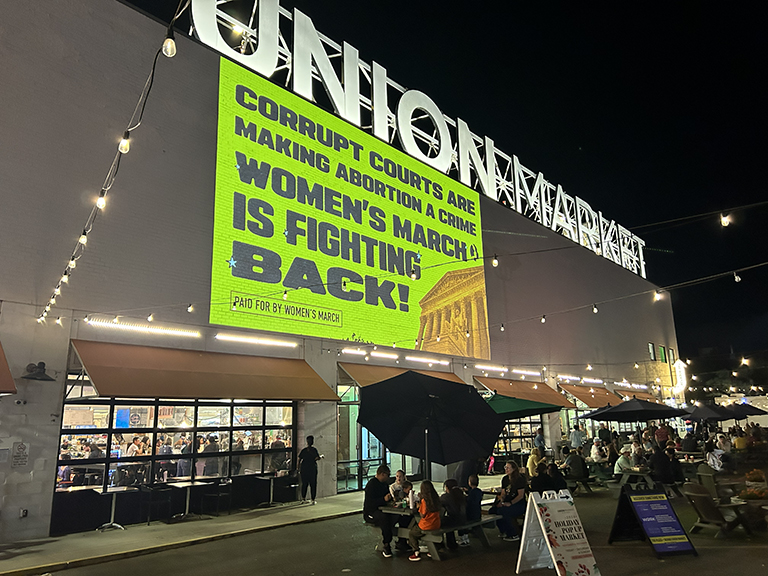
Building projection advertising on State Street, Capitol Square, Willy Street, and the East Side arts district. 20,000 lumens on the walls that matter in one of the Midwest’s most walkable cities.
State Street in Madison is one of the most unusual pedestrian corridors in the Midwest. It doesn’t connect two commercial nodes or two residential neighborhoods — it connects the Wisconsin State Capitol to the University of Wisconsin–Madison campus. That one-mile stretch anchors a foot traffic pattern that combines civic engagement, academic life, nightlife, outdoor dining, advocacy community, and independent retail into a single walkable zone that operates at high pedestrian density from mid-morning through midnight, seven days a week. There is almost no other street in the region where the population at any given moment includes state legislators, graduate students, restaurant tourists, out-of-state visitors, and political organizers walking past the same building facade at the same time.
That building facade, in many cases, is a viable projection surface. State Street’s commercial buildings include painted masonry walls, EIFS-clad upper stories, and party walls between adjacent structures that offer large, relatively uninterrupted face areas at heights that remain fully legible to pedestrians at street level. The corridor’s outdoor dining environment — tables filling the sidewalk during warm months — means audiences linger directly in front of the building faces that projection campaigns occupy. When a person is seated at an outdoor restaurant table on State Street, they are stationary, facing outward, and looking directly at the buildings across the corridor. That’s not an incidental audience condition. That’s projection advertising’s best possible scenario.
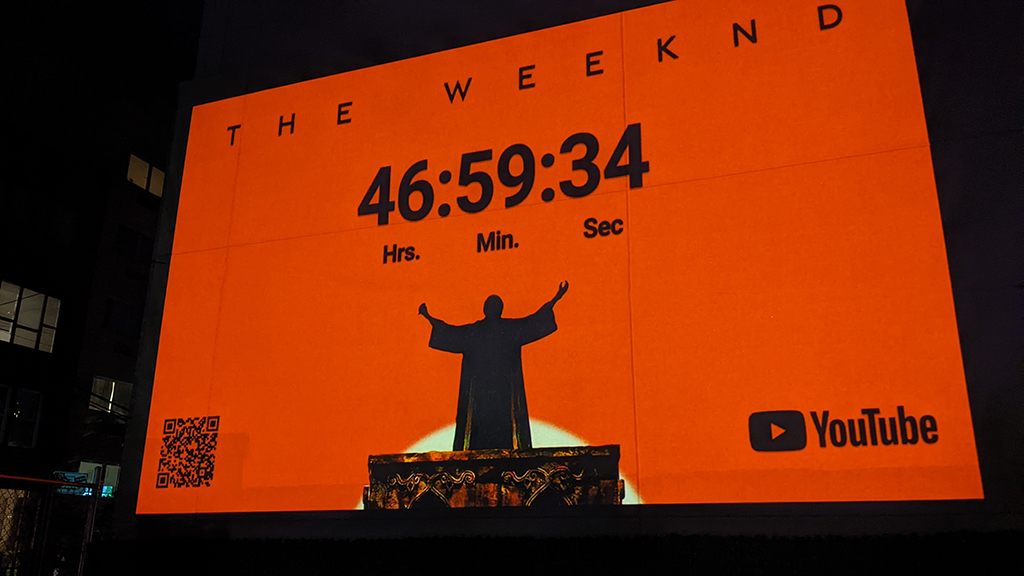
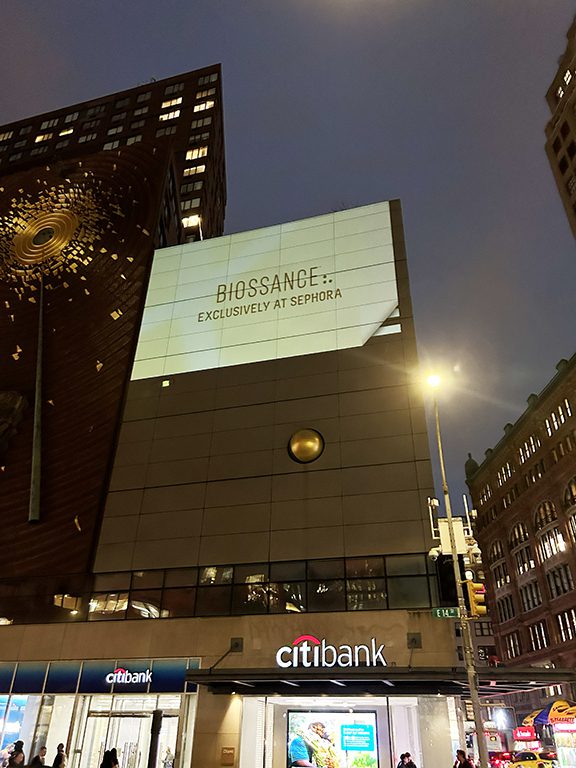
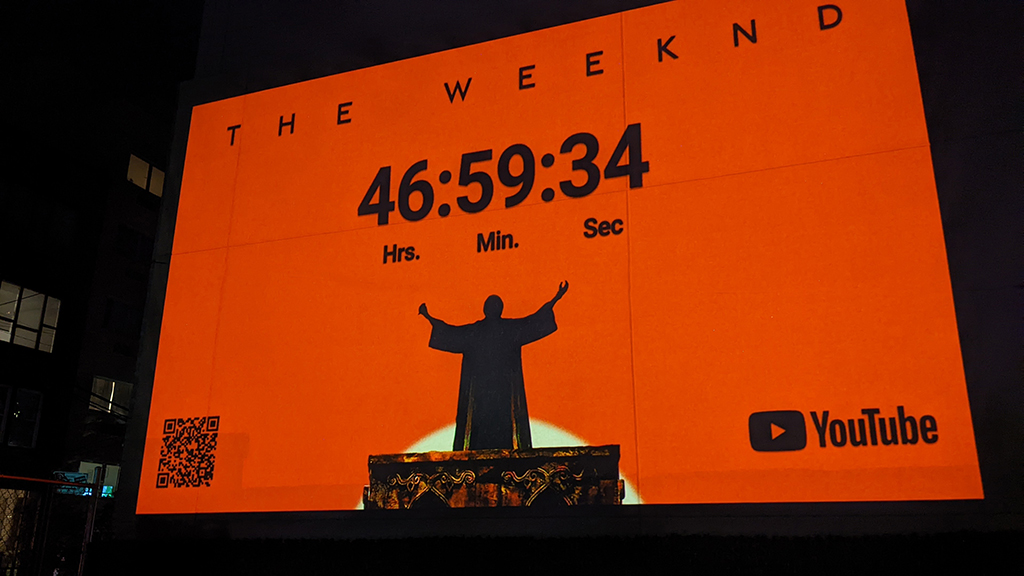
American Guerrilla Marketing deploys 20,000-lumen commercial projection systems on building facades in Madison, targeting the State Street corridor as the primary environment and the Capitol Square zone, Willy Street, East Side arts district, and Monroe Street corridor as secondary markets matched to specific campaign audience objectives. AGM is a Best of Brooklyn award winner whose client list includes The Weeknd, YouTube, the Women’s March, Reproductive Freedom for All, the US Marine Corps, and Biossance. That range — entertainment to advocacy to institutional to consumer product — reflects the same range of campaign types that Madison’s audience supports. State Street is one of the few corridors in America where all of those client categories would find a naturally receptive audience in the same physical location.
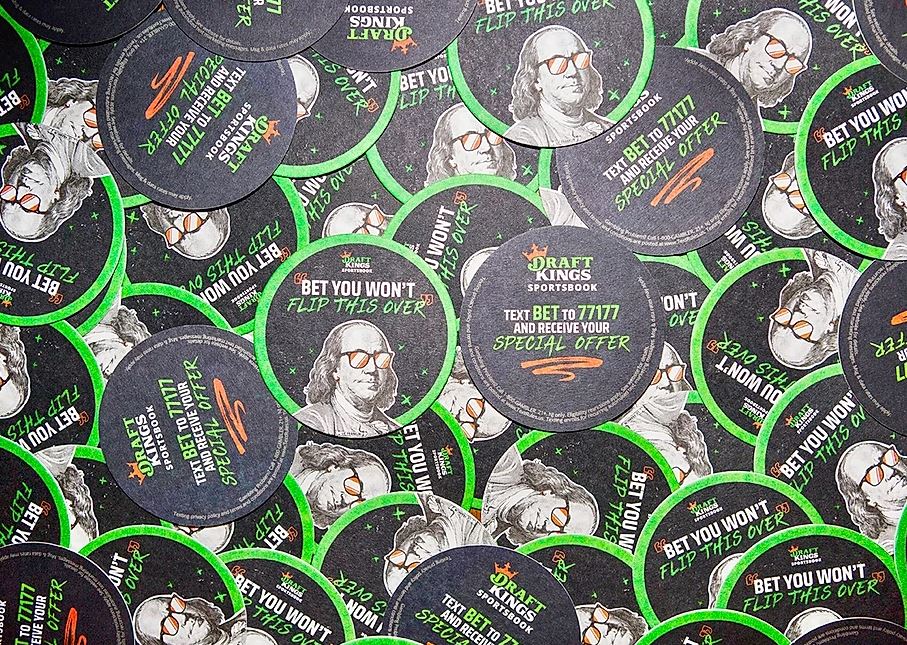
AGM’s projection client roster includes Netflix, Disney, Coca-Cola, FanDuel, Live Nation, iHeartRadio, and the US Marine Corps. A confirmed case study: the US Marine Corps × CMA Fest Nashville — multi-night projections onto architectural surfaces throughout the festival footprint, reaching 80,000+ attendees across the campaign window. Projection advertising scales across every brand category; what our campaigns share is scale, precision, and a physical presence digital cannot replicate.
Madison’s projection advertising environment works across the full calendar. The University of Wisconsin’s academic year generates sustained foot traffic on State Street from September through May, with consistent evening and weekend activity from the student and faculty population. Summer brings festival programming, outdoor events, and Capitol Square farmers markets that produce strong weekend foot traffic independent of the university calendar. The Capitol Square zone sees spikes tied to political events, rallies, and civic programming that draw statewide audiences into the downtown core. A projection campaign in Madison can be timed to any of these patterns — or deployed into the baseline pedestrian volume that State Street maintains throughout the year.
Put Your Message on Madison's Most-Walked Streets
20,000-lumen projection campaigns from contact us for pricing. State Street corridor, Capitol Square, Willy Street, East Side. AGM's own crew, Best of Brooklyn award winner, GPS-documented results.
Madison's Best Projection Districts
Madison offers five distinct projection environments, each with its own audience profile, building stock, and seasonal patterns. AGM’s national scouting team evaluates each district individually and matches campaign location to the specific audience objective and creative strategy.
State Street Arts and Entertainment Corridor — IDEAL
State Street is Madison’s premier projection environment — arguably one of the strongest pedestrian-corridor projection sites in the Midwest. The street runs approximately one mile from the Capitol square to the UW campus and draws a sustained, dense, mixed-demographic foot traffic pattern throughout the evening hours. Buildings along the corridor are typically two to four stories with commercial ground-floor use. The upper stories of many State Street buildings feature large painted masonry walls and EIFS-clad faces with minimal window interruption — exactly the surface profile that produces the clearest, largest projected image at 60-to-120-foot throw distances. The outdoor dining that occupies the sidewalk during warm months turns the corridor’s audience into a stationary, forward-facing population looking directly at the building faces across the street. Blank party walls between adjacent buildings — common throughout the corridor — provide some of the cleanest large-format projection surfaces in downtown Madison. For virtually any campaign targeting an educated, urban, socially active, politically aware audience, State Street is the correct location in Madison.
Capitol Square Outdoor Entertainment Zone
The Wisconsin State Capitol anchors Capitol Square — the civic heart of Madison — surrounded by commercial buildings on all four sides of the square’s perimeter. The Capitol Square zone hosts the Dane County Farmers’ Market (one of the largest in the nation), outdoor concerts, political rallies, and seasonal events that produce high foot traffic at specific moments throughout the year. Commercial buildings ringing Capitol Square include older masonry commercial structures with painted facades, some of which carry large upper-story wall areas suitable for outdoor projection. For campaigns with civic resonance — advocacy organizations, political campaigns, public-interest messaging — Capitol Square provides both a high-foot-traffic physical environment and a contextual backdrop that amplifies messaging with civic or governmental relevance. The geometry of the square, with buildings surrounding a central open space, also provides longer throw distances and cleaner sightlines than the narrower corridor of State Street.
Willy Street Neighborhood Arts Area
Williamson Street — locally known as Willy Street — runs through Madison’s most arts-engaged neighborhood, hosting independent restaurants, food cooperatives, galleries, music venues, and community organizations in a commercial corridor with a distinctly neighborhood character. Willy Street’s building stock includes older painted brick and masonry commercial structures with moderate surface suitability for outdoor projection depending on paint condition and available throw distance. The Willy Street audience is locally concentrated — Madison residents who are arts-engaged, progressive-minded, and deeply community-connected — producing a more targeted demographic than the mixed tourist and student traffic of State Street. For advocacy organizations, arts brands, local community-facing businesses, and campaigns whose message resonates specifically with a progressive residential community, Willy Street provides an audience that State Street’s visitor and student mix can’t replicate.
East Side Arts District
Madison’s East Side encompasses a broader arts and creative-professional community extending out from the Willy Street corridor into surrounding residential and commercial blocks. Galleries, studios, maker spaces, and arts-adjacent businesses anchor a creative ecosystem that generates foot traffic concentrated around arts events, openings, and programming nights. Commercial buildings in the East Side arts district include a range of masonry and frame construction of varying ages and surface conditions. AGM’s scouting team evaluates East Side sites individually against surface quality criteria — identifying specific walls that produce strong projection results within the available deployment geometry. East Side campaigns work particularly well for arts and culture brands, creative agencies, entertainment clients, and advocacy organizations targeting a progressive, arts-engaged local demographic.
Monroe Street Entertainment Corridor
Monroe Street anchors Madison’s west-side entertainment zone — a neighborhood commercial corridor with restaurants, wine bars, specialty retail, and entertainment venues serving the residential neighborhoods of the Dudgeon-Monroe area and the adjacent Vilas neighborhood. Monroe Street’s evening foot traffic is a local resident audience — families, professionals, and neighborhood regulars who use the corridor as a dining and entertainment destination throughout the week. The building stock on Monroe Street includes low-to-mid-rise commercial structures with painted masonry and storefront facades; AGM’s scouting team identifies surfaces with adequate face area and light surface color for projection at the available throw distances on this corridor. For brands whose audience profile skews toward established, neighborhood-resident demographics — rather than the student and advocacy mix of State Street — Monroe Street provides a different angle on Madison’s population.
Campaign Formats That Fit Madison's Audience
Corridor Campaign — State Street
A projection positioned on a State Street building face during peak evening hours — 8 PM through midnight, Friday through Saturday — when outdoor dining audiences are stationary, facing outward, and fully exposed to the building walls across the corridor. This is the format that maximizes impression depth per passerby: the audience isn’t moving past the wall at walking speed, they’re seated directly in front of it for 30 to 90 minutes. Brand recall under those viewing conditions is substantially higher than in any moving-pedestrian environment.
Advocacy Projection
A civic, political, or cause-based message projected onto a building face in or near Capitol Square — a format that pairs the visual impact of a large building projection with the contextual power of a State Capitol backdrop. Advocacy projections in Madison work because the audience in the Capitol zone already has a civic frame of reference. The projection’s message lands in a context where public engagement is normalized, political messaging is expected, and the audience is primed to respond. AGM has executed advocacy campaigns for the Women’s March and Reproductive Freedom for All using exactly this approach in high-civic-resonance environments.
University Market Activation
A projection campaign timed to the UW academic calendar and positioned on State Street closest to the campus end of the corridor — targeting the student and young-professional audience as they move between campus and the restaurant and nightlife zone. This format works for entertainment releases, streaming platforms, consumer electronics, fashion brands, and any product or campaign whose core demographic skews toward 18-to-30 college-educated audiences. The UW student population is one of the most smartphone-active audiences in Wisconsin, meaning the organic documentation rate for projections they encounter is particularly high.
Festival and Event-Adjacent Projection
Madison’s heavy festival calendar — including events at Capitol Square, the Terrace at UW Memorial Union, and State Street itself — creates recurring windows of elevated foot traffic that projection campaigns can anchor to. A campaign timed to a major outdoor event on State Street or Capitol Square intercepts an audience that is already gathered, already in an elevated social state, and already looking at their surroundings with the attentive curiosity that live events produce. AGM can time campaign deployment to align with specific festival dates when advance booking allows sufficient lead time for location scouting and logistics coordination.
Plan Your Guerrilla Projection Campaign in Madison, WI
Tell us about your campaign goals, target audience, and preferred locations. Our team will help you plan a high-impact guerrilla projection campaign tailored to your needs.
Award Winning Personalized Service
You will get thoughtful, devoted, and individualized attention from our experienced, qualified, and professional personnel. Being one of the most illustrious agencies in Brooklyn, New York, American Guerrilla Marketing has been awarded the Best of Brooklyn title.
Nationwide
Industry City, Brooklyn, New York 11232
American Guerrilla Marketing
Hours
Mon - Fri: 9 AM - 5 PM
Sat & Sun: Closed
Automate your campaign with AGM’s Request for Proposal Builder.
Automate your campaign with AGM’s Request for Proposal Builder. Simply answer a few quick questions about your campaign goals, markets, and timeline, and the system will generate a tailored presentation with recommended strategies, quantities, and pricing. Click the RFP Builder to instantly receive your customized proposal.
Booking and Running a Madison Projection Campaign
A Madison projection campaign begins with a campaign brief that identifies your objective, target audience, preferred district or corridor, and timing requirements. The most common first question is whether the campaign belongs on State Street or in one of Madison’s secondary projection environments. AGM’s team can advise on district selection based on audience profile and campaign creative — the advocacy campaign that belongs near Capitol Square is a different product than the entertainment release that belongs on the university end of State Street.
Once the district is confirmed, AGM’s national scouting team conducts advance physical evaluation of candidate surfaces. The scouting process involves both digital pre-screening — reviewing building stock at the block level before visiting — and on-the-ground physical assessment of candidate walls. On State Street, the scouting team is specifically looking for upper-story walls with light surface color, flat planarity, minimal window interruption, and clear sightlines from accessible throw positions across the corridor or from adjacent spaces. The best State Street projection surfaces are typically party walls between adjacent buildings and upper facade sections on commercial buildings where the retail storefront level gives way to a larger, less interrupted wall face above.
On campaign night, AGM’s own two-person technical crew arrives with the full equipment package. The crew handles all positioning, setup, calibration, and launch — the projection goes live at dusk and runs through the campaign window without any client-side participation required at the location. The crew monitors the campaign throughout the run, manages conditions, and documents the deployment with on-site photography and video. After breakdown, AGM compiles the GPS-documented post-campaign report covering location data, deployment timestamps, and visual documentation, delivered digitally to the client.
For State Street campaigns during warm months, campaign night logistics include coordination around outdoor dining infrastructure — the pedestrian furniture and barriers that occupy the sidewalk zone. AGM’s scouting process accounts for these physical elements when evaluating throw positions and sightlines, ensuring that the projection is optimally positioned relative to both the target wall and the audience positions that outdoor dining creates. Madison’s best State Street projection setups take advantage of the wide-sidewalk sections at mid-corridor where the throw distance from across the street gives the 20,000-lumen system room to fill a large building face with a bright, sharp image.
Case Studies: Events, Sports Markets, And Civic Advocacy
Two AGM campaigns are directly relevant to Madison’s projection advertising environment — one from a sports and event context, and one from a civic advocacy context.
Mizzou × Cotton Bowl — Arlington, TX
The University of Missouri’s Cotton Bowl projection campaign gives a clear template for event-adjacent and university-market projection advertising. AGM deployed building projections in the stadium perimeter zone around the Cotton Bowl game — a major college football postseason event — hitting the dense, engaged audience that concentrates around a high-stakes university athletic event. The campaign succeeded because it reached an audience that was already emotionally invested in the institution whose brand the projection carried. That mechanic has direct relevance to Madison: the University of Wisconsin–Madison has one of the most passionate collegiate fan bases in the Big Ten, and the State Street corridor that connects campus to the rest of the city is exactly the pedestrian environment where a university-adjacent brand moment lands with that same emotional resonance. A projection timed to a major UW event — a Badgers game, a graduation weekend, a campus celebration — reaches an audience in the same elevated, institution-connected emotional state that the Cotton Bowl crowd produced in Arlington.
WakeUp Coalition — Austin, TX
AGM’s projection work with WakeUp Coalition in Austin demonstrates what civic advocacy projection looks like at its most effective. The campaign used building projection to deliver a public-interest message in a high-foot-traffic urban environment — turning a city block into a large-scale civic communication moment that reached passersby who were not seeking out the message, but could not help but encounter it. That mechanic — unexpected, large-scale, public-space messaging — is particularly powerful in Madison because the city’s civic culture means that advocacy messaging encountered in public space is normalized and engaged with rather than ignored. State Street’s combination of political community, student activism culture, and dense outdoor audience makes it one of the strongest environments in the Midwest for advocacy projection. The WakeUp Coalition Austin campaign format is directly reproducible here.
Madison Projection Campaign Pricing
Projection advertising campaigns in Madison are priced at contact us for a quote. . That rate covers the 20,000-lumen commercial projection system, generator and complete power solution, electronics bundle, mobility unit, and AGM’s own two-person technical crew for setup, full-duration operation throughout the campaign window, and complete breakdown at close. No subcontractors are involved at any stage. The projection runs from dusk through a standard four-to-six-hour window that covers Madison’s peak evening foot traffic period on State Street and in the secondary districts.
Advance location scouting for the Madison market is available at approximately contact us for pricing. Scouting covers physical on-the-ground evaluation of candidate surfaces in your preferred district, with GPS-documented findings delivered before the campaign date. Campaigns requiring permitted or private-property building placements carry location fees of Contact us for a custom quote. per night depending on the specific building and arrangement. Multi-night Madison campaigns — consecutive evenings on State Street during a festival weekend or across a major UW event window, for example — are available at the same per-projector-per-night rate.
Who Activates In Madison With Projection Advertising
Madison’s projection advertising clients fall into several consistent categories. Advocacy and civic organizations — reproductive rights groups, environmental campaigns, political causes, and community organizations — use State Street and Capitol Square for high-visibility messaging in an environment that is already politically engaged and civic-active. Entertainment brands and streaming platforms target the UW student population on the campus-adjacent end of State Street. Consumer product brands with an educated, progressive demographic target the general State Street audience. Food and beverage brands activate during festival season and summer outdoor dining peaks. University athletics and institutional brands use projection around major campus events and game-day windows. The common denominator across all of these is that the Madison audience is visually attentive, socially active on documentation-and-sharing platforms, and already present in the corridor in high numbers during the evening hours when guerrilla projection advertising operates.
Coverage & Estimated Impressions
| Zone / Area | Peak Hours | Foot Traffic | Est. Nightly Impressions | Best For |
|---|---|---|---|---|
| State Street Arts and Entertainment Corridor | 8PM–1AM | High | 8,000–35,000 | Product Launch |
| Capitol Square Outdoor Entertainment Zone | 8PM–1AM | High | 8,000–35,000 | Event Promotion |
| Willy Street Neighborhood Arts Area | 8PM–1AM | High | 8,000–35,000 | Brand Awareness |
| East Side Arts District | 8PM–1AM | High | 8,000–35,000 | Political |
| Monroe Street Entertainment Corridor | 8PM–1AM | High | 8,000–35,000 | Sports |
Frequently Asked Questions
State Street connects the Wisconsin State Capitol to the UW–Madison campus — two of the most significant public institutions in the state — through a one-mile walkable corridor lined with outdoor dining, independent retail, nightlife, and advocacy organizations. The pedestrian density during evening hours is among the highest of any street in the Midwest outside Chicago, and the audience mix spans demographics that few single corridors can reach simultaneously: students, state workers, political advocates, tourists, and neighborhood residents. Building walls throughout the corridor include large, light-colored upper-story faces that reflect a 20,000-lumen projection cleanly. Outdoor dining audiences are stationary and facing the building facades directly — creating an unusually long average viewing window for projection advertising.
Proximity to UW–Madison’s campus significantly shapes the State Street audience during the academic year. Students represent a substantial portion of evening foot traffic on State Street, particularly on the campus-end blocks closer to Library Mall and the Terrace. This audience is 18-to-25, highly smartphone-active, visually engaged with public space, and active on the social platforms where projection documentation circulates most effectively. For entertainment brands, consumer electronics, streaming platforms, fashion labels, and any campaign targeting college-educated young adults, the UW student presence on State Street provides a concentrated, qualified audience within the general corridor foot traffic.
Yes. Advocacy and civic organizations are among the most natural users of projection advertising in the Madison market. The Capitol Square zone provides both a high-foot-traffic physical environment and a civic context that amplifies advocacy messaging — a projected image near the State Capitol carries a visual resonance that the same image on a neutral commercial building would not. AGM has executed advocacy projection campaigns for clients including the Women’s March and Reproductive Freedom for All, and the same strategic format applies to Madison-based or statewide advocacy campaigns seeking a high-visibility, high-civic-resonance public-space moment.
Campaigns near the State Capitol are subject to the permitting jurisdiction of the relevant municipality and property owners. The Capitol grounds themselves are state-controlled and require specific authorization for any commercial activity; AGM’s campaigns in the Capitol zone typically use commercially-facing building surfaces on the surrounding Capitol Square perimeter rather than the Capitol grounds. For campaigns where the Capitol backdrop is strategically important, AGM’s scouting team identifies surfaces that deliver the visual context without requiring authorization from state property administration. Campaigns requiring private-property building placement anywhere in Madison carry location fees of Contact us for a custom quote. per night.
Madison’s festival calendar — including Dane County Farmers’ Market at Capitol Square, outdoor concert series, State Street special events, and recurring food and arts festivals — creates windows of elevated foot traffic that projection campaigns can leverage directly. An event-adjacent campaign on State Street during a major outdoor festival reaches an audience that is already gathered, already in a social and leisure mindset, and already looking at their surroundings with heightened visual attention. Booking for festival-adjacent campaign dates should begin four to six weeks in advance to allow time for location scouting and any event-specific logistics coordination.
A single-projector campaign covers one location per night. To cover multiple Madison districts simultaneously — State Street and Willy Street on the same evening, for example — AGM deploys an additional projection unit with its own crew and scouted location. Each additional projector is priced at contact us for pricing. For campaigns with multiple audience objectives across different Madison neighborhoods, a multi-district deployment strategy is available and can be designed to reach distinct demographic segments in their respective environments on the same campaign night.
The strongest State Street projection surfaces are upper-story building faces with light paint color, flat wall planarity, and minimal window interruption above the ground-floor retail level. Party walls between adjacent commercial buildings — blank vertical faces that fill the gap between two structures — are often the best surfaces on the corridor because they have no windows at all and can span two to three stories of uninterrupted face area. EIFS-clad and smooth stucco upper stories on commercial buildings also produce excellent image quality. AGM’s scouting team evaluates each candidate wall individually rather than approving block sections, because surface quality on State Street varies significantly from building to building even on the same block.
Political and civic campaigns in Madison use projection advertising to create high-visibility public-space moments that generate both immediate audience impact and earned media documentation. A large projection on a State Street or Capitol Square building face during a political moment — the eve of a major legislative vote, a rally day, an election-adjacent activation — reaches thousands of passersby at the moment when their civic engagement is highest. The surprise of a large-format public projection generates organic social media documentation that extends the message reach beyond the physical audience at the wall. AGM has executed advocacy campaigns for organizations including the Women’s March and Reproductive Freedom for All, using exactly this approach.
Capitol Square and State Street serve different campaign objectives within Madison’s projection landscape. State Street is a linear pedestrian corridor with a dense, continuous flow of foot traffic — strong for campaigns that benefit from high total impression volume and the stationary outdoor-dining audience. Capitol Square is a civic plaza with a more event-dependent foot traffic pattern — strongest during farmers markets, rallies, outdoor programming, and political events when the square draws large concentrated audiences. Capitol Square also provides more open throw geometry, allowing for larger image sizes on surrounding commercial buildings. For civic and advocacy campaigns, Capitol Square’s contextual resonance adds a layer of meaning that the commercial corridor of State Street doesn’t provide.
Willy Street — Williamson Street — is a neighborhood commercial corridor rather than a tourist and university corridor. Its audience is primarily Madison residents: arts-engaged, progressive, community-oriented locals who live in and around the Marquette and Willy Street neighborhoods. The raw foot traffic volume on Willy Street is lower than State Street, but the audience is more locally concentrated and more specifically targeted for campaigns whose message resonates with a progressive residential community rather than a mixed tourist-student-advocate population. For consumer brands, advocacy organizations, and arts-community campaigns whose core demographic is engaged local residents rather than the full State Street mix, Willy Street provides a cleaner audience match.
Madison’s East Side arts district generates foot traffic concentrated around arts events, gallery openings, studio programming, and the nightlife venues anchored in the neighborhood’s commercial blocks. The district’s audience is arts-literate, creative-profession-adjacent, and active on the visual-documentation platforms where projection photography circulates most effectively. Building surfaces in the East Side arts zone vary widely in quality; AGM’s scouting team identifies specific walls that meet projection standards within the available deployment geometry. The East Side is most viable for projection campaigns timed to specific arts events — when concentrated audience density aligns with a defined evening window — rather than as a baseline foot-traffic environment.
More AGM Outdoor Advertising Services
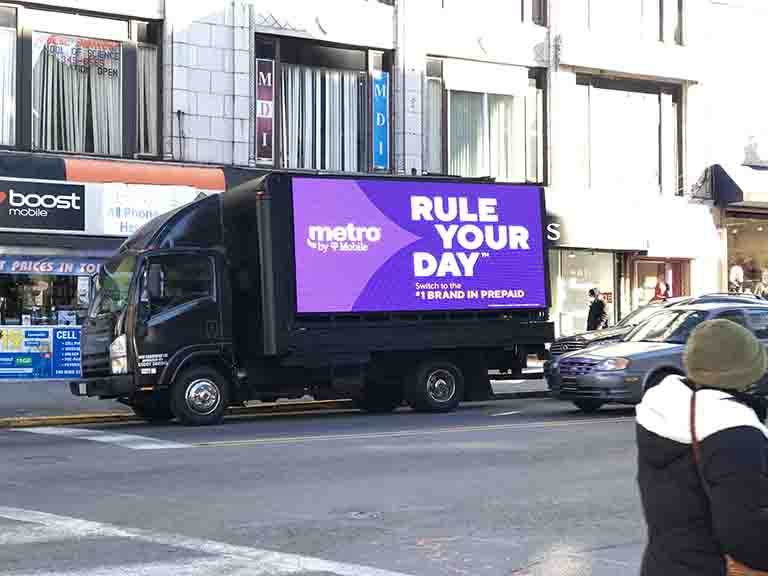
Led Billboard Trucks
Mobile LED displays that bring your brand to any location, any event.
Fly Posting
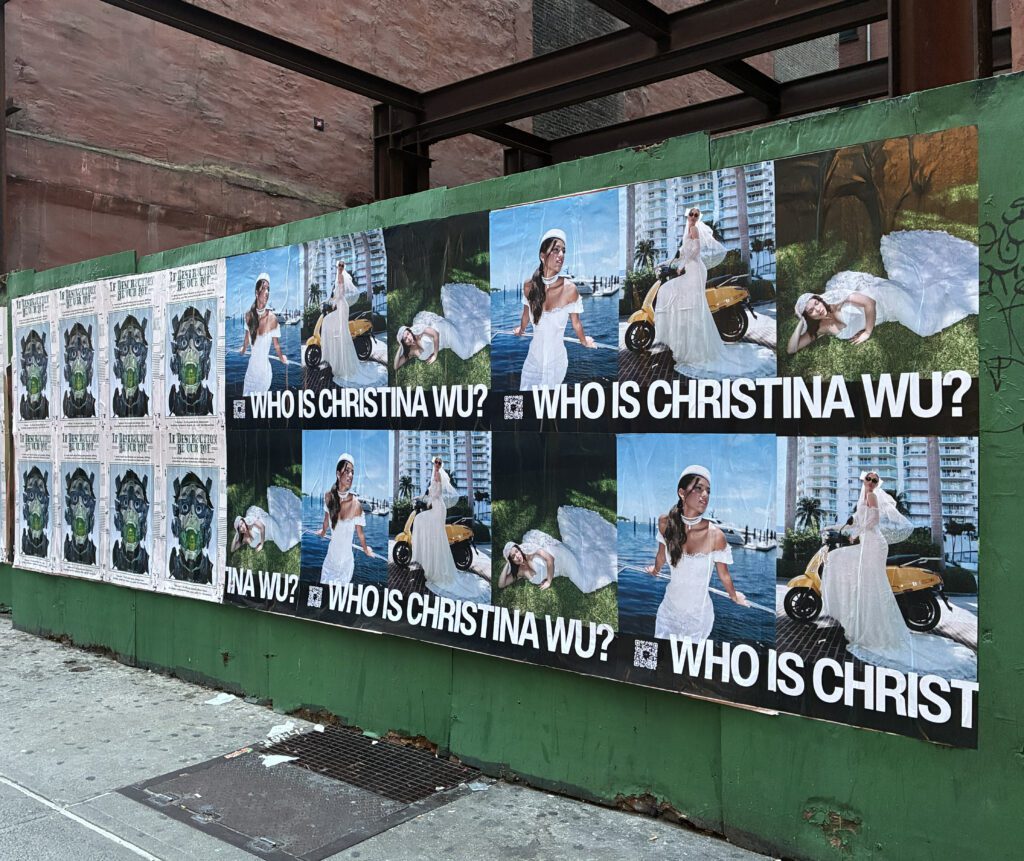
Street-level poster saturation across walls, construction sites, and corridors.

Sidewalk Decals
Ground-level branded decals at pedestrian hotspots and event entrances.

Sidewalk Stencils
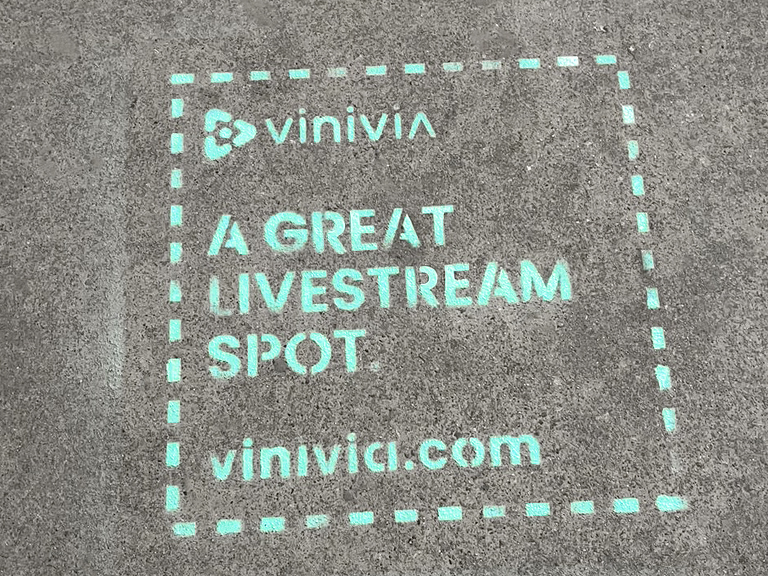
Creative stencil campaigns that put your brand in the path of pedestrians.