
November 25, 2026
Wheatpasting & Poster Campaigns in Jacksonville, Florida
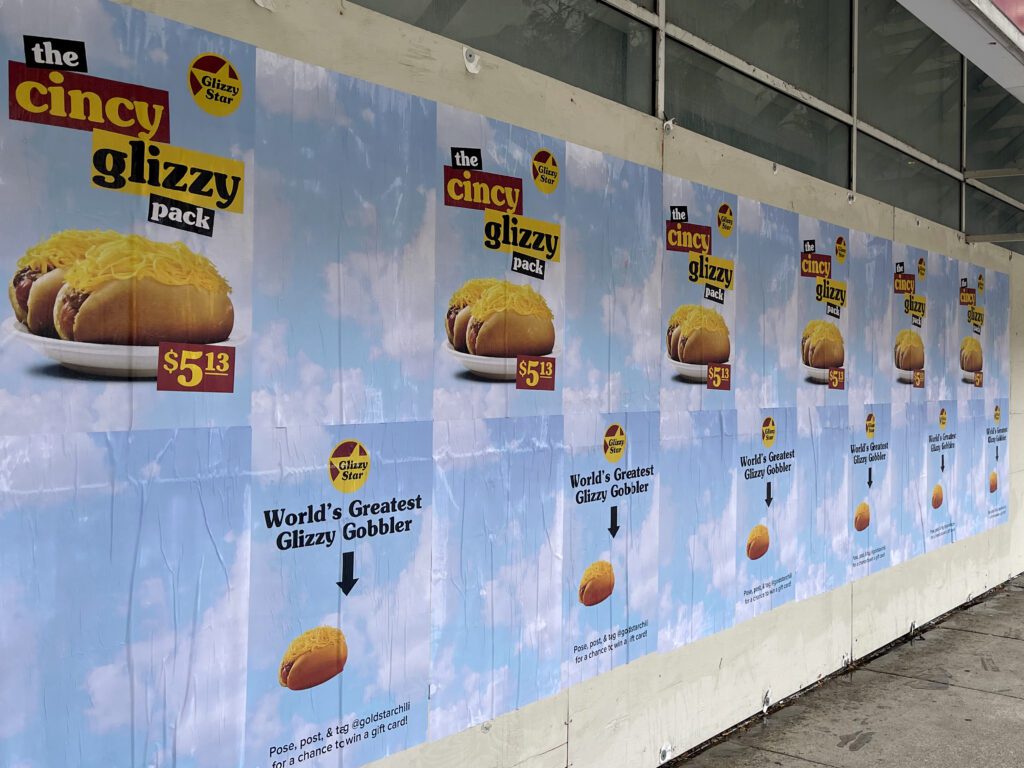
Most briefs that reach us for Jacksonville ask for citywide poster coverage. That request does not survive contact with the map.
Jacksonville is one of the largest cities in the United States by land area. The consolidated city and county boundary swallows beach towns, river suburbs, industrial edge and a downtown core, and the cultural life that makes Poster Campaigns work sits in four or five small pockets with long drives between them. You can stand in Five Points and be a world away from San Marco, and the St Johns River is in between.
So the honest version of a Jacksonville poster campaign is not coverage. It is depth in a handful of named districts where people actually walk, plus a decision about whether you are buying the north bank or the south bank or both.
The second thing buyers get wrong here is season. Jacksonville's humid subtropical climate runs long, hot and wet from roughly late spring into early autumn, with convective thunderstorms arriving most afternoons. That is the worst window for anything paper and paste. The mild, dry winter is the good window, and it happens to line up with the stronger event calendar, which makes the scheduling conversation easier than it is in a lot of Florida markets.
The third thing is permission. Riverside and Avondale are historic residential neighbourhoods with organised, preservation-minded residents. Five Points is a long-standing counterculture district with independent operators who are used to being asked about their walls. Those are two different conversations, and treating them as one is how a Jacksonville campaign goes sideways.
This page covers how we actually run Wheatpasting & Poster Campaigns in Jacksonville: where the surfaces are, what the weather does to them, how permission works district by district, what the calendar looks like in 2026 and 2027, and what we talk clients out of here.
Jacksonville is a district campaign, not a city campaign
The working geography is small and specific.
Five Points is the centre of gravity. The district grew up in the late 1800s around the intersection of Park Street and Lomax Street, and it has stayed the city's alternative-culture node: record shops, bars, independent storefronts, the kind of frontage where a poster on an owner-consented wall looks like it belongs. If you only have one district in a Jacksonville campaign, this is it.
The King Street District sits in the same containing neighbourhood, Riverside, and is one of the area's main restaurant and bar strips. Five Points and King Street are close enough that one parking position can realistically serve a route covering both. That matters more than it sounds, because almost nothing else in Jacksonville pairs that cleanly.
Avondale adjoins Riverside and is often treated as one continuous neighbourhood with it, but it does not behave like Five Points. The commercial heart is the Shoppes of Avondale: tree-lined, boutique-weighted, 1920s housing stock around it, visibly maintained. The frontage is more upmarket and more conservative. Wall owners there are thinking about how a sheet of paper reads to their customers and their neighbours, and the answer is often no. It is also far enough west that you reposition the vehicle rather than walk from King Street.
San Marco is on the south bank, riverfront dining around a walkable square, historic buildings, smaller and more genteel than Riverside. It is a single-stop district. Park once, work the square, move on. The crossing to get there is the cost, not the district itself.
Springfield, north of downtown, is a historic-housing restoration neighbourhood with a serious stock of older buildings. It has a rougher-edged reputation than Avondale but the same preservation sensitivity, because the people restoring those houses care intensely about how the street looks.
Downtown is the one most buyers assume should anchor the campaign, and it is the one we usually argue down. Downtown Jacksonville's daytime office activity is real. Its evening activity is weaker. If you are posting for a nightlife, music, film or culture audience, posting downtown buys you an empty street after six. Downtown earns its place in a campaign through construction hoarding, which is a different proposition, and through daytime dwell near the Prime Osborn Convention Center when something is actually on there.
That is the whole walkable inventory. Anything outside it is car-dependent sprawl where a pedestrian-scale poster has no audience.
Humidity is the adhesion story here, not cold
Paste does not fail in Jacksonville the way it fails in a northern market. There is no sustained freeze-thaw cycle levering the bond off a brick face over a January week. What you get instead is months of air that will not let the paste cure.
Through the long summer, a pasted sheet dries slowly and unevenly. The face can feel touch-dry while the bond underneath is still soft, and that is exactly when edges start to lift. Wind catches a lifted corner, and the sheet peels back on itself. A crew that is used to dry-climate work will underestimate dwell time and walk away from a job that is not actually set.
The practical adjustments we make in Jacksonville summers:
– Work mornings, not evenings. Afternoon thunderstorms are frequent enough through the summer that an evening posting window is a gamble. A sheet applied at 9pm can be rained on before the bond has taken. A sheet applied in the early morning gets a run of hours to set.
– Accept a higher refresh rate. Summer campaigns in Jacksonville need more revisit than winter campaigns in Jacksonville. Not because the paper is worse, because the air is.
– Favour sheltered aspects. Recessed frontage, covered walkway, anything with an overhang buys hours of protection that an exposed wall does not.
– Specify UV-stable inks and laminate where colour matters. The city runs around 234 sunny days a year. An unshaded south-facing sheet with ordinary inks will shift noticeably inside a few weeks. If your artwork depends on a specific brand colour holding, say so before print.
Winter is different and better. Mild, drier air, lower storm frequency, and short cold waves rather than a sustained freeze. Those cold snaps are a scheduling nuisance, not a structural problem. We will move a night if a front is coming through, because a bond that sets in cold air sets poorly, but we are not planning around spalling or ice.
There is one more Florida-coast discipline that applies here. Jacksonville sits on the Atlantic and inside the hurricane season footprint. For any campaign running in late summer or autumn we plan shorter cycles and agree in writing what happens to the inventory if a named storm is tracking in. That usually means pulling what can be pulled and writing off what cannot, decided in advance rather than on the day.
Salt air is a gradient, not a blanket. The beaches communities and the river mouth see genuine marine exposure. Riverside, Avondale and Springfield are inland enough that standard fixing spec holds up fine. If a placement is coastal, we spec corrosion-resistant fixings. If it is in Five Points, we do not pretend it needs them.
Permission in Jacksonville is a neighbourhood question before it is a city question
Posting is a grey area, and it is a grey area everywhere. The thing that is distinctive about Jacksonville is what actually governs the outcome.
We have not verified the specific Jacksonville municipal provisions covering posting on poles or in the public right-of-way, and we will not put a code section in front of a client without checking the current municipal code directly. Treat that as unverified, and treat anyone who quotes you a section number off the top of their head with suspicion.
What we can describe is the enforcement character, and here it is less about city inspectors than about residents.
Riverside and Avondale are historic-district neighbourhoods with strong, organised, preservation-minded residents and active neighbourhood associations. In that environment the binding constraint on an unsanctioned placement is not usually an official. It is a resident with a phone, a photo, and a mailing list, and the response is fast. Springfield carries the same dynamic for the same reason, because a restoration neighbourhood is full of people who have personally invested in how the street looks.
That shapes our posture. In Jacksonville we run owner-consented work on private surfaces, and we concentrate it where owners are most likely to say yes.
Five Points is that ground. A district built on independent operators and counterculture history means wall owners who have been asked before and who may have a view about the artwork rather than a reflex against the format. That is a commercial conversation, not a regulatory one, and it is the right place to start a Jacksonville build.
Two complications worth knowing before anything is sold:
Historic-district overlays. Riverside and Avondale's historic character means that even an owner who says yes may not be the end of the process if the surface is on a contributing structure and the treatment is anything durable. That needs checking per building, before it goes into a plan, not after.
Downtown hoarding is developer-controlled. Construction hoarding around downtown sites, including the ongoing stadium redevelopment, belongs to the contractor or developer. Access to it is a negotiation with them. When it works, it is some of the best surface in the city: large, flat, purpose-built for sheet, and nobody's historic facade. When it does not work, it is because the site team said no, and there is no appeal.
How we reduce risk on every Jacksonville campaign: written permission from the surface owner, placement on private surfaces rather than public infrastructure, photographic documentation of every location at install, and a removal commitment with a date. Removal is not an afterthought in a neighbourhood where the residents are watching. Leaving degraded paper on a Riverside wall is how an operator loses that wall and the three next to it.
The Jacksonville calendar, including the gap nobody mentions
Two things dominate Jacksonville campaign timing right now, and the second one catches people out.
The first is that winter and early spring carry the calendar. The weather is better for paste and the events are denser. Summer is both the weather trough and, for the next couple of years, the event trough.
The second is the stadium. The Stadium of the Future construction project has displaced several of the city's biggest annual events. Local reporting has been explicit that there is no Monster Jam and no Florida versus Georgia game in Jacksonville in 2026, and that neither returns in 2027 for the same reason. If your Jacksonville plan was built on the historic Florida versus Georgia weekend footfall, it is built on a gap. We have had that conversation more than once and it is always uncomfortable, because that weekend was a fixture in a lot of people's media calendars.
What is still there and worth planning around:
– THE PLAYERS Championship in March at TPC Sawgrass in Ponte Vedra. Big national golf audience. Note the geography: Ponte Vedra is outside Jacksonville proper, so the benefit to Riverside and downtown frontage is indirect. It shows up in hotels, restaurants and the airport corridor rather than in Five Points footfall.
– Gate River Run in March, a large participatory road race, and 26.2 with DONNA in February. Participatory events bring a different crowd pattern than spectator events: people arrive early, they are on foot, and they are in a specific part of the city at a specific hour.
– Collective Con, a three-day convention covering comics, anime, gaming, cosplay, voice actors and live music. For cultural and entertainment campaigns this is one of the best-matched audiences in the Jacksonville year.
– Jax Home & Patio Show at the Prime Osborn Convention Center, which is one of the few reliable downtown daytime dwell generators.
– A dense spring and summer sports block: Bob Hayes Invitational Track Meet and Spartan Races in March, Florida High School Track and Field Regional and State Championships in May, AAU Track and Field Championships and the Kingfish Tournament in July.
– Super Girl Surf Festival in November, the TaxSlayer Gator Bowl around the turn of the year, and the Jacksonville Classic Collegiate Baseball Tournament in February.
– Smaller professional and semi-professional teams running their own seasons, including the Jacksonville Armada in soccer, the Jacksonville Axemen in rugby, the Jacksonville 95ers in basketball and the Florida Avengers in women's tackle football.
We also mark university term seasonality as unverified for Jacksonville. The city has a substantial higher-education presence, but we have not confirmed specific campus corridors or term-date effects here the way we can in a dense college town, and we are not going to build a plan on an assumption about it.
Crew logistics: river crossings, parking and being watched
Three things define the working night in Jacksonville.
River crossings are the chokepoint. The St Johns splits the city and bridge routing dictates travel time between north bank and south bank. We plan routes to minimise crossings rather than to minimise map distance, and those are not the same optimisation. A route that looks shorter on a map can cost you an extra bridge and twenty minutes.
Drive time between districts is working time. Five Points to San Marco to Springfield to downtown are not transitions, they are legs. We budget them as hours on the job, and we build routes that finish a district completely before moving. A crew that bounces between districts because the pin order looked efficient burns the night in the vehicle.
Downtown parking is genuinely easy at night, and after the office population leaves it is close to empty. That is a real advantage over the South Florida coastal markets, where parking is the whole problem. Expect stadium construction traffic to affect downtown and the sports-complex approaches through 2026 and 2027, which matters more for daytime access than for night work.
On night windows: the quiet window is wide here. Downtown is dead at night. Five Points and King Street have real bar trade, so the crowd-free window there starts after the bars thin rather than at some fixed hour, and we schedule those two last.
The thing to plan for in Riverside, Avondale, San Marco and Springfield is overlook. These are historic residential neighbourhoods, not warehouse districts. People live above and beside the commercial frontage, and somebody will see the crew. That is not a reason to avoid them. It is a reason to work them the way we do: marked vehicle, visible paperwork, a crew that looks like it is doing a job because it is doing a job, and a willingness to stop and explain to whoever asks. An operator who behaves like they are hiding something invites exactly the phone call they are trying to avoid.
Crew sizing follows the district. A compact owner-consented route through Five Points and King Street is a small two-person job over a few hours, one pasting and one on paste, ladder and lookout. Add Springfield or San Marco and you are adding a repositioning and a second parking decision, which usually means a third pair of hands to keep the night inside its window. Hoarding work downtown is its own call, because large flat runs go up fast once access is sorted and slowly if it is not.
What we talk Jacksonville clients out of
Citywide coverage. Already covered, but it is the most common ask and the one we push back on hardest. Jacksonville's land area means a notional citywide poster buy is mostly surfaces nobody walks past. Depth in Five Points and King Street beats thin presence across the county every time.
Avondale as a primary district. Clients see the Shoppes of Avondale, see foot traffic and attractive frontage, and want it in the plan. The frontage is attractive precisely because it is carefully maintained, and the owners maintaining it are not generally interested in paper on their walls. We will approach Avondale owners for the right campaign, but we do not build a Jacksonville plan assuming Avondale says yes.
Downtown as the night anchor. If the campaign is nightlife-facing, downtown at 10pm is not where the audience is. We would rather put that spend into Riverside frontage and daytime downtown hoarding than buy night presence on an empty street.
August launches. Hot, humid, storm-prone, and in this particular stretch of years also event-light. If the campaign has any flexibility at all, moving it to late autumn or winter improves both adhesion and audience. If it cannot move, we plan morning application, sheltered aspects and a faster refresh cycle, and we say up front that the run will need more maintenance than the same campaign in February.
Building a plan on Florida versus Georgia weekend. Worth repeating because it still comes up. That footfall is not in Jacksonville in 2026 or 2027.
One format note. Where a client wants presence in the car-dependent parts of Jacksonville, which is most of its land area, poster work is the wrong tool and we say so. That is where LED Trucks & Mobile Billboards earn their place: a routed vehicle can cover the Southside, the beaches approaches and the bridge corridors in an evening in a way no fixed poster can, and it pairs well with a tight pasted footprint in Riverside. The posters build density where people walk. The truck covers where they drive.
Frequently asked questions
How long does a pasted poster last in Jacksonville?
It depends almost entirely on season and aspect. A sheltered placement applied in the mild, drier winter holds substantially longer than the same sheet applied during the humid summer, when slow cure and frequent afternoon thunderstorms drive edge lift. Unshaded south-facing print also fades faster here than in cloudier markets. We plan winter runs for longer cycles and summer runs with built-in refresh visits.
Which Jacksonville neighbourhoods actually work for poster campaigns?
Five Points and the King Street District in Riverside are the strongest ground, with San Marco’s walkable square and Springfield as secondary options. Downtown works through construction hoarding and daytime convention dwell rather than night footfall. Avondale has attractive frontage but conservative, carefully maintained property and a harder permission conversation.
Is poster advertising allowed in Jacksonville?
It is a grey area that depends on surface ownership, local ordinance and permission, and it varies by municipality. We have not verified Jacksonville’s specific provisions and will not quote a code section we have not checked. Our posture is owner-consented placement on private surfaces, with written permission, photographic documentation and a removal commitment attached to every location.
Why do you recommend winter over summer in Jacksonville?
Two reasons that happen to point the same way. Summer humidity slows paste cure and raises edge-lift risk, and frequent afternoon thunderstorms can soak a sheet before the bond sets. Winter is mild and drier, which suits paper. The event calendar is also denser in winter and early spring, so the audience and the adhesion window line up.
Do neighbourhood associations really affect a campaign here?
In Riverside, Avondale and Springfield, yes. These are historic districts with organised, preservation-minded residents, and an unsanctioned placement usually draws a resident response faster than an official one. That is why we work from owner permission rather than hoping nobody notices, and why removal on schedule matters so much for keeping access to those walls.
How does the stadium construction change Jacksonville campaign timing?
Significantly. The Stadium of the Future project has displaced major annual events, and local reporting is clear that Monster Jam and the Florida versus Georgia game are not in Jacksonville in 2026 or 2027. Plans built on that weekend’s footfall need rebuilding around THE PLAYERS Championship, Gate River Run, Collective Con and the winter sports calendar instead.
Request a campaign quote
If you are planning poster work in Jacksonville, the useful starting point is not a surface count. It is three questions: which districts your audience actually walks, whether the run can sit in the drier half of the year, and how much of your reach needs to happen outside the walkable pockets.
Tell us the campaign, the window and the audience, and we will come back with a district-by-district plan: which Five Points and King Street frontage is worth approaching, whether San Marco or Springfield earns a place, whether downtown hoarding is available for your dates, and what the removal schedule looks like.
Request a campaign quote and we will scope it against the real Jacksonville map rather than a city outline.

Ready to Run Your Campaign?
Call us or email us. We’ll tell you exactly what we can do in your market and what it costs.
Related Service
Explore similar advertising solutions offered by American Guerrilla Marketing.
American Guerrilla Marketing — Los Angeles
Street-level campaigns in Los Angeles and nationwide. Wheatpasting, LED trucks, street teams, and more.
(646) 776-2770
Related Articles
-
Big Poster Sizes: A Field Guide From the Crew
November 25, 2026
-
Poster Bleed and Trim for Street Use: What to Expect
November 25, 2026
-
Wheatpasting & Poster Campaigns in Reno, Nevada
November 25, 2026
-
Wheatpasting & Poster Campaigns in Salt Lake City
November 25, 2026
-
Wheatpasting & Poster Campaigns in Dallas, Texas
November 25, 2026