
November 25, 2026
Wheatpasting & Poster Campaigns in Reno, Nevada
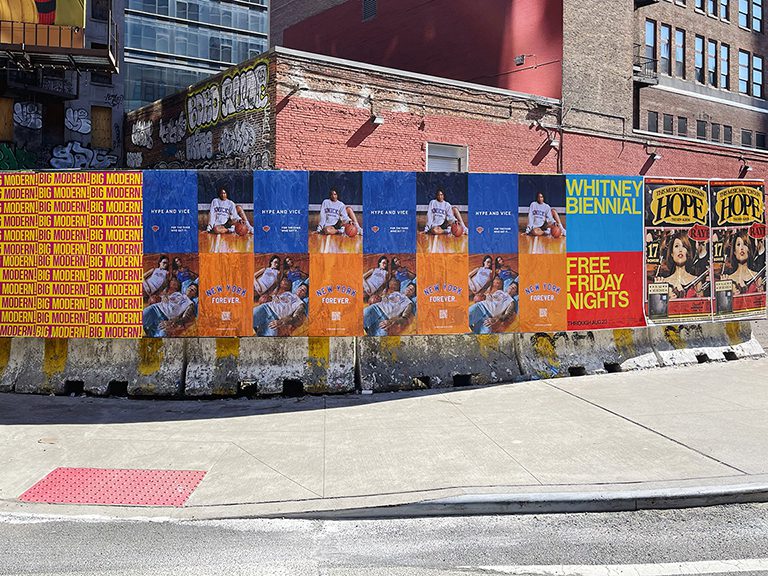
Most buyers who call us about Reno have already decided the city is too small to matter. They want Las Vegas, and Reno is the thing they add at the end of the list because a regional sales lead asked for it.
That gets the city backwards. Reno is one of the easier western markets to run a poster campaign in, and the reason has nothing to do with its size. It is because the walls here are already in use. Downtown and the MidTown District together carry more than a hundred large scale murals, painted by local, national and international artists. Property owners are used to being asked about their walls, and a surprising number of them have said yes to something before.
That changes the first conversation. In a lot of cities, asking a building owner if you can put paper on the side of their property is an odd request that makes them suspicious. In MidTown it is a Tuesday.
The second thing about Reno that matters operationally: the two districts worth posting in are on the same street. MidTown sits down Virginia Street from the downtown casino core, one continuous corridor. A crew does not have to drive between target zones. They park, work a few blocks, move the van, work a few more. I have run campaigns where getting from one viable wall to the next cost forty minutes of traffic. Reno does not do that to you.
What Reno does do to you is the air. The valley is high, dry and swings forty degrees between afternoon and night. That is the real adversary here, not enforcement and not access. Everything below is built around those two facts: permission is more available than you expect, and the climate is harder on paper than you expect.
What a hundred murals actually tells you about permission
I want to be careful here, because the mural count is easy to misread. A city with a visible public art culture is not a city where posting is a free-for-all. It is a city where the conversation about surfaces is already happening. Those are different things, and confusing them is how crews get material pulled down in a week.
Here is the useful read. More than a hundred large scale murals across downtown and MidTown means a large number of individual property owners have, at some point, agreed to let someone put an image on their building. They went through it. They know what it involves. They have an opinion about what they would and would not want up there.
That opinion is the asset. When we approach an owner in MidTown about a short run poster placement, we are usually not explaining the concept. We are negotiating terms with someone who already understands the category. The questions we get are about duration, about whether the paper will stain the brick, about who takes it down. Those are good questions. They are answerable.
The director of the MidTown District has described the area as murals scattered everywhere and all local entrepreneurs. The second half of that is the part that changes how we work. MidTown is owner-operator ground. The person who decides about the wall is frequently the person behind the counter, or someone one phone call away. There is no corporate real estate department, no national property manager in another state, no approval chain that takes six weeks.
Downtown is different in character. There is an organised business improvement presence there in the Downtown Reno Partnership, which runs district programming and maintains the public realm. That means two things at once: unsanctioned material in the public realm comes down quickly, and there is a single reachable organisation to talk to about sanctioned placements.
Casino frontage is its own world. Private property, full security operation, resort permission only. We do not treat it as opportunistic ground and neither should you.
Permission in Reno is a grey area, and that is not a dodge
Posting in Reno, like posting almost everywhere in the United States, sits in a grey area. It varies by municipality, it depends heavily on who owns the surface, and enforcement is inconsistent across districts within the same city. I am not going to tell you where the line is, because the honest answer is that the line moves depending on the block, the owner and who is paying attention that month.
What I can tell you is how we reduce exposure, which is the part that actually matters to a buyer.
We work from property owner permission in writing. Not a verbal yes from someone on site, not a nod from a bartender. Written, naming the specific wall, the start date and the end date. In MidTown that is usually a short email thread with the owner. It takes a day or two, not a month.
We prefer private surfaces over anything in the public realm. Owned walls, construction hoarding, scaffolding, venue boards. Hoarding permission comes from the general contractor's site lead, not the developer's marketing contact. Scaffolding permission comes from whoever holds the scaffold rental contract, often not the building owner at all. Getting that wrong is the most common reason a placement that looked approved gets stripped.
We photograph every surface before and after, with timestamps. If an owner or a district body asks what went up and where, we can answer within the hour.
We commit to removal in writing, with a date. In a city where owners have an existing relationship with visual work on their buildings, removal is the single thing that determines whether you get that wall again. It is also the thing most operators quietly skip.
The independent venue circuit here runs on its own poster culture. Gig boards at all ages spaces like the Holland Project have their own conventions about who posts, how long material stays and who clears the board. Venue controlled surfaces are the most straightforward ground in the city, and campaigns with a music, film or arts angle should start there rather than treating them as an afterthought.
Riverwalk and Wingfield Park are park and civic space. Wingfield Park is an island that doubles as an outdoor concert venue, and the Raymond I. Smith Truckee Riverwalk runs a mile and a half along both banks of the river connecting downtown to it. Treat that whole corridor as event permission territory, not opportunistic territory. You go through the event, not around it.
The high desert will eat your paper if you let it
Nevada is one of the driest states in the country. Statewide precipitation averages somewhere around ten and a half inches a year. Reno sits in a valley bowl between mountain ranges, and the air up here does three things to a wheatpaste campaign.
First, the paste flashes off fast. In a humid coastal city you have a working window where the paste stays open and you can reposition a sheet, smooth a bubble, work an edge. In Reno that window collapses. The surface layer skins over while you are still smoothing. A crew used to working the Gulf Coast or the Pacific Northwest will apply at their normal pace here and find they are fighting a half set sheet.
We handle that two ways. We run a wetter mix than we would at sea level, and we put more hands on each sheet. A multi sheet piece that two people could manage in a humid city gets three here, because the sheets have to go up and get smoothed before the top edge sets.
Second, the paper goes brittle and the edges curl. Low humidity pulls moisture out of uncoated stock continuously, not just during cure. Edges lift first, then the lifted edge catches wind, then you lose a corner and the whole sheet starts to peel. We over paste the perimeter deliberately in Reno, heavier on the edges than the centre, which is the opposite emphasis from what you would do somewhere damp.
Third, the diurnal swing. Reno can run a summer afternoon above ninety degrees and cool into the fifties overnight. That is roughly a forty degree change in a single rotation, every day, for months. Material expands in the afternoon and contracts overnight, and every cycle puts shear load on the bond line. A paste bond that looks perfect at four in the morning when you walk away is under mechanical stress by two that afternoon. Then it happens again. And again.
That cycling is why I am conservative about hold times in this market. Paper that would sit happily for weeks in a mild climate is working harder here. We plan Reno campaigns around shorter, denser runs rather than long slow burns, and we build a mid run check into the schedule so someone physically walks the corridor and looks at every placement.
Then there is the ultraviolet load. Reno's elevation means more UV exposure than a sea level city at the same latitude gets. Uncoated inks fade faster here than the temperature alone would suggest. If a campaign is expected to hold visual quality for more than a few weeks, we specify UV stable inks at the print stage. That is a decision you make before anything is printed, not a problem you solve on the street.
Winter brings a different problem. Lows sit in the thirties through December, January and February, and Reno gets real winter. Freeze and thaw cycling works on the lower portion of any kerbside surface, and road treatment throws grit onto the bottom two or three feet of anything at street level. We raise placement height in winter where the wall allows it.
Then there is the season nobody plans for. July and August are Reno's peak visitor months and also peak wildfire smoke risk. The valley's bowl geography traps smoke carried east over the Sierra Nevada by the prevailing westerlies, and once it settles in it can sit there until the weather pattern changes. That is not a one afternoon event. It can be a week.
Smoke does not damage paper. What it does is empty the street. A trapped episode during a festival week pulls people indoors, shortens the time anyone spends walking a corridor, and hollows out exactly the pedestrian exposure you paid for.
So we treat the July to October window as a period that needs contingency, not avoidance. We front load installation so material is up and working before the risk window peaks, and we build in the ability to extend a run rather than planning a tight window that cannot absorb a lost week.
Winter inversions do a similar thing by a different mechanism. Cold dense air and particulates get trapped near the ground in the valley on still cold days, and you get hazy air that keeps foot traffic down. Those are not campaign killers. They are scheduling facts that belong in the plan.
Crew logistics on the Virginia Street spine
Here is what a working night looks like in Reno.
Our window is roughly midnight to five in the morning. MidTown genuinely quiets down on weeknights, which is what makes this market pleasant to work. The casino adjacent downtown blocks never fully quiet, because that part of the city runs on a twenty four hour clock, so we sequence those differently and accept that there will be people around.
Crew size depends on surface count and sheet size, but the dry air pushes it up. Where two people are enough in a humid market, we usually run three in Reno for anything multi sheet.
Parking is genuinely easy by big city standards. Surface lots and kerbside availability in MidTown overnight mean the van can sit close to the work rather than four blocks away, which cuts the amount of time spent carrying rolled sheets and a paste bucket down a sidewalk. Small thing, big effect on how many surfaces get covered in a shift.
Night work is physically comfortable here in a way it is not in southern Nevada. The same diurnal swing that stresses the paste bond works in the crew's favour at two in the morning in July. Fifties overnight after a ninety degree afternoon is a good shift.
Outside the Virginia Street corridor and the river, Reno is car dependent and spread across the valley. That is the boundary of where this format makes sense. We will not scatter placements into suburban arterials because a map says the demographic lives there. Nobody walks past a wall at thirty five miles an hour.
Event weeks are the hard constraint. During Hot August Nights, which draws thousands of visitors downtown for what is widely described as the largest classic car event in the world, during the ten days of the Reno Rodeo, and around the Great Reno Balloon Race with its pre dawn activity from around half past five in the morning, downtown movement slows to a crawl. Road closures, visitor density and parking pressure land at once.
The rule we work to: install before the event week, never during it. The campaign should already be on the wall when the visitors arrive. A crew trying to work a corridor during Hot August Nights will spend most of the shift looking for somewhere to put the van.
The Reno calendar that should set your dates
Artown runs through the whole of July. It is a month long arts festival across music, dance, theatre and visual arts, and a repeat National Endowment for the Arts grant recipient. For anything with an arts, music or cultural angle, July in Reno is the best month of the year and it is not close. The audience is primed, the districts are programmed, and the city is paying attention to visual work. The tension is that July is also smoke season. Those two facts collide every year.
Hot August Nights moves a large visitor population into downtown in August. Hotels sell out, which is worth knowing if your crew is travelling in. Book accommodation early or you will be driving in from well outside the valley.
The Reno Rodeo brings a ten day competition with over 750 professional athletes and the visitor influx that goes with it.
The University of Nevada, Reno sits north of downtown and runs its own public programming calendar, with the term rhythm you would expect. Reno Aces home games shift downtown footfall on game nights. The Downtown Reno Partnership and the Holland Project each publish their own programming. Use the consolidated VisitReno events calendar as the single planning source rather than checking five calendars separately.
Two recurring events I will not give you dates for. Street Vibrations is widely cited as a recurring Reno motorcycle event, but I could not verify current dates, so treat that as UNVERIFIED. The State Fair of Nevada has returned to Reno after a long absence, and its specific dates are likewise UNVERIFIED here.
What we talk Reno clients out of
Treating Reno as a Las Vegas add on. These are not the same market. Vegas is resort property, Strip adjacency and a visitor population that never touches a neighbourhood. Reno has a walkable local corridor with independent owners on it. Creative that works on the Strip frequently reads as out of town noise in MidTown, and the district notices.
Going wide across the valley. Buyers see a metro population number and want coverage proportional to it. The value in this city is concentrated on one spine and one river path. Spreading the same number of surfaces across suburban Reno to look thorough produces a campaign nobody walks past. We would rather run the Virginia Street corridor three times as densely.
Skipping permission because the city looks permissive. This is the Reno specific mistake, and it comes directly from the mural culture. A buyer sees painted walls everywhere and concludes the city does not care. What is actually happening is that those walls were negotiated. Arriving and treating MidTown as open ground burns the exact relationships that make the district workable, and it burns them for everyone, including the next campaign.
Long slow runs through the summer. The combination of UV load, forty degree daily cycling and smoke risk makes a twelve week summer run a worse idea here than the same run in a mild coastal city. Shorter and denser performs better and ages better.
Booking the install into event week. It comes up on nearly every Reno brief. The instinct is to put the posters up when the crowds arrive. The reality is that the crowds make the install impossible.
Where posters stop and something else starts
Poster Campaigns do one job well in Reno: they hold a corridor over time and build repetition with people who walk the same blocks. The Virginia Street spine is good at exactly that. What they do not do is reach the valley. The suburban majority of this metro never walks the corridor, and no amount of paper fixes that.
When a Reno brief needs both the walkable core and the car dependent remainder, we pair the poster run with LED Trucks and Mobile Billboards. The truck covers the arterials and event perimeters the walls cannot, and it can work event weeks when the corridor is too congested to install in. In a city this linear the routing is simple to plan.
Frequently asked questions
How long will posters hold up in Reno?
Shorter than in a mild climate. Low humidity dries and embrittles paper, high altitude UV fades uncoated inks, and the forty degree daily temperature swing puts repeated shear load on the bond line. We plan shorter, denser runs here and schedule a mid run walkthrough so someone physically checks every placement rather than assuming it is still clean.
Is MidTown really easier to get permission in?
In our experience yes, for a structural reason. MidTown is a district of local owner operators with an established mural culture, so the person who decides about a wall is often on site and already understands the category. That shortens approval from weeks to days. It does not mean permission is optional. We still work from written owner consent naming the wall and the dates.
When is the best time of year to run a campaign in Reno?
July, if your campaign has any arts or culture angle, because Artown programmes the whole month and the city is paying attention to visual work. The caveat is that July and August are also peak wildfire smoke months, so we front load the install and build in the ability to extend a run if a smoke episode empties the streets for a week.
Can you work during Hot August Nights or the Rodeo?
We install before those weeks, not during them. Road closures, visitor density and parking pressure make crew movement slow enough that a shift gets eaten by logistics. The campaign should already be on the wall when the visitors arrive. If a client needs presence during the event week itself, mobile formats handle it better than install crews can.
Is poster advertising permitted in Reno?
It is a grey area, as it is in most American cities. It varies by municipality and depends on who owns the surface and what the local ordinance says. We do not interpret that for clients. We reduce exposure instead by working from written property owner permission, favouring private walls, hoarding and venue surfaces, documenting every placement with timestamped photographs, and committing to removal with a date.
How many people does an install crew need here?
Usually three for anything multi sheet, where two would do in a humid market. The dry air shortens the working window before the paste skins over, so sheets have to go up and get smoothed quickly. The upside is that parking is easy and the two key districts sit on one street, so the crew loses very little time moving between surfaces.
Request a campaign quote
If you are planning a poster campaign in Reno, the useful conversation starts with three things: what dates you are working toward, whether the campaign has an arts or nightlife angle that would benefit from the July window, and how much of the valley you actually need to reach beyond the Virginia Street corridor.
Tell us that and we can tell you what is realistic, including the parts we would advise against. We will walk the corridor, identify which surfaces are negotiable, handle owner permission in writing, install inside the midnight to five window, document everything, and take it down on the date we said we would.
Request a campaign quote and we will come back with a plan built around Reno's calendar and Reno's weather rather than a template.

Ready to Run Your Campaign?
Call us or email us. We’ll tell you exactly what we can do in your market and what it costs.
Related Service
Explore similar advertising solutions offered by American Guerrilla Marketing.
American Guerrilla Marketing — Los Angeles
Street-level campaigns in Los Angeles and nationwide. Wheatpasting, LED trucks, street teams, and more.
(646) 776-2770
Related Articles
-
Wheatpasting & Poster Campaigns in Jacksonville, Florida
November 25, 2026
-
Big Poster Sizes: A Field Guide From the Crew
November 25, 2026
-
Poster Bleed and Trim for Street Use: What to Expect
November 25, 2026
-
Wheatpasting & Poster Campaigns in Salt Lake City
November 25, 2026
-
Wheatpasting & Poster Campaigns in Dallas, Texas
November 25, 2026