🚀 NEW WHEATPASTING MARKETS Discover our wheatpasting campaigns in : 🇬🇧 London • 🇨🇦 Canada • 🇲🇽 Mexico City

American Guerrilla Marketing

Nationwide Service

Media planning, media buying, billboard advertising, & guerrilla marketing

Fly Posting in San Jose, CA

Sidewalk Decals Advertising in San Jose, CA

Silicon Valley’s early-adopter workforce concentrates downtown. AGM executes wheatpasting and street poster campaigns in the SAP Center corridor, the SJSU campus zone, Japantown, and the SoFA District — reaching the tech, gaming, and student audiences that drive product adoption.

Silicon Valley’s Street-Level Launch Platform

There is a specific kind of person in downtown San Jose on a Tuesday afternoon — the kind who arrives at SAP Center three hours before a show, who has a Ramen Nagi order memorized but still spends a minute re-reading the menu, who monitors product release forums and will have a considered opinion about your brand’s new hardware launch within forty-eight hours of its public debut. They work a few blocks from where they’re standing, or they just graduated from SJSU and moved into one of the new apartment towers between Japantown and the campus perimeter. They’re not hard to reach — they’re highly localized, highly networked, and specifically predisposed to be among the first to encounter, adopt, and amplify whatever product or brand arrives in their physical environment before general market awareness builds. Fly posting in San Jose is how brands reach that person at street level, in the exact neighborhoods where they are most present, most attentive, and most connected to the peer networks that drive early adoption in the technology and gaming categories.

Downtown San Jose’s geography is unusually compact for a city of its size. The arts corridor along 1st Street and 2nd Street, the SJSU campus boundary on the city’s eastern edge, Japantown’s 6th Street residential corridor, and the SoFA District’s South 1st Street independent venue strip all sit within a tight geographic radius that makes multi-neighborhood fly posting campaigns in San Jose exceptionally efficient. An AGM campaign covering all four zones can create the perception of market-wide brand presence across San Jose’s most engaged pedestrian corridors within a single installation window — exactly the simultaneous saturation effect that technology product launches and gaming releases need to generate in their core early-adopter markets.

AGM serves San Jose from its Los Angeles office at 611 Wilshire Blvd, Suite 900, Los Angeles, CA 90017 — reachable at (213) 328-4480 — with installation crews that operate throughout the Bay Area and know San Jose’s specific neighborhood surface landscape, posting regulations, and peak foot traffic windows. Every campaign is executed entirely in-house: AGM prints, installs, and documents every poster with GPS-tagged photography delivered to the client as a comprehensive post-campaign reporting package. No subcontractors, no handoffs, no gaps in the chain of accountability between creative brief and campaign documentation.


Launch Your San Jose Fly Posting Campaign

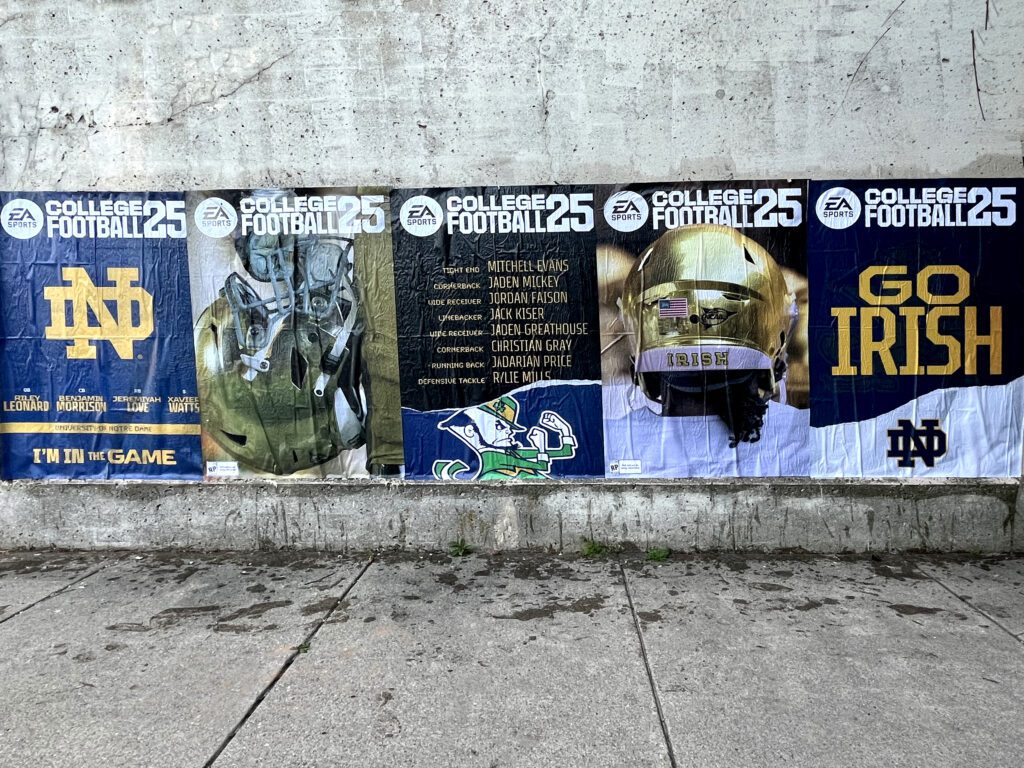
AGM executes street poster and wheatpasting campaigns across downtown San Jose's arts corridor, SJSU campus zone, Japantown, and the SoFA District. Direct execution, GPS-documented reporting, wheat-based adhesive. Clients include EA Sports and political campaigns nationwide.

Browse Cities in California

Select a city to explore Fly Posting Advertising opportunities.

Four San Jose Neighborhoods That Move Products Before Launch Day

Downtown San Jose Arts Corridor

The downtown San Jose arts corridor runs from San Pedro Square Market southward through the 1st Street and 2nd Street bar and restaurant district, anchored at its southern edge by SAP Center — one of the most active mid-size arena venues in Northern California. On concert nights and Sharks game days, the foot traffic through 1st Street and 2nd Street spikes dramatically, flooding the downtown corridor with an entertainment-oriented audience that skews 22-38 and is specifically in a social, discovery-mode consumer state. The bars concentrated on 1st Street south of San Fernando — most of them pulling the tech industry and young professional crowd that works in the downtown office buildings surrounding the SAP Center zone — sustain strong pedestrian activity on weekday evenings and weekend nights throughout the year. The weekday lunch crowd from the surrounding tech company offices creates a consistent Monday-through-Friday impression window for street poster placements on the utility structures, construction barriers, and blank building facade sections throughout the corridor. For brands in the gaming, entertainment, consumer tech, and lifestyle categories, the downtown arts corridor is San Jose’s highest-volume impression zone — the one neighborhood where the day-to-night foot traffic composition matches the early-adopter technology and entertainment demographic almost perfectly across the full active window of a campaign.

SJSU Campus Zone

San Jose State University’s 35,000-plus enrolled students make the campus boundary zone one of the most concentrated captive-demographic posting environments in Northern California. University Avenue and South 4th Street form the primary pedestrian arteries through the campus edge, where students moving between the campus interior, the surrounding housing clusters, and the retail and food corridor along San Carlos Street create consistent multi-directional foot traffic throughout the school day and into the evening. The campus-edge walls and construction barriers that line South 4th Street and the blocks immediately surrounding the campus provide high-retention posting surfaces with excellent sightline visibility from the pedestrian flow. The SJSU student demographic — 18-25, tech-adjacent, gaming and entertainment-oriented, highly social-media-active — is among the most valuable in San Jose for brands in the gaming, app, streaming, fashion, and consumer technology categories. Poster retention on campus-perimeter walls tends to be strong because the audience passes the same surfaces repeatedly throughout the academic week rather than encountering them once on a commute. A fly posting campaign around the SJSU campus zone accumulates impressions across a captive population that moves predictably through a defined geographic perimeter — which makes it one of San Jose’s most efficient impression environments for reaching the college-age demographic that drives early adoption in gaming, music, and consumer tech categories.

Japantown

San Jose’s Japantown — centered on the 6th Street and Jackson Street retail corridor — is one of the three remaining functioning Japantowns in the United States, and its status as a genuine neighborhood community rather than a commercial theme district gives it a quality of pedestrian authenticity that brands benefit from contextually. The 6th Street corridor houses Japanese restaurants, Japanese grocery stores, mochi and wagashi shops, community organizations, and the cultural institutions that support the neighborhood’s annual programming — including Obon, Nikkei Matsuri, and smaller monthly community events that bring concentrated neighborhood attendance to the corridor throughout the year. The residential density immediately surrounding Japantown’s commercial core is high — San Jose’s Japantown neighborhood packs a significant residential population into a relatively compact grid of streets between I-280 and the downtown corridor — which creates consistent weekday foot traffic that doesn’t depend on event programming. The dense residential population is also repeatedly exposed to campaign placements over a full two-week run, building awareness through cumulative frequency rather than single-encounter reach. For brands in the food and beverage, lifestyle, entertainment, and technology categories with messaging that resonates with both the Japantown community’s identity and the broader young professional demographic that the neighborhood attracts through its restaurant and cultural programming, fly posting on the 6th Street and Jackson Street corridor provides access to an authentically engaged community audience in one of the Bay Area’s most distinctive neighborhood environments.

SoFA District — South First Area

The SoFA District on South 1st Street between San Carlos Street and Reed Street is downtown San Jose’s arts and independent culture anchor — the neighborhood equivalent of a smaller-scale SoMa, where the independent music venues, gallery spaces, and bar concepts that cater to San Jose’s young creative professional and arts community demographic have clustered along a walkable stretch of South 1st Street over the past decade. First Friday art walks bring concentrated foot traffic through the SoFA corridor on the first Friday of every month — a predictable, high-engagement audience event that draws creative professionals, students, and arts-community participants from across the South Bay into the SoFA District’s gallery and venue spaces. The blank warehouse facades, vacant storefront windows, construction barriers on new development projects, and utility structures throughout the SoFA District’s primary commercial corridor provide strong surface availability for street poster campaigns targeting the 22-35 creative professional and young arts-community demographic that defines the neighborhood’s character. For gaming brands, music companies, streaming platforms, and arts and culture organizations, the SoFA District is San Jose’s most contextually appropriate posting environment — a neighborhood whose existing visual and cultural identity creates a favorable context for brands in the entertainment, arts, and creative professional space. The demographic here is not the mass-market early adopter; it’s the early adopter who influences the next ring of adopters, which is the tier that matters most in the weeks immediately following a product launch.


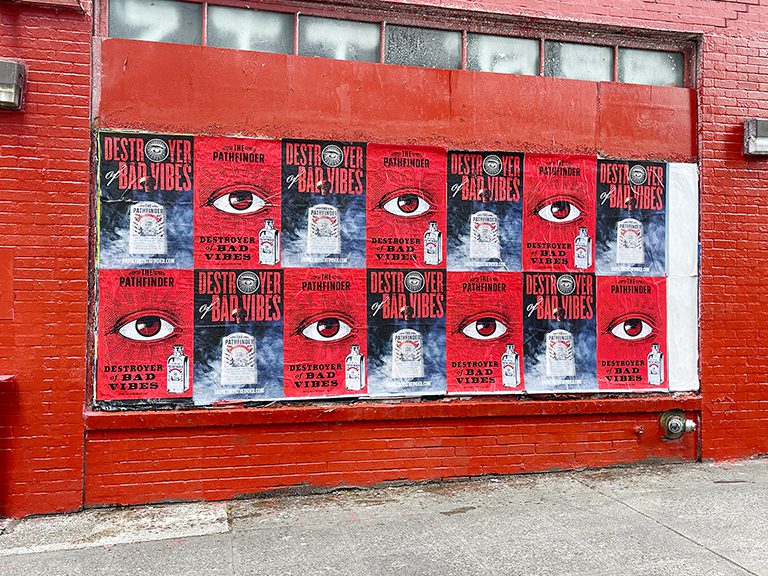
The Coordinated Launch Model: Party To The Polls And What It Proves For Tech Launches

The Party to the Polls × Daybreaker Purple Tour 2024 was a 15-state simultaneous fly posting activation — one of the largest coordinated street poster campaigns AGM has executed across multiple markets in a single installation window. The campaign deployed street posters across fifteen states with a coordinated timing that created unified visual presence in cities from New York to Los Angeles to Austin within the same 48-72 hour launch window. The strategic intent was saturation: the campaign needed to feel omnipresent in its target markets at the same moment, generating the perception of a cultural movement happening everywhere simultaneously rather than a campaign trickling from city to city over several weeks.

That same coordinated launch logic is precisely what technology companies execute when they use fly posting for product releases in their core markets. When a gaming company, consumer hardware brand, or software platform releases a product whose core early-adopter audience is concentrated in Silicon Valley and the surrounding Bay Area, a fly posting campaign that saturates San Jose’s downtown corridor, SJSU campus zone, SoFA District, and Japantown within a single 48-hour window creates the street-level version of the launch moment — the physical-world signal that the product has arrived in the specific neighborhood where the people who will drive its initial adoption move daily. The social amplification that follows — when early adopters photograph the posters, share them on product forums and social networks, and post about the brand’s physical presence in their neighborhood — extends the campaign’s effective reach well beyond San Jose into the broader technology enthusiast ecosystem that San Jose’s early-adopter community is connected to nationally.

The Party to the Polls campaign also demonstrates something important about AGM’s execution capacity that applies directly to technology brand campaigns in San Jose: the ability to coordinate simultaneous multi-market installations at scale, with consistent timing, across geographically dispersed crews, all producing the same GPS-documented reporting standard at every installation point. For technology brands running San Jose campaigns as part of a broader Northern California or West Coast launch activation, AGM’s capacity to deploy across San Jose, San Francisco, Los Angeles, and San Diego within a unified campaign window — with consistent documentation, quality standards, and reporting across all markets — is the operational backbone that makes coordinated regional launch campaigns achievable without sacrificing execution quality in any individual market.

Build Your Fly Posting Campaign

    Award Winning Personalized Service

    You will get thoughtful, devoted, and individualized attention from our experienced, qualified, and professional personnel. Being one of the most illustrious agencies in Brooklyn, New York, American Guerrilla Marketing has been awarded the Best of Brooklyn title.

    Nationwide

    Industry City, Brooklyn, New York 11232

    American Guerrilla Marketing

    +1 (646) 776-2770

    [email protected]

    Telegram: @americanguerillamarketing

    Hours

    Mon - Fri: 9 AM - 5 PM

    Sat & Sun: Closed

    Automate your campaign with AGM’s Request for Proposal Builder.

    Automate your campaign with AGM’s Request for Proposal Builder. Simply answer a few quick questions about your campaign goals, markets, and timeline, and the system will generate a tailored presentation with recommended strategies, quantities, and pricing. Click the RFP Builder to instantly receive your customized proposal.

    Sizing Your San Jose Fly Posting Campaign

    San Jose’s neighborhood scale shapes format decisions in ways that favor the 24×36 standard format for most campaign objectives. The SoFA District, the SJSU campus zone, and Japantown are all human-scale pedestrian environments — the sidewalks are not wide, the buildings are not tall by major-city standards, and the viewing distances from pedestrians to posting surfaces are short. A 24×36 poster at eye level on a construction barrier along South 4th Street near the SJSU campus perimeter, or on a fence line along Jackson Street in Japantown, is encountered at close range by a pedestrian moving at walking pace with nowhere competing for their attention. That physical intimacy maximizes the per-impression impact of the standard format in ways that particularly suit the campus zone and residential neighborhood environments.

    The 48×72 large-format wheat paste makes its strongest case in San Jose on the larger building facade surfaces in the downtown arts corridor — specifically the blank concrete and brick sections on the buildings along 1st and 2nd Streets south of San Fernando, the construction barriers on the still-active development projects in the SoFA District’s expanding southern edge, and any warehouse-scale surfaces in the SoFA zone’s industrial buildings that face the South 1st Street pedestrian corridor. For technology product launches, gaming title releases, and entertainment campaigns where dominant visual scale matters — where the brand needs to command a surface rather than appear on it — a 48×72 placement in the downtown arts corridor or SoFA District provides that scale in the exact neighborhoods where San Jose’s early-adopter audience concentrates.

    24″ × 36″ Street Poster

    100 posters — contact us for pricing
    200 posters — contact us for pricing
    Extra creative: contact us for pricing

    The ideal format for density coverage across San Jose’s campus perimeter zone, Japantown’s 6th Street corridor, and the SoFA District’s South 1st Street pedestrian environment. Multiple creatives allow audience-specific messaging across San Jose’s distinct neighborhood demographics. 72-hour rush production available up to 500 quantity for technology product launches and gaming releases with compressed timelines.

    48″ × 72″ Large-Format Wheat Paste

    100 posters — contact us for pricing
    200 posters — contact us for pricing
    Extra creative: contact us for pricing

    Best deployed on the blank facade sections of downtown San Jose’s arts corridor buildings, construction barriers in SoFA’s active development zones, and any warehouse-scale surfaces facing the South 1st Street pedestrian flow. The dominant-presence format for gaming launches, tech product releases, and entertainment campaigns that need a visual anchor placement in San Jose’s highest-traffic downtown corridor.

    How AGM Plans and Executes San Jose Street Poster Campaigns

    San Jose campaigns are managed from AGM’s Los Angeles office with Bay Area installation crews experienced in the specific surface landscape and posting environment of each San Jose neighborhood. Campaign planning begins with a neighborhood brief — which zones, which target demographics, which timing relative to launch dates or events at SAP Center — that AGM translates into a precise surface map for each target area. The downtown arts corridor’s surface inventory shifts as construction projects along 1st and 2nd Streets progress; the SJSU campus perimeter’s construction barrier availability changes with the academic calendar and active building projects on and around campus; SoFA’s surface landscape is evolving as new development on South 1st Street’s southern blocks brings new posting surfaces online. AGM’s installation team assesses current availability before every campaign rather than working from static historical maps, ensuring that each strategy reflects the actual surface inventory at time of installation.

    Print production is handled entirely by AGM. Heavy-weight outdoor paper stock, inks and coatings selected for the Bay Area’s climate range — including the humidity variation between San Jose’s inland valley climate and the coastal influence that reaches the city’s western neighborhoods — and wheat-based adhesive formulated to hold through San Jose’s seasonal temperature and humidity cycling while remaining pressure-wash removable and environmentally responsible. AGM’s end-to-end production and installation model means that quality control is maintained throughout the campaign without the consistency gaps that come from coordinating between multiple vendors.

    Every placement in every San Jose neighborhood is documented with GPS-tagged, timestamped photography from AGM’s installation crews. At campaign close, clients receive a comprehensive reporting package with location data, installation timestamps, and visual confirmation for every poster placed — across the SJSU campus zone, the downtown arts corridor, Japantown, and the SoFA District. This reporting package is the accountability standard that media agencies and brand teams increasingly require for street poster campaigns, and it’s standard on every AGM San Jose execution regardless of campaign size.

    Who Runs San Jose Street Poster Campaigns

    Technology companies — consumer hardware brands, gaming studios, software platforms, and the startups that orbit Silicon Valley’s established tech ecosystem — are the dominant fly posting clients in San Jose. The city’s concentration of technology industry workers and the SJSU student population makes it the most direct access point to the early-adopter demographic that technology launches need to reach first. A gaming title launching in San Jose reaches the people who will pre-order it, review it, and post about it within the first week — the tier of adoption that drives organic amplification in gaming and consumer tech categories. A consumer hardware brand posting in the downtown corridor and SJSU campus zone reaches exactly the kind of early adopter whose social media presence reaches ten thousand engaged tech enthusiasts through their existing review and enthusiast communities.

    Political campaigns and civic engagement organizations have found San Jose an effective market for fly posting — the SJSU student population is a reliable voter registration and civic participation target, and the young professional demographic in the SoFA District and downtown arts corridor is both high-propensity for civic engagement and high-social-media-amplification for political and advocacy campaigns. AGM’s experience executing political campaign fly posting — including coordinated multi-state activations — translates directly to San Jose civic campaigns that need both the student demographic reach of the campus zone and the young professional audience of the SoFA District and downtown corridor.

    Entertainment brands targeting the Bay Area technology audience use San Jose fly posting as a complement to San Francisco market campaigns — reaching the South Bay portion of the Northern California entertainment audience that San Francisco campaigns don’t efficiently serve. Gaming brands in particular find San Jose a higher-return market than San Francisco for pure gaming demographic targeting, because the SJSU campus zone and SoFA District population skews younger and more gaming-concentrated than even SoMa’s tech-worker demographic. Music acts touring through San Jose SAP Center use fly posting in the downtown corridor and the SJSU zone to build local awareness in the weeks before their San Jose date.

    • Technology & Gaming: Hardware launches, gaming title releases, app awareness campaigns, pre-launch buzz targeting early adopters
    • Political & Civic: Voter registration, ballot measure campaigns, issue advocacy targeting the SJSU student and young professional demographic
    • Entertainment & Live Events: SAP Center concert marketing, streaming platform campaigns, music release activations
    • Fashion & Lifestyle: Streetwear and lifestyle brand launches targeting the 22-35 SoFA and SJSU audience
    • Food & Beverage: Restaurant openings, craft beverage launches, food brand campaigns in the Japantown and SoFA corridors
    • Education & Nonprofit: Campus-adjacent awareness campaigns, nonprofit outreach targeting the SJSU and young professional demographic

    San Jose Fly Posting: Frequently Asked Questions

    San Jose’s technology industry employment concentration means its streets are populated daily by the early-adopter demographic that drives product adoption in the critical first 30 days after launch. The people who work in the tech offices surrounding the downtown arts corridor, who live in the apartment buildings adjacent to the SJSU campus zone, and who attend First Fridays in the SoFA District are specifically the consumers whose adoption behavior influences the broader market. When they encounter a product launch campaign at street level in their daily environment — on their lunch route, on their walk to the parking garage, on the fence line outside their apartment building — the social amplification that follows is disproportionately valuable compared to equivalent impressions in a non-tech-concentrated market.

    SJSU’s 35,000-plus enrolled students are concentrated in a defined perimeter around the campus boundaries on South 4th Street, University Avenue, and San Carlos Street — and most of them live within walking distance of those boundaries in the surrounding off-campus housing. Fly posting on the construction barriers, fence lines, and blank wall sections along the campus perimeter intercepts those students multiple times per day as they move between the campus interior and the off-campus areas where they live, eat, and socialize. The captive, repeated-exposure quality of the campus zone posting environment builds awareness through frequency in a way that makes it exceptionally efficient for brands targeting the 18-24 gaming, fashion, app, and entertainment demographic that SJSU’s student population represents.

    Downtown San Jose’s primary posting surfaces include construction barriers on active development projects along 1st and 2nd Streets and in the SoFA District’s expanding development zone; utility structures throughout the downtown arts corridor and Japantown’s 6th Street grid; blank facade sections on the lower levels of the commercial and mixed-use buildings along 1st Street south of San Fernando; fence lines along the residential side streets adjacent to the SoFA District; and campus-perimeter walls and barriers on and around the SJSU campus boundary. Surface availability shifts as downtown development progresses, so AGM assesses current inventory at the time of campaign planning rather than relying on historical maps to ensure placements reflect actual available surfaces.

    Gaming campaigns in San Jose follow a specific neighborhood logic: the SJSU campus zone reaches the core 18-24 gaming demographic in a captive, high-frequency environment; the SoFA District reaches the 22-35 arts-and-culture-oriented young professional who overlaps heavily with gaming’s enthusiast audience; and the downtown arts corridor near SAP Center reaches the broader young professional tech worker demographic that represents gaming’s premium buyer tier. A campaign covering all three zones creates stratified demographic coverage across San Jose’s full gaming audience — from the student casual player to the enthusiast collector to the professional who buys the premium edition. AGM’s 72-hour rush production capability allows gaming campaigns to install fresh posters within days of a title’s announcement date if the timeline requires it.

    The downtown arts corridor between San Pedro Square Market and SAP Center on 1st Street generates the highest absolute foot traffic volumes in San Jose, with consistent weekday lunch traffic from surrounding tech offices and spiking event-night traffic from SAP Center programming. The SJSU campus perimeter generates the highest frequency-per-impression across a captive student demographic — the same students walk the same perimeter routes multiple times per day. Japantown’s 6th Street corridor generates the deepest community-engagement quality of any San Jose neighborhood, with high resident familiarity and strong retention in campaign placements throughout the neighborhood’s residential-commercial grid. SoFA’s South 1st Street generates the highest creative professional audience concentration, particularly on First Friday event nights when the corridor fills with gallery-goers and arts community participants from across the South Bay.

    SAP Center hosts over 150 events per year — Sharks games, major touring concerts, boxing and MMA events, family entertainment programming — generating concentrated pre- and post-event foot traffic through the surrounding downtown arts corridor that functions as a predictable high-volume impression window for nearby fly posting placements. Entertainment brands can time installations to coincide with high-profile event windows: a concert-focused lifestyle brand posting fresh in the 1st and 2nd Street corridor the week of a major show reaches the exact audience heading to that event in its home neighborhood before the event date. For streaming platforms, music brands, and sports entertainment companies, the SAP Center adjacency turns the downtown arts corridor into a concentrated venue-adjacent media environment — the kind that entertainment brands use to build show-week awareness in markets where they need local audience activation alongside the venue’s own promotional reach.

    Standard lead time for a San Jose fly posting campaign is 2-3 weeks from confirmed brief to installation, covering creative approval, print production at AGM’s facilities, logistics coordination from the Los Angeles base to San Jose’s target neighborhoods, and installation crew scheduling across the specified zones. For campaigns with compressed timelines — gaming launches that finalize creative close to release date, political campaigns with short announcement-to-street windows — AGM’s 72-hour rush production capability on 24×36 format up to 500 quantity can substantially compress the print-to-street timeline. Installation scheduling in San Jose can be executed within 24-48 hours of print completion when logistics are pre-positioned for rush deployment.

    Hardware product launches benefit specifically from San Jose fly posting because the street-level physical presence of the campaign in the neighborhoods where the target early-adopter lives and works creates a brand signal that no digital media channel provides. When a hardware product’s street poster appears on the walls of the SoFA District or the SJSU campus zone, it’s being seen by the exact person whose technology enthusiast social media presence and forum participation will generate the product awareness that drives pre-order and day-one adoption nationally. That person photographs the poster, posts it with commentary, and reaches thousands of engaged technology enthusiasts through their existing online presence — turning a street-level impression into earned media amplification that extends the campaign’s effective reach far beyond San Jose’s geographic boundaries.

    The SoFA District’s young creative professional and arts community audience has a specific relationship to visual media that makes it highly receptive to street poster advertising of genuine quality. This is an audience that attends gallery openings, follows independent music venues’ event calendars, and moves through a neighborhood they’ve chosen specifically because of its independent character and visual culture. They notice what appears on the walls because the walls are part of what they’ve come to the neighborhood to experience. For brands in the gaming, entertainment, fashion, and independent lifestyle categories whose visual creative meets the cultural quality bar that the SoFA audience implicitly applies to what it deems worth paying attention to, the First Friday event windows — when foot traffic through South 1st Street peaks — are particularly high-value impression moments for fresh campaign installations.

    AGM’s standard San Jose campaign coverage is focused on the four downtown San Jose neighborhoods featured on this page — the arts corridor, SJSU campus zone, Japantown, and SoFA District — where pedestrian density and posting surface availability are highest. Adjacent Silicon Valley markets including Sunnyvale, Santa Clara, Mountain View, and Cupertino can be incorporated into broader Bay Area campaigns on request, though those communities’ more suburban physical environments limit fly posting surface availability and pedestrian concentration compared to downtown San Jose’s urban neighborhood structure. Clients targeting the broader Silicon Valley workforce outside downtown San Jose are encouraged to discuss geographic scope with AGM’s campaign team, which can assess surface availability and foot traffic quality in specific suburban corridors before making campaign scope recommendations.

    San Jose’s Japantown is a functioning neighborhood community with a resident population that has strong cultural identity ties to the neighborhood’s Japanese-American heritage and a consistent community programming calendar — Obon, Nikkei Matsuri, and monthly community events throughout the year. Fly posting in Japantown reaches both the neighborhood’s resident population, which is repeatedly exposed to campaign placements over the full campaign window as community members move through the 6th Street and Jackson Street corridor in their daily routines, and the broader South Bay audience that visits Japantown for its restaurant and cultural programming. For food and beverage brands, entertainment companies, community-oriented campaigns, and lifestyle brands with multicultural audience targets, Japantown’s authentic neighborhood character creates a brand context that is meaningfully different from the more commercially oriented posting environments in the SoFA District and downtown arts corridor.

    Browse All States

    Explore Fly Posting Advertising opportunities across the United States.

    No locations found

    American Guerrilla Marketing Blog Posts