
November 20, 2026
Experiential Marketing Companies: How It Actually Works
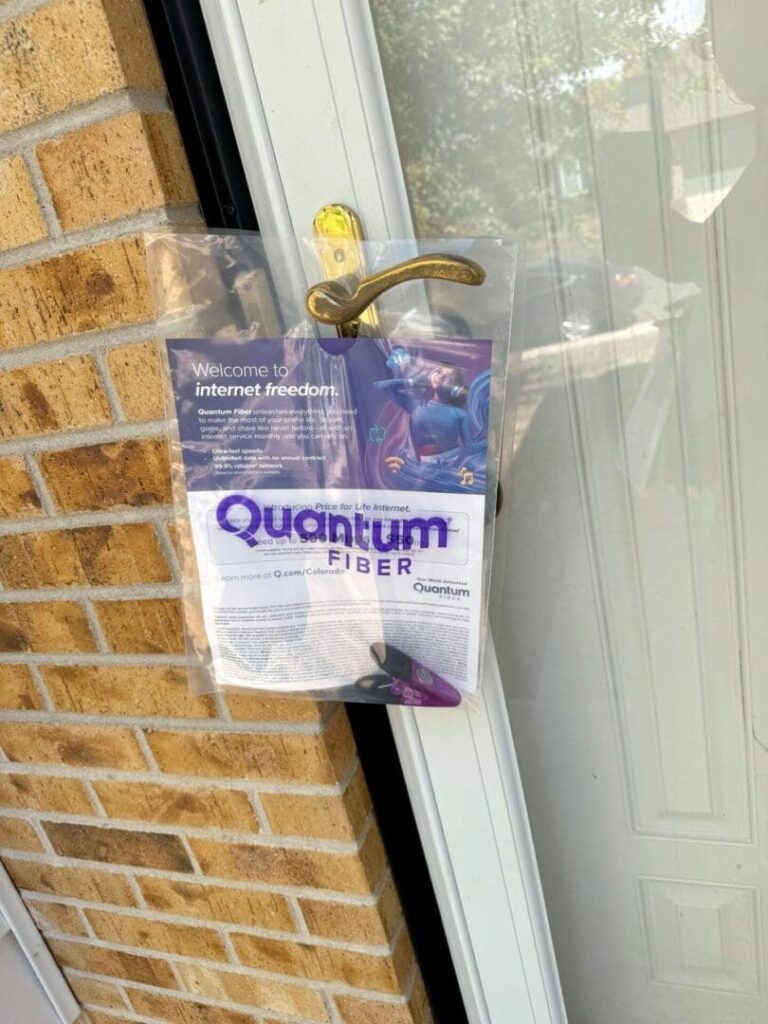
Search for experiential marketing companies and you get a page of companies telling you they are the best experiential marketing company. Every site has the same photographs: a crowd, a branded structure, confetti, someone laughing while holding a cup. None of them explain what the company actually does between the brief and the confetti, which is the only thing you need to know in order to pick one.
I am on the production side of this industry. I run street-level campaigns, including staffed ones, and I have been both the company a client hired and the crew another company hired. That gives me a view of the plumbing that most buyers never see.
So this page is not a pitch for us. It is the framework I would use if I had to hire an experiential agency tomorrow and had never done it before. What the different kinds of company are, who actually does the work, what separates a competent operator from a well-designed website, what to ask, and the warning signs that reliably predict a bad campaign.
The industry is four different businesses wearing one name
When people say experiential agency they are describing companies with genuinely different capabilities. Mixing them up is the root of most hiring mistakes.
**Creative and strategy shops.** They develop the idea. The concept, the narrative, the look, the reason someone would stop. Strong ones are genuinely valuable and will change how your campaign performs. They typically do not own crews, trucks, warehouses or staffing databases, and they subcontract execution. That is not a problem as long as you know it, because you are paying a layer above the people doing the work.
**Production companies.** They build things. Structures, sets, vehicles, custom fabrication. If your activation has a physical build, somebody like this is in the chain whether you hired them directly or not.
**Staffing specialists.** They supply people. Brand ambassadors, event staff, leads, in whatever markets you need. Their asset is a vetted database and the ability to fill a roster in a city they have worked before. Pure staffing companies do not usually plan campaigns, they fill them.
**Field execution operators.** They run the street. Permissions, routing, logistics, load-in, supervision, documentation, teardown. This is my end. We know which corners work, which property managers answer the phone, and what happens when it rains.
A full-service company claims all four. Some genuinely do. Many do one well and subcontract the rest, which is fine and normal, but it changes who you are actually relying on and how many hand-offs sit between your brief and the sidewalk.
The question to ask is simple and extremely revealing: which parts of this do you do with your own people, and which do you subcontract?
A good company answers that directly. An evasive answer tells you most of what you need to know.
What an experiential company actually does, week by week
Here is the real work, in sequence. If a prospective partner cannot describe this process, they have not done it often.
**Brief and objective interrogation.** The good ones push back here. They ask what you want someone to walk away having done, not what you want to build. A company that accepts the brief unchanged and goes straight to concepts is skipping the step that determines everything else.
**Location identification and scouting.** Not from a map. Somebody stands in the proposed spot at the hour and weekday the campaign will run and counts people. Foot traffic in most corridors swings enormously across a single day. The corner that looks ideal at six in the evening can be empty at eleven in the morning.
**Permission and access.** Property owners, venue operators, building managers, local authorities where applicable. This is the longest pole in the tent and the most common cause of schedule slip. It is also where local knowledge is worth more than anything else a company can offer.
**Creative and asset production.** Concept into physical items, printed material, structures, uniforms, giveaways. Lead times here are driven by manufacturing, not by enthusiasm.
**Staffing and training.** Recruit, book, overbook deliberately because day-of attrition is normal, then train. Training is the script, the boundaries, the fallbacks and the escalation path. Untrained staff improvise, and improvisation about your product is a risk you own.
**Logistics.** Getting everything to the location at the right hour with the right access. Load-in, storage, power, water, bathrooms for staff, waste.
**Execution and supervision.** A lead on site who is not also handing out product. The lead manages rotation, restocks, handles the property manager who comes out to ask questions, and documents.
**Documentation and reporting.** Timestamped photographs, engagement counts, reconciled unit counts, and an honest account of what did not go to plan.
**Strike and restoration.** Everything comes down, the site goes back to how it was found. Companies that are casual about this stage get locations closed to them permanently.
Nine stages. A brochure covers stage four and stage seven. The campaign is won or lost at stages two, three and five.
How to evaluate a company properly
Ignore the case study reel for a moment. Reels show the best day of the best campaign of the last three years, photographed by a professional, and tell you nothing about reliability.
Ask these instead.
**Which of these functions are in-house?** Covered above. Count the hand-offs.
**Who is on site on the day, and what is their title?** You want to know whether the people who sold you the campaign will be anywhere near it. Often they will not be, which is acceptable, but you should know the name of the person who will be.
**Have you worked this specific market?** Not the region. The city, ideally the neighbourhood. Local permission relationships and corridor knowledge do not transfer. A company excellent in one city can be starting from zero in another.
**What is your staffing buffer and what happens when someone does not show?** There is a correct answer here: they overbook, they have standby, and the lead can rebalance positions. A company that says attrition does not happen to them is not being straight with you.
**What does your documentation look like?** Ask to see a real report from a real campaign, redacted if necessary. Not a highlight deck. The actual operational report. This single request separates operators from marketers faster than any other question.
**What is the weather protocol?** Who decides, by when, and what is the fallback. If this has not been thought through before you ask, it will not be thought through at dawn on the day.
**What have you cancelled or talked a client out of?** The answer reveals whether they have judgement or just capacity. Anyone who has run enough campaigns has killed a bad one.
**What insurance do you carry and can you produce certificates for a venue?** Practical, and a venue will ask you before they ask them.
**What is the escalation path if something goes wrong at two in the afternoon?** A name and a phone number, not a process diagram.
**How do you handle staff who go off script?** The useful answer involves training content, a written boundaries sheet, a lead who is actually watching, and a correction process during the shift rather than a note in the wrap report. Brand ambassadors answer questions all day, and some of those questions are about claims, comparisons, pricing and availability. If nobody has decided in advance what the team is allowed to say, the team will decide for you, in public, several hundred times.
**What do you do with the hours nobody wants?** Every activation has a dead stretch, usually mid-morning or mid-afternoon. A company with experience has a plan for it: rotate staff to a secondary position, push the team outward to feed the footprint, cut the shift and extend the evening instead. A company without experience simply has four people standing by an empty table for two hours, which is demoralising and visibly bad for the brand.
Warning signs
A few patterns reliably predict trouble.
**Agreement with everything.** If your brief contains a mistake, and most first briefs do, a competent partner says so in the first conversation. Total agreement means either they have not read it carefully or they are planning to deal with the problem later at your expense.
**Concepts before locations.** A beautiful idea for a footprint, presented before anyone has checked whether a viable location exists with permission available in your window. The location constrains the idea, not the other way around.
**Impression numbers with no methodology.** For street-level activity, precise exposure counts are estimates. A company presenting a confident number without explaining how it was derived is either guessing or has learned that buyers like big numbers.
**No discussion of permission.** If permissions, ordinances and property access do not come up early and specifically, the company is either planning to deal with it casually or does not know it is an issue.
**Everything is bespoke.** Custom builds are seductive and expensive, they lengthen every timeline, they break in transit, and in photographs they frequently look identical to something far simpler. The structure is almost never the reason an activation worked.
**No questions about measurement.** A partner who never asks how you will judge success is planning to be judged on photographs.
**A roster that appears instantly.** Staffing a market properly takes a few days of booking and confirming. A company that confirms a full team in a city it has never worked, within an hour of your call, is describing an intention rather than a roster.
**Scaling pitch before a single market is proven.** Ten-city tours sold to a client who has not run one. The correct sequence is one market, learn, fix the script, then roll.
What good companies will tell you that you may not want to hear
**One day in one location is not a campaign.** It is a photograph. If content is the objective, fine, say so and build for it. If reach or trial is the objective, a single day touches very few people. Multi-day in the same corridor compounds, because repeat passers-by start to recognise you.
**You cannot manufacture foot traffic.** You can only go stand in it. The most common cause of a disappointing activation is a location chosen for brand fit or convenience rather than for people.
**Every gate you add loses participants.** Scan this, then enter that, then wait, then receive. Each step cuts the funnel hard. The best-performing activations ask for almost nothing.
**Street Teams with no supporting media work far harder for less.** A team in a corridor that has been papered for a week walks into recognition. A team working cold starts every conversation at zero. This is the single biggest performance difference I see, and it is cheap to fix.
**Permission takes longer than production.** Clients consistently budget time for printing and none for access.
The permission and ordinance picture, honestly
Street-level activity in public space is a grey area. Rules vary by municipality and sometimes by district within a city. Some places have a clear process for a sidewalk footprint, amplified sound or a static vehicle display, with lead times measured in weeks. Some have no clear process. Enforcement is inconsistent in both directions, and the outcome on a given day often depends on the property owner or the local officer rather than the written rule.
I am not going to tell you an activation is legal or illegal in your market. That depends on the city, the surface, the ownership and the permission held, and it is not advice I can responsibly give.
What a competent company does about it is concrete. Locate on private property with owner permission wherever possible, because an owner's yes is worth more than an argument about public space. Keep the footprint inside the agreed area. Keep paths, entrances, fire routes and accessibility ramps clear. Carry the insurance a venue or property owner will require. Brief staff that if challenged they are polite, they stop, and they call the lead rather than debate. Leave nothing behind.
If your organisation has a strict risk posture, say so in the first meeting. It produces a permission-first plan with fewer locations on a longer lead time, which is a perfectly good campaign. It is just not a last-minute one.
How market choice changes the answer
Experiential does not transfer cleanly between cities, and a national plan that reads identically in every market has not been written by someone who ran them.
New York offers extraordinary density and the hardest access environment, with constant competition for the same corners, so expect to work private frontage.
Chicago has strong corridor structure and a hard seasonal split. The same location in May and in January is two different campaigns.
Los Angeles has very little incidental foot traffic outside a handful of pockets. Activations there must attach to an existing gathering, a venue, a campus, a market, a beach path, or bring presence to people with a vehicle.
Austin, Nashville and New Orleans run on event calendars. During a festival the city, the crowd and every access conversation change completely.
Campus markets run on the academic calendar and nothing else. A corridor that is perfect in October is empty in July.
Southern and southwestern markets need morning and evening windows through much of the year, because midday in summer is unworkable for both staff and audience.
When you interview a company, ask them to name corridors and days of the week. Vague geography is the tell.
Where physical media changes the economics of hiring
The reason I keep returning to supporting media is that it changes what the staffed campaign has to accomplish.
People are the most expensive and least scalable part of any experiential campaign. Every hour of every person is a fixed cost in effort, and the number of conversations a team can have in a day has a hard ceiling. So the strategic question is how to make each of those conversations easier and more productive.
Recognition does that. A corridor covered with [Wheatpasting & Poster Campaigns](/services/wheatpasting-poster-campaigns) for a week before activation day means your team is talking to people who already know the name. [Sidewalk Decals & Stencils](/services/sidewalk-decals-stencils) on the approach pull people the last few metres, which is exactly where interest turns into a stop. [LED Trucks & Mobile Billboards](/services/led-trucks-mobile-billboards) circulating the wider area on the day bring people in from outside the immediate block.
Then [Street Teams & Experiential](/services/street-teams-experiential) does the part only humans can do.
If a company you are interviewing does not raise the supporting layer, raise it yourself and see how they respond. The answer tells you whether they think in campaigns or in events.
Frequently asked questions
What is the difference between an experiential agency and a staffing company?
A staffing company supplies vetted people and fills a roster in markets it knows. An agency plans the campaign: objective, concept, location, permission, logistics, measurement, and then either executes or subcontracts. Many buyers hire an agency when they only needed staffing, and some hire staffing when they needed somebody to plan. Decide which gap you actually have.
Should I hire a full-service company or separate specialists?
Full service reduces hand-offs and gives you one accountable party, which matters when something goes wrong on the day. Separate specialists can be stronger in each discipline and give you more control. The real question is which functions a company performs with its own people, because many full-service claims resolve into subcontracting once you ask.
How far ahead should I hire?
Four to six weeks is comfortable for a staffed activation with genuine permission work, trained staff and produced materials. Built footprints, venue agreements, insurance certificates and multi-market scheduling need longer. Permission consistently takes more time than production, and it is the stage clients most often forget to budget time for.
How do I check that a company can actually deliver?
Ask to see a real operational report from a past campaign rather than a highlight reel: timestamped photographs, reconciled unit counts, staffing notes and an honest account of what went wrong. Ask who will be on site and name them. Ask whether they have worked your specific city, not your region.
Is a street activation permitted in public space?
It is a grey area varying by municipality, and it depends on ownership, local ordinance, whether anything is being distributed and whether permission is held. Enforcement is inconsistent. Competent operators reduce exposure by using private property with owner permission, keeping paths clear, carrying appropriate insurance, briefing staff to stop and escalate if challenged, and leaving no trace.
How should an experiential campaign be measured?
Units distributed, reconciled against stock, is the hardest number. Engagement counts are directional, since counting discipline drops late in a long shift. Redemptions on a campaign-specific code are the cleanest performance signal. Add timestamped documentation and a comparison between treated and untreated areas. Treat any precise impressions figure as an estimate.
Request a campaign quote
Tell us the market, the dates, the audience and what you want somebody to walk away having done. We will tell you how many people it takes, which corridors are worth standing in, what the permission work looks like, and whether a different format gets you there with less friction.
Request a campaign quote.

Ready to Run Your Campaign?
Call us or email us. We’ll tell you exactly what we can do in your market and what it costs.
Related Services
Explore similar advertising solutions offered by American Guerrilla Marketing.
American Guerrilla Marketing — Los Angeles
Street-level campaigns in Los Angeles and nationwide. Wheatpasting, LED trucks, street teams, and more.
(646) 776-2770
Related Articles
-
Guerrilla marketing meaning: How It Actually Works
November 20, 2026
-
Boulder Projection Advertising: Corridors, Permissions and
November 20, 2026
-
Combining Guerrilla and Traditional OOH Campaigns
November 20, 2026
-
Guerrilla Marketing Campaign: A Field Guide From the Crew
November 20, 2026
-
Guerrilla Marketing Ideas: How It Actually Works
November 20, 2026