Houston is unlike any other World Cup host city in North America. It is sprawling, car-dependent, heat-intensive, and home to one of the most internationally diverse fan bases in the world. When FIFA 2026 matches come to NRG Stadium, brands that try to activate Houston like they would New York or Boston will waste their budget. The market demands a mobile-first strategy, deep understanding of the city’s cultural geography, and formats that can follow an audience that moves primarily by car rather than on foot.
American Guerrilla Marketing has operated in Houston markets across multiple campaigns. Our team understands the corridors that matter, the neighborhoods where specific fan communities concentrate, and the mobile formats that generate real reach in a car-dependent metro. This guide covers how we approach World Cup Houston 2026 activation, what formats belong in the plan, and how to sequence campaigns across the tournament window.
If you’re planning a brand activation in Houston for the World Cup and you want a field execution partner that knows the market — not just one that will apply a generic playbook — this is the operating framework we’d start with.
Why Houston Requires a Mobile-First Strategy
In Boston, a poster on a high-foot-traffic wall reaches tens of thousands of pedestrians over its lifespan. In Houston, most of those same people are in cars. The I-610 corridor approaching NRG Stadium carries dense tournament traffic. The highways connecting Midtown to the venue, the hotel clusters along Post Oak and the Galleria area, and the residential neighborhoods where international fans rent for the tournament are all primarily car-accessible.
That does not mean static formats are useless in Houston. Walkable neighborhoods — Midtown, Montrose, the Heights, Montrose Boulevard — have genuine foot traffic. Discovery Green and Hermann Park attract fan gathering activity. The Main Street Square light rail corridor connects downtown to Midtown with real pedestrian density. But the highest-efficiency Houston program combines mobile formats for the car corridors with static formats for the walkable zones.
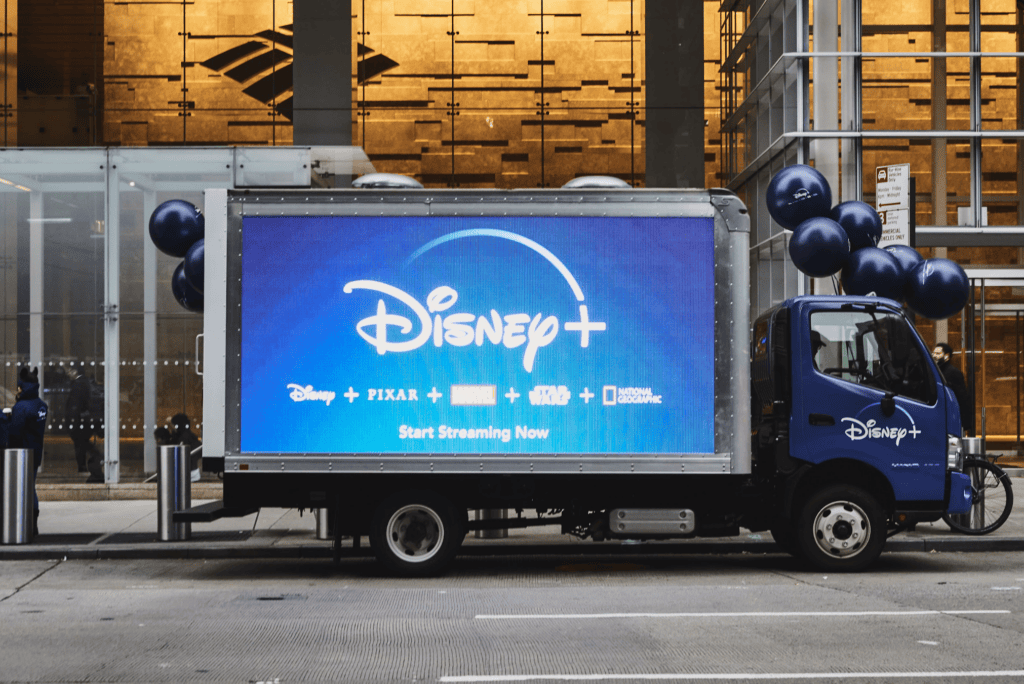
LED billboard trucks are AGM’s primary mobile format for Houston. We route these units through the high-traffic vehicle corridors approaching NRG before and after matches, through the Midtown and Montrose entertainment zones during evening hours, and along the hotel cluster corridors during morning and afternoon windows. GPS tracking documents every mile of route coverage and every time window.
Geographic Priority Zones for World Cup Houston
NRG Stadium Approach Corridors
The roads approaching NRG Stadium from the north (I-610, Main Street) and from hotel clusters (US-59, Greenway Plaza area) carry the match day audience in concentrated vehicle traffic. LED truck placements on these corridors during the 90-minute pre-match window and the 60-minute post-match window capture the full tournament audience in transit. We plan these routes with exact timing to maximize encounter rates during peak traffic density.
Midtown Houston
Midtown is Houston’s hospitality and nightlife center. Fan bars, restaurants, and gathering spaces are concentrated here. The walkable grid around Main Street, Travis, and the surrounding blocks supports street team distribution and poster campaigns that reach the audience during evening hours. This is where international fans congregate after matches and where brand presence in the social conversation is highest.
Montrose and the Heights
These walkable neighborhoods attract the creative class, the media audience, and the hospitality-spending demographic that advertisers most want to reach during World Cup activations. Poster saturation in Montrose and the Heights reaches a younger, more socially active audience that generates earned media through sharing and engagement with well-executed street work.
Discovery Green and Hermann Park
Official and unofficial fan viewing areas will concentrate at Discovery Green, the outdoor space adjacent to the George R. Brown Convention Center, and at Hermann Park near the Museum District. Brand activations adjacent to these fan gathering spaces reach the audience in an open, social mode that produces high engagement rates. We plan adjacent activations — not inside restricted official perimeters — that capture the same audience flow.
Houston’s Multicultural Audience: Why Geographic Targeting Matters
Houston is one of the most ethnically diverse cities in the United States, and World Cup 2026 will amplify that diversity into a visible, highly engaged fan culture. Latin American national teams draw from Houston’s massive Mexican, Honduran, Salvadoran, and Venezuelan communities. West African communities in southwest Houston follow the African national teams. South Asian communities in the Sugar Land and Katy corridors have their own viewing culture and gathering patterns.
Campaigns that treat Houston as a single audience miss the most important targeting opportunities. AGM plans cultural corridor programs that reach specific communities where they already gather — specific neighborhoods, specific restaurant and bar clusters, specific community spaces — with creative and messaging adapted for each context.
This is not just about language. It is about understanding which corridors carry which communities and planning the field program accordingly. The result is higher engagement, higher recall, and better ROI than a generic city-wide program that reaches no one specifically.
Formats That Perform in the Houston Market
LED Billboard Trucks
The primary mobile format for Houston’s car-dependent audience. We route LED trucks through vehicle corridors, hotel districts, and high-traffic commercial zones with GPS tracking and route documentation. Match day routing focuses on the NRG approach roads. Evenings focus on Midtown and Montrose. Daytime runs cover hotel and business districts.
Street Team Distribution
Street team crews work best in Houston’s walkable zones — Midtown, Montrose, Discovery Green, and the Hermann Park area. We deploy crews during match day evenings and post-match windows when foot traffic in these areas peaks. Distribution formats include branded materials, fan engagement items, and information cards with tracking QR codes.
Wheatpasted Posters
Poster campaigns in Midtown, Montrose, and the Heights generate sustained impressions in the market’s most walkable corridors. We identify compliant posting zones, execute installations with photo and GPS documentation, and run refresh crews to maintain saturation through the tournament window.
Branded Vehicle Activations
In a car-centric market, branded vehicles are themselves a visibility format. Wrapped vehicles operating in fan-heavy corridors, parking at venue approach areas, and circulating through fan zones during tournament events create moving impressions that complement static and mobile billboard placements.
Non-Sponsor Activation Strategy for Houston
FIFA’s official exclusion zones apply to the NRG Stadium perimeter and the immediate event footprint. They do not extend to the streets, neighborhoods, and entertainment districts where fans spend the majority of their World Cup time. Non-official sponsors who plan intelligently can achieve comparable audience reach to official sponsors at a fraction of the cost.
The most effective non-sponsor strategy concentrates on the fan hospitality ecosystem rather than the venue. Midtown bars, hotel lobbies and adjacent streets, viewing area approaches, and the transit corridors connecting NRG to the rest of the city are all accessible. We build non-sponsor programs specifically for this operating environment — compliant, high-impact, and focused on the moments where fans are most receptive.
Heat and Weather Planning for Houston Deployments
Houston in summer is hot. Tournament matches in June and July happen in conditions that affect both audiences and field crews. AGM plans Houston deployments with weather in mind: crew shift lengths calibrated to heat safety standards, hydration protocols, and scheduling that concentrates outdoor work in the morning and evening hours when conditions are most manageable. This is not a detail — heat-related crew issues are one of the most common operational failures in Houston summer campaigns.
Measuring Houston World Cup Activation Performance
Every AGM Houston deployment produces documented performance data:
- GPS route logs for all LED truck and crew movements
- Time-stamped photo documentation of placements, crew positions, and activations
- Materials distribution counts by location and time
- Placement persistence tracking for poster programs
- Field observations covering audience concentration, competing brand activity, and format performance
- Consolidated campaign report covering all phases and locations
This documentation gives clients the proof of performance needed for internal reporting and the baseline data for planning future Houston deployments.
FAQ
Where should brands focus first in Houston during World Cup 2026?
The NRG Stadium approach corridors, Midtown Houston, and the Montrose neighborhood are the primary activation zones. The Interstate 610 approach routes to NRG, the Main Street Square light rail corridor, and the fan hospitality cluster in Midtown are the highest-priority locations for both mobile and static formats.
Why does Houston require a mobile-first activation strategy?
Houston’s sprawl means fans drive to most locations. Static posters only work where pedestrian density is high enough to justify the placement. Mobile formats like LED billboard trucks follow the audience through car corridors that static formats cannot reach. We build Houston programs around the mobile-first reality of the market.
What street marketing formats work best for World Cup Houston?
LED billboard trucks on high-traffic vehicle corridors, street team distribution in Midtown and pedestrian-dense areas near NRG, poster programs in walkable neighborhoods like Montrose and the Heights, and branded activations at the fan viewing areas set up in Discovery Green and Hermann Park.
How does the multicultural audience in Houston change activation planning?
Houston has one of the most internationally diverse populations of any World Cup host city. Latin American fan communities, South Asian fan groups, and large West African communities all have distinct geographic concentrations. Campaigns that target specific cultural corridors outperform generic city-wide programs.
Can non-official sponsors run effective World Cup marketing in Houston?
Yes. The majority of fan activity in Houston happens outside FIFA’s official venue perimeter. Midtown bars, fan viewing areas, hotel corridors, and the roads approaching NRG are all accessible to non-sponsor marketing. We build programs specifically for non-sponsors who want tournament reach without official sponsorship costs.
How far in advance should brands plan a Houston World Cup activation?
60-90 days minimum. LED truck logistics, crew recruitment in the Houston market, and materials production all require lead time. Brands that brief us 90 days out have the most flexibility on routes, formats, and timing.
How does AGM document Houston World Cup deployments?
GPS-tracked truck and crew movements, time-stamped photo documentation of all activations, materials distribution counts, and a written field report. For LED truck deployments, we provide route logs showing every street covered and the time window for each pass.
Frequently Asked Questions
What is world cup houston 2026?
American Guerrilla Marketing provides world cup houston 2026 services across 50+ U.S. markets. Every campaign is planned, scouted, executed, and GPS-documented by our field teams. We work with regional brands and Fortune 500 companies on campaigns that require real street-level execution and documented proof of performance.
How does AGM approach houston 2026?
Our process starts with a market consultation to understand your goals, target audience, and budget. We then scout locations, handle any required permissions or permits, coordinate production and installation with our local crews, and provide a full GPS-tagged photo report after the campaign runs.
What markets does American Guerrilla Marketing cover for houston 2026?
We operate in 50+ U.S. markets including New York, Los Angeles, Chicago, Miami, Houston, Atlanta, Seattle, Denver, Boston, and dozens of secondary markets. Contact us to confirm availability and pricing for your specific market.
How much does a houston 2026 campaign cost?
Campaign pricing depends on market, format, quantity, and duration. We work with budgets ranging from targeted single-market runs to national rollouts across multiple cities. Use our RFP Builder or contact us directly for a custom quote based on your specific campaign requirements.
How do I get started with houston 2026 through AGM?
The fastest way to get started is to submit your campaign details through our RFP Builder at americanguerrillamarketing.com, or contact us directly at [email protected] or (646) 776-2770. Our team typically responds within one business day with availability and initial pricing.