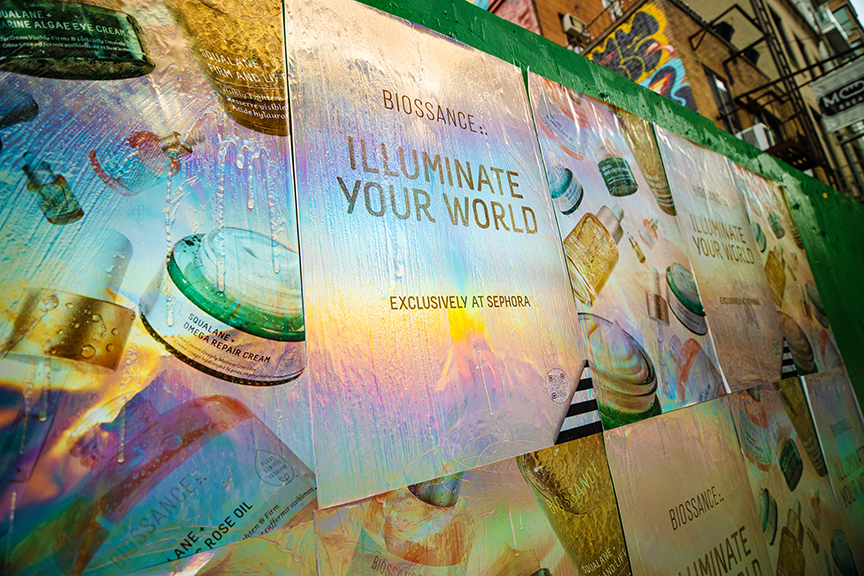
Dense urban environments amplify wheatpaste campaign performance in ways that suburban or rural placements simply cannot replicate, concentrated foot traffic, habitual pedestrian routing, and the visual contrast of a large-format poster against an urban backdrop all compound the format’s effectiveness.
Wheatpaste poster campaigns reach audiences at the exact scale where attention is easiest to earn and hardest to escape. At street level, in the pedestrian corridors where your target audience actually moves, a well-executed wheatpaste campaign creates repeated brand encounters that accumulate into genuine market awareness. American Guerrilla Marketing has run wheatpaste campaigns in markets across the United States for brands at every stage of growth, and this page covers how those campaigns get planned, permitted, and executed at the field level.
What makes wheatpasting worth understanding in depth is the gap between campaigns that generate impressions and campaigns that generate results. The best campaigns are built around audience movement patterns, not just surface availability, they place messages where the right people walk, dwell, and return repeatedly, which drives the frequency that builds real brand memory. The format also benefits from organic amplification: quality street-level work in high-visibility environments gets photographed and shared, multiplying the original media investment without additional spend.
This article covers the tactical and strategic fundamentals of wheatpasting, how campaigns are structured, what execution looks like in practice, how to evaluate format options against objectives and budget, and what distinguishes campaigns that move the needle from campaigns that just spend money. Whether you’re planning a first activation or optimizing an existing street-level program, the information below gives you a grounded framework for making smart decisions and getting measurable outcomes.
High Foot Traffic Turns a Poster Into a Habit
High foot traffic marketing is often described as “more impressions,” and that is true, but it is not the full story. Foot traffic in cities has rhythm. It surges, compresses, pauses, and repeats. Wheat paste posting thrives when it is placed inside that rhythm, where people naturally slow down or pass through again and again. The power is not in a single viewing moment but in the accumulation of sightings that transform a poster from a novelty into a familiar landmark.
A poster on a quiet side street might get a clean view, yet it rarely gets repeated exposure. In a bustling corridor, people do not just see a message once. They see it Monday morning, again Tuesday night, again on Saturday after brunch, and again when a friend points it out. Each encounter reinforces the previous one. The brand name becomes easier to recall. The visual style becomes recognizable. What starts as “I think I saw that somewhere” evolves into “I see that everywhere,” even if the campaign only occupies three strategic walls.
The advantages of this repetition stack up quickly. More passersby per hour means the initial reach is broad. More repeat sightings by the same people build familiarity without additional spend. More chances for a photo, a tag, or a “have you seen this?” conversation turn passive viewers into active participants. That repeat cycle is where pedestrian exposure advertising becomes powerful. It is less like a one-time announcement and more like a chorus that keeps returning.
The psychological effect of repeated exposure in familiar environments cannot be overstated. When someone sees the same poster on their commute five times in a week, it registers differently than seeing five different posters once. The brain categorizes the repeated image as part of the environment, lending it an implicit credibility. It is not shouting for attention, it simply exists, integrated into the daily space. That subtlety is a strength. The poster does not need to interrupt; it just needs to be there when the viewer is ready to notice.
Dwell Time Is the Hidden Engine of Street Poster Visibility
The best city poster placement is not always where people move fastest. It is where motion briefly turns into waiting. Think about the spots where you can feel the street “bunch up.” Those are dwell zones, and they are prime real estate for wheatpasting campaigns. These zones matter because they transform glancing into looking. A pedestrian rushing past a wall might register color and shape. A pedestrian waiting at that same wall has time to read headlines, absorb imagery, and form an opinion.
A few classic dwell triggers show up in almost every major city. Train platform entrances and station stairwells force pedestrians to slow as they work through stairs, turnstiles, and crowd flows. Bus stops where people face the same wall for several minutes create captive viewing opportunities. Food lines outside popular lunch counters during peak hours turn waiting into a predictable ritual. Venue doors during a slow-moving entry, whether for a concert, club, or theater, gather crowds in anticipation mode, a mindset primed for discovery and novelty.
When pedestrians stop, even for thirty seconds, their attention shifts. They pull out phones. They glance around. They notice details they would never catch mid-stride. A well-placed poster in a dwell zone does not compete with movement, it fills the pause. This is why subway platform posters outperform highway billboards for brand recall in urban markets. The billboard gets a two-second glance from a passing car. The platform poster gets two minutes of repeated views from a waiting crowd, many of whom will see it again tomorrow and the day after.
Dwell time also creates opportunities for deeper engagement. A complex visual narrative, a QR code, a subtle call-to-action, or layered messaging can all work in dwell zones because the viewer has the time to process them. In high-speed corridors, simplicity rules. In dwell zones, sophistication becomes possible. The same campaign can deploy bold, single-image posters on fast-moving blocks and detailed, story-driven posters at waiting points, tailoring the creative execution to the viewing context without diluting the brand message.
The Compounding Effect of Commuter Paths
Commuters create repetition at scale. A commuter route is not just one crowd, it is the same crowd returning on a schedule. That matters because recall is built through frequency, not a single perfect impression. When a commuter sees the same poster twice a day, five days a week, that is ten exposures in a single workweek. Over a month, that number climbs past forty. No digital ad campaign can match that level of organic frequency without significant spend, and even then, digital impressions lack the physical presence that street-level posters deliver.
Commuter behavior is highly predictable. Morning routines follow tight timelines. People take the same subway entrance, walk the same three blocks, stop at the same coffee shop. Evening routines are slightly more variable but still pattern-driven. This predictability is a strategic advantage for urban guerrilla marketing. Placement along commuter paths does not rely on chance encounters, it engineers them. The poster becomes a checkpoint in the daily routine, noticed or not, but always present.
Transit Corridors: Where the Street Compresses Attention
Transit corridors are a special kind of busy. They mix speed and pauses: fast walking on the approach, then slowing at stairs, turnstiles, and corners. They also mix audiences. Office workers, students, tourists, service staff, and nightlife crowds all funnel through the same chokepoints at different hours. This density and diversity make transit corridors one of the highest-value environments for wheat paste posting. The sheer volume of foot traffic guarantees reach, while the natural rhythm of movement and pause creates multiple viewing contexts within a single block.
Subway and train station exteriors are particularly effective because they combine urgency with routine. Commuters approaching a station move quickly, but they follow the same path every time. A poster placed on the approach gets seen during the rush. A poster near the exit gets seen during the slower departure. Station staircases force pedestrians to look up or down, changing their sightlines and making vertical poster placements more effective than in flat, open streetscapes. Corners where crowds gather before descending create brief dwell moments where messaging can land with more impact.
Bus corridors operate on a different rhythm but offer similar advantages. Buses run on schedules, which means crowds gather at predictable intervals. A poster across the street from a busy bus stop gets viewed by waiting passengers who face it for minutes at a time. The repetition is daily. The exposure is passive but sustained. >Bus advertising typically focuses on the vehicles themselves, but smart campaigns recognize that the stationary infrastructure, the stops, shelters, and surrounding walls, offer just as much value, often at a fraction of the cost.
Transit corridors also amplify social sharing. Tourists photograph everything. Commuters scroll phones while waiting. A visually striking poster in a high-traffic transit zone has a strong chance of being captured and shared, especially if it is unexpected, funny, beautiful, or provocative. That secondary digital distribution extends the campaign’s reach beyond the physical location, turning a single poster into content that circulates through social feeds, group chats, and community forums. The poster becomes both a physical landmark and a digital artifact.
Nightlife Zones: Slow Movement, High Social Sharing
Nightlife is not only high volume, it is high interaction. People stroll, not march. They look around. They are already in “what’s going on tonight?” mode, which is exactly the mindset many posters want to capture. Nightlife districts operate on a different temporal and social rhythm than daytime business corridors. The foot traffic is slower, more exploratory, and more social. Groups cluster on sidewalks. People pause to check phones, plan the next stop, or wait for friends. This creates an environment where street poster visibility is not just high, it is engaged.
Nightlife zones also skew younger and more digitally native. The audiences most likely to photograph and share a poster are out in force after dark. A clever or visually compelling wheat paste installation in a nightlife corridor can generate significant organic social media reach. The poster is not just seen, it is documented, tagged, and circulated. Brands targeting Gen Z and millennial audiences recognize this dynamic and design campaigns specifically for shareability, knowing that the physical poster is only the starting point for a much larger digital conversation.
The cultural context of nightlife also shifts how posters are received. During the day, advertising blends into the background hum of commerce. At night, especially in arts-forward or countercultural neighborhoods, posters are part of the scene. They contribute to the vibe, the aesthetic, the sense that something interesting is happening here. A poster that would feel corporate at noon can feel rebellious at midnight. That shift in perception allows brands to take creative risks they would not take in daytime placements, experimenting with bold visuals, provocative copy, and unconventional formats.
Placement strategy in nightlife zones requires understanding the flow of evening activity. Early evening crowds gather near restaurants and pre-game bars. Late night energy concentrates around clubs, music venues, and 24-hour food spots. Post-close crowds spread out toward transit or late-night diners. A campaign designed to saturate a nightlife district should mirror this flow, placing posters along the pathways people travel as the night progresses. The goal is not to blanket every wall but to appear at the moments when attention is highest and the audience is most receptive.
Frequently Asked Questions
What is wheat paste posting and how does it work?
Wheat paste posting is a street-level advertising technique that uses water-based adhesive to apply large-format paper posters directly to urban surfaces. American Guerrilla Marketing plans routes based on audience movement patterns, applies materials during off-peak hours, and selects high-visibility surfaces in neighborhoods where target consumers live, work, and gather.
How long do wheat paste posters last on city streets?
Wheat paste poster longevity varies by city, surface, weather, and enforcement. In major metros with active cleaning crews, installations may last 3–10 days. In secondary markets with lower visual competition, posters can remain visible for 2–4 weeks. Professional campaigns plan phased refresh schedules to maintain presence throughout the campaign window.
Is wheat paste posting legal?
Legal status varies by municipality and surface. Most cities prohibit posting on public property without permits, though enforcement varies significantly by neighborhood and market. American Guerrilla Marketing operates legal permitted poster campaigns in addition to managed placements, and works with clients to design programs that balance coverage, compliance, and budget.
How much does a wheat paste posting campaign cost?
Wheat paste campaign costs depend on market size, number of locations, poster dimensions, and campaign duration. Entry-level city campaigns typically start in the low-to-mid thousands for a meaningful footprint. American Guerrilla Marketing builds custom programs scaled to budget, with transparent breakdowns of production, placement, and field execution costs.