
November 25, 2026
Snipe Advertising for Charleston Brands
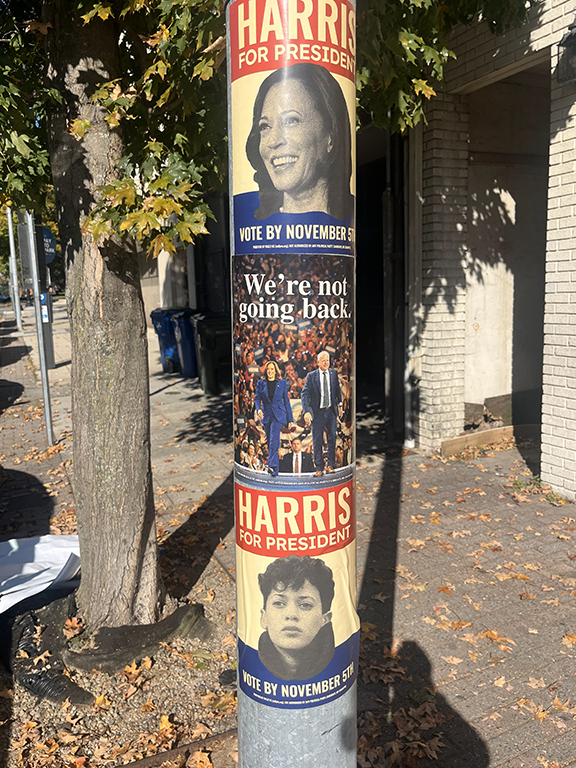
I am going to argue something here that most Charleston buyers do not expect, and that some of them push back on hard in the first call.
Snipe Advertising in this market is not a peninsula format. It is an edge format.
That runs against instinct, because when a Charleston brand thinks about visibility it thinks about downtown. King Street, the Market area, the blocks people photograph. But the historic peninsula is the single worst place in the Lowcountry to build a snipe programme, and the reasons are structural rather than a matter of taste.
The peninsula is where Charleston concentrates its architectural review attention. It is where the walking audience is moving slowly enough to read a full poster, which is a different format and a better fit. And it is where a small placard on a post reads as clutter against a streetscape that the city actively manages.
Meanwhile, the places where a snipe genuinely earns its keep are the places most Charleston briefs ignore: the car-facing approaches, the commercial arterials, the commuter corridors that feed the peninsula every morning and drain it every evening. That is where people are sitting in a vehicle, at a speed where a small, high-contrast, repeated message works, and where surface ownership is often more straightforward than it is downtown.
So this page is organised around geography rather than around the format. Where snipes belong in this region, why, and what they have to survive once they are there.
The Lowcountry is four markets, and snipes serve three of them
Charleston is not one city for media purposes. It is a cluster of centres separated by water and connected by a small number of chokepoints, which is unusual and which changes everything about route-based formats.
**The peninsula.** Compact, walkable, historic, closely watched. This is poster and street-team country. Snipes do not fit here and I will say so on a first call.
**North Charleston.** Reached from downtown via I-26. This is where the airport sits, where the convention and arena complex sits, and where Park Circle, centred on East Montague Avenue, has grown into a genuinely walkable dining and nightlife pocket with its own local crowd. The approaches into Park Circle, including the Spruill Avenue route in from the interstate side, are road-speed environments. North Charleston generally is a car city with real commercial corridor length, and that length is exactly what a snipe programme needs.
**Mount Pleasant and the east side of the harbour.** Reached across the Arthur Ravenel Jr. Bridge, with US-17 running north and south through it. This is suburban and car-dependent. Nobody is walking from one retail cluster to the next. A snipe sequence along a commercial arterial here reaches a captive commuting audience that a peninsula poster never touches.
**West Ashley and the inland side.** US-17 continues through here, and I-526 loops around the outside of the whole region. The I-526 interchanges are known congestion points, which is an operational fact worth more than it sounds: congestion means dwell time, and dwell time is the only thing that makes a small-format roadside message readable.
Three of those four are car markets. Snipe advertising is a car-market format. That is the whole argument, and once a client sees the region drawn that way the brief usually rewrites itself.
The practical consequence is that a Charleston snipe programme is a driving programme. Crews are in vehicles, covering linear distance, not walking a dense grid. That is the opposite of how poster work runs here, and it means the two formats have almost nothing in common logistically despite being neighbours on a service list.
What a snipe has to do at road speed in this region
A snipe is a small format. It only works through repetition, contrast and position, and all three are harder in the Lowcountry than people assume.
Start with sight lines. This region is flat, low and heavily vegetated. Live oaks, palmetto, dense shrub planting along commercial frontage. Vegetation is the main thing that eats roadside visibility here, and it is seasonal: a position that reads cleanly in February can be half-screened by June once everything has leafed out. We survey positions with that in mind and we re-check mid-run during the growing season, because a snipe nobody can see is worse than no snipe at all. It still costs crew time and it still has to come down.
Then speed. On an arterial running at arterial speeds, a driver has a very short read. That means three or four words, enormous contrast, and no detail that requires focus. Every Charleston client I have worked with has wanted more words on a snipe than the format can carry, and the honest answer is always the same: cut it until it is almost uncomfortably short, then cut it again.
Then light. Charleston runs cloudy a lot of the year, and overcast light is flat light. Flat light kills designs that rely on subtle tonal separation. High-contrast work, dark on light or light on dark, survives a grey Lowcountry morning. Mid-tone work disappears into it.
Then the bridge. The Ravenel crossing is a specific and interesting case. Congestion builds on it during peak periods, morning roughly between seven and nine and evening roughly from four to six thirty, and traffic there can crawl. The approaches to a crossing like that are among the few places in this region where drivers are genuinely stationary and genuinely bored. That is valuable attention. It is also attention in a highly visible, highly scrutinised location, which brings us to ownership.
Permission at the edges, where ownership is less obvious than it looks
Surface rules around posting are a grey area everywhere, and I am not going to characterise what is or is not permitted in Charleston County or in any of the municipalities inside it. That turns on surface ownership, the specific jurisdiction, applicable local ordinance, and who happens to be looking. Enforcement attitudes differ between the peninsula, North Charleston, Mount Pleasant and the unincorporated areas, and they are inconsistent even inside a single one of them.
What I will say is that edge markets create a specific and dangerous illusion. A roadside post, a stretch of construction fence, a utility structure on a commercial strip: these look unowned. They are not. Every one of them belongs to somebody, and in a region with this much public infrastructure, that somebody is frequently a public body rather than a private owner.
So our posture for snipe work around Charleston is deliberately conservative:
We identify the controlling party for every position before anything goes up. Not the likely owner. The actual one.
We work private commercial frontage by preference, because a business owner on a commercial corridor can give a clear yes and often wants the foot traffic that comes with being part of something.
We get consent in writing, with dates, and we photograph each position on install so there is a record of exactly what was placed and where.
We commit to a removal date and we remove on it. Abandoned snipes are the single biggest reason this format has a poor reputation in some markets. A placard still hanging three months after a campaign ended is what turns a tolerant corridor into an intolerant one, and it poisons the well for everyone working that road afterwards.
We treat anything inside the historic districts, anything on or immediately adjacent to the bridge, and anything that could be read as attached to public infrastructure as off the table unless the controlling party has explicitly agreed in writing.
That last one disappoints clients who have fixated on the bridge approaches. I understand why. It is the best captive audience in the region. But it is also the most conspicuous, and the risk profile does not justify the reward. We will usually counter-propose positions on private commercial frontage along the arterials that feed the crossing, which catch much of the same traffic before it reaches the bridge, with a far cleaner ownership story.
Salt, sun and standing water: what survives on an exposed Lowcountry post
A peninsula poster sits on a wall, often sheltered, often in a narrow street. A snipe sits on a post, fully exposed, in open air, usually near a road. Completely different survival problem.
Three forces do the damage here.
**Salt.** Harbour and marsh air carries salt well inland. Salt is brutal on fasteners and metal hardware. Zip ties and plastic fixings are not immune either, because salt accelerates the ultraviolet degradation they are already subject to. On a Lowcountry snipe programme we assume corrosion as a baseline rather than treating it as an edge case, and we specify hardware on that basis. We also build re-check intervals into the plan instead of hoping everything is still where we left it.
**Ultraviolet load and heat.** Charleston summers are hot and the sun load is heavy. Ink fades, substrates warp, adhesives soften. A board that stays flat through a mild spring can bow noticeably on a south-facing post in July, and a bowed board catches wind differently, which leads to the third force.
**Wind and wind-driven rain.** Winters here are windy, and rain in this region frequently arrives sideways rather than straight down. Sideways rain plus an exposed position finds every edge and every fixing point. A snipe that is secured at only two points will rotate in a gust, and a rotated snipe reads as neglect. We fix at more points than seems necessary, particularly on anything with surface area.
Hard freeze is rare here, so freeze-thaw damage is not the governing concern it is in northern markets. The Lowcountry equivalents are corrosion, ultraviolet fade and wind. Those are slower and less dramatic than a freeze cycle, but over a run of several weeks they do comparable damage, and they do it unevenly: the coastal-facing positions in a set will always degrade faster than the inland ones.
I tell clients to expect a run to look non-uniform by the end. That is not sloppiness. It is geography. The honest fix is a mid-run service pass on the most exposed positions rather than pretending a single install will hold evenly across the whole set.
Timing: the commuter clock, the storm season and the local calendar
Snipe work here is governed by three clocks at once.
**The daily clock.** Install happens outside peak traffic, for crew safety and for the practical reason that working a roadside position in stop-start congestion is slow and conspicuous. Early morning before the seven o’clock build, or late evening after the evening peak clears, are the workable windows. Mid-day is possible on quieter corridors but exposes the crew to heat through the summer months.
**The seasonal clock.** Late summer is the hardest stretch. It is the hottest and wettest part of the year, it carries real storm exposure, and August is consistently the thinnest part of the local event calendar. For a driving-based crew, summer storms are not just a material risk, they are a scheduling risk, because a corridor install can be stopped mid-route. We build slack into summer schedules that we do not need in October.
**The event clock.** Charleston’s calendar is spring-heavy and it changes traffic patterns, not just pedestrian ones. February brings the Southeastern Wildlife Exposition and the Lowcountry Oyster Festival. March brings Charleston Wine + Food. April brings the Cooper River Bridge Run, which closes the harbour crossing to vehicles for the event and puts an enormous field of runners across it, something no other date in the year does. Spoleto Festival USA opens in late May and runs into June. The North Charleston Arts Fest runs in the spring on that side of the region. The MOJA Arts Festival runs from late September into early October.
For a snipe programme, these matter mostly as traffic events. Bridge Run weekend changes vehicle movement across the whole east side. Big peninsula festival weeks push visitor traffic onto the approaches and change the mix of who is driving in. If your audience is residents rather than visitors, the heaviest tourist weeks are arguably the wrong time to run, because the corridors fill with people who are not your market.
Campus terms matter at the edges too, though less than on the peninsula. The College of Charleston and The Citadel sit on or beside the peninsula and the medical campus anchors the upper peninsula, so term dates move peninsula-bound commuter volume in both directions.
What goes wrong, and what we talk Charleston clients out of
**Wanting downtown.** This is the big one and it comes up on nearly every first call. A Charleston brand wants to be seen downtown, so it asks for snipes downtown. We say no and explain why: wrong format for a walking audience, wrong environment for a closely reviewed historic streetscape, and better options available. If the client wants the peninsula, we point them at Wheatpasting & Poster Campaigns, which is built for exactly that walking audience and those sheltered peninsula surfaces, and we keep the snipe programme on the arterials where it works.
**Fixating on the bridge.** Second most common. The congestion on the harbour crossing makes it look like the best attention in the region, and it is. It is also the most conspicuous location in the region. We counter-propose private frontage on the feeder arterials instead.
**Too few positions over too much distance.** This region is large and spread out. A snipe programme with a handful of positions scattered across North Charleston, Mount Pleasant and West Ashley does nothing, because the format depends on repetition along a route. Better to own one corridor properly than to sprinkle three. When a brief asks for region-wide coverage with a small position count, we push back and ask which single corridor matters most.
**Ignoring vegetation.** Clients approve positions from a map or a spring photograph and are surprised in July. We survey on the ground, we note which positions are at risk once foliage fills in, and we plan a re-check rather than discovering it at the end.
**Leaving removal vague.** The most important commitment in this format and the one clients care least about at the planning stage. We fix the removal date at the point of install, not afterwards. In a region where the same crews work the same corridors repeatedly for different clients, the discipline of taking things down on time is what keeps those corridors workable at all.
Frequently asked questions
Is snipe advertising permitted around Charleston?
It is a grey area, not a yes or no. It turns on who owns the specific surface, which municipality or unincorporated area it sits in, the applicable local ordinance, and who is reviewing. Attitudes differ between the peninsula, North Charleston and the east side of the harbour. We reduce exposure by working from written permission on identified private frontage with documented removal.
Why do you steer snipe campaigns away from the historic peninsula?
Two reasons. The peninsula audience is walking slowly enough to read a full poster, so a small placard is the wrong tool for it. And the historic districts carry an active architectural review habit where signage is assessed case by case. A poster campaign on permissioned peninsula walls serves that audience far better than a snipe programme would.
Which corridors around Charleston actually suit this format?
The car-facing ones. US-17 through Mount Pleasant and West Ashley, the commercial length of North Charleston including the approaches toward Park Circle and East Montague Avenue, and the arterials feeding the I-526 interchanges where congestion creates dwell time. The format needs linear distance and vehicle speed, both of which the peninsula lacks.
How does the coastal climate affect snipe materials?
Salt-laden air corrodes fasteners and hardware faster than inland markets, so we specify for corrosion rather than against it. Heavy summer ultraviolet load fades ink and can bow substrates. Winter wind and sideways rain attack fixing points. Coastal-facing positions in a set always degrade faster than inland ones, so we plan a mid-run service pass.
When should a Charleston snipe campaign run?
Autumn and early spring are the most workable. Late summer is hot, storm-exposed and carries the thinnest local event calendar, which makes it both harder on crews and harder on materials. Spring brings heavy traffic around Charleston Wine + Food, the Cooper River Bridge Run and Spoleto, which helps visitor-facing campaigns and can work against resident-facing ones.
What happens at the end of the run?
Every position comes down on the committed date. Removal is scheduled at the point of install, not negotiated afterwards, and each position is photographed on both install and removal. Abandoned material is what turns a workable corridor into a hostile one, and in a region where the same roads get used repeatedly, that discipline protects future campaigns.
Request a campaign quote
If you are a Charleston brand considering snipe advertising, the first thing to tell us is which corridor matters most to you, and the second is whether your audience is a resident or a visitor. Those two answers decide almost everything else: which side of the harbour we work, which weeks make sense, and whether this is the right format at all.
We will be direct if it is not. Plenty of Charleston briefs that arrive asking for snipes are really poster briefs that belong on the peninsula, and we would rather tell you that on the first call than take a campaign that was never going to work.
Request a campaign quote and we will come back with a corridor-by-corridor plan, an ownership-first permission approach, and a removal commitment in writing.

Ready to Run Your Campaign?
Call us or email us. We’ll tell you exactly what we can do in your market and what it costs.
Related Service
Explore similar advertising solutions offered by American Guerrilla Marketing.
American Guerrilla Marketing — Los Angeles
Street-level campaigns in Los Angeles and nationwide. Wheatpasting, LED trucks, street teams, and more.
(646) 776-2770
Related Articles
-
Snipe Advertising for Atlantic City Brands
November 25, 2026
-
Snipe Advertising for Knoxville Brands
November 25, 2026
-
Snipe Advertising for El Paso Brands
November 25, 2026
-
Snipe Advertising for Jersey City Brands
November 24, 2026
-
Snipe Advertising in Orlando: Corridors and Reality
November 24, 2026