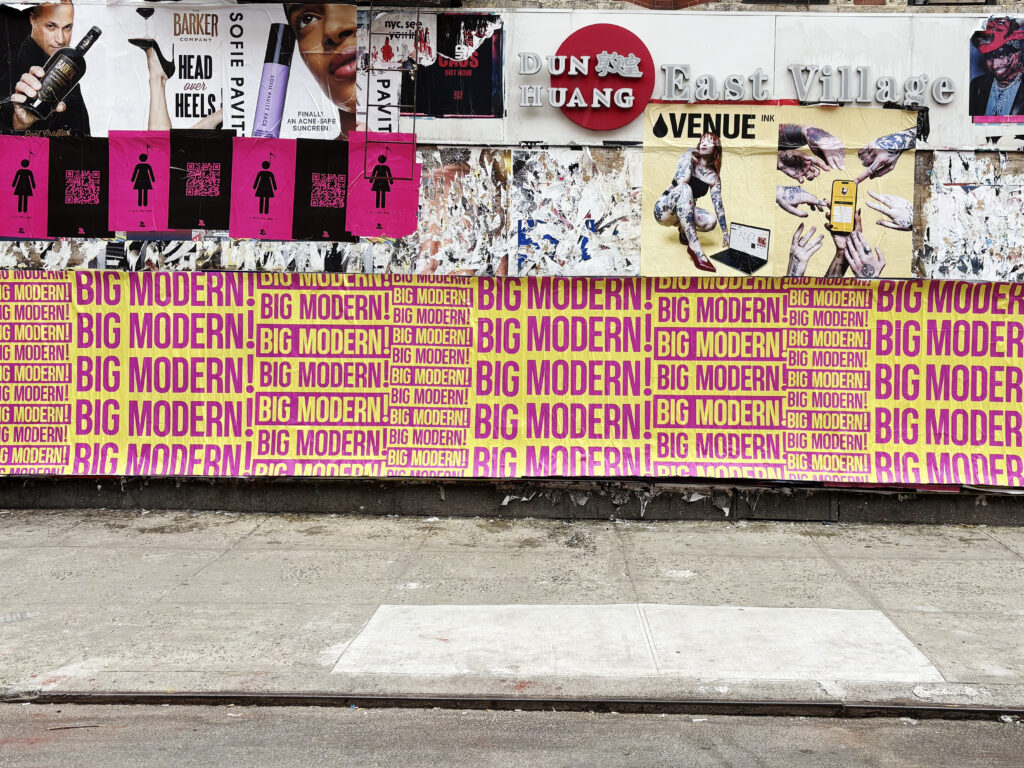
Wheatpasting vs Digital Advertising in London: Why Street Still Converts
This comparison is not an argument that street is better than digital, or that digital has made street obsolete. Both of those positions are wrong, and any experienced campaign operator will tell you so. What’s true is that these two channels do different things, reach audiences in different states of mind, and generate different kinds of impact. The brands running the most effective London campaigns in 2026 are the ones who understand what each channel is actually good at and use them accordingly — not the ones who picked a side in an unnecessary format war.
With that framing established: here is a straight comparison of what wheatpasting and digital advertising actually deliver in the London market, where each performs best, and why physical street presence continues to matter in a city that has more digital advertising inventory than almost anywhere in the world.
Physical Presence That Cannot Be Blocked or Skipped
London has among the highest ad-blocking rates of any major European city. The tech-literate, high-income demographic concentrated in Shoreditch, Islington, and the West End — the exact audience that many brands are most eager to reach — uses ad blockers at rates that can exceed 40% among 18-35-year-olds. A wheatpaste poster on a Rivington Street wall cannot be blocked. The person walking past it cannot choose not to see it. That’s not a trivial advantage in a market where a large percentage of the target audience has actively opted out of digital advertising.
Organic Social Amplification
Context and Cultural Credibility
There is a specific quality to a poster appearing on a London wall that a digital impression cannot replicate. The physical object occupies real space in the city’s visual environment. It participates in the history of that particular wall, that particular neighborhood, all the previous campaigns and art and culture that have appeared there. That context gives a campaign a kind of credibility — the appearance of having been chosen by the city as worthy of display — that algorithmic delivery cannot manufacture.
A 2024 study by Outsmart, the UK out-of-home advertising body, found that 65% of UK consumers find physical advertising more memorable than digital advertising, with 48% saying they had taken an action (searched for a brand, visited a website, or made a purchase) after seeing an outdoor advertisement in the past month.
What Digital Advertising Delivers in London
Measurable Reach and Frequency
Behavioral Targeting Beyond Geography
Digital platforms can target based on interests, behaviors, purchase history, lookalike audiences, and dozens of other signals that go beyond the geographic targeting that wheatpasting provides. A fashion brand that wants to reach specifically people who have recently searched for trainers, follow specific streetwear accounts, and live within a certain postcode can do that digitally in a way that no street campaign can replicate.
Speed and Flexibility
Where Each Channel Wins in the London Market
Objective
Better Channel
Why
Reaching ad-blocking demographic
Wheatpasting
Cannot be blocked; physical presence bypasses filters
Direct response / click-through
Digital
Trackable, linkable, immediately usable
Building ambient cultural presence
Wheatpasting
Physical neighborhood presence creates cultural context
Behavioral targeting beyond geography
Digital
Interest/behavior data unavailable to street campaigns
Organic social media amplification
Wheatpasting
Photographable posters generate genuine social sharing
Campaign measurement and reporting
Digital
Impression and conversion data at granular level
Launching in a specific London neighborhood
Wheatpasting
Genuine neighborhood presence; digital geo-targeting is approximate
The Case for Running Both
The strongest London campaigns in entertainment, music, and fashion use wheatpasting and digital advertising as complementary tools rather than competing options. The physical poster plants the awareness. The digital retargeting reinforces it. Someone who walks past a poster in Shoreditch and photographs it, then sees a sponsored Instagram post for the same campaign two days later, has had two entirely different kinds of contact with the brand. That cross-context frequency is more valuable than high frequency within a single channel.
“The question isn’t digital or street — it’s what each channel is doing in your campaign architecture. Street creates presence. Digital creates frequency and conversion opportunity. Neither does the other’s job particularly well.”
The Ad-Blocking Demographic and Why It Matters for London
London’s concentration of tech workers, media professionals, and highly educated young adults makes it one of the highest ad-blocking markets in Europe. For brands targeting exactly this demographic — which includes the Shoreditch creative sector, the Islington professional class, and the south London arts community — digital advertising faces a structural challenge that no amount of targeting sophistication can fully overcome.
What Comparison Searchers Are Really Trying to Decide
The best-ranking angle is decision-making clarity. Searchers want to know when street posters outperform paid social or display, when digital should lead, and how the two channels can reinforce each other. Common H2 topics include attention versus targeting, credibility versus click-level measurement, neighborhood specificity, CPM logic, and how poster campaigns generate social proof or organic sharing that digital alone struggles to create. In London specifically, walking culture and dense creative districts strengthen the case for physical media.
A strong comparison page should not oversell one side. It should explain that wheatpasting is usually best for visibility, buzz, and local cultural presence, while digital is stronger for retargeting, conversion paths, and controlled audience segmentation. Searchers value balance here. They are more likely to trust a page that helps them choose the right mix than one that treats every brief as a hammer looking for a nail.
For London buyers in particular, the winning answer is often not either-or. It is sequencing. Street posters create attention and context, while digital captures and extends the demand. That balanced framing is what makes the comparison genuinely helpful.
It is that sequencing logic, rather than channel tribalism, that best matches the search intent. Marketers comparing formats want better allocation decisions, and a nuanced explanation serves them better than a one-sided sales pitch.
That balanced answer is especially important in London, where dense walking routes can make a relatively small street campaign feel culturally oversized. The article should keep helping readers decide when that effect is worth more than pure click efficiency.
For that reason, the best answer usually compares role, not prestige. Searchers want to know which channel does what inside a London launch plan, and the page should keep translating the comparison into practical media decisions.
Frequently Asked Questions
What Physical Does That Digital Can’t
The comparison between wheatpaste campaigns and digital advertising in London is not really a channel competition — it’s a question of what effect each channel is trying to create. They’re not substitutes. They work on different parts of the consumer decision process, and understanding that distinction is what allows brands to deploy both intelligently.
Digital advertising is precisely targeted, algorithmically optimized, and measurable down to the individual impression. It reaches people who have already demonstrated relevant interests and behaviors. But it operates in an attention environment that is increasingly saturated, increasingly ad-blocked, and increasingly distrusted by the audiences most valuable to cultural brands — London’s arts-engaged, media-literate professional demographic.
Wheatpasting operates in the physical environment, where there is no skip button, no scroll, no algorithm deciding whether to show the creative. A poster on a wall in Shoreditch exists unconditionally for everyone who walks past. The question is not whether they see it — they do — but whether the creative is strong enough to make seeing it mean something.
UK research from IPSOS consistently finds that out-of-home advertising (including street-level posters) generates significantly higher trust scores than digital display advertising among the 25-44 demographic. In London specifically, where digital ad fatigue is measurably higher than the national average, the trust differential is a meaningful campaign asset.
The Attention Economy Argument for Physical
London’s most valuable consumer audiences are the most over-targeted by digital advertising. The arts professional in Dalston, the creative director in Shoreditch, the media buyer in Soho — these are the people with the highest digital advertising exposure and the strongest ad avoidance behaviors. They’re also the people with the most cultural influence, the largest social networks in the relevant fields, and the strongest word-of-mouth effects on purchasing decisions in their sectors.
Reaching this specific demographic effectively through digital alone is increasingly expensive and decreasingly effective. The CPM for well-targeted digital placements in London’s arts-professional demographic has risen sharply as more brands compete for the same audience. A wheatpaste campaign in their actual neighborhoods — Shoreditch, Dalston, Peckham, Stoke Newington — reaches them in a context they have not armored against, at a CPM that is significantly lower than the equivalent digital reach.
How Brands Use Both Channels Together
The most effective campaigns we’ve seen run in London treat wheatpasting and digital as complementary rather than competing. The physical campaign builds ambient awareness and cultural credibility — people see the poster multiple times on their commute, on their way to the market, outside their local coffee shop. The digital campaign reaches the same audience with a direct conversion message, and the familiarity built by physical exposure makes the digital message land harder.
This is a documented effect in advertising — physical familiarity lowers the resistance to digital conversion messages. Brands that run integrated physical-digital campaigns in London consistently report higher digital conversion rates from London audiences during the period when physical campaigns are active compared to periods when only digital is running. The physical campaign does not replace the digital spend; it makes the digital spend more efficient.
We’ve run integrated campaigns for entertainment and fashion clients where the wheatpaste goes up two weeks before the digital campaign launches. The briefing from those clients consistently notes that the London digital performance during the integrated period outperforms equivalent periods with digital only. The street campaign warms the audience. Digital harvests it.
When Wheatpasting Should Lead the Campaign
There are specific scenarios where wheatpasting should be the lead channel rather than a supplement to digital:
New brand market entry: A brand entering the London market for the first time has zero recognition equity. Digital advertising to a cold audience is expensive and inefficient. A concentrated street campaign in the right neighborhoods builds recognition equity first, so digital campaigns later are reaching a warmed audience rather than a cold one.
Cultural credibility campaigns: Brands that need to signal authentic connection to a specific London subculture — music, street fashion, independent film — cannot buy that credibility through digital targeting. Physical presence in the right neighborhoods, done with appropriate creative, signals cultural membership that digital alone cannot.
Launch events and premieres: A campaign timed around a live event — a film premiere, an album launch, a product drop — benefits disproportionately from physical presence because the physical and the event are in the same experiential space. People going to the premiere walk past the campaign; the physical campaign and the live event reinforce each other in a way digital cannot replicate.
The Measurement Argument: What Physical Advertising Can and Can’t Track
But the measurement comparison is not as clean as it appears. Digital impression counts include bot traffic, served-but-not-viewable placements, and inventory that reaches the right demographic at the wrong attention state. A “seen” digital impression in a pre-roll context where the viewer is waiting to skip is not equivalent to an impression from a pedestrian who stops to read a poster. The quality of the impression matters, not just the count.
Physical advertising measurement is improving. Mobile location data allows brands to identify devices that have been in the proximity of specific campaign locations and subsequently visited their website or app. This proximity-to-action measurement doesn’t prove causation but provides directional evidence of campaign effect in a way that the previous generation of out-of-home measurement couldn’t offer. AGM can facilitate this measurement approach for clients with the appropriate data partnerships — it’s not standard for all campaigns but it’s available for those who need it.
The Trust Differential: Why It Matters for Specific Audiences
UK research consistently shows that outdoor advertising (including street-level wheatpasting) scores significantly higher on audience trust than digital display advertising. For brands trying to reach London’s creative and professional demographics — who are simultaneously the most over-digitally-advertised and the most ad-skeptical audience in the UK — this trust differential is a campaign performance variable, not just an abstract metric. An impression from a medium the audience trusts converts at a higher rate than an impression from a medium they don’t. Physical advertising’s trust premium is a real performance asset for specific audience segments.
Is wheatpasting more cost-effective than digital advertising in London?
What does wheatpasting do that digital advertising cannot?
Wheatpasting creates physical presence in specific neighborhoods that cannot be skipped, blocked, or scrolled past. It generates organic social media amplification when photographed and shared. It creates a sense of cultural event rather than paid media. And it cannot be blocked by ad blockers — a significant consideration in London where blocking rates among the 18-35 tech-savvy demographic exceed 40% in some neighborhoods.
What does digital advertising do that wheatpasting cannot?
Digital advertising provides measurable reach, frequency data, click-through tracking, behavioral targeting beyond geography, and the ability to adjust campaigns mid-flight. It scales instantly across London and can be tested with multiple creative variants simultaneously. Wheatpasting cannot be changed once posted, cannot track direct conversions, and does not provide impression-level data. For direct response objectives, digital is the stronger channel.
Should brands use wheatpasting instead of or alongside digital advertising?
Alongside, for most campaigns. Wheatpasting and digital advertising reach audiences in different states of mind and do different things. The combination of physical street presence with digital retargeting creates cross-context frequency that neither channel achieves alone. Someone who sees the campaign on a London wall and then on Instagram has had two qualitatively different experiences of the same brand, both of which contribute to purchase consideration.
Which London audiences are hardest to reach through digital advertising alone?
Ad-blocking rates in London are significantly above the UK average, particularly among 18-35-year-old tech professionals in east London and creative industry workers throughout the city. This is precisely the demographic that wheatpaste campaigns in Shoreditch, Dalston, and Hackney are well-positioned to reach. For brands targeting this group, street presence is one of the few channels where they’re not filtered out by the audience’s own ad management behavior.